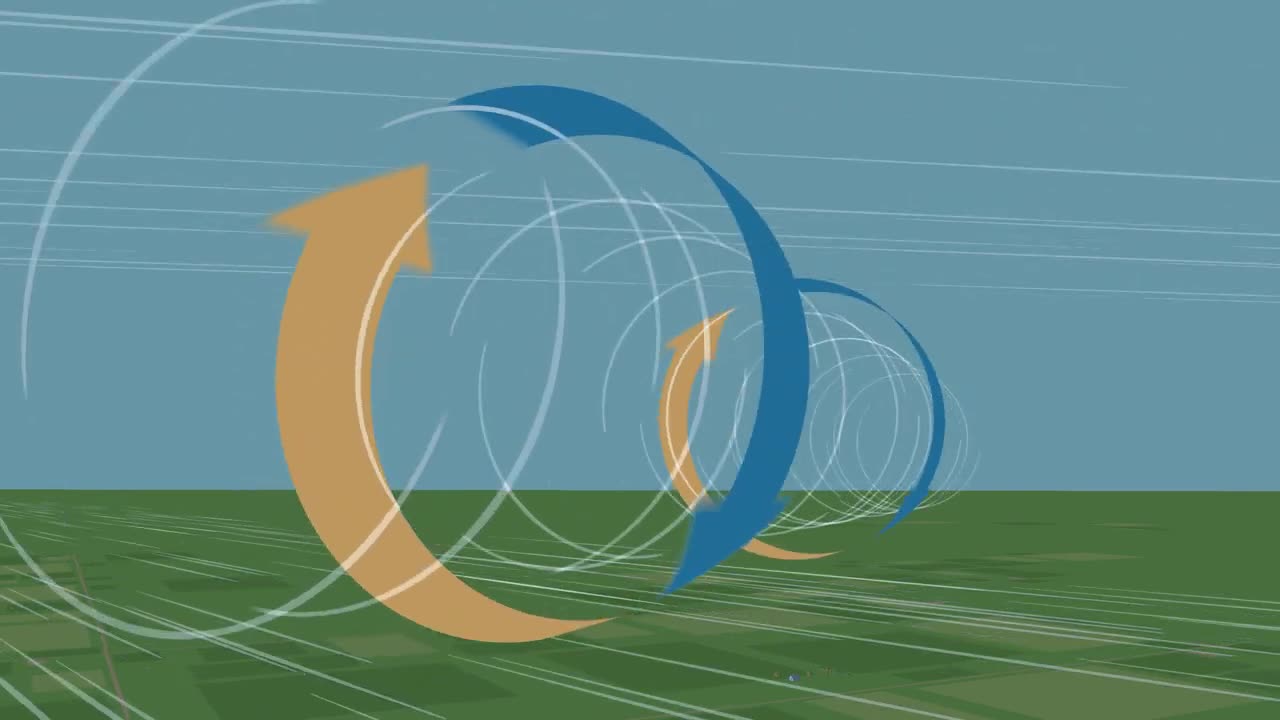
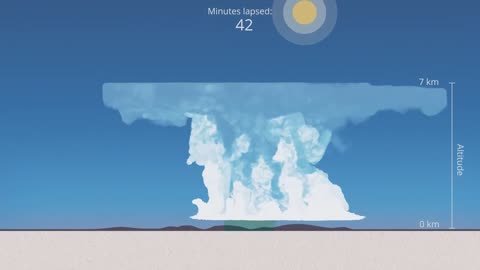
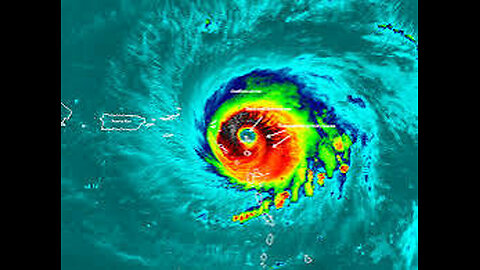
How Do Hurricanes Form? Meteorology - Weather Basics
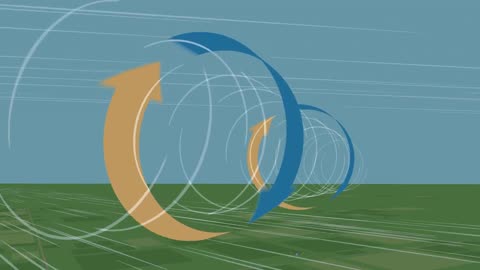
What Causes a Tornado? - Meteorological Basics

NOAA: 'The Hurricane Hunters'

What is the Enhanced Fujita Tornado Scale - Weather Basics - Meteorology
What is a Blizzard? Weather Basics - Meteorology
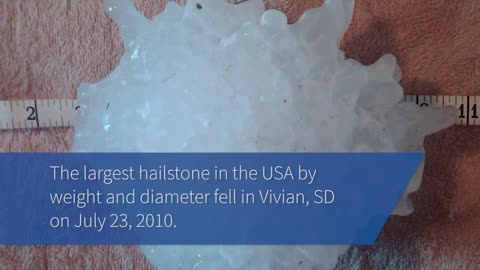
The Science of Hail - Meteorology - Weather Basics
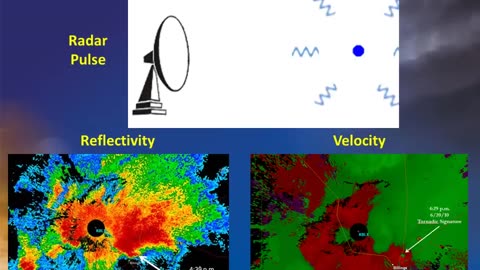
Doppler Weather Radar Basics - Weather Basics - Meteorology

How Do Rainbows Form? - Weather Basics

Thunderstorm Types - Meteorology - Weather

How Does Rain Form? What is the Water Cycle?
Hurricanes - Weather Basics - Meteorology 101

The Science Behind Lightning - Meteorology

How does snow form? - Meteorology
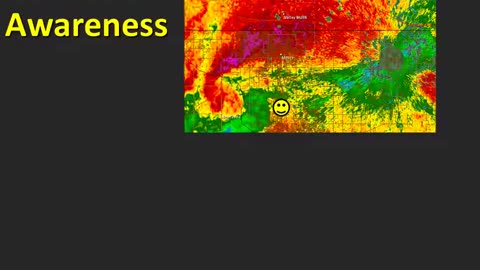
Storm Spotting: Storm Motion and Positioning- Meteorology
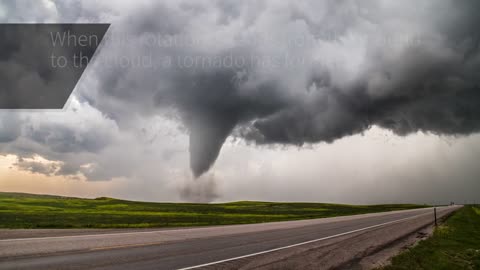
The Science Behind Tornadoes - Meteorology
A Tutorial on Cloud Types - Weather 101 - Meteorology
What Causes a Tornado? - Meteorological Basics
What Causes a Tornado?
The swirling, funnel-shaped winds of a tornado are easily recognizable—and they can be very dangerous. But what causes these unique and violent weather phenomena?
A tornado is a violently rotating column of air that is in contact with both the surface of the Earth and a cumulonimbus cloud or, in rare cases, the base of a cumulus cloud. It is often referred to as a twister, whirlwind or cyclone, although the word cyclone is used in meteorology to name a weather system with a low-pressure area in the center around which, from an observer looking down toward the surface of the Earth, winds blow counterclockwise in the Northern Hemisphere and clockwise in the Southern. Tornadoes come in many shapes and sizes, and they are often (but not always) visible in the form of a condensation funnel originating from the base of a cumulonimbus cloud, with a cloud of rotating debris and dust beneath it. Most tornadoes have wind speeds less than 180 kilometers per hour (110 miles per hour), are about 80 meters (250 feet) across, and travel several kilometers (a few miles) before dissipating. The most extreme tornadoes can attain wind speeds of more than 480 kilometers per hour (300 mph), are more than 3 kilometers (2 mi) in diameter, and stay on the ground for more than 100 km (62 mi)
More Meteorology Videos
https://rumble.com/playlists/JfAj918PQuc
-
 LIVE
LIVE
Drew Hernandez
1 day agoERIKA KIRK / CANDACE OWENS CEASEFIRE SUMMIT & BACK TO BACK MASS SHOOTINGS?
919 watching -
 1:37:33
efenigson
14 hours agoUnapologetically Yourself: The Courage to Speak & Be Different - Zuby | Ep. 111
31.8K2 -
 1:07:27
Inverted World Live
5 hours agoAI Person of the Year & Robot Wolves in Japan | Ep. 153
64.8K7 -
 3:03:11
TimcastIRL
6 hours agoRob Reiner MURDERED, Son Arrested, Trump Faces Backlash Over Comments | Timcast IRL
262K136 -
![ON THE SUBJECT: Top Christmas Movies That Raised Millennials [Part 1]](https://1a-1791.com/video/fww1/d4/s8/1/M/E/t/I/MEtIz.0kob-small-ON-THE-SUBJECT-Top-Christma.jpg) 1:46:20
1:46:20
megimu32
5 hours agoON THE SUBJECT: Top Christmas Movies That Raised Millennials [Part 1]
41.4K8 -
 57:22
57:22
Flyover Conservatives
1 day agoChina and India are Draining Silver — Prices Are Responding Fast - Dr. Kirk Elliott; Natural Remedy You Don't Know About - Dr. Troy Spurrill | FOC Show
41.9K6 -
 LIVE
LIVE
MissesMaam
5 hours agoARC NOOBS 💚✨
287 watching -
 2:30:28
Anthony Rogers
12 hours agoEpisode 393 - Psychic Readings
21.8K2 -
 44:52
44:52
Donald Trump Jr.
9 hours agoShip Outta Luck, Plus FBI Foils LA Terror Plot and Much More | Triggered Ep.300
244K120 -
 12:50
12:50
Dr. Nick Zyrowski
4 days agoThe AMAZING Health Benefits of NAC ( N-Acetyl Cysteine) - Must See!
45.4K20