How Will #MissionToPsyche See Its Target Asteroid?
#asteroid #targetasteroid #missionpsyche #psyche #mars #moon #space #rocketlaunch #spaceexploration #marsexploration# nasamission #nasaspacemission #spacemission #astrology #spaceimaging #spacetechnology #spacescience #moonexploration #jupiter #stakleytingo #wolfchamp #lunar #lunarexploration #spacecraft #spacrocket #spaceshuttel
How Will #MissionToPsyche See Its Target Asteroid?
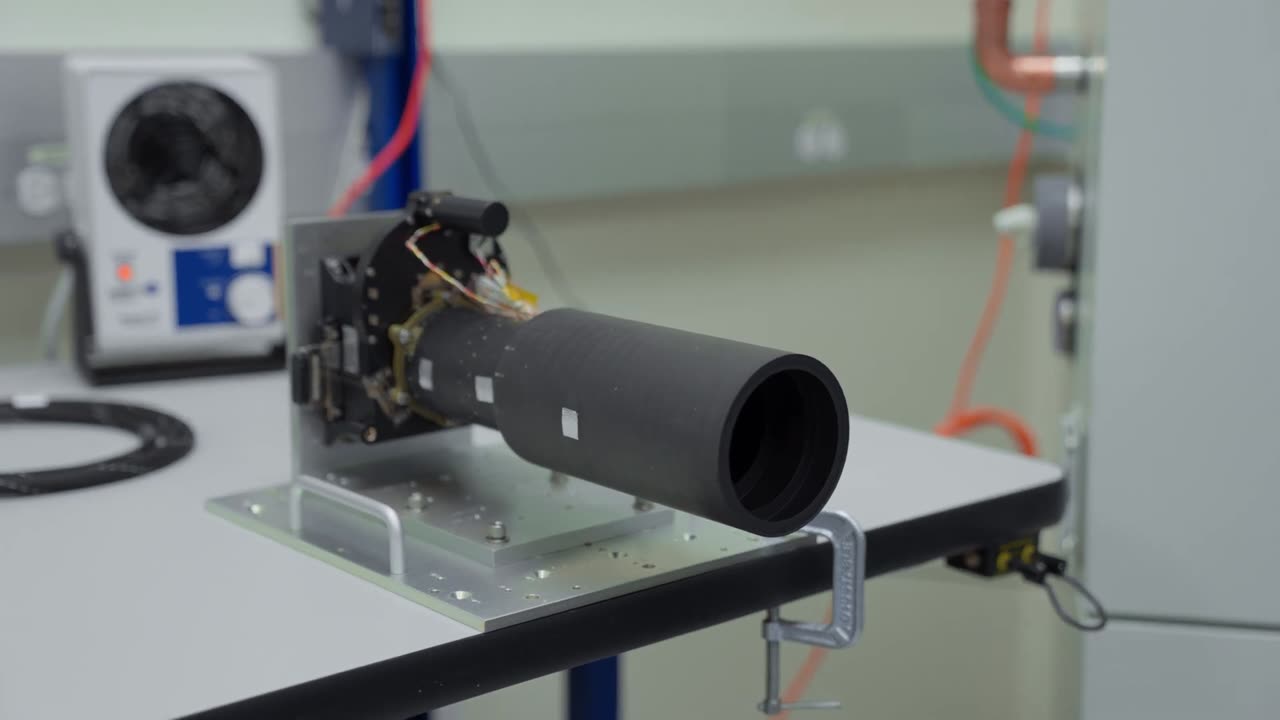
NASA’s Psyche spacecraft will use highly sensitive cameras to allow scientists to see a metal-rich asteroid that’s never been imaged up close before.
Planetary scientist and Psyche mission co-investigator Jim Bell of Arizona State University, along with his instrument team, developed this critical technology in collaboration with Main Space Science Systems.
Psyche’s multispectral imager consists of a pair of identical cameras with filters and telescopic lenses that will photograph the surface of the asteroid in different wavelengths of light. It will provide the data needed to build a digital terrain model of the asteroid’s surface, contribute to revealing Psyche’s geochemistry and composition, and help with navigation.
Whether the asteroid Psyche is the partial core of a planetesimal (a building block of the rocky planets in our solar system) or primordial material that never melted, scientists expect the mission to help answer fundamental questions about Earth’s own metal core and the formation of our solar system.
Psyche is expected to launch in October 2023. The spacecraft will begin orbiting the asteroid Psyche in 2029.
Learn about this first-of-its-kind mission at: https://www.nasa.gov/psyche/.
Credit: NASA/JPL-Caltech/ASU
Produced by: True Story Films
Wolf Champ
How Will #MissionToPsyche See Its Target Asteroid?
NASA’s Psyche spacecraft will use highly sensitive cameras to allow scientists to see a metal-rich asteroid that’s never been imaged up close before.
Planetary scientist and Psyche mission co-investigator Jim Bell of Arizona State University, along with his instrument team, developed this critical technology in collaboration with Main Space Science Systems.
Psyche’s multispectral imager consists of a pair of identical cameras with filters and telescopic lenses that will photograph the surface of the asteroid in different wavelengths of light. It will provide the data needed to build a digital terrain model of the asteroid’s surface, contribute to revealing Psyche’s geochemistry and composition, and help with navigation.
Whether the asteroid Psyche is the partial core of a planetesimal (a building block of the rocky planets in our solar system) or primordial material that never melted, scientists expect the mission to help answer fundamental questions about Earth’s own metal core and the formation of our solar system.
Psyche is expected to launch in October 2023. The spacecraft will begin orbiting the asteroid Psyche in 2029.
Learn about this first-of-its-kind mission at: https://www.nasa.gov/psyche/.
Credit: NASA/JPL-Caltech/ASU
Produced by: True Story Films
Wolf Champ
How Will #MissionToPsyche See Its Target Asteroid?
NASA’s Psyche spacecraft will use highly sensitive cameras to allow scientists to see a metal-rich asteroid that’s never been imaged up close before.
Planetary scientist and Psyche mission co-investigator Jim Bell of Arizona State University, along with his instrument team, developed this critical technology in collaboration with Main Space Science Systems.
Psyche’s multispectral imager consists of a pair of identical cameras with filters and telescopic lenses that will photograph the surface of the asteroid in different wavelengths of light. It will provide the data needed to build a digital terrain model of the asteroid’s surface, contribute to revealing Psyche’s geochemistry and composition, and help with navigation.
Whether the asteroid Psyche is the partial core of a planetesimal (a building block of the rocky planets in our solar system) or primordial material that never melted, scientists expect the mission to help answer fundamental questions about Earth’s own metal core and the formation of our solar system.
Psyche is expected to launch in October 2023. The spacecraft will begin orbiting the asteroid Psyche in 2029.
Learn about this first-of-its-kind mission at: https://www.nasa.gov/psyche/.
Credit: NASA/JPL-Caltech/ASU
Produced by: True Story Films
Wolf Champ
How Will #MissionToPsyche See Its Target Asteroid?
NASA’s Psyche spacecraft will use highly sensitive cameras to allow scientists to see a metal-rich asteroid that’s never been imaged up close before.
Planetary scientist and Psyche mission co-investigator Jim Bell of Arizona State University, along with his instrument team, developed this critical technology in collaboration with Main Space Science Systems.
Psyche’s multispectral imager consists of a pair of identical cameras with filters and telescopic lenses that will photograph the surface of the asteroid in different wavelengths of light. It will provide the data needed to build a digital terrain model of the asteroid’s surface, contribute to revealing Psyche’s geochemistry and composition, and help with navigation.
Whether the asteroid Psyche is the partial core of a planetesimal (a building block of the rocky planets in our solar system) or primordial material that never melted, scientists expect the mission to help answer fundamental questions about Earth’s own metal core and the formation of our solar system.
Psyche is expected to launch in October 2023. The spacecraft will begin orbiting the asteroid Psyche in 2029.
Learn about this first-of-its-kind mission at: https://www.nasa.gov/psyche/.
Credit: NASA/JPL-Caltech/ASU
Produced by: True Story Films
Wolf Champ
How Will #MissionToPsyche See Its Target Asteroid?
NASA’s Psyche spacecraft will use highly sensitive cameras to allow scientists to see a metal-rich asteroid that’s never been imaged up close before.
Planetary scientist and Psyche mission co-investigator Jim Bell of Arizona State University, along with his instrument team, developed this critical technology in collaboration with Main Space Science Systems.
Psyche’s multispectral imager consists of a pair of identical cameras with filters and telescopic lenses that will photograph the surface of the asteroid in different wavelengths of light. It will provide the data needed to build a digital terrain model of the asteroid’s surface, contribute to revealing Psyche’s geochemistry and composition, and help with navigation.
Whether the asteroid Psyche is the partial core of a planetesimal (a building block of the rocky planets in our solar system) or primordial material that never melted, scientists expect the mission to help answer fundamental questions about Earth’s own metal core and the formation of our solar system.
Psyche is expected to launch in October 2023. The spacecraft will begin orbiting the asteroid Psyche in 2029.
Learn about this first-of-its-kind mission at: https://www.nasa.gov/psyche/.
Credit: NASA/JPL-Caltech/ASU
Produced by: True Story Films
Wolf Champ
-
 LIVE
LIVE
Film Threat
16 hours agoSILENT NIGHT, DEADLY NIGHT + DUST BUNNY + HAMNET + MORE | Film Threat Livecast
161 watching -
 LIVE
LIVE
The Shannon Joy Show
2 hours ago🔥SJ LIVE: The NYS Vaccine Mafia! The State Is Trying To Take A Dedicated Pediatricians Son.🔥
175 watching -
 LIVE
LIVE
The Mel K Show
22 hours agoMel K & Matt Ehret | The International Intelligence Deception Post WW2 | 12-12-25
621 watching -
 LIVE
LIVE
Daniel Davis Deep Dive
4 hours agoOne Way or Another Russia Will Get the Land /Patrick Henningsen & Lt Col Daniel Davis
108 watching -
 1:37:19
Graham Allen
4 hours agoThis GOP SUCKS!! Time For A Redo! + Now Candace Hates The Bible?!
149K500 -
 1:53:04
Badlands Media
8 hours agoBadlands Daily: 12/12/25
39.3K12 -
 2:59:45
Wendy Bell Radio
7 hours agoWillows Vs Warriors
54.7K103 -
 15:21
15:21
Bearing
5 hours agoAustralia Just BANNED Social Media for Teens 🚨 Deploy the Fun Police 👮
15K21 -
 1:10:47
The Big Mig™
2 hours agoColorado Rejects Trump’s Pardon For Tina Peters
3.67K10 -
 1:12:06
Chad Prather
18 hours agoWhen God Breaks Your Barriers: The Power that Reaches Farther Than You Think
88.7K47