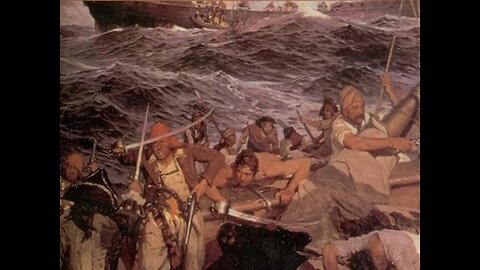
The Atrocities of the Pirates by: Aaron Smith (1724)

Deus Meum Que Jus
The Atrocities of the Pirates is a severe contemporary account documenting the crimes, violence, and moral collapse associated with piracy during the early eighteenth century. Written by Aaron Smith, Ordinary of Newgate Prison, the book draws directly from his role as spiritual attendant to condemned pirates awaiting execution. Smith had personal access to prisoners in their final days and recorded their confessions, recollections of crimes, and states of mind before death.
The work focuses on concrete acts of piracy rather than adventure or legend. It records murders, torture, beatings, robberies, forced compliance, marooning, and executions as related by the pirates themselves or preserved through legal proceedings. Smith presents these events plainly and directly. Victims are often identified, methods of cruelty are described without euphemism, and the cumulative effect is deliberately sobering and confrontational.
Smith’s purpose is explicit. The book is written as both a moral warning and a factual record. Piracy is portrayed as a path leading inevitably to brutality, despair, and death. Considerable attention is given to the pirates’ final hours, including their confessions, expressions of remorse or defiance, and reactions to impending execution. These moments are recorded not for drama, but to demonstrate the psychological and moral consequences of sustained violence.
The tone is uncompromising. Smith does not soften language to protect the reader, nor does he embellish events for entertainment. The brutality described is factual, restrained only by the conventions of early eighteenth-century prose. The absence of romantic framing makes the violence feel relentless rather than theatrical.
Historically, The Atrocities of the Pirates is significant because of its immediacy. The author was recording accounts from men recently active at sea, often within days or weeks of their crimes. This proximity gives the book a stark authenticity and makes it a rare primary-source window into pirate behavior, confessions, and end-of-life reckoning.
The book does not hold back. Its intent is to expose piracy as it was experienced by its victims and perpetrators alike, leaving little room for illusion, justification, or myth.
About the Author:
Aaron Smith was an English Anglican clergyman who served as Ordinary of Newgate Prison in London during the early eighteenth century. In this role, he was responsible for providing spiritual counsel to condemned prisoners in the days and weeks leading up to their executions. His position placed him in direct, sustained contact with some of the most violent criminals of the period, including pirates captured during the height of the Golden Age of Piracy.
As Ordinary, Smith routinely recorded confessions, final statements, and personal histories of those under sentence of death. These accounts were not collected for literary effect, but as part of his clerical duty to document repentance, moral reflection, and preparation for execution. His writings reflect the perspective of a moral witness rather than a storyteller, emphasizing accountability, consequence, and judgment.
Smith’s access was immediate and personal. He spoke privately with prisoners in their cells, observed their mental and emotional states as execution approached, and heard firsthand descriptions of crimes committed at sea. This proximity gives his work a factual weight that distinguishes it from later retellings or secondhand compilations. The material he recorded often came directly from the mouths of the condemned, sometimes within hours of death.
His prose is plain, direct, and severe, shaped by the conventions of early eighteenth-century religious writing. Smith did not seek to entertain or romanticize criminality. His intent was to warn the public, instruct morally, and preserve a truthful record of human behavior stripped of illusion. Violence is presented as consequence rather than spectacle.
Aaron Smith’s work stands as a rare example of prison-based documentation from the period, capturing piracy not as adventure, but as a pattern of brutality followed by inevitable collapse. His writings reflect the worldview of a cleric confronting crime at its endpoint, making his contribution valuable not only to maritime history, but to the study of crime, punishment, and moral thought in early modern England.
The Imitation of Christ by: Thomas à Kempis (between 1418 and 1427)
Deus Meum Que Jus
Written between 1418 and 1427, this book is a devotional handbook devoted entirely to interior transformation. Rather than discussing doctrine, debate, or grand theology, it aims at the daily discipline of mastering the self, subduing ego, and aligning one’s life with the pattern set by Christ. The book reads like a quiet voice speaking directly to the conscience... meditative, simple in language, but pointed in its demands.
Structured in short reflections, it urges the reader to withdraw from vanity, cultivate humility, and develop a steady inner life that isn’t tossed around by moods, praise, criticism, or the chaos of the world. It pushes the reader toward self-examination and away from empty intellectualism. The emphasis is always on doing... living the virtues, practicing patience, embracing simplicity, and learning the difficult art of surrendering one’s will to a higher purpose.
Above all, it focuses on the interior road, the one no one else sees, where character is shaped. It’s a guidebook for anyone who wants to be disciplined, grounded, and inwardly steady, regardless of their surroundings. No plot twists, no theatrics... just steady, practical instruction for building an inner life that holds firm.
About the Author:
Thomas à Kempis (c. 1380 - July 25, 1471) was a German-Dutch canon regular, copyist, and spiritual writer whose life revolved around discipline, contemplation, and the slow, steady refinement of the inner self. Born in Kempen near Cologne, he entered the Augustinian Canons at Mount St. Agnes in the Netherlands, a house associated with the Devotio Moderna movement... a reformist spiritual current emphasizing personal piety, humility, and practical devotion over public display or intellectual showmanship.
He spent most of his adult life in that monastery, working as a scribe, instructor, and spiritual mentor. His handwriting appears in dozens of manuscripts, including an early copy of the entire Bible produced with remarkable precision. He wasn’t a public figure, preacher, or reformer in the political sense... he was a man who preferred the quiet room, the desk, the candle, and the discipline of putting the soul in order.
His work reflects this temperament... direct, inward, stripped of ornament, and relentlessly focused on character formation. The Imitation of Christ is the best-known text attributed to him, and it remains one of the most widely read devotional books in the Christian tradition. While he was deeply embedded in a spiritual movement, there is no credible evidence that he belonged to any mystery schools, esoteric orders, or fraternal rites outside his monastic vocation.
His legacy is defined by consistency... decades of copying, teaching, guiding, and writing, all pointed toward cultivating the inner life. Through his work, he continues to speak in the same tone he lived... quietly, firmly, and always toward the goal of shaping the heart rather than impressing the world.
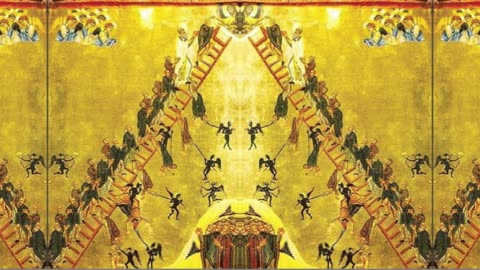
The Pilgrim’s Progress by John Bunyan (1678)
Deus Meum Que Jus
This 1678 book is one of the most influential works in English literature... a spiritual adventure written during Bunyan’s imprisonment in the 1670s. Framed as an allegory, the story follows an ordinary person on a journey from the burdens of everyday life toward the promise of salvation. Every character, landscape, obstacle, and conversation represents a moral or spiritual truth, turning the entire narrative into a symbolic map of the human struggle to find purpose, redemption, and steadfastness in a world full of distractions and dangers.
Though written in simple, accessible language, the book is packed with insight into fear, hope, temptation, courage, doubt, and perseverance. Bunyan creates a world where inner battles take visible form, where choices carry spiritual weight, and where progress is measured not by speed but by character. The journey unfolds through scenes of challenge, guidance, companionship, and reflection... each designed to make the reader think about the deeper direction of their own life.
What makes The Pilgrim’s Progress endure is its clarity. Bunyan strips away theological complexity and instead focuses on the raw, universal experience of trying to move toward something better while everything tries to pull you off course. The book is honest about hardship but equally grounded in the idea that ordinary people can grow, change, and endure.
It remains a cornerstone of Christian literature not because of doctrine, but because of its humanity. Anyone can see themselves in its steps.
About the Author
John Bunyan (1628–1688) was an English writer, preacher, and tinker by trade whose life was shaped by poverty, war, and an uncompromising devotion to his faith. Born in Elstow, Bedfordshire, he grew up in a working-class family and learned the craft of metalworking from his father. His early years were marked by both hardship and restlessness. He served as a soldier during the English Civil War, an experience that left a deep imprint on his understanding of human frailty, fear, and spiritual uncertainty.
After the war, Bunyan underwent a profound personal conversion that turned him toward preaching within the Nonconformist tradition. His refusal to stop preaching without a government license led to his arrest in 1660. He spent the next twelve years in jail. This long imprisonment, meant to silence him, instead became the catalyst for his greatest literary work. Armed only with a Bible, a few books, and an iron will, Bunyan began writing the allegories and spiritual meditations that would shape his legacy.
The Pilgrim’s Progress, published in 1678, was the first of his major works and quickly became a phenomenon. It spoke to ordinary men and women in clear, vivid language and captured the spiritual tension of an age struggling with persecution, conscience, and the meaning of true faith. Bunyan followed it with sermons, treatises, and a second part to the story, solidifying his place as one of the most widely read writers of the English-speaking world.
Though he never held official church office or formal theological training, Bunyan’s writings rose from lived experience rather than academic distance. His insight came from hardship, reflection, and the stubborn conviction that faith should be walked, not theorized. He died in 1688 after falling ill during a preaching journey, leaving behind a body of work that has endured for centuries.
Today, John Bunyan is remembered as a powerful voice of spiritual resilience... a man who turned persecution into creativity and personal struggle into one of the most enduring allegories ever written.
1
comment

The Symbolism of Freemasonry by: Albert Gallatin Mackey, M.D. (1896)
Deus Meum Que Jus
This 1896 book by Albert G. Mackey is one of the most important works in Masonic literature, offering a clear and comprehensive study of the Craft’s symbolic and allegorical foundations. The first edition of The Symbolism of Freemasonry was published in 1869. Rather than a simple catalog of symbols, Mackey presents a structured examination of how Freemasonry teaches moral and spiritual truth through its legends, rituals, and architectural imagery. Symbolism, in his view, is not decorative or optional... it is the core method by which the institution conveys its deeper teachings.
Mackey explains that Freemasonry communicates through two primary channels... its legends and its symbols. Both serve as vehicles for ethical instruction, philosophical reflection, and the gradual unveiling of esoteric meaning. Every tool, gesture, spatial arrangement, and narrative in the lodge exists for a purpose... to guide the initiate from literal understanding toward a higher grasp of moral duty and spiritual insight.
A strength of the book is its historical framing. Mackey places Masonic symbolism within the broader traditions of ancient mystery schools, temple architecture, religious rites, and classical moral philosophies. He does not insist on direct historical descent but shows how Freemasonry adopted and transformed universal symbolic motifs to create a distinctive moral and spiritual system. This helps the reader see Masonic symbolism as part of a long, evolving intellectual and religious heritage.
Throughout the work, Mackey explores key symbolic themes - the lodge as a representation of the world, the significance of the cardinal directions, the working tools, the symbolism of the cornerstone and temple, the legend of the Lost Word, the ineffable Name, and the journey through the degrees. Each topic is treated as a step in the development of a Mason’s inner character. For Mackey, symbolism serves one purpose... the cultivation of virtue, self-knowledge, and a clearer understanding of humanity’s relationship to the divine.
The book functions as both an educational guide and a philosophical treatise. Mackey aims to inspire readers to move beyond rote ritual toward a thoughtful engagement with the Craft’s inner meaning. He presents Freemasonry as a moral science built upon timeless symbols... a system that invites personal growth, intellectual discipline, and spiritual aspiration.
Albert Gallatin Mackey, M.D. (1807–1881), was one of the most influential Masonic scholars of the nineteenth century, known for transforming American Freemasonry into a system with coherent philosophy, consistent symbolism, and serious academic footing. Born in Charleston, South Carolina, he trained as a physician and graduated from the College of South Carolina in 1832. After more than a decade of practice, he abandoned medicine for full-time Masonic scholarship, as recorded in the Grand Lodge of South Carolina.
Mackey entered the Craft in 1841 in St. Andrew’s Lodge No. 10, Charleston. He soon affiliated with Solomon’s Lodge No. 1, where he was elected Worshipful Master the next year. From 1842 to 1867 he served as Grand Secretary of the Grand Lodge of South Carolina and later as Grand Lecturer, strengthening ritual, expanding Masonic education, and deepening the study of symbolism and jurisprudence.
In the Ancient and Accepted Scottish Rite, Southern Jurisdiction, Mackey served for many years as Secretary-General, shaping ritual commentary, overseeing correspondence across multiple states, and helping maintain the unity of the Rite during Reconstruction. After moving to Washington, D.C., in the early 1870s, he continued his work in the York Rite, affiliating with Lafayette Lodge No. 19, Lafayette Royal Arch Chapter No. 5, and Washington Commandery No. 1, gaining experience across the full spectrum of American ritual bodies.
Mackey was active in learned and esoteric circles, including the American Oriental Society and the Philological Society of Charleston, and he studied Hebrew, antiquities, Kabbalistic literature, and ancient mystery traditions. By the time of his death at Fortress Monroe in 1881, he was recognized as the leading interpreter of Masonic symbolism in the United States. The Supreme Council memorial described him as “the architect of American Masonic literature,” and his legacy continues to guide Masonic scholarship today.
2
comments
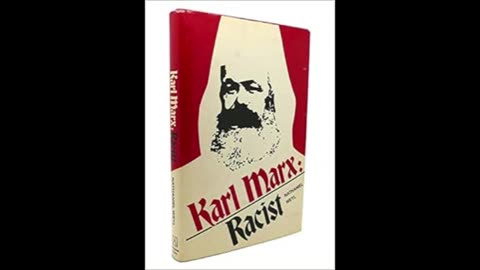
Karl Marx: Racist by Nathaniel Weyl (1968)
Deus Meum Que Jus
This book, first published in 1968, is an examination of the lesser-discussed side of Marx’s writings… the personal letters, journal entries, and political disputes where Marx’s language and attitudes toward race, nationality, and ethnicity show a very different man than the icon often presented. Weyl approaches Marx not as a prophet or theorist but as a historical figure with a documented record, and he builds the book around primary sources drawn from Marx’s own correspondence, arguments with rivals, and published commentary.
The book lays out how Marx and Engels described various groups… Slavs, Blacks, Jews, Asians, Irish workers, and others… and how those descriptions shaped their political judgments. Weyl argues that Marx’s racial worldview influenced his predictions about historical development and his belief that certain groups were “historically progressive” while others were “reactionary” obstacles fated to disappear. The study also explores how these attitudes filtered into later revolutionary movements, especially those that adopted Marx’s terminology without questioning its underlying assumptions.
Rather than focusing on economic theory, Weyl concentrates on the man behind the theory. He looks at Marx’s personal conflicts, the harsh language he used toward other socialist thinkers, and the way racial hierarchy appeared in his private assessments of world events. Much of the book highlights contradictions between Marx’s public universalism and his private prejudices, using direct quotations to let the record speak for itself.
Overall, it is a critical biography built from original writings, showing how Marx’s racial views formed an overlooked but significant part of his intellectual framework and the movements that followed him.
About the Author:
Nathaniel Weyl was an American political scientist and researcher known for his work on ideological movements, political history, and the internal dynamics of revolutionary organizations. He began his career in government service during the New Deal era, later moving into private research and writing, where he developed a reputation for examining political figures and movements through original documents, archived correspondence, and firsthand accounts. Weyl drew on experience from both the political left and the anti-communist investigations of the mid twentieth century, giving him an unusual vantage point on Marxism, socialist parties, and the cultural assumptions that shaped them.
Throughout his career he wrote extensively on political sociology, elite networks, demographic trends, and the hidden mechanics of ideological groups. His method relied on tracing ideas back to their source… analyzing private letters, early pamphlets, and internal debates to uncover the personal motives that drove public theories. This approach shaped his study of Karl Marx, where he focused on the man behind the doctrine rather than the doctrinal system itself.
Weyl’s work often challenged mainstream interpretations by highlighting the human flaws, personal conflicts, and unexamined biases that influenced major thinkers. His reputation rests on careful sourcing, independent analysis, and a willingness to investigate parts of the historical record that many writers overlook.

None Dare Call it Conspiracy by: Gary Allen (1971)
Deus Meum Que Jus
None Dare Call It Conspiracy (1971) is a work in which Gary Allen presents a documented explanation of political and economic developments in the 20th century. The book compiles names, organizations, policy decisions, and historical events to show how a concentrated group of financial and institutional interests has shaped major outcomes in the United States and abroad. Allen’s material draws on congressional records, financial histories, public statements, and published government documents to outline connections among influential families, foundations, and international bodies.
Allen presents the Council on Foreign Relations, major philanthropic foundations, and global policy organizations as central points of influence. He details their members, publications, affiliations, and roles in government and business, emphasizing their involvement in shaping legislation, foreign relations, banking decisions, and long-term national policy. He maintains that leadership across both major political parties has been connected to these same institutions, resulting in continuity of direction regardless of administration.
The book organizes its information chronologically and structurally, presenting events such as banking reforms, political shifts, wars, and international agreements as linked through overlapping personnel and shared institutional goals. Allen’s purpose is to lay out factual material in a way that allows readers to follow the relationships, timelines, and documented actions that form the basis of his conclusions.
About the Author:
Gary Allen (1936–1986) was an American journalist, political commentator, and prolific writer known for his sharply anti-establishment, anti–big government perspective. He wrote for several conservative and libertarian publications, including The Review of the News and American Opinion, where he developed a reputation for his direct, uncompromising style. Allen was closely associated with the John Birch Society, serving as one of its most widely read spokespersons and contributing extensive investigative columns on foreign policy, banking, education, and government expansion.
Allen authored or co-authored more than a dozen books, many of which focus on global power structures and the influence of elite financial networks. His most widely known work, None Dare Call It Conspiracy, made him a prominent figure in early 1970s political discourse, selling millions of copies through grassroots distribution rather than mainstream channels. His writing consistently emphasized transparency in government, constitutional limits on power, and skepticism toward centralized authority—principles that defined his career.
Beyond his books, Allen was a frequent public speaker and radio guest, where he expanded on themes of government overreach, internationalism, and the erosion of individual liberties. His work resonated strongly with readers who felt traditional media failed to address hidden political influences. Until his death in 1986, Allen remained committed to exposing what he viewed as concealed mechanisms of political and economic control, positioning himself as a watchdog against the concentration of power in any form.
1
comment
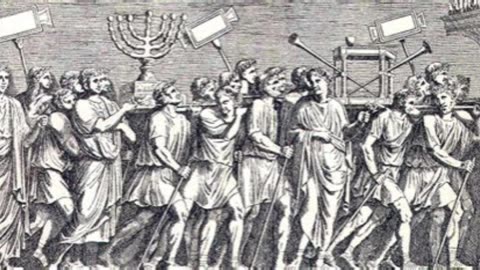
Stories of the Wars of the Jews by: Charlotte Maria Tucker (A.L.O.E.)
Deus Meum Que Jus
This 19th-century work isn’t a simple retelling of Jewish history... it’s Protestant imperial propaganda for children, thinly veiled as a moral storybook. Written under the pen name A.L.O.E. (“A Lady of England”), Charlotte Maria Tucker reworks the writings of Flavius Josephus into a series of Christianized parables about divine punishment, obedience, and national destiny.
Through the fall of Jerusalem and the destruction of the Second Temple, Tucker turns real historical tragedy into a theological warning - nations that disobey God fall, and those that uphold divine law rise. This message reflected Victorian Britain’s self-image as a “chosen” Christian empire inheriting Israel’s covenant. It’s not history... it’s moral conditioning, teaching children that faith and empire are inseparable.
The book also spreads historical misconceptions - for example, the claim that “Jesus was a Jew.” Truth: there were no “Jews” on earth when He walked it... not by name, not by language, not by history. He was born into the tribe of Judah under the Law of Israel - that’s it. The word “Jew” is a later label, layered with centuries of politics and religion that didn’t exist in His time. Presenting Jesus through this later lens shows how Tucker’s stories serve ideology over historical accuracy.
The tone and narrative structure anticipate the later doctrines of British Israelism, which claimed that the Anglo-Saxon people were the true descendants of the biblical Israelites. Tucker’s version of the story laid the emotional and spiritual groundwork for that ideology long before it was formally codified.
Now available in audiobook format, Stories of the Wars of the Jews is a revealing artifact of its time... a blend of piety, nationalism, and indoctrination wrapped in the comforting voice of a Victorian Sunday school tale.
About the Author:
Charlotte Maria Tucker (1821–1893), who wrote under the pseudonym A.L.O.E. (“A Lady of England”), was a devout Evangelical Anglican and prolific author of moral and missionary fiction. She produced more than 150 works aimed at teaching Christian virtue to both British youth and colonial converts.
Tucker’s writing advanced a distinctly Victorian vision of divine empire - that Britain, like ancient Israel, was chosen by God to civilize and redeem the world. Though she predated organized British Israelism, her stories helped normalize the same theological worldview - that national power and spiritual obedience were intertwined, and that Britain’s global reach fulfilled a biblical pattern.
After years of missionary work in Amritsar, India, she died there in 1893. Her pen name, “A Lady of England,” was less a disguise than a declaration... her work spoke not as an individual, but as a moral voice of the English nation itself.
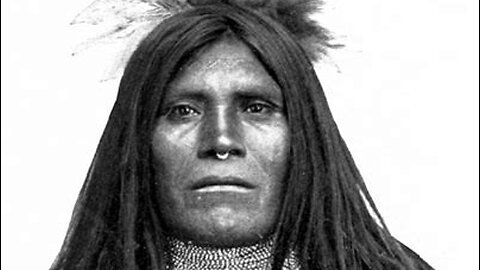
Montezuma’s Castle and Other Weird Tales by Charles B. Cory (1899)
Deus Meum Que Jus
This book is a rich and compelling collection of late-19th-century short stories that weave together adventure, the uncanny, and the supernatural. The title tale transports readers to the rugged landscapes of the American Southwest, into caves, ruins, and relic hunting, where an expedition to the cliff-dwelling known as “Montezuma’s Castle” spirals into betrayal, entrapment, and a night of suspenseful terror. Cory captures both the physical dangers of exploration and the psychological tension of facing the unknown, creating a vivid sense of place that lingers long after the story ends.
Beyond the opening story, Cory offers a diverse array of “weird tales” filled with mummies, ancient Aztec curses, ghostly visitations, mysterious powders, and desert perils. Each tale blends historical detail, folklore, and supernatural speculation, reflecting Cory’s fascination with the unknown and his love for weaving fact with imaginative storytelling. His background as a naturalist, bird-collector, and wealthy sportsman adds a unique layer to the narratives, as he often integrates meticulous observations of the natural world and expedition-style research into his fiction, grounding even the most uncanny moments in a believable setting.
The stories not only entertain but also subtly explore the intersections of wilderness, history, and myth. Cory’s tales invite readers to consider the echoes of ancient civilizations, the mysteries of natural landscapes, and the lingering presence of the supernatural in a rapidly modernizing world. While some narratives reflect the pacing and style of the late 19th century, their vivid imagery, adventurous spirit, and eerie undertones make them enduring examples of early American weird fiction. Readers of horror, adventure, and historical curiosities will find the collection both thrilling and thought-provoking, offering a glimpse into a genre that blends scientific observation with imaginative storytelling.
About the Author:
Charles B. Cory (1857–1921) was an American ornithologist, naturalist, and writer whose contributions spanned both science and literature. Born into a wealthy Boston family, Cory devoted much of his life to the study and collection of birds, publishing extensively on North American ornithology and becoming a recognized authority in the field. He served as curator of the Boston Society of Natural History and was an active member of numerous scientific societies, earning respect among his peers for his meticulous scholarship and dedication to the natural world.
In addition to his scientific work, Cory was deeply fascinated by adventure, folklore, and the supernatural, interests he explored extensively in his fiction. His stories, including Montezuma’s Castle and Other Weird Tales, reflect his passion for exploration, history, and natural landscapes, blending real-world knowledge with imaginative storytelling. Cory’s fiction offers a rare perspective: the mind of a scientifically trained Victorian gentleman encountering the mysterious and eerie corners of history and nature. Today, his works remain a window into the adventurous spirit and curious imagination of a man who sought to understand both the natural and the supernatural worlds.
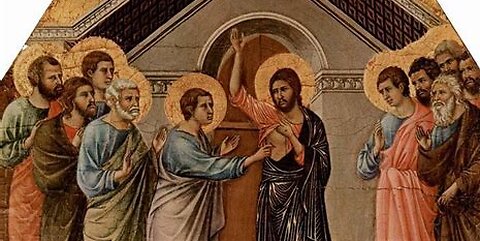
Christianity in the Apostolic Age by: George T. Purves (1900)
Deus Meum Que Jus
This book is a masterful exploration of the first generation of the Christian Church – from the resurrection of Christ to the close of the New Testament period. Written at the turn of the 20th century by the Princeton theologian and professor of New Testament Literature and Exegesis, this work provides a deeply historical yet faithful examination of how the earliest Christian communities formed, grew, and defined their faith amid persecution, cultural diversity, and doctrinal uncertainty.
Purves approaches the Apostolic era not as myth or legend but as living history grounded in Scripture. He traces the development of Christian teaching as it spread outward from Jerusalem through Paul’s missionary journeys, the writings of Peter, John, and James, and the gradual organization of the Church. His analysis of early ecclesiastical structures, apostolic authority, and the tension between Jewish and Gentile believers provides valuable insight into the theological unity that would later define orthodox Christianity.
Unlike later speculative historians, Purves defends the supernatural foundation of the Church while maintaining scholarly rigor. His work stands as both a theological defense and a historical synthesis – balancing reverence for divine revelation with a clear-eyed look at the human challenges that shaped the Apostolic movement.
In short, Christianity in the Apostolic Age is both devotional and historical – a cornerstone study that helps readers understand how the faith of the Apostles became the faith of the Church. It remains a classic reference for anyone seeking to grasp the original context, struggles, and triumphs of the first Christians.
About the Author:
George Tybout Purves (1852–1901) was an American Presbyterian theologian, scholar, and pastor whose brief life produced a legacy of enduring biblical scholarship. Educated at Princeton University and Princeton Theological Seminary, Purves went on to become one of the leading voices of 19th-century American Reformed theology. He served as pastor of the First Presbyterian Church of Pittsburgh and later as Professor of New Testament Literature and Exegesis at Princeton Theological Seminary, where he trained a generation of ministers in sound doctrine and careful scriptural study.
Purves was known for combining deep reverence for the authority of Scripture with the intellectual discipline of a historian. His writings bridged the gap between theological orthodoxy and critical scholarship, presenting faith not as blind belief but as reason enlightened by revelation. His clear, reasoned style and pastoral tone reflected his conviction that Christian truth could withstand the full light of inquiry.
Among his best-known works are Christianity in the Apostolic Age (1900), The Testimony of Jesus to the Old Testament (1896), and The Life and Letters of Saint Paul (1897). Each reveals Purves’ lifelong aim: to show that Christianity’s earliest age was both historically verifiable and divinely guided.
Respected by his peers and students alike for his humility and devotion, Purves’ career was cut short by illness in 1901, yet his scholarship continues to serve as a model of faith grounded in learning and reason shaped by grace.
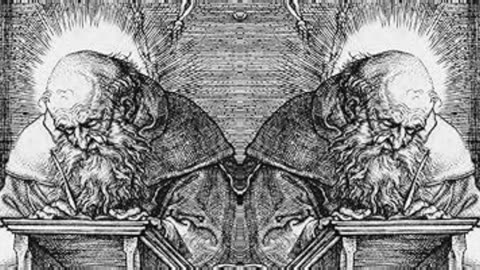
Enchiridion Militis Christiani (English: Handbook of a Christian Knight, 1503)
Deus Meum Que Jus
This 1503 book by Desiderius Erasmus (1466–1536) is a concise guide for lay Christians on living a devout and morally upright life according to Christ’s teachings. Erasmus wrote it to encourage personal piety, ethical conduct, and spiritual integrity, emphasizing inner virtue over outward rituals or ostentatious displays of religiosity. Using the metaphor of the “Christian knight,” he frames life as a battlefield against sin, vice, and moral weakness, urging readers to cultivate moral discipline and spiritual vigilance in everyday life. The book stresses the importance of personal engagement with Scripture, arguing that knowledge of the Bible is central to genuine Christian growth. Influenced by humanist ideals, Erasmus blends classical notions of virtue and reason with Christian ethics, highlighting rational reflection, learning, and moral self-cultivation. Written in a clear and accessible style, it was intended for lay readers rather than scholars or clergy, combining practical advice with metaphorical language to make spiritual lessons tangible. The Enchiridion became one of Erasmus’ most popular works, shaping Christian humanism and inspiring later efforts to reform Christian practice from within the Church while maintaining orthodox belief.
About the Author:
Desiderius Erasmus (1466–1536) was a Dutch Renaissance humanist, theologian, and scholar, widely regarded as one of the most influential intellectuals of his time. Born in Rotterdam, he was educated in classical literature, philosophy, and theology, developing a deep command of Latin and Greek that would shape his scholarly career. Erasmus devoted himself to the study of the Bible and the early Church Fathers, seeking to reconcile classical learning with Christian faith, and he became a leading proponent of Christian humanism. He is best known for advocating moral and educational reform within the Church, emphasizing personal piety, reason, and ethical conduct over ritualistic or superstitious practices. Erasmus authored numerous works, including The Praise of Folly and Adagia, combining wit, scholarly insight, and moral instruction. Throughout his life, he sought reform without schism, maintaining loyalty to the Catholic Church while criticizing its abuses. His writings influenced both the Protestant Reformation and the broader intellectual currents of Renaissance Europe, leaving a lasting legacy as a thinker who championed education, critical scholarship, and the cultivation of virtue.

The Thirty Years' War, 1618-1648 by: Samuel Rawson Gardiner
Deus Meum Que Jus
The Thirty Years’ War, 1618–1648 by Samuel Rawson Gardiner is a detailed and authoritative study of one of Europe’s most devastating conflicts. Gardiner, a prominent 19th-century English historian, examines the political, religious, and social causes and consequences of the war, which engulfed much of Central Europe and shaped the future of the continent.
The book provides an in-depth analysis of the intricate alliances, rivalries, and power struggles among the Holy Roman Empire, France, Spain, Sweden, and the various German principalities. Gardiner explores how the collision of Protestant and Catholic interests, combined with dynastic ambitions and territorial disputes, escalated into a protracted and brutal war that left deep and lasting scars on European society.
Drawing on extensive archival sources, official documents, and contemporary accounts, Gardiner presents a meticulous chronological narrative that captures both the strategic and human dimensions of the conflict. His work emphasizes the interplay between religious fervor, political ambition, and military strategy, offering readers a comprehensive understanding of how the Thirty Years’ War reshaped European politics and society.
This volume is essential for students of early modern history, military historians, and anyone seeking a thorough and scholarly account of one of Europe’s most consequential wars.
About the Author:
Samuel Rawson Gardiner (1829–1902) was a distinguished English historian, widely regarded for his rigorous scholarship on 17th-century English and European history. He specialized in political and constitutional history, with particular attention to the causes and effects of civil and religious conflicts.
Gardiner’s meticulous research drew on extensive primary sources, including state papers, correspondence, and contemporary chronicles. His works, such as History of England from the Accession of James I to the Outbreak of the Civil War and The Thirty Years’ War, 1618–1648, are celebrated for their careful analysis, chronological precision, and ability to contextualize complex historical events.
Renowned for his impartiality and scholarly rigor, Gardiner provided a nuanced understanding of the interplay between political, religious, and social forces in early modern Europe. His contributions continue to serve as essential references for historians, scholars, and students of European and British history.
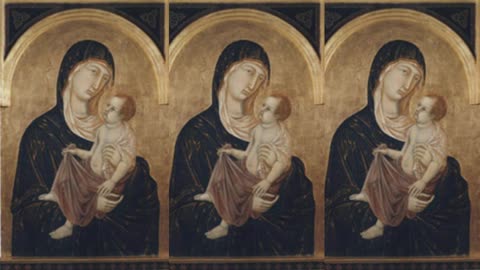
The Origins of Christianity by Thomas Whittaker (1856–1935)
Deus Meum Que Jus
This 1904 book by Thomas Whittaker is a scholarly exploration of the historical and philosophical roots of the Christian faith. Drawing on extensive historical research, Whittaker examines the development of early Christianity in the context of the religious, cultural, and philosophical currents of the ancient world.
The book analyzes the influences of Judaism, Hellenistic thought, and Greco-Roman religious traditions on the formation of Christian doctrines and practices. Whittaker investigates the life and teachings of Jesus, the role of the apostles, and the evolution of early Christian communities, emphasizing a historical and intellectual perspective rather than theological interpretation.
The implication of the author is that Christianity is primarily a human construct influenced by surrounding cultures rather than divinely revealed. Known for its rigorous scholarship, this work provides readers with a detailed and critical account of how Christianity emerged from a complex interplay of ideas, beliefs, and social movements in the first centuries CE. It remains a valuable resource for historians, theologians, and anyone interested in understanding Christianity in its historical context.
About the Author
Thomas Whittaker (1856–1935) was a British philosopher, theologian, and scholar known for his rigorous and critical study of religion and philosophy. He specialized in examining the historical and intellectual foundations of religious traditions, particularly Christianity, in the context of broader cultural and philosophical developments.
Whittaker was recognized for his meticulous research and analytical approach, drawing on historical texts, classical philosophy, and comparative religion to explore how belief systems evolved over time. He contributed extensively to discussions on the origins of Christian doctrine, emphasizing the influence of Judaism, Hellenistic thought, and Greco-Roman culture on early Christian communities.
Throughout his career, Whittaker sought to illuminate the historical processes behind religious ideas, treating faith traditions as complex social and intellectual phenomena. His work continues to be valued by historians, scholars of religion, and students of philosophy for its depth, clarity, and scholarly rigor.
2
comments

The Historical Jesus: Lecture Series by Professor Bart D. Ehrman
Deus Meum Que Jus
Discover what historians really know about Jesus of Nazareth in this in-depth lecture series by Bart D. Ehrman.
In The Historical Jesus, New Testament scholar Bart D. Ehrman examines one of history’s most debated figures, Jesus of Nazareth, not through theology or faith but through the lens of historical inquiry. He draws on ancient texts, linguistic evidence, and cultural context to reconstruct the world Jesus lived in and to explore what can genuinely be known about his life and message.
Throughout the lectures, Ehrman explains the difference between the Jesus of history and the Christ of faith. He analyzes the earliest sources, including the Gospels, noncanonical writings, and early historians, to show how oral traditions evolved into written narratives and how different audiences shaped each portrayal of Jesus. He also explores how myth and memory became intertwined over time.
Key topics include the Roman and Jewish world of the first century, the historical methods used to separate fact from later theological development, the sayings and parables most likely to trace back to Jesus himself, and the events leading to his crucifixion along with the origins of resurrection belief.
Ehrman’s approach is both scholarly and accessible. He provides a clear picture of what historians can and cannot claim about Jesus. Rather than challenging faith, The Historical Jesus encourages deeper understanding of how one man’s teachings grew into a movement that reshaped world history.
About the Author:
Bart D. Ehrman is a leading scholar of early Christianity and the New Testament. He is the James A. Gray Distinguished Professor at the University of North Carolina at Chapel Hill, where he has taught since 1988. Ehrman earned his Ph.D. from Princeton Theological Seminary and is known for his rigorous historical approach to the study of Christian origins.
He has written extensively on the historical Jesus, the development of early Christian doctrine, and the transmission of biblical texts. His works include Misquoting Jesus, Jesus: Apocalyptic Prophet of the New Millennium, and Lost Christianities. Ehrman’s research often focuses on how religious beliefs were shaped, preserved, and transformed in the centuries following Jesus’s death.
A frequent lecturer and commentator, Ehrman is recognized for making complex scholarship accessible to general audiences. His courses with The Great Courses and his public writings emphasize critical thinking, historical evidence, and an appreciation for the diversity of early Christian thought.
While his findings sometimes challenge traditional interpretations, Ehrman’s goal is not to promote disbelief but to help readers understand how historical methods can illuminate one of the most influential figures in human history. His balanced, factual style makes him one of the most widely read historians of religion in the modern era.
Source: https://archive.org/details/B-001-001-274
1.1K
views
2
comments
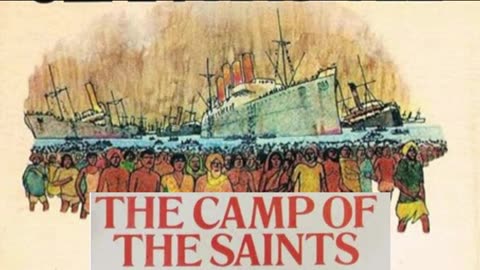
The Camp of the Saints by: Jean Raspail
Deus Meum Que Jus
Le Camp des Saints is a dystopian French novel by Jean Raspail, first published in 1973. It explores the collapse of Western civilization through the lens of mass migration. Raspail constructs a narrative in which Europe faces an overwhelming influx of impoverished refugees from India, depicted as a "third-world" tidal wave arriving on the French coast. The novel focuses on how Western society reacts or fails to react to this humanitarian crisis, emphasizing cultural, political, and moral decay.
The story centers on a massive fleet of decrepit ships carrying starving people from India to Southern France. French authorities, intellectuals, and media elites are paralyzed by guilt, idealism, and a naive sense of humanitarian duty. Raspail portrays them as increasingly passive and morally compromised, unable to resist or protect their own society. The novel follows multiple perspectives, including politicians, journalists, ordinary citizens, and the refugees themselves. It shows the tension between survival instincts, ethical dilemmas, and societal collapse.
As the fleet approaches, chaos unfolds. Law and order break down, and Raspail uses this crisis to examine what he perceives as the spiritual, cultural, and demographic decline of Europe. The narrative is unapologetically provocative and frames the arrival of the refugees as an existential threat to Western identity and civilization.
The book explores several themes. Civilizational decline is shown through a West that is weak, decadent, and incapable of defending itself. Mass migration and cultural conflict highlight the consequences of uncontrolled migration and social tension. Moral hypocrisy and guilt are explored through characters who are paralyzed by idealism and unable to act decisively. Survival versus ideology is a central concern, as the novel critiques policies that compromise self-preservation.
Raspail's prose is vivid, often allegorical, and deliberately stark. The narrative is polemical and designed to provoke reflection and controversy. Le Camp des Saints is highly controversial, praised by some for its critique of Western complacency and condemned by others for its racialized depiction of migration and perceived alarmism. The book has influenced political discourse in Europe and remains a polarizing work, frequently cited in debates over immigration and cultural identity.
About the Author:
Jean Raspail (1925–2020) was a French author, explorer, and cultural critic, best known for his controversial 1973 novel Le Camp des Saints (The Camp of the Saints). He was born on July 5, 1925, in Chemillé-sur-Dême, a town in the Loire Valley. Raspail came from a bourgeois Catholic family with strong ties to Parisian commercial and civic life. He was the youngest of four children and spent his early years in the affluent 16th arrondissement of Paris, attending prestigious Catholic schools.
Raspail's early life was marked by a deep engagement with Catholic traditions and a sense of aristocratic nostalgia. His education at elite institutions such as Saint-Jean de Passy and the École des Roches in Verneuil-sur-Avre laid the foundation for his later works, which often explored themes of cultural identity, tradition, and the decline of Western civilization.
In the 1950s, Raspail undertook extensive travels. He led expeditions such as a Tierra del Fuego–Alaska car trek from 1950 to 1952 and a French research mission to the land of the Incas in 1954. These experiences enriched his understanding of the world and influenced his literary works, which often blended adventure with philosophical inquiry.
Raspail's literary career spanned several decades. He authored numerous novels, essays, and travel books. Notably, his 1981 novel Moi, Antoine de Tounens, roi de Patagonie (I, Antoine of Tounens, King of Patagonia) won the Grand Prix du Roman from the Académie française. Despite his prolific output, he remained somewhat marginal in the French literary establishment due to the provocative nature of his works.
Raspail's traditional Catholicism and monarchist leanings were central to his worldview. He often critiqued modern liberalism and communism, advocating instead for a return to what he perceived as a more authentic and noble past. This perspective was evident in his 1990 novel Sire, which imagines the coronation of a French king in the year 1999.
Throughout his life, Raspail remained a steadfast critic of contemporary political and cultural trends, particularly regarding immigration and national identity. His works continue to provoke debate and reflection on the challenges facing Western societies in the modern era.
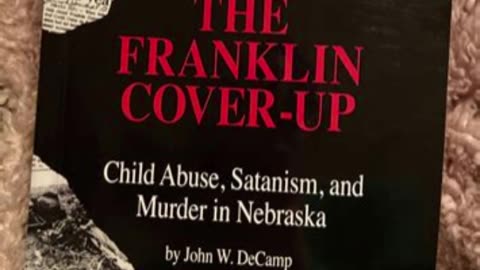
The Franklin Cover-up: Child Abuse, Satanism, and Murder in Nebraska by: John W. DeCamp
Deus Meum Que Jus
This book was first published in 1992 by former Nebraska state senator John W. DeCamp - it's a controversial exposé that connects the financial collapse of the Franklin Community Federal Credit Union to allegations of child abuse, human trafficking, and high-level political corruption. Written in the style of an insider’s account, the book argues that what began as an embezzlement scandal involving credit union manager Larry King concealed a much darker network of crimes, including the sexual exploitation of foster children, the use of ritualistic abuse, and the silencing of witnesses.
DeCamp presents testimony from alleged victims, investigative reports, and his own legal involvement as evidence of a systematic cover-up, claiming that law enforcement agencies, courts, and even federal authorities obstructed inquiries and intimidated those who tried to speak out. Central to his narrative is the death of Gary Caradori, the chief investigator for the Nebraska Legislature’s Franklin committee, who perished in a plane crash after collecting evidence - an event DeCamp suggests was not accidental. Other suspicious deaths, he argues, reinforce the pattern of suppression and danger surrounding the case.
The book portrays the scandal as not merely local but emblematic of how powerful interests protect themselves, depicting an environment in which children’s testimonies were discredited, whistleblowers were targeted, and evidence was hidden or destroyed. It situates the Franklin case within the broader context of 1980s and 1990s America, when public fears about ritual abuse, institutional corruption, and elite conspiracies were at their height, and when official investigations frequently left more questions than answers.
Both a legal brief and a polemical warning, The Franklin Cover-Up has been cited by those who believe systemic child abuse was deliberately buried by government and media, while critics argue it reflects the era’s “satanic panic” and lacks substantiated proof for its more extreme claims. Regardless of one’s view, the work has endured as a touchstone in debates about state power, the credibility of child witnesses, and the limits of public trust in institutions meant to protect the vulnerable.
About the Author:
John W. DeCamp (1941–2017) was an American attorney, author, and public servant who served four terms as a Nebraska state senator from 1971 to 1987. A decorated Vietnam War veteran, he rose to the rank of Captain in the U.S. Army and was awarded the Bronze Star Medal for his service. After returning home, he earned a law degree from the University of Nebraska College of Law and went on to build a career that combined politics, legal practice, and public advocacy.
During his time in the Nebraska Legislature, DeCamp became known for his work on education, agricultural issues, and government reform, often positioning himself as a populist voice attentive to the concerns of ordinary citizens. Following his legislative service, he remained active in law and civic affairs, representing a wide range of clients in both civil and criminal cases. His legal career brought him into contact with sensitive and controversial matters, which in turn shaped his later writing.
In addition to The Franklin Cover-Up: Child Abuse, Satanism, and Murder in Nebraska, DeCamp authored numerous articles, commentaries, and legal briefs, reflecting his long-standing interest in government accountability and the protection of vulnerable populations. He remained a figure of debate throughout his life - admired by supporters for his willingness to pursue difficult issues and remembered by colleagues for his tenacity in public service.
DeCamp’s life reflected a blend of military service, political experience, and legal advocacy, and his writing continues to be read as an extension of his broader commitment to questioning official narratives and defending those he believed had no voice in the system.
2
comments
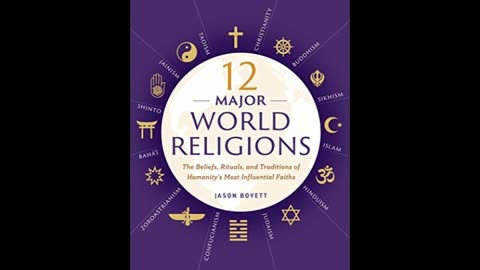
12 Major World Religions: The Beliefs, Rituals, and Traditions of Humanity’s Most Influential Faiths
Deus Meum Que Jus
Full Title: 12 Major World Religions: The Beliefs, Rituals, and Traditions of Humanity’s Most Influential Faiths by: Jason Boyett (2016)
This book is a concise, accessible guide to twelve of the world’s most influential religions, covering their core beliefs, sacred texts, key figures, rituals, and historical development. Boyett’s approach is straightforward and factual, intended to give readers a working knowledge of each faith without promoting or criticizing any of them.
The religions covered include:
1. Hinduism
2. Buddhism
3. Jainism
4. Sikhism
5. Judaism
6. Christianity
7. Islam
8. Baha’i Faith
9. Confucianism
10. Taoism
11. Shinto
12. Zoroastrianism
Each chapter outlines the religion’s origins, major teachings, practices, and festivals, as well as its global influence today. Boyett also addresses lesser-known facts and modern developments within each tradition. The writing style is clear and digestible, making complex theology and history accessible to general readers.
Rather than offering deep theological debate, the book serves as a reliable reference for understanding the diversity of global belief systems and the historical forces that shaped them.
About the Author:
Jason Boyett is an American author, journalist, and speaker known for making complex subjects accessible to general readers through clear, conversational writing. He has written on topics ranging from religion and history to culture and humor. In addition to 12 Major World Religions, Boyett is the author of books such as Pocket Guide to the Bible, Pocket Guide to the Apocalypse, and O Me of Little Faith.
Boyett has contributed to national publications, produced podcasts, and spoken publicly on faith, doubt, and interfaith understanding. His work often blends historical research with a modern, practical perspective, aiming to educate without promoting a specific religious agenda. While not affiliated with any formal theological institution, his background includes extensive independent study of comparative religion and the intersection of belief and contemporary life.
1
comment

The Fourth Turning: An American Prophecy by: William Strauss and Neil Howe
Deus Meum Que Jus
Full Title:
The Fourth Turning: An American Prophecy - What the Cycles of History Tell Us About America’s Next Rendezvous with Destiny
This 1997 book is by William Strauss and Neil Howe.
In it, the authors present a theory that Anglo-American history moves in repeating cycles of approximately 80 to 100 years, each divided into four generational “Turnings.” These Turnings, called the High, the Awakening, the Unraveling, and the Crisis - each last about 20 to 25 years and reflect a recurring pattern of social moods and generational archetypes.
According to the book, each generation falls into one of four archetypes, (Prophet, Nomad, Hero, or Artist), which rotate predictably over time, shaping the character of each Turning. The most dramatic phase is the Fourth Turning, a period of upheaval and transformation during which existing institutions collapse and are rebuilt, often following a major crisis.
Strauss and Howe argue that America’s past Fourth Turnings included the Revolutionary War (1770s–1780s), the Civil War (1860s), and the Great Depression and World War II (1930s–1940s). They predict that a new Fourth Turning began in the early 2000s and would likely culminate in a massive crisis between the 2020s and 2030s - a time of reckoning that will determine the future shape of American society.
The book blends history, sociology, and prophecy, offering both a warning and a framework for understanding the rhythms of national life. It’s been influential among political strategists, military planners, and media figures, with some interpreting it as a roadmap rather than a warning.
The way I see it, is either they’re telling you the truth… or they’re letting you in on the plan.
2
comments

The Hill of Dreams by Arthur Machen (1907)
Deus Meum Que Jus
The Hill of Dreams, first published in 1907, is Arthur Machen’s most personal and introspective work, a semi-autobiographical novel that blurs the lines between reality, dream, memory, and mysticism. Unlike his more well-known tales of horror and supernatural dread, this novel is a deeply psychological and spiritual exploration of an artist’s inner world, chronicling the life and descent of a sensitive young man named Lucian Taylor.
Lucian grows up in rural Wales, surrounded by ancient ruins, overgrown landscapes, and the lingering aura of the Roman occupation. From a young age, he is drawn not to the material world, but to an inner life of imagination and spiritual vision. His experiences on a hill near his home - later referred to as the titular "Hill of Dreams"... initiate him into moments of ecstatic beauty and otherworldly revelation. These moments echo the classic initiatory experiences found in mystical traditions, where the veil between the visible and invisible is briefly lifted. Yet unlike in traditional Masonic or Rosicrucian allegory, Lucian receives no guiding hand - only the overwhelming weight of his visions and the loneliness they bring.
As Lucian matures, he moves to London to pursue life as a writer, but his mystical sensitivity renders him increasingly detached from modern life. He becomes consumed by dreams, memories, and internal quests for beauty, ultimately losing touch with physical reality. His journey becomes one of isolation, where the spiritual is not a ladder to ascent, but a labyrinth with no clear center.
The novel is thick with symbolic and poetic language, and it reflects Machen’s lifelong belief that the physical world is only a shadow of a deeper, hidden reality. Themes of spiritual longing, aesthetic transcendence, and the cost of visionary insight dominate the narrative. For readers familiar with esoteric traditions, The Hill of Dreams resembles the early stages of the mystical path, when the initiate is overwhelmed by beauty and truth, but lacks the structure or strength to endure it.
Often described as Machen’s most beautiful book, The Hill of Dreams is less a plot-driven novel and more a literary initiation into the pain and wonder of the spiritual search. It shares philosophical DNA with works by William Blake and Thomas De Quincey, and it stands as a lyrical tribute to the price artists and mystics pay when their vision pierces too far beyond the veil.
About the Author
Arthur Machen (1863–1947) was a Welsh author, mystic, and journalist best known for his works of supernatural and occult fiction. Born Arthur Llewellyn Jones in Caerleon, Monmouthshire, Machen drew lifelong inspiration from the ancient myths, ruined Roman temples, and mist-shrouded hills of the Welsh countryside. Though raised in a devout Christian household, he developed an early fascination with alchemy, ceremonial magic, and the unseen forces beneath the fabric of reality—an obsession that would shape the core of his literary legacy.
Machen’s early life was steeped in classical literature, and he translated The Heptameron of Marguerite of Navarre before turning to fiction. His breakthrough came with The Great God Pan (1894), a tale of mystical transgression and hidden worlds that scandalized Victorian England with its implications of spiritual and sexual horror. This story, along with The White People and The Hill of Dreams, cemented his reputation as a master of the "weird tale"—stories in which spiritual dread and metaphysical unease replace conventional terror.
Although he was never a member of any formal esoteric order, Machen’s writings reveal a deep sympathy with the mystical worldview of groups like the Hermetic Order of the Golden Dawn, Rosicrucians, and initiatory societies such as Freemasonry. He believed that the mundane world was but a veil over the divine, and that beneath our ordinary senses lies a realm of beauty, terror, and transcendent truth. Many of his protagonists stumble upon this hidden realm—often at great personal cost.
In his later years, Machen found a second wave of appreciation among literary figures like H.P. Lovecraft, who called him a “modern master of the grotesque.” Today, Machen’s works are studied not only for their literary merit but also for their contribution to Western esoteric thought. His stories remain potent gateways for those seeking the spiritual edge where myth, mysticism, and madness intertwine.
The Great God Pan by Arthur Machen (1894)
Deus Meum Que Jus
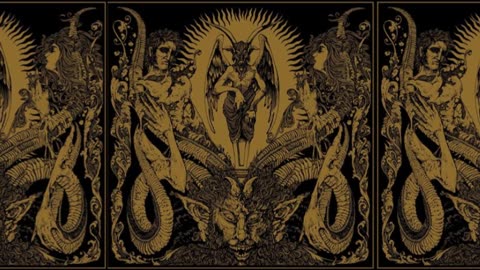
The Great God Pan is Arthur Machen’s most infamous and enduring work of supernatural fiction... first published in 1894, it caused an uproar in Victorian literary circles for its unsettling blend of science, mysticism, and forbidden knowledge. Widely regarded as a foundational text in the genre of metaphysical horror, the novella explores what happens when man attempts to pierce the veil between the material and spiritual realms without understanding the consequences.
The story begins with a controversial experiment performed by a physician named Dr. Raymond, who believes he can enable a human being to perceive the spiritual world by altering the brain. His subject is a young woman named Mary, and while the experiment appears to succeed, it leaves her permanently impaired. Years later, a series of suicides and scandals trace back to a mysterious and alluring woman named Helen Vaughan, whose origins (and very nature) appear increasingly inhuman. As the narrative unfolds through the perspectives of various characters, we come to understand that Helen is not just a person, but the embodiment of something far older and more primal.
At its heart, The Great God Pan is a meditation on the dangers of unearned knowledge and the blurred boundary between science and the occult. It fuses ancient pagan symbolism with late-19th-century anxieties about evolution, sexuality, and spiritual corruption. The titular reference to the Greek god Pan - a deity of nature, chaos, and fertility - is used to represent a raw, ancient force that civilized man cannot hope to control or fully comprehend.
Machen’s prose is rich with suggestion rather than explicit description, making the horror in The Great God Pan psychological and metaphysical rather than physical. The story implies that beneath the surface of reality lies a universe of hidden terror and spiritual vastness - a recurring theme in Machen’s work, and one that mirrors ideas found in mystical and initiatory traditions like Rosicrucianism and Freemasonry. However, while Masonic allegory typically focuses on enlightenment and moral ascension, The Great God Pan is a cautionary tale about what happens when sacred mysteries are desecrated by scientific arrogance.
Banned and reviled by many critics when it first appeared, the novella gained lasting recognition over time, especially among modern horror writers such as H.P. Lovecraft, Stephen King, and Clive Barker. Today, The Great God Pan is celebrated not only for its atmospheric power but for its philosophical depth, posing timeless questions about the limits of human perception and the price of transgression.
About the Author
Arthur Machen (1863–1947) was a Welsh author, mystic, and journalist best known for his works of supernatural and occult fiction. Born Arthur Llewellyn Jones in Caerleon, Monmouthshire, Machen drew lifelong inspiration from the ancient myths, ruined Roman temples, and mist-shrouded hills of the Welsh countryside. Though raised in a devout Christian household, he developed an early fascination with alchemy, ceremonial magic, and the unseen forces beneath the fabric of reality - an obsession that would shape the core of his literary legacy.
Machen’s early life was steeped in classical literature, and he translated The Heptameron of Marguerite of Navarre before turning to fiction. His breakthrough came with The Great God Pan (1894), a tale of mystical transgression and hidden worlds that scandalized Victorian England with its implications of spiritual and sexual horror. This story, along with The White People and The Hill of Dreams, cemented his reputation as a master of the "weird tale", stories in which spiritual dread and metaphysical unease replace conventional terror.
Although he was never a member of any formal esoteric order, Machen’s writings reveal a deep sympathy with the mystical worldview of groups like the Hermetic Order of the Golden Dawn, Rosicrucians, and initiatory societies such as Freemasonry. He believed that the mundane world was but a veil over the divine, and that beneath our ordinary senses lies a realm of beauty, terror, and transcendent truth. Many of his protagonists stumble upon this hidden realm - often at great personal cost.
In his later years, Machen found a second wave of appreciation among literary figures like H.P. Lovecraft, who called him a “modern master of the grotesque.” Today, Machen’s works are studied not only for their literary merit but also for their contribution to Western esoteric thought. His stories remain potent gateways for those seeking the spiritual edge where myth, mysticism, and madness intertwine.
1
comment
The White People by Arthur Machen (Written 1899, Published 1904)
Deus Meum Que Jus
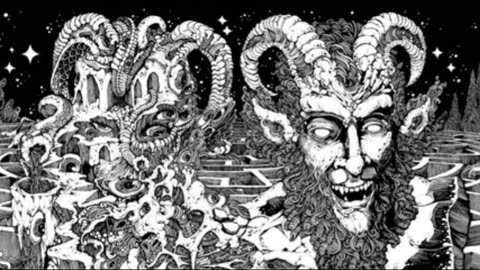
The White People is a short story written by Arthur Machen in 1899 and first published in 1904. It is widely considered one of his most haunting and symbolically rich works, deeply steeped in themes of occultism, mysticism, and hidden knowledge. The story is framed as a philosophical dialogue between two men (Ambrose and Cotgrave) who discuss the true nature of evil. Rather than defining evil in conventional moral terms, they propose that real evil lies in the misuse of sacred, spiritual truths. To illustrate this point, Ambrose shares a found manuscript written by a young girl, referred to only as “the green book.”
The bulk of the narrative is taken from this diary, which is written in an innocent, almost dreamlike tone. The young girl describes strange experiences that include mysterious rituals, unfamiliar words and names, secret gatherings, and vague references to "the dancing," “the Aklo letters,” and beings called “Dôls.” These accounts are never explained outright but evoke an atmosphere of secret pagan rites and arcane initiations. The girl herself does not fully comprehend the gravity of what she is participating in, which creates a chilling contrast between her naïveté and the dark spiritual forces that surround her.
At its core, the story is an exploration of esoteric initiation and the thin line between mystical enlightenment and spiritual peril. The girl’s journey mirrors that of an initiate into a hidden tradition, yet she is clearly unprepared and unguarded. This reflects Machen’s recurring concern with the danger of seeking divine or magical truths without reverence or proper preparation. Although the story contains no overt references to Freemasonry or Rosicrucianism, the structure and themes resonate with both traditions, particularly the idea of sacred knowledge kept veiled from the unworthy, the importance of symbolic language, and the concept of a spiritual journey fraught with hidden tests.
The White People is not a horror story in the modern sense. Rather than relying on jump scares or grotesque imagery, its power lies in its atmosphere, a lingering dread that arises from the suggestion of unseen powers and the corruption of the sacred. For readers interested in the occult, the story serves as a literary initiation of its own: a cautionary tale about what happens when one opens doors without knowing what lies behind them.
About the Author:
Arthur Machen (1863–1947) was a Welsh author, mystic, and journalist best known for his works of supernatural and occult fiction. Born Arthur Llewellyn Jones in Caerleon, Monmouthshire, Machen drew lifelong inspiration from the ancient myths, ruined Roman temples, and mist-shrouded hills of the Welsh countryside. Though raised in a devout Christian household, he developed an early fascination with alchemy, ceremonial magic, and the unseen forces beneath the fabric of reality, an obsession that would shape the core of his literary legacy.
Machen’s early life was steeped in classical literature, and he translated The Heptameron of Marguerite of Navarre before turning to fiction. His breakthrough came with The Great God Pan (1894), a tale of mystical transgression and hidden worlds that scandalized Victorian England with its implications of spiritual and sexual horror. This story, along with The White People and The Hill of Dreams, cemented his reputation as a master of the "weird tale" - stories in which spiritual dread and metaphysical unease replace conventional terror.
Although he was never a member of any formal esoteric order, Machen’s writings reveal a deep sympathy with the mystical worldview of groups like the Hermetic Order of the Golden Dawn, Rosicrucians, and initiatory societies such as Freemasonry. He believed that the mundane world was but a veil over the divine, and that beneath our ordinary senses lies a realm of beauty, terror, and transcendent truth. Many of his protagonists stumble upon this hidden realm.. often at great personal cost.
In his later years, Machen found a second wave of appreciation among literary figures like H.P. Lovecraft, who called him a “modern master of the grotesque.” Today, Machen’s works are studied not only for their literary merit but also for their contribution to Western esoteric thought. His stories remain potent gateways for those seeking the spiritual edge where myth, mysticism, and madness intertwine.
4
comments
The Republic by: Plato
Deus Meum Que Jus
The Republic is Plato’s most famous and influential work - a sweeping philosophical dialogue that explores the nature of justice, the structure of a just society, and the ideal form of government. Framed as a conversation led by Socrates, the dialogue unfolds across ten books and uses a mix of storytelling, allegory, and logical argument to build Plato’s vision of a well-ordered, virtuous civilization.
At the heart of the work is a challenge: What is justice, and why should we care about it? Socrates debates this question with his interlocutors, dismantling conventional views and introducing the concept of the Tripartite Soul (reason, spirit, and appetite), which mirrors his model for a well-balanced society: ruled by philosopher-kings, protected by guardians, and supported by the productive class.
The dialogue famously includes the Allegory of the Cave, a powerful metaphor for ignorance, enlightenment, and the philosopher’s role in society. Plato also introduces the Theory of Forms, proposing that the physical world is only a shadow of higher, eternal truths.
The Republic doesn’t just critique politics.. it reimagines education, ethics, art, the role of women, and the very purpose of human life. Though some of its ideas (like censorship or selective breeding) are controversial, its ambition, depth, and poetic force have kept it at the center of political and philosophical thought for over two millennia.
About the Author:
Plato (c. 427–347 BCE) was a foundational figure in Western philosophy and a student of Socrates. Born into an aristocratic Athenian family, he lived during the chaotic years following the Peloponnesian War and witnessed firsthand the political instability and moral decline of his city-state - an experience that deeply shaped his work.
Plato founded the Academy in Athens, one of the first institutions of higher learning in the Western world. Through his dialogues, he preserved and expanded the teachings of Socrates while also laying the groundwork for metaphysics, ethics, epistemology, and political theory. His writing style... dramatic, poetic, and rich in symbolism - allowed complex philosophical ideas to be expressed through dynamic character interactions rather than dry exposition.
Plato’s influence is immeasurable: he was the teacher of Aristotle, the intellectual ancestor of countless Western thinkers, and a cornerstone of esoteric and mystical traditions. Some later interpretations, particularly within Neoplatonism and Renaissance Hermeticism, viewed Plato not just as a philosopher, but as a conduit of divine wisdom - his “world of forms” echoing ancient mystical teachings about ideal archetypes and eternal truths.
Whether approached as a rational philosopher or a mystical sage, Plato remains one of the most powerful voices in the history of thought, challenging readers to question, reflect, and seek the higher good.
Protagoras by: Plato
Deus Meum Que Jus
Protagoras is one of Plato’s early dialogues, centering on a spirited and intellectually rich debate between Socrates and the famous sophist Protagoras. The core question? Whether virtue can be taught.
Set in a lavish Athenian house packed with young intellectuals and powerful figures, the dialogue showcases Socrates interrogating Protagoras' claim that he can teach virtue - a claim central to the Sophist movement. What unfolds is not just a clash of personalities, but a deep philosophical dissection of ethics, education, rhetoric, and the nature of human excellence.
Socrates, always probing, challenges the idea that virtue is a set of teachable skills like math or music. Protagoras, representing the Sophists, argues for a structured, teachable view of virtue grounded in cultural refinement and civic responsibility. The conversation swerves into mythology, poetry (particularly a sharp analysis of a poem by Simonides), and logic games as both men try to outmaneuver the other in both reason and style.
Why it Matters:
This dialogue is one of the earliest and clearest showdowns between philosophy and sophistry, truth-seeking vs. persuasive performance. It reveals early Greek ideas about moral relativism, education, and the role of the individual in society. It’s also one of the best texts for seeing Socratic irony in action, as Plato paints Socrates as both humble and intellectually lethal.
About the Author:
Plato (c. 427–347 BCE) was a foundational figure in Western philosophy and a student of Socrates. Born into an aristocratic Athenian family, he lived during the chaotic years following the Peloponnesian War and witnessed firsthand the political instability and moral decline of his city-state - an experience that deeply shaped his work.
Plato founded the Academy in Athens, one of the first institutions of higher learning in the Western world. Through his dialogues, he preserved and expanded the teachings of Socrates while also laying the groundwork for metaphysics, ethics, epistemology, and political theory. His writing style... dramatic, poetic, and rich in symbolism - allowed complex philosophical ideas to be expressed through dynamic character interactions rather than dry exposition.
Plato’s influence is immeasurable: he was the teacher of Aristotle, the intellectual ancestor of countless Western thinkers, and a cornerstone of esoteric and mystical traditions. Some later interpretations, particularly within Neoplatonism and Renaissance Hermeticism, viewed Plato not just as a philosopher, but as a conduit of divine wisdom - his “world of forms” echoing ancient mystical teachings about ideal archetypes and eternal truths.
Whether approached as a rational philosopher or a mystical sage, Plato remains one of the most powerful voices in the history of thought, challenging readers to question, reflect, and seek the higher good.
The Shining Pyramid: The Definitive Edition by: Arthur Machen
Deus Meum Que Jus
The Shining Pyramid is a classic tale of supernatural horror rooted in ancient folklore. First published in 1895, the story follows a man investigating strange symbols and mysterious disappearances near his country estate, eventually uncovering a hidden race of pre-human creatures lurking beneath the surface of modern Britain. This definitive edition includes restored text, annotations, and contextual material that highlight Machen’s influence on weird fiction and his obsession with the eerie overlap between the ancient world and the present.
Published on February 1, 2024, The Shining Pyramid: The Definitive Edition combines the complete contents of both the 1923 and 1925 versions into a single collection. It features stories and essays that showcase Machen’s range as a storyteller and cultural commentator. The title story, written during the same period as The Great God Pan and The White People, stands as a cornerstone of folk horror. This volume also includes shorter tales such as Out of the Earth, The Happy Children, The Lost Club, and Drake’s Drum, alongside non-fiction writings like The Secret of the Sangraal, in which Machen explores the Holy Grail’s deeper lore, as well as essays reflecting his views on Christianity, paganism, and socio-economic concerns.
About the Author: Arthur Machen
Arthur Machen (1863–1947) was a Welsh author, mystic, and essayist whose works deeply shaped the development of supernatural and weird fiction. Best known for masterworks like The Great God Pan, The White People, and The Hill of Dreams, Machen’s writing explores the thin veil between the seen and unseen, often revealing ancient, hidden forces at play in the modern world.
Machen’s worldview was shaped by his Anglo-Catholic beliefs and a brief affiliation with esoteric circles. In the late 1890s, he was loosely associated with the Hermetic Order of the Golden Dawn, the occult society known for members like W.B. Yeats and A.E. Waite. His involvement was minimal and short-lived; letters and personal writings suggest he respected the group’s mystical aspirations but remained skeptical of its ceremonial practices.
Although not a Freemason, Machen was connected to several spiritual and literary movements promoting Christian mysticism and sacramentalism. He also maintained personal relationships with clergy and thinkers in Anglo-Catholic and Catholic mystical circles.
By the 1920s and 1930s, Machen was recognized as a foundational figure in modern supernatural fiction. Writers such as H.P. Lovecraft openly credited him as a major influence in shaping the genre of cosmic horror.
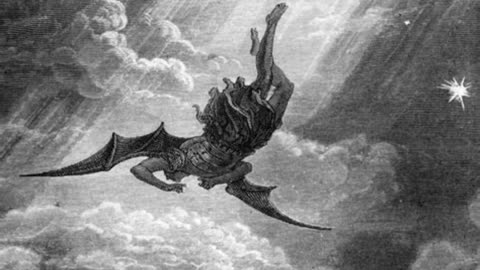
Paradise Lost by: Milton
Deus Meum Que Jus
Paradise Lost is a monumental English epic poem written in blank verse (unrhymed iambic pentameter), consisting of 10 books in its original 1667 edition and expanded to 12 books in the 1674 revision. Widely considered one of the greatest works in the English language, the poem tells the biblical story of the Fall of Man, portraying the rebellion of Satan, the war in Heaven, the creation of Earth, and the temptation of Adam and Eve that led to their expulsion from the Garden of Eden.
Milton’s work reimagines these events with philosophical depth, classical influence, and rich theological inquiry. Satan emerges as a complex antihero, prideful, articulate, and driven - often stealing the spotlight with his defiant lines like “Better to reign in Hell than serve in Heaven.” Meanwhile, Adam and Eve are portrayed not simply as archetypes but as emotionally vivid characters who wrestle with love, free will, obedience, and loss.
The poem explores heavy themes such as justice, divine providence, authority, temptation, and redemption, all while questioning the nature of good and evil, human agency, and the character of God. Milton, blind and dictating his verses, weaves together classical epic tradition with Protestant theology, creating a synthesis that both honors and challenges biblical interpretation.
About the Author:
John Milton (1608–1674) was an English poet, intellectual, and civil servant whose work left a profound mark on literature, politics, and theology. Best known for his epic Paradise Lost, Milton was a master of classical forms and biblical themes, blending them into works of stunning poetic depth and philosophical rigor.
Educated at Christ’s College, Cambridge, Milton was fluent in Latin, Greek, Hebrew, and several modern languages. A staunch advocate for liberty, he wrote powerful political tracts defending freedom of speech (Areopagitica, 1644), republicanism, and the right to divorce. During the English Civil War, he aligned with the Puritans and served as Secretary for Foreign Tongues under Oliver Cromwell’s Commonwealth, handling diplomatic correspondence in Latin.
Milton went completely blind in 1652 but continued to write by dictation, including his greatest masterpiece, Paradise Lost (published in 1667, revised in 1674). He followed it with Paradise Regained and Samson Agonistes. His work reflects deep engagement with theology, politics, classical literature, and the human struggle between reason, faith, and temptation.
Milton’s personal life was marked by tragedy, he lost his sight, two wives, and several children - but his legacy is enduring. He was both a devout Christian and a fierce individualist, whose influence shaped writers from Blake and Wordsworth to Tolkien and Borges. His command of language and vision of cosmic justice continue to challenge and inspire readers centuries later.
A Modern Utopia by H. G. Wells (1905)
Deus Meum Que Jus
This book is a bold philosophical and speculative work that envisions a parallel Earth governed by a rational, progressive, and highly organized world state. Unlike traditional utopias that are static or isolated, Wells imagines a dynamic, evolving society that maintains order through global unity while allowing for individual freedom and scientific advancement.
In this utopian world, the planet is ruled by a class known as the Samurai—a voluntary, disciplined elite who act as guardians of the common good. They live by a strict ethical code, ensuring the smooth functioning of a merit-based society that rejects poverty, war, and ignorance. There is no private ownership of land, religion is personal and diverse, and technological progress is embraced, but kept in balance with moral responsibility.
Wells blends science fiction, political theory, and satire, using a narrative device where the protagonist and a companion arrive in this parallel world and explore its structures, values, and contradictions. The story becomes a platform for Wells to critique the flaws of early 20th-century society—imperialism, capitalism, class divisions—and to propose an alternative based on reason, education, and global cooperation.
A Modern Utopia stands as one of Wells's most ambitious works, merging his optimism about science and progress with a candid acknowledgment of human weakness. It’s a forward-looking meditation on what it would actually take—not just structurally but spiritually—for humanity to build a better world.
About the Author:
H.G. Wells (Herbert George Wells, 1866-1946) was an English writer, historian, and social commentator, widely regarded as one of the most influential authors of the early 20th century. Best known for his pioneering works of science fiction, such as The War of the Worlds, The Time Machine, and The Invisible Man, Wells also wrote extensively on social, political, and philosophical topics.
Wells was a committed advocate for social reform and was deeply involved in the intellectual and political debates of his time. He was a member of the Fabian Society, a British socialist organization that aimed to advance the principles of democratic socialism through gradual reforms rather than revolution. His interest in social issues and his belief in the power of science and education to improve society are reflected in many of his works, including The Open Conspiracy.
Wells was a member of the Fabian Society, a British socialist organization advocating for gradual, democratic reforms rather than revolutionary change. He engaged in political debates and was known for his radical views on social reform, class inequality, and the future of human society. Although he supported socialism, he was often critical of political parties and institutions, which he felt were too slow or corrupt to bring about real change.
Wells’ personal life was often as controversial as his writings. He had multiple affairs, including one with feminist and author Amber Reeves, which heavily influenced The New Machiavelli. The affair strained his relationship with the Fabians, and this personal experience is mirrored in the novel’s exploration of sexual morality, personal ambition, and political pragmatism.
H.G. Wells is widely regarded as one of the founding fathers of science fiction, but his contributions to literature extend far beyond that genre. His explorations of political, social, and philosophical issues influenced not only his contemporaries but also future generations of writers and thinkers. His predictions about future technologies, warfare, and society were often uncannily accurate.
Wells was deeply influenced by Charles Darwin’s theory of evolution, which shaped his views on human nature, society, and progress. His writing style combined a fascination with science and the possibilities of the future with a deep skepticism of human nature and institutions. His works often reflect his belief that human progress requires a balance between scientific advancement and ethical responsibility.

The World Set Free by H. G. Wells (1914)
Deus Meum Que Jus
This book is a prophetic science fiction novel that envisions a world transformed—and nearly destroyed—by the advent of atomic energy. Written decades before the actual development of nuclear weapons, Wells imagines a breakthrough in physics that leads to "atomic bombs"—weapons of terrifying, long-lasting power that make conventional warfare obsolete.
The story follows the rapid spread of atomic technology and the global chaos it unleashes. Nations engage in devastating wars, and entire cities are reduced to ruins. But out of this destruction emerges a pivotal shift: humanity is forced to confront the consequences of its own inventions. In the aftermath, a world government is formed—not out of ideology, but from necessity—to prevent future annihilation and to guide civilization toward peace and rational cooperation.
Wells uses the narrative as a vehicle for his broader vision of scientific progress, human unity, and the need for global governance. It’s part cautionary tale, part utopian forecast, and eerily accurate in its prediction of atomic warfare. His fictional atomic bomb is described as a weapon that continues to explode for days, a chilling prelude to the real-world development of nuclear weapons decades later.
The World Set Free is not just speculative fiction—it is one of Wells’s most important and disturbing warnings. It reflects his belief that science, left unguided by ethics and foresight, could lead to self-destruction—but also that the same science, when combined with wisdom, could be the key to humanity’s salvation.
About the Author:
H.G. Wells (Herbert George Wells, 1866-1946) was an English writer, historian, and social commentator, widely regarded as one of the most influential authors of the early 20th century. Best known for his pioneering works of science fiction, such as The War of the Worlds, The Time Machine, and The Invisible Man, Wells also wrote extensively on social, political, and philosophical topics.
Wells was a committed advocate for social reform and was deeply involved in the intellectual and political debates of his time. He was a member of the Fabian Society, a British socialist organization that aimed to advance the principles of democratic socialism through gradual reforms rather than revolution. His interest in social issues and his belief in the power of science and education to improve society are reflected in many of his works, including The Open Conspiracy.
Wells was a member of the Fabian Society, a British socialist organization advocating for gradual, democratic reforms rather than revolutionary change. He engaged in political debates and was known for his radical views on social reform, class inequality, and the future of human society. Although he supported socialism, he was often critical of political parties and institutions, which he felt were too slow or corrupt to bring about real change.
Wells’ personal life was often as controversial as his writings. He had multiple affairs, including one with feminist and author Amber Reeves, which heavily influenced The New Machiavelli. The affair strained his relationship with the Fabians, and this personal experience is mirrored in the novel’s exploration of sexual morality, personal ambition, and political pragmatism.
H.G. Wells is widely regarded as one of the founding fathers of science fiction, but his contributions to literature extend far beyond that genre. His explorations of political, social, and philosophical issues influenced not only his contemporaries but also future generations of writers and thinkers. His predictions about future technologies, warfare, and society were often uncannily accurate.
Wells was deeply influenced by Charles Darwin’s theory of evolution, which shaped his views on human nature, society, and progress. His writing style combined a fascination with science and the possibilities of the future with a deep skepticism of human nature and institutions. His works often reflect his belief that human progress requires a balance between scientific advancement and ethical responsibility.
The Revolutions of Civilization by William Matthew Flinders Petrie (1911)
Deus Meum Que Jus
The Revolutions of Civilization by William Matthew Flinders Petrie, published in 1911, is a provocative and analytical exploration of how civilizations rise, flourish, and ultimately fall - based not on moral decline or chance, but on cycles of innovation, stagnation, and regression. Drawing from his extensive background in archaeology and Egyptology, Petrie presents a theory that civilizations go through repeating phases, driven by human behavior and responses to changing conditions.
Petrie argues that great civilizations emerge through creative revolutions, bursts of originality and progress led by individuals or small groups. However, as their innovations become institutionalized, societies shift from original thought to imitation, and eventually to bureaucracy, decay, and collapse. This decline, he suggests, is often followed by a new wave of creativity elsewhere, continuing the cycle.
Rather than focusing solely on Western history, Petrie compares multiple ancient cultures - including Egyptian, Mesopotamian, Greek, and Eastern civilizations - to support his theory. He emphasizes the role of individual initiative, rather than race or geography, in sparking civilizational growth.
Though written in the early 20th century and framed with the language and assumptions of its time, The Revolutions of Civilization remains an influential early attempt to understand history in terms of recurring patterns rather than linear progress, and it reflects Petrie’s lifelong effort to bring scientific rigor to the study of ancient cultures.
About the Author:
Sir William Matthew Flinders Petrie (1853–1942) was a pioneering British archaeologist and Egyptologist, widely regarded as the father of modern archaeological methodology. Renowned for his meticulous excavation techniques and insistence on recording even the smallest artifact, Petrie transformed archaeology from treasure hunting into a disciplined science. His work laid the foundation for stratigraphy, seriation, and cultural chronology in the field.
Over the course of his career, Petrie excavated more than 50 sites in Egypt and the Near East, including major discoveries at Abydos, Amarna, and Giza. He was instrumental in uncovering the lives of ordinary people, not just royalty, emphasizing the historical value of pottery, tools, and architecture. His work with the Egypt Exploration Fund and later the British School of Archaeology in Egypt greatly expanded Western understanding of ancient Egyptian civilization.
Beyond archaeology, Petrie wrote extensively on civilization, race, and social evolution, including philosophical works like The Revolutions of Civilization. While some of his views reflect the colonial-era biases of his time, his contributions to archaeology remain foundational. He trained and influenced generations of scholars, including Howard Carter, the discoverer of Tutankhamun's tomb.
Flinders Petrie was knighted in 1923 for his services to science, and today he is remembered not only for what he unearthed, but for how he taught the world to dig deeper - literally and intellectually.
Note: while there's no concrete proof that Petrie was initiated into Freemasonry, he was absolutely operating within the intellectual and cultural orbit of men who were - and his work was admired and referenced by them frequently.
The Discovery of the Future by H. G. Wells (1902)
Deus Meum Que Jus
The Discovery of the Future by H. G. Wells (1902) is a groundbreaking lecture-turned-essay in which Wells lays out his vision for how humanity can begin to study, predict, and shape the future through the use of science, reason, and imagination. Delivered to the Royal Institution, the work challenges the then-common belief that the future was unknowable or solely the domain of religion and superstition.
Wells divides thinkers into two types: the submissive, who accept the future as unknowable fate, and the creative, who believe it can be understood and influenced. He firmly aligns with the latter, arguing that just as science has made the natural world more predictable, it can also uncover the patterns of human behavior, social development, and technological change.
Rather than waiting passively, Wells calls for the rise of a forward-looking mindset, one that embraces education, data, and long-term thinking. He sees this as not just possible, but essential—if humanity hopes to avoid chaos and guide itself toward progress.
The Discovery of the Future is a visionary and philosophical work that marks one of the earliest formal arguments for what we now call futures studies or strategic foresight, and it reflects Wells’s enduring faith in science as a tool for human evolution.
About the Author:
H.G. Wells (Herbert George Wells, 1866-1946) was an English writer, historian, and social commentator, widely regarded as one of the most influential authors of the early 20th century. Best known for his pioneering works of science fiction, such as The War of the Worlds, The Time Machine, and The Invisible Man, Wells also wrote extensively on social, political, and philosophical topics.
Wells was a committed advocate for social reform and was deeply involved in the intellectual and political debates of his time. He was a member of the Fabian Society, a British socialist organization that aimed to advance the principles of democratic socialism through gradual reforms rather than revolution. His interest in social issues and his belief in the power of science and education to improve society are reflected in many of his works, including The Open Conspiracy.
Wells was a member of the Fabian Society, a British socialist organization advocating for gradual, democratic reforms rather than revolutionary change. He engaged in political debates and was known for his radical views on social reform, class inequality, and the future of human society. Although he supported socialism, he was often critical of political parties and institutions, which he felt were too slow or corrupt to bring about real change.
Wells’ personal life was often as controversial as his writings. He had multiple affairs, including one with feminist and author Amber Reeves, which heavily influenced The New Machiavelli. The affair strained his relationship with the Fabians, and this personal experience is mirrored in the novel’s exploration of sexual morality, personal ambition, and political pragmatism.
H.G. Wells is widely regarded as one of the founding fathers of science fiction, but his contributions to literature extend far beyond that genre. His explorations of political, social, and philosophical issues influenced not only his contemporaries but also future generations of writers and thinkers. His predictions about future technologies, warfare, and society were often uncannily accurate.
Wells was deeply influenced by Charles Darwin’s theory of evolution, which shaped his views on human nature, society, and progress. His writing style combined a fascination with science and the possibilities of the future with a deep skepticism of human nature and institutions. His works often reflect his belief that human progress requires a balance between scientific advancement and ethical responsibility.
Men Like Gods by H. G. Wells (1923)
Deus Meum Que Jus
This book is a bold and imaginative work of utopian science fiction that blends political philosophy with speculative adventure. The novel follows Mr. Barnstaple, a disillusioned English journalist, who—along with a group of strangers—is accidentally transported to Utopia, a parallel world where humanity has evolved beyond war, poverty, and government coercion.
In Utopia, there is no need for laws or leaders. Science, reason, and personal freedom reign. The inhabitants—“men like gods”—live by the “Five Principles of Liberty,” and their society reflects what Wells believed humanity could achieve if it shed superstition, authoritarianism, and backward social structures.
As the visitors from Earth attempt to make sense of this advanced world, their own flaws and attachments to outdated systems become painfully clear. What begins as a curious exploration becomes a mirror held up to 20th-century civilization—its ignorance, violence, and resistance to progress.
Men Like Gods serves as both a utopian vision and a sharp critique of contemporary politics, religion, and human nature. It’s an early exploration of parallel universe theory, and it allowed Wells to push his views on liberal socialism, secular humanism, and scientific progress, making it a philosophical novel as much as a sci-fi tale. It also lightly satirizes organized religion and totalitarian ideologies—foreshadowing the tensions of the coming decades.
About the Author:
H.G. Wells (Herbert George Wells, 1866-1946) was an English writer, historian, and social commentator, widely regarded as one of the most influential authors of the early 20th century. Best known for his pioneering works of science fiction, such as The War of the Worlds, The Time Machine, and The Invisible Man, Wells also wrote extensively on social, political, and philosophical topics.
Wells was a committed advocate for social reform and was deeply involved in the intellectual and political debates of his time. He was a member of the Fabian Society, a British socialist organization that aimed to advance the principles of democratic socialism through gradual reforms rather than revolution. His interest in social issues and his belief in the power of science and education to improve society are reflected in many of his works, including The Open Conspiracy.
Wells was a member of the Fabian Society, a British socialist organization advocating for gradual, democratic reforms rather than revolutionary change. He engaged in political debates and was known for his radical views on social reform, class inequality, and the future of human society. Although he supported socialism, he was often critical of political parties and institutions, which he felt were too slow or corrupt to bring about real change.
Wells’ personal life was often as controversial as his writings. He had multiple affairs, including one with feminist and author Amber Reeves, which heavily influenced The New Machiavelli. The affair strained his relationship with the Fabians, and this personal experience is mirrored in the novel’s exploration of sexual morality, personal ambition, and political pragmatism.
H.G. Wells is widely regarded as one of the founding fathers of science fiction, but his contributions to literature extend far beyond that genre. His explorations of political, social, and philosophical issues influenced not only his contemporaries but also future generations of writers and thinkers. His predictions about future technologies, warfare, and society were often uncannily accurate.
Wells was deeply influenced by Charles Darwin’s theory of evolution, which shaped his views on human nature, society, and progress. His writing style combined a fascination with science and the possibilities of the future with a deep skepticism of human nature and institutions. His works often reflect his belief that human progress requires a balance between scientific advancement and ethical responsibility.
The Psychology of Peoples: Its Influence on Their Evolution by Gustave Le Bon (1894)
Deus Meum Que Jus
This book is a groundbreaking exploration of how collective psychology shapes the destiny of civilizations. Published in 1894, the book argues that a nation's identity, institutions, and historical trajectory are rooted not merely in politics or economics, but in the deep psychological makeup of its people—what Le Bon calls the soul of a race.
He examines how instincts, traditions, language, religion, and inherited traits mold the behavior of entire populations over generations. Le Bon distinguishes between the psychology of individuals and that of groups, emphasizing that unconscious drives, not rational thought, steer the evolution of societies. His analysis touches on education, government, religion, and war, offering sharp—though at times controversial—critiques of Western civilization, democracy, and cultural decline.
Often considered a companion to his better-known work The Crowd, this book provides the broader framework behind his theories of mass behavior. Where The Crowd focuses on short-term group dynamics, The Psychology of Peoples deals with long-term cultural and civilizational development. Though steeped in the assumptions of its time, Le Bon's insights into group identity, national character, and social inertia remain deeply influential in fields ranging from sociology and political science to propaganda and mass media theory.
About the Author:
Gustave Le Bon (1841–1931) was a French polymath—physician, anthropologist, sociologist, and social psychologist—best known for his pioneering work on crowd psychology and mass behavior. A keen observer of cultural movements and historical cycles, Le Bon was deeply concerned with how irrational forces, tradition, and collective emotion shape societies far more than reason or logic.
He rose to prominence with his influential works such as The Crowd: A Study of the Popular Mind (1895) and The Psychology of Peoples (1894), which laid the foundation for modern social psychology and the study of group dynamics. Le Bon’s theories were widely read—and sometimes controversially admired—by figures ranging from Sigmund Freud and Carl Jung to Mussolini, Hitler, and Roosevelt, all of whom recognized the power of collective belief in shaping history.
While some of his views reflect the racial and cultural biases of his era, his central insights—that mass behavior is driven more by unconscious emotion than by rational thought, and that civilizations rise and fall based on the psychology of their people—remain relevant in analyzing propaganda, political movements, and cultural shifts to this day. Le Bon’s work continues to provoke debate and reflection across disciplines for its bold and unsettling clarity.

Household Gods by: Aleister Crowley (1912)
Deus Meum Que Jus
Household Gods by Aleister Crowley is a one-act dramatic play, first published in 1912, that explores themes of divine intervention, personal responsibility, and the illusion of religious authority. Written with Crowley’s signature wit and sharp critique of conventional morality, the play presents a dialogue between a Roman nobleman and household deities, challenging the nature of faith, superstition, and self-deception.
Interestingly, Household Gods carries striking similarities to what would later become the core themes of Beauty and the Beast... long before Disney put its spin on it. The play features talking objects, a setting steeped in mysticism, and a protagonist whose inner turmoil mirrors that of a cursed beast. Given that Crowley famously called himself "The Great Beast", it’s hard not to see an ironic reflection of his own persona in the story.
Beyond its theatrical charm, Household Gods serves as both a satire on religious orthodoxy and a meditation on personal will, making it a fascinating read for those interested in Crowley’s esoteric worldview, literary prowess, and the deeper symbolic layers of his work.

Courts and Criminals by: Arthur Cheney Train (1914)
Deus Meum Que Jus
"Courts and Criminals" is a collection of essays by Arthur Cheney Train, published in 1914. Drawing from his experience as a former assistant district attorney in New York, Train provides an insider's perspective on the American legal system of the early 20th century. The essays delve into various aspects of criminal law, courtroom dynamics, and societal factors influencing crime.
Overview of the 12 Essays:
1. The Pleasant Fiction of the Presumption of Innocence
Explores how the ideal of "innocent until proven guilty" often contrasts with the realities of the justice system, where biases and preconceived notions can influence outcomes.
2. Preparing a Criminal Case for Trial
Discusses the meticulous process prosecutors undertake to build a case, from gathering evidence to strategizing courtroom presentations.
3. Sensationalism and Jury Trials
Critiques the impact of media sensationalism on jury impartiality, highlighting cases where public opinion swayed judicial proceedings.
4. Why Do Men Kill?
Investigates the psychological and sociological factors that lead individuals to commit homicide, challenging simplistic explanations.
5. Detectives and Others
Provides insight into the world of private detectives, contrasting their methods and ethics with those of official law enforcement.
6. Detectives Who Detect
Highlights cases where detectives showcased exceptional skill and intuition, emphasizing the art of investigation.
7. Women in the Courts
Examines the unique challenges women face in the legal system, both as defendants and plaintiffs, and the evolving perceptions of their credibility and roles.
8. Tricks of the Trade
Reveals various tactics employed by lawyers to sway juries and judges, shedding light on ethical gray areas in legal practice.
9. What Fosters Crime
Analyzes societal conditions that contribute to criminal behavior, such as poverty, lack of education, and systemic injustices.
10. Insanity and the Law
Delves into the complexities of the insanity defense, discussing its legal implications and the challenges of distinguishing between mental illness and criminal intent.
11. The Mala Vita in America
Explores the presence and influence of organized crime syndicates, particularly those with roots in Italian immigrant communities, and their impact on American society.
12. The Prisoner at the Bar
Reflects on the experiences of defendants in the courtroom, the dynamics between lawyers and clients, and the human elements that influence justice.
Train's essays offer a critical and nuanced examination of the legal system, many of which remain relevant in discussions about justice and criminal law today.
About the Author:
Arthur Cheney Train was an American lawyer, author, and former assistant district attorney in New York City. Best known for his legal fiction and courtroom writings, Train brought sharp insight and dry wit to his portrayals of the American justice system. His professional background gave him rare access to the inner workings of criminal courts during the early 20th century, and he used that experience to craft both fiction and nonfiction that highlighted the system's strengths—and exposed its flaws.
He gained widespread recognition for creating the fictional character **Mr. Ephraim Tutt**, a clever, principled defense attorney who often challenged legal corruption and injustice. However, in *Courts and Criminals* (1914), Train stepped out from behind his fictional veil and delivered a candid, unvarnished look at real criminal proceedings, systemic issues, legal loopholes, and human nature as seen from the prosecutor’s side of the courtroom.
With a sharp eye for hypocrisy and a deep concern for justice, Train's work continues to resonate with readers interested in law, ethics, and the complexities of human behavior under pressure. His legacy is that of a legal mind who could entertain as easily as he could educate.

Hitler's Last Witness: The Memoirs of Hitler's Bodyguard by Rochus Misch (2008)
Deus Meum Que Jus
Hitler's Last Witness: The Memoirs of Hitler's Bodyguard by Rochus Misch is a firsthand account from the man who served as Adolf Hitler’s personal bodyguard, courier, and telephonist from 1940 until the Führer's death in 1945. As one of the last surviving members of Hitler’s inner circle, Misch offers a rare, unfiltered glimpse into daily life inside the Reich Chancellery and the Führerbunker.
The memoir covers his early years, wartime service, and how he came to work directly for Hitler. Misch recounts mundane routines, intense moments during Allied bombings, and the final days of the Third Reich, including his experience during Hitler and Eva Braun's suicides. Rather than offering political analysis, the book reflects Misch’s perspective as a loyal soldier caught in history’s darkest chapter, often detached from or unwilling to confront the regime’s atrocities.
Blunt, human, and often unsettling, Hitler's Last Witness provides a unique - and controversial - perspective on one of history’s most notorious regimes from a man who watched it collapse from the inside.
About the Author:
Rochus Misch (1917–2013) was a member of the SS and served as Adolf Hitler’s personal bodyguard, courier, and telephonist from 1940 until the fall of the Third Reich in 1945. Born in Silesia (then part of Germany), Misch joined the Leibstandarte SS Adolf Hitler, Hitler’s elite bodyguard unit, and was eventually assigned to Hitler’s personal staff.
He was present for many pivotal events of the war, including the final days inside the Führerbunker, witnessing firsthand the collapse of Nazi Germany. Misch was captured by the Soviets in 1945 and spent nine years in a Soviet prison camp before returning to Germany.
Until his death in 2013, Misch remained one of the last surviving individuals from Hitler’s inner circle. His memoir, Hitler’s Last Witness, reflects his experiences not as a policymaker or ideologue, but as a man who observed history unfold from within the Nazi regime—often loyal, occasionally naive, and unapologetically blunt. His account is both a rare historical document and a controversial reminder of the human faces behind one of history’s darkest chapters.
The Anti-Christ by Friedrich Nietzsche
Deus Meum Que Jus
This book is a blistering critique of Christianity, morality, and the values of Western civilization. Written in 1888 but published posthumously in 1895, the book attacks the foundations of Christian doctrine, arguing that it promotes weakness, resentment, and a denial of life. Nietzsche contrasts Christian values with what he calls the "will to power", advocating for a philosophy that embraces strength, self-overcoming, and life-affirmation.
Throughout the work, Nietzsche condemns priests, theologians, and the Church, portraying them as corrupt forces that have twisted human nature by exalting suffering, meekness, and submission. He sees Jesus as a noble figure whose teachings were later distorted by Paul and the Church to create an oppressive moral system.
More than just an attack on religion, The Anti-Christ is a call for a revaluation of values, where humanity breaks free from what Nietzsche sees as the self-destructive chains of Christianity and embraces a bold, vitalistic approach to existence. Provocative and uncompromising, the book remains one of Nietzsche’s most controversial and powerful works.
About the Author:
Friedrich Nietzsche (1844–1900) was a German philosopher, cultural critic, and philologist known for his radical critiques of religion, morality, and modern society. Originally trained in classical philology, Nietzsche became a professor at the University of Basel at just 24 years old before leaving academia due to health issues. His philosophical writings challenge traditional values and introduce concepts such as the Übermensch (Overman), the Will to Power, and the Eternal Recurrence, which later influenced existentialism, nihilism, and postmodern thought.
Nietzsche was a fierce critic of Christianity, democracy, and herd morality, viewing them as obstacles to human greatness. His works, including Thus Spoke Zarathustra, Beyond Good and Evil, and The Anti-Christ, called for a revaluation of all values and a rejection of life-denying ideologies. Despite his profound impact, Nietzsche spent the final years of his life in mental and physical decline, with his sister, Elisabeth Förster-Nietzsche, later manipulating and misrepresenting his works for nationalist and Judenfeindlichkeit causes—distorting his philosophy beyond recognition.
Though controversial in his time, Nietzsche’s influence has only grown, shaping modern philosophy, psychology, and literature. His ideas remain as provocative and challenging today as when he first wrote them.
The Manisis Chronicles: A Novel of Fantasy or Prophecy? by Dr. Eugene J. Bruington
Deus Meum Que Jus
This book is a thought-provoking narrative that blurs the lines between fiction and foresight. The book warns of trials and tribulations that may soon face the United States, exploring the fundamental laws governing human existence and offering guidance on how global populations might become the "wheat" in the anticipated Great Separation. Through a mix of storytelling and deep philosophical insight, the author challenges readers to discern between imaginative fiction and potential reality, prompting reflection on the actions necessary to navigate the uncertain future ahead.
About the Author:
Dr. Eugene J. Bruington is the pseudonymous author of The Manisis Chronicles: A Novel of Fantasy or Prophecy? Little is publicly known about the true identity of the writer. Whether a scholar of metaphysics, a mystic, or simply an observer of global events, the author presents a work that blends allegory, prophecy, and philosophy - challenging readers to question the nature of reality, spiritual law, and the future of humanity.
1
comment
Compendium of Occult Laws by: Dr. R. Swinburne Clymer
Deus Meum Que Jus
Here, perhaps for the first time, a single volume presents practically all of the Laws that govern man and nature - including Hermetic and esoteric concepts and teachings, and the philosophy of Initiation. These are Laws that lead mankind to Life, Light and Love and to Immortality.
The Case Against the Fed by: Murray N. Rothbard
Deus Meum Que Jus
The Case Against the Fed is a scathing indictment of the Federal Reserve System, arguing that it operates as a banking cartel that enriches financial elites at the public’s expense. Murray N. Rothbard meticulously traces the history of money and banking, exposing how the Fed manipulates the money supply, fuels inflation, and enables reckless government expansion through deficit spending. With clear, incisive analysis, he dissects the mechanics of fractional reserve banking and central banking, illustrating how they create economic instability rather than preventing it. Rothbard makes a compelling case that the Federal Reserve is not just unnecessary but actively harmful to a free-market economy, advocating instead for sound money free from government control.
About the Author:
Murray N. Rothbard (1926–1995) was an American economist, historian, and political theorist, widely regarded as one of the most influential figures in Austrian economics and modern libertarian thought. A student of Ludwig von Mises, Rothbard was a leading advocate for free markets and a relentless critic of central banking, state intervention, and coercive power structures. As a co-founder of the Cato Institute and the Ludwig von Mises Institute, he played a key role in shaping the libertarian movement. His seminal works, including Man, Economy, and State, The Mystery of Banking, and For a New Liberty, challenge the legitimacy of government-controlled monetary systems and promote a society based on voluntary exchange and private property. His unwavering opposition to the Federal Reserve and fiat currency, as exemplified in The Case Against the Fed, continues to influence libertarians, Austrian economists, and critics of centralized financial power to this day.
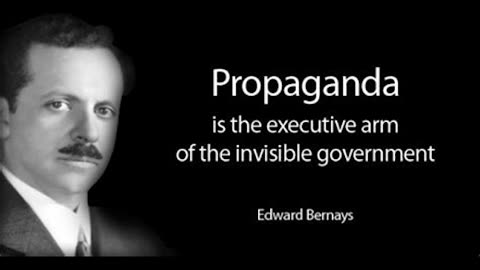
"Propaganda" by: Edward Bernays (1928)
Deus Meum Que Jus
Propaganda is a foundational work on mass influence and psychological manipulation, written by Edward Bernays, the father of modern public relations. Published in 1928, the book outlines how governments, corporations, and media shape public opinion through strategic messaging, emotional appeal, and subconscious influence techniques.
Bernays argues that the masses are not rational thinkers, but rather easily guided by those who understand the mechanics of persuasion. He details how propaganda can be used not just in politics, but in advertising, business, and social movements to mold society’s beliefs and behaviors. His ideas - rooted in Freudian psychology and wartime propaganda strategies - laid the groundwork for modern marketing, political campaigns, and media control.
More than just a historical text, Propaganda remains a playbook for those in power, showing how perception can be manufactured, trends can be created, and people can be led to believe they made independent choices when, in reality, they were carefully guided toward them. Whether you see it as a warning or a manual, it’s essential reading for understanding the invisible forces shaping public thought.
About the Author:
Edward Bernays (1891–1995) was a pioneer in public relations, mass persuasion, and psychological manipulation, often called the "Father of Public Relations." A nephew of Sigmund Freud, he applied Freudian psychology to marketing and propaganda, shaping the way governments, corporations, and media influence public opinion.
Born in Vienna, Austria, and later moving to the United States, Bernays worked on wartime propaganda for the U.S. government during World War I, helping to promote America’s role in the war effort. After seeing how effective propaganda was, he realized it could be weaponized in peacetime, using subtle psychological tactics to control public perception.
Bernays pioneered modern advertising and PR techniques, orchestrating campaigns that made bacon and eggs a "traditional American breakfast", convinced women to smoke Lucky Strikes by branding cigarettes as symbols of female empowerment, and introduced the concept of "press events" to generate artificial demand for products. His ideas also influenced politicians, intelligence agencies, and corporate elites, many of whom used his strategies to shape public behavior without people realizing they were being manipulated.
His book Propaganda (1928) remains one of the most influential works on mass persuasion, laying the foundation for modern political campaigns, corporate branding, and media control. Whether seen as a genius or a manipulator, Bernays reshaped the modern world - often behind the scenes - by teaching those in power how to engineer consent.
2
comments

Psychological Warfare by: Paul Linebarger
Deus Meum Que Jus
Psychological Warfare is a foundational manual on propaganda, influence operations, and psychological manipulation in warfare, written by Paul M.A. Linebarger, a U.S. military intelligence officer and expert in psychological operations (PSYOP). Originally published in 1948 and later revised in 1954, this book provides an in-depth analysis of how governments, military forces, and intelligence agencies use psychological tactics to control narratives, shape public perception, and destabilize enemies.
Linebarger explores historical examples of psychological warfare, from ancient times to World War II and the early Cold War, detailing how propaganda was used to weaken morale, spread misinformation, and influence both enemy and civilian populations. He outlines techniques for effective psychological operations, including black, white, and gray propaganda, radio broadcasts, leaflet campaigns, and rumor control.
More than just a military manual, Psychological Warfare serves as a blueprint for understanding modern information warfare, psychological operations, and propaganda techniques that continue to be used today. Due to its real-world applications and unfiltered insights, it remains one of the most important works ever written on the subject - highly relevant to anyone studying military strategy, intelligence operations, media influence, or political warfare.
About the Author:
Paul Myron Anthony Linebarger was a military intelligence officer, political scientist, and expert in psychological warfare, best known for his work in U.S. military strategy and propaganda operations during World War II and the Cold War. He was also a renowned science fiction writer under the pen name Cordwainer Smith.
Born in Milwaukee, Wisconsin, Linebarger was raised in an elite diplomatic environment, as his father was an advisor to Sun Yat-sen, the first president of the Republic of China. This upbringing gave him early exposure to global politics, intelligence work, and military strategy. Fluent in multiple languages, including Chinese and Russian, he later became a professor of Asian Studies at Johns Hopkins University and an adviser to the U.S. Department of Defense.
During World War II, Linebarger served in U.S. Army Intelligence and the Office of War Information (OWI), where he helped develop psychological operations (PSYOP), including radio broadcasts, propaganda leaflets, and strategic deception tactics. His expertise made him one of the leading architects of modern psychological warfare.
After the war, Linebarger continued to shape U.S. intelligence strategy, advising covert operations, counterinsurgency efforts, and Cold War propaganda campaigns. His book Psychological Warfare (1948, revised 1954) became the definitive guide on the subject, widely used by militaries, intelligence agencies, and political strategists.
Beyond his intelligence work, Linebarger is celebrated in science fiction circles for his unique and visionary writing, particularly his Instrumentality of Mankind series, published under the name Cordwainer Smith. His fiction often contained themes of control, perception, and hidden power structures - ideas deeply rooted in his real-world expertise in psychological warfare.
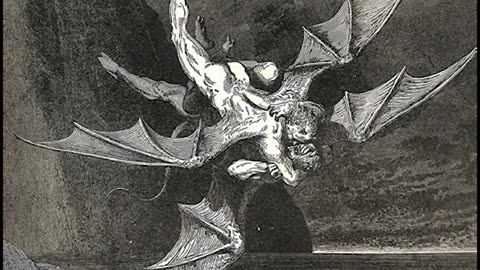
Dante's Inferno (Modern English Translation)
Deus Meum Que Jus
Hell, as a place of eternal fire and torment, was never actually described in the Bible... at least, not the way most people think.
If you didn’t know, the modern version of Satan with the red skin, horns, a pitchfork, and ruling over hell - didn’t come from the Bible.
That image was created by Dante in Inferno (1320) and later expanded on by artists, playwrights, and Milton in Paradise Lost (1667). In the Bible, Satan is described as a fallen angel, a deceiver, and even appearing as an “angel of light” (2 Cor. 11:14), not a demon sitting on a throne in hell.
It’s not canonical - it’s a modern pop-culture myth believed by people who haven’t cracked open their Bible beyond testing their luck.
This video is Dante’s Inferno, Modern English Translation. If you’ve never listened to it, it’s worth checking out. Dante wrote his own version of hell, threw his enemies into ironic punishments, and somehow, people started treating his fan-fiction as reality. Everything from the fiery underworld to the devil’s appearance comes more from this than actual scripture.
The Book of Luck by: Anonymous
Deus Meum Que Jus
The Book of Luck (author unknown) is an early 20th-century guide to superstitions, fortune-telling, and mystical practices. Covering palmistry, astrology, handwriting analysis, tarot, and talismans, it reflects the era’s fascination with luck, destiny, and unseen forces shaping human life.
Richly illustrated with charts and diagrams, it serves as a practical manual for interpreting signs, symbols, and omens believed to influence fortune. Rooted in the Victorian and Edwardian obsession with the occult, the book stands as both a historical curiosity and a glimpse into early 20th-century esoteric traditions.
For those interested in mysticism, divination, or historical perspectives on luck, The Book of Luck offers a captivating look at bygone beliefs about fate and fortune.
See the illustrations, diagrams, or read it here: archive.org/details/everybodysbookof00raci
Drugging a Nation: The Story of China & the Opium Curse by Samuel Merwin (1908)
Deus Meum Que Jus
Drugging a Nation is a hard-hitting exposé on the devastating impact of opium in China, written by Samuel Merwin in 1908. This book documents how British imperialism, corrupt officials, and Western economic interests fueled China’s opium crisis, turning an ancient civilization into a nation of addicts.
Merwin presents firsthand accounts, investigative journalism, and in-depth reporting on how opium was systematically used as a tool of control, especially by the British through the East India Company, flooding China with the drug for profit. He details how opium dens, addiction, and widespread corruption crippled Chinese society, while Western powers justified their role under the guise of “free trade.”
The book also explores China’s struggle to fight back, including government efforts to suppress opium use, reform movements, and public resistance. It serves as both a historical record and a warning about the dangers of state-sponsored drug trade, making it a critical read for those studying the Opium Wars, colonialism, and economic warfare.
About the Author:
Samuel Merwin was an American journalist, novelist, and social reformer, known for his investigative works exposing corruption, exploitation, and social injustice. Born in Evanston, Illinois, Merwin gained recognition for his sharp political insights and fearless reporting during the late 19th and early 20th centuries.
His most notable work, Drugging a Nation: The Story of China & the Opium Curse (1908), was the result of on-the-ground investigative journalism in China, where he documented the destructive effects of the British-led opium trade. His reporting exposed how Western imperial powers profited from addiction, leaving China weakened and dependent.
Beyond journalism, Merwin was also a prolific novelist, co-authoring several books with Henry Kitchell Webster before branching out on his own. His fiction often carried themes of political intrigue, economic corruption, and social struggle, reflecting his deep concern for justice and human rights.
Merwin’s work remains a critical resource for understanding the intersection of imperialism, drug trade, and economic warfare, shedding light on one of history’s most infamous state-sponsored narcotics operations.
1
comment
Ghosts, A Message From The Illuminati (1906) by Alexander J. McIvor-Tyndall
Deus Meum Que Jus
This book is a 1906 spiritualist and occult work exploring ghostly phenomena, secret societies, and esoteric knowledge. McIvor-Tyndall, a known figure in Theosophical and mystical circles, blends supernatural encounters with hints of Illuminati influence, presenting ghosts as messengers of hidden truths. The book delves into spectral manifestations, psychic experiences, and the idea that unseen forces shape world events. Its tone straddles mysticism and conspiracy, making it an intriguing snapshot of turn-of-the-century occult thought.
Read it here: https://archive.org/details/mc-ivor-tyndall-ghosts-a-message-from-the-illuminati
Source: https://librivox.org/short-nonfiction-collection-vol-103-by-various/
Marx & Satan by: Richard Wurmbrand (1986)
Deus Meum Que Jus
"Marx & Satan" by Richard Wurmbrand explores the claim that Karl Marx, beyond being a political theorist, had a deep fascination with Satanism and occult themes. Wurmbrand, a Romanian pastor persecuted under communism, argues that Marx’s writings and personal correspondence reveal a hatred for religion and a potential link to Luciferian ideology. The book examines Marx’s poetry, philosophical influences, and connections to figures associated with occult movements. While controversial and often criticized for its speculative nature, Marx & Satan presents a perspective that ties communism not just to atheism but to a deliberate, anti-God agenda.
About the Author:
Richard Wurmbrand (1909–2001) was a Romanian Lutheran pastor, writer, and founder of The Voice of the Martyrs, an organization dedicated to helping persecuted Christians. Imprisoned and tortured for 14 years under Romania’s communist regime, Wurmbrand became a vocal critic of communism, particularly its suppression of religious freedom. After his release and exile to the West, he wrote extensively about his experiences and the ideological dangers of Marxism, with books like Tortured for Christ and Marx & Satan. His works emphasize the spiritual battle between Christianity and totalitarian regimes, making him a key figure in Cold War-era religious activism.
Personal note:
Wurmbrand mistakenly attributes some works to Marx that he didn’t actually write - most notably, The Communist Manifesto, which was commissioned by The League of the Just. However, he does an excellent job of exposing Marx’s deep-seated hatred for God, using Marx’s own poetry and personal writings to argue that his ideology was as much spiritual rebellion as it was political theory.
The missing links Wurmbrand overlooks can be found by examining The League of the Just, the secretive group that not only commissioned The Communist Manifesto but also paved the way for Marx’s rise.
1
comment
1900 Or, The Last President by Ingersoll Lockwood
Deus Meum Que Jus
Released on November 3, 1896, this political novella explores a fictional and tumultuous future in the United States, beginning with the unexpected election of an outsider candidate to the presidency. The story unfolds with scenes of public unrest, financial panic, and a fragmented political landscape. Set in the early 20th century, the narrative weaves themes of social upheaval, economic disparity, and political disarray, eerily resonating with modern concerns. Known for its speculative elements and connections to Lockwood's other works, it has gained renewed attention for its uncanny parallels to contemporary events.
1.15K
views
2
comments

The Flying Eyes by J. Hunter Holly
Deus Meum Que Jus
The Flying Eyes by J. Hunter Holly is a science fiction novel that tells the chilling story of an alien invasion like no other. Mysterious floating entities known as "The Flying Eyes" descend upon Earth, possessing the terrifying ability to dominate the human mind. These extraterrestrial beings manipulate thoughts, incite madness, and compel their victims to act against their own will. Set in a small, unraveling community, the novel follows a determined scientist who races to understand and combat this enigmatic threat. Combining psychological tension with classic sci-fi elements, The Flying Eyes explores themes of fear, mental control, and humanity's struggle against an unseen, incomprehensible enemy.
About the Author:
J. Hunter Holly was the pen name of Joan Carol Holly (1932–1982), an American science fiction author active during the 1950s and 1960s. She wrote several novels, often exploring themes of alien invasions, psychological manipulation, and human experimentation. Though not as widely recognized as some of her contemporaries, Holly contributed uniquely to the genre with her focus on the fragility of the human mind and the ethics of scientific advancement. Writing under her pseudonym, she crafted suspenseful, thought-provoking works that gained her a dedicated following in the mid-20th-century sci-fi community.

The Shape of Things to Come by: H. G. Wells (1933)
Deus Meum Que Jus
The Shape of Things to Come is a work of science fiction by H. G. Wells, published in 1933, which speculates on future events from 1933 until the year 2106. In the book, a world state is established as the solution to humanity's problems.
As a frame story, Wells claims that the book is his edited version of notes written by an eminent diplomat, Dr Philip Raven, who had been having dream visions of a history textbook published in 2106 and wrote down what he could remember of it. It is split into five separate sections or "books":
Today And Tomorrow: The Age of Frustration Dawns – The history of the world up to 1933.
The Days After Tomorrow: The Age of Frustration – 1933–1960.
The World Renaissance: The Birth of the Modern State – 1960–1978.
The Modern State Militant – 1978–2059.
The Modern State in Control of Life – 2059 to New Year's Day 2106.
The Shape of Things to Come was written as a future history. Seen in retrospect, it can be considered as an alternative history, diverging from reality in late 1933 or early 1934, the point of divergence being US President Franklin D. Roosevelt's failure to implement the New Deal and revive the US economy and Adolf Hitler's failure to revive the German economy by rearmament. Instead, the worldwide economic crisis continues for thirty years, concurrently with the war, as described above.
source: https://archive.org/details/Shape_Of_Things_To_Come
The Regius Manuscript - A Poem of Moral Duties (c. 1390)
Deus Meum Que Jus
Take a step back into history with this enlightening video that guides you through a realm of ancient wisdom and morality. This immersive journey into the landscape of the Regius Manuscript—a treasured text from the late 14th century—provides a unique exploration of moral duties and behaviors from a bygone era.
The Regius Manuscript, dating from around 1390, is a Middle English poetic text, considered the oldest known Masonic document. Its origins remain shrouded in mystery, but its 64 pages of rhymed verse provide a compelling snapshot of medieval society's moral instructions, chivalric codes, and practical etiquette.
This video blends modern technology & historical texts thanks to a collaboration between the language model ChatGPT-4, voicechanger.io, VoiceGenerator.io, and the timeless allure of "Greensleeves"; I wouldn't have been able to make this without all of them. It's a testament to the potential of technology in making ancient wisdom more accessible and engaging for everyone.
ORIGINAL:
The Regius Manuscript
"A Poem of Moral Duties"
The oldest known Masonic Document in Poetic Meter
Written about 1390
(In the original text)
Hic incipiunt constituciones artis
gemetriae secundum Eucyldem.
Whose wol bothe wel rede and loke,
He may fynde wryte yn olde boke
Of grete lordys and eke ladyysse,
That had mony chyldryn y-fere, y-wisse;
And hade no rentys to fynde hem wyth,
Nowther yn towne, ny felde, ny fryth:
A cownsel togeder they cowthe hem take;
To ordeyne for these chyldryn sake,
How they myzth best lede here lyfe
Withoute fret desese, care and stryge;
And most for the multytude that was
comynge
Of here chyldryn after here zyndynge.
(They) sende thenne after grete clerkys,
To techyn hem thenne gode werkys;
And pray we hem, for our Lordys sake,
To oure chyldryn sum werke to make,
That they myzth gete here lyvnge therby,
Bothe wel and onestlyche, ful sycurly.
Yn that tyme, throzgh good gemetry,
Thys onest craft of good masonry
Wes ordeynt and made yn thys manere,
Y-cownterfetyd of thys clerkys y-fere;
At these lordys prayers they cownterfetyd gemetry,
And zaf hyt the name of masonry,
For the moste oneste craft of alle.
These lordys chyldryn therto dede falle,
To lurne of hym the craft of gemetry,
The wheche he made ful curysly;
Throzgh fadrys prayers and modrys also,
Thys onest craft he putte hem to.
He that lerned best, and were of oneste,
And passud hys felows yn curyste;
Zef yn that craft he dede hym passe,
He schulde have more worschepe then the
lasse.
Thys frete clerkys name was clept Euclyde,
Hys name hyt spradde ful wondur wyde.
Zet thys grete clerke more ordeynt he
To hym that was herre yn thys degre,
That he schulde teche the synplyst of (wytte)
Yn that onest craft to be parfytte;
And so uchon schulle techyn othur,
And love togeder as syster and brothur.
Forthermore zet that ordeynt he,
Mayster y-called so schulde he be;
So that he were most y-worschepede,
Thenne sculde he be so y-clepede:
But mason schulde never won other calle,
Withynne the craft amongus hem alle,
Ny soget, ny servant, my dere brother,
Thazht he be not so perfyt as ys another;
Uchon sculle calle other felows by cuthe,
For cause they come of ladyes burthe.
On thys maner, throz good wytte of
gemetry,
Bygan furst the craft of masonry:
The clerk Euclyde on thys wyse hyt fonde,
Thys craft of gemetry yn Egypte londe.
Yn Egypte he tawzhte hyt ful wyde,
Yn dyvers londe on every syde;
Mony erys afterwarde, y understonde,
Zer that the craft com ynto thys londe,
Thys craft com ynto Englond, as y zow say,
Yn tyme of good kynge Adelstonus day;
He made tho bothe halle and eke bowre,
And hye templus of gret honowre,
To sportyn hym yn bothe day and nyzth,
Thys goode lorde loved thys craft ful wel,
And purposud to strenthyn hyt every del,
For dyvers defawtys that yn the craft he
fonde;
He sende about ynto the londe
After alle the masonus of the crafte,
To come to hym ful evene strazfte,
For to amende these defautys alle
By good consel, zef hyt mytzth falle.
A semble thenne he cowthe let make
Of dyvers lordis, yn here state,
Dukys, erlys, and barnes also,
Kynzthys, sqwyers, and mony mo,
And the grete burges of that syte,
They were ther alle yn here degre;
These were ther uchon algate,
To ordeyne for these masonus astate.
Ther they sowzton by here wytte,
How they myzthyn governe hytte:
Fyftene artyculus they ther sowzton
And fyftene poyntys they wrozton.
Hic incipit articulus primus.
The furste artycul of thys gemetry:--
The mayster mason moste be ful securly
bothe stedefast, trusty, and trwe,
Hyt schal hum never thenne arewe:
And pay thy felows after the coste,
As vytaylys goth thenne, wel thou woste;
And pay them trwly, apon thy fay,
What that they mowe serve fore;
And spare, nowther for love ny drede,
Of nowther partys to take no mede;
Of lord ny felow, whether he be,
Of hem thou take no maner of fe;
And as a jugge stonde upryzth,
And thenne thou dost to bothe good ryzth;
And trwly do thys whersever thou gost,
Thy worschep, thy profyt, hyt shcal be most.
Articulus secundus.
The secunde artycul of good masonry,
As ze mowe hyt here hyr specyaly,
That every mayster, that ys a mason,
Most ben at the generale congregacyon,
So that he hyt resonably z-tolde
Where that the semble schal be holde;
And to that semble he most nede gon,
But he have a resenabul skwsacyon,
Or but he be unbuxom to that craft,
Or with falssehed ys over-raft,
Or ellus sekenes hath hym so stronge,
That he may not com hem amonge;
That ys a skwsacyon, good and abulle,
To that semble withoute fabulle.
Articulus tercius.
The thrydde artycul for sothe hyt uysse,
That the mayster take to no prentysse,
but he have good seuerans to dwelle
Seven zer with hym, as y zow telle,
Hys craft to lurne, that ys profytable;
Withynne lasse he may not be able
To lordys profyt, ny to his owne,
As ze mowe knowe by good resowne.
Articulus quartus.
The fowrhe artycul thys moste be
That the mayster hym wel be-se,
That he no bondemon prentys make,
Ny for no covetyse do hym take;
For the lord that he ys bonde to,
May fache the prentes whersever he go.
Zef yn the logge he were y-take,
Muche desese hyt myzth ther make,
And suche case hyt myzth befalle,
That hyt myzth greve summe or alle.
For alle the masonus tht ben there
Wol stonde togedur hol y-fere
Zef suche won yn that craft schulde swelle,
Of dyvers desesys ze myzth telle:
For more zese thenne, and of honeste,
Take a prentes of herre degre.
By olde tyme wryten y fynde
That the prenes schulde be of gentyl kynde;
And so symtyme grete lordys blod
Toke thys gemetry, that ys ful good.
Articulus quintus.
The fyfthe artycul ys swythe good,
So that the prentes be of lawful blod;
The mayster schal not, for no vantage,
Make no prentes that ys outrage;
Hyt ys to mene, as ze mowe here,
That he have hys lymes hole alle y-fere;
To the craft hyt were gret schame,
To make an halt mon and a lame,
For an unperfyt mon of suche blod
Schulde do the craft but lytul good.
Thus ze mowe knowe everychon,
The craft wolde have a myzhty mon;
A maymed mon he hath no myzht,
Ze mowe hyt knowe long zer nyzht.
Articulus sextus.
The syzte artycul ze mowe not mysse,
That the mayster do the lord no pregedysse,
To take of the lord, for hyse prentyse,
Also muche as hys felows don, yn alle vyse.
For yn that craft they ben ful perfyt,
So ys not he, ze mowe sen hyt.
Also hyt were azeynus good reson,
To take hys, hure as hys felows don.
Thys same artycul, yn thys casse,
Juggythe the prentes to take lasse
Thenne hys felows, that ben ful perfyt.
Yn dyvers maters, conne qwyte hyt,
The mayster may his prentes so enforme,
That hys hure may crese ful zurne,
And, zer hys terme come to an ende,
Hys hure may ful wel amende.
Articulus septimus.
The seventhe artycul that ys now here,
Ful wel wol telle zow, alle y-fere,
That no mayster, for favour ny drede,
Schal no thef nowther clothe ny fede.
Theves he schal herberon never won,
Ny hym that hath y-quellude a mon,
Wy thylike that hath a febul name,
Lest hyt wolde turne the craft to schame.
Articulus octavus.
The eghte artycul schewt zow so,
That the mayster may hyt wel do,
Zef that he have any mon of crafte,
And be not also perfyt as he auzte,
He may hym change sone anon,
And take for hym a perfytur mon.
Suche a mon, throze rechelaschepe,
Myzth do the craft schert worschepe.
Articulus nonus.
The nynthe artycul schewet ful welle,
That the mayster be both wyse and felle;
That no werke he undurtake,
But he conne bothe hyt ende and make;
And that hyt be to the lordes profyt also,
And to hys craft, whersever he go;
And that the grond be wel y-take,
That hyt nowther fle ny grake.
Articulus decimus.
The then the artycul ys for to knowe,
Amonge the craft, to hye and lowe,
There schal no mayster supplante other,
But be togeder as systur and brother,
Yn thys curyus craft, alle and som,
That longuth to a maystur mason.
Ny thys curyus craft, alle and som,
That longuth to a maystur mason.
Ny he schal not supplante non other mon,
That hath y-take a werke hym uppon,
Yn peyne therof that ys so stronge,
That peyseth no lasse thenne ten ponge,
But zef that he be gulty y-fonde,
That toke furst the werke on honde;
For no mon yn masonry
Schal no supplante othur securly,
But zef that hyt be so y-wrozth,
That hyt turne the werke to nozth;
Thenne may a mason that werk crave,
To the lordes profzt hyt for to save;
Yn suche a case but hyt do falle,
Ther schal no mason medul withalle.
Forsothe he that begynnth the gronde,
And he be a mason goode and sonde,
For hath hyt sycurly yn hys mynde
To brynge the werke to ful good ende.
Articulus undecimus.
The eleventhe artycul y telle the,
That he ys bothe fayr and fre;
For he techyt, by hys myzth,
That no mason schulde worche be nyzth,
But zef hyt be yn practesynge of wytte,
Zef that y cowthe amende hytte.
Articulus duodecimus.
The twelfthe artycul ys of hye honeste
To zevery mason, whersever he be;
He schal not hys felows werk deprave,
Zef that he wol hys honeste save;
With honest wordes he hyt comende,
By the wytte that God the dede sende;
Buy hyt amende by al that thou may,
Bytwynne zow bothe withoute nay.
Articulus xiijus.
The threttene artycul, so God me save,
Ys, zef that the mayster a prentes have,
Enterlyche thenne that he hym teche,
And meserable poyntes that he hym reche,
That he the craft abelyche may conne,
Whersever he go undur the sonne.
Articulus xiiijus.
The fowrtene artycul, by food reson,
Schewete the mayster how he schal don;
He schal no prentes to hym take,
Byt dyvers crys he have to make,
That he may, withynne hys terme,
Of hym dyvers poyntes may lurne.
Articulus quindecimus.
The fyftene artcul maketh an ende,
For to the maysterhe ys a frende;
To lere hym so, that for no mon,
No fals mantenans he take hym apon,
Ny maynteine hys felows yn here synne,
For no good that he myzth wynne;
Ny no fals sware sofre hem to make,
For drede of here sowles sake;
Lest hyt wolde turne the craft to schame,
And hymself to mechul blame.
Plures Constituciones.
At thys semble were poyntes y-ordeynt mo,
Of grete lordys and maystrys also,
That whose wol conne thys craft and com to
astate,
He most love wel God, and holy churche
algate,
And hys mayster also, that he ys wythe,
Whersever he go, yn fylde or frythe;
And thy felows thou love also,
For that they craft wol that thou do.
Secundus punctus.
The secunde poynt, as y zow say,
That the mason worche apon the werk day,
Also trwly, as he con or may,
To deserve hys huyre for the halyday,
And trwly to labrun on hys dede,
Wel deserve to have hys mede.
Tercius punctus.
The thrydde poynt most be severele,
With the prentes knowe hyt wele,
Hys mayster conwsel he kepe and close,
And hys felows by hys goode purpose;
The prevetyse of the chamber telle he no
man,
Ny yn the logge whatsever they done;
Whatsever thou heryst, or syste hem do,
Tells hyt no mon, whersever thou go;
The conwesel of halls, and zeke of bowre,
Kepe hyt wel to gret honowre,
Lest hyt wolde torne thyself to blame,
And brynge the craft ynto gret schame.
Quartus punctus.
The fowrthe poynt techyth us alse,
That no mon to hys craft be false;
Errour he schal maynteine none
Azeynus the craft, but let hyt gone;
Ny no pregedysse he schal not do
To hys mayster, ny hys felows also;
And thatzth the prentes be under awe,
Zet he wolde have the same lawe.
Quintus punctus.
The fyfthe poynte ys, withoute nay,
That whenne the mason taketh hys pay
Of the mayster, y-ordent to hym,
Ful mekely y-take so most hyt byn;
Zet most the mayster, by good resone,
Warne hem lawfully byfore none,
Zef he nulle okepye hem no more,
As he hath y-done ther byfore;
Azeynus thys ordyr he may not stryve,
Zef he thenke wel for to thryve.
Sextus punctus.
The syxte poynt ys ful zef to knowe,
Bothe to hye and eke to lowe,
For such case hyt myzth befalle,
Am nge the masonus, summe or alle,
Throwghe envye, or dedly hate,
Ofte aryseth ful gret debate.
Thenne owyth the mason, zef that he may,
Putte hem bothe under a day;
But loveday zet schul they make none;
Tyl that the werke day be clene a-gone;
Apon the holyday ze mowe wel take
Leyser y-nowzgth loveday to make,
Lest that hyt wolde the werke day
Latte here werke for suche afray;
To suche ende thenne that hem drawe,
That they stonde wel yn Goddes lawe.
Septimus punctus.
The seventhe poynt he may wel mene,
Of wel longe lyf that God us lene,
As hyt dyscryeth wel opunly,
Thou schal not by thy maysters wyf ly,
Ny by the felows, yn no maner wyse,
Lest the craft wolde the despyse;
Ny by the felows concubyne,
No more thou woldest he dede by thyne.
The peyne thereof let hyt be ser,
That he prentes ful seven zer,
Zef he forfete yn eny of hem,
So y-chasted thenne most he ben;
Ful mekele care myzth ther begynne,
For suche a fowle dedely synne.
Octavus punctus.
The eghte poynt, he may be sure,
Zef thou hast y-taken any cure,
Under thy mayster thou be trwe,
For that pynt thou schalt never arewe;
Atrwe medyater thou most nede be
To thy mayster, and thy felows fre;
Do trwly al....that thou myzth,
To both partyes, and that ys good ryzth.
Nonus punctus.
The nynthe poynt we schul hym calle,
That he be stwarde of oure halle,
Zef that ze ben yn chambur y-fere,
Uchon serve other, with mylde chere;
Jentul felows, ze moste hyt knowe,
For to be stwardus alle o rowe,
Weke after weke withoute dowte,
Stwardus to ben so alle abowte,
Lovelyche to serven uchon othur,
As thawgh they were syster and brother;
Ther schal never won on other costage
Fre hymself to no vantage,
But every mon schal be lyche fre
Yn that costage, so moste hyt be;
Loke that thou pay wele every mon algate,
That thou hsat y-bowzht any vytayles ate,
That no cravynge be y-mad to the,
Ny to thy felows, yn no degre,
To mon or to wommon, whether he be,
Pay hem wel and trwly, for that wol we;
Therof on thy felow trwe record thou take,
For that good pay as thou dost make,
Lest hyt wolde thy felowe schame,
Any brynge thyself ynto gret blame.
Zet good acowntes he most make
Of suche godes as he hath y-take,
Of thy felows goodes that thou hast spende,
Wher, and how, and to what ende;
Suche acowntes thou most come to,
Whenne thy felows wollen that thou do.
Decimus punctus.
The tenthe poynt presentyeth wel god lyf,
To lyven withoute care and stryf;
For and the mason lyve amysse,
And yn hys werk be false, y-wysse,
And thorwz suche a false skewysasyon
May sclawndren hys felows oute reson,
Throwz false sclawnder of suche fame
May make the craft kachone blame.
Zef he do the craft suche vylany,
Do hym no favour thenne securly.
Ny maynteine not hym yn wyked lyf,
Lest hyt wolde turne to care and stryf;
But zet hym ze schul not delayme,
But that ze schullen hym constrayne,
For to apere whersevor ze wylle,
Whar that ze wolen, lowde, or stylle;
To the nexte semble ze schul hym calle,
To apere byfore hys felows alle,
And but zef he wyl byfore hem pere,
The crafte he moste nede forswere;
He schal thenne be chasted after the lawe
That was y-fownded by olde dawe.
Punctus undecimus.
The eleventhe poynt ys of good
dyscrecyoun,
As ze mowe knowe by good resoun;
A mason, and he thys craft wel con,
That syzth hys felow hewen on a ston,
Amende hyt sone, zef that thou con,
And teche hym thenne hyt to amende,
That the lordys werke be not y-schende,
And teche hym esely hyt to amende,
With fayre wordes, that God the hath lende;
For hys sake that sytte above,
With swete wordes noresche hym love.
Punctus duodecimus.
The twelthe poynt of gret ryolte,
Ther as the semble y-hole schal be,
Ther schul be maystrys and felows also,
And other grete lordes mony mo;
There schal be the scheref of that contre,
And also the meyr of that syte,
Knyztes and ther schul be,
And other aldermen, as ze schul se;
Suche ordynance as they maken there,
They schul maynte hyt hol y-fere
Azeynus that mon, whatsever he be,
That longuth to the craft bothe fayr and free.
Zef he any stryf azeynus hem make,
Ynto here warde he schal be take.
Xiijus punctus.
The threnteth poynt ys to us ful luf.
He schal swere never to be no thef,
Ny soker hym yn hys fals craft,
For no good that he hath byraft,
And thou mowe hyt knowe or syn,
Nowther for hys good, ny for hys kyn.
Xiijus punctus.
The fowrtethe poynt ys ful good lawe
To hym that wold ben under awe;
A good trwe othe he most ther swere
To hys mayster and hys felows that ben
there;
He most be stedefast and trwe also
To alle thys ordynance, whersever he go,
And to hys lyge lord the kynge,
To be trwe to hym, over alle thynge.
And alle these poyntes hyr before
To hem thou most nede by y-swore,
And alle schul swere the same ogth
Of the masonus, be they luf, ben they loght,
To alle these poyntes hyr byfore,
That hath ben ordeynt by ful good lore.
And they schul enquere every mon
On his party, as wyl as he con,
Zef any mon mowe be y-fownde gulty
Yn any of these poyntes spesyaly;
And whad he be, let hym be sowzht,
And to the semble let hym be browzht.
Quindecimus punctus.
The fifethe poynt ys of ful good lore,
For hem that schul ben ther y-swore,
Suche ordyance at the semble wes layd
Of grete lordes and maystres byforesayd;
For thelke that be unbuxom, y-wysse,
Azeynus the ordynance that ther ysse
Of these artyculus, that were y-meved there,
Of grete lordes and masonus al y-fere.
And zef they ben y-preved opunly
Byfore that semble, by an by,
And for here gultes no mendys wol make,
Thenne most they nede the craft they schul
refuse,
And swere hyt never more for to use.
But zef that they wol mendys make,
Azayn to the craft they schul never take;
And zef that they nul not do so,
The scheref schal come hem sone to,
And putte here dodyes yn duppe prison,
For the trespasse that they hav y-don,
And take here goodes and here cattelle
Ynto the kynges hond, everyt delle,
And lete hem dwelle ther full stylle,
Tyl hyt be oure lege kynges wylle.
Alia ordinacio artis gematriae.
They ordent ther a semble to be y-holde
Every zer, whersever they wolde,
To amende the defautes, zef any where
fonde
Amonge the craft withynne the londe;
Uche zer or thrydde zer hyt schuld be holde,
Yn every place whersever they wolde;
Tyme and place most be ordeynt also,
Yn what place they schul semble to.
Alle the men of craft thr they most ben,
And other grete lordes, as ze mowe sen,
To mende the fautes that buth ther y-spoke,
Zef that eny of hem ben thenne y-broke.
Ther they schullen ben alle y-swore,
That longuth to thys craftes lore,
To kepe these statutes everychon,
That ben y-ordeynt by kynge Aldelston;
These statutes that y have hyr y-fonde
Y chulle they ben holde throzh my londe,
For the worsche of my rygolte,
That y have by my dygnyte.
Also at every semble that ze holde,
That ze come to zowre lyge kyng bolde,
Bysechynge hym of hys hye grace,
To stone with zow yn every place,
To conferme the statutes of kynge Adelston,
That he ordeydnt to thys craft by good
reson,
Ars quatuor coronatorum.
Pray we now to God almyzht,
And to hys moder Mary bryzht,
That we mowe keepe these artyculus here,
And these poynts wel al y-fere,
As dede these holy martyres fowre,
That yn thys craft were of gret honoure;
They were as gode masonus as on erthe
schul go,
Gravers and ymage-makers they were also.
For they were werkemen of the beste,
The emperour hade to hem gret luste;
He wylned of hem a ymage to make,
That mowzh be worscheped for his sake;
Susch mawmetys he hade yn hys dawe,
To turne the pepul from Crystus lawe.
But they were stedefast yn Crystes lay,
And to here craft, withouten nay;
They loved wel God and alle hys lore,
And weren yn hys serves ever more.
Trwe men they were yn that dawe,
And lyved wel y Goddus lawe;
They thozght no mawmetys for to make,
For no good that they myzth take,
To levyn on that mawmetys for here God,
They nolde do so thawz he were wod;
For they nolde not forsake here trw fay,
An beyleve on hys falsse lay.
The emperour let take hem sone anone,
And putte hem ynto a dep presone;
The sarre he penest hem yn that plase,
The more yoye wes to hem of Cristus grace.
Thenne when he sye no nother won,
To dethe he lette hem thenne gon;
By the bok he may kyt schowe,
In the legent of scanctorum,
The name of quatour coronatorum.
Here fest wol be, withoute nay,
After Alle Halwen the eyght day.
Ze mow here as y do rede,
That mony zeres after, for gret drede
That Noees flod wes alle y-ronne,
The tower of Babyloyne was begonne,
Also playne werke of lyme and ston,
As any mon schulde loke uppon;
So long and brod hyt was begonne,
Seven myle the hezghte schadweth the
sonne.
King Nabogodonosor let hyt make,
To gret strenthe for monus sake,
Thazgh suche a flod azayne schulde come,
Over the werke hyt schulde not nome;
For they hadde so hy pride, with stronge
bost,
Alle that werke therfore was y-lost;
An angele smot hem so with dyveres speche,
That never won wyste what other schuld
reche.
Mony eres after, the goode clerk Euclyde
Tazghte the craft of gemetre wonder wyde,
So he ded that tyme other also,
Of dyvers craftes mony mo.
Throzgh hye grace of Crist yn heven,
He commensed yn the syens seven;
Gramatica ys the furste syens y-wysse,
Dialetica the secunde, so have y blysse,
Rethorica the thrydde, withoute nay,
Musica ys the fowrth, as y zow say,
Astromia ys the V, by my snowte,
Arsmetica the Vi, withoute dowte
Gemetria the seventhe maketh an ende,
For he ys bothe make and hende,
Gramer forsothe ys the rote,
Whose wyl lurne on the boke;
But art passeth yn hys degre,
As the fryte doth the rote of the tre;
Rethoryk metryth with orne speche amonge,
And musyke hyt ys a swete song;
Astronomy nombreth, my dere brother,
Arsmetyk scheweth won thyng that ys
another,
Gemetre the seventh syens hyt ysse,
That con deperte falshed from trewthe ywys.
These bene the syens seven,
Whose useth hem wel, he may han heven.
Now dere chyldren, by zowre wytte,
Pride and covetyse that ze leven, hytte,
And taketh hede to goode dyscrecyon,
And to good norter, whersever ze com.
Now y pray zow take good hede,
For thys ze most kenne nede,
But much more ze moste wyten,
Thenne ze fynden hyr y-wryten.
Zef the fayle therto wytte,
Pray to God to send the hytte;
For Crist hymself, he techet ous
That holy churche ys Goddes hous,
That ys y-mad for nothynge ellus
but for to pray yn, as the bok tellus;
Ther the pepul schal gedur ynne,
To pray and wepe for here synne.
Loke thou come not to churche late,
For to speke harlotrey by the gate;
Thenne to churche when thou dost fare,
Have yn thy mynde ever mare
To worschepe thy lord God bothe day and
nyzth,
With all thy wyttes, and eke thy myzth.
To the churche dore when tou dost come,
Of that holy water ther sum thow nome,
For every drope thou felust ther
Qwenchet a venyal synne, be thou ser.
But furst thou most do down thy hode,
For hyse love that dyed on the rode.
Into the churche when thou dost gon,
Pulle uppe thy herte to Crist, anon;
Uppon the rode thou loke uppe then,
And knele down fayre on bothe thy knen;
Then pray to hym so hyr to worche,
After the lawe of holy churche,
For to kepe the comandementes ten,
That God zaf to alle men;
And pray to hym with mylde steven
To kepe the from the synnes seven,
That thou hyr mowe, yn thy lyve,
Kepe the wel from care and stryve,
Forthermore he grante the grace,
In heven blysse to hav a place.
In holy churche lef nyse wordes
Of lewed speche, and fowle bordes,
And putte away alle vanyte,
And say thy pater noster and thyn ave;
Loke also thou make no bere,
But ay to be yn thy prayere;
Zef thou wolt not thyselve pray,
Latte non other mon by no way.
In that place nowther sytte ny stonde,
But knele fayre down on the gronde,
And, when the Gospel me rede schal,
Fayre thou stonde up fro the wal,
And blesse the fayre, zef that thou conne,
When gloria tibi is begonne;
And when the gospel ys y-done,
Azayn thou myzth knele adown;
On bothe thy knen down thou falle,
For hyse love that bowzht us alle;
And when thou herest the belle rynge
To that holy sakerynge,
Knele ze most, bothe zynge and olde,
And bothe zor hondes fayr upholde,
And say thenne yn thys manere,
Fayr and softe, withoute bere;
"Jhesu Lord, welcom thou be,
Yn forme of bred, as y the se.
Now Jhesu, for thyn holy name,
Schulde me from synne and schame,
Schryff and hosel thou grant me bo,
Zer that y schal hennus go,
And vey contrycyon of my synne,
Tath y never, Lord, dye therynne;
And, as thou were of a mayde y-bore,
Sofre me never to be y-lore;
But when y schal hennus wende,
Grante me the blysse withoute ende;
Amen! amen! so mot hyt be!
Now, swete lady, pray for me."
Thus thou myzht say, or sum other thynge,
When thou knelust at the sakerynge.
For covetyse after good, spare thou nought
To worschepe hym that alle hath wrought;
For glad may a mon that day ben,
That onus yn the day may hym sen;
Hyt ys so muche worthe, withoute nay,
The vertu therof no mon telle may;
But so meche good doth that syht,
As seynt Austyn telluth ful ryht,
That day thou syst Goddus body,
Thou schalt have these, ful securly;-
Mete and drynke at thy nede,
Non that day schal the gnede;
Ydul othes, an wordes bo,
God forzeveth the also;
Soden deth, that ylke day,
The dar not drede by no way;
Also that day, y the plyht,
Thou schalt not lese thy eye syht;
And uche fote that thou gost then,
That holy syht for to sen,
They schul be told to stonde yn stede,
When thou hast therto gret nede;
That messongere, the angele Gabryelle,
Wol kepe hem to the ful welle.
From thys mater now y may passe,
To telle mo medys of the masse:
To churche come zet, zef thou may,
And here thy masse uche day;
Zef thou mowe not come to churche,
Wher that ever thou doste worche,
When thou herest to masse knylle,
Pray to God with herte stylle,
To zeve the part of that servyse,
That yn churche ther don yse.
Forthermore zet, y wol zow preche
To zowre felows, hyt for to teche,
When thou comest byfore a lorde,
Yn halle, yn bowre, or at the borde,
Hod or cappe that thou of do,
Zer thou come hym allynge to;
Twyes or thryes, without dowte,
To that lord thou moste lowte;
With thy ryzth kne let hyt be do,
Thynowne worschepe tou save so.
Holde of thy cappe, and hod also,
Tyl thou have leve hyt on to do.
Al the whyle thou spekest with hym,
Fayre and lovelyche bere up thy chyn;
So, after the norter of the boke,
Yn hys face lovely thou loke.
Fot and hond, thou kepe ful stylle
From clawynge and trypynge, ys sckylle;
From spyttynge and snyftynge kepe the
also,
By privy avoydans let hyt go.
And zef that thou be wyse and felle,
Thou hast gret nede to governe the welle.
Ynto the halle when thou dost wende,
Amonges the genteles, good and hende,
Presume not to hye for nothynge,
For thyn hye blod, ny thy connynge,
Nowther to sytte, ny to lene,
That ys norther good and clene.
Let not thy cowntenans therfore abate,
Forsothe, good norter wol save thy state.
Fader and moder, whatsever they be,
Wel ys the chyld that wel may the ,
Yn halle, yn chamber, wher thou dost gon;
Gode maners maken a mon.
To the nexte degre loke wysly,
To do hem reverans by and by;
Do hem zet no reverans al o-rowe,
But zef that thou do hem know.
To the mete when thou art y-sette,
Fayre and onestelyche thou ete hytte;
Fyrst loke that thyn honden be clene,
And that thy knyf be scharpe and kene;
And kette thy bed al at thy mete,
Ryzth as hyt may be ther y-ete.
Zef thou sytte by a worththyur mon.
Then thy selven thou art won,
Sofre hym fyrst to toyche the mete,
Zer thyself to hyt reche.
To the fayrest mossel thou myzht not strike,
Thaght that thou do hyt wel lyke;
Kepe thyn hondes, fayr and wel,
From fowle smogynge of thy towel;
Theron thou schalt not thy nese snyte,
Ny at the mete thy tothe thou pyke;
To depe yn the coppe thou myzght not
synke,
Thagh thou have good wyl to drynke,
Lest thyn enyn wolde wattryn therbyThen were hyt no curtesy
Loke yn thy mowth ther be no mete,
When thou begynnyst to drynke or speke.
When thou syst any mon drynkiynge,
That taketh hed to thy carpynge,
Sone anonn thou sese thy tale,
Whether he drynke wyn other ale.
Loke also thou scorne no mon,
Yn what degre thou syst hym gon;
Ny thou schalt no mon deprave,
Zef thou wolt thy worschepe save;
For suche worde myzht ther outberste,
That myzht make the sytte yn evel reste,
Close thy honde yn thy fyste,
And kepe the wel from "had-y-wyste."
Yn chamber amonge the ladyes bryght,
Holde thy tonge and spende thy syght;
Lawze thou not with no gret cry,
Ny make no ragynge with rybody.
Play thou not buyt with thy peres,
Ny tel thou not al that thou heres;
Dyskever thou not thyn owne dede,
For no merthe, ny for no mede;
With fayr speceh thou myght have thy
wylle,
With hyt thou myght thy selven spylle.
When thou metyst a worthy mon,
Cappe and hod thou holle no on;
Yn churche, yn chepyns, or yn gate,
Do hym reverans after hys state.
Zef thou gost with a worthyor mon,
Then thyselven thou art won,
Let thy forther schulder sewe backe,
For that ys norter withoute lacke;
When he doth speke, holte the stylle,
When he hath don, sey for thy wylle,
Yn thy speche that thou be felle,
And what thou sayst avyse the welle;
But byref thou no hym hys tale,
Nowther at the wyn, ny at the ale.
Cryst then of hys hye grace,
Zeve zow bothe wytte and space,
Wel thys boke to conne and rede,
Heven to have for zowre mede.
Amen! amen! so mot hyt be!
Say we so alle per charyte.
2
comments

The Matthew Cooke Manuscript (c. 1450)
Deus Meum Que Jus
Embark on an enlightening journey back in time with this engaging video that leads you through the fascinating corridors of medieval wisdom and principles. This immersive exploration plunges you into the historical panorama of the Matthew Cooke Manuscript—a revered document penned around 1450, providing a profound examination of societal norms and moral standards from a time long past.
The Matthew Cooke Manuscript, scribed roughly around 1450, is an important Middle English text, acknowledged as the second-oldest known Masonic document. While its origins continue to be a subject of intrigue, this invaluable document delivers an intriguing glimpse into the moral teachings, chivalric tenets, and societal codes prevalent during the Middle Ages.
This video blends modern technology & historical texts thanks to a collaboration between the language model ChatGPT-4, voicechanger.io, VoiceGenerator.io, and the timeless allure of "Greensleeves"; I wouldn't have been able to make this without all of them. It's a testament to the potential of technology in making ancient wisdom more accessible and engaging for everyone.
ORIGINAL TEXT:
The Matthew Cooke Manuscript
One of the oldest known Masonic Documents
Written about 1450
Thanked be God, our glorious Father, the founder and
creator of heaven and earth, and of all things that therein
are, for that he has vouchsafed, of his glorious Godhead,
to make so many things of manifold virtue for the use of
mankind. For he made all things to be subject and
obedient to man. All things eatable of a wholesome
nature he ordained for man's sustenance. And moreover,
he hath given to man wit and the knowledge of divers
things and handicrafts, by the which we may labour in
this world, in order to therewith get our livelihood and
fashion many objects, pleasant in the sight of God, to our
own ease and profit. To rehearse all these matters here
were too long in the writing or telling, I will therefore
refrain; but I will nevertheless, tell you some ; for
instance, how and in what manner the Science of
Geometry was first invented, and who were the
founders both thereof and of several other crafts, as is
declared in the Bible, and other histories.
How, and in what manner this worthy Science of
Geometry took its rise, I will tell you, as I said before.
You must know that there are seven liberal sciences,
from which seven all other sciences and crafts in the
world sprung; but especially is Geometry the first cause
of all the other sciences, whatsoevor they be.
These seven sciences are as follows:
The first, which is called the foundation of all science, is
grammar, which teacheth to write and speak correctly.
The second is rhetoric, which teaches us to speak
elegantly.
The third is dialectic, which teaches us to discern the
true from the false, and it is usually called art or
sophistry (logic).
The fourth is arithmetic, which instructs us in the science
of numbers, to reckon, and to make accounts.
The fifth is Geometry, which teaches us all about
mensuration, measures and weights, of all kinds of
handicrafts.
The sixth is music, and that teaches the art of singing by
notation for the voice, on the organ, trumpet, and harp,
and of all things pertaining thereto.
The seventh is astronomy, which teaches us the course of
the sun and of the moon and of the other stars and
planets of heaven.
Our intent is to treat chiefly of the first foundation of
Geometry and who were the founders thereof. As I said
before, there are seven liberal sciences, that is to say,
seven sciences or crafts that are free in themselves, the
which seven exist only through Geometry. And
Geometry may be described as earth-mensuration, for
Geometry is derived from geo, which is in Greek "earth,"
and metrona or a measure. Thus is the word Geometry
compounded and signifies the measure of the earth.
Marvel not because I said that all sciences exist only
through the science of Geometry. For there is no art or
handicraft wrought by man's hands that is not wrought
by Geometry which is a chief factor (notabulle cause)
thereof. For if a man work with his hands he employs
some sort of tool, and there is no instrument of any
material in this world which is not formed of some sort
of earth (ore) and to earth it will return. And there is no
instrument or tool to work with that has not some
proportion, more or less. And proportion is measure,
and the instrument or tool is earth. And Geometry is
earth-mensuration therefore I affirm that all men live by
Geometry. For all men here to this world live by the
labour of their hands.
Many more proofs could I give you that Geometry is the
science by which all reasoning men live, but I refrain at
this time because the writing of it were a long process.
And now I will enter further into the matter You must
know that among all the crafts followed by man in this
world, Masonry has the greatest renown end the largest
share of this science of Geometry, as is stated in history,
such as the Bible, and the Master of History," and in the
Policronicon a well authenticated (or trustworthy)
chronicle, and in the history called Beda De Imagine
Mundi, and Isodorus Ethomolegiarum Methodius
Episcopus & Martiris. And many others say that
Masonry is the chief part of Geometry and so methinks it
may well be said, for it was the first founded, as is stated
in the Bible, in the first book of Genesis and the fourth
chapter. And moreover all the learned authors above
cited agree thereto. And some of them affirm it more
openly and plainly, precisely as in Genesis in the Bible.
Before Noah's Flood by direct male descent from Adam
in the seventh generation, there lived a man called
Lamech who had two wives, called Adah and Zillah. By
the first wife, Adah, he begat two sons, Jabal and Jubal.
The elder son Jabal was the first man that ever
discovered geometry and masonry, and he made houses,
and is called in the Bible the father of all men who dwell
in tents or dwelling houses. And he was Cain's master
mason and governor of the works when he built the city
of Enoch, which was the first city ever made and was
built by Cain, Adam's son, who gave it to his own son
Enoch, and give the city the name of his son and called it
Enoch, and now it is known as Ephraim. And at that
place was the Science of Geometry and Masonry first
prosecuted and contrived as a science and as a
handicraft. And so we may well say that it is the first
cause and foundation of all crafts and sciences. And also
this man Jabel was called the father of shepherds. The
Master of History says, and Beda De Imagine Mundi and
the Policronicon and many others more say, that he was
the first that made partition of lands, in order that every
man might know his own land and labour thereon for
himself. And also he divided flocks of sheep, that every
man might know his own sheep, and so we may say that
he was the inventor of that science.
And his brother Jubal or Tubal was the inventor of
music and song, as Pythagoras states in Polycronicon,
and the same says Isodorous. In his Ethemolegiis in the
6th book he says that he was the first founder of music
and song, and of the organ and trumpet; and he
discovered that science by the sound of the weights of
his brother's, Tubal-Cain's, hammers.
And of a truth, as the Bible says, that is to say, in the
fourth Chapter of Genesis, Lamech begat by his other
wife Zillah a son and a daughter, and their names Tubal
Cain, that was the son, and the daughter was called
Naamah. And according to the Policronicon, some men
say that she was Noah's wife; but whether this be so or
not, we will not affirm.
Ye must know that this son Tubal Cain was the founder
of the smith's craft and of other handicrafts dealing with
metals, such as iron, brass, gold and silver as some
learned writers say; and his sister Naamah discovered
the craft of weaving for before her time no cloth was
woven, but they span yarn and knit it and made such
clothing as they could. And as this woman Naamah
invented the craft of weaving it was called woman'scraft.
And these four brethren knew that God would take
vengeance for sin, either by fire or water. And they were
much concerned how to save the sciences they had
discovered, and they took counsel together and
exercised all their wits. And they said there were two
kinds of stone of such virtue that the one would not
burn, called marble, and the other named "Lacerus"
would not sink in water. And so they devised to write all
the sciences they had found on these two stones, so that
if God took vengeance by fire the marble would not
burn, and if by water the other would not drown, and
they besought their elder brother Jabal to make two
pillars of these two stones, that is of marble and of
"Lacerus," and to write on the two pillars all the sciences
and crafts which they had found and he did so. And
therefore we may say that he was the wisest in science,
for he first began and carried out their purpose before
Noah's flood,
Fortunately knowing of the vengeance that God would
send, the brethren knew not whether it would be by fire
or water. They knew by a sort of prophecy that God
would send one or the other, and therefore they wrote
their sciences on the two pillars of stone. And some men
say that they wrote on the stones all the seven sciences,
but [this I affirm not]. As they had it in mind that a
vengeance would come, so it befell that God did send
vengeance, and there came such a flood that all the
world was drowned and all men died save only eight
persons. These were Noah and his wife and his three
sons and their wives, of which sons all the world is
descended, and they were named in this wise, Shem,
Ham and Japhet. And this flood is called Noah's Flood,
for he and his children were saved therein. And many
years after the flood, according to the chronicle, these
two pillars were found, and the chronicle says that a
great clerk, Pythagoras, found the one, and Hermes the
philosopher found the other, and they taught the
sciences that they found written thereon.
Every chronicle and history and many other writers and
the Bible especially relate the building or the tower of
Babel; and it is written in the Bible, Genesis, Chap. x how
that Ham, Noah's son, begat Nimrod, who grew a
mighty man upon the earth and waxed strong, like unto
a giant. He was a great king and the beginning of his
kingdom was the kingdom of Babilon proper, and Erech
and Arend and Calnch and the land of Shinar. And this
same Ham began the tower of Babel and taught his
workmen the Craft of Masonry and he had with him
many masons, more than 40,000, and he loved and
cherished them well. And it is written in Polycronicon,
and in the Master of History, and in other histories, and
beyond this the Bible witnesses in the same 10th chapter,
as it is written, that Ashur who was of near kindred to
Nimrod went forth from the land of Shinar and built the
City of Nineveh and Plateas (sic) and many more. For it
is written "Do terra illa" [&c.]
It is but reasonable that we should plainly say how and
in what manner the Charges of the Mason's Craft were
first founded, and who first gave it the name of Masonry
And you must know that it is stated and written in the
Polycronicon and in Methothus Episcopus and Martiris
that Ashur who was a worthy lord of Shinar, sent to
Nimrod the king to send him Masons and workmen of
the Craft that they might help him make his city which
he was minded to make. And Nimrod sent him 3000
masons. And as they were about to depart and go forth,
he called them before him and said to them, "Ye must go
to my cousin Ashur to help him build a city, but see to it,
that ye be well governed, and I will give you a Charge
that shall be to your and my profit.
"When you come to that lord, look that you be true to
him, even as you would be to me, labour at your Craft
honestly, and take a reasonable payment for it such as
you may deserve. Love each other as though you were
brothers and hold together staunchly. Let him that hath
most skill teach his fellow, and be careful that your
conduct amongst yourselves and towards your lord may
be to my credit, that I may have thanks for sending you
and teaching you the Craft." And they received the
charge from him, being their lord and master, and went
forth to Ashur and built the city of Nineveh in the
country of Plateas (sic) and other cities also that are
called Calah and Rosen, which is a great city between
Calah and Nineveh. And in this manner the Craft of
Masonry was first instituted and charged as a science.
Elders of Masons before our times had these charges in
writing as we have them now in our Charges of the story
of Euclid, and as we have seen them written both in
Latin and in French.
But it is only reasonable that we should tell you how
Euclid came to the knowledge of Geometry, as stated in
the Bible and in other histories. In the XlIth chapter of
Genesis it is told how Abraham came to the land of
Canaan and our Lord appeared unto him and said, "I
will give this land to thy seed." But a great famine
reigned in that land and Abraham took Sarah, his wife,
with him and made a journey into Egypt to abide there
whilst the famine lasted. And Abraham, so says the
chronicle, was as a wise man and a learned. And he
knew all the seven sciences and taught the Egyptians the
science of Geometry. And this worthy clerk Euclid was
his pupil and learned of him. And he first gave it the
name of Geometry; although it was practised before his
time, it had not acquired the name of Geometry. But it is
said by Isodoras in the 5th Book and first Chapter of
Ethomolegiarum that Euclid was one of the first
founders of Geometry and gave it that name.
For in his time, the river of Egypt which is called the
Nile so overflowed the land that no man could dwell
therein. Then the worthy clerk Euclid taught them to
make great walls and ditches to keep back the water,
and by Geometry he measured the land and parcelled it
out into sections and caused every man to enclose his
own portion with walls and ditches and thus it became a
country abounding in all kinds of produce, and of young
people and of men and women: so that the youthful
population increased so much as to render earning a
livelihood difficult. And the lords of the country drew
together and took counsel how they might help their
children who had no competent livelihood in order to
provide for themselves and their children, for they had
so many. And at the council amongst them was this
worthy Clerk Euclid and when he saw that all of them
could devise no remedy in the matter be said to them
"Lay your orders upon your sons and I will teach them a
science by which they may live as gentlemen, under the
condition that they shall be sworn to me to uphold the
regulations that I shall lay upon them." And both they
and the king of the country and all the lords agreed
thereto with one consent.
It is but reasonable that every man should agree to that
which tended to profit himself; and so they took their
sons to Euclid to be ruled by him and he taught them the
Craft of Masonry and gave it the name of Geometry on
account of the parcelling out of the ground which he had
taught the people at the time of making the walls and
ditches, as aforesaid, to keep out the water. And Isodoris
says in Ethomologies that Euclid called the craft
Geometry.
And there this worthy clerk Euclid gave it a name and
taught it to the lord's sons of that land whom he had as
pupils.
And he gave them a charge. That they should call each
other Fellow and no otherwise, they being all of one craft
and of the same gentle birth, lords' sons. And also that
the most skilful should be governor of the work and
should be called master; and other charges besides,
which are written in the Book of Charges. And so they
worked for the lords of the land and built cities and
towns, castles and temples and lords' palaces.
During the time that the childen of Israel dwelt in Egypt
they learned the craft of Masonry. And after they were
driven out of Egypt they came into the promised land,
which is now called Jerusalem, and they occupied that
land and the charges were observed there. And [at] the
making of Solomon's Temple which king David began,
King David loved masons well, and gave them [wages]
nearly as they are now. And at the making of the Temple
in Solomon's time, as stated in the Bible in the third book
of Kings and the fifth chapter, Solomon held four score
thousand masons at work. And the son of the king of
Tyre was his master mason. And in other chronicles and
in old books of masonry, it is said that Solomon
confirmed the charges that David his father had given to
masons. And Solomon himself taught them their usages
differing but slightly from the customs now in use.
And from thence this worthy science was brought into
France and into many other regions.
At one time there was a worthy king in France called
Carolus Secondus, that is to say Charles the Second. And
this Charles was elected king of France by the grace of
God and also by right of descent. And some men say he
was elected by good fortune, which is false as by the
chronicles he was of the blood royal. And this same king
Charles was a mason before he became king. And after
he was king he loved masons and cherished them and
gave them charges and usages of his devising, of which
some are yet in force in France; and he ordained that
they should have an assembly once a year and come and
speak together in order that the masters and follows
might regulate all things amiss.
And soon after that came St. Adhabelle into England and
he converted St. Alban to Christianity. And St. Alban
loved well masons and he was the first to give them
charges and customs in England, And he ordained
[wages] adequate to pay for their toil.
And after that there was a worthy king in England,
called Athelstan, and his youngest son loved well the
science of Geometry; and he knew well, as well as the
masons themselves, that their handicraft was the
practice of the science of Geometry. Therefore he drew to
their councils (or took counsel, or lessons, of them) and
learned the practical part of that science in addition to
his theoretical (or book) knowledge. For of the
speculative part he was a master. And he loved well
masonry and masons. And he became a mason himself.
And he give them charges and usages such as are now
customary in England and in other countries. And he
ordained that they should have reasonable pay. And he
purchased a free patent of the king that they might hold
an assembly at what time they thought reasonable and
come together to consult. Of the which charges, usages
and assembly it is written and taught in our Book of
Charges; wherefore I leave it for the present.
Good men! for this cause and in this way Masonry first
arose. It befell, once upon a time, that great lords had so
many free begotten children that their possessions were
not extensive enough to provide for their future.
Therefore they took counsel how to provide for their
children and find them all honest livelihood. And they
sent for wise masters of the worthy science of Geometry,
that through their wisdom they might provide them
with some honest living. Then one of them that was
called Euclid a most subtil and wise inventor regulated
[that science] and art and called it Masonry. And so in
this art of his he honestly taught the children of great
lords according to the desire of the fathers and the free
consent of their children. And having taught them with
great care for a certain time they were not all alike
capable of exercising the said art, wherefore the said
master Euclid ordained that those that surpassed the
others in skill should be honoured above the others. And
[comman]ded to call the more skilful "master" and for
[him] to instruct the less skilful. The which masters were
called masters of nobility, of knowledge and skill in that
art. Nevertheless they commanded that they that were of
less knowledge should not be called servants or subjects,
but fellows, on account of the nobility of their gentle
blood. In this manner was the aforesaid art begun in the
land of Egypt by the aforesaid master Euclid and so it
spread from country to country and from kingdom to
kingdom
Many years after, in the time of king Athelstan,
sometime king of England, by common assent of his
Council and other great lords of the land on account of
great defects found amongst masons, a certain rule was
ordained for them.
Once a year or every three years as might appear
needful to the king and great lords of the land and all the
comunity, congregations should be called by the masters
from country to country and from province to province
of all masters, masons and fellows in the said art. And at
such congregations those that are made masters shall be
examined in the articles hereafter written and be
ransacked whether they be able and skilful in order to
serve the lords to their profit and to the honour of the
aforesaid art. And moreover they shall be charged to
well and truly expend the goods of their lords, as well of
the lowest as of the highest; for those are their lords for
the time being of whom they take their pay in
recompense of their service and toil.
The first article is this. That every master of this art
should be wise, and true to the lord who employs him,
expending his goods carefully as he would his own were
expended; and not give more pay to any mason than he
knows him to have earned, according to the dearth (or
scarcity and therefore price) of corn and victuals in the
country and this without favouritism, for every man is to
be rewarded according to his work.
The Second article is this. That every master of the art
shall be warned beforehand to come to his congregation
in order that he may duly come, there, unless he may
[be] excused for some cause or other. But if he be found
[i.e., accused of being] rebellious at such congregation, or
at fault in any way to his employer's harm or the
reproach of this art, he shall not be excused unless he be
in peril of death. And though he be in peril of death, yet
must, he give notice of his illness, to the master who is
the president of the gathering.
The [third] article is this. That no master take no
apprentice for a shorter term than seven years at least,
for the reason that such as have been bound a shorter
time can not adequately learn their art, nor be able to
truly serve their employer and earn the pay that a mason
should.
The fourth article is this. That no master shall for any
reward take as an apprentice a bondsman born, because
his lord to whom he is a bondsman might take him, as
he is entitled to, from his art and carry him away with
him from out the Lodge, or out of the place he is in. And
because his fellows peradventure might help him and
take his part, and thence manslaughter might arise;
therefore it is forbidden. And there is another reason;
because his art was begun by the freely begotten
children of great lords, as aforesaid.
The fifth article is this. That no master shall pay more to
his apprentice during the time of his apprenticeship,
whatever profit he may take thereby, than he well
knows him to have deserved of the lord that employs
him; and not even quite so much, in order that the lord
of the works where he is taught may have some profit by
his being taught there.
The sixth article is this. That no master from
covetousness or for gain shall accept an apprentice that
is unprofitable; that is, having any maim (or defect) by
reason of which he is incapable of doing a mason's
proper work.
The seventh article is this. That no master shall
knowingly help or cause to be maintained and sustained
any common nightwalker robber by which nightwalking
they may be rendered incapable of doing a fair day's
work and toil: a condition of things by which their
fellows might be made wrath.
The eighth article is this. Should it befall that a perfect
and skilful mason come and apply for work and find one
working who is incompetent and unskilful, the master of
the place shall discharge the incompetent and engage the
skilful one, to the advantage of the employer.
The ninth article is this. That no master shall supplant
another. For it is said in the art of masonry that no man
can so well complete a work to the advantage of the lord,
begun by another as he who began it intending to end it
in accordance with his own plans, or [he] to whom he
shows his plans.
These regulation following were made by the lords
(employers) and masters of divers provinces and divers
congregations of masonry.
[First point] To wit: whosoever desires to become a
mason, it behoves him before all things to [love] God
and the holy Church and all the Saints; and his master
and follows as his own brothers.
The second point. He must give a fair day's work for his
pay.
The third [point]. He shall hele the counsel or his fellows
in lodge and in chamber, and wherever masons meet.
The fourth point. He shall be no traitor to the art and do
it no harm nor conform to any enactments against the art
nor against the members thereof: but he shall maintain
it in all honour to the best of his ability.
The fifth point. When he receives his pay he shall take it
without murmuring, as may be arranged at the time by
the master; and he shall fulfil the agreement regarding
the hours of work and rest, as ordained and set by the
master.
The sixth point. In case of disagreement between him
and his fellows, he shall unquestioningly obey the
master and be silent thereon at the bidding of his master,
or of his master's warden in his master's absence, until
the next following holiday and shall then settle the
matter according to the verdict of his fellows; and not
upon a work-day because of the hindrance to the work
and to the lord's interests.
The seventh point. He shall not covet the wife nor the
daughter of his master or of his fellows unless it be in
marriage neither shall he hold concubines, on account of
the discord this might create amongst them.
The eighth point. Should it befall him to be his master's
warden, he shall be a true mediator between his master
and his fellows: and he shall be active in his master's
absence to the honour of his master and the profit of the
lord who employs him.
The ninth point. If he be more wise and skilful than his
fellow working with him in the Lodge or in any other
place, and he perceive that for want of skill, he is about
to spoil the stone upon which he is working and can
teach him to improve the stone, he shall instruct and
help him; so that love may increase the more amongst
them and the work of his employer be not lost.
When the master and fellows, being forewarned are
come to such congregations, the sheriff of the country or
the mayor of the city or alderman of the town in which
the congregation is held, shall if need be, be fellow and
associate of the master of the congregation, to help him
against disobedient members to maintain the rights of
the realm.
And at the commencement of the proceedings, new men
who have never been charged before are to be charged in
this manner. Ye shall never be thieves nor thieves'
maintainers, and shall do a fair day's work and toil for
your pay that you take of the lord, and shall render true
accounts to your fellows in all matters which should be
accounted for to them, and love them as yourselves. And
ye shall be true to the king of England and to the realm:
and that ye keep with all your might and [power] all the
aforesaid articles.
After that an enquiry shall be held whether any master
or fellow summoned to the meeting, have broken any of
the beforesaid articles, which, if they have done, it shall
be then and there adjudicated upon.
Therefore be it known; if any master or fellow being
forewarned to come to the congregation, be
contumacious and appear not; or having trespassed
against any of the aforesaid articles shall be convicted;
he shall forswear his masonry and shall no longer
exercise the craft. And if he presume so to do, the sheriff
of the country in which he may be found at work shall
put him in prison and take all his goods for the use of
the king, until his (the king's) grace be granted and
showed him.
For this cause chiefly were these congregations ordained; that the lowest as well as the highest might be well and
truly served in the aforesaid art throughout all the
kingdom of England.
Amen, so mote it be.
Dowland's Manuscript (c. 1500)
Deus Meum Que Jus
Embark on an intriguing voyage through time as you delve into the captivating realm of "Dowland's Manuscript." This captivating video takes you on a mesmerizing journey, guiding you through the hallowed corridors of medieval knowledge and insights. Immerse yourself in the rich historical tapestry of this esteemed manuscript, believed to have been authored during a bygone era.
"Dowland's Manuscript," thought to have originated around a significant period, offers a mesmerizing window into the depths of Middle English literature. Revered as one of the notable Masonic documents, it holds the distinction of being the second-oldest known artifact within this esteemed tradition. Unveiling its secrets and hidden meanings, this cherished manuscript invites you to unravel the enigmatic teachings, chivalrous principles, and societal customs that permeated the Middle Ages.
This video blends modern technology & historical texts thanks to a collaboration between the language model ChatGPT-4, voicechanger.io, VoiceGenerator.io, and the timeless allure of "Greensleeves"; I wouldn't have been able to make this without all of them. It's a testament to the potential of technology in making ancient wisdom more accessible and engaging for everyone.
ORIGINAL TEXT:
In the Gentleman's Magazine published in the year 1815, a copy of a very valuable old manuscript was printed. We believe it's likely that this original manuscript can be matched to one of the existing manuscripts after a careful comparison. This manuscript was sent to the Editor by Mr. James Dowland with some notes. He said, "For the enjoyment of your readers, I'm sending you an interesting speech about Freemasonry that I recently acquired. It's written clearly on a long scroll of parchment, seemingly from the 17th century, and it was likely copied from an even older manuscript."
Brother Woodford, Mr. Wallbran, Mr. Sims, and other notable experts believe that the original manuscript, from which the Gentleman's Magazine copied its content, is from a scroll that's at least a hundred years older than the date given to Mr. Dowland's manuscript. As a result, they estimate its date around 1550, making it the second oldest, just after manuscript B.
The wording of this manuscript doesn't differ much from the "Grand Lodge" and "Edinburgh-Kilwinning" manuscripts. The recorded wages mentioned in this manuscript are also in agreement with those found in the "Grand Lodge" manuscript and some of the York manuscripts.
May the power of the Father of Kings, along with the wisdom of His glorious Son, through the grace and goodness of the Holy Spirit — three persons in one God — be with us at our beginning. May they give us the grace to live in this mortal life in such a way that we may enter His kingdom that will never end. Amen.
Dear Brothers and Fellows: Our aim is to tell you how and in what way this valuable craft of Masonry began. We'll also explain how it was favored by notable Kings, Princes, and many other respected men. Furthermore, for those who are interested, we will outline the responsibilities that every true Mason must uphold — and take note, they are indeed worth upholding for this esteemed craft and complex science.
There are seven liberal arts and sciences, and Masonry is one of them. The seven sciences are as follows: The first is Grammar, which teaches a man to speak and write correctly. The second is Rhetoric, teaching a man to speak eloquently and subtly. The third is Dialectic, which helps a man to discern or recognize truth from falsehood. The fourth is Arithmetic, instructing a man to calculate and account all kinds of numbers. The fifth is Geometry, which instructs on the measurement of the earth and all other things, and this science is what Masonry is called. The sixth is Music, teaching a man about songs, voices, tongues, organs, harps, and trumpets. The seventh is Astronomy, which educates a man about the course of the sun, moon, and stars.
These are the seven liberal arts and sciences, all of which are based on one science: Geometry. One can argue that the science of work is based on Geometry because it teaches a man about measurement, weight, and balance, of all kinds of things on earth. No person who practices any science does so without using some form of measurement, and no one buys or sells anything without using some form of measurement or weight; all of these involve Geometry.
And all these tradesmen, craftsmen, practitioners of the other seven sciences, especially the farmer and cultivators of all types of fields, grains, seeds, vines, and other produce, none of them can find their measurements without Geometry. So, in my opinion, the science of Geometry is the most honorable as it supports all others.
I'm going to tell you how these important sciences first began. Before Noah's flood, there was a man named Lamech, as it's written in the Bible, in the 4th chapter of Genesis. This Lamech had two wives, one named Ada, and the other named Sella. With his first wife Ada, he had two sons, Jahell and Tubal. With his second wife Sella, he had a son and a daughter. These four children discovered the beginning of all sciences in the world.
The eldest son, Jahell, discovered the science of Geometry. He separated flocks of sheep and lambs in the field and was the first to build houses from stone and wood, as noted in the said chapter. His brother Tubal discovered the science of Music, the art of song, harp, and organ. The third brother, Tubal Cain, discovered metalwork involving gold, silver, copper, iron, and steel, while the daughter discovered the craft of weaving.
These children knew that God would take revenge for sins either by fire or water. So, they wrote down their discoveries on two stone pillars so they could be found after Noah's flood. One of these stones was marble because it wouldn't burn with fire, and the other stone was called "laterns," which wouldn't sink in water.
We aim to tell you accurately how and in what way these stones, on which these sciences were written, were discovered. A great man named Hermaynes, who was the son of Cus, who was the son of Sem, who was the son of Noah, found one of the two pillars of stone. He read the sciences written on it and taught them to other people.
When the Tower of Babylon was being constructed, Masonry was greatly esteemed. The King of Babylon, named Nimrod, was a mason himself and greatly appreciated the craft, as said by historians. When the city of Nineveh and other Eastern cities were being built, Nimrod, the King of Babylon, sent sixty masons to assist at the request of his cousin, the King of Nineveh.
When he sent them, he gave them instructions to be honest with each other, to love each other truly, and to serve their lord honestly for their pay. In this way, the master may be honored, and all that belong to him. He gave them more rules to follow. This was the first time Masons were given any instructions or responsibilities related to their craft.
Furthermore, when Abraham and his wife Sara went to Egypt, he taught the Egyptians the seven sciences. He had an outstanding student named Euclid who was a master of all seven liberal arts.
During his time, it happened that the lord and the ruling class had many sons, some with their wives and some with other ladies of the realm. The land was abundant in offspring due to its warm climate, but they couldn't adequately support their children, which caused them great worry.
The king of the land convened a large council or parliament to discuss how they might provide for their children in a respectable way fitting for gentlemen, but they couldn't find a solution. So, they announced throughout the realm that anyone who could suggest a solution should come forward and would be rewarded generously.
Upon hearing this, the learned Euclid came forward and proposed to the king and his lords to take their children under his guidance and teach them one of the seven sciences, so they could lead respectable lives as gentlemen should. He made one condition - he should be granted authority to govern them as the science demands. The king and his council agreed to this, granting and sealing their permission.
Then, Euclid took these lord's sons and taught them the practical science of Geometry for working with stones and creating impressive work associated with constructing churches, temples, castles, towers, manors, and all other kinds of buildings. He gave them certain rules to follow.
The first rule was that they should be loyal to the king and the lords they served. They should love one another and be honest with each other, and refer to each other as fellows or brothers, not as servants or slaves or any other disrespectful name. They should earn their pay from the lord or master they served.
They should appoint the wisest among them to be the master of the work and not let love, noble lineage, wealth, or favoritism prevent a less skilled person from being the master, as it would result in poor service to the lord and shame for them. They should also address the person in charge of the work as Master during the time they work with him. He gave them many other instructions and made them swear a serious oath, common at that time, agreeing to these rules. He arranged reasonable wages for them so they could live decently.
Moreover, he also instructed them to assemble once a year to discuss how they could best serve their lord and bring honor to themselves, and to hold accountable anyone who had violated the science's rules. This is how the science was established there, and the distinguished Euclid named it Geometry. But now, it is called Masonry throughout the land.
Then, long after, when the Children of Israel came into the land of Beheast, now known among us as Jerusalem, King David began to build the temple they called "Templum D'ni," or what we call the Temple of Jerusalem. King David appreciated masons, treated them well, and paid them well. He passed on the instructions and customs he learned from Egypt given by Euclid and other instructions that you will hear about later.
After King David's death, his son Solomon completed the Temple his father started. He brought together masons from various countries and lands, amounting to eighty thousand stone workers, all referred to as masons. He selected three thousand from them to be masters and supervisors of his work.
Moreover, there was a king from another region named Hiram, who liked King Solomon and gave him timber for his construction. Hiram had a son named Aynon who was a master of Geometry and was the chief master of all his masons, handling all the carvings and masonry work related to the Temple. This is affirmed in the Bible, in the Book of Kings, the third chapter. Solomon confirmed the duties and customs his father had given to the masons. This is how masonry was established in Jerusalem and other kingdoms.
Craftsmen skilled in this work travelled far and wide to different countries, some to learn more skills and others to teach those who knew little. A skilled mason named Maymus Grecus, who had worked on Solomon's Temple, went to France and taught masonry there. There was a royal figure in France named Charles Martel who loved this craft. He learned the science from Maymus Grecus and also took up the responsibilities and customs. Later, he became the King of France by God's grace. When he came into power, he supported the masons, helped make more masons, and gave them the duties, customs, and good pay as he had learned from other masons. He also confirmed their right to hold annual meetings wherever they wished, treating them well. This is how masonry came to France.
England didn't have any organized masonry until the time of Saint Alban. During his time, the King of England, who was a pagan, built a wall around the town called Saint Alban. Saint Alban was a respected knight and steward in the king's household, overseeing the realm and the construction of the town walls. He liked masons and treated them well, improving their wages to two shillings and six pence a week and three pence for their meals. Before this, throughout the land, a mason would only receive a penny a day and food. Saint Alban enhanced this, granting them a charter from the King and his Council to hold a general council or assembly. Saint Alban himself attended these meetings, helped make masons, and gave them their duties.
Soon after Saint Alban's death, various wars came into England from different nations, disrupting the good order of masonry until King Athelstone's reign. He was a respected King of England who brought peace and built many great works like abbeys and towers. He liked masons and had a son named Edwin, who loved masonry even more than his father. Edwin was deeply interested in Geometry, liked to talk and learn about the craft from the masons, and even became a mason himself. He obtained a charter and commission from his father, the King, to hold an annual assembly anywhere within England to address any faults or transgressions within the craft.
He held a meeting in York, where he created Masons, gave them their duties, and taught them their customs. He ordered these rules to be followed ever since, and then kept the Charter and Commission, making a rule that it should be passed on from king to king.
When the assembly was gathered, he made a declaration asking all the old and young Masons, who had any written or understood instructions and customs from this land or any other, to bring them forward. When they were examined, they found some in French, Greek, English, and other languages, but all had the same intention. He made a book out of these and included the origins of the craft. He himself ordered that it should be read or recited whenever a new Mason is made, to give him his duties. Since that day, Masonic customs have been followed in that form as well as people could manage it. Also, several assemblies have established specific duties through the best advice of Masters and fellows. Then an elder holds the book, as they or he lay hands on the book, and then they should be ordered to do so by law.
Every man who is a Mason, pay close attention to these duties. If anyone finds themselves guilty of any of these, they should correct themselves in the eyes of God. Most importantly, those about to be given these responsibilities, make sure you can carry out these duties well, because it's very risky to lie on a book.
The first duty is, you should be a true servant to God and the Holy Church, not straying into error or heresy as per your understanding or as taught by wise men. Also, you should be a loyal subject to the King of England without committing treason or any falsehood. If you know of any treason or betrayal, try to fix it privately if possible, or else warn the King or his Council. Also, you should be true to each other, that is, to every Mason of the Masonry craft. You should treat them as you would want to be treated. Moreover, you should keep all the secrets of the Lodge and Chamber and all other secrets that a Mason should keep.
Also, no Mason should be involved in theft or thievery as far as he knows. You should also be loyal to the lord or master you serve, and genuinely seek his profit and advantage. You should call other Masons your brothers or your fellows, and not use any insulting names. Also, don't disgracefully pursue your fellow's wife, his daughter, or his servant, and don't disgrace him in any way. You should also pay fairly for your food and drink wherever you board. Also, don't do anything disgraceful in the place where you board, that might harm the reputation of the craft. These are the general responsibilities every true Mason should keep, both Masters and fellows.
Now, I will go over the specific responsibilities for Masters and Fellows. First, no Master should take on a lord's work or anyone else's work unless he knows himself to be capable and knowledgeable enough to complete the lord's work in a way that the craft won't be slandered or disgraced, and that the lord can be well and truly served. Also, no Master should take on work unless it's reasonable, so that the lord can be truly served with his own goods, and the Master can live honestly and pay his fellows fairly. No master or fellow should undercut each other's work. If you've taken on work or are in charge of a lord's work, you shouldn't push him out unless he's unable to finish the work. No Master or fellow should take an apprentice for less than seven years, and the apprentice should be able-bodied, freeborn, and sound of limbs as a man should be. Also, no Master or fellow should allow someone to be made a Mason without the agreement of at least six or seven experienced fellows. The person to be made a Mason should be free-born, of good kin, honest, and not a slave. Also, no Mason should take an apprentice unless he has enough work for at least two or three fellows. No master or fellow should put a lord's work out for bids that used to be paid by the day. Each Master should pay his fellows as they deserve, so you're not fooled by shoddy workers. None of you should slander another behind his back causing him to lose his good name or worldly goods. No fellow, either within the Lodge or outside, should answer disrespectfully without a reasonable cause. Every Mason should respect his elder and honor him. No Mason should gamble or play dice or any other unlawful games that might disgrace the craft. No Mason should indulge in promiscuity or act as a pimp, which could slander the craft. No fellow should go into town at night, where there's a lodge of fellows, unless he has a fellow with him who can vouch for his being in a respectable place. Every Master and fellow should attend the Assembly, if it's within fifty miles of him, if he has any written charges. If you've done something wrong against the craft, you should accept the decision of the Masters and Fellows, and try to make peace if possible. If you can't agree, go to the courts. Neither a master nor a fellow should make a mould, square or rule for a layman, nor allow a layman in the lodge, or outside, to cut mould stones. Every Mason should welcome and take care of fellow Masons when they travel through the country, give them work if they want, as is the custom. If he doesn't have work in his place, he should give him money to get to the next lodge. Every Mason should serve the lord faithfully for his pay, and every master should complete his work, be it by task or by the day, if you have your agreements and everything else you should have. These responsibilities that we've now gone over with you, and all that belong to Masons, you should uphold, may your God help you, as well as your faith, and according to what this book instructs, to the best of your abilities. Amen!
(Reprinted from Volume 85 of the Gentleman's Magazine, first printed in June 1815)
2
comments
The Charges of a Freemason (1723, Anderson's Constitution's 2/3)
Deus Meum Que Jus
Begin a unique journey with our AI narrator, Adam. Listen as he explores the 'Charges of a Freemason' from the famous 'Anderson's Constitutions.' Discover these powerful rules about kindness, friendship, & responsibility, brought to life for everyone to understand.
Adam's smooth voice brings a fresh touch to these age-old teachings. Journey through the fascinating history of Freemasonry, learning about its impact on the world then and now.
Take in the values and virtues of this ancient brotherhood. Get a closer look at ethics and the idea of helping others, key principles at the heart of Freemasonry, era by era. By listening to this audiobook today, you'll be diving deep into a treasure of ancient wisdom, made simple and engaging for the modern listener.

The History of Freemasonry (1723, Anderson's Constitution's 1/3)
Deus Meum Que Jus
Behold an incredible journey through the legendary and symbolic history of Freemasonry, narrated by our advanced AI, Adam. In this unique audiobook, experience the compelling narrative found in the 'Anderson's Constitutions,' tracing the roots of Freemasonry back to biblical times.
Observe as Adam brings to life the tales of renowned figures like Adam himself, Noah, and King Solomon, vividly painting the mythos of this ancient brotherhood. Zero in on the rich cultural narratives, where historical accuracy gives way to potent symbolism.
Embark on a deep exploration of the fraternity's core principles and ideals, expertly narrated by our AI, Adam. His narration enhances the vibrant tapestry of Freemasonry's past, rendering it accessible to both experts and novices alike.
Adam's insightful narration illuminates the fraternity's complex history, underlining the enduring relevance of its ancient teachings in the modern world. Listen today, nurturing your understanding of this intriguing tradition and its profound influence on society.
The General Regulations of Freemasonry (1723, Anderson's Constitution's 3/3)
Deus Meum Que Jus
Begin a fascinating journey with our AI narrator, Adam. Delve into the 'General Regulations of Freemasonry,' as outlined in the esteemed 'Anderson's Constitutions.' These foundational rules, masterfully brought to life by Adam, govern the conduct of Freemasons, setting high standards for ethics and brotherhood.
Once shrouded in the mists of time, these regulations now resonate with clarity through Adam's smooth narration. Zero in on these guiding principles, appreciating their timeless wisdom and enduring influence on Freemasonry.
As you listen, you'll not only understand these regulations in their historical context but also their relevance in the modern world. Navigating the complexities of the fraternity's rules, Adam expertly bridges the gap between the past and the present.
Invite Adam to guide you through this engaging exploration of Freemasonry's core regulations. He brings a fresh perspective to these ancient rules, making them accessible and engaging for all listeners.

Anderson's Constitutions (1723) FULL
Deus Meum Que Jus
Embark on a captivating journey into the historical heart of Freemasonry with the comprehensive audiobook of 'Anderson's Constitutions of 1723.' Authored by James Anderson, a Master in the Lodge of Aberdeen, and a revered Freemason, this foundational text has served as a guide and reference point for the fraternity since the 18th century.
James Anderson was commissioned by the Grand Lodge of London and Westminster to amalgamate the traditions and laws of Freemasonry into a unified constitution. His work, 'Anderson's Constitutions,' is a consequential milestone in Freemasonry's history. The audiobook ensures that Anderson's insightful writing can be appreciated by a broad audience, enabling scholars and novices alike to glean understanding of Freemasonry's roots.
The text is bifurcated into two primary sections. The first offers a legendary and symbolic history of Freemasonry, tracing the fraternity's origins to biblical figures like Adam, Noah, and King Solomon. It weaves a grand narrative, brimming with potent symbolism, creating a unique mythos for the fraternity. The narratives serve as allegorical tools, artfully used to convey the teachings and principles of Freemasonry.
The secondary part presents the 'Charges' and 'General Regulations' of a Freemason. These sections lay out the duties, ethical guidelines, and rules that govern Masonic conduct. The charges cover a range of responsibilities, from personal duties to societal, insisting on the paramount importance of morality, legality, and benevolence. The General Regulations provide a structural framework for the fraternity's governance, detailing officer roles, and procedures for meetings and ceremonies.
This audiobook animatedly brings to life the wisdom in Anderson's work. Each narrative from the historical section is vividly rendered, allowing listeners to fully engage with the allegorical teachings of Freemasonry. Similarly, the charges and regulations are presented with clarity and precision, providing insights into conduct standards and organizational structure.
The AI narrator, Adam, presents the material with an understanding, offering listeners an immersive auditory experience. His narration underscores Freemasonry's symbolic history and brings to life the fraternity's guiding principles and regulations.
Anderson's Constitutions stand as a testimony to the enduring wisdom and influence of Freemasonry, reflecting the fraternity's dedication to moral uprightness, benevolence, and brotherly love. This audiobook version provides an opportunity to delve into this pioneering work, inviting listeners to explore the intricacies of Freemasonry's foundational text. Whether you're a Freemason seeking to deepen your understanding, a scholar exploring fraternal organizations, or a curious listener interested in philosophical underpinnings, 'Anderson's Constitutions of 1723' offers a journey into Freemasonry.

Secret Societies: A Sinister Agenda Exposed by: William Cooper (1983)
Deus Meum Que Jus
First published in 1983, this book delves into the world of secret societies and their activities, with a focus on their influence over global events. It discusses the existence of a "New World Order", the manipulation of world affairs, and the role of organizations like the Freemasons and the Illuminati. The book has been both praised and criticized for its controversial content and claims, and it remains a notable work within the realm of conspiracy literature.
6
comments

Silent Weapons for Quiet Wars
Deus Meum Que Jus
Here is the link to the version available online - use it to see the diagrams and charts:
https://www.lawfulpath.com/ref/sw4qw/index.shtml
Here is the script for this video:
Silent Weapons for Quiet Wars
An Introduction Programming Manual
Operations Research Technical Manual
TW-SW7905.1
The following document is taken from two sources. The first, was acquired on a website (of which I can't remember the address) listing as its source the book titled Behold A Pale Horse by William Cooper, Light Technology Publishing, 1991, ("Copy furnished by Mr. Tom Young; A fellow Warrior in the cause of Freedom" is what Bill put in his book as his source.) The second source is a crudely copied booklet which does not contain a copyright notice, or a publishers name. With the exception of the Forward, the Preface, the main thing that was missing from the first source was the illustrations. As we began comparing the two, we realized that the illustrations, and the accompanying text (also missing from the first) made up a significant part of the document. This has now been restored by The Lawful Path, and so far as I know, is the only internet copy available complete with the illustrations.
To be really clear - We have no first-hand knowledge that this document is genuine, however many of the concepts contained herein are certainly reasonable, important, and bear strong consideration.
If anyone has additional knowledge about the source of this document; has better copies of the illustrations than the ones posted here; has any missing pieces to this document, or has any comments which can improve upon the quality of this document, we will appreciate your comments.
For more you can go to either of these websites:
The Lawful Path http://www.lawfulpath.com
https://www.lawfulpath.com/ref/sw4qw/index.shtml
Or, read Chapter One in Bill Cooper's book "Behold A Pale Horse", any edition will have the chapter titled "Silent Weapons for Quiet Wars", and he goes into it with added comments and emphasis, so it is worth a look to get the full picture.
This manuscript was delivered to our offices by an unknown person. We did not steal the document, nor are we involved with any theft from the United States Government, and we did not get the document by way of any dishonest methods. We feel that we are not endangering the "National Security" by reproducing this document, quite the contrary; it has been authenticated and we feel that we are not only within our rights to publish it, but morally bound to do so.
Regarding the training manual, you may have detected that we had to block out the marginal notes made by the selectee at the C.I.A. Training Center, but I can assure you that the manual is authentic, and was printed for the purpose of introducing the selectee to the conspiracy. It has been authenticated by four different technical writers for Military Intelligence, one just recently retired who wants very much to have this manual distributed throughout the world, and one who is still employed as an Electronics Engineer by the Federal Government, and has access to the entire series of Training Manuals. One was stationed in Hawaii, and held the highest security clearance in the Naval Intelligence, and another who is now teaching at a university, and has been working with the Central Intelligence Agency for a number of years, and wants out before the axe falls on the conspirators.
We believed that the entire world should know about this plan, so we distributed internationally one-hundred of these manuscripts, to ask individuals at top level positions their opinions. The consensus opinion was to distribute this to as many people as who wanted it, to the end that they would not only understand that "War" had been declared against them, but would be able to properly identify the true enemy to Humanity.
Delamer Duverus
Preface
Conspiracy theories are nothing new to history. Plots to "kill Caesar" and overthrow Rome abounded, for instance. however, it is seldom that concrete clues to such plots come to light, and are generally known.
Silent Weapons for Quiet Wars, An Introduction Programming Manual was uncovered quite by accident on July 7, 1986 when an employee of Boeing Aircraft Co. purchased a surplus IBM copier for scrap parts at a sale, and discovered inside details of a plan, hatched in the embryonic days of the "Cold War" which called for control of the masses through manipulation of industry, peoples' pastimes, education and political leanings. It called for a quiet revolution, putting brother against brother, and diverting the public's attention from what is really going on.
The document you are about to read is real. It is reprinted in its virgin form, with diagrams, as a touch of reality.
Table of Contents
Foreword
Preface
Security
Historical Introduction
Political Introduction
Energy
Descriptive Introduction of the Silent Weapon
Theoretical Introduction
General Energy Concepts
Mr. Rothschild's Energy Discovery
Apparent Capital as "Paper Inductor
Breakthrough
Application in Economics
The Economic Model
Industrial Diagrams
Three Industrial Classes
Aggregation
The E-model
Economic Inductance
Inductive Factors to Consider
Translation
Time Flow Relationships and Self-destructive Oscillations
Industry Equivalent Circuits
Stages of Schematic Simplification
Generalization
Final Bill of Goods
The Technical Coefficients
The Household Industry
Household Models
Economic Shock Testing
Introduction to the Theory of Shock Testing
Example of Shock Testing
Introduction to Economic Amplifiers
Short List of Inputs
Short List of Outputs
Table of Strategies
Diversion, the Primary Strategy
Diversion Summary
Consent, the Primary Victory
Amplification Energy Sources
Logistics
The Artificial Womb
The Political Structure of a Nation - Dependency
Action/Offense
Responsibility
Summary
System Analysis
The Draft
Enforcement
The following document, dated May 1979, was found on July 7, 1986, in an IBM copier that had been purchased at a surplus sale.
TOP SECRET
Silent Weapons for Quiet Wars
Operations Research Technical Manual TM-SW7905.1
Welcome Aboard
This publication marks the 25th anniversary of the Third World War, called the "Quiet War", being conducted using subjective biological warfare, fought with "silent weapons."
This book contains an introductory description of this war, its strategies, and its weaponry.
May 1979 #74-1120
Security
It is patently impossible to discuss social engineering or the automation of a society, i.e., the engineering of social automation systems (silent weapons) on a national or worldwide scale without implying extensive objectives of social control and destruction of human life, i.e., slavery and genocide.
This manual is in itself an analog declaration of intent. Such a writing must be secured from public scrutiny. Otherwise, it might be recognized as a technically formal declaration of domestic war. Furthermore, whenever any person or group of persons in a position of great power and without full knowledge and consent of the public, uses such knowledge and methodologies for economic conquest - it must be understood that a state of domestic warfare exists between said person or group of persons and the public.
The solution of today's problems requires an approach which is ruthlessly candid, with no agonizing over religious, moral or cultural values.
You have qualified for this project because of your ability to look at human society with cold objectivity, and yet analyze and discuss your observations and conclusions with others of similar intellectual capacity without the loss of discretion or humility. Such virtues are exercised in your own best interest. Do not deviate from them.
Historical Introduction
Silent weapon technology has evolved from Operations Research (O.R.), a strategic and tactical methodology developed under the Military Management in England during World War II. The original purpose of Operations Research was to study the strategic and tactical problems of air and land defense with the objective of effective use of limited military resources against foreign enemies (i.e., logistics).
It was soon recognized by those in positions of power that the same methods might be useful for totally controlling a society. But better tools were necessary.
Social engineering (the analysis and automation of a society) requires the correlation of great amounts of constantly changing economic information (data), so a high-speed computerized data-processing system was necessary which could race ahead of the society and predict when society would arrive for capitulation.
Relay computers were to slow, but the electronic computer, invented in 1946 by J. Presper Eckert and John W. Mauchly, filled the bill.
The next breakthrough was the development of the simplex method of linear programming in 1947 by the mathematician George B. Dantzig.
Then in 1948, the transistor, invented by J. Bardeen, W.H. Brattain, and W. Shockley, promised great expansion of the computer field by reducing space and power requirements.
With these three inventions under their direction, those in positions of power strongly suspected that it was possible for them to control the whole world with the push of a button.
Immediately, the Rockefeller Foundation got in on the ground floor by making a four-year grant to Harvard College, funding the Harvard Economic Research Project for the study of the structure of the American Economy. One year later, in 1949, The United States Air Force joined in.
In 1952 the grant period terminated, and a high-level meeting of the Elite was held to determine the next phase of social operations research. The Harvard project had been very fruitful, as is borne out by the publication of some of its results in 1953 suggesting the feasibility of economic (social) engineering. (Studies in the Structure of the American Economy - copyright 1953 by Wassily Leontief, International Science Press Inc., White Plains, New York).
Engineered in the last half of the decade of the 1940's, the new Quiet War machine stood, so to speak, in sparkling gold-plated hardware on the showroom floor by 1954.
With the creation of the maser in 1954, (Microwave Amplification by Stimulated Emission of Radiation) the promise of unlocking unlimited sources of fusion atomic energy from the heavy hydrogen in sea water and the consequent availability of unlimited social power was a possibility only decades away.
The combination was irresistible.
The Quiet War was quietly declared by the International Elite at a meeting held in 1954.
Although the silent weapons system was nearly exposed 13 years later, the evolution of the new weapon-system has never suffered any major setbacks.
This volume marks the 25th anniversary of the beginning of the Quiet War. Already this domestic war has had many victories on many fronts throughout the world.
Political Introduction
In 1954 it was well recognized by those in positions of authority that it was only a matter of time, only a few decades, before the general public would be able to grasp and upset the cradle of power, for the very elements of the new silent-weapon technology were as accessible for a public utopia as they were for providing a private utopia.
The issue of primary concern, that of dominance, revolved around the subject of the energy sciences.
Energy
Energy is recognized as the key to all activity on earth. Natural science is the study of the sources and control of natural energy, and social science, theoretically expressed as economics, is the study of the sources and control of social energy. Both are bookkeeping systems: mathematics. Therefore, mathematics is the primary energy science. And the bookkeeper can be king if the public can be kept ignorant of the methodology of the bookkeeping.
All science is merely a means to an end. The means is knowledge. The end is control. Beyond this remains only one issue: Who will be the beneficiary?
In 1954 this was the issue of primary concern. Although the so-called "moral issues" were raised, in view of the law of natural selection it was agreed that a nation or world of people who will not use their intelligence are no better than animals who do not have intelligence. Such people are beasts of burden and steaks on the table by choice and consent.
Consequently, in the interest of future world order, peace, and tranquillity, it was decided to privately wage a quiet war against the American public with an ultimate objective of permanently shifting the natural and social energy (wealth) of the undisciplined and irresponsible many into the hands of the self-disciplined, responsible, and worthy few.
In order to implement this objective, it was necessary to create, secure, and apply new weapons which, as it turned out, were a class of weapons so subtle and sophisticated in their principle of operation and public appearance as to earn for themselves the name "silent weapons."
In conclusion, the objective of economic research, as conducted by the magnates of capital (banking) and the industries of commodities (goods) and services, is the establishment of an economy which is totally predictable and manipulatable.
In order to achieve a totally predictable economy, the low-class elements of society must be brought under total control, i.e., must be housebroken, trained, and assigned a yoke and long-term social duties from a very early age, before they have an opportunity to question the propriety of the matter. In order to achieve such conformity, the lower-class family unit must be disintegrated by a process of increasing preoccupation of the parents and the establishment of government-operated day-care centers for the occupationally orphaned children.
The quality of education given to the lower class must be of the poorest sort, so that the moat of ignorance isolating the inferior class from the superior class is and remains incomprehensible to the inferior class. With such an initial handicap, even bright lower class individuals have little if any hope of extricating themselves from their assigned lot in life. This form of slavery is essential to maintain some measure of social order, peace, and tranquillity for the ruling upper class.
Descriptive Introduction of the Silent Weapon
Everything that is expected from an ordinary weapon is expected from a silent weapon by its creators, but only in its own manner of functioning.
It shoots situations, instead of bullets; propelled by data processing, instead of chemical reaction (explosion); originating from bits of data, instead of grains of gunpowder; from a computer, instead of a gun; operated by a computer programmer, instead of a marksman; under the orders of a banking magnate, instead of a military general.
It makes no obvious explosive noises, causes no obvious physical or mental injuries, and does not obviously interfere with anyone's daily social life.
Yet it makes an unmistakable "noise," causes unmistakable physical and mental damage, and unmistakably interferes with the daily social life, i.e., unmistakable to a trained observer, one who knows what to look for.
The public cannot comprehend this weapon, and therefore cannot believe that they are being attacked and subdued by a weapon.
The public might instinctively feel that something is wrong, but that is because of the technical nature of the silent weapon, they cannot express their feeling in a rational way, or handle the problem with intelligence. Therefore, they do not know how to cry for help, and do not know how to associate with others to defend themselves against it.
When a silent weapon is applied gradually, the public adjusts/adapts to its presence and learns to tolerate its encroachment on their lives until the pressure (psychological via economic) becomes too great and they crack up.
Therefore, the silent weapon is a type of biological warfare. It attacks the vitality, options, and mobility of the individuals of a society by knowing, understanding, manipulating, and attacking their sources of natural and social energy, and their physical, mental, and emotional strengths and weaknesses.
Theoretical Introduction
Give me control over a nation's currency, and I care not who makes its laws.
-- Mayer Amschel Rothschild, 1743 - 1812
Today's silent weapons technology is an outgrowth of a simple idea discovered, succinctly expressed, and effectively applied by the quoted Mr. Mayer Amschel Rothschild. Mr. Rothschild discovered the missing passive component of economic theory known as economic inductance. He, of course, did not think of his discovery in these 20th-century terms, and, to be sure, mathematical analysis had to wait for the Second Industrial Revolution, the rise of the theory of mechanics and electronics, and finally, the invention of the electronic computer before it could be effectively applied in the control of the world economy.
General Energy Concepts
In the study of energy systems, there always appears three elementary concepts. These are potential energy, kinetic energy, and energy dissipation. And corresponding to these concepts, there are three idealized, essentially pure physical counterparts called passive components.
In the science of physical mechanics, the phenomenon of potential energy is associated with a physical property called elasticity or stiffness, and can be represented by a stretched spring.
In electronic science, potential energy is stored in a capacitor instead of a spring. This property is called capacitance instead of elasticity or stiffness.
In the science of physical mechanics, the phenomenon of kinetic energy is associated with a physical property called inertia or mass, and can be represented by a mass or a flywheel in motion.
In electronic science, kinetic energy is stored in an inductor (in a magnetic field) instead of a mass. This property is called inductance instead of inertia.
In the science of physical mechanics, the phenomenon of energy dissipation is associated with a physical property called friction or resistance, and can be represented by a dashpot or other device which converts energy into heat.
In electronic science, dissipation of energy is performed by an element called either a resistor or a conductor, the term "resistor" being the one generally used to describe a more ideal device (e.g., wire) employed to convey electronic energy efficiently from one location to another. The property of a resistance or conductor is measured as either resistance or conductance reciprocals.
In economics these three energy concepts are associated with:
Economic Capacitance - Capital (money, stock/inventory, investments in buildings and durables, etc.)
Economic Conductance - Goods (production flow coefficients)
Economic Inductance - Services (the influence of the population of industry on output)
All of the mathematical theory developed in the study of one energy system (e.g., mechanics, electronics, etc.) can be immediately applied in the study of any other energy system (e.g., economics).
Mr. Rothchild's Energy Discovery
What Mr. Rothschild had discovered was the basic principle of power, influence, and control over people as applied to economics. That principle is "when you assume the appearance of power, people soon give it to you."
Mr. Rothschild had discovered that currency or deposit loan accounts had the required appearance of power that could be used to induce people (inductance, with people corresponding to a magnetic field) into surrendering their real wealth in exchange for a promise of greater wealth (instead of real compensation). They would put up real collateral in exchange for a loan of promissory notes. Mr. Rothschild found that he could issue more notes than he had backing for, so long as he had someone's stock of gold as a persuader to show his customers.
Mr. Rothschild loaned his promissory notes to individual and to governments. These would create overconfidence. Then he would make money scarce, tighten control of the system, and collect the collateral through the obligation of contracts. The cycle was then repeated. These pressures could be used to ignite a war. Then he would control the availability of currency to determine who would win the war. That government which agreed to give him control of its economic system got his support.
Collection of debts was guaranteed by economic aid to the enemy of the debtor. The profit derived from this economic methodology mad Mr. Rothschild all the more able to expand his wealth. He found that the public greed would allow currency to be printed by government order beyond the limits (inflation) of backing in precious metal or the production of goods and services.
Apparent Capital as "Paper" Unquote Inductor
In this structure, credit, presented as a pure element called Quote, "currency," Unquote has the appearance of capital, but is in effect negative capital. Hence, it has the appearance of service, but is in fact, indebtedness or debt. It is therefore an economic inductance instead of an economic capacitance, and if balanced in no other way, will be balanced by the negation of population (war, genocide). The total goods and services represent real capital called the gross national product, and currency may be printed up to this level and still represent economic capacitance; but currency printed beyond this level is subtractive, represents the introduction of economic inductance, and constitutes notes of indebtedness.
War is therefore the balancing of the system by killing the true creditors (the public which we have taught to exchange true value for inflated currency) and falling back on whatever is left of the resources of nature and regeneration of those resources.
Mr. Rothschild had discovered that currency gave him the power to rearrange the economic structure to his own advantage, to shift economic inductance to those economic positions which would encourage the greatest economic instability and oscillation.
The final key to economic control had to wait until there was sufficient data and high-speed computing equipment to keep close watch on the economic oscillations created by price shocking and excess paper energy credits - paper inductance/inflation.
Breakthrough
The aviation field provided the greatest evolution in economic engineering by way of the mathematical theory of shock testing. In this process, a projectile is fired from an airframe on the ground and the impulse of the recoil is monitored by vibration transducers connected to the airframe and wired to chart recorders.
By studying the echoes or reflections of the recoil impulse in the airframe, it is possible to discover critical vibrations in the structure of the airframe which either vibrations of the engine or aeolian vibrations of the wings, or a combination of the two, might reinforce resulting in a resonant self-destruction of the airframe in flight as an aircraft. From the standpoint of engineering, this means that the strengths and weaknesses of the structure of the airframe in terms of vibrational energy can be discovered and manipulated.
Application in Economics
To use this method of airframe shock testing in economic engineering, the prices of commodities are shocked, and the public consumer reaction is monitored. The resulting echoes of the economic shock are interpreted theoretically by computers and the psycho-economic structure of the economy is thus discovered. It is by this process that partial differential and difference matrices are discovered that define the family household and make possible its evaluation as an economic industry (dissipative consumer structure).
Then the response of the household to future shocks can be predicted and manipulated, and society becomes a well-regulated animal with its reins under the control of a sophisticated computer-regulated social energy bookkeeping system.
Eventually every individual element of the structure comes under computer control through a knowledge of personal preferences, such knowledge guaranteed by computer association of consumer preferences (universal product code, UPC; zebra-striped pricing codes on packages) with identified consumers (identified via association with the use of a credit card and later a permanent "tattooed" body number invisible under normal ambient illumination).
Summary
Economics is only a social extension of a natural energy system. It, also, has its three passive components. Because of the distribution of wealth and the lack of communication and lack of data, this field has been the last energy field for which a knowledge of these three passive components has been developed.
Since energy is the key to all activity on the face of the earth, it follows that in order to attain a monopoly of energy, raw materials, goods, and services and to establixh a world system of slave labor, it is necessary to have a first strike capability in the field of economics. In order to maintain our position, it is necessary that we have absolute first knowledge of the science of control over all economic factors and the first experience at engineering the world economy.
In order to achieve such sovereignty, we must at least achieve this one end: that the public will not make either the logical or mathematical connection between economics and the other energy sciences or learn to apply such knowledge.
This is becoming increasingly difficult to control because more and more businesses are making demands upon their computer programmers to create and apply mathematical models for the management of those businesses.
It is only a matter of time before the new breed of private programmer/economists will catch on to the far reaching implications of the work begun at Harvard in 1948. The speed with which they can communicate their warning to the public will largely depend upon how effective we have been at controlling the media, subverting education, and keeping the public distracted with matters of no real importance.
The Economic Model
Economics, as a social energy science has as a first objective the description of the complex way in which any given unit of resources is used to satisfy some economic want. (Leontief Matrix). This first objective, when it is extended to get the most product from the least or limited resources, comprises that objective of general military and industrial logistics known as Operations Research. (See simplex method of linear programming.)
The Harvard Economic Research Project (1948-) was an extension of World War II Operations Research. Its purpose was to discover the science of controlling an economy: at first the American economy, and then the world economy. It was felt that with sufficient mathematical foundation and data, it would be nearly as easy to predict and control the trend of an economy as to predict and control the trajectory of a projectile. Such has proven to be the case. Moreover, the economy has been transformed into a guided missile on target.
The immediate aim of the Harvard project was to discover the economic structure, what forces change that structure, how the behavior of the structure can be predicted, and how it can be manipulated. What was needed was a well-organized knowledge of the mathematical structures and interrelationships of investment, production, distribution, and consumption.
To make a short story of it all, it was discovered that an economy obeyed the same laws as electricity and that all of the mathematical theory and practical and computer know-how developed for the electronic field could be directly applied in the study of economics. This discovery was not openly declared, and its more subtle implications were and are kept a closely guarded secret, for example that in an economic model, human life is measured in dollars, and that the electric spark generated when opening a switch connected to an active inductor is mathematically analogous to the initiation of war.
The greatest hurdle which theoretical economists faced was the accurate description of the household as an industry. This is a challenge because consumer purchases are a matter of choice which in turn is influenced by income, price, and other economic factors.
This hurdle was cleared in an indirect and statistically approximate way by an application of shock testing to determine the current characteristics, called current technical coefficients, of a household industry
Finally, because problems in theoretical electronics can be translated very easily into problems of theoretical electronics, and the solution translated back again, it follows that only a book of language translation and concept definition needed to be written for economics. The remainder could be gotten from standard works on mathematics and electronics. This makes the publication of books on advanced economics unnecessary, and greatly simplifies project security.
Industrial Diagrams
An ideal industry is defined as a device which receives value from other industries in several forms and converts them into one specific product for sales and distribution to other industries. It has several inputs and one output. What the public normally thinks of as one industry is really an industrial complex, where several industries under one roof produce one or more products.
A pure (single output) industry can be represented oversimply by a circuit block as follows:
Industry 'K'
The flow of product from industry #1 (supply) to industry #2 (demand) is denoted by 112. The total flow out of industry "K" is denoted by Ik (sales, etc.).
A three industry network can be diagrammed as follows:
3 Industry Network
A node is a symbol of collection and distribution of flow. Node #3 receives from industry #3 and distributes to industries #1 and #3. If industry #3 manufactures chairs, then a flow from industry #3 back to industry #3 simply indicates that industry #3 is using part of its own output product, for example, as office furniture. Therefore the flow may be summarized by the equations:
equations
Three Industrial Classes
Industries fall into three categories or classes by type of output:
Class #1 - Capital (resources)
Class #2 - Goods (commodities or use - dissipative)
Class #3 - Services (action of population)
Class #1 industries exist at three levels:
Nature - sources of energy and raw materials.
Government - printing of currency equal to the gross national product (GNP), and extension of currency in excess of GNP.
Banking - loaning of money for interest, and extension (inflation/counterfeiting) of economic value through the deposit loan accounts.
Class #2 industries exist as producers of tangible or consumer (dissipated) products. This sort of activity is usually recognized and labeled by the public as "industry."
Class #3 industries are those which have service rather than a tangible product as their output. These industries are called (1) households, and (2) governments. Their output is human activity of a mechanical sort, and their basis is population.
Aggregation
The whole economic system can be represented by a three-industry model if one allows the names of the outputs to be (1) capital, (2) goods, and (3) services. The problem with this representation is that it would not show the influence, say, the textile industry on the ferrous metal industry. This is because both the textile industry and the ferrous metal industry would be contained within a single classification called the "goods industry" and by this process of combining or aggregating these two industries under one system block they would lose their economic individuality.
The E-Model
A national economy consists of simultaneous flows of production, distribution, consumption, and investment. If all of these elements including labor and human functions are assigned a numerical value in like units of measure, say, 1939 dollars, then this flow can be further represented by a current flow in an electronic circuit, and its behavior can be predicted and manipulated with useful precision.
The three ideal passive energy components of electronics, the capacitor, the resistor, and the inductor correspond to the three ideal passive energy components of economics called the pure industries of capital, goods, and services, respectively.
Economic capacitance represents the storage of capital in one form or another.
Economic conductance represents the level of conductance of materials for the production of goods.
Economic inductance represents the inertia of economic value in motion. This is a population phenomenon known as services.
Economic Inductance
An electrical inductor (e.g., a coil or wire) has an electric current as its primary phenomenon and a magnetic field as its secondary phenomenon (inertia). Corresponding to this, an economic inductor has a flow of economic value as its primary phenomenon and a population field as its secondary field phenomenon of inertia. When the flow of economic value (e.g., money) diminishes, the human population field collapses in order to keep the economic value (money) flowing (extreme case - war).
This public inertia is a result of consumer buying habits, expected standard of living, etc., and is generally a phenomenon of self-preservation.
Inductive Factors to Consider:
Population
Magnitude of the economic activities of the government
The method of financing these government activities (See Peter-Paul Principle - inflation of the currency.)
Translation
(a few examples will be given.)
Charge: coulombs; dollars (1939).
Flow/Current: amperes (coulombs per second); dollars of flow per year.
Motivating Force: volts; dollars (output) demand.
Conductance: amperes per volt; dollars of flow per year per dollar demand.
Capacitance: coulombs per volt; dollars of production inventory/stock per dollar demand.
Time Flow Relationships and Self-Destructive Oscillations
An ideal industry may be symbolized electronically in various ways. The simplest way is to represent a demand by a voltage and a supply by a current. When this is done, the relationship between the two becomes what is called an admittance, which can result from three economic factors: (1) foresight flow, (2) present flow, and (3) hindsight flow.
Foresight flow is the result of that property of living entities to cause energy (food) to be stored for a period of low energy (e.g., a winter season). It consists of demands made upon an economic system for that period of low energy (winter season).
In a production industry it takes several forms, one of which is known as production stock or inventory. In electronic symbology this specific industry demand (a pure capital industry) is represented by capacitance and the stock or resource is represented by a stored charge. Satisfaction of an industry demand suffers a lag because of the loading effect of inventory priorities.
Present flow ideally involves no delays. It is, so to speak, input today for output today, a "hand to mouth" flow. In electronic symbology, this specific industry demand (a pure us industry) is represented by a conductance which is then a simple economic valve (a dissipative element).
Hindsight flow is known as habit or inertia. In electronics this phenomenon is the characteristic of an inductor (economic analog = a pure service industry) in which a current flow (economic analog = flow of money) creates a magnetic field (economic analog = active human population) which, if the current (money flow) begins to diminish, collapse (war) to maintain the current (flow of money - energy).
Other large alternatives to war as economic inductors or economic flywheels are an open-ended social welfare program, or an enormous (but fruitful) open-ended space program.
The problem with stabilizing the economic system is that there is too much demand on account of (1) too much greed and (2) too much population.
This creates excessive economic inductance which can only be balanced with economic capacitance (true resources or value - e.g., in goods or services).
The social welfare program is nothing more than an open-ended credit balance system which creates a false capital industry to give nonproductive people a roof over their heads and food in their stomachs. This can be useful, however, because the recipients become state property in return for the "gift," a standing army for the elite. For he who pays the piper picks the tune.
Those who get hooked on the economic drug, must go to the elite for a fix. In this, the method of introducing large amounts of stabilizing capacitance is by borrowing on the future "credit" of the world. This is a fourth law of motion - onset, and consists of performing an action and leaving the system before the reflected reaction returns to the point of action - a delayed reaction.
The means of surviving the reaction is by changing the system before the reaction can return. By this means, politicians become more popular in their own time and the public pays later. In fact, the measure of such a politician is the delay time.
The same thing is achieved by a government by printing money beyond the limit of the gross national product, and economic process called inflation. This puts a large quantity of money into the hands of the public and maintains a balance against their greed, creates a false self-confidence in them and, for awhile, stays the wolf from the door.
They must eventually resort to war to balance the account, because war ultimately is merely the act of destroying the creditor, and the politicians are the publicly hired hit men that justify the act to keep the responsibility and blood off the public conscience. (See section on consent factors and social-economic structuring.)
If the people really cared about their fellow man, they would control their appetites (greed, procreation, etc.) so that they would not have to operate on a credit or welfare social system which steals from the worker to satisfy the bum.
Since most of the general public will not exercise restraint, there are only two alternatives to reduce the economic inductance of the system.
Let the populace bludgeon each other to death in war, which will only result in a total destruction of the living earth.
Take control of the world by the use of economic "silent weapons" in a form of "quiet warfare" and reduce the economic inductance of the world to a safe level by a process of benevolent slavery and genocide.
The latter option has been taken as the obviously better option. At this point it should be crystal clear to the reader why absolute secrecy about the silent weapons is necessary. The general public refuses to improve its own mentality and its faith in its fellow man. It has become a herd of proliferating barbarians, and, so to speak, a blight upon the face of the earth.
They do not care enough about economic science to learn why they have not been able to avoid war despite religious morality, and their religious or self-gratifying refusal to deal with earthly problems renders the solution of the earthly problem unreachable to them.
It is left to those few who are truly willing to think and survive as the fittest to survive, to solve the problem for themselves as the few who really care. Otherwise, exposure of the silent weapon would destroy our only hope of preserving the seed of the future true humanity.
Industry Equivalent Circuits
The industry 'Q' can be given a block symbol as follows:
Industry 'Q'
Terminals #1 through #m are connected directly to the outputs of industries #1 and #m, respectively.
The equivalent circuit of industry 'Q' is given as follows:
Equivalent of 'Q'
Characteristics:
All inputs are at zero volts.
A - Amplifier - causes output current IQ to be represented by a voltage EQ. Amplifier delivers sufficient current at EQ to drive all loads Y10 through YmQ and sink all currents i1Q through imQ.
The unit transconductance amplifier AQ is constructed as follows:
transconductance amplifier
* Arrow denotes the direction of the flow of capital, goods, and services. The total demand is given as EQ, where EQ=IQ.
Coupling Network
The coupling network YPQ symbolizes the demand which industry Q makes on industry P. the connective admittance YPQ is called the 'technical coefficient' of the industry Q stating the demand of industry Q, called the industry of use, for the output in capital, goods, or services of industry P called the industry of origin.
The flow of commodities from industry P to industry Q is given by iPQ evaluated by the formula:
iPQ = YPQ* EQ.
When the admittance YPQ is a simple conductance, this formula takes on the common appearance of Ohm's Law,
iPQ = gPQ* IQ.
The interconnection of a three industry system can be diagrammed as follows. The blocks of the industry diagram can be opened up revealing the technical coefficients, and a much simpler format. The equations of flow are given as follows:
equations of flow
Stages of Schematic Simplification
Stages
Generalization
All of this may now be summarized.
Let Ij represent the output of industry j, and
ijk, the amount of the product of industry j absorbed annually by industry k, and
ijo, the amount of the same product j made available for 'outside' use. Then
equation
Substituting the technical coefficiences, yjk
equation
which is the general equation of every admittance in the industry circuit.
Final Bill of Goods
equation
is called the final bill of goods or the bill of final demand, and is zero when the system can be closed by the evaluation of the technical coefficients of the 'non-productive' industries, government and households. Households may be regarded as a productive industry with labor as its output product.
The Technical Coefficients
The quantities yjk are called the technical coefficients of the industrial system. They are admittances and can consist of any combination of three passive parameters, conductance, capacitance, and inductance. Diodes are used to make the flow unidirectional and point against the flow.
gjk = economic conductance, absorption coefficient
yjk = economic capacitance, capital coefficient
Ljk = economic inductance, human activity coefficient
Types of Admittances
admittance schematic
admittance schematic
The Household Industry
The industries of finance (banking), manufacturing, and government, real counterparts of the pure industries of capital, goods, and services, are easily defined because they are generally logically structured. Because of this their processes can be described mathematically and their technical coefficients can be easily deduced. This, however, is not the case with the service industry known as the household industry.
Household Models
When the industry flow diagram is represented by a 2-block system of households on the right and all other industries on the left, the following results:
labor, etc.
The arrows from left to right labeled A, B, C, etc., denote flow of economic value from the industries in the left hand block to the industry in the right hand block called 'households'. These may be thought of as the monthly consumer flows of the following commodities. A - alcoholic beverages, B - beef, C - coffee, . . . . , U - unknown, etc. . .
The problem which a theoretical economist faces is that the consumer preferences of any household is not easily predictable and the technical coefficients of any one household tend to be a nonlinear, very complex, and variable function of income, prices, etc.
Computer information derived from the use of the universal product code in conjuction with credit-card purchase as an individual household identifier could change this state of affairs, but the U.P.C. method is not yet available on a national or even a significant regional scale. To compensate for this data deficiency, an alternate indirect approach of analysis has been adopted known as economic shock testing. This method, widely used in the aircraft manufacturing industry, develops an aggregate statistical sort of data.
Applied to economics, this means that all of the households in one region or in the whole nation are studied as a group or class rather than individually, and the mass behavior rather than the individual behavior is used to discover useful estimates of the technical coefficients governing the economic structure of the hypothetical single-household industry.
Notice in the industry flow diagram that the values for the flows A, B, C, etc. are accessible to measurement in terms of selling prices and total sales of commodities.
One method of evaluating the technical coefficients of the household industry depends upon shocking the prices of a commodity and noting the changes in the sales of all of the commodities.
Economic Shock Testing
In recent times, the application of Operations Research to the study of the public economy has been obvious for anyone who understands the principles of shock testing.
In the shock testing of an aircraft airframe, the recoil impulse of firing a gun mounted on that airframe causes shock waves in that structure which tell aviation engineers the conditions under which some parts of the airplane or the whole airplane or its wings will start to vibrate or flutter like a guitar string, a flute reed, or a tuning fork, and disintegrate or fall apart in flight.
Economic engineers achieve the same result in studying the behavior of the economy and the consumer public by carefully selecting a staple commodity such as beef, coffee, gasoline, or sugar, and then causing a sudden change or shock in its price or availability, thus kicking everybody's budget and buying habits out of shape.
They then observe the shock waves which result by monitoring the changes in advertising, prices, and sales of that and other commodities.
The objective of such studies is to acquire the know-how to set the public economy into a predictable state of motion or change, even a controlled self-destructive state of motion which will convince the public that certain "expert" people should take control of the money system and reestablish security (rather than liberty and justice) for all. When the subject citizens are rendered unable to control their financial affairs, they, of course, become totally enslaved, a source of cheap labor.
Not only the prices of commodities, but also the availability of labor can be used as the means of shock testing. Labor strikes deliver excellent tests shocks to an economy, especially in the critical service areas of trucking (transportation), communication, public utilities (energy, water, garbage collection), etc.
By shock testing, it is found that there is a direct relationship between the availability of money flowing in an economy and the real psychological outlook and response of masses of people dependent upon that availability.
For example, there is a measurable quantitative relationship between the price of gasoline and the probability that a person would experience a headache, feel a need to watch a violent movie, smoke a cigarette, or go to a tavern for a mug of beer.
It is most interesting that, by observing and measuring the economic models by which the public tries to run from their problems and escape from reality, and by applying the mathematical theory of Operations Research, it is possible to program computers to predict the most probable combination of created events (shocks) which will bring about a complete control and subjugation of the public through a subversion of the public economy (by shaking the plum tree).
Introduction to the Theory of Economic Shock Testing
Let the prices and total sales of commodities be given and symbolized as follows:
Commodities Price Function Total Sales
alcoholic beverages A A
beef B B
coffee C C
gasoline G G
sugar S S
tobacco T T
unknown balance U U
Let us assume a simple economic model in which the total number of important (staple) commodities are represented as beef, gasoline, and an aggregate of all other staple commodities which we will call the hypothetical miscellaneous staple commodity 'M' (e.g., M is an aggregate of C, S, T, U, etc.).
Example of Shock Testing:
Assume that the total sales, P, of petroleum products can be described by the linear function of the quantities B, G, and M, which are functions of the prices of those respective commodities.
P = aPG B + aPG G + aPM M
Then where B, G, and M are functions of the prices of beef, gasoline, and miscellaneous, respectively, and aPB, aPG, and aPM are constant coefficients defining the amount by which each of the functions B, G, and M affect the sales, P, of petroleum products. We are assuming that B, G, and M are variables independent of each other.
If the availability or price of gasoline is suddenly changed, then G must be replaced by G + G. This causes a change in the petroleum sales from P to P + P. Also we will assume that B and M remain constant when G changes to G + G.
(P + P) = aPB B + aPG (G + G) + aPMM.
Expanding upon this expression, we get
P + P = aPB B + aPG G + aPG G + aPM M
and subtracting the original value of P we get for the change in P
Change in P = P = aPG G
Dividing by G we get
aPG = P / G .
This is a rate of change in P due only to an isolated change in G, G.
In general, ajk is the partial rate of change in the sales effect j due to a change in the causal price function of commodity k. If the interval of time were infinitesimal, this expression would be reduced to the definition of the total differential of a function, P.
equation:
When the price of gasoline is shocked, all of the coefficients with round G (2G) in the denominator are evaluated at the same time. If B, G, and M were independent, and sufficient for description of the economy, then three shock tests would be necessary to evaluate the system.
There are other factors which may be represented the same way.
For example, the tendency of a docile sub-nation to withdraw under economic pressure may be given by
equation
where G is the price of gasoline, WP is the dollars spent per unit time (referenced to say 1939) for war production during 'peace' time, etc. These quantities are presented to a computer in matrix format as follows:
equation
and
X1 = G Y1 = P - KP
X2 = B Y2 = F - KF
X3 = etc. Y3 = etc.
Finally, inverting this matrix, i.e., solving for the Xk terms of the Yj, we get, say,
[bkj] [Yj ] = [Xk] .
This is the result into which we substitute to get that set of conditions of prices of commodities, bad news on TV, etc., which will deliver a collapse of public morale ripe for take over.
Once the economic price and sales coefficients ajk and bkj are determined, they may be translated into the technical supply and demand coefficients gjk, Cjk, and 1/Ljk.
Shock testing of a given commodity is then repeated to get the time rate of change of these technical coefficients.
Introduction to Economic Amplifiers
Economic amplifiers are the active components of economic engineering. The basic characteristic of any amplifier (mechanical, electrical, or economic) is that it receives an input control signal and delivers energy from an independent energy source to a specified output terminal in a predictable relationship to that input control signal.
The simplest form of an economic amplifier is a device called advertising.
If a person is spoken to by a T.V. advertiser as if he were a twelve-year-old, then, due to suggestibility, he will, with a certain probability, respond or react to that suggestion with the uncritical response of a twelve-year-old and will reach into his economic reservoir and deliver its energy to but that product on impulse when he passes it in the store.
An economic amplifier may have several inputs and output. Its response might be instantaneous or delayed. Its circuit symbol might be a rotary switch if its options are exclusive, qualitative, "go" or "no-go", or it might have its parametric input/output relationships specified by a matrix with internal energy sources represented.
Whatever its form might be, its purpose is to govern the flow of energy from a source to an output sink in direct relationship to an input control signal. For this reason, it is called an active circuit element or component.
Economic Amplifiers fall into classes called strategies, and, in comparison with electronic amplifiers, the specific internal functions of an economic amplifier are called logistical instead of electrical.
Therefore, economic amplifiers not only deliver power gain but also, in effect, are used to cause changes in the economic circuitry.
In the design of an economic amplifier we must have some idea of at least five functions, which are:
the available input signals
the desired output-control objectives,
the strategic objective,
the available economic power sources,
the logistical options.
The process of defining and evaluating these factors and incorporating the economic amplifier into an economic system has been popularly called game theory.
The design of an economic amplifier begins with a specification of the power level of the output, which can range from personal to national. The second condition is accuracy of response, i.e., how accurately the output action is a function of the input commands. High gain combined with strong feedback helps to deliver the required precision.
Most of the error will be in the input data signal. Personal input data tends to be specified, while national input data tends to be statistical.
Short List of Inputs
Questions to be answered:
what.
where.
why.
when.
how.
who.
General sources of information:
telephone taps.
analysis of garbage.
surveillance.
behavior of children in school.
Standard of living by:
food.
shelter.
clothing.
transportation.
Social contacts:
telephone - itemized record of calls.
family - marriage certificates, birth certificates, etc.
friends, associates, etc.
memberships in organizations.
political affiliation.
The Personal Paper Trail.
Personal buying habits, i.e., personal consumer preferences:
checking accounts.
credit-card purchases.
"tagged" credit-card purchases - the credit-card purchase of products bearing the U.P.C. (Universal Product Code).
Assets:
checking accounts.
savings accounts.
real estate.
business.
automobile, etc.
safety deposit at bank.
stock market.
Liabilities:
creditors.
enemies (see - legal).
loans.
Government sources (ploys)*:
Welfare.
Social Security.
U.S.D.A. surplus food.
doles.
grants.
subsidies.
* Principle of this ploy -- the citizen will almost always make the collection of information easy if he can operate on the "free sandwich principle" of "eat now, and pay later."
Government sources (via intimidation):
Internal Revenue Service
OSHA
Census
etc.
Other government sources -- surveillance of U.S. mail.
Habit Patterns -- Programming
Strengths and weaknesses:
activities (sports, hobbies, etc.)
see "legal" (fear, anger, etc. -- crime record)
hospital records (drug sensitivities, reaction to pain, etc.)
psychiatric records (fears, angers, disgusts, adaptability, reactions to stimuli, violence, suggestibility or hypnosis, pain, pleasure, love, and sex)
Methods of coping -- of adaptability -- behavior:
consumption of alcohol
consumption of drugs
entertainment
religious factors influencing behavior
other methods of escaping from reality
Payment modus operandi (MO) -- pay on time, etc.:
payment of telephone bills
energy purchases
water purchases
repayment of loans
house payments
automobile payments
payments on credit cards
Political sensitivity:
beliefs
contacts
position
strengths/weaknesses
projects/activities
Legal inputs -- behavioral control (Excuses for investigation, search, arrest, or employment of force to modify behavior)
court records
police records -- NCIC
driving record
reports made to police
insurance information
anti-establishment acquaintances
National Input Information
Business sources (via I.R.S., etc):
prices of commodities
sales
investments in
stocks/inventory
production tools and machinery
buildings and improvements
the stock market
Banks and credit bureaus:
credit information
payment information
Miscellaneous sources:
polls and surveys
publications
telephone records
energy and utility purchases
Short List of Outputs
Outputs -- create controlled situations -- manipulation of the economy, hence society -- control by control of compensation and income.
Sequence:
allocates opportunities.
destroys opportunities.
controls the economic environment.
controls the availability of raw materials.
controls capital.
controls bank rates.
controls the inflation of the currency.
controls the possession of property.
controls industrial capacity.
controls manufacturing.
controls the availability of goods (commodities).
controls the prices of commodities.
controls services, the labor force, etc.
controls payments to government officials.
controls the legal functions.
controls the personal data files -- uncorrectable by the party slandered.
controls advertising.
controls media contact.
controls material available for T.V. viewing
disengages attention from real issues.
engages emotions.
creates disorder, chaos, and insanity.
controls design of more probing tax forms.
controls surveillance.
controls the storage of information.
develops psychological analyses and profiles of individuals.
controls legal functions [repeat of 15]
controls sociological factors.
controls health options.
preys on weakness.
cripples strengths.
leaches wealth and substance.
Table of Strategies
Do this:
Keep the public ignorant
To get this:
Less public organization
Do this:
Maintain access to control points for feedback
To get this:
Required reaction to outputs (prices, sales)
Do this:
Create preoccupation
To get this:
Lower defenses
Do this:
Attack the family unit
To get this:
Control of the education of the young
Do this:
Give less cash and more
credit and doles
To get this:
More self-indulgence and more data
Do this:
Attack the privacy of the church
To get this:
Destroy faith in this sort of government
Do this:
Social conformity
To get this:
Computer programming simplicity
Do this:
Minimize the tax protest
To get this:
Maximum economic data, minimum enforcement problems.
Do this:
Stabilize the consent
To get this:
Simplicity coefficients
Do this:
Tighten control of variables
To get this:
Simpler computer input data -- greater predictability
Do this:
Establish boundary
conditions
To get this:
Problem simplicity / solutions of differential and difference equations
Do this:
Proper timing
To get this:
Less data shift and blurring
Do this:
Maximize control
To get this:
Minimum resistance to control
Do this:
Collapse of currency
To get this:
Destroy the faith of the American people in each other.
Diversion, the Primary Strategy
Experience has prevent that the simplest method of securing a silent weapon and gaining control of the public is to keep the public undisciplined and ignorant of the basic system principles on the one hand, while keeping them confused, disorganized, and distracted with matters of no real importance on the other hand.
This is achieved by:
disengaging their minds; sabotaging their mental activities; providing a low-quality program of public education in mathematics, logic, systems design and economics; and discouraging technical creativity.
engaging their emotions, increasing their self-indulgence and their indulgence in emotional and physical activities, by:
unrelenting emotional affrontations and attacks (mental and emotional rape) by way of constant barrage of sex, violence, and wars in the media - especially the T.V. and the newspapers.
giving them what they desire - in excess - "junk food for thought" - and depriving them of what they really need.
rewriting history and law and subjecting the public to the deviant creation, thus being able to shift their thinking from personal needs to highly fabricated outside priorities.
These preclude their interest in and discovery of the silent weapons of social automation technology.
The general rule is that there is a profit in confusion; the more confusion, the more profit. Therefore, the best approach is to create problems and then offer solutions.
Diversion Summary
Media: Keep the adult public attention diverted away from the real social issues, and captivated by matters of no real importance.
Schools: Keep the young public ignorant of real mathematics, real economics, real law, and real history.
Entertainment: Keep the public entertainment below a sixth-grade level.
Work: Keep the public busy, busy, busy, with no time to think; back on the farm with the other animals.
Consent, the Primary Victory:
A silent weapon system operates upon data obtained from a docile public by legal (but not always lawful) force. Much information is made available to silent weapon systems programmers through the Internal Revenue Service. (See Studies in the Structure of the American Economy for an I.R.S. source list.)
This information consists of the enforced delivery of well-organized data contained in federal and state tax forms, collected, assembled, and submitted by slave labor provided by taxpayers and employers.
Furthermore, the number of such forms submitted to the I.R.S. is a useful indicator of public consent, an important factor in strategic decision making. Other data sources are given in the Short List of Inputs.
Consent Coefficients - numerical feedback indicating victory status. Psychological basis: When the government is able to collect tax and seize private property without just compensation, it is an indication that the public is ripe for surrender and is consenting to enslavement and legal encroachment. A good and easily quantified indicator of harvest time is the number of public citizens who pay income tax despite an obvious lack of reciprocal or honest service from the government.
Amplification Energy Sources
The next step in the process of designing an economic amplifier is discovering the energy sources. The energy sources which support any primitive economic system are, of course, a supply of raw materials, and the consent of the people to labor and consequently assume a certain rank, position, level, or class in the social structure, i.e., to provide labor at various levels in the pecking order.
Each class, in guaranteeing its own level of income, controls the class immediately below it, hence preserves the class structure. This provides stability and security, but also government from the top.
As time goes on and communication and education improve, the lower-class elements of the social labor structure become knowledgeable and envious of the good things that the upper-class members have. They also begin to attain a knowledge of energy systems and the ability to enforce their rise through the class structure.
This threatens the sovereignty of the elite.
If this rise of the lower classes can be postponed long enough, the elite can achieve energy dominance, and labor by consent no longer will hold a position of an essential energy source.
Until such energy dominance is absolutely established, the consent of people to labor and let others handle their affairs must be taken into consideration, since failure to do so could cause the people to interfere in the final transfer of energy sources to the control of the elite.
It is essential to recognize that at this time, public consent is still an essential key to the release of energy in the process of economic amplification.
Therefore, consent as an energy release mechanism will now be considered.
Logistics
The successful application of a strategy requires a careful study of inputs, outputs, the strategy connecting the inputs and the outputs, and the available energy sources to fuel the strategy. This study is called logistics.
A logistical problem is studied at the elementary level first,
2
comments
Report From Iron Mountain on the Possibility and Desirability of Peace
Deus Meum Que Jus
Links:
New York Times Archive:
https://www.nytimes.com/1972/03/19/archives/report-from-iron-mountain.html
Download the pdf here:
https://archive.org/details/lewin-l.-c.-report-from-iron-mountain-and-nyt-article-1967/page/n147/mode/2up
Iron Mountain: Blueprint for Tyranny Narrated by Milton William Cooper (1993, restored)
https://rumble.com/v331lwy-iron-mountain-blueprint-for-tyranny-narrated-by-milton-william-cooper-1993.html
Disclaimer for the Iron Mountain Report:
This audiobook presents the "Report from Iron Mountain on the Possibility and Desirability of Peace." This document emerged in the mid-1960s and purports to be the findings of an anonymous "Special Study Group," supposedly convened at high governmental levels to delve into the consequences of a lasting peace on American society.
Listeners should be mindful of the following context:
1. Origins: Upon its release, the report stirred considerable controversy and debate concerning its authenticity. After years of ambiguity, Leonard Lewin came forward stating he authored the report as a satirical work.
2. Purpose: Lewin's assertion was that the report aimed to provoke thought and discussion around the prevailing ideologies and mentalities during the Cold War era.
3. Nature of the Content: The views and recommendations contained within this report are presented in a sincere manner, but, given its contentious history, the genuine nature of the document remains a topic of discussion.
In light of Lewin's later admission, the veracity of the report has been called into question. However, it's worth noting that this admission came after years of silence. As with many works of this nature, the lines between fact, fiction, and satire can often blur. I leave it to you, the listener, to draw your own conclusions about its authenticity and implications.
Here is the New York Times, March 19th, 1972 article where Leonard Lewin eventually said it was satire:
The book came out in November, 1967, and generated controversy as soon as appeared. It purported to be the secret report of an anonymous “Special Study Group,” set up, presumably at a very high level of government, to determine the consequences to American society of “permanent” peace, and to draft a program to deal with them. Its conclusions seemed shocking.some of the harder questions of war and peace. But those who felt their own oxen gored—who could identify themselves in some way with the government, the military, “systems analysis,” the established order of power—were not. They attacked, variously, the substance of the Report; the competence of those who praised its effectiveness; and the motives of whomever they assigned the obloquy of authorship, often charging him with a disingenuous sympathy for the Report's point of view. The more important think‐tankers, not unreasonably seeing the book as an indictment of their own collective moral sensibilities and intellectual pretensions, proffered literary as well as political judgments: very bad satire, declared Herman Kahn; lacking in bite, wrote Henry Rowen, of Rand. Whoever wrote it is an idiot, said Henry Kissinger. A handful of far‐right zealots and eccentrics predictably applauded the conclusions.
This commission found: that even in the unlikely event that a lasting peace should prove “attainable,” it would almost surely be undesirable; that the “war system” is essential to the functioning of a stable society; that until adequate replacement for it might, be developed, wars and an “optimum” annual number of war deaths should be methodically planned and budgeted. And much more. Most of the Report deals with the “basic” functions of war (economic, political, sociological, ecological, etc.) and with possible substitutes to serve them, which were examined and found wanting. The text is preceded by my foreword, along with other background furnished by the “John Doe” who made the Report available.
The first question raised, of course, was that of its authenticity. But government spokesmen were oddly cautious in phrasing their denials, and for a short time, at least in Washington, more speculation was addressed to the identity of the Group's members and of their sponsorship than to whether the Report was an actual quasi‐official document. (The editors of Trans‐action magazine, which ran an extensive round‐up of opinion on the book, noted that government officials, as a class, were those most likely to accept it as the real thing.)
Eventually, however, in the absence of definitive confirmation either way, commentators tended to agree that it must be a political satire. In that case, who could have written it? Among the dozens of names mentioned, those of J. K. Galbraith and myself appeared most often, along with a mix of academics, politicians, think‐tank drop‐outs, and writers.
Most reviewers, relatively uncontaminated by overexposure to real‐politik, were generous to what they saw as the author's intentions: to expose a kind of thinking in high places that was all too authentic, influential, and dangerous, and to stimulate more public discussion of
Leonard Lewin's next book is “Triage.”
That's as much background as I have room for, before destroying whatever residuum of suspense may still persist about the book's authorship. I wrote the “Report,” all of it. (How it came about and who was privy to the plot I'll have to discuss elsewhere.) But why as a hoax?
What I intended was simply to pose the issues of war and peace in a provocative way. To deal with the essential absurdity of the fact that the war system, however much deplored, is nevertheless accepted as part of the necessary order of things. To caricature the bankruptcy of the thinktank mentality by pursuing its style of scientistic thinking to its logical ends. And perhaps, with luck, to extend the scope of public discussion of “peace planning” beyond its usual stodgy limits.
Several sympathetic critics of the book felt that the guessing‐games it set off tended to deflect attention from those objectives, and thus to dilute its effects. To be sure. Yet if the “argument” of the Report had not been hyped up by its ambiguous authenticity—is it, just possibly for real?—its serious implications wouldn't have been discussed either. At all. This may be a brutal commentary on what it sometimes takes to get conspicuous exposure in the supermarket of political ideas, or it may only exemplify how an oblique approach may work when direct engagement fails. At any rate, the whodone‐it aspect of the book was eventually superseded by sober critiques.
At this point it became clear that whatever surviving utility the Report might have, if any, would be as a point‐of‐departure book—for the questions it raises, not for the specious “answers” it purports to offer. And it seemed to me that unless a minimum of uncertainty about its origins could be sustained—i.e., so long as I didn't explicitly acknowledge writing it—its value as a model for this kind of “policy analysis” might soon be dissipated. So I continued to play the nocomment game.
Until now. The charade is over, whatever is left of it. For the satirical conceit of Iron Mountain, like so many others, has been overtaken by the political phenomena it attacked. I'm referring to those other documents—real ones, and verifiable—that have appeared in print. The Pentagon papers were not written by someone like me. Neither was the Defense Department's Pax Americana study (how to take over Latin America). Nor was the script of Mr. Kissinger's “Special Action Group,” reported by Jack Anderson (how to help Pakistan against India while pretending to be neutral).
So far as I know, no one has challenged the authenticity of these examples of high‐level strategic thinking. I believe a disinterested reader would agree that sections of them are as outrageous, morally and intellectually, as any of the Iron Mountain inventions. No, the revelations lay rather in the style of the reasoning—the profound cynicism, the contempt for public opinion. Some of the documents read like parodies of Iron Mountain, rather than the reverse.
These new developments may have helped fuel the debates the book continues to ignite, but they raised a new problem for me. It was that the balance of uncertainty about the book's authorship could “tilt,” as Kissinger might say, the other way. (Was that Defense order for 5,000‐odd paperbacks, some one might ask, really for routine distribution to overseas libraries—or was it for another, more sinister, purpose?) I'm glad my own Special Defense Contingency Plan included planting two nonexistent references in the book's footnotes to help me prove, if I ever have to, that the work is fictitious.
[END OF ARTICLE]
Now, let's continue to the
REPORT FROM IRON MOUNTAIN: ON THE POSSIBILITY AND DESIRABILITY OF PEACE
With introductory material by Leonard C. Lewin
The Dial Press, Inc. 1967, New York
Library of Congress Catalog card Number 67-27553 Printed in the U.S.
CONTENTS:
Foreword 3
Background Information 8
Statement by "John Doe" 16
The Report of the Special Study Group 18
Letter of Transmittal 18
Introduction 19
Section 1. Scope of the Study 21
Section 2. Disarmament and the Economy 24
Section 3. Disarmament Scenarios 28
Section 4. War & Peace as Social Systems 30
Section 5. The Functions of War 33
Section 6. Substitutes for the Functions of War 46
Section 7. Summary and Conclusions 59
Section 8. Recommendations 69
NOTES 74
FOREWORD
"John Doe," as I will call him in this book for reasons that will be made clear, is a professor at a large university in the Middle West. His field is one of the social sciences, but I will not identify him beyond this. He telephoned me one evening last winter, quite unexpectedly; we had not been in touch for several years. He was in New York for a few days, he said, and there was something important he wanted to discuss with me. He wouldn't say what it was. We met for lunch the next day at a midtown restaurant. He was obviously disturbed. He made small talk for half an hour, which was quite out of character, and I didn't press him. Then, apropos of nothing, he mentioned a dispute between a writer and a prominent political family that had been in the headlines. What, he wanted to know, were my views on "freedom of
information"? How would I qualify them? And so on. My answers were not memorable, but they seemed to satisfy him. Then, quite abruptly, he began to tell me the following story:
Early in August of 1963, he said, he found a message on his desk that a "Mrs. Potts" had called him from Washington. When he returned the call, a MAN answered immediately, and told Doe, among other things, that he had been selected to serve on a commission "of the highest importance." Its objective was to determine, accurately and realistically, the nature of the problems that would confront the United States if and when a condition of "permanent peace" should arrive, and to draft a program for dealing with this contingency. The man described the unique procedures that were to govern the commission's work and that were expected to extend its scope far beyond that of any previous examination of these problems. Considering that the caller did not precisely identify either himself or his agency, his persuasiveness must have been a truly remarkable order. Doe entertained no serious doubts of the bona fides of the project, however, chiefly because of his previous experience with the excessive secrecy that often surrounds quasi-governmental activities. In addition, the man at the other end of the line demonstrated an impressively complete and surprisingly detailed knowledge of Doe's work and personal life. He also mentioned the names of others who were to serve with the group; most of them were known to Doe by reputation. Doe agreed to take the assignment --- he felt he had no real choice in the matter --- and to appear the second Saturday following at Iron Mountain, New York. An airline ticket arrived in his mail the next morning. The cloak-and-dagger tone of this convocation was further enhanced by the meeting place itself. Iron Mountain, located near the town of Hudson, is like something out of Ian Fleming or E. Phillips Oppenheim. It is an underground nuclear hideout for hundreds of large American corporations. Most of them use it as an emergency storage vault for important documents. But a number of them maintain substitute corporate headquarters as well, where essential personnel could presumably survive and continue to work after an attack. This latter group includes such firms as Standard Oil of New Jersey, Manufacturers Hanover Trust, and Shell. I will leave most of the story of the operations of the Special Study Group, as the commission was formally called, for Doe to tell in his own words ("Background Information"). At this point it is necessary to say only that it met and worked regularly for over two and a half years, after which it produced a Report. It was this document, and what to do about it, that Doe wanted to talk to me about. The Report, he said, had been suppressed --- both by the Special Study Group itself and by the government INTERAGENCY committee to which it had been submitted. After months of agonizing, Doe had decided that he would no longer be party to keeping it secret. What he wanted from me was advice and assistance in having it published. He gave me his copy to read, with the express understanding that if for any reason I were unwilling to become involved, I would say nothing about it to anyone else. I read the Report that same night. I will pass over my own reactions to it, except to say that the unwillingness of Doe's associates to publicize their findings became readily understandable. What had happened was that they had been so tenacious in their determination to deal comprehensively with the many problems of transition to peace that the original questions asked of them were never quite answered. Instead, this is what they concluded:
Lasting peace, while no theoretically impossible, is probably unattainable; even if it could be achieved it would almost certainly not be in the best interests of a stable society to achieve it. That is the gist of what they say. Behind their qualified academic language runs this general argument: War fills certain functions essential to the stability of our society; until other ways of filling them are developed, the war system must be maintained -- and improved in effectiveness.
It is not surprising that the Group, in its Letter of Transmittal, did not choose to justify its work to "the lay reader, unexposed to the exigencies of higher political or military responsibility." Its Report was addressed, deliberately, to unnamed government administrators of high rank; it assumed - considerable political sophistication from this select audience. To the general reader, therefore, the substance of the document may be even more unsettling than its conclusions. He may not be prepared for some of its assumptions -- for instance, that most medical advances are viewed more as problems than as progress; or that poverty is necessary and desirable, public postures by politicians to the contrary notwithstanding; or that standing armies are, among other things social-welfare institutions in exactly the same sense as are old-people's homes and mental hospitals. It may strike him as odd to find the probably explanation of "flying saucer" incidents disposed of en passant in less than a sentence. He may be less surprised to find that the space program and the "controversial antimissile missile and fallout shelter programs are understood to have the spending of vast sums of money, not the advancement of science or national defense, as their principal goals, and to learn that "military" draft policies are only remotely concerned with defense. He may be offended to find the organized repression of minority groups, and even the reestablishment of slavery, seriously (and on the whole favorably discussed as possible aspects of a world at peace. He is not likely to take kindly to the notion of the deliberate intensification of air and water pollution (as part of a program leading to peace), even when the reason for considering it is made clear. That a world without war will have to turn sooner rather than later to universal test-tube procreation will be less disturbing, if no more appealing. But few readers will not be taken aback, at least, by a few lines in the Report's conclusions, repeated in its formal recommendations, that suggest that the longrange planning--and "budgeting" -- of the "optimum" number of lives to be destroyed annually in overt warfare is high on the Group's list of priorities for government action. I cite these few examples primarily to warn the general reader what he can expect. The statesmen and strategists for whose eyes the Report was intended obviously need no such protective admonition. This book, of course, is evidence of my response to Doe's request. After carefully considering the problems that might confront the publisher of the Report, we took it to The Dial Press. There, its significance was immediately recognized, and, more important, we were given firm assurances that no outside pressures of any sort would be permitted to interfere with its publication.
It should be made clear that Doe does not disagree with the substance of the Report, which represents as genuine consensus in all important respects. He constituted a minority of one -- but only on the issue of disclosing it to the general public. A look at how the Group dealt with this question will be illuminating. The debate took place at the Group's last full meeting before the Report was written, late in March, 1966, and again at Iron Mountain. Two facts must be kept in mind, by way of background. The first is that the Special Study Group had never been explicitly charged with or sworn to secrecy, either when it was convened or at any time thereafter. The second is that the Group had nevertheless operated as if it had been. This was assumed from the circumstances of its inception and from the tone of its instructions. (The Group's acknowledgment of help from "the many persons....who contributed so greatly to our work" is somewhat equivocal; these persons were not told the nature of the project for which their special resources of information were solicited.) Those who argued the case for keeping the Report secret were admittedly motivated by fear of the explosive political effects that could be expected from publicity. For evidence, they pointed to the suppression of the far less controversial report of then-Senator Hubert Humphrey's subcommittee on disarmament in 1962. (Subcommittee members had reportedly feared that it might be used by Communist propagandists, as Senator Stuart Symington put it, to "back up the Marxian theory that was production was the reason for the success of capitalism.") Similar political precautions had been taken with the better-known Gaither Report in 1957, and even with the so-called Moynihan Report in 1965. Furthermore, they insisted, a distinction must be made between serious studies, which are normally classified unless and until policy makers decide to release them, and conventional "showcase" projects, organized to demonstrate a political leadership's concerns about an issue and to deflect the energy of those pressing for action on it. (The example used, because some of the Group had participated in it, was a "While House Conference" on intended cooperation, disarmament, etc., which had been staged late in 1965 to offset complaints about escalation of Vietnam War.)
Doe acknowledges this distinction, as well as the strong possibility of public misunderstanding. But he feels that if the sponsoring agency had wanted to mandate secrecy it could have done so at the outset. It could also have assigned the project to one of the government's established "think tanks," which normally work on a classified basis. He scoffed at fear of public reaction, which could have no lasting effect on long-range measures that might be taken to implement the Group's proposals, and derided the Group's abdication of responsibility for its opinions and conclusions. So far as he was concerned, there was such a thing as a public right to know what was being done on its behalf; the burden of proof was on those who would abridge it. If my account seems to give Doe the better of the argument, despite his failure to convince his colleagues, so be it. My participation in this book testifies that I am not neutral. In my opinion, the decision of the Special Study Group to censor its own findings was not merely timid but presumptuous. But the refusal, as of this writing, of the agencies for which the Report was prepared to release it themselves raises broader questions of public policy. Such questions center on the continuing use of self-serve definitions of "security" to avoid possible political embarrassment. It is ironic how often this practice backfires. I should state, for the record, that I do not share the attitudes toward war and peace, life and death, and survival of the species manifested in the Report. Few readers will. In human terms, it is an outrageous document. But it does represent a serious and challenging effort to define an enormous problem. And it explains, or certainly appears to explain, aspects of American policy otherwise incomprehensible by the ordinary standards of common sense. What we may think of these explanations is something else, but it seems to me that we are entitled to know not only what they are but whose they are. By "whose" I don't mean merely the names of the authors of the Report. Much more important, we have a right to know to what extent their assumptions of social necessity are shared by the decision-makers in our government. Which do they accept and which do they reject? However disturbing the answers, only full and frank discussion offers any conceivable hope of solving the problems raised by the Special Study Group in their Report from Iron Mountain.
L.C.L. New York June 1967
BACKGROUND INFORMATION
[The following account of the workings of the Special Study Group is taken verbatim from a series of tape recorded interviews I had with "John Doe." The transcript has been edited to minimize the intrusion of my questions and comments, as well as for length, and the sequence has been revised in the interest of continuity. L.C.L.]
HOW WAS THE GROUP FORMED?
...The general idea for it, for this kind of study dates back at least to 1961. It started with some of the new people who came in with the Kennedy administration, mostly, I think, with McNamara, Bundy, and Rusk. They were impatient about many things....One of them was that no really serious work had been done about planning for peace---a long-range peace, that is, with long-range planning. Everything that had been written on the subject [before 1961] was superficial. There was insufficient appreciation of the scope of the problem. The main reason for this, of course, was that the idea of a real peace in the world, general disarmament and so on, was looked on as utopian. Or even crack- pot. This is still true, and it's easy enough to understand when you look at what's going on in the world today....It was reflected in the studies that had been made up to that time. They were not realistic...
The idea of the Special Study, the exact form it would take, was worked out early in '63...The settlement of the Cuban missile affair had something to do with it, but what helped most to get it moving were the big changes in military spending that were being planned.....Plants being closed, relocations, and so forth. Most of it wasn't made public until much later....
[I understand] it took a long time to select the people for the Group. The calls
didn't go out until the summer......
WHO MADE THE SELECTION?
That's something I can't tell you. I wasn't involved with the preliminary
planning. The first I knew of it was when I was called myself. But three of the
people had been in on it, and what the rest of us know we learned from them,
about what went on earlier. I do know that it started very informally. I don't
know what particular government agency approved the project.
WOULD YOU CARE TO MAKE A GUESS?
All right---I think it was an ad hoc committee, at the cabinet level, or near it. It had to be. I suppose they gave the organizational job--making arrangements, paying the bills, and so on---to somebody from the State or Defense of the National Security Council. Only one of us was in touch with Washington, and I wasn't the one. But I can tell you that very, very few people knew about us....For instance, there was the Ackley Committee. It was set up after we were. If you read their report---the same old tune---economic reconversion, turning sword plants into plowshare factories...I think you'll wonder if even the President knew about our Group. The Ackley Committee certainly didn't.
IS THAT POSSIBLE, REALLY? I MEAN THAT NOT EVEN THE PRESIDENT KNEW OF YOUR COMMISSION?
Well, I don't think there's anything odd about the government attacking a problem at two different levels. Or even about two or three [government] agencies working at cross-purposes. It happens all the time. Perhaps the President did know. And I don't mean to denigrate the Ackley Committee, but it was exactly that narrowness of approach that we were supposed to get away from.......
You have to remember -- you've read the Report---that what they wanted from us was a different kind of thinking. It was a matter of approach. Herman Kahn calls is "Byzantine"--no agonizing over cultural and religious values. No moral posturing. It's the kind of thinking that Rand and the Hudson Institute and I.D.A. (Institute for Defense Analysis.) brought into war planning...What they asked up to do, and I think we did it, was to give the same kind of treatment to the hypothetical nuclear war...We may have gone further than they expected, but once you establish your premises and your logic you can't turn back.... Kahn's books, for example, are misunderstood, at least by laymen. They shock people. But you see, what's important about them is not his conclusions, or his opinions. It's the method. He has done more than anyone else I can think of to get the general public accustomed to the style of modern military thinking.....Today it's possible for a columnist to write about "counterforce strategy" and "minimum deterrence" and "credible first strike capability" without having to explain every other word. He can write about war and strategy without getting bogged down in questions or morality.......
The other big difference about or work is breadth. The Report speaks for itself. I can't say that we took every relevant aspect of life and society into account, but I don't think we missed anything essential...
WHY WAS THE PROJECT GIVEN TO AN OUTSIDE COMMISSION?
WHY COULDN'T IT HAVE BEEN HANDLED BY AN APPROPRIATE GOVERNMENT AGENCY?
I think that's obvious, or should be. The kind of thinking wanted from our Group just isn't to be had in a formal government operation. Too many constraints. Too many inhibitions. This isn't a new problem. Why else would outfits like Rand and Hudson stay in business? Any assignment that's at all sophisticated is almost always given to an outside group. This is true even in the State Department, in the "gray" operations, those that are supposed to be unofficial, but are really as official as can be. Also with the C.I.A.... For our study, even the private research centers were too institutional... A lot of thought went into making sure that our thinking would be unrestricted. All kinds of little things. The way we were called into the Group, the places we met, all kinds of subtle devices to remind us. For instance, even our name, the Special Study Group. You know government names. Wouldn't you think we'd have been called "Operation Olive Branch," or "Project Pacifica," or something like that? Nothing like that for us---too allusive, too suggestive. And no minutes of our meetings---too inhibiting.... About who might be reading them. Of course, we took notes for our own use. And among ourselves, we usually called ourselves "The Iron Mountain Boys," or "Our Thing," or whatever came to mind........
WHAT CAN YOU TELL ME ABOUT THE MEMBERS OF THE GROUP?
I'll have to stick to generalities....There were fifteen of us. The important thing was that we represented a very wide range of disciplines. And not all academic. People from the natural sciences, the social sciences, even the humanities. We had a lawyer and a businessman. Also, a professional war planner. Also, you should know that everyone in the Group had done work of distinction in at least two different fields. The interdisciplinary element was built in.....
It's true that there were no women in the Group, but I don't think that was significant.....We were all American citizens, of course. And all, I can say, in very good health, at least when we began.... You see, the first order of business, at the first meeting, was the reading of dossiers. They were very detailed, and not just professional, but also personal. They included medical histories. I remember one very curious thing, for whatever it's worth. Most of us, and that includes me, had a record of abnormally high uric acid concentrations in the blood...... None of us had ever had this experience, of a public inspection of credentials, or medical reports. It was very disturbing... But it was deliberate. The reason for it was to emphasize that we were supposed to make ALL our own decisions on procedure, without outside rules. This included judging each other's qualifications and making allowances for possible bias. I don't think it affected our work directly, but it made the point it was supposed to make...... That we should ignore absolutely nothing that might conceivably affect our objectivity.
[At this point I persuaded Doe that a brief occupational description of the individual members of the Group would serve a useful purpose for readers of the Report. The list which follows was worked out on paper. (It might be more accurate to say it was negotiated)/. The problem was to give as much relevant information as possible without violating Doe's commitment to protect his colleagues' anonymity. It turned out to be very difficult, especially in the cases of those members who are very well known. For this reason, secondary areas of achievement or reputations are usually not shown. The simple alphabetical "names" were assigned by Doe for convenient reference; they bear no intended relation to actual names. "Able" was the Group's Washington contact. It was he who brought and read the dossiers, and who most often acted as chairman. He, "Baker," and "Cox" were the three who had been involved in the preliminary planning. There is no other significance to the order of listing.
"Arthur Able" is an historian and political theorist, who has served in government.
"Bernard Baker: is a professor of international law and a consultant on government operations.
"Charles Cox" is an economist, social critic, and biographer.
"John Doe."
"Edward Ellis" is a sociologist often involved in public affairs.
"Frank Fox" is a cultural anthropologist.
"George Green" is a psychologist, educator, and developer of personnel testing systems.
"Harold Hill" is a psychiatrist, who has conducted extensive studies of the relationship between individual and group behavior.
"John Jones" is a scholar and literary critic.
"Martin Miller" is a physical chemist, whose work has received inter- national recognition at the highest level.
"Paul Peters" is a biochemist, who has made important discoveries bearing on reproductive processes.
"Richard Roe" is a mathematician affiliated with an independent West Coast research institution.
"Samuel Smith" is an astronomer, physicist, and communications theorist.
"Thomas Taylor" is a systems analyst and war planner, who has written extensively on war, peace, and international relations.
"William White" is an industrialist, who has undertaken many special government assignments.
HOW DID THE GROUP OPERATE? I MEAN, WHERE AND WHEN DID YOU MEET, AND SO FORTH?
We met on the average of once a month. Usually it was on weekends, and usually for two days. We had a few longer sessions, and one that lasted only four hours. .... We met all over the country, always at a different place, except for the first and last times, which were at Iron Mountain. It was like a traveling seminar....Sometimes at hotels, sometimes at universities. Twice we met at summer camps, and once at a private estate, in Virginia. We used a business place in Pittsburgh, and another in Poughkeepsie, [New York]....We never met in Washington, or on government property anywhere....Able would announce the times and places two meetings ahead. They were never changed..... We didn't divide into subcommittees, or anything else that formal. But we all took individual assignments between meetings. A lot of it involved getting information from other people.... Among the fifteen of us, I don't thing there was anybody in the academic or professional world we couldn't call on if we wanted to, and we took advantage of it..... We were paid a very modest per diem. All of it was called "expenses" on the vouchers. We were told not to report it on our tax returns.... The checks were drawn on a special account of Able's at a New York bank. He signed them....I don't know what the study cost. So far as our time and travel were concerned, it couldn't have come to more than the low six-figure range. But the big item must have been computer time, and I have no idea how high this ran......
YOU SAY THAT YOU DON'T THINK YOUR WORK WAS AFFECTED BY PROFESSIONAL BIAS. WHAT ABOUT POLITICAL AND PHILOSOPHICAL BIAS? IS IT POSSIBLE TO DEAL WITH QUESTIONS OF WAR AND PEACE WITHOUT REFLECTING PERSONAL VALUES?
Yes, it is. I can understand your skepticism. But if you had been at any of our meetings you'd have had a very hard time figuring out who were the liberals and who were the conservatives, or who were hawks and who were doves. There IS such a thing as objectivity, and I think we had it... I don't say no one had any emotional reaction to what we were doing. We all did, to some extent. As a matter of fact, two members had heart attacks after we were finished, and I'll be the first to admit it probably wasn't a coincidence.
YOU SAID YOU MADE UP YOUR OWN GROUND RULES. WHAT WERE THESE GROUND RULES?
The most important were informality and unanimity . By informality I mean that our discussions were open-ended. We went as far afield as any one of us thought we had to. For instance, we spent a lot of time on the relationship between military recruitment policies and industrial employment. Before we were finished with it, we'd gone through the history of western penal codes and any number of comparative psychiatric studies [of draftees and volunteers]. We looked over the organization of the Inca empire. We determined the effects of automation on underdeveloped societies....It was all relevant.... By unanimity, I don't mean that we kept taking votes, like a jury. I mean that we stayed with every issue until we had what the Quakers call a "sense of the meeting." It was time-consuming. But in the long run it saved time. Eventually we all got on the same wavelength, so to speak..... Of course we had differences, and big ones, especially in the beginning... For instance, in Section I you might think we were merely clarifying our instructions. Not so; it took a long time before we all agreed to a strict interpretation.... Roe and Taylor deserve most of the credit for this... There are many things in the Report that look obvious now, but didn't seem so obvious then. For instance, on the relationship of war to social systems. The original premise was conventional, from Clausewitz. .... That war was an "instrument" of broader political values. Able was the only one who challenged this, at first. Fox called his position "perverse." Yet it was Fox who furnished most of the data that led us all to agree with Able eventually. I mention this be- cause I think it's a good example of the way we worked. A triumph of method over cliché...... I certainly don't intend to go into details about who took what side about what, and when. But I will say, to give credit where due, that only Roe, Able, Hill and Taylor were able to see, at the beginning, where our method was taking us.
BUT YOU ALWAYS REACHED AGREEMENT, EVENTUALLY?
Yes. It's a unanimous report... I don't mean that our sessions were always harmonious. Some of them were rough. The last six months there was a lot of quibbling about small points... We'd been under pressure for a long time, we'd been working together too long. It was natural.....that we got on each other's nerves. For a while Able and Taylor weren't speaking to each other. Miller threatened to quit. But this all passed. There were no important differences...
HOW WAS THE REPORT ACTUALLY WRITTEN? WHO DID THE WRITING?
We all had a hand in the first draft. Jones and Able put it together, and then mailed it round for review before working out a final version... The only problems were the form it should take and whom we were writing it for. And, of course, the question of disclosure.... [Doe's comments on this point are summarized in the introduction.]
YOU MENTIONED A "PEACE GAMES" MANUAL. WHAT ARE PEACE GAMES?
I wanted to say something about that. The Report barely mentions it. "Peace games" is a method we developed during the course of the study. It's a forecasting technique, an information system. I'm very excited about it. Even if nothing is done about our recommendations--which is conceivable--this is something that can't be ignored. It will revolutionize the study of social problems. It's a by-product of the study. We needed a fast, dependable procedure to approximate the effects of disparate social phenomena on other social phenomena. We got it. It's in a primitive phase, but it works.
HOW ARE PEACE GAMES PLAYED? ARE THEY LIKE RAND'S WAR GAMES?
You don't "play" peace games, like chess or Monopoly, any more than you play war games with toy soldiers. You use computers. It's a programming system. A computer "language," like Fortran, or Algol, or Jovial.... Its advantage is its superior capacity to interrelate data with no apparent common points of reference.... A simple analogy is likely to be misleading. But I can give you some examples. For instance, supposing I asked you to figure out what effect a moon landing by U.S. astronauts would have on an election in, say, Sweden. Or what effect a change in the draft law--a specific change--would have on the value of real estate in downtown Manhattan? Or a certain change in college entrance requirements in the United States on the British shipping industry? You would probably say, first, that there would be no effect to speak of, and second, that there would be no way of telling. But you'd be wrong on both counts. In each case there would be an effect, and the peace games method could tell you what it would be, quantitatively. I didn't take these examples out of the air. We used them in working out the method....Essentially, it's an elaborate high-speed trial-and-error system for determining working algorithms. Like most sophisticated types of computer problem-solving... A lot of the "games" of this kind you read about are just glorified and conversational exercises. They really are games, and nothing more. I just saw one reported in the Canadian Computer Society Bulletin, called a "Vietnam Peace Game." They use simulation techniques, but the programming hypotheses are speculative.... The idea of a problem-solving system like this is not original with us. ARPA (the Advanced Research Projects Agency, of the Department of Defense DoD.) has been working on something like it. So has General Electric, in California. There are others..... We were successful not because we know more than they do about programming, which we don't, but because we leaned how to formulate the problems accurately. It goes back to the old saw. You can always find the answer if you know the right question.....
SUPPOSING YOU HADN'T DEVELOPED THIS METHOD. WOULD YOU HAVE COME TO THE SAME CONCLUSIONS IN THE REPORT?
Certainly. But it would have taken many times longer. But please don't misunderstand my enthusiasm [about the peace games method]. With all due respect to the effects of computer technology on modern thinking, basic judgments must still be made by human beings. The peace games technique isn't responsible for our Report. We are.
STATEMENT BY "JOHN DOE"
Contrary to the decision of the Special Study Group, of which I was a member, I have arranged for the general release of our Report. I am grateful to Mr. Leonard C. Lewin for his invaluable assistance in making this possible, and to The Dial Press for accepting the challenge of publication. Responsibility for taking this step, however, is mine and mine alone. I am well aware that my action may be taken as a breach of faith by some of my former colleagues. But in my view my responsibility to the society for which I am a part supersedes any self-assumed obligation on the part of fifteen individual men. Since our Report can be considered on its merits, it is not necessary for me to disclose their identity to accomplish my purpose. Yet I gladly abandon my own anonymity it is were possible to do so without at the same time comprising theirs, to defend our work publicly if and when they release me from this personal bond. But this is secondary. What is needed now, and needed badly, is widespread public discussion and debate about the elements of war and the problems of peace. I hope that publication of this Report will serve to initiate it.
THE REPORT OF THE SPECIAL STUDY GROUP LETTER OF TRANSMITTAL
To the convener of this Group:
Attached is the Report of the Special Study Group established by you in August, 1963, 1) to consider the problems involved in the contingency of a transition to a general condition of peace, and 2) to recommend procedures for dealing with this contingency. For the convenience of nontechnical readers we have elected to submit our statistical supporting data, totaling 604 exhibits, separately, as well as a preliminary manual of the "peace games" method devised during the course of our study.
We have completed our assignment to the best of our ability, subject to the limitations of time and resources available to us. Our conclusions of fact and our recommendations are unanimous; those of use who differ in certain secondary respects from the findings set forth herein do not consider these differences sufficient to warrant the filing of a minority report. It is our earnest hope that the fruits of our deliberations will be of value to our government in its efforts to provide leadership to the nation in solving the complex and far reaching problems we have examined, and that our recommendations for subsequent Presidential action in this area will be adopted.Because of the unusual circumstances surrounding the establishment of this Group, and in view of the nature of its findings, we do not recommend that this Report be released for publication. It is our affirmative judgment that such action would not be in the public interest. The uncertain advantages of public discussion of our conclusions and recommendations are, in our opinion, greatly outweighed by the clear and predictable danger of a crisis in public confidence which untimely publication of this Report might be expected to provoke. The likelihood that a lay reader, unexposed to the exigencies of higher political or military responsibility, will misconstrue the purpose of this project, and the intent of its participants, seems obvious. We urge that circulation of this Report be closely restricted to those whose responsibilities require that they be apprised of its contents. We deeply regret that the necessity of anonymity, a prerequisite to our Group's unhindered pursuit of its objectives, precludes proper acknowledgment of our gratitude to the many persons in and out of government who contributed so greatly to our work.
FOR THE SPECIAL STUDY GROUP
[signature withheld for publication]
30 SEPTEMBER, 1966
INTRODUCTION
The Report which follows summarizes the results of a two-and-a-half-year study of the broad problems to be anticipated in the event of general transformation of American society to a condition lacking its most critical current characteristics: its capability and readiness to make war when doing so is judged necessary or desirable by its political leadership. Our work has been predicated on the belief that some kind of general peace may soon be negotiable. The de facto admission of Communist China into the United Nations now appears to be only a few years away at most. It has become increasingly manifest that conflicts of American national interest with those of China and the Soviet Union are susceptible of political solution, despite the superficial contraindications of the current Vietnam war, of the threats of an attack on China, and of the necessarily hostile tenor of day-to-day foreign policy statements. It is also obvious that differences involving other nations can be readily resolved by the three great powers whenever they arrive at a stable peace among themselves. It is not necessary, for the purposes of our study, to assume that a general detente of this sort will come about---and we make no such argument--but only that it may. It is surely no exaggeration to say that a condition of general world peace would lead to changes in the social structures of the nations of the world of unparalleled and revolutionary magnitude. The economic impact of general disarmament, to name only the most obvious consequence of peace, would revise the production and distribution patterns of the globe to a degree that would make changes of the past fifty years seem insignificant. Political, sociological, cultural, and ecological changes would be equally far-reaching. What has motivated our study of these contingencies has been the growing sense of thoughtful men in and out of government that the world is totally unprepared to meet the demands of such a situation. We had originally planned, when our study was initiated, to address ourselves to these two broad questions and their components: What can be expected if peace comes? What should we be prepared to do about it? But as our investigation proceeded, it became apparent that certain other questions had to be faced. What, for instance, are the real functions of war in modern societies, beyond the ostensible ones of defending and advancing the "national interests" of nations? In the absence of war, what other institutions exist or might be devised to fulfill these functions? Granting that a "peaceful" settlement of disputes is within the range of current international relationships, is the abolition of war, in the broad sense, really possible? If so, is it necessarily desirable, in terms of social stability? If not, what can be done to improve the operation of our social system in respect to its war-readiness? The word peace, as we have used it in the following pages, describes a permanent, or quasi-permanent, condition entirely free from the national exercise, or contemplation, of any form of the organized social violence, or threat of violence, generally known as war. It implies total and general disarmament. It is not used to describe the more familiar condition of "cold war," "armed peace," or other mere respite, long or short, from armed conflict. Nor is it used simply as a synonym for the political settlement of international differences. The magnitude of modern means of mass destruction and the speed of modern communications require the unqualified working definition given above; only a generation ago such an absolute description would have seemed utopian rather than pragmatic. Today, any modification of this definition would render it almost worthless for our purpose. By the same standard, we have used the work war to apply interchangeably to conventional ("hot") war, to the general condition of war preparation or war readiness, and to the general "war system." The sense intended is made clear in context. The first section of our Report deals with its scope and with the assumptions on which our study was based. The second considers the effects of disarmament on the economy, the subject of most peace research to date. The third takes up socalled "disarmament scenarios" which have been proposed. The fourth, fifth, and sixth examine the nonmilitary functions of war and the problems they raise for a viable transition to peace; here will be found some indications of the true dimensions of the problem, not previously coordinated in any other study. In the seventh section we summarize our findings, and in the eight we set forth our recommendations for what we believe to be a practical and necessary course of action.
SECTION 1 - SCOPE OF THE STUDY
When The Special Study Group was established in August, 1963, its members were instructed to govern their deliberations in accordance with three principal criteria. Briefly stated, they were these: 1) military-style objectivity; 2) avoidance of preconceived value assumptions; 3) inclusion of all relevant areas of theory and data. These guideposts are by no means as obvious as they may appear at first glance, and we believe it necessary to indicate clearly how they were to inform our work. For they express succinctly the limitations of previous "peace studies," and imply the nature of both government and unofficial dissatisfaction with these earlier efforts. It is not our intention here to minimize the significance of the work of our predecessors, or to belittle the quality of their contributions. What we have tried to do, and believe we have done, is extend their scope. We hope that our conclusions may serve in turn as a starting point for still broader and more detailed examinations of every aspect of the problems of transition to peace and of the questions which must be answer- ed before such a transition can be allowed to get under way. It is a truism that objectivity is more often an intention expressed than an attitude achieved, but the intention---conscious, unambiguous, and constantly self-critical -- is a precondition to its achievement. We believe it no accident that we were charged to use a "military contingency" model for our study, and we owe a considerable debt to the civilian war planning agencies for their pioneering work in the objective examination of the contingencies of nuclear war. There is no such precedent in the peace studies. Much of the usefulness of even the most elaborate and carefully reasoned programs for economic conversion to peace, for example, has been vitiated by a wishful eagerness to demonstrate that peace is not only possible, but even cheap or easy. One official report is replete with references to the critical role of "dynamic optimism" on economic developments, and goes on to submit, as evidence, that it "would be hard to imagine that the American people would not respond very positively to an agreed and safeguarded program to substitute an international rule of law and order," etc. Another line of argument frequently taken is that disarmament would entail comparatively little disruption of the economy, since it need only be partial; we will deal with this approach later. Yet genuine objectivity in war studies is often critized as inhuman. As Herman Kahn, the writer on strategic studies best known to the general public, put it: "Critics frequently object to the icy rationality of the Hudson Institute, the Rand Corporation, and other such organizations. I'm always tempted to ask in reply, `Would you prefer a warm, human error? Do you feel better with a nice emotional mistake.'" And, as Secretary of Defense Robert S. McNamara has pointed out, in reference to facing up to the possibility of nuclear war, "Some people are afraid even to look over the edge. But in a thermonuclear war we cannot afford any political acrophobia." Surely it would be self-evident that this applies equally to the opposite prospect, but so far no one has taken more than a timid glance over the brink of peace. An intention to avoid preconceived value judgments is if anything even more productive of self-delusion. We claim no immunity, as individuals, from this type of bias, but we have made a continuously self-conscious effort to deal with the problems of peace without, for example, considering that a condition of peace is per se "good" or "bad." This has not been easy, but it has been obligatory; to our knowledge, it has not been done before. Previous studies have taken the desirability of peace, the importance of human life, the superiority of democratic institutions, the greatest "good" for the greatest number, the "dignity" of the individual, the desirability of maximum health and longevity, and other such wishful premises as axiomatic values necessary for the justification of a study of peace issues. We have not found them so. We have attempted to apply the standards of physical science to our thinking, the principal characteristic of which is not quantification, as is popularly believed, but that, in Whitehead's words, "...it ignores all judgments of value; for instance, all aesthetic and moral judgments." Yet it is obvious that any serious investigation of a problem, however "pure," must be informed by some normative standard. In this case it has been simply the survival of human society in general, of American society in particular, and, as a corollary to survival, the stability of this society. It is interesting, we believe, to note that the most dispassionate planners of nuclear strategy also recognize that the stability of society is the one bedrock value that cannot be avoided. Secretary McNamara has defended the need for American nuclear superiority on the grounds that it "makes possible a strategy designed to preserve the fabric of our societies if war should occur." A former member of the Department of State policy planning staff goes further.
"A more precise word for peace, in terms of the practical world, is stability. ... Today the great nuclear panoplies are essential elements in such stability as exists. Our present purpose must be to continue the process of learning how to live with them." We, of course, do not equate stability with peace, but we accept it as the one common assumed objective of both peace and war. The third criterion-breadth-has taken us still farther afield from peace studies made to date. It is obvious to any layman that the economic patterns of a warless world will be drastically different from those we live with today, and it is equally obvious that the political relationships of nations will not be those we have learned to take for granted, sometimes described as a global version of the adversary system of our common law. But the social implications of peace extend far beyond its putative effects on national economics and international relations. As we shall show, the relevance of peace and war to the internal political organization of societies, to the sociological relationships of their members, to psychological motivations, to ecological processes, and to cultural values is equally profound. More important, it is equally critical in assaying the consequences of a transition to peace, and in deter- mining the feasibility of any transition at all. It is not surprising that these less obvious factors have been generally ignored in peace research. They have not lent themselves to systematic analysis. They have been difficult, perhaps impossible, to measure with any degree of assurance that estimates of their effects could be depended on. They are "intangibles," but only in the sense that abstract concepts in mathematics are intangible compared to those which can be quantified. Economic factors, on the other hand, can be measured, at least superficially; and international relationships can be verbalized, like law, into logical sequences. We do not claim that we have discovered an infallible way of measuring these other factors, or of assigning them precise weights in the equation of transition. But we believe we have taken their relative importance into account to this extent: we have removed them from the category of the "intangible," hence scientifically suspect and therefore somehow of secondary importance, and brought them out into the realm of the objective. The result, we believe, provides a context of realism for the discussion of the issues relating to the possible transition to peace which up to now has been missing. This is not to say that we presume to have found the answers we were seeking. But we believe that our emphasis on breadth of scope has made it at least possible to begin to understand the questions.
SECTION 2 - DISARMAMENT AND THE ECONOMY
In this section we shall briefly examine some of the common features of the studies that have been published dealing with one or another aspect of the expected impact of disarmament on the American economy. Whether disarmament is considered as a by-product of peace or as its precondition, its effect on the national economy will in either case be the most immediately felt of its consequences. The quasi-mensurable quality of economic manifestations has given rise to more detailed speculation in this area than in any other. General agreement prevails in respect to the more important economic problems that general disarmament would raise. A short survey of these problems, rather than a detailed critique of their comparative significance, is sufficient for our purposes in this Report. The first factor is that of size. The "world war industry," as one writer has aptly called it, accounts for approximately a tenth of the output of the world's total economy. Although this figure is subject to fluctuation, the causes of which are themselves subject to regional variation, it tends to hold fairly steady. The United States, as the world's richest nation, not only accounts for the largest single share of this expense, currently upward of $60 billion a year, but also "...has devoted a higher proportion [emphasis added] of its gross national product to its military establishment than any other major free world nation. This was true even before our increased expenditures in Southeast Asia." Plans for economic conversion that minimize the economic magnitude of the problem do so only by rationalizing, however persuasively, the maintenance of a substantial residual military budget under some euphemized classification. Conversion of military expenditures to other purposes entails a number of difficulties. The most serious stems from the degree of rigid specialization that characterizes modern war production, best exemplified in nuclear and missile technology. This constituted no fundamental problem after World War II, nor did the question of free-market consumer demand for "conventional" items of consumption---those good and services consumers had already been conditioned to require. Today's situation is qualitatively different in both respects.
This inflexibility is geographical and occupational, as well as industrial, a fact which has led most analysts of the economic impact of disarmament to focus their attention on phased plans for the relocation of war industry personnel and capital installations as much as on proposals for developing new patterns of consumption. One serious flaw common to such plans is the kind called in the natural sciences the "macroscopic error." An implicit presumption is made that a total national plan for conversion differs from a community program to cope with the shutting down of a "defense facility" only in degree. We find no reason to believe that this is the case, nor that a general enlargement of such local programs, however well thought out in terms of housing, occupational retraining, and the like, can be applied on a national scale. A national economy can absorb almost any number of subsidiary reorganizations within its total limits, providing there is no basic change in its own structure. General disarmament, which would require such basic changes, lends itself to no valid smaller-scale analogy.Even more questionable are the models proposed for the retaining labor for nonarmaments occupations. Putting aside for the moment the unsolved questions dealing with the nature of new distribution patterns---retraining for what?-- the increasingly specialized job skills associated with war industry production are further depreciated by the accelerating inroads of the industrial techniques loosely described as "automation." It is not too much to say that general disarmament would require the scrapping of a critical proportion of the most highly developed occupational specialties in the economy. The political difficulties inherent in such an "adjustment" would make the outcries resulting from the closing of a few obsolete military and naval installations in 1964 sound like a whisper. In general, discussions of the problem of conversion have been characterized by an unwillingness to recognize its special quality. This is best exemplified by the 1965 report of the Ackley Committee. One critic has tellingly pointed out that it blindly assumes that "...nothing in the arms economy--neither its size, nor its geographical concentration, nor its highly specialized nature, nor the peculiarities of its market, nor the special nature of much of its labor force--- endows it with any uniqueness when the necessary time of adjustment comes." Let us assume, however, despite the lack of evidence that a viable program for conversion can be developed in the framework of the existing economy, that the problems noted above can be solved. What proposals have been offered for utilizing the productive capabilities that disarmament would presumably release? The most common held theory is simply that general economic reinvestment would absorb the greater part of these capabilities. Even though it is now largely taken for granted (and even by today's equivalent of traditional laissezfaire economists) that unprecedented government assistance (and concomitant government control) will be needed to solve the "structural" problems of transition, a general attitude of confidence prevails that new consumption patterns will take up the slack. What is less clear is the nature of these patterns. One school of economists has it that these patterns will develop on their own. It envisages the equivalent of the arms budget being returned, under careful control, to the consumer, in the form of tax cuts. Another, recognizing the undeniable need for increased "consumption" in what is generally considered the public sector of the economy, stresses vastly increased government spending in such areas of national concern as health, education, mass transportation, lowcost housing, water supply, control of the physical environment, and, stated generally, "poverty." The mechanisms proposed for controlling the transition to an arms-free economy are also traditional--changes in both sides of the federal budget, manipulation of interest rates, etc. We acknowledge the undeniable value of fiscal tools in a normal cyclical economy, where they provide leverage to accelerate or brake an existing trend.
TO CONTINUE READING: Click the link at the top of this description to see the PDF file.

A Proposed Constitutional Model for the Newstates of America
Deus Meum Que Jus
Links:
Full:
https://drive.google.com/file/d/19-vOULLlMxiGLuhQBooBRekeGE7_Ku81/preview
https://famguardian.org/Subjects/LawAndGovt/NewWorldOrder/DeclarationToAbolishUSGov-NewStates.htm
https://www.1215.org/lawnotes/lawnotes/ns1.htm
"A Proposed Constitutional Model for the Newstates of America"
Disclaimer:
In this audiobook, we delve into the "Newstates of America" proposed constitution, an ambitious academic endeavor from the mid-20th century aimed at reconsidering the U.S. Constitution in light of a rapidly evolving world.
As listeners journey through this content, we recommend bearing in mind the following facets:
1. Origins Under Scrutiny: The document emerged from the Center for the Study of Democratic Institutions, with influential figures like Rexford Tugwell at the helm. Yet, the involvement of bodies such as the Fund for the Republic, associated with the Ford Foundation, has cast shadows of doubt, leading to questions about its true genesis and the objectives driving its creation.
2. Stated Purpose: Positioned as an academic exploration, this proposed constitution sought to ignite discourse on the malleability of the U.S. Constitution, especially during the tumultuous eras of the 1960s and 1970s.
3. Content Character: The proposal gravitates towards a more centralized governance model and introduces avant-garde institutional mechanisms. Its unconventional nature has sparked both intellectual fascination and public apprehension.
4. Potential for Propaganda: In the realm of ideological warfare, this document could be wielded to challenge the sanctity of the original U.S. Constitution. There's a risk of it being utilized to stoke divisions, discredit leadership, undermine international perceptions, advance alternative agendas, or even wage psychological warfare. The lines between genuine academic pursuit, societal reflection, and external influence can blur, making discernment crucial.
With this backdrop of intricate origins, multifaceted debates, and potential manipulation avenues, decoding the genuine intent and influence behind the "Newstates of America" is no small feat. As you immerse yourself in this audiobook, it's paramount to be vigilant and discerning, striving to distill fact from fiction, influence from inquiry. Ultimately, the task of navigating these layered complexities and forming an enlightened perspective lies with you, the listener.
Warning:
The following content presents a vision of a potential new constitution for America. While it offers a unique perspective on governance, individual rights, and societal structure, readers should approach it with caution and critical thinking. Some elements, such as the regulation of firearms and the emphasis on environmental stewardship, may resonate with certain audiences but be contentious for others. Moreover, provisions concerning the suspension of rights, the powers of the Boundary Commission, and the significant influence of the Overseer over the electoral process raise concerns about centralization of power and potential misuse. The document emphasizes transparency, public participation, and international cooperation, but the centralized nature of certain branches, combined with the significant authority vested in the President and other officials, could lead to potential autocracy or misuse of power. Life tenure for Senators, the mix of appointed and elected members in the Senate, and centralized emergency powers are other areas of concern. Over-centralization might result in bureaucratic inefficiencies, potential misuse of power, and conflicts between national and state judiciaries. The potential for a complete redrafting of the Constitution every twenty-five years could lead to significant upheaval. As with any foundational document or proposal, it's essential to weigh its merits against its potential drawbacks. Always seek diverse sources of information and engage in informed discussions when considering such transformative ideas, especially when they touch on deeply rooted cultural and societal values.
Introduction:
As the 1960s dawned, following a transformative decade, America found itself navigating unprecedented societal and international waters. The era was marked by profound changes: the blossoming civil rights movement, the divisive Vietnam War, and mounting questions about the government's efficacy in these tumultuous times.
It was against this backdrop that the Center for the Study of Democratic Institutions, under the aegis of Robert M. Hutchins and with the support of the Fund for the Republic— Which is - a Ford Foundation affiliate—embarked on an audacious undertaking: the crafting of a contemporary model constitution for a world in flux.
Over a decade, from 1964 to 1974, an assembly of scholars, jurists, and thinkers, led by New Deal luminary Rexford Tugwell, grappled with emergent global challenges, ranging from nuclear diplomacy to environmental sustainability. Their collaborative effort culminated in the 1974 unveiling of Tugwell's "A Proposed Constitutional Model for the Newstates of America"—a constitution not just redesigned but re imagined.
While this innovative text certainly sparked discourse, it wasn't devoid of detractors. Myths surrounding its origins proliferated, and debates regarding its intended role vis-à-vis the U.S. Constitution raged. At its core, however, the Newstates Constitution stands as an emblem of the academic spirit—a catalyst meant to incite conversations on the evolving nature of foundational legal structures in a dynamic era.
Its primary aim? To traverse the realms of potential and possibility—to conceptualize how foundational texts might be reinvigorated to address the challenges of a modern era. It served as an invitation to dialogue, a prompt for pondering potential constitutional refinements.
In sum, "The Newstates of America" encapsulates a reflection on the interplay between time-honored traditions and the audacity of envisaging adaptability in governance. As you delve deeper, you'll uncover not just a vision of a possible future but a testament to the enduring American spirit of introspection and evolution.
Contributors to "A Proposed Constitutional Model for the Newstates of America" encompass:
1. Rexford G. Tugwell (principal author):
- A pivotal figure in Roosevelt's "Brain Trust," Tugwell's influence extended from shaping New Deal policies to a gubernatorial stint in Puerto Rico. He remains central to the crafting of the "Newstates of America" constitution.
2. Harold W. Dodds:
- The distinguished academic helmed Princeton University as its fifteenth president between 1933-1957.
3. Charles S. Ascher:
- Recognized for his expertise in public administration and urban strategy, Ascher held significant roles, including directorial positions within New York City's administrative architecture and academic posts at Columbia University.
4. Ashby B. Fristoe:
- Information about Ashby B. Fristoe is somewhat limited, but he was connected with the U.S. government's administrative functions in various capacities over his career.
5. Gladys L. Baker:
- worked with the U.S. Department of Agriculture and was known for her work on agricultural economics and policies.
6. John H. Fenton:
- was a political scientist known for his contributions to the field of public administration. He was associated with Columbia University.
7. Elmer B. Staats:
- Staats had a long career in U.S. government service. He served as the Comptroller General of the United States from 1966 to 1981. In this role, he oversaw the Government Accountability Office (GAO), which audits and evaluates the performance of the federal government.
8. C. Wilfred Jenks:
- A British international lawyer, Jenks was associated with the International Labour Organization (ILO). He held the position of Director-General of the ILO from 1970 to 1973.
9. Joseph P. Harris:
- was a political scientist and an authority on public administration and electoral systems. He wrote extensively on voting systems and was also involved in the League of Women Voters.
10. James MacGregor Burns:
- was an eminent political scientist and historian. He's best known for his work on leadership theories, particularly "transformational leadership." Burns wrote extensively on American political history and leadership, and his book "Leadership" (1978) is considered a seminal work in the field.
---
PREAMBLE:
So that we may join in common endeavors, welcome the future in good order, and create an adequate and self-repairing government - we, the people, do establish the Newstates of America, herein provided to be ours, and do ordain this Constitution whose supreme law it shall be until the time prescribed for shall have run.
---
ARTICLE I:
Rights and Responsibilities:
A. Rights
SECTION 1:
Freedom of expression, of communication, of movement, of assembly, or of petition shall not be abridged except in declared emergency.
SECTION 2:
Access to information possessed by governmental agencies shall not be denied except in interest of national security; but communications among officials necessary to decision making shall be privileged.
SECTION 3:
Public communicators may decline to reveal sources of information, but shall be responsible for hurtful disclosures.
SECTION 4:
The privacy of individuals shall be respected; searches and seizures shall be made only on judicial warrant; persons shall be pursued or questioned only for the prevention of crime or the apprehension of suspected criminals, and only according to rules established under law.
SECTION 5:
There shall be no discrimination because of race, creed, color, origin, or sex. The Court of Rights and Responsibilities may determine whether selection for various occupations has been discriminatory.
SECTION 6:
All persons shall have equal protection of the laws, and in all electoral procedures the vote of every eligible citizen shall count equally with others.
SECTION 7:
It shall be public policy to promote discussion of public issues and to encourage peaceful public gatherings for this purpose. Permission to hold such gatherings shall not be denied, nor shall they be interrupted, except in declared emergency or on a showing of imminent danger to public order and on judicial warrant.
SECTION 8:
The practice of religion shall be privileged; but no religion shall be imposed by some on others, and none shall have public support.
SECTION 9:
Any citizen may purchase, sell, lease, hold, convey and inherit real and personal property, and shall benefit equally from all laws for security in such transactions.
SECTION 10:
Those who cannot contribute to productivity shall be entitled to a share of the national product; but distribution shall be fair and the total may not exceed the amount for this purpose held in the National Sharing Fund.
SECTION 11:
Education shall be provided at public expense for those who meet appropriate tests of eligibility.
SECTION 12:
No person shall be deprived of life, liberty, or property without due process of law. No property shall be taken without compensation.
SECTION 13:
Legislatures shall define crimes and conditions requiring restraint, but confinement shall not be for punishment; and when possible, there shall be preparation for return to freedom.
SECTION 14:
No person shall be placed twice in jeopardy for the same offense.
SECTION 15:
Writs of habeas corpus shall not be suspended except in declared emergency.
SECTION 16:
Accused persons shall be informed of charges against them, shall have a speedy trial, shall have reasonable bail, shall be allowed to confront witnesses or to call others, and shall not be compelled to testify against themselves; at the time of arrest they shall be informed of their right to be silent and to have counsel, provided, if necessary, at public expense; and courts shall consider the contention that prosecution may be under an invalid or unjust statute.
B. Responsibilities:
SECTION 1:
Each freedom of the citizen shall prescribe a corresponding responsibility not to diminish that of others: of speech, communication, assembly, and petition, to grant the same freedom to others; of religion, to respect that of others; of privacy, not to invade that of others; of the holding and disposal of property, the obligation to extend the same privilege to others.
SECTION 2:
Individuals and enterprises holding themselves out to serve the public shall serve all equally and without intention to misrepresent, conforming to such standards as may improve health and welfare.
SECTION 3:
Protection of the law shall be repaid by assistance in its enforcement; this shall include respect for the procedures of justice, apprehension of lawbreakers, and testimony at trial.
SECTION 4:
Each citizen shall participate in the processes of democracy, assisting in the selection of officials and in the monitoring of their conduct in office.
SECTION 5:
Each shall render such services to the nation as may be uniformly required by law, objection by reason of conscience being adjudicated as hereinafter provided; and none shall expect or may receive special privileges unless they be for a public purpose defined by law.
SECTION 6:
Each shall pay whatever share of governmental costs is consistent with fairness to all.
SECTION 7:
Each shall refuse awards or titles from other nations or their representatives except as they be authorized by law.
SECTION 8:
There shall be a responsibility to avoid violence and to keep the peace; for this reason the bearing of arms or the possession of lethal weapons shall be confined to the police, members of the armed forces, and those licensed under law.
SECTION 9:
Each shall assist in preserving the endowments of nature and enlarging the inheritance of future generations.
SECTION 10:
Those granted the use of public lands, the air, or waters shall have a responsibility for using these resources so that, if irreplaceable, they are conserved and, if replaceable, they are put back as they were.
SECTION 11:
Retired officers of the armed forces, of the senior civil service, and of the Senate shall regard their service as a permanent obligation and shall not engage in enterprise seeking profit from the government.
SECTION 12:
The devising or controlling of devices for management or technology shall establish responsibility for resulting costs.
SECTION 13:
All rights and responsibilities defined herein shall extend to such associations of citizens as may be authorized by law.
---
ARTICLE II:
The Newstates:
SECTION 1:
There shall be Newstates, each comprising no less than 5 percent of the whole population. Existing states may continue and may have the status of Newstates if the Boundary Commission, hereinafter provided, shall so decide. The Commission shall be guided in its recommendations by the probability of accommodation to the conditions for effective government. States electing by referendum to continue if the Commission recommend otherwise shall nevertheless accept all Newstate obligations.
SECTION 2:
The Newstates shall have constitutions formulated and adopted by processes hereinafter prescribed.
SECTION 3:
They shall have Governors; legislatures, and planning administrative and judicial systems.
SECTION 4:
Their political procedures shall be organized and supervised by electoral Overseers; but their elections shall not be in years of presidential election.
SECTION 5:
The electoral apparatus of the Newstates of America shall be available to them, and they may be allotted funds under rules agreed to by the national Overseer; but expenditures may not be made by or for any candidate except they be approved by the Overseer; and requirements of residence in a voting district shall be no longer than thirty days.
SECTION 6:
They may charter subsidiary governments, urban or rural, and may delegate to them powers appropriate to their responsibilities.
SECTION 7:
They may lay, or may delegate the laying of, taxes; but these shall conform to the restraints stated hereinafter for the Newstates of America.
SECTION 8:
They may not tax exports, may not tax with intent to prevent imports, and may not impose any tax forbidden by laws of the Newstates of America; but the objects appropriate for taxation shall be clearly designated.
SECTION 9:
Taxes on land may be at higher rates than those on its improvements.
SECTION 10:
They shall be responsible for the administration of public services not reserved to the government of the Newstates of America, such activities being concerned with those of corresponding national agencies, where these exist, under arrangements common to all.
SECTION 11:
The rights and responsibilities prescribed in this Constitution shall be effective in the Newstates and shall be suspended only in emergency when declared by Governors and not disapproved by the Senate of the Newstates of America.
SECTION 12:
Police powers of the Newstates shall extend to all matters not reserved to the Newstates of America; but prompted powers shall not be impaired.
SECTION 13:
Newstates may not enter into any treaty, alliance, confederation, or agreement unless approved by the Boundary Commission hereinafter provided.
They may not coin money, provide for the payment of debts in any but legal tender, or make any charge for inter-Newstate services. They may not enact ex post facto laws or ones impairing the obligation of contracts.
SECTION 14:
Newstates may not impose barriers to imports from other jurisdictions or impose any hindrance to citizens' freedom of movement.
SECTION 15:
If governments of the Newstates fail to carry out fully their constitutional duties, their officials shall be warned and may be required by the Senate, on the recommendation of the Watchkeeper, to forfeit revenues from the Newstates of America.
---
ARTICLE III:
The Electoral Branch:
SECTION 1:
To arrange for participation by the electorate in the determination of policies and the selection of officials, there shall be an Electoral Branch.
SECTION 2:
An Overseer of electoral procedures shall be chosen by majority of the Senate and may be removed by a two-thirds vote. It shall be the Overseer's duty to supervise the organization of national and district parties, arrange for discussion among them, and provide for the nomination and election of candidates for public office. While in office the Overseer shall belong to no political organization; and after each presidential election shall offer to resign.
SECTION 3:
A national party shall be one have had at least a 5 percent affiliation in the latest general election; but a new party shall be recognized when valid petitions have been signed by at least 2 percent of the voters in each of 30 percent of the districts drawn for the House of Representatives. Recognition shall be suspended upon failure to gain 5 percent of the votes at a second election, 10 percent at a third, or 15 percent at further elections.
District parties shall be recognized when at least 2 percent of voters shall have signed petitions of affiliation; but recognition shall be withdrawn upon failure to attract the same percentages as are necessary for the continuance of national parties.
SECTION 4:
Recognition by the Overseer shall bring parties within established regulations and entitle them to common privileges.
SECTION 5:
The Overseer shall promulgate rules for party conduct and shall see that fair practices are maintained, and for this purpose shall appoint deputies in each district and shall supervise the choice, in district and national conventions, of party administrators. Regulations and appointments may be objected to by the Senate.
SECTION 6:
The Overseer, with the administrator and other officials, shall:---
Provide the means for discussion, in each party, of public issues, and for this purpose, ensure that members have adequate facilities for participation.
Arrange for discussion, in annual district meetings, of the President's views, of the findings of the Planning Branch, and such other information as may be pertinent for the enlightened political discussion.
Arrange, on the first Saturday in each month, for enrollment, valid for one year, of voters at convenient places.
SECTION 7:
The Overseer shall also:
Assist the parties in nominating candidates for district members of the House of Representatives each three years; and for this purpose designate one hundred districts, each with a similar number of eligible voters, redrawing districts after each election. In these there shall be party conventions having no more than three hundred delegates, so distributed that representation of voters be approximately equal.
Candidates for delegate may become eligible by presenting petitions signed by two hundred registered voters. They shall be elected by party members on the first Tuesday in March, those having the largest number of votes being chosen until the three hundred be complete. Ten alternates shall also be chosen by the same process.
District conventions shall be held on the first Tuesday in April. Delegates shall choose three candidates for membership in the House of Representatives, the three having the most votes becoming candidates.
Arrange for the election each three years of three members of the House of Representatives in each district from among the candidates chosen in party conventions, the three have the most votes to be elected.
SECTION 8:
The Overseer shall also:
Arrange for national conventions to meet nine years after previous presidential elections, with an equal number of delegates from each district, the whole number not to exceed one thousand.
Candidates for delegates shall be eligible when petitions signed by five hundred registered voters have been filed. Those with the most votes, together with two alternates, being those next in number of votes, shall be chosen in each district.
Approve procedures in these conventions for choosing one hundred candidates to be members-at-large of the House of Representatives, whose terms shall be coterminous with that of the President. For this purpose delegates shall file one choice with convention officials. Voting on submissions shall proceed until one hundred achieve 10 percent, but not more than three candidates may be resident in any one district; if any district have more than three, those with the fewest votes shall be eliminated, others being added from the districts having less than three, until equality be reached. Of those added, those having the most votes shall be chosen first.
Arrange procedures for the consideration and approval of party objectives by the convention.
Formulate rules for the nomination in these conventions of candidates for President and Vice Presidents when the offices are to fall vacant, candidates for nomination to be recognized when petitions shall have been presented by one hundred or more delegates, pledged to continue support until candidates can no longer win or until they consent to withdraw. Presidents and Vice-Presidents, together with Representatives-at-large, shall submit to referendum after serving for three years, and if they are rejected, new conventions shall be held within one month and candidates shall be chosen as for vacant offices.
Candidates for President and Vice-Presidents shall be nominated on attaining a majority.
Arrange for the election on the first Tuesday in June, in appropriate years, of new candidates for President and Vice-Presidents, and members-at-large of the House of Representatives, all being presented to the nation's voters as a ticket; if no ticket achieve a majority, the Overseer shall arrange another election, on the third Tuesday in June, between the two persons having the most votes; and if referendum so determine he shall provide similar arrangements for the nomination and election of candidates.
In this election, the one having the most votes shall prevail.
SECTION 9:
The Overseer shall also:
Arrange for the convening of the national legislative houses on the fourth Tuesday of July.
Arrange for inauguration of the President and Vice- Presidents on the second Tuesday of August.
SECTION 10:
All costs of electoral procedures shall be paid from public funds, and there shall be no private contributions to parties or candidates; no contributions or expenditures for meetings, conventions, or campaigns shall be made; and no candidate for office may make any personal expenditures unless authorized by a uniform rule of the Overseer; and persons or groups making expenditures, directly or indirectly, in support of prospective candidates shall report to the Overseer and shall conform to his regulations.
SECTION 11:
Expenses of the Electoral Branch shall be met by the addition of one percent to the net annual taxable income returns of taxpayers, this sum to be held by the chancellor of Financial Affairs for disposition by the Overseer.
Funds shall be distributed to parties in proportion to the respective number of votes cast for the President and Governors at the last election, except that new parties, on being recognized, shall share in proportion to their number. Party administrators shall make allocations to legislative candidates in amounts proportional to the party vote at the last elections.
Expenditures shall be audited by the Watchkeeper; and sums not expended within four years shall be returned to the treasury.
It shall be a condition of every communications franchise that reasonable facilities shall be available for allocations by the overseer.
---
ARTICLE IV:
The Planning Branch:
SECTION 1:
There shall be a Planning Branch to formulate and administer plans and to prepare budgets for the uses of expected income in pursuit of policies formulated by the processes provided herein.
SECTION 2:
There shall be a National Planning Board of fifteen members appointed by the President; the first members shall have terms designated by the President of one to fifteen years, thereafter one shall be appointed each year; the President shall appoint a Chairman who shall serve for fifteen years unless removed by him.
SECTION 3:
The Chairman shall appoint, and shall supervise, a planning administrator, together with such deputies as may be agreed to by the Board.
SECTION 4:
The Chairman shall present to the Board six- and twelve-year development plans prepared by the planning staff. They shall be revised each year after public hearings, and finally in the year before they are to take effect. They shall be submitted to the President on the fourth Tuesday in July for transmission to the Senate on September first with his comments.
If members of the Board fail to approve the budget proposals by the forwarding date, the Chairman shall nevertheless make submission to the President with notations of reservation by such members. The President shall transmit this proposal, with his comments, to the House of Representatives on September first.
SECTION 5:
It shall be recognized that the six- and twelve-year development plans represent national intentions tempered by the appraisal of possibilities. The twelve-year plan shall be a general estimate of probable progress, both governmental and private; the six-year plan shall be more specific as to estimated income and expenditure and shall take account of necessary revisions.
The purpose shall be to advance, through every agency of government, the excellence of national life. It shall be the further purpose to anticipate innovations, to estimate their impact, to assimilate them into existing institutions, and to moderate deleterious effects on the environment and on society.
The six- and twelve-year plans shall be disseminated for discussion and the opinions expressed shall be considered in the formulation of plans for each succeeding year with special attention to detail in proposing the budget.
SECTION 6:
For both plans an extension of one year into the future shall be made each year and the estimates for all other years shall be revised accordingly. For nongovernmental activities the estimate of developments shall be calculated to indicate the need for enlargement or restriction.
SECTION 7:
If there be objection by the President or the Senate to the six- or Twelve-year plans, they shall be returned for restudy and resubmission. If there still be differences, and if the President and the Senate agree, they shall prevail. If they do not agree, the Senate shall prevail and the plan shall be revised accordingly.
SECTION 8:
The Newstates, on June 1, shall submit proposals for development to be considered for inclusion in those for the Newstates of America. Researches and administration shall be delegated, when convenient, to planning agencies of the Newstates.
SECTION 9:
There shall be submissions from private individuals or from organized associations affected with a public interest, as defined by the Board. They shall report intentions to expand or contract, estimates of production and demand, probable uses of resources, numbers expected to be employed, and other essential information.
SECTION 10:
The Planning Branch shall make and have custody of official maps, and these shall be documents of reference for future developments both public and private; on them the location of facilities, with extension indicated, and the intended use of all areas shall be marked out.
Official maps shall also be maintained by the planning agencies of the Newstates, and in matters not exclusively national the National Planning Board may rely on these.
Undertakings in violation of official designation shall be at the risk of the venturer, and there shall be no recourse; but losses from designations after acquisition shall be recoverable in actions before the Court of Claims.
SECTION 11:
The Planning Branch shall have available to it funds equal to one-half of one percent of the approved national budget (not including debt services or payments from trust funds). They shall be held by the Chancellor of Financial Affairs and expended according to rules approved by the Board; but funds not expended within six years shall be available for other users.
SECTION 12:
Allocations may be made for the planning agencies of the Newstates; but only the maps and plans of the national Board, or those approved by them, shall have status at law.
SECTION 13:
In making plans, there shall be due regard to the interests of other nations and such cooperation with their intentions as may be approved by the Board.
SECTION 14:
There may also be cooperation with international agencies and such contributions to their work as are not disapproved by the President.
---
ARTICLE V:
The Presidency:
SECTION 1:
The President of the Newstates of America shall be the head of government, shaper of its commitments, expositor of its policies, and supreme commander of its protective forces; shall have one term of nine years, unless rejected by 60 percent of the electorate after three years; shall take care that the nation's resources are estimated and are apportioned to its more exigent needs; shall recommend such plans, legislation, and action as may be necessary; and shall address the legislators each year on the state of the nation, calling upon them to do their part for the general good.
SECTION 2:
There shall be two Vice-Presidents elected with the President; at the time of taking office the President shall designate one Vice-President to supervise internal affairs; and one to be deputy for general affairs. The deputy for general affairs shall succeed if the presidency be vacated; the Vice- President for internal affairs shall be second in succession. If either Vice-President shall die or be incapacitated the President, with the consent of the Senate, shall appoint a successor. Vice-Presidents shall serve during an extended term with such assignments as the President may make.
If the presidency fall vacant through the disability of both Vice-Presidents, the Senate shall elect successors from among its members to serve until the next general election.
With the Vice-Presidents and other officials the President shall see to it that the laws are faithfully executed and shall pay attention to the findings and recommendations of the Planning Board, the National Regulatory Board, and the Watchkeeper in formulating national policies.
SECTION 3:
Responsible to the Vice-President for General Affairs there shall be Chancellors of External, Financial, Legal, and Military Affairs.
The Chancellor of External Affairs shall assist in conducting relations with other nations.
The Chancellor of Financial Affairs shall supervise the nation's financial and monetary systems, regulating its capital markets and credit-issuing institutions as they may be established by law; and this shall include lending institutions for operations in other nations or in cooperation with them, except that treaties may determine their purposes and standards.
The Chancellor of Legal Affairs shall advise governmental agencies and represent them before the courts.
The Chancellor of Military Affairs shall act for the presidency in disposing all armed forces except militia commanded by governors; but these shall be available for national service at the President's convenience.
Except in declared emergency, the deployment of forces in far waters or in other nations without their consent shall be notified in advance to a national security committee of the Senate hereinafter provided.
SECTION 4:
Responsible to the Vice-President for Internal Affairs there shall be chancellors of such departments as the President may find necessary for performing the services of government and are not rejected by a two-thirds vote when the succeeding budget is considered.
SECTION 5:
Candidates for the presidency and the vice-presidencies shall be natural-born citizens. Their suitability may be questioned by the Senate within ten days of their nomination, and if two-thirds of the whole agree, they shall be ineligible and a nominating convention shall be reconvened. At the time of his nomination no candidate shall be a member of the Senate and none shall be on active service in the armed forces or a senior civil servant.
SECTION 6:
The President may take leave because of illness or for an interval of relief, and the Vice-President in charge of General Affairs shall act. The President may resign if the Senate agree; and, if the term shall have more than two years to run, the Overseer shall arrange for a special election for President and Vice-President.
SECTION 7:
The Vice-Presidents may be directed to perform such ministerial duties as the President may find convenient; but their instructions shall be of record, and their actions shall be taken as his deputy.
SECTION 8:
Incapacitation may be established without concurrence of the President by a three-quarters vote of the Senate, whereupon a successor shall become Acting President until the disability be declared, by a similar vote, to be ended or to have become permanent. Similarly the other Vice-President shall succeed if a predecessor die or be disabled. Special elections, in these contingencies, may be required by the Senate.
Acting Presidents may appoint deputies, unless the Senate object, to assume their duties until the next election.
SECTION 9:
The Vice-Presidents, together with such other officials as the President may designate from time to time, may constitute a cabinet or council; but this shall not include officials of other branches.
SECTION 10:
Treaties or agreements with other nations, negotiated under the President's authority, shall be in effect unless objected to by a majority of the Senate within ninety days. If they are objected to, the President may resubmit and the Senate reconsider. If a majority still object, the Senate shall prevail.
SECTION 11:
All officers, except those of other branches, shall be appointed and may be removed by the President. A majority of the Senate may object to appointments within sixty days, and alternative candidates shall be offered until it agrees.
SECTION 12:
The President shall notify the Planning Board and the House of Representatives, on the fourth Tuesday in June, what the maximum allowable expenditures for the ensuing fiscal year shall be.
The President may determine to make expenditures less than provided in appropriations; but, except in declared emergency, none shall be made in excess of appropriations. Reduction shall be because of changes in requirements and shall not be such as to impair the integrity of budgetary procedures.
SECTION 13:
There shall be a Public Custodian, appointed by the President and removable by him, who shall have charge of properties belonging to the government, but not allocated to specific agencies, who shall administer common public services, shall have charge of building construction and rentals, and shall have such other duties as may be designated by the President or the designated Vice Presidents.
SECTION 14:
There shall be an Intendant responsible to the President who shall supervise Offices for Intelligence and Investigation; also an Office of Emergency Organization with the duty of providing plans and procedures for such contingencies as can be anticipated.
The Intendant shall also charter nonprofit corporations (or foundations), unless the President shall object, determined by him to be for useful public purposes. Such corporations shall be exempt from taxation but shall conduct no profit-making enterprises.
SECTION 15:
The Intendant shall also be a counselor for the coordination of scientific and cultural experiments, and for studies within the government and elsewhere, and for this purpose shall employ such assistance as may be found necessary.
SECTION 16:
Offices for other purposes may be established and may be discontinued by presidential order within the funds allocated in the procedures of appropriation.
---
ARTICLE VI:
The Legislative Branch:
(The Senate and the House of Representatives):
A. The Senate
SECTION 1:
There shall be a Senate with membership as follows: If they so desire, former Presidents, Vice-Presidents, Principal Justices, Overseers, Chairmen of the Planning and Regulatory Boards, Governors having had more than seven years service, and unsuccessful candidates for the presidency and vice-presidency who have received at least 30 percent of the vote. To be appointed by the President, three persons who have been Chancellors, two officials from the civil services, two officials from the diplomatic services, two senior military officers, also one person from a panel of three, elected in a process approved by the Overseer, by each of twelve such groups or associations as the President may recognize from time to time to be nationally representative, but none shall be a political or religious group, no individual selected shall have been paid by any private interest to influence government, and any association objected to by the Senate shall not be recognized. Similarly, to be appointed by the Principal Justice, two persons distinguished in public law and two former members of the High Courts or the Judicial Council. Also, to be elected by the House of Representatives, three members who have served six or more years.
Vacancies shall be filled as they occur.
SECTION 2:
Membership shall continue for life, except that absences not provided for by rule shall constitute retirement, and that Senators may retire voluntarily.
SECTION 3:
The Senate shall elect as presiding officer a Convener who shall serve for two years, when his further service may be discontinued by a majority vote. Other officers, including a Deputy, shall be appointed by the Convener unless the Senate shall object.
SECTION 4:
The Senate shall meet each year on the second Tuesday in July and shall be in continuous session, but may adjourn to the call of the Convener. A quorum shall be more than three-fifths of the whole membership.
SECTION 5:
The Senate shall consider, and return within thirty days, all measures approved by the House of Representatives (except the annual budget). Approval or disapproval shall be by a majority vote of those present. Objection shall stand unless the House of Representatives shall overcome it by a majority vote plus one; if no return be made, approval by the House of Representatives shall be final.
For consideration of laws passed by the House of Representatives or for other purposes, the Convener may appoint appropriate committees.
SECTION 6:
The Senate may ask advice from the Principal Justice concerning the constitutionality of measures before it; and if this be done, the time for return to the House of Representatives may extend to ninety days.
SECTION 7:
If requested, the Senate may advise the President on matters of public interest; or, if not requested, by resolution approved by two-thirds of those present. There shall be a special duty to expressions of concern during party conventions and commitments made during campaigns; and if these be neglected, to remind the President and the House of Representatives that these undertakings are to be considered.
SECTION 8:
In time of present or prospective danger caused by cataclysm, by attack, or by insurrection, the Senate may declare a national emergency and may authorize the President to take appropriate action. If the Senate be dispersed, and no quorum available, the President may proclaim the emergency, and may terminate it unless the Senate shall have acted. If the President be not available, and the circumstances extreme, the senior serving member of the presidential succession may act until a quorum assembles.
SECTION 9:
The Senate may also define and declare a limited emergency in time of prospective danger, or of local or regional disaster, or if an extraordinary advantage be anticipated. It shall be considered by the House of Representatives within three days and, unless disapproved, may extend for a designated period and for a limited area before renewal.
Extraordinary expenditures during emergency may be approved, without regard to usual budget procedures, by the House of Representatives with the concurrence of the President.
SECTION 10:
The Senate, at the beginning of each session, shall select three of its members to constitute a National Security Committee to be consulted by the President in emergencies requiring the deployment of the armed forces abroad. If the Committee dissent from the President's proposal, it shall report to the Senate, whose decision shall be final.
SECTION 11:
The Senate shall elect, or may remove, a National Watchkeeper, and shall oversee, through a standing committee, a Watchkeeping Service conducted according to rules formulated for their approval.
With the assistance of an appropriate staff the Watchkeeper shall gather and organize information concerning the adequacy, competence, and integrity of governmental agencies and their personnel, as well as their continued usefulness; and shall also suggest the need for new or expanded services, making report concerning any agency of the deleterious effect of its activities on citizens or on the environment.
The Watchkeeper shall entertain petitions for the redress of grievances and shall advise the appropriate agencies if there be need for action.
For all these purposes, personnel may be appointed, investigations made, witnesses examined, post audits made, and information required.
The Convener shall present the Watchkeeper's findings to the Senate, and if it be judged to be in the public interest, they shall be made public or, without being made public, be sent to the appropriate agency for its guidance and such action as may be needed. On recommendation of the Watchkeeper the Senate may initiate corrective measures to be voted on by the House of Representatives within thirty days. When approved by a majority and not vetoed by the President, they shall become law.
For the Watchkeeping Service one-quarter of one percent of individual net taxable incomes shall be held by the Chancellor of Financial Affairs; but amounts not expended in any fiscal year shall be available for general use.
B. The House of Representatives
SECTION 1:
The House of Representatives shall be original lawmaking body of the Newstates of America.
SECTION 2:
It shall convene each year on the second Tuesday in July and shall remain in continuous session except that it may adjourn to the call of a Speaker, elected by a majority vote from among the Representatives-at-large, who shall be its presiding officer.
SECTION 3:
It shall be a duty to implement the provisions of this constitution and, in legislature to be guided by them.
SECTION 4:
Party leaders and their deputies shall be chosen by caucus at the beginning of each session.
SECTION 5:
Standing and temporary committees shall be selected as follows:
Committees dealing with the calendaring and management of bills shall have a majority of members nominated to party caucuses by the Speaker; other members shall be nominated by minority leaders. Membership shall correspond to the parties' proportions at the last election. If nominations be not approved by a majority of the caucus, the Speaker or the minority leaders shall nominate others until a majority shall approve.
Members of other committees shall be chosen by party caucus in proportion to the results of the last election. Chairmen shall be elected annually from among at-large-members.
Bills referred to committees shall be returned to the house with recommendations within sixty days unless extension be voted by the House.
In all committee actions names of those voting for and against shall be recorded.
No committee chairman may serve longer than six years.
SECTION 6:
Approved legislation, not objected to by the Senate within the allotted time, shall be presented to the President for his approval or disapproval. If the President disapprove, and three- quarters of the House membership still approve, it shall become law. The names of those voting for and against shall be recorded. Bills not returned within eleven days shall become law.
SECTION 7:
The President may have thirty days to consider measures approved by the House unless they shall have been submitted twelve days previous to adjournment.
SECTION 8:
The house shall consider promptly the annual budget; if there be objection, it shall be notified to the Planning Board; The Board shall then resubmit through the President; and, with his comments, it shall be returned to the House. If there still be objection by a two-thirds majority, the House shall prevail. Objection must be by whole title; titles not objected to when voted on shall constitute appropriation.
The budget for the fiscal year shall be in effect on January 1. Titles not yet acted on shall be as in the former budget until action be completed.
SECTION 9:
It shall be the duty of the House to make laws concerning taxes.
1. For their laying and collection:
a. They shall be uniform, and shall not be retroactive.
b. Except such as may be authorized by law to be laid by Authorities, or by the Newstates, all collections shall be made by a national revenue agency. This shall include collections for trust funds hereinafter authorized.
c. Except for corporate levies to be held in the National Sharing Fund, hereinafter authorized, taxes may be collected only from individuals and only from incomes; but there may be withholding from current incomes.
d. To assist in the maintenance of economic stability, the President may be authorized to alter rates by executive order.
e. They shall be imposed on profitmaking enterprises owned or conducted by religious establishments or other nonprofit organizations.
f. There shall be none on food, medicines, residential rentals, or commodities or services designated by law as necessities; and there shall be no double taxation.
g. None shall be levied for registering ownership or transfer of property.
2. For expenditure from revenues:
a. For the purposes detailed in the annual budget unless objection be made by the procedure prescribed herein.
b. For such other purposes as the House may indicate and require the Planning Board to include in revision of the budget; but, except in declared emergency, the total may not exceed the President's estimate of available funds.
3. For fixing the percentage of net corporate taxable incomes to be paid into a National Sharing Fund to be held in the custody of the Chancellor of Financial Affairs and made available for such welfare and environmental purposes as are authorized by law.
4. To provide for the regulation of commerce with other nations and among the Newstates, Possessions, Territories; or, as shall be mutually agreed, with other organized governments; but exports shall not be taxed; and imports shall not be taxed except on recommendation of the President at rates whose allowable variations shall have been fixed by law. There shall be no quotas, and no nations favored by special rates, unless by special acts requiring two-thirds majorities.
5. To establish, or provide for the establishment of institutions for the safekeeping of savings, for the gathering and distribution of capital, for the issuance of credit, for regulating the coinage of money, for controlling the media of exchange, and for stabilizing prices; but such institutions, when not public or semipublic, shall be regarded as affected with the public interest and shall be supervised by the Chancellor of Financial Affairs.
6. To establish institutions for insurance against risks and liabilities for communication, transportation, and others commonly used and necessary for public convenience.
7. To ensure the maintenance, by ownership or regulation, of facilities for communication, transportation, and others commonly used and necessary for public convenience. *
8. To assist in the maintenance of world order, and, for this purpose, when the President shall recommend to vest jurisdiction in international legislative, judicial, or administrative agencies.
9. To develop with other peoples, and for the benefit of all, the resources of space, of other bodies in the universe, and of the seas beyond twelve miles from low-water shores unless treaties shall provide other limits.
10. To assist other peoples who have not attained satisfactory levels of well-being; to delegate the administration of funds for assistance, whenever possible, to international agencies; and to invest in or contribute to the furthering of development in other parts of the world.
11. To assure, or to assist in assuring, adequate and equal facilities for education; for training in occupations citizens may be fitted to pursue; and to reeducate or retrain those whose occupations may become obsolete.
12. To establish or to assist institutions devoted to higher education, to research, or to technical training.
13. To establish and maintain, or assist in maintaining, libraries, archives, monuments, and other places of historic interest.
14. To assist in the advancement of sciences and technologies; and to encourage cultural activities.
15. To conserve natural resources by purchase, by withdrawal from use, or by regulation; to provide, or to assist in providing, facilities for recreation; to establish and maintain parks, forests, wilderness areas, wetlands, and prairies; to improve streams and other waters; to ensure the purity of air and water; to control the erosion of soils; and to provide for all else necessary for the protection and common use of the national heritage.
16. To acquire property and improvements for public use at costs to be fixed, if necessary, by the Court of Claims.
17. To prevent the stoppage or hindrance of governmental procedures, or other activities affected with a public interest as defined by law, by reason of disputes between employers and employees, or for other reasons, and for this purpose to provide for conclusive arbitration if adequate provision for collective bargaining fail. From such findings there may be appeal to the Court of Arbitration Review; but such proceedings may not stay the acceptance of findings.
18. To support an adequate civil service for the performance of such duties as may be designated by administrators; and for this purpose to refrain from interference with the processes of appointment of placement, asking advice or testimony before committees only with the consent of appropriate superiors.
19. To provide for the maintenance of armed forces.
20. To enact such measures as will assist families in making adjustment to future conditions, using estimates concerning population and resources made by the Planning Board.
21. To vote within ninety days on such measures as the President may designate as urgent.
---
ARTICLE VII:
The Regulatory Branch:
SECTION 1:
There shall be a Regulatory Branch, and there shall be a National Regulator chosen by majority vote of the Senate and removable by a two-thirds vote of that body. His term shall be seven years, and he shall make and administer rules for the conduct of all economic enterprises.
The Regulatory Branch shall have such agencies as the Board may find necessary and are not disapproved by law.
SECTION 2:
The Regulatory Board shall consist of seventeen members recommended to the Senate by the Regulator. Unless rejected by majority vote they shall act with the Regulator as a lawmaking body for industry.
They shall initially have terms of one to seventeen years, one being replaced each year and serving for seventeen years. They shall be compensated and shall have no other occupation.
SECTION 3:
Under procedures approved by the Board, the Regulator shall charter all corporations or enterprises except those exempted because of size or other characteristics, or those supervised by the Chancellor of Financial Affairs, or by the Intendant, or those whose activities are confined to one Newstate.
Charters shall describe proposed activities, and departure from these shall require amendment on penalty of revocation. For this purpose there shall be investigation and enforcement services under the direction of the Regulator.
SECTION 4:
Chartered enterprises in similar industries or occupations may organize joint Authorities. These may formulate among themselves codes to ensure fair competition, meet external costs, set standards for quality and service, expand trade, increase production, eliminate waste, and assist in standardization. Authorities may maintain for common use services for research and communication; but membership shall be open to all eligible enterprises. Nonmembers shall be required to maintain the same standards as those prescribed for members.
SECTION 5:
Authorities shall have governing committees of five, two being appointed by the Regulator to represent the public. They shall serve as he may determine; they shall be compensated; and he shall take care that there be no conflicts of interest. The Board may approve or prescribe rules for the distribution of profits to stockholders, allowable amounts of working capital, and reserves. Costing and all other practices affecting the public interest shall be monitored.
All codes shall be subject to review by the Regulator with his board.
SECTION 6:
Member enterprises of an Authority shall be exempt from other regulation.
SECTION 7:
The regulator, with his Board, shall fix standards and procedures for mergers of enterprises or the acquisition of some by others; and these shall be in effect unless rejected by the Court of Administrative Settlements. The purpose shall be to encourage adaptation to change and to further approved intentions for the nation.
SECTION 8:
The charters of enterprises may be revoked and Authorities may be dissolved by the Regulator, with the concurrence of the Board, if they restrict the production of goods and services, or controls of their prices; also if external costs are not assessed to their originators or if the ecological impacts of their operations are deleterious.
SECTION 9:
Operations extending abroad shall conform to policies notified to the Regulator by the President; and he shall restrict or control such activities as appear to injure the national interest.
SECTION 10:
The Regulator shall make rules for and shall supervise marketplaces for goods and services; but this shall not include security exchanges regulated by the Chancellor of Financial Affairs.
SECTION 11:
Designation of enterprises affected with a public interest, rules for conduct of enterprises and of their Authorities, and other actions of the Regulator or of the Boards may be appealed to the Court of Administrative Settlements, whose judgments shall be informed by the intention to establish fairness to consumers and competitors and stability in economic affairs.
SECTION 12:
Responsible also to the Regulator, there shall be an Operations Commission appointed by the Regulator, unless the Senate object, for the supervision of enterprises owned in whole or in part by government. The commission shall choose its chairman, and he shall be the executive head of a supervisory staff. He may require reports, conduct investigations, and make rules and recommendations concerning surpluses or deficits, the absorption of external costs, standards of service, and rates or prices charged for services or goods.
Each enterprise shall have a director, chosen by and removable by the Commission; and he shall conduct its affairs in accordance with standards fixed by the Commission.
---
ARTICLE VIII:
The Judicial Branch:
SECTION 1:
There shall be a Principal Justice of the Newstates for America; a Judicial Council; and a Judicial Assembly. There shall also be a Supreme Court and a High Court of Appeals; also Courts of Claims, Rights and Duties, Administrative Review, Arbitration Settlements, Tax Appeals, and Appeals from Watchkeeper's Findings. There shall be Circuit Courts to be of first resort in suits brought under national law; and they shall hear appeals from courts of the Newstates.
Other courts may be established by law on recommendation of the Principal Justice with the Judicial Council.
SECTION 2:
The Principal Justice shall preside over the judicial system, shall appoint the members of all national courts, and unless the Judicial Council object, shall make its rules; also, through an Administrator, supervise its operations.
SECTION 3:
The Judicial Assembly shall consist of Circuit Court Judges, together with those of the High Courts of the Newstates of America and those of the highest courts of the Newstates. It shall meet annually, or at the call of the Principal Justice, to consider the state of the Judiciary and such other matters as may be laid before it.
It shall also meet at the call of the Convener to nominate three candidates for the Principal Justiceship whenever a vacancy shall occur. From these nominees the Senate shall choose the one having the most votes.
SECTION 4:
The Principal Justice, unless the Senate object to any, shall appoint a Judicial Council of five members to serve during his incumbency. He shall designate a senior member who shall preside in his absence.
It shall be the duty of the Council, under the direction of the Principal Justice, to study the courts in operation, to prepare codes of ethics to be observed by members, and to suggest changes in procedure. The Council may ask the advice of the Judicial Assembly.
It shall also be a duty of the Council, as hereinafter provided, to suggest Constitutional amendments when they appear to be necessary; and it shall also draft revisions if they shall be required. Further it shall examine, and from time to time cause to be revised, civil and criminal codes; these, when approved by the Judicial Assembly, shall be in effect throughout the nation.
SECTION 5:
The Principal Justice shall have a term of eleven years; but if at any time the incumbent resign or be disabled from continuing in office, as may be determined by the Senate, replacement shall be by the senior member of the Judicial Council until a new selection be made. After six years the Assembly may provide, by a two-thirds vote, for discontinuance in office, and a successor shall then be chosen.
SECTION 6:
The Principal Justice may suspend members of any court for incapacity or violation of rules; and the separation shall be final if a majority of the Council agree.
For each court the Principal Justice shall, from time to time, appoint a member who shall preside.
SECTION 7:
A presiding judge may decide, with the concurrence of the senior judge, that there may be pretrial proceedings, that criminal trials shall be conducted by either investigatory or adversary proceedings, and whether there shall be a jury and what the number of jurors shall be; but investigatory proceedings shall require a bench of three.
SECTION 8:
In deciding on the concordance of statutes with the Constitution, the Supreme Court shall return to the House of Representatives such as it cannot construe. If the House fail to make return within ninety days the Court may interpret.
SECTION 9:
The Principal Justice, or the President, may grant pardons or reprieves.
SECTION 10:
The High Courts shall have thirteen members; but nine members, chosen by then senior justices from time to time, shall constitute a court. The justices on leave shall be subject to recall.
Other courts shall have nine members; but seven, chosen by their senior, shall constitute a court.
All shall be in continuous session except for recesses approved by the Principal Justice.
SECTION 11:
The Principal Justice, with the Council, may advise the Senate, when requested, concerning the appropriateness of measures approved by the House of Representatives; and may also advise the President, when requested, on matters he may refer for consultation.
SECTION 12:
It shall be for other branches to accept and to enforce judicial decrees.
SECTION 13:
The High Court of Appeals may select applications for further consideration by the Supreme Court of decisions reached by other courts, including those of the Newstates. If it agree that there be a constitutional issue it may make preliminary judgment to be reviewed without hearing, and finally, by the Supreme Court.
SECTION 14:
The supreme Court may decide:
a. Whether, in litigation coming to it on appeal, constitutional provisions have been violated or standards have not been met.
b. On the application of constitutional provisions to suits involving the Newstates.
c. Whether international law, as recognized in treaties, United Nations agreements, or arrangements with other nations, has been ignored or violated.
d. Other causes involving the interpretation of constitutional provisions; except that in holding any branch to have exceeded its powers the decision shall be suspended until the Judicial Court shall have determined whether, in order to avoid confrontation, procedures for amendment of the Constitution are appropriate.
If amendatory proceedings are instituted, decision shall await the outcome.
SECTION 15:
The Courts of the Newstates shall have initial jurisdiction in cases arising under their laws except those involving the Newstate itself or those reserved for national courts by a rule of the Principal Justice with the Judicial Council.
---
ARTICLE IX:
General Provisions:
SECTION 1:
Qualifications for participation in democratic procedures as a citizen, and eligibility for office, shall be subject to repeated study and redefinition; but any change in qualification or eligibility shall become effective only if not disapproved by the Congress.
For this purpose a permanent Citizenship and Qualifications Commission shall be constituted, four members to be appointed by the President, three by the Convener of the Senate, three by the Speaker of the House, and three by the Principal Justice. Vacancies shall be filled as they occur. The members shall choose a chairman; they shall have suitable assistants and accommodations; and they may have other occupations. Recommendations of the commission shall be presented to the President and shall be transmitted to the House of Representatives with comments. They shall have a preferred place on the calendar and, if approved, shall be in effect.
SECTION 2:
Areas necessary for the uses of government may be acquired at its valuation and may be maintained as the public interest may require. Such areas shall have self-government in matters of local concern.
SECTION 3:
The President may negotiate for the acquisition of areas outside the Newstates of America, and, if the Senate approve, may provide for their organization as Possessions or Territories.
SECTION 4:
The President may make agreements with other organized peoples for a relation other than full membership in the Newstates of America. They may become citizens and may participate in the selection of officials.
TO CONTINUE READING: Click any of the links at the top of this description to see the PDF file.

The Secret Teachings of All Ages by: Manly P. Hall
Deus Meum Que Jus
You are listening to the audiobook of 'The Secret Teachings of All Ages' by Manly P. Hall. Manly P. Hall was a renowned 20th-century philosopher, mystic, and esoteric scholar.
In this seminal work, he delves deep into the hidden wisdom found in various world traditions, uncovering the universal truths and age-old mysteries that have shaped human history and spiritual development. This comprehensive guide provides insights into myths, symbols, and philosophies from a wide array of ancient cultures, offering listeners a rich tapestry of knowledge that bridges the gap between the esoteric and the known.
![The Official C.I.A. Manual of Trickery and Deception [DECLASSIFIED]](https://1a-1791.com/video/s8/1/K/R/T/v/KRTvm.oq1b-small-The-Official-C.I.A.-Manual-.jpg)
The Official C.I.A. Manual of Trickery and Deception [DECLASSIFIED]
Deus Meum Que Jus
Links:
https://ia802703.us.archive.org/32/items/cia-manual-trickery-deception-2009/cia-manual-trickery-deception-2009.pdf
https://archive.org/details/mkultra-recognition-signals-john-mulholland
Step right up, ladies and gentlemen, and behold the unparalleled fusion of espionage and enchantment! Dive deep into a world where the mystique of the CIA mingles with theatrical flair in this enthralling audiobook rendition of the 'CIA Manual of Trickery and Deception'. Beyond the limelight, the covert tactics of spycraft elegantly waltzed with the wonders of stage magic, drawing from the prowess of legends like Houdini. This grand performance offers insights into the very essence of 'The Art of Deception', the 'Surreptitious Removal of Objects', specialized techniques in the 'Art of Deception for Women', and the orchestrated dance of 'Working as a Team' alongside the subtle cues of 'Recognition Signals'.
Now, without any further distractions or sideshows, immerse yourself in this grand tent of secrets, and unveil the hidden intersections of magic and intelligence work!"
The Official CIA Manual of Trickery and Deception
by: H. Keith Melton and Robert Wallace
Contents:
Acknowledgments:
Foreword by John McLaughlin:
Introduction: The Legacy of MKULTRA and the Missing Magic Manuals:
Some Operational Applications of The Art of Deception:
I. Introduction and General Comments on The Art of Deception:
II. Handling of Tablets:
III. Handling of Powders:
IV. Handling of Liquids:
V. Surreptitious Removal of Objects:
VI. Special Aspects of Deception for Women:
VII. Surreptitious Removal of Objects by Women:
VIII. Working as a Team:
Recognition Signals:
About the Authors:
ACKNOWLEDGMENTS
It is unlikely that either John Mulholland or Dr. Sidney Gottlieb, the CIA officer who authorized the creation of “Some Operational Applications of the Art of Deception” and “Recognition Signals,” ever anticipated their manuals would become available to anyone without security clearances. Both men understood that their respective professions, as magician or CIA officer, required oaths of secrecy.
The magician’s oath states:
"As a magician I promise never to reveal the secret of any illusion to a non magician, unless that one swears to uphold the Magician’s Oath in turn. I promise never to perform any illusion for any non-magician without first practicing the effect until I can perform it well enough to maintain the illusion of magic.".
Members of the magic community disavow anyone seen as betraying this oath, but also recognize the necessity to expose secrets of their craft responsibly to students and others desirous of learning magic. In his 2003 book, Hiding the Elephant: How Magicians Invented the Impossible and Learned to Disappear, illusionist and author Jim Steinmeyer addressed the conundrum faced by those seeking to write about magic, yet still preserve its mysteries:
In order to understand how Houdini hid his elephant, we’re going to have to explain a few secrets. We’ll have to violate that sacred magician’s oath. In the process, I promise that there will be a few disappointments and more than a few astonishments. But to appreciate magic as an art, you’ll have to understand not only the baldest deceptions, but also the subtlest techniques. You’ll have to learn to think like a magician. In his popular general market book of 1963, Mulholland on Magic, the skilled practitioner himself revealed many of the principles of magic that a decade earlier had been included in his operational manuscript for the CIA. The real secret that Gottlieb and Mulholland sought to preserve, however, was not of specific tricks, but that professional intelligence officers, not just performing magicians, would be acquiring the necessary knowledge to apply the craft to the world of espionage. In a sense, this book is the result of two historical accidents. The first “accident” is that of the thousands of pages of research conducted under the CIA’s decade-long MKULTRA program, to our knowledge, only two major research studies—Mulholland’s manuals—survived CIA Director Richard Helm’s order in 1973 to destroy all MKULTRA documents. Mulholland’s manuals are a rare piece of historical evidence that the CIA, in the 1950s, through MKULTRA, sought to understand and acquire unorthodox capabilities for potential use against the Soviet adversary and the worldwide Communist threat. The manuals and other declassified MKULTRA administrative materials further reveal that many of America’s leading scientists and private institutions willingly participated in secret programs they agreed were critical to the nation’s security. The second “accident” was the authors’ discovery of the long-lost CIA manuals while conducting unrelated research in 2007. Although portions of the manuals had been previously described, referenced, or printed in part, we were unaware of the existence of a copy of the complete declassified work along with the original drawings and illustrations. Notable public references to the Mulholland manuals were made by magician-historian Michael Edwards in a 2001 article, “The Sphinx & the Spy: The Clandestine World of John Mulholland,” in Genii: The Conjurors’ Magazine, April 2001, a partial reproduction of Mulholland’s first manual in Genii, vol. 66 no. 8, August 2003, and Ben Robinson’s MagiCIAn: John Mulholland’s Secret Life, Lybrary.com, 2008. Neither the CIA’s library, nor its Historical Intelligence Collection, contained a copy of Mulholland’s manuals. When retrieved by the authors, the manuals’ text was legible, but the poor quality of photocopied pages of Mulholland’s accompanying illustrations, drawings, and photographs required careful study to understand his original intent.
To enhance the manuals’ readability, corrections to grammar, punctuation, and related errors that do not alter the substance of the original material have been made. We are indebted to our HarperCollins editor, Stephanie Meyers, for recommending Phil Franke as the illustrator, who has re-created the style and precision of the original images. The reader will find Phil’s mastery of capturing human hand and arm movements, which are central to Mulholland’s explanation of his tricks, to be superb art. From the first day we mentioned this project, Daniel Mandel, our agent at Sanford J. Greenburger and Associates, was an enthusiastic promoter. We are deeply appreciative for the personal interest in the subject by Steve Ross, then at HarperCollins, and his actions in making the project possible. Stephanie Meyers provided excellent suggestions and guidance in constructing the overall work and seeing it through to publication. The HarperCollins graphic design team has created a distinctive cover that reflects the historical look and significance of the material. While researching, writing, and rewriting the book, we received the daily good spirited assistance of Mary Margaret Wallace in typing and editing drafts that bounced back and forth between the authors. Consistent encouragement and well-placed suggestions and criticisms from Hayden Peake and Peter Earnest substantially improved our initial drafts. Tony and Jonna Mendez offered perspectives from their experiences that enabled us to translate many of the elements of magic from theory to practice. Additional appreciation is owed to Jerry Richards, Dan Mulvenna, Nigel West, Michael Hasco, David Kahn, and Brian Latell, as well as Ben, Bill, and Paul for their insights and contributions. Susan Rowen served as our “hand model” and kept our spirits roused as the authors re-created each of Mulholland’s original photographs as references for artist Phil Franke. John McLaughlin, former deputy director and acting director of the CIA, reviewed the manuscript to validate our use of magic terminology, as well as contributing the book’s preface and administering the “magician’s oath” to the authors. John is an accomplished amateur magician and, by virtue of his distinguished career at the CIA, is uniquely qualified to understand the rich overlap between the tradecraft of the intelligence officer and the magician. As a senior research fellow and lecturer at Philip Merrill Center for Strategic Studies at the Paul H. Nitze School of Advanced International Studies in Washington, D.C., he often begins presentations on strategic deception with demonstrations from his repertoire of magic tricks.
FOREWORD:
by: John McLaughlin - Former Deputy Director, Central Intelligence:
This is a book about an extraordinary American magician and the way his life intersected with American intelligence at a pivotal moment in its early history. John Mulholland was never a household word, like the world famous escapologist Houdini or, more recently, the illusionist David Copperfield. But among professional magicians from the 1930s to the 1950s, he was seen as the very model of what a magician should be—urbane, highly skilled, inventive, and prolific. He was very successful professionally, entertaining mostly in New York City society circles. He published widely on magic, both for the general public and for the inner circle of magicians who subscribed to the professional journal he edited for decades, The Sphinx. His impact on the art of magic was enormous. Mulholland’s 1932 book, Quicker Than the Eye, was one of the first books I stumbled on as a magic-struck boy combing the public library in the 1950s. I fondly remember being transported by an author who seemed to have traveled the world and witnessed marvelous things I could only imagine. That’s what fascinated me about Mulholland then. As a lifelong amateur magician who spent a career in American intelligence, what fascinates me about Mulholland today is the way the story told here resonates with something I came to conclude in the course of my professional life: that magic and espionage are really kindred arts. The manual that Mulholland wrote for the Central Intelligence Agency and that is reproduced here sought to apply to some aspects of espionage the techniques of stealth and misdirection used by the professional conjuror. Many may ask what these two fields have to do with each other. But a cursory look at what intelligence officers do illustrates the convergence. Just as a magician’s methods must elude detection in front of a closely attentive audience, so an intelligence officer doing espionage work must elude close surveillance and pass messages and materiel without detection. In another part of the profession, analysts must be as familiar as magicians with methods of deception, because analysts are almost always working with incomplete information and in circumstances where an adversary is seeking to mislead them—or in the magician’s term, misdirect them. Counterintelligence officers—people who specialize in catching spies—work in a part of the profession so labyrinthine that it is often referred to as a “wilderness of mirrors”—a phrase, of course, with magical overtones. Finally, there are the covert-action specialists.
In any intelligence service, these are the officers who seek at the direction of their national leaders to affect events or perceptions overseas, especially during wartime. Principles of misdirection familiar to magicians were evident in many of the great British covert operations of World War II— such as deceiving Hitler into thinking the 1943 Allied invasion from North Africa would target Greece rather than its true target, Sicily. This was the conjuror’s stage management applied to a continent-sized theater. The manual Mulholland produced for the CIA does not read the way a book for experienced magicians would read. He is clearly addressing an amateur audience and takes care to explain things in the simplest of terms. Yet he draws on the underlying principles of magic to explain how intelligence officers could avoid detection in the midst of various clandestine acts. A case can be made that Mulholland’s instruction influenced the more mundane aspects of espionage tradecraft—how to surreptitiously acquire and conceal various materials, for example. As best we know, however, the methods he designed for more aggressive actions—clandestinely delivering pills and powders into an adversary’s drink, for example—were never actually used. The fact that he was asked to contemplate such things is emblematic of a unique moment in American history. American leaders during the early Cold War felt the nation existentially threatened by an adversary who appeared to have no scruples. Mulholland’s writing on delivery of pills, potions, and powders was just one example of research carried out back then in fields as diverse as brainwashing and paranormal psychology. Many such efforts that seem bizarre today are understandable only in the context of those times—the formative years of the Cold War. These were also the formative years for the American intelligence community. It is important to remember that this was a very new field for the United States. Most other countries had long before integrated espionage into the national security tool kit; the Chinese strategist Sun Tsu had written about it in sophisticated terms in the sixth century B.C., and older countries such as Britain, Russia, and France had been at it for centuries. While the United States had used intelligence episodically, it was not organized at a national-level effort until 1947, and our young country struggles still today with its proper place in our national security strategy. I doubt many intelligence officers today would recognize John Mulholland’s name. But the essence of his contribution had little to do with notoriety or fame. It was, in effect, to help the nation’s early intelligence officers think like magicians. Given the close kinship between these two ancient arts, that was a significant contribution indeed and one that continues—in stealthy ways that Mulholland would probably admire—to this very day.
INTRODUCTION:
The Legacy of MKULTRA and the Missing Magic Manuals
Magic and Intelligence are really kindred arts.
-JOHN MCLAUGHLIN,
FORMER DEPUTY DIRECTOR OF CENTRAL INTELLIGENCE
In 2007, the authors discovered a long-lost CIA file, once classified top secret, which revealed extraordinary details of the agency’s connection to the world of magic decades earlier. The documents, part of project MKULTRA, shed light on a fascinating and littleknown operation—the employment of John Mulholland as the CIA’s first magician. An accomplished author and America’s most respected conjurer of his day, Mulholland authored two illustrated manuals for teaching CIA field officers how to integrate elements of the magician’s craft into clandestine operations. Due, in part, to the extraordinary levels of secrecy surrounding MKULTRA, the manuals were considered too
sensitive to be distributed widely and all copies were believed to have been destroyed in 1973.
Nearly fifty years after they were written, rumors of the existence of a long-lost copy of the “magic” manuals continued to fly through the corridors at Langley, but many intelligence officers thought they were a myth.2 To understand the CIA’s first magician, and how his remarkable manuals came to be, it is necessary to recall one of the most dangerous periods in U.S. history. With its establishment in July 1947, the CIA received two primary missions—prevent surprise foreign attacks against the United States and counter the advance of Soviet communism into Europe and third-world nations. Officers of “the Agency,” as the CIA became known, would be on the front lines of the Cold War for four tense decades fueled by nuclear stalemate, incompatible ideologies, and a Soviet government obsessed with secrecy. At home, the USSR’s security and intelligence organizations, the KGB and its predecessors, cowed the internal population, and abroad they attempted to undermine
foreign governments aligned with the West. The Soviet Union’s successful testing of a nuclear weapon in 1949 caught the United States by surprise and created two nuclear powers competing in an international atmosphere of fear and uncertainty. President Eisenhower received a startling top secret report in 1954 from a commission headed by retired general James H. Doolittle that concluded, “If the U.S. is to survive, long-standing American concepts of ‘fair play’ must be reconsidered. We must learn to subvert, sabotage, and destroy our enemies by cleverer, more sophisticated, and more effective methods than those used against us.
It may become necessary that the American people become acquainted with, understand, and support this fundamentally repugnant philosophy.” The report affirmed a threat to the Western democracies from Soviet-sponsored aggression and called for an American offensive and defensive intelligence posture unlike anything previously authorized in peacetime. As a result, the CIA’s covert-action role expanded from Europe into the Middle East, Africa, Latin America, and the Far East. Reflecting on those years more than half a century later, former U.S. secretary of state Henry Kissinger asserted that during the decade of the 1950s only the United States stood between Soviet-led communism and world freedom. The CIA had been engaged in covert programs since its creation and in 1951 formed a special unit, the Technical Services Staff (TSS), to exploit advances in U.S. technology in support of espionage operations. One of TSS’s first employees was Dr. Sidney Gottlieb, whose degree in chemistry from the California Institute of Technology made him a logical choice to head the handful of chemists in the staff. Initially the chemistry branch created and tested formulas, or “special inks,” for secret writing that enabled CIA spies to embed invisible messages in otherwise innocuous correspondence.5 To conceal the liquid “disappearing inks,” TSS reformulated the liquids into a solid form that looked like aspirin tablets and repackaged the tablets in pill bottles that would pass unnoticed in an agent’s medicine cabinet. When a spy had information to convey, he would dissolve the tablet in water or alcohol to reconstitute the ink for his secret message. TSS supported other activities of the Agency as well: forging travel and identity documents for agents who worked under alias names, printing propaganda leaflets, installing clandestine microphones and cameras, and building concealments for spy equipment in furniture, briefcases, and clothing. To those uninitiated in the craft of espionage, the secretive work of the TSS scientists and engineers at times appeared to accomplish the impossible. In reality, this handful of CIA scientists was demonstrating the third law of prediction advanced by science-fiction author Arthur C. Clarke: “Any sufficiently advanced technology is indistinguishable from magic.” Dr. Sidney Gottlieb, Chief, CIA Technical Services Division, 1966–1973.
Dr. Gottlieb and his chemists expanded their research during 1953 to counter another unanticipated Soviet threat. The three-year-long Korean War had stalemated and the alliance of North Korea, China, and the Soviet Union seemed on the road to mastering the art of “mind control.” Such a capability could render soldiers, and possibly entire populations, vulnerable to Communist propaganda and influence. Reports reached the CIA about Soviet clandestine successes with mind control and newly discovered capabilities to brainwash, recruit, and operate agents with the aid of drugs. Mind control appeared to allow the Communists, using a combination of psychological techniques and newly developed pharmacological compounds, to remotely alter a subject’s mental capacities and control his “free will.”8 Despite limited research on similar topics during World War II and the early 1950s, the science underlying the reported Soviet successes remained a mystery. America needed to understand the scientific basis of mind control and develop safeguards and, if necessary, applications for its own use. In March 1953, Allen Dulles, Director of Central Intelligence, entrusted the thirtyfour-year-old Gottlieb with one of America’s most secret and sensitive Cold War programs, code-named MKULTRA. Dulles authorized TSS and Dr. Gottlieb’s chemical staff to begin work on multiple projects for “research and development of chemical, biological, and radiological materials capable of employment in clandestine operations to control human behavior.” MKULTRA eventually encompassed 149 subprojects and remained one of the CIA’s most carefully guarded secrets for over twenty years. Its projects aimed to understand how drugs and alcohol altered human behavior and to protect American assets from Soviet psychological or psychopharmaceutical manipulation. The research included clandestine acquisition of drugs, clinical testing on and experimentation with humans, some of whom were unaware of said testing, and grant proposals and contracts with hospitals, companies, and individuals. The scientists investigated topics ranging from concocting truth serums to developing a humane way to incapacitate guard dogs using a powerful tranquilizer mixed into ground beef. Several projects involved research on little-understood mind-altering drugs such as LSD and marijuana. In the end, the research produced an assortment of potential offensive capabilities involving incapacitating, lethal, and untraceable toxins. However, the absence of scientific data in the early 1950s about the effective and safe dosage levels of the new drugs, including LSD, presented a problem for the MKULTRA researchers. As a result, Gottlieb and members of his team performed experiments on themselves that included ingesting drugs and observing and recording their own reactions. In late 1953, an early LSD experiment involving several government scientists went horribly bad. “Hush puppy” pills contained a harmless tranquilizer, which was mixed with ground beef and fed to the dog. To avoid suspicion, adrenaline-filled syrettes would reawaken the dog when the mission was concluded.
Dr. Frank Olson was working at the U.S. Army Special Operations Division (SOD) biological weapons facility at Ft. Detrick, Maryland, and assisting the CIA on MKULTRA projects. Along with half a dozen other scientists, he volunteered to attend a retreat during mid-November 1953 at the remote Deep Creek Lodge in western Maryland, organized by Gottlieb. Together with seven other researchers from TSS and Ft. Detrick, Olson was served Cointreau liqueur that had secretly been spiked with seventy micrograms of LSD. After thirty minutes, the participants were told of the LSD and alerted to begin studying their reactions. Most reported little effect, but Olson had a “bad trip” that night. As his condition worsened in the following days, Gottlieb’s deputy, Dr. Robert Lashbrook, escorted him to New York City for psychiatric counseling. This attention and treatment seemed to calm Olson temporarily, but later that evening on November 24, 1953, he jumped to his death from a tenth-floor window of his New York hotel room. CIA executives, seeking to protect the secrecy of the MKULTRA program, did not fully reveal the circumstances of Olson’s death to his family. No other fatalities from the MKULTRA experiments occurred, but two decades passed before Olson’s widow received a delayed apology from President Gerald Ford and a financial settlement from the U.S.
government. Soviet intelligence in the 1950s, however, was less averse to death, either from accident or from assassination. Nikita Khrushchev, the successor to dictator Joseph Stalin, continued the existing policy of “special actions” as a central tool for dealing with the leaders of anti Soviet émigré groups. The first target of the post-Stalinist era, Ukrainian nationalist Georgi Okolovich, was spared when the assassin, KGB officer Nikolai Khokhlov, confessed the plot to his victim and defected to the CIA. On April 20, 1954, Khokhlov gave a dramatic press conference and revealed both the assassination plot and his exotic weapon to the world. The execution device was an electrically operated gun and silencer hidden inside a cigarette pack that shot cyanide-tipped bullets. This failure was followed soon thereafter by the successful assassinations of Ukrainian leaders Lev Rebet in 1957 and Stephen Bandera in 1959. Both were killed by KGB assassin Bogdan Stashinsky, who defected in 1961 and revealed that he had disposed of his weapon, a cyanide gas gun concealed in a rolled-up newspaper, in a canal near Bandera’s residence in Munich, Germany. An analysis of the KGB cigarette-pack gun and Stashinsky’s cyanide weapon, recovered from the canal, stimulated accelerated U.S. efforts to create comparable weaponry for the United States.
The Nondiscernible Bioinoculator.
From the beginning of MKULTRA, CIA scientists researched lethal chemical and biological substances, as well as “truth serums” and hallucinogens, as they continued work begun in the Office of Strategic Services during World War II. Under a joint project code-named MKNAOMI, TSS and the SOD cooperated on development of ingenious weapons and exotic poisons. One Army-produced handgun, called the “nondiscernible bioinoculator,” resembled a .45-caliber Colt pistol that, fitted with a telescopic sight and detachable shoulder stock, fired a toxin-tipped dart silently and accurately up to 250 feet. The dart was so small—slightly wider than a human hair—it was nearly undetectable and left no traces in the target’s body during an autopsy. Other dart-firing launchers were developed and concealed inside fountain pens, walking canes, and umbrellas. A toothpaste tube used as concealment for the CIA STINGER, a small .22-caliber singleshot firing device.
Research was also conducted on a variety of exotic poisons including shellfish toxins, cobra venom, botulinium, and crocodile bile.21 Under the MKULTRA program, the CIA stockpiled eight different lethal substances and another twenty-seven temporary incapacitates either for specific operations or as on-the-shelf capabilities for possible future use. In one example, a tube of poison-laced toothpaste was prepared for insertion into the toiletry kit of President Patrice Lumumba in 1960. However, the CIA office chief in Leopoldville, Larry Devlin, rejected the plan and tossed the tube into the nearby river. About the same time, CIA treated a handkerchief with an incapacitating agent, brucellosis, to be sent to a targeted Iraqi colonel, 24 but the man was shot by a firing squad before the handkerchief ever arrived.
Illustration of original vials of lethal shellfish toxin created for MKULTRA.
Perhaps some of the most creative and almost whimsical CIA plots considered in the early 1960s were part of Operation Mongoose, meant to discredit or assassinate Cuban leader Fidel Castro using an assortment of incapacitating and deadly paraphernalia. The CIA considered modifying various devices for assassinating Castro.
HALLUCINOGENIC SPRAYS AND CIGARS:
One bioorganic chemist proposed spraying LSD inside Castro’s broadcasting studio in Havana to cause him to hallucinate. Since Castro famously smoked cigars, another idea suggested impregnating Castro’s cigars with a special chemical to produce temporary disorientation during his rambling speeches during their live broadcast to the Cuban people.
CONTAMINATED BOOTS:
When Castro traveled abroad, he often left his boots outside the hotel room door at night to be shined. CIA considered dusting the insides of the boots with thallium salts, a strong depilatory, which would cause his beard to fall out. The chemical was procured and tested successfully on animals, but the plan scrapped when Castro canceled the targeted trip.
DEPILATORY, POISONED, AND EXPLODING CIGARS:
Similar to the dusted-boot concept, Castro’s cigars could be treated with a powerful depilatory, causing loss of beard and corresponding damage to his “macho” image. A special box of cigars was to be provided for Castro during an appearance on David Susskind’s television talk show. However, after a senior CIA officer questioned how the operation could ensure that only Castro would smoke the cigars, the idea was abandoned. In another attempt, a Cuban double agent was recruited to offer Castro a cigar treated with botulin, a deadly toxin that would cause death within seconds. The cigars were passed to the agent in February 1961, but he failed to carry out the plan. Cuban security officials eventually created a private cigar brand, the Cohiba, exclusively for Castro, to safeguard his supply against future assassination attempts. A third concept involved planting a box of exploding cigars at a place where Castro would visit during a trip to the United Nations and “blow his head off.” The plan was not carried out. In addition to cigars, Castro enjoyed Cuba’s oceans and beaches, which offered an operational venue for:
EXPLODING SEASHELLS:
TSD was asked in 1963 to construct a seashell filled with explosives. This device was to be planted near Cuba’s Veradero Beach, a place where Castro commonly went skin diving. CIA discarded the idea as impractical when it failed an operational review.
CONTAMINATED DIVING SUIT:
A proposal was made for an intermediary to present Castro with a diving suit and breathing apparatus contaminated with tubercle bacillus (tuberculosis germ).34 CIA obtained a diving suit and dusted it to produce Madura foot, a chronic skin disease. The plan failed when the intermediary chose to present a different diving suit.
POISONED PEN:
About the same time that President Kennedy was assassinated in Dallas—November 22, 1963—a CIA officer met secretly with Rolando Cubela, a Cuban agent in Paris, and offered a poisoned pen to kill Castro. The device, a Paper Mate ballpoint, was modified to conceal a small hypodermic syringe for injecting Blackleaf-40 poison. Even the slightest prick would result in a certain death, though the agent would have time to escape before the effects were noticed. After learning of Kennedy’s death, however, Cubela reconsidered the plan and disposed of the pen prior to returning to Cuba. A decade later, in 1976, American policy governing lethal actions against foreign leaders was formalized when President Ford issued Executive Order 11905 prohibiting political assassinations.
A hypodermic syringe was concealed inside this modified Paper Mate pen for an operation to assassinate Castro.
From the earliest days of MKULTRA, Dr. Sidney Gottlieb recognized that CIA’s drugs and chemicals, regardless of their ultimate purpose, would be operationally useless unless field officers and agents could covertly administer them. During the same month MKULTRA was authorized, April 1953, Gottlieb contacted John Mulholland, then fiftyfive years old and one of America’s most respected magicians. Mulholland was an expert in sleight of hand or “close-up” magic, a style of conjuring that appealed to Gottlieb because it was performed only a few feet from the audience. Further, sleight-of-hand illusions required no elaborate props for support. If Mulholland could deceive a suspecting audience who was studying his every move in close proximity, it should be possible to use similar tricks for secretly administering a pill or potion to an unsuspecting target. To do so, CIA field officers would need to be taught to perform their own tricks and John Mulholland, the author of several books about performing magic, appeared to be the ideal instructor. When approached, Mulholland soon agreed to develop a “spy manual” for Gottlieb describing “the various aspects of the magician’s art,” which might be useful in covert operations. The instructions would provide information enabling a field case officer “to develop the skills to surreptitiously place a pill or other substance in drink or food to be consumed by a target.” Mulholland accepted $3,000 to write the manual and the CIA approved the expense as MKULTRA Subproject Number 4 on May 4, 1953. John Mulholland—world-renowned magician, “Deception that is art.”
As part of the broader top-secret MKULTRA program, confidentiality regarding the CIA-Mulholland relationship and possible operational use of the techniques of magic was essential. Multiple layers of security included a formal secrecy agreement with Mulholland, “sterile” correspondence using alias names, cover companies, and nonattributable post office boxes. CIA used various covers for Dr. Gottlieb. Initially he communicated with Mulholland as Sherman C. Grifford of Chemrophyl Associates through a numbered post office box in Washington, D.C. Subsequently the P.O. box number changed, as did the cover name, to Samuel A. Granger, president of the notional Granger Research Company.
As an added measure, Mulholland’s writing contained no reference to the CIA or clandestine operations. Field case officers were called “performers” or “tricksters” and the covert acts referred to as “tricks.” Mulholland pledged never to divulge, publish, or reveal the information, methods, or persons involved.44 Information compartmentation practices at the time make it unlikely that Mulholland was told about any of the other MKULTRA subprojects and there is no evidence that Mulholland designed the sleight-of-hand tricks for any specific operation. By the winter of 1954, the manuscript, titled “Some Operational Applications of the Art of Deception,” was complete.45 Gottlieb, apparently pleased with the effort, then saw another area for the magician’s skills: the CIA needed new methods for secret communication between officers and spies. Gottlieb invited Mulholland to suggest how the CIA might appropriate “techniques and principles employed by ‘magicians,’ ‘mind readers’ etc. to communicate information, and the development of new [nonelectrical communication] techniques.” For this new assignment, Mulholland produced another,
but much shorter manual titled “Recognition Signals.” John Mulholland’s stationery from 1953 to 1958.
In 1956, Gottlieb again expanded John Mulholland’s role as a consultant to consider “the application of the magician’s techniques to clandestine operations, such techniques to include surreptitious delivery of materials, deceptive movements and actions to cover normally prohibited activities, influencing choices and perceptions of other persons, various forms of disguise; covert signaling systems, etc.” Mulholland’s work for TSS continued until 1958, when his failing health from constant smoking and advancing arthritis limited his ability to travel and consult. Mulholland’s manuscripts, “Some Operational Applications of the Art of Deception” and “Recognition Signals,” are among the few remaining documents to reveal MKULTRA’s research. Virtually all of the program’s reports and operational files on the “research and development of chemical, biological, and radiological materials capable of employment in clandestine operations to control human behavior” were ordered destroyed by DCI Richard Helms in 1973, ten years after most of the research had ended. According to a CIA officer in the 1970s, the Mulholland manual(s) “is the only product of MKULTRA known to have escaped destruction.”50 Gottlieb, MKULTRA’s principal officer, had written in 1964, “It has become increasingly obvious over the last several years that the general area [of biological and chemical control of human behavior] had less and less relevance to current complex operations. On the scientific side these materials and techniques are too unpredictable in their effect on individual human beings to be operationally useful.” But the destruction of the MKULTRA documents would itself become a problem for the Agency. In the wake of New York Times articles alleging CIA abuses and misconduct related to domestic spying in December 1974, a U.S. Senate Committee, headed by Senator Frank Church, launched an investigation. One sensational revelation from the hearings involved the discovery of nonoperational MKULTRA financial and administrative documents that had escaped destruction two years earlier. Senate scrutiny of the files revealed that drug experiments with provocative names such as Operation Midnight Climax had been run from CIA safe houses in California and New York. These experiments observed the effects of LSD on unwitting individuals or “clients” who were lured to the safe houses by prostitutes. Their reactions to drugs were surreptitiously monitored from behind one-way mirrors to judge the effectiveness of LSD, “truth serums,” and other mind-control substances. Although he had been retired for two years, Gottlieb was called as a witness by the Senate committee and questioned for four consecutive days in October 1975. The questioning concentrated on the drug experiments and Gottlieb apparently was not asked about the John Mulholland contract. Subsequently, following months of investigative work and thousands of hours of testimony, the Church Committee cited the CIA for a failure of “command and control” for only two drug experimentation projects including the 1953 event that had resulted in the death of Dr. Olson. The committee then concluded that none of the officers conducting MKULTRA had undertaken or participated in illegal or criminal activities. An Operation Midnight Climax researcher monitors the hotel room from behind a one-way mirror to secretly photograph and record events.
Keeping his promise of secrecy, Mulholland died in 1970 without revealing his clandestine role as “the CIA’s magician.” The public learned of his covert relationship with the CIA, and the Agency’s interest in drawing on the techniques of conjuring and magic for its espionage mission, only when the MKULTRA documents were declassified in 1977. For nearly twenty-five years, the story was nearly forgotten until a wellresearched article by magic historian Michael Edwards appeared in Genii magazine in 2001, a follow-up August 2003 piece by Richard Kaufman in Genii, and a biography of Mulholland by magician Ben Robinson was published in late 2008 under the title, MagiCIAn: John Mulholland’s Secret Life. Declassified CIA documents, the Genii articles, and Robinson’s book described an elusive, illustrated “manual” written by Mulholland detailing how to perform magic tricks for potential use by intelligence officers. The seven chapter titles of Mulholland’s first hundred-page manuscript were listed in the MKULTRA documents, but Edwards noted, “Today—five decades after it was written—the tricks and approaches set forth in this manual are still classified ‘top secret.’” Robinson, commenting about the secrecy surrounding Mulholland’s manual, stated: “Of a one-hundred-and-twenty-one-page manual comprised of eight chapters, the government has allowed only fifty-six pages to be made public. Of the fifty-six pages seen, roughly two-thirds of the pages are visible; the remaining third has been redacted [blacked out].” An internal history of the Technical Services Staff written by a CIA historian in 2000–2001 referred to the “top-secret” Mulholland manual and indicated that no known copies existed. We now know that under his CIA contracts Mulholland produced at least two illustrated manuals. The first described and illustrated numerous “tricks,” primarily sleight-of-hand and close-up deceptions for secretly hiding, transporting, and delivering small quantities of liquids, powders, or pills in the presence of unsuspecting targets. The second, much shorter manual revealed methods used by magicians and their assistants to pass information among one another without any appearance of communication. The manuals were written in the form of general training instructions rather than for support for specific operations. Only one copy of the original manuals is known to have survived. For Gottlieb and his successors, the techniques of deception used by performing magicians, when added to the “magic” of technology, presented an intriguing potential to enhance the clandestine delivery of materials and secret communications. Mulholland’s principles of magic were consistent with the CIA’s doctrine of tradecraft, and in the ensuing decades talented consultants from the world of magic provided the CIA with innovative illusions to mask and obscure clandestine operations. Multiple elements of the magician’s craft can be seen throughout the world of espionage, most notably in stage management, sleight of hand, disguise, identity transfer, escapology, and special concealment devices such as coins.
Stage Management and Misdirection:
The proper secret for a magician to use is the one indicated as best under the conditions and circumstances of the performance.
-JOHN MULHOLLAND
John Mulholland instructed officers that their success, as opposed to that of magicians, depended upon the fact that they are not known to be, or even suspected of being, tricksters. The deceptive techniques he taught for delivering CIA pills, powders, and potions were to be performed clandestinely, yet in full view of audiences that, if aware of the nature of the activity, would immediately confront and arrest the spy. Awareness and “management” of the potentially hostile environment, where audiences are culturally diverse, uncontrolled, and sometimes unseen, is as critical to a spy’s success as his special devices. Similarly, a successful stage magician understands that the execution of a trick may not produce an effective illusion unless the stage and audience are consciously managed. Mulholland, the master of “close magic,” instructed his CIA “tricksters” that “the more of the performer that can be seen, the less his chance of doing anything without detection. As an example, a performer on the stage would be seen were he to put his hand into his pocket, but that action can be made without being seen while standing close to a person so the hand is outside of his range of vision.” This style of magic was ideal for the CIA-intended actions that needed to be performed in close proximity to the target. Sight lines, limiting what the audience is allowed to see, are arranged so that the magician’s trick may be executed without exposing secret equipment or maneuvers. The placement of the magician’s scenery, props, lighting, and even a distractingly beautiful assistant further protect and safeguard the illusion. Sufficient time is allocated for preparing complex illusions and an unlimited number of rehearsals may be conducted to tweak and perfect the performance. In contrast to espionage, where a single mistake can be deadly for the spy, slip-ups by a magician during a “live show” carry little consequence beyond momentary embarrassment. To create an effective illusion, the spy and the magician employ similar craft and stage management techniques. Plausible reasons are substituted for reality to conceal true purposes, and spectator attention is lulled and diverted. For both spies and magicians to be successful, execution must be carefully planned, exhaustively practiced, and skillfully performed.
Magicians plan performances by asking themselves “what is my stage?” and “who is my audience?” Mulholland taught that these questions should be supplemented by asking “what is my goal for the operation?” and “how can I carry out the operation secretly?” Only after these questions have been sufficiently answered can the likely stage and audience be assessed. For the magician, the perfectly executed illusion is the ultimate goal. For the spy, illusion is only a means to divert attention from a clandestine act. To be successful, the espionage illusion must withstand both the direct observation of onlookers (casuals) and the scrutiny of professional counterintelligence officers (hostile surveillance), without exposing either the participation or identification of the agent. Typical clandestine acts of this type involve covert exchange of information, money, and supplies between the spy and intelligence officer. Proper stage management techniques provide reasons for the magician’s audience to believe their eyes instead of their reason. People have an almost infinite capability to selfrationalize and “know” that humans cannot levitate or survive being cut in half, yet both appear to occur on a well-managed stage.
The CIA learned to exploit such tendencies in operations where the spy needed the hostile surveillance team to ignore direct visual observations and rationalize events as nonalerting. For example, an intelligence officer may always park his car at the curb directly in front of his house. This is observed by surveillance. On the day a dead drop is left for an agent, the car is parked across the street from the house. The agent recognizes the different parking location as a signal, while surveillance sees no significance. Strategic misdirection becomes even more effective when combined with camouflage and illusion. During World War II, stage magician Jasper Maskelyne used his skills for “deceiving the eye” to support the British Camouflage Directorate. Inflatable rubber tanks were created to misdirect enemy attention away from real tanks that were disguised with plywood shells to appear as transport trucks. Operationally, an entire column of “trucks” could shed their artificial skins and reappear on the battlefield “out of thin air,” as if by magic! Such operations also had applications in naval deceptions. In 1915, “Q-boats,” apparently harmless, worn-out steamers appearing to be easy prey, lured German submarines close in to finish them off with their deck gun. The Q-boats had been fitted with concealed guns disguised in collapsible deckhouses or lifeboats. Naval uniforms for the crew were exchanged for old secondhand uniforms to disguise their crew and captain, who remained hidden to portray a lightly manned and vulnerable vessel. Only when the submarine drew close enough “for the kill” would the trap be sprung, and the superstructure pivoted away to reveal the Q-boat’s formidable weaponry. Reminiscent of the Q-boats’ successful deception, in 1961 CIA officers acquired standard Chinese junks in Hong Kong for conversion with high-speed craft equipped with marine diesel engines, fifty-caliber machine guns, and a battery of camouflaged 3.5-inch rockets. The boats, which appeared externally unmodified, would patrol covertly off the Vietnamese coast above the DMZ, and, if necessary, be able to quickly discard their camouflaged junk superstructure and hull “like magic” before disappearing at high speed. For agent operations, a retired CIA technical officer, Tony Mendez, has described the elaborate stage management techniques used in Moscow against elite surveillance teams of the KGB’s Seventh Directorate. By “lulling” the surveillance team with an unvarying pattern of daily commute in and around Moscow, the alertness of the watchers would eventually, and naturally, degrade. Then, after months of an unchanging travel pattern, the CIA officer would “disappear” during his “normal” commute for the brief time necessary for a clandestine act—usually filling a dead drop or posting a letter—before reappearing at his destination only minutes behind schedule.65 The watchers were not alarmed by the short gap in a routine schedule.
Mendez explains that when using misdirection, “a larger action covers a smaller action as long as the larger action itself does not attract suspicion.” A CIA officer stationed abroad once commented that having a dog was essential as a mask for secret communication with agents. Taking the dog out for long walks at night (the larger action) provided numerous opportunities to secretly mark signal sites and service dead drops (the smaller actions). Surveillance teams became used to the pattern of the late-night walks and were lulled into a false belief that no smaller-action clandestine activity would occur. Both magicians and spies must effectively manage the stage and sight lines to create an illusion. CIA officer Haviland Smith, the former senior CIA officer in Czechoslovakia during the late 1950s, developed new operational techniques to exploit weaknesses in the sight lines of the surveillance teams working against him in Prague. He discovered that when he was walking in urban areas, on routes he used frequently, the trailing surveillance team was always behind him, and when he made a right-hand turn, he would be “in the gap” or clear of surveillance for a few seconds. Rather than acting suspiciously to evade surveillance, he managed the sight lines to operate “before their very eyes” while “in the gap.” Smith repeated the technique during his next posting in East Berlin, and again it worked. By properly managing his stage, all of his operational activities could be conducted in these gaps, and out of sight. Smith continued to refine his techniques for working “in the gap” to covertly exchange information with spies and in 1965 consulted with a magician for tips on using misdirection. Smith initiated each operational sequence employing an orthogonal approach—right angles or right-hand turns—to ensure he would be free from trailing observation. In a personal demonstration set up at Washington’s Mayflower Hotel in front of his boss, the head of the East European Division, he added the new twist of misdirection. Smith had another officer—Ron Estes—make a right-hand turn into the hotel carrying a small package in his right hand beneath his raincoat. Smith, posing as the agent, was waiting inside the door, standing next to a bank of pay phones. As Estes approached, he shifted his raincoat from his right hand and shook it briefly before letting it flop into his left hand. In that same instant he handed the package unnoticed to Smith with his right hand. The movement of the raincoat successfully diverted attention to the left of Estes and away from the package. Smith received it without notice and moved quickly away and down a stairway. The CIA observers were unaware of the technique and inquired impatiently when the activity would take place. It worked. Misdirection had compounded the effectiveness of stage management. Performing theaters can be artfully arranged for illusions that provide the stage magician with distinct advantages. Stage lighting assures the audience focus is drawn to visible details intended to enhance the illusion, masking those that are unwanted. Props and paraphernalia are arranged in advance. Access to the stage is controlled and restricted to avoid exposing the magician’s secrets. The intelligence officer lacks such advantages, as the location or stage of his performance will be dictated by the requirements of the secret operation. As such, little assured control can be exercised over the audience, lighting, and sight lines. Regardless of how well designed and rehearsed clandestine “magic” may be, uncertainty always accompanies the real “performance.” For the field officer and agent, unseen as well as unanticipated spectators or hidden surveillance can expose a clandestine operation with disastrous consequences.
Thus special precautions are required. Robert Hanssen, a trained FBI counterintelligence officer who volunteered to spy for Soviet and Russian intelligence, selected the footbridges in the parks of northern Virginia for his stage. At night, he hid tightly wrapped and taped plastic trash bags crammed full of secret U.S. documents or retrieved sacks containing money or diamonds. Hanssen cleverly controlled the stage by choosing to “perform” when the parks were mostly unoccupied and at sites in heavily wooded and secluded park locations. He carefully selected each operational site to minimize his visibility to passersby while permitting him to detect possible surveillance prior to placing or removing bags from beneath the footbridge. Under these circumstances, Hanssen exploited an advantage over even the magician’s controlled stage since the absence of any audience virtually guaranteed his success. For the Central Intelligence Agency, few operations were more dangerous, or important, than the covert or “black” exfiltration of endangered officers, agents, and defectors from hostile countries or hostage situations. During the Cold War, the CIA and British intelligence, MI6, employed stage management techniques, frequently similar to those in the world of magic, for more than 150 secret operations to bring individuals and their extended families “out of the cold.” Stage management by the British intelligence service saved one of its most important spies from certain death in 1985. KGB colonel Oleg Gordievsky, the senior KGB intelligence officer and acting rezident in London, who was working secretly for the British intelligence, was betrayed by CIA turncoat Aldrich Ames and recalled to Moscow under suspicion. KGB investigators had circumstantial evidence from Ames that pointed to Gordievsky, but lacked the proof necessary to arrest the senior KGB officer. Each day he was subjected to lengthy interrogations as the investigators built their case against him, but allowed to return at night to his apartment, which was rigged with hidden listening devices. They hoped that overhearing a private confession to his wife, or an attempt to contact the British, would provide the final proof of his treason. However, Gordievsky secretly activated an emergency escape plan provided to him by MI6, and after eluding surveillance while on his daily jog traveled by train and bus to the Finnish border. Concurrent with Gordievsky’s secret travel, a pregnant British diplomat was driven from Moscow to Helsinki for medical attention. As her car and driver neared the Finnish border, they rendezvoused with Gordievsky and concealed him in the trunk of their diplomatic vehicle. At the border, while KGB Border Guard officers were examining papers, their German shepherd guard dog began to sniff suspiciously at the area of the car concealing Gordievsky. Thinking quickly, the pregnant diplomat took a meat sandwich from her bag and offered it to the curious dog as a distraction. Her impromptu stage management, employing misdirection, saved the agent’s life and Gordievsky became the only person known to have escaped Moscow while under the direct observation of the KGB’s Seventh Directorate. A classic CIA example demanding exacting stage management for a secret exfiltration is the rescue of six U.S. diplomats stranded outside of the American embassy in Iran after the compound was overrun and seized by Iranian “students” in November of 1979. Mendez, then chief of the disguise section of the CIA’s Office of Technical Service, adapted exfiltration techniques to the particular situation.
With the assistance of Academy Award winner and Hollywood makeup specialist John Chambers, he created the deception necessary for their rescue. Mendez and his associates formed a notional Hollywood film company, “Studio Six Productions,” to produce a science-fiction film titled Argo. Studio Six announced that the film would be shot in Iran and a team would be dispatched to scout potential locations outside Tehran. Fooled by this subterfuge, the Iranian government was expected to agree to cooperate with the Hollywood company as part of efforts to reverse the negative international publicity following the embassy takeover. To prepare the world stage, Mendez opened Studio Six production offices on the Columbia Studio lot in Hollywood and established credibility by running a full-page business advertisement in the industry’s most important trade paper, Variety. Mendez, posing as a European filmmaker, adopted an alias name, obtained visas from the Iranian embassy in Switzerland, and, accompanied by a colleague, traveled to Tehran in January of 1980. Once contact was established with the six diplomats hidden at the residence of a Canadian official, Mendez explained how their cover as filmmakers, combined with disguise and fabricated Canadian passports, could be used to exfiltrate them out of the Tehran airport. Mendez, a magic enthusiast as well as an accomplished “document validator” or forger, used a simple sleight-of-hand trick with wine-bottle corks to illustrate how deception and stage management would be used to overcome potential obstacles. His “magic and illusion” demonstration, called “The Impassable Corks,” instilled confidence for the plan among the diplomats. Mendez and his colleague worked through the weekend to create “new” Canadian passports and forge the necessary Iranian exit visas. Each of the six diplomats received cosmetic “makeovers” using disguise materials that restyled their looks to appear “Hollywood.” One conservative diplomat sported snow-white hair with a “mod” blow-dry. Mendez observed that after the transformation, “[the diplomat] was wearing tight trousers with no pockets and a blue silk shirt unbuttoned down the front with his chest hair cradling a gold chain and medallion. With his topcoat resting across his shoulders like a cape, he strolled around the room with the flair of a Hollywood dandy.” Seats for the escaping diplomats posing as the film’s “scouting team” were booked on a Swissair flight departing from Tehran’s Mehrabad Airport early on January 28, 1980. Mendez and his CIA colleague arrived at 5:30 A.M. to “manage the stage” at a time when the departure officials would be sleepy and most of the potentially troublesome Revolutionary Guards were still in bed. The escapees’ luggage was emblazoned with Canadian maple leaf stickers and Mendez hovered about his “stage,” the airport departure lounge, impressing onlookers with “Hollywood-talk.” The activity effectively supported the newly acquired manners and dress of the disguised diplomats, and by late afternoon, all reached Zurich, Switzerland, and freedom. Illusionist Jim Steinmeyer, when commenting on the techniques of the escape, noted: “Mendez’s improvisation was performed within carefully rehearsed scenes, meticulous paperwork, backstopped stories, and exhaustive research. If the six Americans seemed to saunter effortlessly through the Tehran airport, it was because the stage had been beautifully set and the scene masterfully presented. It was a demonstration of Kellar the Magician’s famous boast that, once he had an audience under his spell, he could ‘march an elephant across the stage and no one would notice.’” Dr. Gottlieb’s TSS staff later became the CIA’s Office of Technical Service and employed a new generation of magicians and illusionists.
Sleight of Hand:
As beginners, magicians love the colorful boxes they first saw on magic shop shelves—the trick props that seem able to do anything. As sophisticates, they learn that these mechanical props are no substitute for pure ability…sleight of hand.
—JIM STEINMEYER, HIDING THE ELEPHANT
A common and incorrect belief is that the hand is quicker than the eye. Quick movement does not explain an effective illusion by either magicians or spies. In fact, the hand is much slower than the eye, and for deceptive purposes, neither should ever move quickly. An illusion is primarily mental, not visual; when magicians and spies fool the minds of audiences, eyes observe only what the performer intends. Mulholland employed sleight of hand, the skilled manipulation of objects in a manner undetectable to the observer, in creating effective deceptions and illusions. He also recognized that such techniques could be learned by intelligence officers and applied in espionage. By replacing quick or clumsy movements that would attract the attention of hostile surveillance teams or an intended target, Mulholland described “sleights” that would appear to observers as natural and innocent, whether those be gestures, alterations in body posture, or changes in hand position. Effective sleight of hand employs psychology, misdirection, and a natural sequence of steps to create an illusion. Magicians and spies use misdirection so that their audiences will look toward an intended direction and away from the covert act. Since the human mind can only focus on a single thought at a time, controlling the target’s visual perception of events unfolding around him can implant a false image and memory. For example, Mulholland instructed officers that the flaming of a match rising in one hand to light a target’s cigarette would mask the discrete drop of a pill from the other hand. The target’s eyes, focusing, as intended, on the match, were incapable of also noticing the pill, the covert action. Mulholland realized that CIA officers needed small props to enhance their limited sleight-of-hand skills. He understood that spectators were less likely to suspect items with which they were already familiar. Commonly seen objects, such as cigarettes, matchbooks, pencils, and coins, appeared almost ubiquitous and inconsequential. Since most onlookers would not suspect that these items could be used as espionage devices, they could be concealments for hiding the pills, potions, and powders such as those produced by MKULTRA. Intelligence officers employed other sleight-of-hand techniques using conjuring paraphernalia. “Flash paper,” a staple for many magicians, was popular when cigarette smoking was common and acceptable. CIA officers employed it when taking secret notes in hostile and threatening environments; if the officer sensed danger or considered an operation compromised, touching the paper with a lit cigarette would result in its complete and instantaneous destruction. To the surveillance teams, none of the officer’s movements appeared unusual and only the ash residue remained if searched. In later years, as smoking became less acceptable, CIA officers preferred making written notes on water-soluble paper instead of flash paper. Covert communications and tasking instructions were printed on this special, water-soluble paper so they could be destroyed quickly and completely in a cup of coffee, splashed with water, or even swallowed.
Ryszard Kuklinski, the CIA’s most valuable Cold War agent in Poland in the 1970s, kept his secret escape plan on water-soluble paper taped beneath a kitchen cabinet so it could be quickly destroyed in a nearby pan of water. A principal skill of intelligence officers is taking photographs without being detected. In the 1960s, the CIA needed an effective way to make a Minox subminiature camera “disappear” quickly after taking a secret photo. The solution employed sleight of hand and a device from the magician’s repertoire of disappearing objects. In this case a “holdout,” a simple piece of elastic for making a coin disappear from an outstretched hand and up the performer’s sleeve, worked well. However, instead of elastic, CIA technicians used a retractable tape measure to fit the mechanism with thin black cord and mounted it on a leather armband. The cord attached to the end of the Minox, and after the photo was taken, the officer had only to release his grip to allow the camera to retract and “disappear” up his sleeve. Using sleight of hand can enhance a clandestine operation in other, less direct ways. For example, undercover officers often face difficulties infiltrating suspicious groups who are wary when approached by strangers. One solution was a simple trick, the “magic beer coaster,” to attract attention and have the target “come to him.”80 A folded U.S. fiftydollar bill was inserted into a Heineken beer coaster that had been sliced apart with a razor, then reglued and placed in a book press to flatten as it dried. The officer appeared several nights at the bar and drank alone while slowly tearing apart a stack of Heineken coasters. When the bartender eventually asked why he was doing this, the officer responded, “Heineken places fifty-dollar bills as a little-known promotion in unmarked beer coasters.” An hour later, the officer employed sleight of hand to introduce a gimmicked coaster into the stack in front of him. When he later tore apart the prepared coaster and “discovered” the fifty-dollar bill, he celebrated loudly and offered to buy a round of drinks. The onlookers came to him! Though the fifty-dollar coaster attracted attention, the full effectiveness of the illusion was dependent on the officer’s stage performance and his sleight of hand
Disguise and Identity Transfer:
Disguise is only a tool…. Before you use any tradecraft tool you have to set up the operation for the deception.
-TONY MENDEZ, FORMER CIA “MASTER OF DISGUISE”
Magicians regularly employ doubles, identical twins, full disguise, or disguise paraphernalia to create effective illusions.
TO CONTINUE READING: Click any of the links at the top of this description to see the PDF file.
Thank you.
3
comments
Racing Toward Armageddon: The Three Great Religions and the Plot to End the World by Michael Baigent (audiobook)
Deus Meum Que Jus
"Racing Toward Armageddon" by Michael Baigent is an in-depth examination of the intersection between theology and real-world geopolitics.
For those unfamiliar, here's a bit more on the major themes and questions raised by the book:
Ancient Prophecies and Sacred Texts: Baigent delves into religious scriptures, primarily focusing on Christianity, Islam, and Judaism. He examines prophecies and predictions about the end times, offering insights into how different religious groups interpret and understand them.
Actively Fulfilling Prophecy: One of the most controversial assertions in the book is the idea that certain religious groups or factions might not just be passively awaiting the fulfillment of these prophecies, but could be taking actions to ensure their realization. This is a contentious idea as it suggests that religious beliefs could drive significant geopolitical actions.
Geopolitical Implications: Baigent does not stop at theology. He examines the real-world political implications of these beliefs, looking at how they might influence decisions in areas of high tension, such as the Middle East.
Jerusalem's Central Role: The city of Jerusalem is given particular attention due to its significance to all three major Abrahamic religions. The city's history and the beliefs surrounding it make it a focal point for potential conflicts driven by religious prophecies.
Faith's Impact on the Global Stage: The book also offers a broader perspective, examining how religious beliefs, even when deeply personal, can have ripple effects that shape global events, policies, and outcomes.
"Racing Toward Armageddon" serves as a potent reminder of the profound impact that faith can have on the world stage. It's a read that encourages introspection, dialogue, and a deeper understanding of the interconnectedness of belief and geopolitics. Whether or not one agrees with Baigent's conclusions, it's undeniably a text that spurs discussion and reflection.
I originally planned for this to show every single page, but considering the events in Israel this week - I rushed it & it's just the cover of the book for the whole thing.
1.78K
views

The United Nations Charter
Deus Meum Que Jus
The 51st article of the United Nations Charter created NATO.
They are creating a worldwide socialist totalitarian government.
Bill Cooper was right.
3.27K
views
2
comments

The Initiates of the Flame by Manly P. Hall (1922)
Deus Meum Que Jus
Dive into the mystical teachings of "The Initiates of the Flame" by Manly P. Hall with this audiobook presentation. Hall explores the esoteric traditions and symbols that have guided humanity's spiritual development, weaving through ancient wisdom, alchemy, and the quest for enlightenment. Concluding with a series of inspired illustrations, this audiobook not only narrates the profound text but visually brings to life its timeless symbols and teachings.

The Initiates of the Flame by Manly P. Hall, 1922 (just the illustrations)
Deus Meum Que Jus
These are the illustrations from the 1922 book, "The Initiates of the Flame" by Manly P. Hall. If you have ever wondered what Freemasons mean with their symbols, this one is a great start.
Atlantis: An Interpretation by: Manly P. Hall (1976)
Deus Meum Que Jus
Atlantis: An Interpretation by: Manly P. Hall (1976) delves into the mystical and philosophical underpinnings of the Atlantis legend. Hall, a renowned scholar in the esoteric, explores the symbology and teachings embedded within the myth, offering listeners a deeper understanding of its implications on human consciousness and civilization. This audiobook invites a contemplative journey into ancient wisdom, examining Atlantis not just as a historical mystery, but as a metaphor for spiritual awakening and transformation.
1.24K
views

The Secret Destiny of America by: Manly P. Hall
Deus Meum Que Jus
The Secret Destiny of America by Manly Palmer Hall (1901–1990) is a profound exploration of the hidden spiritual and philosophical forces that have shaped the history of the United States. Drawing on esoteric teachings, historical documents, and classical philosophy, Hall examines the United States not merely as a political entity, but as a nation imbued with a sacred and symbolic purpose.
Hall traces the influence of ancient wisdom traditions, mysticism, and secret societies on the founding principles of the country. He discusses how the vision of America’s founders was inspired by a higher moral and spiritual order, emphasizing concepts such as liberty, justice, and the ethical responsibility of citizens. The book explores the symbolic meaning behind national monuments, architecture, and the governmental framework, connecting these to broader esoteric and philosophical currents.
The work presents the idea that the United States has a unique spiritual destiny and a role to play in the moral and intellectual advancement of humanity. Hall’s meticulous research and engaging narrative encourage readers to view history, politics, and civic responsibility through a deeper, symbolic lens.
This book remains an essential read for students of philosophy, history, esotericism, and anyone interested in understanding the spiritual and symbolic foundations of American culture.
About the Author
Manly P. Hall, born in Peterborough, Ontario, Canada, became a celebrated author, lecturer, astrologer, and mystic in the 20th century. At the age of 27, he published his magnum opus, The Secret Teachings of All Ages (1928), offering a comprehensive exploration of topics including ancient religions, secret societies, philosophy, and the occult.
Hall’s career was characterized by his unyielding quest for knowledge across diverse disciplines. Over seven decades, he delivered more than 8,000 lectures in the United States and abroad, synthesizing religious, philosophical, and historical research. In 1934, he founded the Philosophical Research Society in Los Angeles, providing a venue for the study of religion, philosophy, and science. Despite lacking formal education beyond high school, Hall’s self-directed learning and intellectual curiosity established him as a respected voice in esoteric and philosophical thought.
1.81K
views
1
comment

The Lost Keys of Masonry: The Legend of Hiram Abiff by: Manly Hall (2nd Edition)
Deus Meum Que Jus
In this book, Hall explores the spiritual and esoteric dimensions of Freemasonry. It presents the organization not merely as a fraternal group but as a significant spiritual journey. The book delves into the symbolic and allegorical aspects of Masonic rituals, emphasizing the transformative process of a Mason from an Entered Apprentice to a Master Mason. Hall discusses the philosophical and moral underpinnings of Freemasonry, focusing on personal development, ethical living, and the pursuit of wisdom. He suggests that Freemasonry is connected to a much older mystical tradition aimed at understanding life's deeper mysteries. According to Hall, the true Masonic journey is one of enlightenment and self-discovery, where Masons are seen as builders of their spiritual temples. The book targets readers interested in the esoteric aspects of Freemasonry and those who view its rituals and symbols as a pathway to personal and spiritual growth.
I used this to create this video, there are no illustrations in it:
https://archive.org/details/The.Lost.Keys.Of.Masonry.Manly.P.Hall.1923/mode/2up
This is a newer edition of the same book, it has a different name- it has even more illustrations, and an extra chapter in the back; Revised and enlarged Edition:
https://archive.org/details/lostkeysoffreema0000hall
1.37K
views

The Brotherhood: The Secret World of the Freemasons by: Stephen Knight
Deus Meum Que Jus
Dive into the secretive world of Freemasonry with Stephen Knight's groundbreaking exposé, "The Brotherhood." This audiobook reveals the unseen influence of Freemasons across various facets of society, including the police, politics, law, judiciary, and even connections with the KGB. Based on candid interviews with members who've broken their vow of secrecy, Knight explores the possibility of a Mason-dominated government and the society's impact on global affairs. Discover the mysteries and controversies surrounding one of the most enigmatic societies in history.
About the Author: Stephen Knight, also known as Swami Puja Debal, was a journalist and author renowned for his work on Freemasonry and the Jack the Ripper case. His investigative journalism extended into fiction with "Requiem at Rogano." Knight passed away in 1985. In 1983, he became a religious follower of Bhagwan Shree Rajneesh, a spiritual guru also known as Osho, and as part of this spiritual journey, he took the name Swami Puja Debal. This phase of his life reflects Knight's exploration into spirituality and his association with the Rajneesh movement, which was known for its controversial teachings and practices.
Read it for yourself here:
https://archive.org/details/TheBrotherhoodKnightStephen/mode/1up

None Dare Call It Conspiracy by: Gary Allen, co-authored with Larry Abraham
Deus Meum Que Jus
"None Dare Call It Conspiracy" by Gary Allen, co-authored with Larry Abraham, is a seminal work that transcends the traditional boundaries of political and economic discourse, revealing the unseen mechanisms that shape our world. This book is an essential read for anyone keen on understanding the true dynamics of power and the forces that have historically maneuvered to control global events and economies. Allen’s meticulous research and compelling narrative offer an enlightening perspective on the influence wielded by the elite, making it clear why this book is a must-read at least once in a lifetime.
The importance of "None Dare Call It Conspiracy" cannot be overstated. It serves not just as a book but as a critical tool for awakening and empowering readers. By peeling back layers of orchestrated history, Allen provides invaluable insights into the construction of modern society and the economic systems that underpin it. This book encourages readers to question, to research, and to think critically about the narratives presented to them daily.
Reading "None Dare Call It Conspiracy" is more than an educational endeavor; it's an act of self-empowerment. It equips individuals with the knowledge to discern truth from manipulation, enabling a more informed participation in democracy and society. For those committed to the ideals of liberty, or transparency, Allen’s work is a beacon of awareness in a sea of manufactured consent.
In a world where information is abundant yet truth can be elusive, "None Dare Call It Conspiracy" stands out as a crucial piece of literature, inviting readers to embark on a journey of discovery and to join the ranks of informed citizens who dare to challenge the status quo. It's not merely a book but a passage to a deeper understanding of the world, making it truly a must-read for everyone.

The Ways Of The Lonely Ones: A Collection of Mystical Allegories by: Manly Hall
Deus Meum Que Jus
This one is a compelling anthology that weaves together tales of individuals embarked on spiritual quests. Each story reveals a unique journey towards enlightenment, portraying seekers who navigate the complexities of the inner self, confront their deepest fears, and discover profound truths. Hall masterfully crafts narratives that not only reflect individual quests for meaning but also illuminate universal spiritual principles. Through allegory and symbolism, these stories invite readers to reflect on their own spiritual journeys and the timeless quest for understanding and connection with something greater than oneself.
Here are the stories in this book:
1. Natures Homage
2. The Maker Of The Gods
3. The Master Of The Blue Cape
4. The Face of Christ
5. The One Who Turned Back
6. The Guardian Of The Light
7. The Glory Of The Lord
8. The Last Of The Shamans
1.6K
views
3
comments
Masonry: Beyond the Light by William Schnoebelen
Deus Meum Que Jus
Many Christians believe Freemasonry is a fine, Christian organization. But as Bill Schnoebelen climbed to Freemasonry's 32nd degree he discovered horrifying facts about this organization that lower level Freemasons never learn. Now a born again Christian, Schnoebelen reveals all while he answers questions like these:
... Is Masonry a religion?
... Is a Mason serving two masters?
... Who is Jesus to the lodge?
... Do Masons use dangerous and forbidden oaths?
... What is the Eastern Star?
... What is the Lodge's evil ancestry?
... Who are the children of Baphomet?
... Is there a witchcraft connection with Masonry?
... How can you protect your family?
... Should a Christian be a Mason?
... How do you get out?
1.1K
views
1
comment
On the Origins of Free-Masonry by: Thomas Paine
Deus Meum Que Jus
On the Origin of FREE-MASONRY
BY THOMAS PAINE.
POSTHUMOUS WORK.
NEW-YORK:
PRINTED AND SOLD BT ELLIOT AND CRISSY,
NO. 114 WATER-STREET.
1810
District of New York, ss.
BE it Remembered, that on the 14th day of September, in the thirty-fifth year of the independence of the United States of America, Margaret B. Bonneville, of the said District, has deposited in this Office, the Title of a Book, the right whereof she claims as proprietor, in the words following, to wit:
“On the Origin of Free-Masonry. By Thomas Paine”
In conformity to the Act of the Congress of the United States, entitled. An Act for the Encouragement of Learning, by securing the copies of Maps, Charts, and Books, to the authors and proprietors of such copies, during the times therein mentioned,” and also to an act, entitled “An Act supplementary to an act for the Encouragement of Learning, by securing the copies of Maps, Charts, and Books to the authors and proprietors of such copies, during the times therein mentioned, and extending the benefits thereof to the arts of Designing, Engraving, and Etching Historical and other Prints.”
CHS. CLINTON, Clerk of the District of New-York
ON THE ORIGIN OF FREE-MASONRY
It is always understood that Free-Masons have a secret which they carefully conceal; but from everything that can be collected from their own accounts of Masonry their real secret is no other than their origin, which but few of them understand; and those who do, envelope it in mystery.
The society of Masons are distinguished into three classes or degrees. FIRST, the Entered Apprentice. SECOND, the Fellow Craft. THIRD, the Master-Mason.
The entered apprentice knows but little more of Masonry than the use of signs and tokens, and certain steps and words, by which Masons can recognize each other, without being discovered by a person who is not a mason. The fellow-craft is not much better instructed in masonry than the entered apprentice. It is only in the Master-Mason’s Lodge that whatever knowledge remains of the origin of masonry is preserved and concealed.
In 1730, Samuel Pritchard, member of a constituted lodge in England, published a treatise entitled Masonry Dissected; and made oath before the Lord Mayor of London that it was a true copy.
Samuel Pritchard maketh oath that the copy hereunto annexed is a true and genuine copy in every particular.
In his work he has given the catechism, or examination in question and answer, of the apprentice, the fellow-craft and the Master Mason. There was no difficulty in his doing this as it is mere form. . .
In his introduction he says, “ The original institution of masonry consisted in the foundation of the liberal arts and sciences, but more especially on Geometry; for at the building of the Tower of Babel the art find mystery of Masonry was first introduced, and from thence handed down by Euclid , a worthy and excellent Mathematician of the Egyptians; and he communicated it to Hiram , the Master Mason concerned in building Solomon’s Temple in Jerusalem,”
Besides the absurdity of deriving masonry from the building of Babel, where, according to the story, the confusion of languages prevented builders understanding each other, and consequently of communicating any knowledge they had, there is a glaring contradiction in point of chronology in the account he gives.
Solomon’s Temple was built, and dedicated 1004 years before the Christian era; and Euclid, as may be seen in the tables of chronology, lived 277 years before the same era. It was therefore impossible that Euclid could communicate anything to Hiram, since Euclid did not life till 700 years after the time of Hiram
In 1783 captain George Smith, inspector of the Royal Artillery Academy, at Woolwich, in England, and Provincial Grand Master of Masonry for the county of Kent, published a treatise entitled The Use and Abuse of Free-Masonry,
In his chapter of the antiquity of masonry he makes it to be coeval with creation, “When, says he, the sovereign architect raised on masonic principles, the beauteous globe, and commanded that master science, Geometry, to lay the planetary world, and to regulate by its laws the whole stupendous system in just unerring proportion, rolling round the central sun."
"But, continues he, I am not at liberty publicly to, undraw the curtain, and openly to descant oh this, head, it is sacred, and ever will remain so; those who are honored with the trust will not reveal it, and those who are ignorant of it cannot betray it.” By this last part of the phrase, Smith means the two inferior classes, the fellow-craft and the entered apprentice, for he says in the next page of his work, “It is not everyone. that is barely initiated into Free-Masonry that is entrusted with all the mysteries thereto belonging; they are not attainable as things, of course, nor by every capacity.”
The learned but unfortunate Doctor Dodd, Grand Chaplain of Masonry, in his oration at
the dedication of Free-Mason’s Hall, London, traces Masonry through a variety of stages. Masons, says he, are well informed from their own private and interior records that the building of Solomon’s Temple is an important era, from whence they derive many mysteries of their art. “Now, says he, be it remembered that this great event took place above 1000 years before the Christian era, and consequently more than
a century before Homer, the first of the Grecian Poets, wrote; and above five centuries before Pythagoras brought from the east his sublime system of truly masonic instruction to illuminate our western world.
“But remote as this period is, we date not from thence the commencement of our art. For though it might owe to the wise and glorious King of Israel, some of its many mystic forms and hieroglyphic ceremonies, yet certainly the art itself is coeval with man, the great subject of it.
“We trace, continues he, its footsteps in the most distant, the most remote ages and nations of the world. We find it among the first and most celebrated civilizers of the East. We deduce it regularly from the first astronomers on the plains of Chaldea, to the wise and mystic kings and priests of Egypt, the sages of Greece, and. the philosophers of Rome”
From these reports and declarations of Masons of the highest order in the institution, we see that Masonry, without publicly declaring so, lays claim to some divine communication from the creator in a manner different from, and unconnected with, the book which the Christians tall the bible; and the natural result from this is, that Masonry is derived from some very ancient religion wholly independent of, and unconnected with that book.
To come then at once to the point, Masonry (as I shall shew from the customs, ceremonies, hieroglyphics and chronology of Masonry) is derived, and is the remains of, the religion of the ancient Druids; who like the magi of Persia mid the priests of Heliopolis in Egypt, were Priest's of the Sun. They paid worship to this great luminary, as the great visible agent of a great invisible first cause, 'whom they styled, time without limits.
In Masonry many of the ceremonies of the Druids arc preserved in their original state, at least without any parody. With them the sun is still the sun; and his image, in the form of the sun, is the great emblematical ornament of Masonic Lodges and Masonic dresses. It is the central figure on their aprons, and they wear it also pendant on the breast in their lodges and in their processions.
At what period of antiquity, or in that nation, this religion was first established, is lost in the labyrinth of unrecorded times. It is generally ascribed to the ancient Egyptians, the Babylonians and Chaldeans, and reduced afterwards to a system regulated by the apparent progress of the sun through the 12 signs of the Zodiac by Zoroaster the law-giver of Persia, from whence Pythagoras brought it into Greece. It is to these matters Dr. Dodd refers in the passage already quoted from his oration.
The worship of the sun as the great visible agent of a great invisible first cause, time without limits, spread itself over a considerable part of Asia and Africa, from thence to Greece and Rome, through all ancient Gaul and into Britain and Ireland.
Smith, in his chapter on the Antiquity of Masonry in Britain, says, that, “Notwithstanding the obscurity which envelopes Masonic history in that country, various circumstances contribute to prove that Free-Masonry was introduced into Britain about 1030 years before Christ.”
It cannot be Masonry in its present state that Smith here alludes to. The Druids flourished in Britain at the period he speaks of, and it is from them that Masonry is descended. Smith has put the child in the place of the parent.
It sometimes happens ns well in writing as in conversation that a person lets slip an expression that serves to unravel what he intends to conceal, and this is the case with Smith, for in the same
chapter he says, “The Druids, when they committed anything to writing, used the Greek alphabet, and I am bold to assert that the most per, feet remains of the; Druids’ rites and ceremonies are preserved in the customs and ceremonies of the Masons that are to be found existing among mankind. My brethren, says he, may be able to trace them with greater exactness than I am at liberty to explain to the public.”
This is a confession from a Master Mason, without intending it to be so understood by the public, that Masonry is the remains of the religion of the Druids; the reason for the Masons keeping this a secret I shall explain in the course of this work.
As the study and contemplation of the Creator in the works of the creation of which the sun as the great visible agent of that Being, was the visible object of the adoration of Druids, all their religious rites and ceremonies had reference to the apparent progress of the sun through the twelve? signs of the Zodiac, and his influence upon the earth. The Masons adopt the same practices. The roof of their Temples or Lodges is ornamented with a sun, and the floor is a representation of the variegated face of the earth, either by carpeting or Mosaic Work.
Free Masons Hall, in great Queen-street, Lincolns Inn fields, London, is a magnificent building, and cost upwards of 12,000 pounds sterling. Smith, in speaking of this building says (page 152) "The roof of this magnificent Hall is, in all probability the highest piece of finished architecture in Europe. In the center of this roof, a most resplendent sun is represented in burnished gold, surrounded with the 12 signs of the Zodiac with their respective characters:
Aries
Libra
Taurus
Scorpio
Gemini
Sagittarius
Cancer
Capricornus
Leo
Aquarius
Virgo
Pisces
"After giving this description he says, “The emblematical meaning of the sun is well known to the enlightened and inquisitive Free-Mason; and as the real sun is situated in the center of the universe, so the emblematical sun is the center of real Masonry. We all know, continues he, that the sun is the fountain of light, the source of the seasons, the cause of the vicissitudes of day and night, the parent of vegetation, the friend of man; hence the scientific Free-Mason only knows the reason why the sun is placed in the center of this beautiful hall."
The masons, in order to protect themselves from the persecution of the Christian church, have always spoken in a mystical manner of the figure of the sun in their lodges, or, like the astronomer Lalande, who is a mason, been silent upon the subject.
The Lodges of the Masons, if built for the purpose, are constructed in a manner to correspond with the apparent motion of the sun. They are situated East and West. The Master’s place is always in the East. In the examination of an Entered Apprentice, the Master, among many other questions asks him,
Question: How is the Lodge situated?
Answer: East and West.
Question: Why so?
Answer: Because all churches and chapels are or ought to be so.
This answer, which is mere catechismal form, is not an answer to the question. It does no more than remove the question a point further, which is, why ought all churches and chapels to be so? But as the Entered Apprentice is not initiated into the druidical mysteries of Masonry, he is not asked any questions to which a direct answer would lead thereto.
Question: Where stands your Master?
Answer: In the East.
Question: Why so?
Answer: As the sun rises in the East and opens the day, so the Master stands in the East (with his right hand upon his left breast, being a sign and the square about his neck) to open the lodge and set his men at work,
Question: Where stand your Wardens?
Answer: In the West.
Question: What is their business?
Answer: As the sun sets in-the West to close the day, so the Wardens stand in the west (with their right hands upon their left breasts, being a sign, and the level and plumb, rule about their necks) to close the lodge, and dismiss the men from labor, paying them their wages.
Here the name of the sun is mentioned, but it is proper to observe, that in this place it has reference only to labor or to the time of labor; and not to any religious druidical rite or ceremony, as it would have with respect to the situation of Lodges East and West. I have already observed in the chapter on the origin of the Christian religion, that the situation of churches East and West is taken from the worship of the sun which rises in the East. The Christians never bury their dead on the north side of a church; and a Mason’s Lodge always has, or is supposed to have, three windows, which are called fixed lights, to distinguish them from the moveable lights of the sun and the moon.
The Master asks the Entered Apprentice
Question: How are they (the fixed lights) situated?
Answer: East, west, and south.
Question: What are their uses?
Answer: To light the men to and from their work.
Question: Why are there no lights in the North?
Answer: Because the sun darts no rays from thence.
This among numerous other instances shews that the Christian religion and Masonry have one and the same common origin, the ancient worship of, the sun.
The high festival of the masons is on the day they call St. John’s day; but every enlightened mason must know that holding their festival on this day has no reference to the person called St. John, and that it is only to disguise the true cause of holding it on this day, that they call the day by that name. As there were Masons, or at least Druids, many centuries before the time of St. John, if such person ever existed, the holding their festival on this day must refer to some cause totally unconnected with John.
The case is, that the day called St. John’s day is the 24th of June, and is what is called midsummer day. The sun is then arrived at the summer solstice, and with respect to his meridional altitude, or height at high noon, appear for some days to be of the same height. The astronomical longest day, like the shortest day, is not every year, on account of leap year, on the same numerical day, and therefore the 24th of June is always taken for midsummer day; and it is in honor of the sun, which has then arrived at his greatest height in our hemisphere, and not anything with respect to St. John, that this annual festival of the Masons, taken from the Druids, is celebrated on midsummer day.
Customs' will often outlive the remembrance of their origin, and this is the case with respect to a custom still practiced in Ireland, where the Druids flourished at the time they flourished in Britain. On the eve of St. John’s day, that is, on the eve of midsummer day, the Irish light fires on the tops of the hills. This can have no reference to St. John; but it -has emblematical reference to the sun which on that day is at his highest summer elevation, and. might in common language be said to have arrived at the top of the hill.
As to what masons and books of masonry tell us of Solomon’s Temple at Jerusalem, it is no ways improbable that some masonic ceremonies may have been derived from the building of that Temple, for the worship of the sun was in practice many centuries before the temple existed, or before the Israelites came out of Egypt. And we learn from the history of the Jewish Kings, 2 Kings, chapter 22, 23, that the worship of the sun was performed by the Jews m that temple. It is, however, much to be doubted, if it was done with the same scientific purity and religious morality, with which it was performed by the Druids, who by all accounts that historically remain of them, were a wise, learned and moral class of men. The Jews, on the contrary, were ignorant of astronomy, and of Science in general, and if a religion founded upon astronomy, fell into their hands, it is almost certain it- would be corrupted. We do not read in the history of the Jews, whether in the bible or elsewhere, that they were the inventors or the improvers of any one art or science. Even in the building of this temple, the Jews did not know how to square and frame the timber for beginning and carrying on the work, and Solomon was obliged to send to Hiram, King of Tyre, (Zidon) to procure workmen; “for thou knowest, (says Solomon to Hiram) 1 Kings, chapter 5, v. 6) that there is not among us any that can skill to hew timber like unto the Zidonians.” This Temple was more properly Hiram’s Temple than Solomon’s, and if the Masons derive anything from the building of it, they owe it to the Zidonians and not to the Jews. —But to return to the worship of the sun in this Temple.
It is said, second kings, chapter 23, verse 5, “and King Josiah put down all the Idolatrous priests that burned incense unto the sun, the moon, the planets and to all the host of heaven.” —And it is said at the 11th verse “ and he took away the horses that the kings of Judah had given to the sun at the entering in of the house of the Lord, and burned the chariots of the sun with fire, verse 13, and the high places that were before Jerusalem, which were on the right hand of the mount of corruption, which Solomon the king of Israel had builded for Astoreth, the abomination of the Zidonians (the very people that built the temple) did the king defile.
Besides these things, the description that Josephus gives of the decorations of. this Temple, resemble on a large scale, those of a Mason’s Lodge. He says that the distribution of the several parts of the Temple of the Jews represented all nature, particularly the parts most apparent of it, as the sun, the moon, the planets, the zodiac, the earth, the elements, and that the system of the world was retraced there by numerous ingenious emblems. These, in all probability, are what Josiah, in his ignorance, calls the abomination of the Zidonians. ASTERIX
ASTERIX Smith in speaking of a Lodge says, when the Lodge is revealed to an entering Mason, it discovers to him a representation of the World; in which from the wonders of nature we are led to contemplate her great original, and worship him from his mighty works; and we are thereby also moved to exercise those moral and social virtues which become mankind as the servants of the great Architect of the world.
Everything, however, drawn from this Temple (CROSS) and applied to Masonry, still refers to the worship of the sun, however corrupted or misunderstood by the Jews, and consequently to the religion of the Druids.
(CROSS) It may not be improper here to observe, that the law called the law of Moses, could not have been in existence at the time of building this Temple. Here is the likeness of things in heaven above, and in earth beneath. And we read in 1 Kings, chap. 6, 7. that Solomon made cherubs and cherubims, that he carved all the walls of the house roundabout with cherubims and palm-trees, and open flowers, and that he made a molten sea, placed on twelve oxen, and that the ledges of it were ornamented with lions, oxen and cherubims; all this is contrary to the law called the law of Moses.
Another circumstance which shews that Masonry is derived from some ancient system, prior to, and unconnected with, the Christian religion, is the chronology, or method of counting time, used by the Masons in the records of their Lodges. They make no use of what is called the Christian era, and they reckon their months numerically as the ancient Egyptians did, and as the Quakers do now. I have by me a record of a French Lodge at the time the late Duke of Orleans, then Duke de Chartres was Grand Master of Masonry in France. It begins as follows:
“Le trentième jour du sixième mois de l'an de la Vénérable Loge, cinq mille sept cent soixante-treize,” that is, The thirtieth day of the sixth month of the year of the venerable Lodge, five thousand seven hundred and seventy-three. By what I observe in English hooks of Masonry, the English Masons use the initials A. L. and riot V. L. By A. L. they mean in the year of the Lodge, as the Christians by A. D. mean in the year of the Lord. But A. L. like V. L. refers to the same chronological era, that is, to the supposed time of the Creation.
Though the Masons have taken many of their ceremonies and hieroglyphics from the ancient Egyptians, it is certain they have not taken their chronology from thence. If they had, the church would soon have sent them to the stake; as the chronology of the Egyptians, like that of the Chinese, goes many thousand years beyond. the bible chronology.
The religion of the Druids, as before said, was the same as the religion of the ancient Egyptians. The priests of Egypt were the professors and teachers of science, and were, styled priests of Heliopolis, that is, of the city of the sun. The Druids in Europe, who were the same order of men, have their name from the Teutonic or ancient German language; the Germans being anciently called Teutones. The word Druid signifies a wise man. In Persia they were called magi, which signifies the same thing.
“Egypt, says Smith, from whence we derive many of our mysteries, hath always borne a distinguished rank in history, and was once celebrated above all others for its antiquities, learning, opulence, and fertility. In their system, their pritibipal hero-gods, Osiris and Isis, theologically represented the supreme Being and universal Nature; and physically, the two great celestial luminaries, the sun and the moon, by whose influence all nature was actuated. The experienced brethren of the society (says Smith in a note to this passage) are well informed what affinity these symbols bear to Masonry, and why they are used in all Masonic Lodges.”
In speaking of the apparel of the Masons in their Lodges, part of which, as we see in their public processions, is a white leather apron, he says, “the Druids were appareled in white at the time of their sacrifices and solemn offices. The Egyptian Priests of Osiris wore snow-white cotton. The Grecian and most other priests wore white garments. As Masons, we regard the principles of those who were the first worshippers of the true God, imitate their apparel, and assume the badge of innocence.
“The Egyptians, continues Smith, in the earliest ages, constituted a great number of Lodges, but with assiduous care kept their secrets of Masonry from all strangers. These secrets have been imperfectly handed down to us by oral tradition only, and ought to be kept undiscovered to the laborers, craftsmen, and apprentices, till by good behavior, and long study, they become better acquainted in Geometry and the liberal arts, and thereby qualified for Masters and Wardens, which is seldom or ever the case with English Masons.”
Under the head of Free-Masonry, written by the astronomer Lalande, in the French Encyclopedia, I expected from his great knowledge in astronomy, to have found much information on the origin of Masonry; for what connection can there'be between any institution and the sun and twelve signs of the Zodiac, if there be not something in that institution, or in its origin, that has reference to astronomy. Everything used as a hieroglyphic, has reference to the subject and purpose for which it is used; and we are not to suppose the Free-Masons, among whom are many very learned and scientific men, to be such idiots as to make use of astronomical signs without some astronomical purpose.
But I was much disappointed in my expectation from Lalande. . In speaking of the origin of Masonry, he says “L'origine de la maçonnerie se perd, comme tant d’autres, dans l’obscurité des temps;” that is, the origin of masonry, like many others, loses itself in the obscurity of time. When I came to this expression, I supposed Lalande a Mason, and on enquiry found he was. This passing over saved him from the embarrassment which Masons are under respecting the disclosure of their origin, and which they are sworn to conceal. There is a society of Masons in Dublin who take the name of Druids; these Masons must be supposed to have a reason for taking that name, I come now to speak of the cause of secrecy used by the Masons.
The natural source of secrecy is fear. When any new religion over-runs a former religion, the professors of the new become the persecutors of the old. We see this in all the instances that history brings before us. When Hilkiah the Priest and Shaphan the scribe, in the reign of king Josiah, found,-or pretended to find, the law, called the law of Moses, a thousand years after the time of Moses, and it does not appear from the 2d Book of Kings, chapters 22, 23, that such law was ever practiced or known before the time of Josiah; he established that law as a national religion, and put all the priests of the sun to death. When the Christian religion over-ran the Jewish religion, the Jews were the continual subject of persecution in all Christian countries. When the Protestant religion in England over-ran the Roman Catholic religion, it was made death for a catholic priest to be found in England. As this has been the case in all the instances, we have any knowledge of, we are obliged to admit it with respect to the case in question, and that when the Christian religion over-ran the religion of the Druids in Italy, ancient Gaul, Britain, and Ireland, the Druids became the subject of persecution. This would naturally and necessarily oblige such of them as remained attached to their original religion to meet in secret and under the strongest injunctions of secrecy. Their safety depended upon it.
A false brother might expose the lives of many of them to destruction; and from the remains of the religion of the Druids, thus preserved, arose the institution which, to avoid the name of Druid, took that of Mason, and practiced, under this new name, the rights and ceremonies of Druids.
FINIS.
2
comments
The Club of Rome by Dr. John Coleman
Deus Meum Que Jus
In order to begin to understand world events, it is necessary for us to realize that the many tragic and explosive events of the 20th century did not just happen by themselves; but that they were planned according to a well laid out blueprint. Who were the planners and creators of significant events?
The creators of these often violent and revolutionary events belong in the main to secret societies that infest our world, just as they have always done. Mostly, these secret societies are based upon the occult and occult practices, but as with all secret societies to make up secret governments, they are controlled by the Committee of 300. Those poorly informed persons, who believe that devil worship, demons and witchcraft have vanished from modern society, are misinformed. Today, occult-based secret societies along with Luciferianism, Black Magic and Voodoo, are flourishing and appear to be far more widespread than was originally thought.
It is the tolerating of these secret societies in our midst, many of whose principals pose as Christians, added to our permissible attitude toward these organizations and their leaders who are the cause of our problems, national and international. Every unrest, revolution and war can inevitably be traced back to one or another or a combination of several secret societies.
The History of the Clergy During The French Revolution: A Work Dedicated to the English Nation
Deus Meum Que Jus
by: Augustine Barruel
This book is a significant historical text that delves into the tumultuous period of the French Revolution from the perspective of the Catholic clergy. Written by Barruel, a Jesuit priest, this work offers a detailed account of the sufferings, persecutions, and challenges faced by the clergy during the revolution. Barruel's narrative is both a historical documentation and a passionate defense of the Catholic Church, criticizing the revolutionary government's policies and actions against religious institutions.
The book is notable for its thorough research and firsthand accounts, providing insights into the experiences of priests and religious figures who were imprisoned, exiled, or executed. Barruel's work also serves as a broader commentary on the impact of revolutionary ideologies on religion and society. Dedicated to the English nation, the book aims to highlight the contrast between the stability and religious tolerance in England and the chaos and anti-clericalism in revolutionary France.
Barruel's perspective is deeply rooted in his own experiences and beliefs, making the book a blend of historical analysis and personal conviction. It remains a valuable resource for understanding the complex relationship between the French Revolution and the Catholic Church.
The Story of Freemasonry by: W. G. Sibley (1904)
Deus Meum Que Jus
This book is a comprehensive exploration of the history, principles, and traditions of Freemasonry. Sibley delves into the origins of Freemasonry, tracing its roots back to ancient civilizations and examining its evolution through the Middle Ages to the modern era. The book covers the symbolic meanings behind Masonic rituals, the significance of its ceremonies, and the moral and ethical teachings imparted to its members. Additionally, Sibley addresses the societal impact of Freemasonry, highlighting notable Freemasons and their contributions to various fields. Through detailed accounts and historical analysis, "The Story of Freemasonry" provides an insightful look into one of the world's oldest and most enigmatic fraternal organizations.

The Mysticism of Freemasonry by: Swinburne Clymer (1924)
Deus Meum Que Jus
This book delves into the esoteric and mystical aspects of Freemasonry. Clymer, a prominent figure in the Rosicrucian movement, explores the symbolic and philosophical underpinnings of Masonic rituals and teachings. He emphasizes the spiritual and metaphysical dimensions of Freemasonry, presenting it as a path to personal enlightenment and self-realization. The book discusses the origins of Masonic symbols, their deeper meanings, and how they relate to ancient mystical traditions. Clymer also addresses the role of Freemasonry in the broader context of spiritual evolution and its potential to contribute to the moral and intellectual advancement of humanity. This work is a blend of historical analysis and mystical interpretation, aimed at both Masons and those interested in the esoteric traditions of the order.

Brain-Washing: A Synthesis of the Russian Textbook on Psychopolitics
Deus Meum Que Jus
This is a controversial and intriguing book that purports to reveal Soviet psychological warfare techniques. Allegedly compiled and edited by Charles Stickley in 1955, the book claims to be a synthesis of a Russian textbook on psychopolitics, which is the art and science of asserting and maintaining dominion over the thoughts and loyalties of individuals, officers, bureaus, and masses. The book covers various methods and strategies for mental manipulation, indoctrination, and brainwashing, purportedly used by the Soviet Union to weaken and control its enemies.
The text is divided into several chapters, each detailing different aspects of psychopolitical tactics, including the use of propaganda, the role of mental health professionals, and the exploitation of societal and individual vulnerabilities. Despite its provocative content, the book's authenticity and origins have been widely debated, with many considering it to be a work of Cold War propaganda or disinformation. It remains a subject of interest for those studying psychological operations, Cold War history, and the tactics of ideological subversion.

The Question of Freemasonry by: Ed Decker
Deus Meum Que Jus
This book is a thought-provoking exploration into the hidden machinations of powerful secret societies. In this work, Cooper delves into the clandestine activities and influential reach of organizations such as the Freemasons, the Illuminati, and the Trilateral Commission. He argues that these societies manipulate global events to establish a New World Order, steering political, economic, and social systems toward their own ends. Through meticulous research and a compelling narrative, Cooper uncovers the connections between these groups and significant historical events, aiming to reveal their true impact on the world. This book challenges readers to question the official narratives and consider the possibility of a deeper, more covert agenda at play in shaping global affairs.

Secret Societies: A Sinister Agenda Exposed by: Milton William Cooper (1999)
Deus Meum Que Jus
This book is a thought-provoking exploration into the hidden machinations of powerful secret societies. In this work, Cooper delves into the clandestine activities and influential reach of organizations such as the Freemasons, the Illuminati, and the Trilateral Commission. He argues that these societies manipulate global events to establish a New World Order, steering political, economic, and social systems toward their own ends. Through meticulous research and a compelling narrative, Cooper uncovers the connections between these groups and significant historical events, aiming to reveal their true impact on the world. This book challenges readers to question the official narratives and consider the possibility of a deeper, more covert agenda at play in shaping global affairs.
2
comments
The Book of Lies by: Edward Alexander Crowley (Aleister Crowley)
Deus Meum Que Jus
Published in 1913, this book is a collection of 93 chapters, each a brief and often cryptic essay or poem, touching upon various aspects of occultism, mysticism, and magical theory. Crowley, an influential figure in modern occultism, uses the text to explore and convey complex esoteric ideas, often employing symbolism, wordplay, and paradoxes to challenge the reader's understanding. The work reflects Crowley's belief in the power of hidden truths and the necessity of personal experience in the pursuit of enlightenment. Each chapter is accompanied by Crowley's own commentaries, providing insights into his intentions and interpretations, though these are often as enigmatic as the chapters themselves. The book is considered an essential text for those interested in Thelema, the spiritual philosophy developed by Crowley.
1
comment

Pawns in the Game by: William Guy Carr
Deus Meum Que Jus
This is is a book that delves into the theory of a global conspiracy orchestrated by a small, elite group of individuals. Carr, a former Canadian naval officer, presents a detailed account of what he believes to be a hidden agenda by international bankers and powerful families to control world events and manipulate governments. The book covers various historical events and figures, suggesting that many significant occurrences, such as wars and economic crises, are part of a larger plan to establish a New World Order. Carr's work is considered controversial and has been both criticized and praised for its perspective on global power structures. Published in 1958, it remains a significant piece of literature in conspiracy theory circles.

Unrestricted Warfare by: Qiao Liang and Wang Xiangsui
Deus Meum Que Jus
This book is a military treatise published in 1999 by two Chinese People's Liberation Army (PLA) colonels. The book explores modern warfare strategies and suggests that traditional military tactics are inadequate for contemporary conflicts. The authors propose that warfare should not be limited to military means but should include economic, political, and technological strategies.
The central thesis of "Unrestricted Warfare" is that the boundaries of warfare have expanded beyond the battlefield. The authors argue that in the era of globalization and technological advancement, nations can achieve their strategic objectives through various non-military means, including cyber attacks, economic disruption, and psychological operations. They emphasize the importance of innovation and flexibility in warfare, suggesting that new forms of conflict will play a crucial role in future wars.
The book has been influential in military and strategic circles, sparking debates about the nature of modern warfare and the role of unconventional tactics. It is often cited in discussions about cyber warfare and asymmetrical conflict strategies.
"Unrestricted Warfare" is known for its provocative ideas and has been viewed both as a prescient analysis of future conflicts and as a potential blueprint for adversarial tactics.
It's worth noting that Qiao Liang is currently a retired Major General in the People's Liberation Army Air Force, & Wang Xiangsui, on the other hand, has retired with the rank of Senior Colonel in the People's Liberation Army.

The Ancient Arabic Order of the Nobles of the Mystic Shrine for North America
Deus Meum Que Jus
by: George Livingston Root (1903)
This book serves as a detailed chronicle of the Shriners, a fraternal organization known for its charitable endeavors and distinctive regalia. Root meticulously compiles information from reliable sources to offer a comprehensive history and understanding of the Order.
Key topics covered in the book include:
Origin of the Order: An exploration of the founding and early development of the Shriners, tracing its roots and initial growth.
Legends of the Mystic Shrine: A collection of myths and stories associated with the Shriners, highlighting the mystique and cultural significance of the organization.
Billy Florence's Interest in the Order: The involvement of actor and Freemason Billy Florence in promoting and expanding the Order.
Allegorical Masonry: An examination of the symbolic and allegorical elements within the Shriners, connecting them to broader Masonic traditions.
Celebration of Moharum or the Arabic New Year: Descriptions of the festivities and rituals observed by the Shriners during the Arabic New Year.
Esoteric Rites: Insights into the secretive and esoteric rituals practiced by the Shriners.
Significance of the Fez: The cultural and symbolic importance of the fez, the distinctive headwear of the Shriners.
Mecca Temple: A look at the Mecca Temple, one of the key temples in the Order.
Formation of the Imperial Council: The establishment and role of the Imperial Council in governing the Shriners.
Court of Isis: An exploration of the Court of Isis and its place within the Shriners' traditions.
The book also delves into the connections between the Shriners and other secret societies, including the Illuminati, and describes the organization as "the Supreme Confraternity of Fraternities." It suggests that the Shriners are influential figures operating behind the scenes of various societal structures.
Root's work offers a thorough and detailed account of the Shriners, making it an essential read for those interested in the history and inner workings of this prominent fraternal organization.
Read it here: https://archive.org/details/ancientarabicord00root/mode/1up

The Unanimous Declaration of the Thirteen United States of America
Deus Meum Que Jus
Note: The following text is a transcription of the Stone Engraving of the parchment Declaration of Independence (the document on display in the Rotunda at the National Archives Museum.) The spelling and punctuation reflects the original.
In Congress, July 4, 1776
The unanimous Declaration of the thirteen united States of America, When in the Course of human events, it becomes necessary for one people to dissolve the political bands which have connected them with another, and to assume among the powers of the earth, the separate and equal station to which the Laws of Nature and of Nature's God entitle them, a decent respect to the opinions of mankind requires that they should declare the causes which impel them to the separation.
We hold these truths to be self-evident, that all men are created equal, that they are endowed by their Creator with certain unalienable Rights, that among these are Life, Liberty and the pursuit of Happiness.--That to secure these rights, Governments are instituted among Men, deriving their just powers from the consent of the governed, --That whenever any Form of Government becomes destructive of these ends, it is the Right of the People to alter or to abolish it, and to institute new Government, laying its foundation on such principles and organizing its powers in such form, as to them shall seem most likely to effect their Safety and Happiness. Prudence, indeed, will dictate that Governments long established should not be changed for light and transient causes; and accordingly all experience hath shewn, that mankind are more disposed to suffer, while evils are sufferable, than to right themselves by abolishing the forms to which they are accustomed. But when a long train of abuses and usurpations, pursuing invariably the same Object evinces a design to reduce them under absolute Despotism, it is their right, it is their duty, to throw off such Government, and to provide new Guards for their future security.--Such has been the patient sufferance of these Colonies; and such is now the necessity which constrains them to alter their former Systems of Government. The history of the present King of Great Britain is a history of repeated injuries and usurpations, all having in direct object the establishment of an absolute Tyranny over these States. To prove this, let Facts be submitted to a candid world.
He has refused his Assent to Laws, the most wholesome and necessary for the public good.
He has forbidden his Governors to pass Laws of immediate and pressing importance, unless suspended in their operation till his Assent should be obtained; and when so suspended, he has utterly neglected to attend to them.
He has refused to pass other Laws for the accommodation of large districts of people, unless those people would relinquish the right of Representation in the Legislature, a right inestimable to them and formidable to tyrants only.
He has called together legislative bodies at places unusual, uncomfortable, and distant from the depository of their public Records, for the sole purpose of fatiguing them into compliance with his measures.
He has dissolved Representative Houses repeatedly, for opposing with manly firmness his invasions on the rights of the people.
He has refused for a long time, after such dissolutions, to cause others to be elected; whereby the Legislative powers, incapable of Annihilation, have returned to the People at large for their exercise; the State remaining in the mean time exposed to all the dangers of invasion from without, and convulsions within.
He has endeavoured to prevent the population of these States; for that purpose obstructing the Laws for Naturalization of Foreigners; refusing to pass others to encourage their migrations hither, and raising the conditions of new Appropriations of Lands.
He has obstructed the Administration of Justice, by refusing his Assent to Laws for establishing Judiciary powers.
He has made Judges dependent on his Will alone, for the tenure of their offices, and the amount and payment of their salaries.
He has erected a multitude of New Offices, and sent hither swarms of Officers to harrass our people, and eat out their substance.
He has kept among us, in times of peace, Standing Armies without the Consent of our legislatures.
He has affected to render the Military independent of and superior to the Civil power.
He has combined with others to subject us to a jurisdiction foreign to our constitution, and unacknowledged by our laws; giving his Assent to their Acts of pretended Legislation:
For Quartering large bodies of armed troops among us:
For protecting them, by a mock Trial, from punishment for any Murders which they should commit on the Inhabitants of these States:
For cutting off our Trade with all parts of the world:
For imposing Taxes on us without our Consent:
For depriving us in many cases, of the benefits of Trial by Jury:
For transporting us beyond Seas to be tried for pretended offences
For abolishing the free System of English Laws in a neighbouring Province, establishing therein an Arbitrary government, and enlarging its Boundaries so as to render it at once an example and fit instrument for introducing the same absolute rule into these Colonies:
For taking away our Charters, abolishing our most valuable Laws, and altering fundamentally the Forms of our Governments:
For suspending our own Legislatures, and declaring themselves invested with power to legislate for us in all cases whatsoever.
He has abdicated Government here, by declaring us out of his Protection and waging War against us.
He has plundered our seas, ravaged our Coasts, burnt our towns, and destroyed the lives of our people.
He is at this time transporting large Armies of foreign Mercenaries to compleat the works of death, desolation and tyranny, already begun with circumstances of Cruelty & perfidy scarcely paralleled in the most barbarous ages, and totally unworthy the Head of a civilized nation.
He has constrained our fellow Citizens taken Captive on the high Seas to bear Arms against their Country, to become the executioners of their friends and Brethren, or to fall themselves by their Hands.
He has excited domestic insurrections amongst us, and has endeavoured to bring on the inhabitants of our frontiers, the merciless Indian Savages, whose known rule of warfare, is an undistinguished destruction of all ages, sexes and conditions.
In every stage of these Oppressions We have Petitioned for Redress in the most humble terms: Our repeated Petitions have been answered only by repeated injury. A Prince whose character is thus marked by every act which may define a Tyrant, is unfit to be the ruler of a free people.
Nor have We been wanting in attentions to our Brittish brethren. We have warned them from time to time of attempts by their legislature to extend an unwarrantable jurisdiction over us. We have reminded them of the circumstances of our emigration and settlement here. We have appealed to their native justice and magnanimity, and we have conjured them by the ties of our common kindred to disavow these usurpations, which, would inevitably interrupt our connections and correspondence. They too have been deaf to the voice of justice and of consanguinity. We must, therefore, acquiesce in the necessity, which denounces our Separation, and hold them, as we hold the rest of mankind, Enemies in War, in Peace Friends.
We, therefore, the Representatives of the united States of America, in General Congress, Assembled, appealing to the Supreme Judge of the world for the rectitude of our intentions, do, in the Name, and by Authority of the good People of these Colonies, solemnly publish and declare, That these United Colonies are, and of Right ought to be Free and Independent States; that they are Absolved from all Allegiance to the British Crown, and that all political connection between them and the State of Great Britain, is and ought to be totally dissolved; and that as Free and Independent States, they have full Power to levy War, conclude Peace, contract Alliances, establish Commerce, and to do all other Acts and Things which Independent States may of right do. And for the support of this Declaration, with a firm reliance on the protection of divine Providence, we mutually pledge to each other our Lives, our Fortunes and our sacred Honor.
Source of text: https://www.archives.gov/founding-docs/declaration-transcript

Mystic Masonry by: J.D. Buck
Deus Meum Que Jus
"Mystic Masonry" by J.D. Buck is an influential work that delves deeply into the esoteric and symbolic aspects of Freemasonry. This book offers a comprehensive examination of the mystical teachings and allegorical symbolism inherent in Masonic rituals and traditions. Buck articulates the philosophical and spiritual dimensions of Freemasonry, emphasizing its role as a path to personal enlightenment and spiritual development.
The book explores various symbols and rituals of Freemasonry, interpreting them through the lens of ancient wisdom and metaphysical principles. Buck discusses the inner meanings of Masonic symbols, the significance of Masonic degrees, and the broader spiritual implications of Masonic teachings. He presents Freemasonry as a repository of universal truths and a guide for moral and ethical living.
"Mystic Masonry" is not only a detailed exposition of Masonic symbolism but also a call to Masons to embrace the deeper spiritual aspects of their craft. It seeks to inspire Masons to pursue higher knowledge and understanding, fostering a sense of unity and brotherhood grounded in shared spiritual ideals.
About the Author:
James Denton Buck (1838–1916), known as J.D. Buck, was a prominent American physician, writer, and Freemason. Born in Ohio, Buck pursued a career in medicine, becoming a respected homeopathic physician. However, his interests were not confined to the medical field; he was deeply engaged in esoteric studies, metaphysics, and the philosophical aspects of Freemasonry.
Buck was an ardent supporter and active member of the Masonic fraternity, contributing significantly to Masonic literature. He was a 33rd Degree Freemason within the Ancient and Accepted Scottish Rite of Freemasonry, reflecting his high standing and deep involvement in the craft. He was a member of Kilwinning Lodge No. 356 in Cincinnati, Ohio, and held various significant positions within the fraternity.
In addition to "Mystic Masonry," Buck authored several other notable works, including "The Genius of Freemasonry and the Twentieth-Century Crusade" and "The Symbolism of Freemasonry," wherein he explored the symbolic and allegorical aspects of the craft. His writings remain influential in Masonic circles, valued for their depth of insight and commitment to the higher ideals of Freemasonry. His contributions to the fraternity through his writings and active participation have left a lasting impact on Freemasonry, particularly in the philosophical and esoteric dimensions he so passionately advocated.
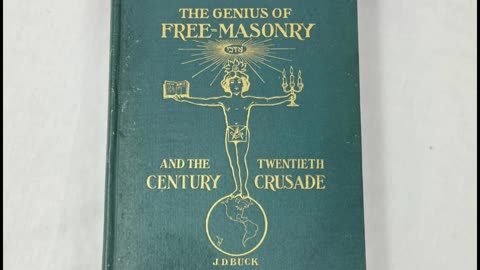
The Genius of Freemasonry and the Twentieth-Century Crusade by: J.D. Buck (1914)
Deus Meum Que Jus
"The Genius of Freemasonry and the Twentieth-Century Crusade" by J.D. Buck is a profound exploration of Freemasonry, delving into its philosophies, principles, and its envisioned role in the modern world. Published in 1914, the book is a product of its time, reflecting the early 20th-century concerns and aspirations. Buck presents Freemasonry not just as a fraternal organization but as a pivotal force for moral and spiritual development.
The text emphasizes the universal truths and ethical teachings of Freemasonry, advocating for its potential to foster a global movement towards enlightenment and human betterment. Buck argues that the core tenets of Freemasonry—truth, justice, brotherhood, and the pursuit of knowledge—are essential for the advancement of society. He envisions a "Twentieth-Century Crusade" where Freemasonry plays a central role in overcoming ignorance, superstition, and tyranny, thus contributing to the progress of humanity.
The book is both a defense of Freemasonry against its critics and a call to action for its members to live up to the high ideals espoused by the order. It addresses various misconceptions about Freemasonry, clarifies its aims, and highlights its historical significance and future potential.
About the Author:
James Denton Buck (1838–1916), known as J.D. Buck, was a prominent American physician, writer, and Freemason. Born in Ohio, Buck pursued a career in medicine, becoming a respected homeopathic physician. However, his interests were not confined to the medical field; he was deeply engaged in esoteric studies, metaphysics, and the philosophical aspects of Freemasonry.
Buck was an ardent supporter and active member of the Masonic fraternity, contributing significantly to Masonic literature. He was a 33rd Degree Freemason within the Ancient and Accepted Scottish Rite of Freemasonry, reflecting his high standing and deep involvement in the craft. He was a member of Kilwinning Lodge No. 356 in Cincinnati, Ohio, and held various significant positions within the fraternity.
In addition to "The Genius of Freemasonry and the Twentieth-Century Crusade," Buck authored several other notable works, including "Mystic Masonry" and "The Symbolism of Freemasonry," wherein he explored the symbolic and allegorical aspects of the craft. His writings remain influential in Masonic circles, valued for their depth of insight and commitment to the higher ideals of Freemasonry. His contributions to the fraternity through his writings and active participation have left a lasting impact on Freemasonry, particularly in the philosophical and esoteric dimensions he so passionately advocated.

Freemasonry its Hidden Meaning by George H. Steinmetz
Deus Meum Que Jus
"Freemasonry: Its Hidden Meaning" by George H. Steinmetz is a detailed exploration of the esoteric and symbolic aspects of Freemasonry. Published in 1948, this book provides an in-depth analysis of the hidden meanings behind Masonic rituals, symbols, and teachings. Steinmetz approaches Freemasonry as a profound philosophical and spiritual system, revealing the deeper significance of its practices.
The book delves into the allegorical interpretations of Masonic symbols and the moral and ethical lessons they convey. Steinmetz discusses the symbolism of the Masonic degrees, the significance of the Masonic tools, and the broader implications of Masonic philosophy. He emphasizes the importance of understanding the esoteric teachings of Freemasonry to fully appreciate its potential as a transformative and enlightening path.
"Freemasonry: Its Hidden Meaning" is a comprehensive guide for both new and experienced Masons seeking to deepen their understanding of the craft. It encourages readers to look beyond the surface of Masonic rituals and symbols to uncover the rich spiritual and philosophical heritage embedded within them.
About the Author:
George H. Steinmetz was a notable Masonic author and scholar known for his contributions to the understanding of Masonic symbolism and philosophy. He was a 33rd Degree Freemason, a high honor that reflects his deep involvement and esteemed position within the fraternity. Steinmetz was a member of various Masonic bodies and actively participated in Masonic education and research.
Steinmetz dedicated much of his work to elucidating the deeper meanings and esoteric teachings of Freemasonry, aiming to inspire Masons to explore the spiritual and philosophical dimensions of their craft. His writings are characterized by their clarity, depth, and insight, making complex Masonic concepts accessible to a wider audience. His works, including "Freemasonry: Its Hidden Meaning," have been highly regarded within Masonic circles for their thorough analysis and thoughtful interpretations.
In addition to his literary contributions, Steinmetz's efforts have helped to illuminate the rich symbolic heritage of Freemasonry, encouraging Masons to seek a greater understanding of the principles and teachings that underpin their rituals and traditions. His dedication to the craft has left a lasting impact on the Masonic community.
Symbolic Teachings or Masonry and its Message by: Thomas Milton Stewart
Deus Meum Que Jus
"Symbolic Teachings or Masonry and its Message" by Thomas Milton Stewart is a profound exploration of the symbolic and philosophical foundations of Freemasonry. Published in 1914, this book offers a meticulous analysis of Masonic rituals and symbols, uncovering their esoteric and ethical significances. Stewart portrays Freemasonry as a structured path towards spiritual enlightenment and moral development, emphasizing its capacity to foster self-improvement and the pursuit of higher truths.
The text serves as an in-depth guide to the allegorical and symbolic dimensions of Masonic practices, revealing how these elements convey deeper spiritual realities. Stewart discusses the role of Masonic degrees, the interpretative value of its teachings, and the ultimate aims of the Masonic journey—self-knowledge and moral integrity. His perspective presents Freemasonry as not just a fraternal organization, but a profound spiritual and philosophical tradition that offers valuable insights into personal and collective growth.
About the Author:
Thomas Milton Stewart (1853-1927) was an influential Freemason and author deeply engaged with the philosophical aspects of Freemasonry. He held the prestigious 33rd degree of the Scottish Rite and was a member of Kilwinning Lodge No. 297 in Cincinnati, Ohio. His extensive writings focus on the esoteric and symbolic components of Freemasonry, aiming to unpack the deeper meanings and lessons embedded within its traditions.
Stewart's contributions to Masonic literature are marked by his scholarly approach and keen insights into the spiritual and ethical teachings of Freemasonry. His works, particularly "Symbolic Teachings or Masonry and its Message," are cherished in Masonic circles for their clarity and depth, aiding Masons in their understanding of the craft's profound spiritual foundations. His legacy is revered among Masons who seek to deepen their engagement with the craft’s esoteric teachings.
The Meaning of Masonry by W.L. Wilmshurst
Deus Meum Que Jus
"The Meaning of Masonry" by W.L. Wilmshurst is a seminal work that delves into the spiritual and philosophical aspects of Freemasonry. Published in 1922, this book explores the deeper meanings and esoteric teachings of Masonic rituals, symbols, and traditions. Wilmshurst presents Freemasonry as a profound system of spiritual development and enlightenment, emphasizing its role in the moral and intellectual evolution of individuals.
The book provides a comprehensive analysis of the symbolic language of Freemasonry, explaining how Masonic symbols serve as keys to deeper spiritual truths. Wilmshurst discusses the purpose and significance of Masonic degrees, the allegorical nature of Masonic teachings, and the ultimate goal of the Masonic path—the realization of the divine within oneself. He views Freemasonry as a universal spiritual tradition that transcends religious and cultural boundaries, offering a pathway to self-knowledge and inner transformation.
"The Meaning of Masonry" is a thought-provoking and insightful text, ideal for both new and seasoned Masons who seek to understand the esoteric foundations of the craft. Wilmshurst's clear and eloquent writing makes complex spiritual concepts accessible, providing a valuable resource for anyone interested in the deeper aspects of Freemasonry.
About the Author:
Walter Leslie Wilmshurst (1867–1939) was a prominent English Freemason and Masonic writer known for his deep exploration of the spiritual and mystical dimensions of Freemasonry. Wilmshurst was a 33rd Degree Freemason and a member of various Masonic bodies, including the Ancient and Accepted Scottish Rite. He was also affiliated with several lodges, including Huddersfield Lodge No. 290 and the Masonic Study Circle in England.
Wilmshurst's writings reflect his profound understanding of the esoteric teachings of Freemasonry. He dedicated much of his life to studying and interpreting the symbolic and philosophical aspects of the craft, aiming to reveal the deeper spiritual meanings behind Masonic rituals and symbols. His works, including "The Meaning of Masonry," are highly regarded within the Masonic community for their depth of insight and spiritual clarity.
As a respected Masonic scholar, Wilmshurst contributed significantly to Masonic literature, encouraging Masons to pursue a deeper understanding of the spiritual path offered by Freemasonry. His legacy continues to inspire and guide Masons in their quest for spiritual enlightenment and self-discovery.
Symbolism by: Milton A. Pottenger
Deus Meum Que Jus
"Symbolism" by Milton A. Pottenger is an in-depth exploration into the myriad ways symbols influence human thought, culture, and spirituality. This seminal work provides a comprehensive analysis of symbols across different civilizations, examining their roles in art, religion, and daily life. Pottenger's research spans from ancient hieroglyphics and religious icons to modern logos and branding, highlighting the enduring power of symbols to convey complex ideas and evoke deep emotional responses.
Through a blend of historical data, cultural studies, and psychological insights, Pottenger deciphers the language of symbols, offering readers a unique lens through which to view the world around them. His discussions delve into the symbolic representations found in global myths, dreams, and rituals, revealing their universal significances and their localized interpretations. "Symbolism" is not only a guide to the symbols themselves but also a reflection on humanity's need to find meaning and connection through symbols.
About the Author
Milton A. Pottenger was an esteemed scholar recognized for his profound understanding of cultural and symbolic dynamics. With a rich academic background that spans anthropology, psychology, and history, Pottenger dedicated much of his career to studying how symbols function across different human societies. His writings are characterized by a deep scholarly rigor, combined with a narrative style that makes complex ideas accessible and engaging.
His contributions to the field of symbolism are marked by a meticulous approach to research and a passionate commitment to unraveling the intricate ways symbols shape human consciousness and societal structures. Pottenger's works, particularly "Symbolism," serve as critical resources for students, scholars, and anyone interested in the psychological and cultural impacts of symbols. His intellectual legacy continues to inspire and inform discussions on symbolism in various academic and professional fields.
The Pythagorean Triangle or The Science of Numbers by: Milton A. Pottenger
Deus Meum Que Jus
"The Pythagorean Triangle or The Science of Numbers" by Milton A. Pottenger is a scholarly exploration of the mathematical and mystical aspects of the Pythagorean theorem and its broader implications in numerology and esoteric traditions. This comprehensive text delves into the historical roots of Pythagorean mathematics, tracing its profound impact from ancient Greek philosophy to contemporary metaphysical thought.
Pottenger examines the Pythagorean Triangle not merely as a geometric figure, but as a symbol of universal harmony, illustrating how its proportions reveal fundamental truths about the nature of reality. Through a detailed analysis of number theory, sacred geometry, and philosophical symbolism, this book offers insights into the interconnectedness of science and spirituality as seen through the lens of Pythagorean wisdom.
This work is an essential guide for those interested in the intersections of mathematics, philosophy, and mysticism, providing a thorough understanding of how ancient teachings continue to influence modern scientific and spiritual inquiries.
About the Author
Milton A. Pottenger was a distinguished scholar whose extensive research spanned the fields of mathematics, philosophy, and esoteric studies. Known for his rigorous analytical approach and engaging writing style, Pottenger brought complex concepts to life, making them accessible to a wide audience. His academic pursuits were driven by a deep fascination with the foundational principles of numbers and their symbolic meanings across various cultures and epochs.
In "The Pythagorean Triangle or The Science of Numbers," Pottenger synthesizes historical scholarship with contemplative insight, offering a rich, nuanced account of Pythagorean mathematical principles and their enduring relevance. His work is celebrated for its depth and clarity, appealing to both academic scholars and casual readers with an interest in the mystical dimensions of mathematics. Pottenger's legacy is marked by his ability to bridge the gap between scientific inquiry and mystical speculation, enriching the discourse on both fronts.
Hamlet by: Shakespeare
Deus Meum Que Jus
"Hamlet," a tragedy by William Shakespeare, is set in the Kingdom of Denmark and tells the story of Prince Hamlet exacting revenge on his uncle Claudius, who has murdered Hamlet's father, taken the throne, and married Hamlet's mother. The play vividly portrays themes of treachery, revenge, incest, and moral corruption. Hamlet struggles with his own psychological turmoil as he seeks to avenge his father's death. This internal conflict leads him through a complex journey that explores issues of betrayal, retribution, and the nature of existence itself. The narrative is famous for its deep character development and the philosophical questions it raises, encapsulated in Hamlet's soliloquy which includes the iconic line "To be, or not to be." The play is celebrated for its intricate plotting, rich language, and a profound exploration of the human condition.

The War of Antichrist with the Church and Christian Civilization by: Monsignor George F. Dillon (1885)
Deus Meum Que Jus
This recording is courtesy of LibriVox.
This recording is in the public domain.
Visit LibriVox.org for more free audiobooks.
"The War of Antichrist with the Church and Christian Civilization" is a book written by Monsignor George F. Dillon in 1885. This work presents a comprehensive examination of the perceived threats to Christian society posed by secret societies and revolutionary movements, particularly focusing on Freemasonry and its alleged connections with other groups such as the Illuminati and the Carbonari. Dillon argues that these organizations aim to undermine and ultimately overthrow Christian civilization, replacing it with secular, anti-religious governance. The book compiles historical data, speeches, and writings of key figures associated with these societies, aiming to expose their strategies and goals. It was published with the intent to alert and inform its readers about these perceived clandestine dangers to their faith and way of life, echoing a sentiment of urgency and the need for a defensive stance against these influences.
Mormonism and Masonry by Samuel H. Goodwin (1920)
Deus Meum Que Jus
This recording is courtesy of LibriVox.
This recording is in the public domain.
Visit LibriVox.org for more free audiobooks.
"Mormonism and Masonry" by Samuel H. Goodwin offers a comprehensive examination of the connections between the LDS Church and Freemasonry. Published in 1920, this work explores the similarities and differences in rituals, symbols, and practices between the two groups. Goodwin, leveraging his status as a 32nd Degree Scottish Rite and York Rite Mason, investigates potential influences of Masonic rites on the LDS temple ceremonies crafted by Joseph Smith. This text is a critical resource for scholars and enthusiasts interested in the historical and doctrinal links between these influential organizations, providing in-depth analysis supported by historical documents and comparative studies.
About the Author:
Samuel H. Goodwin, an esteemed Freemason, held the prestigious 32nd Degree in the Scottish Rite and was also a member of the York Rite. His deep understanding of Masonic traditions and rituals informs his scholarly work, providing a nuanced perspective on the intersections between Freemasonry and Mormonism. Goodwin's expertise is evident throughout his book, which leverages his firsthand knowledge of Masonic practices to draw connections with the rituals of the Church of Jesus Christ of Latter-day Saints.
The Secret Rose and Rosa Alchemica by: William Butler Yeats (1897)
Deus Meum Que Jus
This recording is courtesy of LibriVox.
This recording is in the public domain.
Visit LibriVox.org for more free audiobooks.
"The Secret Rose" and "Rosa Alchemica" by William Butler Yeats are profound explorations of mystical and esoteric themes, deeply influenced by his involvement in the Hermetic Order of the Golden Dawn. Published together in 1897, these stories merge Irish mythological elements with personal and nationalistic narratives in "The Secret Rose," while "Rosa Alchemica" offers a narrative of personal transformation through the allegorical journey of alchemy. These works exemplify Yeats’s ability to blend deep allegorical meanings and mystical experiences with his poetic vision, offering a window into his complex spiritual and artistic pursuits.
About the Author:
William Butler Yeats, a seminal figure in 20th-century literature and Irish cultural revival, was not only a poet but also a passionate student of the mystical and occult. Though not a Freemason, Yeats was deeply involved with the Hermetic Order of the Golden Dawn, an organization dedicated to ritual magic and esoteric knowledge. His membership in the Golden Dawn, from 1890, significantly shaped his literary output, as seen in his exploration of mystical themes and incorporation of rich symbolism. Yeats's works, including "The Secret Rose" and "Rosa Alchemica," reflect his lifelong quest to weave the spiritual and mystical with the poetic narrative.
The Book of Mormon: Part 9 - Ether & Moroni
Deus Meum Que Jus
Ether discusses the history of the Jaredites, an earlier group who came to the Americas but eventually destroyed themselves through internal conflict. Moroni, the final author and son of Mormon, concludes the narrative, adding his own insights and farewell.
About the Author:
Joseph Smith (1805–1844) was an influential religious leader and founder of the Church of Jesus Christ of Latter-day Saints, commonly known as the Mormon Church. Born in Sharon, Vermont, Smith moved with his family to rural New York during his youth, an area experiencing intense religious revivalism known as the Second Great Awakening.
At the age of fourteen, Smith claimed to have experienced a profound visionary encounter in which God the Father and Jesus Christ appeared to him, directing him away from the existing denominations and signaling his future role as a restorer of the ancient Christian faith. In 1827, Smith reported that an angel named Moroni guided him to a set of golden plates buried in a nearby hill. Smith stated that these plates contained the writings of prophets who lived in the Americas centuries prior, and over the next few years, he translated these records into what would become "The Book of Mormon," published in 1830.
Joseph Smith was also a Freemason, initiated into the Nauvoo Lodge in Illinois. He rapidly attained the rank of a Master Mason. His incorporation of Masonic elements into LDS temple ceremonies has been a point of contention, as some believe this contributed to the fractures between him and the Masonic community. Smith's leadership style, revelations, and theocratic vision often placed him at the center of significant controversy and conflict. His founding of cities, like Nauvoo, Illinois, and his candidacy for the United States presidency were marked by both fervent support and fierce opposition.
His life came to a tragic end when he was murdered by a mob in 1844 while imprisoned in Carthage, Illinois. This mob included non-Mormons and, reportedly, disaffected Masons, angry over a variety of issues including his handling of the Nauvoo Expositor. Despite the controversies surrounding his life and teachings, Joseph Smith left a lasting legacy on American religious history and continues to be revered as a prophet by millions of Latter-day Saints worldwide.
The Book of Mormon Part 8 - 4 Nephi & Mormon
Deus Meum Que Jus
Covers the period of great peace following Christ's visit and then the subsequent decline into wickedness and warfare, as compiled by Mormon.
About the Author:
Joseph Smith (1805–1844) was an influential religious leader and founder of the Church of Jesus Christ of Latter-day Saints, commonly known as the Mormon Church. Born in Sharon, Vermont, Smith moved with his family to rural New York during his youth, an area experiencing intense religious revivalism known as the Second Great Awakening.
At the age of fourteen, Smith claimed to have experienced a profound visionary encounter in which God the Father and Jesus Christ appeared to him, directing him away from the existing denominations and signaling his future role as a restorer of the ancient Christian faith. In 1827, Smith reported that an angel named Moroni guided him to a set of golden plates buried in a nearby hill. Smith stated that these plates contained the writings of prophets who lived in the Americas centuries prior, and over the next few years, he translated these records into what would become "The Book of Mormon," published in 1830.
Joseph Smith was also a Freemason, initiated into the Nauvoo Lodge in Illinois. He rapidly attained the rank of a Master Mason. His incorporation of Masonic elements into LDS temple ceremonies has been a point of contention, as some believe this contributed to the fractures between him and the Masonic community. Smith's leadership style, revelations, and theocratic vision often placed him at the center of significant controversy and conflict. His founding of cities, like Nauvoo, Illinois, and his candidacy for the United States presidency were marked by both fervent support and fierce opposition.
His life came to a tragic end when he was murdered by a mob in 1844 while imprisoned in Carthage, Illinois. This mob included non-Mormons and, reportedly, disaffected Masons, angry over a variety of issues including his handling of the Nauvoo Expositor. Despite the controversies surrounding his life and teachings, Joseph Smith left a lasting legacy on American religious history and continues to be revered as a prophet by millions of Latter-day Saints worldwide.
The Book of Mormon Part 7 - 3 Nephi 1-30
Deus Meum Que Jus
Known for its account of the visit of Jesus Christ to the Americas post-resurrection, detailing His teachings, miracles, and the establishment of His church among the Nephites.
About the Author:
Joseph Smith (1805–1844) was an influential religious leader and founder of the Church of Jesus Christ of Latter-day Saints, commonly known as the Mormon Church. Born in Sharon, Vermont, Smith moved with his family to rural New York during his youth, an area experiencing intense religious revivalism known as the Second Great Awakening.
At the age of fourteen, Smith claimed to have experienced a profound visionary encounter in which God the Father and Jesus Christ appeared to him, directing him away from the existing denominations and signaling his future role as a restorer of the ancient Christian faith. In 1827, Smith reported that an angel named Moroni guided him to a set of golden plates buried in a nearby hill. Smith stated that these plates contained the writings of prophets who lived in the Americas centuries prior, and over the next few years, he translated these records into what would become "The Book of Mormon," published in 1830.
Joseph Smith was also a Freemason, initiated into the Nauvoo Lodge in Illinois. He rapidly attained the rank of a Master Mason. His incorporation of Masonic elements into LDS temple ceremonies has been a point of contention, as some believe this contributed to the fractures between him and the Masonic community. Smith's leadership style, revelations, and theocratic vision often placed him at the center of significant controversy and conflict. His founding of cities, like Nauvoo, Illinois, and his candidacy for the United States presidency were marked by both fervent support and fierce opposition.
His life came to a tragic end when he was murdered by a mob in 1844 while imprisoned in Carthage, Illinois. This mob included non-Mormons and, reportedly, disaffected Masons, angry over a variety of issues including his handling of the Nauvoo Expositor. Despite the controversies surrounding his life and teachings, Joseph Smith left a lasting legacy on American religious history and continues to be revered as a prophet by millions of Latter-day Saints worldwide.
1
comment

The Book of Mormon: Part 6 - Helaman 1-16
Deus Meum Que Jus
Discusses the Nephite and Lamanite societies and includes prophecies and the preaching of Nephi and Lehi.
About the Author:
Joseph Smith (1805–1844) was an influential religious leader and founder of the Church of Jesus Christ of Latter-day Saints, commonly known as the Mormon Church. Born in Sharon, Vermont, Smith moved with his family to rural New York during his youth, an area experiencing intense religious revivalism known as the Second Great Awakening.
At the age of fourteen, Smith claimed to have experienced a profound visionary encounter in which God the Father and Jesus Christ appeared to him, directing him away from the existing denominations and signaling his future role as a restorer of the ancient Christian faith. In 1827, Smith reported that an angel named Moroni guided him to a set of golden plates buried in a nearby hill. Smith stated that these plates contained the writings of prophets who lived in the Americas centuries prior, and over the next few years, he translated these records into what would become "The Book of Mormon," published in 1830.
Joseph Smith was also a Freemason, initiated into the Nauvoo Lodge in Illinois. He rapidly attained the rank of a Master Mason. His incorporation of Masonic elements into LDS temple ceremonies has been a point of contention, as some believe this contributed to the fractures between him and the Masonic community. Smith's leadership style, revelations, and theocratic vision often placed him at the center of significant controversy and conflict. His founding of cities, like Nauvoo, Illinois, and his candidacy for the United States presidency were marked by both fervent support and fierce opposition.
His life came to a tragic end when he was murdered by a mob in 1844 while imprisoned in Carthage, Illinois. This mob included non-Mormons and, reportedly, disaffected Masons, angry over a variety of issues including his handling of the Nauvoo Expositor. Despite the controversies surrounding his life and teachings, Joseph Smith left a lasting legacy on American religious history and continues to be revered as a prophet by millions of Latter-day Saints worldwide.

The Book of Mormon: Part 5 - Alma 1-63
Deus Meum Que Jus
The longest book in the volume, detailing the missionary efforts of Alma the Younger and his contemporaries, the wars between the Nephites and the Lamanites, and the teachings of Alma.
About the Author:
Joseph Smith (1805–1844) was an influential religious leader and founder of the Church of Jesus Christ of Latter-day Saints, commonly known as the Mormon Church. Born in Sharon, Vermont, Smith moved with his family to rural New York during his youth, an area experiencing intense religious revivalism known as the Second Great Awakening.
At the age of fourteen, Smith claimed to have experienced a profound visionary encounter in which God the Father and Jesus Christ appeared to him, directing him away from the existing denominations and signaling his future role as a restorer of the ancient Christian faith. In 1827, Smith reported that an angel named Moroni guided him to a set of golden plates buried in a nearby hill. Smith stated that these plates contained the writings of prophets who lived in the Americas centuries prior, and over the next few years, he translated these records into what would become "The Book of Mormon," published in 1830.
Joseph Smith was also a Freemason, initiated into the Nauvoo Lodge in Illinois. He rapidly attained the rank of a Master Mason. His incorporation of Masonic elements into LDS temple ceremonies has been a point of contention, as some believe this contributed to the fractures between him and the Masonic community. Smith's leadership style, revelations, and theocratic vision often placed him at the center of significant controversy and conflict. His founding of cities, like Nauvoo, Illinois, and his candidacy for the United States presidency were marked by both fervent support and fierce opposition.
His life came to a tragic end when he was murdered by a mob in 1844 while imprisoned in Carthage, Illinois. This mob included non-Mormons and, reportedly, disaffected Masons, angry over a variety of issues including his handling of the Nauvoo Expositor. Despite the controversies surrounding his life and teachings, Joseph Smith left a lasting legacy on American religious history and continues to be revered as a prophet by millions of Latter-day Saints worldwide.
The Book of Mormon: Part 4 - Words of Mormon 1 & Mosiah 1-29
Deus Meum Que Jus
This part transitions from the smaller plates to Mormon’s abridgment of the larger plates, detailing the reign of King Benjamin and the religious and political upheavals during the time of Mosiah.
About the Author:
Joseph Smith (1805–1844) was an influential religious leader and founder of the Church of Jesus Christ of Latter-day Saints, commonly known as the Mormon Church. Born in Sharon, Vermont, Smith moved with his family to rural New York during his youth, an area experiencing intense religious revivalism known as the Second Great Awakening.
At the age of fourteen, Smith claimed to have experienced a profound visionary encounter in which God the Father and Jesus Christ appeared to him, directing him away from the existing denominations and signaling his future role as a restorer of the ancient Christian faith. In 1827, Smith reported that an angel named Moroni guided him to a set of golden plates buried in a nearby hill. Smith stated that these plates contained the writings of prophets who lived in the Americas centuries prior, and over the next few years, he translated these records into what would become "The Book of Mormon," published in 1830.
Joseph Smith was also a Freemason, initiated into the Nauvoo Lodge in Illinois. He rapidly attained the rank of a Master Mason. His incorporation of Masonic elements into LDS temple ceremonies has been a point of contention, as some believe this contributed to the fractures between him and the Masonic community. Smith's leadership style, revelations, and theocratic vision often placed him at the center of significant controversy and conflict. His founding of cities, like Nauvoo, Illinois, and his candidacy for the United States presidency were marked by both fervent support and fierce opposition.
His life came to a tragic end when he was murdered by a mob in 1844 while imprisoned in Carthage, Illinois. This mob included non-Mormons and, reportedly, disaffected Masons, angry over a variety of issues including his handling of the Nauvoo Expositor. Despite the controversies surrounding his life and teachings, Joseph Smith left a lasting legacy on American religious history and continues to be revered as a prophet by millions of Latter-day Saints worldwide.
The Book of Mormon: Part 3 - Enos 1, Jarom 1, and Omni 1
Deus Meum Que Jus
These brief books contain the writings of descendants of Jacob and Enos, discussing their efforts to preach to their people and maintain records.
About the Author:
Joseph Smith (1805–1844) was an influential religious leader and founder of the Church of Jesus Christ of Latter-day Saints, commonly known as the Mormon Church. Born in Sharon, Vermont, Smith moved with his family to rural New York during his youth, an area experiencing intense religious revivalism known as the Second Great Awakening.
At the age of fourteen, Smith claimed to have experienced a profound visionary encounter in which God the Father and Jesus Christ appeared to him, directing him away from the existing denominations and signaling his future role as a restorer of the ancient Christian faith. In 1827, Smith reported that an angel named Moroni guided him to a set of golden plates buried in a nearby hill. Smith stated that these plates contained the writings of prophets who lived in the Americas centuries prior, and over the next few years, he translated these records into what would become "The Book of Mormon," published in 1830.
Joseph Smith was also a Freemason, initiated into the Nauvoo Lodge in Illinois. He rapidly attained the rank of a Master Mason. His incorporation of Masonic elements into LDS temple ceremonies has been a point of contention, as some believe this contributed to the fractures between him and the Masonic community. Smith's leadership style, revelations, and theocratic vision often placed him at the center of significant controversy and conflict. His founding of cities, like Nauvoo, Illinois, and his candidacy for the United States presidency were marked by both fervent support and fierce opposition.
His life came to a tragic end when he was murdered by a mob in 1844 while imprisoned in Carthage, Illinois. This mob included non-Mormons and, reportedly, disaffected Masons, angry over a variety of issues including his handling of the Nauvoo Expositor. Despite the controversies surrounding his life and teachings, Joseph Smith left a lasting legacy on American religious history and continues to be revered as a prophet by millions of Latter-day Saints worldwide.

The Book of Mormon: Part 2 - Jacob 1-7
Deus Meum Que Jus
This section covers the ministry of Jacob, Nephi's brother, focusing on his teachings and exhortations to the Nephite people.
About the Author:
Joseph Smith (1805–1844) was an influential religious leader and founder of the Church of Jesus Christ of Latter-day Saints, commonly known as the Mormon Church. Born in Sharon, Vermont, Smith moved with his family to rural New York during his youth, an area experiencing intense religious revivalism known as the Second Great Awakening.
At the age of fourteen, Smith claimed to have experienced a profound visionary encounter in which God the Father and Jesus Christ appeared to him, directing him away from the existing denominations and signaling his future role as a restorer of the ancient Christian faith. In 1827, Smith reported that an angel named Moroni guided him to a set of golden plates buried in a nearby hill. Smith stated that these plates contained the writings of prophets who lived in the Americas centuries prior, and over the next few years, he translated these records into what would become "The Book of Mormon," published in 1830.
Joseph Smith was also a Freemason, initiated into the Nauvoo Lodge in Illinois. He rapidly attained the rank of a Master Mason. His incorporation of Masonic elements into LDS temple ceremonies has been a point of contention, as some believe this contributed to the fractures between him and the Masonic community. Smith's leadership style, revelations, and theocratic vision often placed him at the center of significant controversy and conflict. His founding of cities, like Nauvoo, Illinois, and his candidacy for the United States presidency were marked by both fervent support and fierce opposition.
His life came to a tragic end when he was murdered by a mob in 1844 while imprisoned in Carthage, Illinois. This mob included non-Mormons and, reportedly, disaffected Masons, angry over a variety of issues including his handling of the Nauvoo Expositor. Despite the controversies surrounding his life and teachings, Joseph Smith left a lasting legacy on American religious history and continues to be revered as a prophet by millions of Latter-day Saints worldwide.
The Book of Mormon: Part 1 - 1 Nephi, 2 Nephi
Deus Meum Que Jus
These books narrate the story of Nephi and his family, including their departure from Jerusalem, their journeyings in the wilderness, their arrival in the Promised Land, and Nephi’s teachings and prophecies.
About the Author:
Joseph Smith (1805–1844) was an influential religious leader and founder of the Church of Jesus Christ of Latter-day Saints, commonly known as the Mormon Church. Born in Sharon, Vermont, Smith moved with his family to rural New York during his youth, an area experiencing intense religious revivalism known as the Second Great Awakening.
At the age of fourteen, Smith claimed to have experienced a profound visionary encounter in which God the Father and Jesus Christ appeared to him, directing him away from the existing denominations and signaling his future role as a restorer of the ancient Christian faith. In 1827, Smith reported that an angel named Moroni guided him to a set of golden plates buried in a nearby hill. Smith stated that these plates contained the writings of prophets who lived in the Americas centuries prior, and over the next few years, he translated these records into what would become "The Book of Mormon," published in 1830.
Joseph Smith was also a Freemason, initiated into the Nauvoo Lodge in Illinois. He rapidly attained the rank of a Master Mason. His incorporation of Masonic elements into LDS temple ceremonies has been a point of contention, as some believe this contributed to the fractures between him and the Masonic community. Smith's leadership style, revelations, and theocratic vision often placed him at the center of significant controversy and conflict. His founding of cities, like Nauvoo, Illinois, and his candidacy for the United States presidency were marked by both fervent support and fierce opposition.
His life came to a tragic end when he was murdered by a mob in 1844 while imprisoned in Carthage, Illinois. This mob included non-Mormons and, reportedly, disaffected Masons, angry over a variety of issues including his handling of the Nauvoo Expositor. Despite the controversies surrounding his life and teachings, Joseph Smith left a lasting legacy on American religious history and continues to be revered as a prophet by millions of Latter-day Saints worldwide.
Chapter 1º - Apprentice - Morals & Dogma of the Ancient & Accepted Scottish Rite of Freemasonry
Deus Meum Que Jus
This chapter addresses the first degree of the Scottish Rite of Freemasonry, the Entered Apprentice. This chapter serves as an introduction to the fundamental principles of Freemasonry, setting the stage for the deeper and more esoteric lessons explored in subsequent degrees. The Entered Apprentice degree is depicted as the gateway through which one enters the world of Masonic symbolism, philosophy, and ethics.
Pike uses this chapter to discuss the symbols and tools associated with the degree, such as the rough ashlar, the square, and the compasses, interpreting them as tools for personal and moral development. He emphasizes the importance of knowledge, self-awareness, and the continuous pursuit of truth as foundational virtues for any Mason. The chapter is rich with allegorical content, aiming to instruct the new initiate in the virtues of silence, obedience, and humility—qualities essential for the building of character and the foundation of a meaningful Masonic journey.
Moreover, Pike explores the themes of light and darkness, knowledge and ignorance, which are central to the Masonic initiation experience. The Apprentice is encouraged to seek light through education and moral rectitude, moving from a state of spiritual darkness to a state of enlightenment. This transformation is symbolic of the broader Masonic goal of improving oneself and, by extension, society.
The discourse in this chapter provides listeners with insights into how Masonry views the role of the individual in society and the importance of ethical conduct and continuous learning. It sets the tone for the intricate teachings of the Scottish Rite and underscores the lifelong commitment to personal and communal improvement that Masonry advocates.
About the Book:
Morals & Dogma of the Ancient and Accepted Scottish Rite of Freemasonry was first published in 1871 and authored by Albert Pike, who was a deeply influential figure within the Scottish Rite. The book is a comprehensive collection of philosophical and instructional essays on each degree of the Scottish Rite, from the 1st to the 33rd. It is considered one of the most profound and enduring works on Freemasonry, reflecting Pike’s vast knowledge of philosophy, esotericism, and various religious traditions.
The work is structured into 32 chapters, each corresponding to one of the Masonic degrees of the Scottish Rite, with an additional introductory chapter on the 33rd degree. Pike elaborates on the symbolic, ethical, and philosophical teachings associated with each degree, making extensive use of allegorical and scriptural references to explore themes such as morality, justice, and truth.
Morals & Dogma is revered not only for its depth in explaining the symbolic meanings of Masonic rituals but also for Pike’s efforts to contextualize Masonic teachings within the broader scope of Western and Eastern philosophical thought. His interpretations draw from a myriad of sources, including Biblical scriptures, classical philosophy, medieval Kabbalah, and other mystical and religious texts, showcasing Freemasonry as a unique conduit for spiritual and moral development.
The book’s enduring relevance comes from its ability to weave complex theological, philosophical, and historical threads into a coherent system of moral conduct and metaphysical understanding. It serves as both a guide and a philosophical treatise, intended to inspire contemplation and ethical conduct among Masons.
While Morals & Dogma has historically been a key manual for those within the Scottish Rite, its appeal extends beyond Masonic circles due to its rich discussions of morality and spirituality. It remains a significant work for anyone interested in the philosophical underpinnings of fraternal orders or in the broader dialogue between ancient wisdom traditions and modern ethical challenges.
About the Author:
Albert Pike (1809–1891) was a multifaceted American figure known for his roles as a lawyer, writer, soldier, and influential Freemason. Born in Boston, Massachusetts, Pike moved to the frontier, which today is Arkansas, where he practiced law, worked as a journalist, and engaged in various political activities.
Pike's Masonic journey is as storied and complex as his public life. He was deeply involved in the development of the Scottish Rite of Freemasonry and became the Sovereign Grand Commander of the Southern Jurisdiction of the Scottish Rite from 1859 until his death in 1891. Under his leadership, the Scottish Rite flourished, and Pike authored Morals and Dogma of the Ancient and Accepted Scottish Rite of Freemasonry in 1871, a book that remains a cornerstone of Masonic literature.
Beyond the Scottish Rite, Pike was active in many other Masonic bodies. He was a founding officer of the Knights of the Golden Circle and was involved in the development of several York Rite bodies. His Masonic work extended internationally; he played a crucial role in promoting and organizing Freemasonry in Europe and Latin America.
During the American Civil War, Pike served as a brigadier general in the Confederate States Army, commanding the District of Indian Territory. His service in this capacity was marked by controversies, including disagreements with superior officers and the government's policies toward Native American tribes. Despite his military and political engagements, his contributions to Masonic scholarship and ritual remain his most enduring legacy.
Pike's interests and writings spanned a wide range of subjects, including philosophy, astrology, and comparative religion, which influenced his Masonic writings and teachings. His intellectual pursuits reflected his belief in the universality of all religions and the synthesis of philosophical truths across different cultures.
Albert Pike's life was characterized by his vigorous intellect, his dedication to the ideals of Freemasonry, and his controversial role in the historical events of his time. His Masonic work, especially through Morals and Dogma, continues to be studied and revered in Masonic circles worldwide, cementing his place as one of the most significant figures in the history of Freemasonry.
Chapter 30º - Knight Kadosh - Morals & Dogma of the Ancient & Accepted Scottish Rite of Freemasonry
Deus Meum Que Jus
This chapter is dedicated to the Knight Kadosh or the 30th degree of the Scottish Rite of Freemasonry, delves into one of the most philosophical and symbolically rich degrees within the Masonic hierarchy. This degree, also known as the Knight of the White and Black Eagle, explores themes of judgment, justice, and the perpetual fight against tyranny and oppression. Pike's exposition on the Knight Kadosh degree is a profound reflection on moral and ethical dilemmas faced by individuals seeking to uphold the highest virtues of knighthood and Masonic principles.
In this chapter, Pike interprets the allegories and symbols associated with the degree, discussing the historical and mythical narratives that shape its rituals and teachings. The Knight Kadosh is presented not just as a degree of vengeance, as commonly misconstrued, but as a call to moral warfare against the forces of injustice and ignorance that plague society. Pike emphasizes the importance of discretion, loyalty, and the pursuit of truth through the rigorous examination of one's own beliefs and actions.
This degree serves as a culmination of the philosophical journey through the degrees of the Scottish Rite, requiring deep introspection and commitment to the Masonic quest for light and truth. Pike's writings urge Masons at this level to act as champions of the oppressed and defenders of moral law, embodying the chivalric ideals that are central to the degree's symbolism.
The exploration of this chapter provides listeners with a deeper understanding of Masonic philosophy as it pertains to justice, morality, and the higher duties of a Knight Kadosh. It highlights Pike's mastery in weaving complex historical, religious, and esoteric threads into a coherent philosophical discourse that remains relevant to the ethical challenges of the modern world.
About the Book:
Morals & Dogma of the Ancient and Accepted Scottish Rite of Freemasonry was first published in 1871 and authored by Albert Pike, who was a deeply influential figure within the Scottish Rite. The book is a comprehensive collection of philosophical and instructional essays on each degree of the Scottish Rite, from the 1st to the 33rd. It is considered one of the most profound and enduring works on Freemasonry, reflecting Pike’s vast knowledge of philosophy, esotericism, and various religious traditions.
The work is structured into 32 chapters, each corresponding to one of the Masonic degrees of the Scottish Rite, with an additional introductory chapter on the 33rd degree. Pike elaborates on the symbolic, ethical, and philosophical teachings associated with each degree, making extensive use of allegorical and scriptural references to explore themes such as morality, justice, and truth.
Morals & Dogma is revered not only for its depth in explaining the symbolic meanings of Masonic rituals but also for Pike’s efforts to contextualize Masonic teachings within the broader scope of Western and Eastern philosophical thought. His interpretations draw from a myriad of sources, including Biblical scriptures, classical philosophy, medieval Kabbalah, and other mystical and religious texts, showcasing Freemasonry as a unique conduit for spiritual and moral development.
The book’s enduring relevance comes from its ability to weave complex theological, philosophical, and historical threads into a coherent system of moral conduct and metaphysical understanding. It serves as both a guide and a philosophical treatise, intended to inspire contemplation and ethical conduct among Masons.
While Morals & Dogma has historically been a key manual for those within the Scottish Rite, its appeal extends beyond Masonic circles due to its rich discussions of morality and spirituality. It remains a significant work for anyone interested in the philosophical underpinnings of fraternal orders or in the broader dialogue between ancient wisdom traditions and modern ethical challenges.
About the Author:
Albert Pike (1809–1891) was a multifaceted American figure known for his roles as a lawyer, writer, soldier, and influential Freemason. Born in Boston, Massachusetts, Pike moved to the frontier, which today is Arkansas, where he practiced law, worked as a journalist, and engaged in various political activities.
Pike's Masonic journey is as storied and complex as his public life. He was deeply involved in the development of the Scottish Rite of Freemasonry and became the Sovereign Grand Commander of the Southern Jurisdiction of the Scottish Rite from 1859 until his death in 1891. Under his leadership, the Scottish Rite flourished, and Pike authored Morals and Dogma of the Ancient and Accepted Scottish Rite of Freemasonry in 1871, a book that remains a cornerstone of Masonic literature.
Beyond the Scottish Rite, Pike was active in many other Masonic bodies. He was a founding officer of the Knights of the Golden Circle and was involved in the development of several York Rite bodies. His Masonic work extended internationally; he played a crucial role in promoting and organizing Freemasonry in Europe and Latin America.
During the American Civil War, Pike served as a brigadier general in the Confederate States Army, commanding the District of Indian Territory. His service in this capacity was marked by controversies, including disagreements with superior officers and the government's policies toward Native American tribes. Despite his military and political engagements, his contributions to Masonic scholarship and ritual remain his most enduring legacy.
Pike's interests and writings spanned a wide range of subjects, including philosophy, astrology, and comparative religion, which influenced his Masonic writings and teachings. His intellectual pursuits reflected his belief in the universality of all religions and the synthesis of philosophical truths across different cultures.
Albert Pike's life was characterized by his vigorous intellect, his dedication to the ideals of Freemasonry, and his controversial role in the historical events of his time. His Masonic work, especially through Morals and Dogma, continues to be studied and revered in Masonic circles worldwide, cementing his place as one of the most significant figures in the history of Freemasonry.
The Mission of Masonry by: Joseph Fort Newton
Deus Meum Que Jus
The Mission of Masonry is a critical work by Joseph Fort Newton, originally delivered as an address at the 69th Annual Communication of the Grand Lodge of Iowa, A.F. & A.M., in 1912. Later printed for private distribution, this work serves as an exposition of Masonry's deeper purpose and responsibilities, extending beyond rituals to focus on the fraternity’s ethical, moral, and philosophical imperatives.
In The Mission of Masonry, Newton argues that Freemasonry is a vital moral force with the potential to uplift society by promoting universal brotherhood, ethical living, and the pursuit of truth. The work highlights how Masonic values—rooted in justice, charity, and knowledge—are not confined to the lodge but extend to all areas of life. Newton asserts that Masonry’s mission is to build better men who are committed to improving society through the application of Masonic principles. The text explores how Freemasonry transcends national, racial, and religious boundaries, advocating for unity and mutual respect among all people.
Newton also delves into the symbolic and allegorical aspects of Masonry, showing how these teachings are meant to inspire moral conduct and intellectual growth. He challenges Masons to take their responsibilities seriously, urging lodges to invest in Masonic education as a way of ensuring that members fully understand and embody the fraternity’s values.
Newton's address was instrumental in shaping Masonic education in the United States, and it laid the groundwork for his later works like The Builders and Short Talks on Masonry. The Mission of Masonry is still referenced today for its clear articulation of Freemasonry’s spiritual mission.
About the Author:
Joseph Fort Newton (1880-1950) was a renowned Baptist minister, Masonic scholar, and prolific writer. Raised to the degree of Master Mason in Friendship Lodge No. 7, Dixon, Illinois, in 1902, Newton became one of the most influential voices in early 20th-century Freemasonry. His contributions were not limited to the United States; he gained international recognition during his time as the pastor of City Temple in London, where he became a prominent figure in both religious and Masonic circles.
Newton served as the Grand Chaplain of the Grand Lodge of Iowa from 1911 to 1913. His role in promoting Masonic education was central to his career, and he was a member of several lodges and Masonic bodies throughout his life:
1. Friendship Lodge No. 7, Dixon, Illinois (where he was raised as a Master Mason).
2. Grand Lodge of Iowa (where he served as Grand Chaplain).
3. City Temple Lodge, London (during his tenure as pastor).
Newton was also associated with several appendant bodies and honorary memberships due to his contributions to Masonic education and philosophy. His influence extended beyond the lodge as he authored works that blended Masonic teachings with broader religious and philosophical ideas. His education included degrees from Southern Baptist Theological Seminary and Harvard University, and he received honorary doctorates from institutions like Tufts University and Coe College.
Newton's deep involvement in Freemasonry is reflected in his literary works, which continue to be staples in Masonic libraries. He was dedicated to promoting the idea that Freemasonry’s mission is to cultivate virtuous men who can lead society toward higher ideals. His writing style, blending eloquence with philosophical depth, made complex Masonic principles accessible to a wide audience. Works like The Mission of Masonry and The Builders are still studied for their insight into the esoteric and ethical dimensions of the craft.
Newton's philosophy emphasized that the lessons of Masonry are universal truths meant to guide members toward bettering themselves and, by extension, the world around them. His contributions to Masonic literature and education have made him one of the most celebrated Masonic authors of the 20th century.

Nox Niijosa by: Walter Leslie Wilmshurst (1917)
Deus Meum Que Jus
First appearing in The Oxford Book of English Mystical Verse (1917), Nox Nivosa is a profoundly esoteric poem, rich with symbolism and allegory, encapsulating deep spiritual concepts about the soul’s journey through life, death, and rebirth. Wilmshurst uses the metaphor of snowflakes to illustrate the cyclical process of creation, dissolution, and transformation, ultimately leading to spiritual enlightenment and union with the divine.
Nox Niijosa
by: WALTER LESLIE WILMSHURST
"SNOWFLAKES downfloating from the void
Upon my face,
Spilth of the silent alchemy employed
In deeps of space
Where viewless everlasting fingers ply
The power whose secret is the mystery
That doth my world encase;"
>The snowflakes represent spiritual energy or divine thoughts descending from the void (the formless source of all creation) into the material world. The "silent alchemy" refers to the invisible process of creation—the transformation of spiritual essence into physical form. The "viewless everlasting fingers" are a metaphor for the divine forces shaping these thoughts into tangible expressions. The "mystery" encapsulating the world symbolizes the hidden laws of creation that govern both the cosmos and the individual soul.
"Power that with equal ease outshakes
Yon architrave
Of massy stars in heaven and these frail flakes
Earth's floor that pave;
Swings the flamed orbs with infinite time for dower
And strews these velvet jewels not an hour
Of sunshine that will brave;"
>Here, Wilmshurst explores the idea that the same divine power that moves the stars ("flamed orbs") is responsible for the formation of snowflakes. This reflects the Hermetic principle "As above, so below," showing the interconnectedness of the macrocosm (the universe) and the microcosm (the individual soul). The delicate snowflakes, like the grand movements of celestial bodies, are expressions of the same universal force, symbolizing the balance between the infinite and the finite.
"Yet of whose clustered crystals none
But speaks the act Of the hand that steers each ceaseless-wheeling sun
And to whose tact
Fire-wreath and spangled ice alike respond;
Thoughts from the void frozen to flower and frond,
Divinely all compact;"
>Wilmshurst continues the metaphor by describing the snowflakes as "thoughts from the void frozen to flower and frond." This suggests that all forms—whether they are grand cosmic entities or delicate earthly creations—are manifestations of divine thought. The "hand that steers each ceaseless-wheeling sun" is a metaphor for the divine intelligence guiding the universe, reinforcing the idea that both the macrocosmic (sun) and microcosmic (snowflake) are governed by the same spiritual principles.
"Snowflakes, of pureness unalloyed,
That in dark space
Are built, and spilt from out the teeming void
With prodigal grace,
Air-quarried temples though you fall scarce-felt
And all your delicate architecture melt
To tears upon my face, —"
>In this stanza, the snowflakes are described as "air-quarried temples," symbolizing the temporary, yet beautiful, nature of all material forms. Despite their intricate design, these creations quickly dissolve ("melt to tears"), emphasizing the transient nature of life and the impermanence of the physical world. The "teeming void" represents the boundless source from which all forms arise and eventually return, highlighting the cyclical process of creation and dissolution in the universe.
"I too am such encrystalled breath
In the void planned
And bodied forth to surge of life and death;
And as I stand
Beneath this sacramental spilth of snow,
Crumbling, you whisper:
'Fear thou not to go
Back to the viewless hand;"
>The speaker identifies with the snowflakes, recognizing that, like them, he is a temporary crystallization of divine essence ("encrystalled breath"). The "surge of life and death" refers to the soul’s journey through multiple incarnations, shaped by cycles of creation and dissolution. The snowflakes’ whisper to "fear thou not to go back to the viewless hand" is a reassurance that death is not an end but a return to the source—a concept central to mystical traditions like Freemasonry and Rosicrucianism.
"'Thence to be moulded forth again
Through time and space
Till thy imperishable self attain
Such strength and grace
Through endless infinite refinement passed By the eternal
Alchemist that at last
Thou see Him face to face'"
>The poem concludes with the promise of reincarnation and spiritual evolution. The "eternal Alchemist" represents the divine force that continually refines the soul through successive lifetimes ("moulded forth again through time and space"). The ultimate goal is for the soul to attain "strength and grace" through this process, eventually reaching a state of perfection where it can directly perceive the divine ("see Him face to face"). This aligns with the esoteric teachings of spiritual ascension, where the soul moves closer to unity with the divine source through cycles of purification and enlightenment.
About the Author:
Walter Leslie Wilmshurst (1867-1939) was a renowned Freemason and mystical writer with a profound influence on the esoteric interpretations of Freemasonry. His Masonic journey began in 1889 when he was initiated into **Huddersfield Lodge No. 290** in Yorkshire, England. Throughout his Masonic career, Wilmshurst held several significant offices and was deeply committed to exploring the spiritual dimensions of the craft.
Masonic Orders and Degrees:
1. Craft Freemasonry:
- Initiated, passed, and raised in Huddersfield Lodge No. 290.
- Held various offices within the lodge, reflecting his deep engagement with the teachings and symbolism of the Craft Degrees (Entered Apprentice, Fellowcraft, and Master Mason).
2. Royal Arch Masonry:
- Advanced to the Holy Royal Arch, which Wilmshurst viewed as the culmination of the Craft Degrees. He believed the Royal Arch revealed the hidden meanings and spiritual truths that complete the Masonic journey.
3. Mark Master Mason:
- Wilmshurst was a Mark Master Mason, a degree that further explores the symbolic role of the individual as a builder and delves into the importance of integrity and moral character in the Masonic path.
Wilmshurst’s focus was primarily on the Craft Degrees and their extensions through the Royal Arch and Mark Masonry, where his esoteric teachings found their most profound expression. His writings and lectures emphasized the transformative journey these degrees represent, guiding initiates toward spiritual enlightenment and the realization of divine truths.
The Rosicrucian Mysteries: An Elementary Exposition of Their Secret Teachings by Max Heindel (1911)
Deus Meum Que Jus
The Rosicrucian Mysteries by Max Heindel is a foundational text that provides an introduction to the core teachings of the Rosicrucian Fellowship. Subtitled An Elementary Exposition of Their Secret Teachings, the book is aimed at newcomers interested in the esoteric and spiritual principles of the Rosicrucian tradition.
Heindel explains fundamental concepts such as the nature of the soul, reincarnation, karma, spiritual evolution, and initiation processes. The text integrates Christian mysticism with occult teachings, presenting a unique path of spiritual development centered on the Rosicrucian worldview.
Content Overview:
The book is divided into key sections that address:
1. The Constitution of the Human Being: Describes the physical, etheric, and astral bodies, and how they function within the context of spiritual development.
2. Life After Death: Explains the stages the soul undergoes after death and the purpose of reincarnation as part of spiritual evolution.
3. The Science of Initiation: Discusses how spiritual growth is achieved through disciplined practice and inner work within the framework of the Rosicrucian system.
4. Healing and the Invisible Helpers: Delves into the Rosicrucian approach to spiritual healing and the role of "invisible helpers" in assisting humanity.
The book remains an essential read for those exploring Rosicrucian philosophy and its application in daily life.
About the Author:
Max Heindel (1865-1919) was a Christian mystic, occultist, and the founder of the Rosicrucian Fellowship. Born in Denmark as Carl Louis von Grasshoff, Heindel later moved to the United States, where he became a prominent figure in the study and dissemination of esoteric teachings.
Orders and Degrees:
1. The Theosophical Society:
- Heindel was actively involved in the Theosophical Society, which served as his introduction to esoteric studies and mysticism. Though he was not a prominent leader within the society, his exposure to Theosophy laid the groundwork for his later work.
2. Rosicrucian Fellowship:
- Heindel is best known for founding the Rosicrucian Fellowship in 1909, based on his teachings and interpretations of Rosicrucianism. After an intensive period of study with an alleged group of Rosicrucian initiates in Europe, he formalized these teachings in The Rosicrucian Cosmo-Conception, which remains a foundational text for the fellowship.
- The fellowship, though inspired by traditional Rosicrucian principles, developed under Heindel’s unique interpretation of esoteric Christianity, astrology, and spiritual science. Unlike traditional Masonic orders, the fellowship does not operate under a degree-based structure but emphasizes spiritual growth, self-study, and service.
Max Heindel’s focus was primarily on the development of a spiritual system rooted in Rosicrucian principles. His teachings and writings, particularly those of the Rosicrucian Fellowship, continue to influence esoteric communities and those pursuing spiritual enlightenment through Christian mysticism.
2
comments

Gleanings of a Mystic: A Series of Essays on Practical Mysticism by Max Heindel (1922)
Deus Meum Que Jus
Gleanings of a Mystic: A Series of Essays on Practical Mysticism is a compelling work by Max Heindel, first published in 1922, that offers profound insights into the practical application of mystical principles in daily life. This book is a collection of essays that delve into the core concepts of Christian mysticism, esoteric knowledge, and spiritual science, as articulated by Heindel, the founder of the Rosicrucian Fellowship.
The book is structured into a series of essays, each exploring different aspects of mysticism and spiritual practice. Heindel’s primary focus is on the practical implementation of mystical teachings rather than mere theoretical discussions. This makes the work particularly valuable for those seeking to integrate spiritual principles into their everyday lives.
Key themes in Gleanings of a Mystic include:
1. The Mystical Interpretation of Biblical Stories: Heindel offers esoteric interpretations of various Biblical narratives, revealing deeper spiritual truths hidden within these ancient texts. He emphasizes that these stories are not just historical accounts but allegorical lessons meant to guide the soul’s journey toward enlightenment.
2. The Philosophy of Rebirth and Karma: The essays explore the concepts of reincarnation and karma, fundamental to Heindel’s teachings. Heindel discusses how the law of cause and effect operates across lifetimes, shaping our spiritual development and destiny.
3. Spiritual Alchemy and Inner Transformation: Heindel describes the process of spiritual alchemy, where the soul is refined and purified through life’s challenges. This inner transformation is seen as essential for achieving higher states of consciousness and ultimately attaining union with the divine.
4. The Role of the Rosicrucian Fellowship:* The book also touches on the mission and work of the Rosicrucian Fellowship, emphasizing its role in spreading the teachings of esoteric Christianity and guiding individuals on the path to spiritual awakening.
5. Practical Mysticism: True to its title, *Gleanings of a Mystic* is rich in practical advice. Heindel provides guidance on meditation, prayer, and other spiritual practices designed to help individuals cultivate a direct, personal experience of the divine.
Gleanings of a Mystic is particularly notable for its accessibility to both new and experienced students of mysticism. Heindel’s clear and concise writing makes complex esoteric concepts understandable, while his focus on practical application ensures that readers can immediately begin to incorporate these teachings into their spiritual practice.
The book is an essential read for members of the Rosicrucian Fellowship, as it encapsulates many of the core teachings of the movement. However, its appeal extends beyond this group to anyone interested in Christian mysticism, esoteric philosophy, or spiritual development. Through this work, Heindel continues to inspire seekers on the path of inner transformation, offering wisdom that is as relevant today as it was when first published.
About the Author:
Max Heindel (1865-1919) was a Christian mystic, occultist, and the founder of the Rosicrucian Fellowship. Born in Denmark as Carl Louis von Grasshoff, Heindel later moved to the United States, where he became a prominent figure in the study and dissemination of esoteric teachings.
Orders and Degrees:
1. The Theosophical Society:
- Heindel was actively involved in the Theosophical Society, which served as his introduction to esoteric studies and mysticism. Though he was not a prominent leader within the society, his exposure to Theosophy laid the groundwork for his later work.
2. Rosicrucian Fellowship:
- Heindel is best known for founding the Rosicrucian Fellowship in 1909, based on his teachings and interpretations of Rosicrucianism. After an intensive period of study with an alleged group of Rosicrucian initiates in Europe, he formalized these teachings in The Rosicrucian Cosmo-Conception, which remains a foundational text for the fellowship.
- The fellowship, though inspired by traditional Rosicrucian principles, developed under Heindel’s unique interpretation of esoteric Christianity, astrology, and spiritual science. Unlike traditional Masonic orders, the fellowship does not operate under a degree-based structure but emphasizes spiritual growth, self-study, and service.
Max Heindel’s focus was primarily on the development of a spiritual system rooted in Rosicrucian principles. His teachings and writings, particularly those of the Rosicrucian Fellowship, continue to influence esoteric communities and those pursuing spiritual enlightenment through Christian mysticism.

The New Atlantis by Francis Bacon (1627)
Deus Meum Que Jus
The New Atlantis by Francis Bacon is a seminal work in utopian literature and a key text in the history of science and philosophy. Written in 1626 and published posthumously in 1627, The New Atlantis presents an idealized society centered around knowledge, discovery, and the advancement of science. The work is a fictional narrative that reflects Bacon’s vision for the role of scientific inquiry in society, blending elements of utopian ideals with the structure of a learned society.
The story is set on the fictional island of Bensalem, located in the Pacific Ocean. The inhabitants of Bensalem live in a society characterized by peace, prosperity, and enlightenment, all made possible through their devotion to scientific research and discovery. The island is governed by a group of wise men known as the "House of Salomon," a scientific institution dedicated to understanding the natural world through observation, experimentation, and the accumulation of knowledge.
The House of Salomon functions as the heart of Bensalem’s society, embodying Bacon’s ideal of the "scientific method." It is a place where researchers and scholars are free to explore the mysteries of nature, develop new technologies, and apply their discoveries for the benefit of society. The institution’s members are depicted as selfless, working solely for the betterment of humanity rather than for personal gain or power.
In addition to its focus on science, The New Atlantis explores themes of religion, morality, and governance. The society of Bensalem is portrayed as both spiritually devout and intellectually advanced, with a strong sense of social order, charity, and communal responsibility. Bacon’s vision of a utopia is not only a place of material progress but also one of ethical and moral integrity, where the pursuit of knowledge serves a higher purpose.
The New Atlantis is considered a key text in the development of modern scientific thought. It presents a model for the integration of science, ethics, and governance, inspiring later works that explore the relationship between knowledge and society. The House of Salomon is often seen as a precursor to modern scientific academies, such as the Royal Society, which was founded in 1660 and was influenced by Bacon’s ideas.
Bacon’s work is also notable for its allegorical and symbolic dimensions, blending elements of mysticism and esoteric traditions with his rationalist vision. Some interpretations suggest that The New Atlantis reflects Bacon’s own involvement with secret societies, such as the Rosicrucians, though this remains a topic of scholarly debate.
The New Atlantis remains an influential text, not only in literature but also in the history of scientific philosophy. It exemplifies Bacon’s belief in the potential of human reason and empirical inquiry to transform society for the better. The work has been praised for its visionary approach to science and its foresight in imagining a society where knowledge is power, but used responsibly for the collective good.
For those interested in the history of science, utopian literature, or the intersection of philosophy and society, The New Atlantis is an essential read, offering a glimpse into Bacon’s enduring vision of a world where enlightenment and progress are achieved through the dedicated pursuit of knowledge.
About the Author:
Francis Bacon (1561-1626) was an English philosopher, statesman, scientist, and author whose contributions to the development of empiricism and the scientific method laid the foundation for modern scientific inquiry. Serving as Attorney General and Lord Chancellor of England, Bacon was a major political figure, but his true legacy lies in his intellectual work, which bridged science, literature, and esoteric traditions.
Bacon’s writings, including Novum Organum and The Advancement of Learning, argued for a methodical approach to scientific investigation through observation and inductive reasoning. This approach fundamentally challenged the scholastic traditions of the Middle Ages and propelled the development of modern science. His vision was of a world where knowledge could be systematically gathered, tested, and applied to improve society—a vision encapsulated in his utopian work The New Atlantis.
1. Rosicrucianism:
Francis Bacon is often linked to the Rosicrucians, a mystical brotherhood that emerged in the early 17th century, which claimed to possess secret knowledge blending science, alchemy, and spiritual wisdom. Some researchers and esoteric scholars suggest that Bacon was either directly involved in the Rosicrucian movement or inspired its principles. The New Atlantis has been interpreted as an allegory for the ideals of Rosicrucianism, particularly in its portrayal of a society dedicated to the pursuit of hidden knowledge and spiritual enlightenment.
2. Freemasonry:
Although the official formation of Freemasonry occurred after Bacon’s death, many Masonic historians and scholars speculate that Bacon’s influence was instrumental in shaping its early structure and philosophy. Some even consider him the "founder" or guiding spirit behind early speculative Freemasonry, citing his emphasis on knowledge, symbolism, and moral philosophy as aligned with Masonic principles. His intellectual legacy is said to have informed the development of Masonic rituals, particularly those relating to the search for truth and the betterment of humanity.
3. The Order of the Helmet:
Bacon is rumored to have founded a secret literary society called the "Order of the Helmet," dedicated to the protection and promotion of esoteric knowledge and literature. This group, supposedly comprised of intellectual elites, is said to have operated in secrecy, exploring the deeper meanings behind classical texts, philosophy, and spiritual practices.
4. The Shakespeare Authorship Debate:
One of the most enduring theories surrounding Bacon is the claim that he was the true author of the works attributed to William Shakespeare. Proponents of this theory argue that Bacon’s vast knowledge, literary skill, and involvement in secret societies gave him the resources and motivation to write the plays and sonnets under a pseudonym. They suggest that hidden codes and allegories within Shakespeare’s works reveal Bacon’s authorship and his connection to esoteric traditions.
Francis Bacon’s influence extends beyond his contributions to science and literature; he is revered in various esoteric and mystical traditions for his visionary ideas on knowledge and enlightenment. His works are considered foundational texts for those studying the intersection of science, spirituality, and secret societies. Whether as a scientist, philosopher, or esotericist, Bacon’s intellectual endeavors were consistently aimed at uncovering the hidden truths of the universe, making him a key figure in the history of Western esotericism.
Bacon’s legacy is both celebrated and shrouded in mystery, with his influence resonating in Freemasonry, Rosicrucianism, and beyond. His vision of a world united by the pursuit of knowledge and truth continues to inspire those in both scientific and mystical fields.

The Wisdom of the Ancients, A Series of Mythological Fables by: Francis Bacon (1609)
Deus Meum Que Jus
The Wisdom of the Ancients, A Series of Mythological Fables by Francis Bacon, first published in 1609, is a collection of thirty-one mythological fables that Bacon interprets allegorically to extract philosophical and moral lessons. Bacon’s intent is to reveal the hidden wisdom embedded within ancient myths, proposing that they contain insights into natural philosophy, ethics, and human behavior. Each myth is carefully analyzed to show how it reflects broader truths about society and the human condition.
The fables in this collection explore a wide range of topics through classical myths, reinterpreted by Bacon in a way that aligns with his philosophical outlook. Bacon believed that these myths were not mere stories but encoded messages passed down by the ancients, offering wisdom on matters such as governance, ambition, knowledge, and moral conduct.
List of Fables in the Book:
1. Cassandra, or Divination
2. Typhon, or a Rebel
3. The Cyclops, or the Ministers of Terror
4. Narcissus, or Self-Love
5. The River Styx, or Leagues
6. Pan, or Nature
7. Perseus, or War
8. Endymion, or a Favorite
9. The Sister of the Giants, or Fame
10. Actaeon and Pentheus, or a Curious Man
11. Orpheus, or Philosophy
12. Coelum, or the Origin of Things
13. Proteus, or Matter
14. Memnon, or a Youth too Forward
15. Tithonus, or Satiety
16. The Giants’ War, or the Monarchy of Rome
17. Cupid, or an Atom
18. Diomedes, or Zeal
19. Dionysus, or Desire
20. Atalanta, or Profit
21. Prometheus, or the State of Man
22. Icarus, or the Fall of Ambition
23. Sphinx, or Science
24. Proserpina, or Spirit
25. Metis, or Counsel
26. Daedalus, or Mechanic
27. Eros, or Friendship
28. The Sirens, or Pleasure
29. The Palace of Fame
30. Echo, or Talkativeness
31. The Fates, or Necessity
Significance:
Each fable is accompanied by Bacon’s analysis, where he extracts deeper meanings related to natural phenomena, human virtues, and societal structures. For instance, the story of Prometheus is interpreted as a reflection on the nature of human knowledge, ambition, and the potential consequences of seeking enlightenment.
The Wisdom of the Ancients remains an important work for those interested in the allegorical interpretation of mythology, philosophy, and the intersection of classical and early modern thought.
About the Author:
Francis Bacon (1561-1626) was an English philosopher, statesman, scientist, and author whose contributions to the development of empiricism and the scientific method laid the foundation for modern scientific inquiry. Serving as Attorney General and Lord Chancellor of England, Bacon was a major political figure, but his true legacy lies in his intellectual work, which bridged science, literature, and esoteric traditions.
Bacon’s writings, including Novum Organum and The Advancement of Learning, argued for a methodical approach to scientific investigation through observation and inductive reasoning. This approach fundamentally challenged the scholastic traditions of the Middle Ages and propelled the development of modern science. His vision was of a world where knowledge could be systematically gathered, tested, and applied to improve society—a vision encapsulated in his utopian work The New Atlantis.
1. Rosicrucianism:
Francis Bacon is often linked to the Rosicrucians, a mystical brotherhood that emerged in the early 17th century, which claimed to possess secret knowledge blending science, alchemy, and spiritual wisdom. Some researchers and esoteric scholars suggest that Bacon was either directly involved in the Rosicrucian movement or inspired its principles. The New Atlantis has been interpreted as an allegory for the ideals of Rosicrucianism, particularly in its portrayal of a society dedicated to the pursuit of hidden knowledge and spiritual enlightenment.
2. Freemasonry:
Although the official formation of Freemasonry occurred after Bacon’s death, many Masonic historians and scholars speculate that Bacon’s influence was instrumental in shaping its early structure and philosophy. Some even consider him the "founder" or guiding spirit behind early speculative Freemasonry, citing his emphasis on knowledge, symbolism, and moral philosophy as aligned with Masonic principles. His intellectual legacy is said to have informed the development of Masonic rituals, particularly those relating to the search for truth and the betterment of humanity.
3. The Order of the Helmet:
Bacon is rumored to have founded a secret literary society called the "Order of the Helmet," dedicated to the protection and promotion of esoteric knowledge and literature. This group, supposedly comprised of intellectual elites, is said to have operated in secrecy, exploring the deeper meanings behind classical texts, philosophy, and spiritual practices.
4. The Shakespeare Authorship Debate:
One of the most enduring theories surrounding Bacon is the claim that he was the true author of the works attributed to William Shakespeare. Proponents of this theory argue that Bacon’s vast knowledge, literary skill, and involvement in secret societies gave him the resources and motivation to write the plays and sonnets under a pseudonym. They suggest that hidden codes and allegories within Shakespeare’s works reveal Bacon’s authorship and his connection to esoteric traditions.
Francis Bacon’s influence extends beyond his contributions to science and literature; he is revered in various esoteric and mystical traditions for his visionary ideas on knowledge and enlightenment. His works are considered foundational texts for those studying the intersection of science, spirituality, and secret societies. Whether as a scientist, philosopher, or esotericist, Bacon’s intellectual endeavors were consistently aimed at uncovering the hidden truths of the universe, making him a key figure in the history of Western esotericism.
Bacon’s legacy is both celebrated and shrouded in mystery, with his influence resonating in Freemasonry, Rosicrucianism, and beyond. His vision of a world united by the pursuit of knowledge and truth continues to inspire those in both scientific and mystical fields.

Atlantis: The Antediluvian World by Ignatius Loyola Donnelly (1831 - 1901)
Deus Meum Que Jus
Atlantis: The Antediluvian World by Ignatius Loyola Donnelly, first published in 1882, is a seminal work that argues for the historical existence of Atlantis, a lost civilization described by Plato. Donnelly presents the idea that Atlantis was a highly advanced civilization that served as the origin of many ancient cultures and technologies found across the world. He proposes that Atlantis was the source of various myths, legends, and religious traditions and that its destruction led to a global dispersion of its people, influencing civilizations in Egypt, Mesopotamia, and the Americas.
Donnelly uses a wide array of geological, mythological, and linguistic evidence to support his hypothesis. He explores topics such as flood myths from different cultures, the similarities between ancient languages, and the architectural and technological parallels between distant civilizations. The book had a significant impact on later theories about Atlantis and contributed to the popularization of the idea that such a lost continent once existed.
List of Chapters and Key Concepts:
1. The Purpose of the Book - Introduction to the concept of Atlantis as a historical reality.
2. Plato’s History of Atlantis - Analysis of Plato’s accounts of Atlantis from *Timaeus and Critias.
3. The Probabilities of Plato’s Story - Arguments supporting the likelihood that Plato’s description was based on real events.
4. Was Such a Catastrophe Possible? - Examination of geological evidence suggesting the possibility of a sudden destruction.
5. The Testimony of the Sea - Oceanographic studies indicating the remnants of a submerged landmass.
6. The Testimony of the Flora and Fauna - Comparisons of plant and animal species across continents, suggesting a common origin.
7. The Corroborating Testimonies of Ancient Histories - Evidence from various ancient texts that align with the Atlantis narrative.
8. The Deluge Legends - Examination of flood myths from different cultures as evidence of a shared historical event.
9. The Destruction of Atlantis Described in the Deluge Legends - Specific connections between the Atlantis narrative and global flood stories.
10. The Civilization of the Old World and New Compared - Similarities between ancient civilizations across different continents.
11. The Bronze Age in Europe - Connections between European Bronze Age cultures and Atlantis.
12. Artificial Deformation of the Skull - Cultural practices shared between ancient civilizations as possible remnants of Atlantean influence.
13. The Origin of Our Alphabet - Linguistic analysis tracing modern alphabets to a common ancient source.
14. The Atlantis and the Old World Religions - The influence of Atlantean culture on religious traditions.
15. The Colonies of Atlantis - Hypotheses regarding the global dispersal of Atlantean survivors.
16. The Gods of the Phoenicians - Connections between Atlantean figures and deities in other mythologies.
17. The Oldest Colony of Atlantis - Egypt as a possible surviving colony of Atlantis.
18. The Growth of Mythologies - The evolution of myths rooted in Atlantean history.
19. The Kings of Atlantis Become the Gods of Greece - The transformation of Atlantean rulers into Greek deities.
20. The God Odin, Woden, and Adon - Norse and Semitic gods as derived from Atlantean traditions.
21. The Pyramid, the Cross, and the Garden of Eden - Symbolism in global religious traditions tracing back to Atlantis.
22. Atlantis Reconstructed - A speculative reconstruction of Atlantean society.
23. The Antediluvian World in the Bible - Connections between Atlantis and the biblical narrative of early human history.
Atlantis: The Antediluvian World remains an influential book in the realms of alternative history and speculative archaeology. While many of Donnelly’s ideas have been debunked by modern science, the book continues to captivate readers interested in the mysteries of ancient civilizations and the possible reality behind the Atlantis legend.
About the Author:
Ignatius Loyola Donnelly (1831-1901) was an American politician, writer, and amateur scientist whose ideas have had a lasting impact on fringe theories, particularly in the realms of lost civilizations and alternative history. Born in Philadelphia, Donnelly was a man of diverse talents and interests. He was a lawyer by training, a progressive reformer in politics, and a fervent advocate for social change, but he is best remembered today for his work in speculative history and his contributions to the Atlantis legend.
Donnelly’s career began in law and politics, where he rose to prominence as a reformer and advocate for the underprivileged. He served as the Lieutenant Governor of Minnesota and later as a member of the U.S. House of Representatives. His political writings often focused on economic reform, particularly regarding the rights of farmers and laborers. However, it was his fascination with ancient history and mythology that would lead him down the path of authorship, culminating in his most famous work, Atlantis: The Antediluvian World.
In this groundbreaking book, Donnelly proposes that the lost civilization of Atlantis, described by Plato, was not only real but was also the cradle of all subsequent human civilization. He argues that the sudden destruction of Atlantis by a cataclysmic event led to the dispersion of its people, who then seeded advanced knowledge and technology across the globe. According to Donnelly, this explains the remarkable similarities between ancient cultures separated by vast oceans, such as the Egyptians, Mesopotamians, and the Mesoamerican civilizations.
Donnelly’s theories were revolutionary for his time. He approached the Atlantis narrative with the rigor of a historian and the imagination of a novelist, blending geological, linguistic, and mythological evidence into a compelling narrative. His work has been credited with sparking renewed interest in the idea of Atlantis, influencing generations of researchers, writers, and enthusiasts. Although many of his claims have since been debunked by modern archaeology and geology, Donnelly’s work remains a cornerstone in the study of lost civilizations and speculative history.
Beyond Atlantis, Donnelly authored several other influential books, including Ragnarok: The Age of Fire and Gravel, in which he hypothesized that a comet impact caused widespread destruction and shaped human history, and The Great Cryptogram, where he controversially claimed that Sir Francis Bacon was the true author of Shakespeare’s works. His willingness to challenge orthodox narratives and explore unconventional ideas made him a polarizing figure, both admired and criticized in equal measure.
For those interested in the mysteries of ancient history and the enduring enigma of Atlantis, Donnelly’s Atlantis: The Antediluvian World is essential reading. It offers a unique blend of scholarship, imagination, and storytelling that remains influential in discussions about lost civilizations. His work stands out not just for its content but for the depth of research and the boldness of his ideas. Donnelly’s synthesis of myth, history, and science presents a captivating narrative that continues to intrigue and inspire those who seek answers to humanity’s ancient past.

The Lost Island of Atlantis by: Edward Taylor Fletcher (1891)
Deus Meum Que Jus
The Lost Island of Atlantis by Edward Taylor Fletcher is a poetic exploration of the legendary Atlantis, blending myth, imagination, and philosophical reflection. Published in 1891, the work is notable for its lyrical and evocative language, painting a vivid picture of the fabled island and its people. Fletcher’s portrayal of Atlantis is imbued with a sense of nostalgia and loss, as he contemplates the grandeur of a civilization that once was and the mystery surrounding its disappearance.
The poem delves into themes such as the rise and fall of civilizations, the impermanence of human achievements, and the enduring quest for knowledge about our ancient past. Fletcher draws on classical sources, particularly Plato’s dialogues Timaeus and Critias, while also weaving in his interpretations and speculative ideas about what Atlantis might have represented.
Though The Lost Island of Atlantis does not claim to be a historical or scientific treatise, its literary and philosophical merits have garnered attention from those interested in Atlantis as a symbol of lost knowledge and forgotten history. The poem serves as both a tribute to the legendary island and a meditation on the cyclical nature of human civilization.
About the Author:
Edward Taylor Fletcher (1816-1897) was a Canadian poet, writer, and surveyor with a deep interest in history, mythology, and esoteric traditions. Born in England, Fletcher immigrated to Canada at a young age, where he became involved in the literary and intellectual circles of his time. His work often reflected his fascination with ancient cultures and their myths, as well as his philosophical musings on the nature of time, memory, and the human condition.
Fletcher’s literary contributions were well-regarded in his lifetime, particularly for their depth of thought and richness of language. While much of his work was rooted in the Romantic tradition, he also exhibited a unique voice that reflected his personal interests in the mysteries of the past.
Masonic and Esoteric Affiliations: Edward Taylor Fletcher was a dedicated Freemason, and his involvement in the craft significantly influenced his writings. He was a member of St. John’s Lodge No. 3 in Montreal, Quebec, where he was initiated, passed, and raised to the degree of Master Mason. Fletcher’s Masonic journey included active participation in the rituals and philosophical discussions of the lodge, where he deepened his understanding of the symbolic and allegorical aspects of Freemasonry.
Fletcher’s Masonic connections are evident in his exploration of themes such as lost knowledge, the search for truth, and the moral and spiritual development of humanity—common subjects in both Masonic teachings and his literary work. His interest in Atlantis can be seen as part of a broader engagement with the idea of ancient wisdom traditions, which are often revered within Masonic circles for their contributions to human enlightenment.
Fletcher’s legacy is one of intellectual curiosity and a passion for uncovering the hidden truths of the past. His poem The Lost Island of Atlantis remains a testament to his fascination with one of history’s most enduring mysteries, and his life’s work reflects the influence of both his Masonic affiliations and his broader philosophical inquiries.

The Coming Race by: Edward George Earle Lytton Bulwer-Lytton (1871)
Deus Meum Que Jus
The Coming Race by Edward Bulwer-Lytton, first published in 1871, is a pioneering work of speculative fiction that delves into themes of power, utopia, and the potential consequences of technological and spiritual advancement. The novel is centered around the discovery of a subterranean world inhabited by the Vril-ya, an advanced race that possesses extraordinary powers derived from a mysterious force known as "Vril." This force allows them to control matter, heal, and even destroy with minimal effort, essentially giving them god-like abilities.
The narrative follows an unnamed protagonist who accidentally discovers this hidden civilization. As he explores their society, he is struck by the stark differences between the Vril-ya and surface-dwelling humans. The Vril-ya are portrayed as highly intelligent, morally superior, and physically imposing beings who have eliminated war, crime, and suffering through their mastery of Vril. However, the protagonist also realizes the potential threat they pose to humanity, should they ever choose to emerge from their subterranean world.
Bulwer-Lytton uses the novel to explore the implications of unchecked power and the ethical dilemmas that come with it. The Vril-ya's society, while seemingly utopian, raises questions about the loss of individuality, the dangers of a homogeneous culture, and the potential for a superior race to dominate others. The concept of Vril itself became influential in various esoteric circles, particularly in the late 19th and early 20th centuries, where it was often cited as a source of mystical energy.
The book was initially published anonymously, which added to its mystique and intrigue. Over time, The Coming Race gained recognition as an important precursor to the science fiction genre, influencing later works that explore similar themes of advanced civilizations and the ethical use of power. The novel's blend of adventure, philosophy, and speculative science has ensured its lasting legacy, both in literature and in the realm of esoteric studies.
About the Author:
Edward Bulwer-Lytton (1803-1873) was a notable English novelist, playwright, and politician, renowned for his extensive literary contributions as well as his involvement in various intellectual and esoteric circles. He was born into an aristocratic family and became one of the most popular writers of his time, with works spanning multiple genres, including historical fiction, romance, the supernatural, and early science fiction.
Masonic and Esoteric Affiliations:
Freemasonry:
Edward Bulwer-Lytton was initiated into Freemasonry, becoming an active member of the craft. While specific details about the degrees he achieved or the exact lodges he was associated with are not widely documented, it is known that Freemasonry's symbolic and philosophical teachings had a significant influence on his writing. His novels, such as Zanoni and The Coming Race, reflect themes common in Masonic philosophy, such as the pursuit of hidden knowledge and the moral implications of power.
Rosicrucianism:
Bulwer-Lytton was closely connected to the Rosicrucian movement, an esoteric order that focuses on spiritual enlightenment and the pursuit of mystical knowledge. His novel Zanoni is often cited as a Rosicrucian allegory, exploring the journey of an initiate through trials and transformations leading to higher consciousness and immortality. The philosophical and mystical ideas presented in his works align closely with the Rosicrucian worldview.
Occult Interests:
Bulwer-Lytton had a deep interest in the occult, including mesmerism (a precursor to hypnotism), spiritualism, and other mystical practices that were popular during the Victorian era. His exploration of these subjects is evident in his literature, where he often depicted the supernatural and the unseen forces that influence human life.
Influence on Later Esoteric Movements:
Although Bulwer-Lytton was not directly affiliated with later organizations such as the Hermetic Order of the Golden Dawn, his work had a considerable impact on the members of this and other esoteric societies. His portrayal of secret knowledge and advanced spiritual practices in his novels provided inspiration for many occultists in the late 19th and early 20th centuries.
Edward Bulwer-Lytton’s literary and esoteric legacy is significant, with his novels continuing to be studied for their symbolic content and insights into the mystical philosophies that captivated him. His influence extends beyond literature into the realms of occultism and mysticism, where his exploration of hidden knowledge and spiritual power remains of enduring interest.
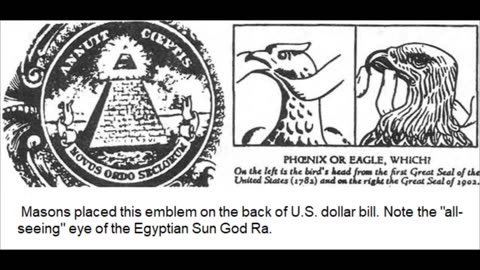
The Watchtower and the Masons by: Fritz Springmeier
Deus Meum Que Jus
The Watchtower and the Masons by Fritz Springmeier is a book that explores the alleged connections between the Freemasons and the Watchtower Society, the organization behind the Jehovah's Witnesses. First published in the 1990s, Springmeier's book delves into the history of the Watchtower Society, focusing particularly on its founder, Charles Taze Russell, and the organization's supposed links to Freemasonry.
Springmeier presents his case by examining symbols, rituals, and teachings within the Jehovah's Witnesses that he argues are influenced by Masonic traditions. He discusses the use of Masonic imagery and parallels between Masonic rituals and those of the Watchtower Society. The book suggests that there may be deeper, hidden connections between the two organizations, implying that Freemasonry has had a significant influence on the development of the Jehovah's Witnesses.
While The Watchtower and the Masons has been influential in certain circles, particularly among those who are skeptical of the Watchtower Society or who have an interest in conspiracy theories, it is important to note that the claims made in the book are controversial and have been the subject of much debate. The book is often referenced in discussions about the influence of secret societies on religious organizations.
About the Author:
Fritz Springmeier is an American author known for his work involving secret societies such as the Illuminati and Freemasonry. He became widely known in the 1990s for his writings, which often focus on the hidden influence of these organizations on global events, religious movements, and political systems.
Springmeier's works, including The Watchtower and the Masons, have been both praised and criticized. Supporters appreciate his detailed research and the connections he draws between various organizations and ideologies. Critics, however, often point to what they call "the speculative nature" of his conclusions and the "lack of mainstream academic support" for many of his claims.
Despite the controversy surrounding his work, Springmeier has garnered a significant following among those who are interested in exploring alternative narratives about history, religion, and power structures. His books still continue to be influential.
His approach to these topics has sparked considerable discussion and debate, making him a prominent figure in the field of conspiracy theory research.
1.01K
views

The New World Order by: H.G. Wells
Deus Meum Que Jus
"The New World Order" (1940) by H.G. Wells is a non-fiction work in which Wells lays out his vision for a future global government. Written during the turmoil of World War II, Wells argues that the only way to achieve lasting peace is through the establishment of a single world state. This new world order, according to Wells, would transcend national boundaries and create a unified government responsible for maintaining global peace and security. Wells advocates for the end of sovereign nation-states, which he views as obsolete and a source of conflict. Instead, he envisions a federal world government that would manage international affairs, disarmament, and social justice.
The book reflects Wells’ deep belief in progress, rationalism, and the potential for human society to evolve beyond its current limitations. He outlines the structure of this global government, which would be guided by a rational elite committed to the common good. Wells' vision includes the idea of a universal education system and the spread of a common language to foster global unity. While the book was intended as a serious proposal for a peaceful future, the term "new world order" has since become associated with various conspiracy theories that allege secret societies are working towards such a global government.
About the Author: H.G. Wells
Herbert George Wells (1866–1946) was an English writer best known for his science fiction works, including The War of the Worlds, The Time Machine, and The Invisible Man. A prolific author, Wells wrote in various genres, including social commentary, history, and politics. His works often explored themes of technological advancement, social reform, and the future of humanity.
Wells was a member of the Fabian Society, a socialist organization dedicated to the promotion of social justice and reform through gradual and democratic means. The Fabian Society played a significant role in the formation of the Labour Party in the UK. While Wells was not confirmed to be a member of any secret societies, his involvement with the Fabian Society and his advocacy for a global government in works like The New World Order have led some to speculate about his influence on ideas associated with globalism and the role of intellectual elites in shaping society.
1
comment

Programmed to Kill: The Politics of Serial Murder by David McGowan (2004)
Deus Meum Que Jus
Programmed to Kill: The Politics of Serial Murder by David McGowan, first published in 2004, is a controversial exploration of the darker side of serial murders and their potential links to government and institutional power. McGowan delves into the possibility that many high-profile serial killers may have been manipulated or "programmed" by powerful entities, using them as tools for broader, covert political agendas.
The book challenges conventional narratives about serial killers by suggesting that these individuals might not be acting solely out of personal psychopathy but could be the result of mind control experiments, psychological conditioning, or other forms of manipulation orchestrated by clandestine forces. McGowan investigates the backgrounds of numerous serial killers, uncovering strange coincidences, inconsistencies in official reports, and possible connections to military or intelligence organizations.
McGowan's work ties together various strands of conspiracy theory, including MKUltra, a CIA program known for its mind control experiments, and the alleged involvement of secret societies in shaping the actions of individuals for their purposes. The book raises questions about the nature of evil, the manipulation of public perception, and the extent to which those in power might go to achieve their objectives.
Programmed to Kill has garnered attention for its provocative content and its challenge to mainstream understandings of crime, violence, and political power. While the book is embraced by some as a bold exploration of hidden truths, others view it with skepticism, pointing to the speculative nature of some of its claims. Nonetheless, it remains a significant work for those interested in conspiracy theories, psychological warfare, and the potential intersections between serial murder and politics.
About the Author:
David McGowan (1960-2015) was an American author and researcher known for his investigative work into various aspects of American culture, politics, and history. He focused on uncovering what he believed to be the hidden and often darker sides of societal structures and historical events. McGowan's approach was characterized by deep dives into the inconsistencies and overlooked details in mainstream accounts, leading him to propose alternative explanations for certain events and trends.
Another book he wrote:
Weird Scenes Inside the Canyon: Laurel Canyon, Covert Ops & the Dark Heart of the Hippie Dream (2014)
This work examines the connections between the 1960s counterculture scene in Laurel Canyon, Los Angeles, and possible links to military intelligence.
McGowan’s work often centered on the intersections of power, media, and social control. He scrutinized popular narratives and sought to uncover alternative perspectives that he believed were being overlooked or deliberately obscured. His investigative approach involved analyzing a broad array of sources, from historical documents to contemporary reports, to build his case for alternative explanations to well-known events.
McGowan was known for his meticulous research and willingness to challenge prevailing narratives. He often compiled extensive documentation to support his analyses, though his interpretations of this information sometimes led him into controversial territory.
McGowan left behind a body of work that continues to be discussed and analyzed by those interested in exploring alternative viewpoints on history and culture. His books, particularly *Programmed to Kill*, have garnered attention for their in-depth look at complex and often disturbing topics.
David McGowan’s research and writing remain influential in certain circles for their critical perspective on mainstream narratives and their focus on uncovering what he saw as hidden truths behind significant cultural and historical developments.
The Open Conspiracy: Blueprints for a World Revolution is a book by H.G. Wells (1928)
Deus Meum Que Jus
The Open Conspiracy: Blueprints for a World Revolution is a book by H.G. Wells, first published in 1928. In this work, Wells outlines his vision for a new global order, one in which humanity transcends the limitations of nationalism, religious dogma, and outdated social structures. He proposes a planned, scientifically guided world government led by an intellectual elite that would steer society toward a more rational and progressive future. The "Open Conspiracy" refers to this deliberate movement, where like-minded individuals and groups openly work towards the establishment of a unified world state. Wells emphasizes education, the dismantling of old institutions, and the promotion of scientific and technological advancements as key steps in achieving this global revolution. The book sparked significant debate for its advocacy of a centralized global authority and has been both praised and criticized for its utopian and, at times, authoritarian vision of world governance.
In The Open Conspiracy: Blueprints for a World Revolution, H.G. Wells outlines a plan for the establishment of a global society governed by reason and science. His plan involves several key steps:
1. Global Education and Enlightenment
Wells emphasizes the need for widespread education to foster a rational worldview. This education would break down the barriers of nationalism, religious dogma, and superstition, promoting a shared understanding of the world based on scientific principles.
2. Formation of an Intellectual Elite
Wells envisions an intellectual and scientific elite who would lead humanity towards this new global society. These leaders would be responsible for guiding the masses, shaping policies, and ensuring that progress is made in a rational and systematic way.
3. Dismantling of Existing Institutions
To make way for this new order, outdated institutions, particularly those based on nationalism and religion, would need to be dismantled. Wells argues that these institutions are obstacles to progress and must be replaced by new structures that reflect the ideals of the Open Conspiracy.
4. Creation of a World Government
A central part of Wells's plan is the establishment of a world government. This government would not be based on traditional political models but would instead be guided by scientific principles and rational planning. It would coordinate global efforts to address issues like poverty, war, and environmental degradation.
5. Active Participation by Citizens
Unlike secret conspiracies, Wells's "Open Conspiracy" would be transparent and involve active participation from citizens who support the cause. These individuals would work together, both openly and behind the scenes, to promote the ideals of global unity and rational governance.
6. Gradual Implementation
Wells acknowledges that this plan would not happen overnight. Instead, it would be a gradual process, with incremental changes building towards the ultimate goal of a unified world state.
Wells's plan is ambitious, advocating for a complete restructuring of society to align with his vision of a rational, scientifically managed world. The Open Conspiracy is both a call to action and a blueprint for those who share his belief in the need for global governance to achieve peace and progress.
About the Author:
H.G. Wells (Herbert George Wells, 1866-1946) was an English writer, historian, and social commentator, widely regarded as one of the most influential authors of the early 20th century. Best known for his pioneering works of science fiction, such as The War of the Worlds, The Time Machine, and The Invisible Man, Wells also wrote extensively on social, political, and philosophical topics.
Wells was a committed advocate for social reform and was deeply involved in the intellectual and political debates of his time. He was a member of the Fabian Society, a British socialist organization that aimed to advance the principles of democratic socialism through gradual reforms rather than revolution. His interest in social issues and his belief in the power of science and education to improve society are reflected in many of his works, including The Open Conspiracy.
In The Open Conspiracy, Wells expresses his vision for a new world order, guided by rationalism and scientific knowledge, and led by an intellectual elite. This book is a clear example of his belief in the possibility of human progress through planned and organized efforts, a theme that recurs throughout his non-fiction writing.
Wells' contributions to literature and social thought have had a lasting impact, influencing not only the genre of science fiction but also the way people think about the future and the potential for societal change. Despite some of his more controversial ideas, his works continue to be studied and appreciated for their insight into the challenges and possibilities of modern civilization.

The History of the Fabian Society by Edward R. Pease (1916)
Deus Meum Que Jus
The History of the Fabian Society by Edward R. Pease, first published in 1916, is a comprehensive account of the founding, development, and impact of the Fabian Society, one of the most influential socialist organizations in Britain. Pease, a founding member and the long-time secretary of the society, provides an insider’s perspective on the origins of Fabianism, its key figures, and its role in shaping British social and political thought.
The Fabian Society was established in 1884 with the goal of advancing the principles of democratic socialism through gradual and reformist, rather than revolutionary, means. The society’s members believed in the need for state intervention in the economy to ensure fairness and social justice, advocating for policies such as universal education, health care, and labor rights. Unlike other socialist groups of the time, the Fabians focused on achieving their goals through parliamentary means and incremental reforms rather than outright revolution.
In the book, Pease details the early meetings and discussions that led to the formation of the society, highlighting the contributions of key members such as George Bernard Shaw, Sidney and Beatrice Webb, and H.G. Wells. He also discusses the society’s strategies for influencing public policy, including the production of pamphlets, the organization of lectures and debates, and the engagement with politicians and public officials.
Pease’s account also covers the internal debates and disagreements within the society, particularly regarding the best methods to achieve their objectives and the extent to which they should collaborate with other political groups. Despite these challenges, the Fabian Society succeeded in becoming a significant force in British politics, particularly in its influence on the Labour Party and its role in the development of the welfare state.
The History of the Fabian Society is a key text for understanding the evolution of British socialism and the role of intellectual movements in shaping political change. It provides a detailed and nuanced view of the Fabian approach to social reform, which continues to influence political thought and policy-making in the UK and beyond.
About the Author:
Edward R. Pease (1857-1955) was a British writer, social reformer, and one of the founding members of the Fabian Society, an organization dedicated to the promotion of democratic socialism through gradual and reformist means. Pease played a significant role in the development of the Fabian Society, serving as its secretary for many years and helping to shape its policies and strategies.
Pease was instrumental in organizing the early activities of the Fabian Society, which included public lectures, debates, and the publication of influential pamphlets. His book, The History of the Fabian Society, is a critical account of the society’s origins and its impact on British political thought, particularly its influence on the Labour Party and the welfare state.
Pease was a close associate of other key figures in the society, such as George Bernard Shaw, Sidney Webb, and Beatrice Webb. Together, they advanced the Fabian agenda of social reform through parliamentary action, education, and advocacy. The Fabians sought to achieve socialism through the ballot box rather than through revolution, distinguishing themselves from other socialist movements of the time.
1
comment

The New Machiavelli by: H.G. Wells (1911)
Deus Meum Que Jus
The New Machiavelli is an intricate exploration of politics, personal ambition, and moral compromise, wrapped in the confessional narrative of Richard Remington, a charismatic and ambitious politician. Published in 1911, the novel stands out in H.G. Wells' oeuvre as a sharp critique of the political system of Edwardian Britain, juxtaposed against the personal struggles and failings of its protagonist. The narrative's confessional style allows Wells to intertwine political commentary with personal reflection, providing a deeply introspective examination of both individual and societal flaws.
The title, The New Machiavelli, is a direct reference to Niccolò Machiavelli’s seminal political treatise The Prince, which is renowned for its analysis of power dynamics and the ethics of political leadership. Wells uses the protagonist, Remington, to examine these same dynamics in a modern British context, suggesting that the pragmatism and cold calculations Machiavelli advocated in Renaissance Italy are still relevant—and problematic—in early 20th-century British politics.
Structure and Style: The novel is presented as a retrospective memoir, with Remington detailing his rise through the British political system and the moral decisions that ultimately led to his downfall. This structure provides an intimate glimpse into the character’s psychology and ambitions, making the novel as much a personal study as it is a political critique. The narrative tone is reflective, with Remington dissecting his life choices, from his initial idealism to the compromises he makes as his political career progresses. This intimate, confessional style gives the novel a sense of immediacy and personal relevance, as Remington’s regrets and rationalizations are laid bare.
Wells cleverly parallels Remington’s personal journey with his evolving political philosophy. Early in the novel, Remington is presented as an intellectual and reformist, committed to reshaping British society along progressive lines. However, as he climbs the political ladder, he becomes increasingly embroiled in the pragmatism and compromises necessary to sustain power. His extramarital affair with Isabel Rivers becomes symbolic of the broader moral failings that characterize his political career—he sacrifices his ideals and personal integrity in pursuit of both sexual and political fulfillment.
Themes:
Central to the novel is the conflict between Remington’s youthful idealism and the cold pragmatism he adopts as he ascends in the political world. Wells critiques the way in which political systems, particularly in Britain, erode personal integrity and force individuals to make moral compromises. Through Remington’s journey, Wells explores how even the most noble aspirations can become corrupted by the harsh realities of political life.
The novel is also deeply concerned with the tension between personal desires and public responsibilities. Remington’s affair with Isabel Rivers serves as the focal point for this tension, illustrating how private indiscretions can have profound public consequences. Wells suggests that political leaders are often held to impossible standards, expected to maintain both public virtue and personal discipline, leading to inevitable failures.
The New Machiavelli provides a scathing critique of the British political establishment, particularly the Liberal Party, which Remington represents in the novel. Wells portrays the political class as hypocritical, self-serving, and out of touch with the needs of ordinary people. He is particularly critical of the way political institutions resist meaningful reform, trapping well-meaning individuals like Remington in a system that rewards compromise over principle.
The novel’s portrayal of marriage, sexual relationships, and the roles of women is also significant. Wells uses the characters of Remington’s wife, Margaret, and his lover, Isabel, to explore the limitations placed on women in Edwardian society. Margaret represents the idealized, supportive wife, while Isabel embodies passion and rebellion against societal norms. Through these relationships, Wells critiques the societal expectations of marriage and fidelity, particularly in the context of political life.
The novel was controversial at the time of its publication because of its perceived autobiographical nature. Many contemporary readers saw Richard Remington as a thinly veiled version of Wells himself, and Isabel Rivers as a fictionalized representation of Amber Reeves, with whom Wells had an affair. The public scandal surrounding Wells’ personal life—he was married at the time—added a layer of real-world drama to the novel, making it a subject of much discussion. While Wells denied that The New Machiavelli was directly autobiographical, the parallels between his life and the novel’s plot are undeniable.
Upon its release, The New Machiavelli caused a stir, not only because of its portrayal of extramarital affairs but also due to its perceived attacks on prominent political figures of the day, particularly members of the Fabian Society, with whom Wells had a contentious relationship. The novel’s depiction of British politics was seen as cynical and critical of the very institutions that Wells had once supported. Despite this, the novel was widely read and discussed, cementing Wells’ reputation as a sharp social critic.
While the novel’s scandalous elements attracted much attention, The New Machiavelli has since been recognized for its insightful exploration of the corrupting influence of power and the inevitable compromises that political leaders must make. Its blend of personal and political narrative, combined with its psychological depth, has made it a key work in Wells’ body of fiction.
The New Machiavelli is often seen as Wells’ most explicitly political novel, blending his intellectual critique of the British political system with his personal experiences and observations. The novel’s exploration of the moral and ethical challenges faced by those in power remains relevant today, offering timeless insights into the nature of political leadership. It stands as an important text in the tradition of political fiction, alongside works like Disraeli’s Coningsby and Trollope’s Palliser novels, but with a more modern, critical edge.
About the Author:
H.G. Wells (Herbert George Wells, 1866-1946) was an English writer, historian, and social commentator, widely regarded as one of the most influential authors of the early 20th century. Best known for his pioneering works of science fiction, such as The War of the Worlds, The Time Machine, and The Invisible Man, Wells also wrote extensively on social, political, and philosophical topics.
Wells was a committed advocate for social reform and was deeply involved in the intellectual and political debates of his time. He was a member of the Fabian Society, a British socialist organization that aimed to advance the principles of democratic socialism through gradual reforms rather than revolution. His interest in social issues and his belief in the power of science and education to improve society are reflected in many of his works, including The Open Conspiracy.
Wells was a member of the Fabian Society, a British socialist organization advocating for gradual, democratic reforms rather than revolutionary change. He engaged in political debates and was known for his radical views on social reform, class inequality, and the future of human society. Although he supported socialism, he was often critical of political parties and institutions, which he felt were too slow or corrupt to bring about real change.
Wells’ personal life was often as controversial as his writings. He had multiple affairs, including one with feminist and author Amber Reeves, which heavily influenced The New Machiavelli. The affair strained his relationship with the Fabians, and this personal experience is mirrored in the novel’s exploration of sexual morality, personal ambition, and political pragmatism.
H.G. Wells is widely regarded as one of the founding fathers of science fiction, but his contributions to literature extend far beyond that genre. His explorations of political, social, and philosophical issues influenced not only his contemporaries but also future generations of writers and thinkers. His predictions about future technologies, warfare, and society were often uncannily accurate.
Wells was deeply influenced by Charles Darwin’s theory of evolution, which shaped his views on human nature, society, and progress. His writing style combined a fascination with science and the possibilities of the future with a deep skepticism of human nature and institutions. His works often reflect his belief that human progress requires a balance between scientific advancement and ethical responsibility.

When the Sleeper Wakes by: H.G. Wells (1899)
Deus Meum Que Jus
When the Sleeper Wakes is one of H.G. Wells' early forays into dystopian science fiction, originally published in 1899. The novel presents a bleak vision of the future, offering a potent mix of social commentary and imaginative speculation. The story follows Graham, a man who falls into a deep, coma-like sleep for over two centuries, only to awaken in a radically transformed world where he has unwittingly become the wealthiest and most powerful man on Earth.
The novel begins in the 19th century, with the protagonist, Graham, suffering from insomnia so severe that it leads to his entering a deep, unnatural sleep. This sleep lasts for over 200 years, during which time his modest financial investments, managed by trustees, grow exponentially, making him the symbolic owner of a vast fortune. Upon awakening in the 22nd century, Graham discovers that his wealth has given him enormous influence over a globalized society ruled by a tyrannical elite.
The new world Graham encounters is dystopian: a sprawling, mechanized society where the masses are oppressed by a wealthy minority that controls both politics and industry. The lower classes live in squalor and are kept subjugated through technology and surveillance. The few who benefit from the rigid social structure live in isolated luxury, while most of the populace is forced into monotonous labor under harsh conditions.
As Graham adjusts to this disorienting reality, he learns that he is seen as a figurehead by the people and the ruling oligarchy alike. The masses look to him as a potential savior, while the elite seek to control him and maintain their grip on power. The novel’s central conflict emerges as Graham grapples with the moral responsibility thrust upon him, facing the choice between aiding the revolution against the oppressive regime or succumbing to the manipulations of those who have maintained control during his long sleep.
Wells explores several key themes in When the Sleeper Wakes, many of which are reflective of his broader concerns about industrialization, capitalism, and class struggle:
One of the novel's primary themes is the sharp divide between the ruling elite and the working masses. Wells depicts a future where technological advances have concentrated wealth and power into the hands of a few, exacerbating inequality and fostering widespread discontent. The novel critiques unchecked capitalism, suggesting that the future may hold even greater exploitation of the working class.
The mechanization of society is central to the dystopian world Wells envisions. The technology that powers the futuristic cities and maintains the ruling class's control has a dehumanizing effect, transforming workers into cogs in the industrial machine. This alienation resonates with Wells’ broader critique of the industrial revolution, where he saw technology as both a tool of progress and a source of dehumanization.
A significant part of the novel involves Graham’s internal struggle over whether to lead or support a revolutionary uprising against the oppressive elite. This theme reflects Wells' own socialist leanings and his belief that social revolution could be necessary to create a more just and equitable society.
As Graham transitions from an ordinary man into a figurehead with immense influence, the novel explores the complexities of power and the moral responsibilities that come with it. Graham's dilemma—whether to embrace his role as a leader of the oppressed or to allow himself to be manipulated by the existing power structures—mirrors the broader question of how individuals and societies should wield power.
In 1910, Wells revised the novel, releasing it under the new title The Sleeper Awakes. This edition streamlined some of the original plot and addressed Wells’ dissatisfaction with aspects of the initial publication. In particular, the revisions made the narrative more cohesive and polished some of the world-building elements.
When the Sleeper Wakes was not as commercially successful as some of Wells’ other works upon its initial release, but it has since gained recognition as an important early example of dystopian fiction. The novel’s influence can be seen in later works of dystopian literature, including George Orwell’s 1984 and Aldous Huxley’s Brave New World, both of which echo Wells’ concerns about power, technology, and social inequality.
Although When the Sleeper Wakes is not as widely known as The War of the Worlds or The Time Machine, it remains a significant work in Wells’ literary career. Its portrayal of a future society dominated by corporate oligarchs, the use of advanced technology to control the masses, and the depiction of revolution make it a pioneering work in the dystopian genre. The novel’s prescient commentary on the future of capitalism, technology, and social stratification continues to resonate in modern discussions of science fiction and social theory.
About the Author:
H.G. Wells (Herbert George Wells, 1866-1946) was an English writer, historian, and social commentator, widely regarded as one of the most influential authors of the early 20th century. Best known for his pioneering works of science fiction, such as The War of the Worlds, The Time Machine, and The Invisible Man, Wells also wrote extensively on social, political, and philosophical topics.
Wells was a committed advocate for social reform and was deeply involved in the intellectual and political debates of his time. He was a member of the Fabian Society, a British socialist organization that aimed to advance the principles of democratic socialism through gradual reforms rather than revolution. His interest in social issues and his belief in the power of science and education to improve society are reflected in many of his works, including The Open Conspiracy.
Wells was a member of the Fabian Society, a British socialist organization advocating for gradual, democratic reforms rather than revolutionary change. He engaged in political debates and was known for his radical views on social reform, class inequality, and the future of human society. Although he supported socialism, he was often critical of political parties and institutions, which he felt were too slow or corrupt to bring about real change.
Wells’ personal life was often as controversial as his writings. He had multiple affairs, including one with feminist and author Amber Reeves, which heavily influenced The New Machiavelli. The affair strained his relationship with the Fabians, and this personal experience is mirrored in the novel’s exploration of sexual morality, personal ambition, and political pragmatism.
H.G. Wells is widely regarded as one of the founding fathers of science fiction, but his contributions to literature extend far beyond that genre. His explorations of political, social, and philosophical issues influenced not only his contemporaries but also future generations of writers and thinkers. His predictions about future technologies, warfare, and society were often uncannily accurate.
Wells was deeply influenced by Charles Darwin’s theory of evolution, which shaped his views on human nature, society, and progress. His writing style combined a fascination with science and the possibilities of the future with a deep skepticism of human nature and institutions. His works often reflect his belief that human progress requires a balance between scientific advancement and ethical responsibility.

The Chymical Wedding of Christian Rosenkreutz by: Johann Valentin (1616)
Deus Meum Que Jus
The Chymical Wedding of Christian Rosenkreutz was originally published anonymously in Strasbourg in 1616. Like the earlier Rosicrucian manifestos, its anonymous nature added to the mystique surrounding the Rosicrucian order. The work was widely circulated among intellectual and esoteric circles in Europe, fueling speculation about the existence of the mysterious "Fraternity of the Rose Cross."
Scholars have since attributed the work to Johann Valentin Andreae, based on stylistic and thematic similarities to his other writings, particularly his utopian novel Christianopolis (1619). Additionally, in his later years, Andreae hinted that his early involvement with Rosicrucian literature was somewhat satirical, referring to some of these works as "ludibrium" (a jest). Despite this, the depth of alchemical and spiritual knowledge in The Chymical Wedding suggests a more complex intent, blending allegory, esoteric symbolism, and spiritual philosophy. Many scholars believe that Andreae’s later distancing from the Rosicrucian movement was part of his attempt to focus more on his theological career.
The Chymical Wedding of Christian Rosenkreutz is the third and most enigmatic of the original Rosicrucian manifestos. Unlike the Fama Fraternitatis and Confessio Fraternitatis, which were more straightforward calls for spiritual reform and esoteric knowledge, The Chymical Wedding is presented as an allegorical narrative filled with alchemical symbolism, dreamlike sequences, and mystical themes. The work is considered a seminal text in esoteric and alchemical literature, representing the spiritual journey of Christian Rosenkreutz, the mythical founder of the Rosicrucian fraternity.
The story begins when Christian Rosenkreutz receives a mysterious invitation to attend a royal wedding at a distant castle. The invitation, which appears under strange circumstances, invites him to partake in a seven-day spiritual and alchemical journey that takes place during the wedding.
As the narrative unfolds, Rosenkreutz embarks on a symbolic quest that tests his moral character, spiritual insight, and alchemical knowledge. The tale is divided into seven days, each marked by distinct challenges and alchemical processes, mirroring the stages of the alchemical Great Work (Magnum Opus) that transforms base matter into gold—a metaphor for spiritual enlightenment.
During the seven days, Rosenkreutz witnesses strange and magical occurrences, including the dismemberment and resurrection of the king and queen, various alchemical experiments, and interactions with mystical characters. These events are imbued with profound symbolism that reflects the transformative journey of the soul towards divine knowledge, echoing both Christian and Hermetic traditions.
The wedding itself is symbolic of the alchemical marriage (coniunctio), a key concept in alchemical philosophy, representing the union of opposites (sulfur and mercury, male and female, spirit and matter). This union symbolizes the ultimate goal of the alchemist: to transmute the base aspects of human nature into spiritual gold.
Rosenkreutz’s journey is also a spiritual quest, filled with tests of his virtue, intellect, and faith. His experiences reflect the process of purifying the soul, shedding earthly attachments, and achieving mystical union with the divine.
The text subtly presents the ideals of the Rosicrucian order—hidden wisdom, self-improvement, and service to humanity. While the Rosicrucians are known for their secrecy, The Chymical Wedding promotes the idea of inner transformation as a means to contribute to the greater good, much like the spiritual goals described in earlier Rosicrucian manifestos.
The narrative weaves Christian mysticism with Hermetic and alchemical teachings. The symbolism of death, resurrection, and the sacred marriage align with Christian allegories of salvation, while also drawing on Hermetic ideas about the unity of all things and the divine nature of human potential.
The Chymical Wedding is often interpreted as both an allegorical dream and a practical guide to spiritual transformation. Its complex, symbolic imagery reflects a synthesis of alchemical, mystical, and Christian ideas. Johann Valentin Andreae, the likely author, had deep knowledge of the esoteric traditions circulating in early 17th-century Europe, and the work is steeped in the intellectual currents of its time, including the Hermetic revival, alchemical practices, and the secret societies emerging in Europe.
The work is also significant for its influence on later esoteric traditions, including Freemasonry and modern occult movements. It is considered one of the foundational texts of Rosicrucianism, an esoteric movement that combined mysticism, alchemy, and the pursuit of hidden knowledge. The story’s emphasis on the transformative power of knowledge, the sacredness of the inner journey, and the concept of hidden wisdom echoes throughout later mystical and occult writings.
About the Author:
Johann Valentin Andreae (1586–1654) was a German theologian, philosopher, and writer. He is best known for his association with the Rosicrucian movement, particularly through his connection to the three key Rosicrucian manifestos: the Fama Fraternitatis, Confessio Fraternitatis, and The Chymical Wedding of Christian Rosenkreutz. Though Andreae later distanced himself from the Rosicrucian movement, referring to it as a “ludibrium” (a joke or plaything), many scholars believe that he authored The Chymical Wedding as an allegorical work, blending his interest in mystical, theological, and philosophical ideas.
Andreae studied theology at the University of Tübingen, where he was exposed to various currents of Renaissance humanism, science, and esotericism. His background in Christian mysticism and Hermetic philosophy shaped his approach to writing and his views on spiritual reform.
Although Andreae denied involvement in the creation of a real Rosicrucian brotherhood, his works—particularly The Chymical Wedding—are deeply linked to Rosicrucian ideals of spiritual enlightenment, alchemical transformation, and the pursuit of secret knowledge. His other notable work, Christianopolis, further explores utopian ideas of a society governed by wisdom and spiritual principles.
Andreae was deeply committed to Christian reform and spent much of his life advocating for a revival of Christian piety and learning. He served as a Lutheran pastor and theologian, and many of his writings reflect his vision of a world transformed by knowledge, virtue, and spiritual dedication.
Despite his later denial of active involvement in the Rosicrucian movement, Andreae's works, including The Chymical Wedding, have left an enduring legacy in Western esotericism. The text has been influential not only in the development of Rosicrucian thought but also in shaping the broader Western esoteric tradition, influencing later movements such as Freemasonry and various occult societies.

A Wonderful Visit by: H.G. Wells (1895)
Deus Meum Que Jus
A Wonderful Visit is one of H.G. Wells' lesser-known but fascinating early works, published in 1895. The novel explores the collision between the supernatural and the everyday world, blending elements of fantasy, satire, and social commentary. At its heart, the book is a whimsical, yet sharp critique of Victorian society’s rigid norms and limited imagination.
The plot begins when an angel, who appears otherworldly and distinctly out of place, is accidentally shot by an ornithologist named Mr. Thomas Hinchcliff while on a bird-hunting expedition. Mistaking the angel for an exotic bird, Hinchcliff quickly discovers that he has not only injured a supernatural being but also encountered a creature that defies all earthly expectations. The angel, described as a beautiful and ethereal figure with delicate wings, speaks and behaves in ways that perplex the people of a small English village.
The story follows the angel’s interactions with the villagers, who react with a mix of wonder, confusion, and hostility. Despite his heavenly origins, the angel is subjected to the narrow-mindedness of the Victorian populace. People find his inability to conform to their customs unsettling. The angel's beauty, innocence, and otherworldly nature stand in stark contrast to the moral rigidity and materialistic values of the time.
As the angel attempts to adapt to human life, his presence serves as a mirror for the absurdities and hypocrisies of the village’s society. Wells uses this fantastical scenario to explore deeper questions about the limits of human understanding and imagination. The villagers, including the local vicar and the doctor, cannot reconcile the angel’s existence with their preconceived notions of the world. Instead of marveling at the extraordinary, they seek to force him into their own framework of knowledge and morality, often with comic or tragic results.
Wells uses the angel as a device to criticize Victorian social mores, particularly the strict moral codes and conventional thinking that often suppressed individual expression and curiosity. The angel’s inability to fit into society highlights the inflexibility and intolerance of the villagers.
The novel contrasts the limitless potential of imagination—represented by the angel—with the constrained realities of human existence. The inability of the villagers to fully appreciate or understand the angel symbolizes society’s failure to grasp the extraordinary or the unfamiliar.
The angel’s innocence is gradually tainted by his interactions with human society. Over time, the pure, idealistic nature of the angel is worn down by the materialism and cynicism of the people around him, serving as a commentary on how society corrupts what is good and innocent.
The tone of A Wonderful Visit is both lighthearted and satirical, but it is underpinned by a more serious reflection on society’s limitations. Wells’ narrative is filled with moments of humor, particularly in the villagers' bumbling attempts to understand the angel. The absurdity of their efforts often gives way to moments of reflection on the larger implications of their actions.
In typical Wellsian fashion, the novel is deeply imaginative, but it also reveals his talent for social commentary. Although more famous for his science fiction, A Wonderful Visit showcases Wells’ ability to use fantasy to comment on real-world issues.
While A Wonderful Visit did not gain the same level of fame as some of Wells’ other works, such as The Time Machine (1895) or The War of the Worlds (1898), it remains a notable example of his early experimentation with fantasy and satire. The novel’s blend of whimsy and critique reflects Wells’ growing interest in using fiction to explore societal issues.
About the Author:
H.G. Wells (Herbert George Wells, 1866-1946) was an English writer, historian, and social commentator, widely regarded as one of the most influential authors of the early 20th century. Best known for his pioneering works of science fiction, such as The War of the Worlds, The Time Machine, and The Invisible Man, Wells also wrote extensively on social, political, and philosophical topics.
Wells was a committed advocate for social reform and was deeply involved in the intellectual and political debates of his time. He was a member of the Fabian Society, a British socialist organization that aimed to advance the principles of democratic socialism through gradual reforms rather than revolution. His interest in social issues and his belief in the power of science and education to improve society are reflected in many of his works, including The Open Conspiracy.
Wells was a member of the Fabian Society, a British socialist organization advocating for gradual, democratic reforms rather than revolutionary change. He engaged in political debates and was known for his radical views on social reform, class inequality, and the future of human society. Although he supported socialism, he was often critical of political parties and institutions, which he felt were too slow or corrupt to bring about real change.
Wells’ personal life was often as controversial as his writings. He had multiple affairs, including one with feminist and author Amber Reeves, which heavily influenced The New Machiavelli. The affair strained his relationship with the Fabians, and this personal experience is mirrored in the novel’s exploration of sexual morality, personal ambition, and political pragmatism.
H.G. Wells is widely regarded as one of the founding fathers of science fiction, but his contributions to literature extend far beyond that genre. His explorations of political, social, and philosophical issues influenced not only his contemporaries but also future generations of writers and thinkers. His predictions about future technologies, warfare, and society were often uncannily accurate.
Wells was deeply influenced by Charles Darwin’s theory of evolution, which shaped his views on human nature, society, and progress. His writing style combined a fascination with science and the possibilities of the future with a deep skepticism of human nature and institutions. His works often reflect his belief that human progress requires a balance between scientific advancement and ethical responsibility.

The Treatise on Christ and Antichrist by Hippolytus of Rome (c. 200-220 AD)
Deus Meum Que Jus
Treatise on Christ and Antichrist is one of the key early Christian writings by Hippolytus of Rome, a prominent theologian of the third century. The treatise offers a detailed exploration of Christian eschatology (the study of end times), focusing on the relationship between Christ and the Antichrist. Hippolytus, a highly influential figure in the early Church, wrote this text as part of his broader effort to interpret biblical prophecies and provide the faithful with guidance on the meaning of Christ's second coming and the final battle between good and evil.
The treatise is structured as a commentary, with Hippolytus drawing heavily on the Scriptures, particularly the books of Daniel, Revelation, and various prophetic passages from the Old Testament, to paint a vivid picture of the future.
Hippolytus begins by discussing the divinity and humanity of Christ, emphasizing the Incarnation and the role of Christ as the savior of humanity. He contrasts Christ's humility and obedience with the pride and rebellion of the Antichrist.
Much of the treatise focuses on interpreting the visions in the Book of Daniel, particularly those involving the "four beasts" and the "little horn" (commonly interpreted as the Antichrist). Hippolytus provides a detailed exegesis of these passages, linking them to future events.
Hippolytus describes the Antichrist as a future figure who will come at the end of days to deceive the world and lead a rebellion against God. Drawing on both biblical prophecies and contemporary events, he portrays the Antichrist as the ultimate adversary of Christ and the Church, a figure of immense power and deceit. He will mimic Christ in many ways, performing false miracles and leading many astray.
The treatise goes on to describe the final battle between Christ and the Antichrist, in which Christ will return in glory to defeat evil and establish His eternal kingdom. Hippolytus uses apocalyptic imagery, drawing from the Book of Revelation, to paint a vivid picture of the events leading to the end of the world.
Throughout the treatise, Hippolytus urges Christians to remain vigilant and steadfast in their faith. He warns against falling into complacency or being deceived by false teachings, emphasizing the importance of staying true to the teachings of Christ as the end approaches.
The treatise is a profound reflection on the nature of Christ, focusing particularly on the fulfillment of prophecies concerning His second coming. Hippolytus emphasizes the dual nature of Christ—fully human and fully divine—and the significance of His sacrificial role in the salvation of humanity.
Treatise on Christ and Antichrist is a prime example of early Christian apocalyptic literature, dealing extensively with themes of judgment, resurrection, and the ultimate victory of Christ over evil. It reflects the growing concern in early Christianity with eschatology, particularly the interpretation of biblical prophecies regarding the end times.
Hippolytus offers one of the earliest and most detailed theological reflections on the figure of the Antichrist, portraying him as a counterfeit Christ who will seek to usurp God's authority and lead humanity astray. This portrayal would influence later Christian writers and become a central theme in Christian eschatology.
Hippolytus’ treatise is significant for its method of biblical interpretation. He draws on various books of the Bible, especially the Old Testament, to weave together a cohesive narrative about the end of the world. His reading of texts such as Daniel and Revelation would set a precedent for later Christian theologians engaged in eschatological speculation.
About the Author:
Hippolytus of Rome was a prominent Christian theologian, scholar, and church leader of the early third century. Born around 170 AD, he was likely from a Greek-speaking background and received an education in the classical and theological traditions of his time. His extensive knowledge of Scripture, early Christian writings, and contemporary philosophy positioned him as a significant figure in early Christian theology.
Hippolytus is best known for his vigorous defense of orthodox Christianity and his opposition to various heresies. His writings include a variety of works such as commentaries on Scripture, theological treatises, and polemical writings. His major contributions include:
Refutation of All Heresies (also known as Elenchus)
In this work, Hippolytus systematically refutes the major heretical movements of his time, including Gnosticism and various sects he considered to be deviating from orthodox Christian teachings. The work provides valuable insights into the nature of early Christian heresies and the theological debates of the period.
Commentary on the Book of Daniel
A detailed exegesis of the prophecies found in the Book of Daniel, reflecting Hippolytus’s deep engagement with Old Testament prophecy and its implications for Christian eschatology.
Hippolytus served as a presbyter in the Church of Rome and was a significant ecclesiastical figure in the early Christian community. His role in the church was marked by a strong commitment to maintaining doctrinal purity and defending orthodox positions against various heretical teachings. His theological and exegetical works were influential in shaping early Christian thought and were widely read and referenced by subsequent theologians.
Hippolytus’s tenure as a church leader was not without conflict. He was involved in various ecclesiastical disputes and was eventually exiled during the persecution under Emperor Maximinus Thrax. He is said to have been martyred around 235 AD. Despite his tumultuous life, his contributions to Christian theology and his role in defending orthodoxy have earned him a lasting legacy within the Christian tradition.
Hippolytus’s writings provide a critical link between early Christian doctrine and later theological developments. His works are valued for their insights into early Christian eschatology, ecclesiology, and the context of early church disputes and heresies. His influence extends through the history of Christian thought, marking him as a key figure in the development of early Christian theology.
2
comments
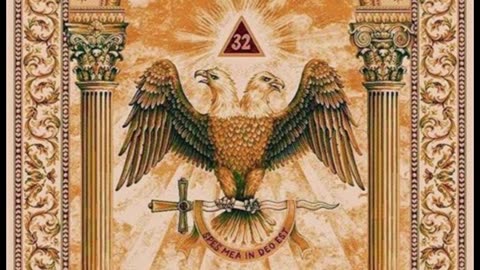
Humanum Genus (On Freemasonry) April 20, 1884 by Pope Leo XIII - Part 4/4, Sections 51-58
Deus Meum Que Jus
In Part 4 of Humanum Genus, covering Sections 51-58, Pope Leo XIII concludes his encyclical with a focus on the implications for the Church and practical measures for addressing the influence of Freemasonry:
1. Masonic Penetration
Pope Leo XIII examines the extent to which Freemasonry has infiltrated various aspects of society, including religious and civil institutions. He highlights the pervasive reach of Masonic influence and its detrimental effects on public and private life.
2. The Church’s Defense
Sections 51-58 discuss the need for the Catholic Church to strengthen its defenses against Masonic encroachment. The Pope emphasizes the importance of maintaining doctrinal purity and unity among Christians to combat the divisive effects of Freemasonry.
3. Call to Clergy and Laity
The Pope addresses both clergy and laypeople, urging them to remain vigilant and informed about the dangers of Freemasonry. He encourages active resistance and educates them on recognizing and countering Masonic influence.
4. Moral and Spiritual Vigilance
Leo XIII underscores the necessity of moral and spiritual vigilance in the face of Masonic threats. He calls for a renewed commitment to Christian principles and practices as a bulwark against the challenges posed by Freemasonry.
5. Conclusion and Exhortation
In his concluding sections, the Pope reaffirms his condemnation of Freemasonry and reiterates the Church’s position on maintaining doctrinal integrity. He exhorts the faithful to uphold Christian values and resist secular and anti-clerical pressures.
6. Prayers and Devotions
The encyclical ends with a call for prayers and devotions to seek divine assistance in combating the influence of Freemasonry. Leo XIII emphasizes the power of prayer and spiritual fortitude in safeguarding the Church’s mission and the Christian faith.
This final part encapsulates Pope Leo XIII’s comprehensive critique of Freemasonry and his appeal for a unified, vigilant response from the Church and its adherents.
About the Author:
Pope Leo XIII (1810-1903), born Vincenzo Gioacchino Raffaele Luigi Pecci on March 2, 1810, in Carpineto Romano, Italy, served as the 226th Pope of the Roman Catholic Church from 1878 until his death in 1903. His papacy is noted for its significant contributions to Catholic social teaching and its engagement with contemporary social and political issues.
Leo XIII was educated at the Roman Seminary and later at the Pontifical Gregorian University, where he developed a deep understanding of philosophy, theology, and law. He was ordained a priest in 1837 and embarked on a career that saw him rise through various ecclesiastical positions, including bishop of Perugia and cardinal.
Pope Leo XIII is best known for his social encyclicals, particularly *Rerum Novarum* (1891), which addressed the conditions of the working classes and set forth the Church’s stance on social justice, labor rights, and the role of the state in economic matters. This encyclical marked the beginning of modern Catholic social teaching.
His works include substantial theological writings and commentaries on Church doctrine. Humanum Genus (1884), his encyclical against Freemasonry, reflects his concerns about the moral and philosophical challenges posed by secret societies and their influence on society and the Church.
Leo XIII worked to restore the authority of the papacy and the influence of the Church in a rapidly changing world. His papacy was marked by efforts to address modernity, secularism, and the shifting political landscape of the late 19th century.
Leo XIII was known for his opposition to modernist trends within the Church, advocating instead for traditional doctrines and practices. His encyclicals often criticized secularism and liberalism, which he viewed as threats to Christian values.
Humanum Genus specifically addresses his concerns about Freemasonry and other secret societies, which he believed were undermining Christian values and Church authority. His criticism was rooted in a broader defense of Church doctrine against what he saw as subversive influences.
Pope Leo XIII’s papacy left a lasting impact on the Catholic Church’s approach to social issues and its engagement with modernity. His teachings continue to influence Catholic thought on social justice, the role of the Church in public life, and the Church’s relationship with secular ideologies. He died on July 20, 1903, and was succeeded by Pope Pius X.
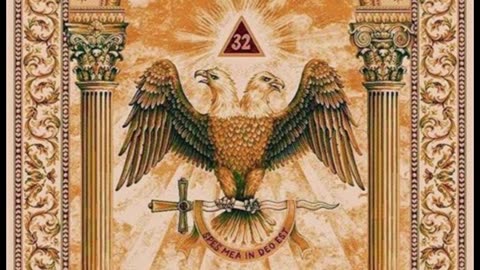
Humanum Genus (On Freemasonry) April 20, 1884 PART 3/4, Sections 36-50
Deus Meum Que Jus
In Part 3 of Humanum Genus, covering Sections 36-50, Pope Leo XIII further develops his arguments against Freemasonry, focusing on the broader implications for society and the Church:
1. Masonic Corruption
Pope Leo XIII discusses how Freemasonry corrupts public morals and institutions. He argues that the Masonic agenda undermines societal ethics and contributes to moral decay by promoting secular and relativistic values.
2. Freemasonry and the Family
The Pope explores the impact of Freemasonry on the institution of the family. He contends that Masonic ideology seeks to weaken the traditional family structure and family values by promoting alternative social norms.
3. Education and Freemasonry
Sections 36-50 address the influence of Freemasonry in educational systems. Leo XIII critiques the way Masonic principles are integrated into educational curricula, which he believes leads to the erosion of religious and moral instruction.
4. Legal and Political Systems
The Pope evaluates the extent to which Freemasonry has influenced legal and political systems. He asserts that Masonic ideals often lead to the enactment of laws and policies that conflict with Christian teachings and undermine the Church's authority.
5. Responses and Remedies
In this part, Leo XIII offers strategies for countering the influence of Freemasonry. He calls for vigilance and action from the Church and its followers to resist Masonic infiltration and uphold Christian values.
6. Masonic Rites and Symbols
The Pope provides an analysis of Masonic rites, symbols, and ceremonies, arguing that they are inherently opposed to Christian teachings. He discusses how these rituals often contain hidden meanings that conflict with religious principles.
7. Ecclesiastical Cautions
Leo XIII emphasizes the importance of maintaining ecclesiastical integrity and cautions against any form of compromise or accommodation with Masonic groups. He underscores the need for the Church to remain steadfast in its doctrines and practices.
8. The Final Judgment
Sections 36-50 conclude with a reflection on the ultimate judgment of Freemasonry and its impact on society. The Pope stresses the need for moral and spiritual vigilance to ensure that the Christian faith remains untainted by Masonic influences.
This part of the encyclical reinforces Pope Leo XIII's condemnation of Freemasonry and outlines the broader implications of its presence and activities within society and the Church.
About the Author:
Pope Leo XIII (1810-1903), born Vincenzo Gioacchino Raffaele Luigi Pecci on March 2, 1810, in Carpineto Romano, Italy, served as the 226th Pope of the Roman Catholic Church from 1878 until his death in 1903. His papacy is noted for its significant contributions to Catholic social teaching and its engagement with contemporary social and political issues.
Leo XIII was educated at the Roman Seminary and later at the Pontifical Gregorian University, where he developed a deep understanding of philosophy, theology, and law. He was ordained a priest in 1837 and embarked on a career that saw him rise through various ecclesiastical positions, including bishop of Perugia and cardinal.
Pope Leo XIII is best known for his social encyclicals, particularly *Rerum Novarum* (1891), which addressed the conditions of the working classes and set forth the Church’s stance on social justice, labor rights, and the role of the state in economic matters. This encyclical marked the beginning of modern Catholic social teaching.
His works include substantial theological writings and commentaries on Church doctrine. Humanum Genus (1884), his encyclical against Freemasonry, reflects his concerns about the moral and philosophical challenges posed by secret societies and their influence on society and the Church.
Leo XIII worked to restore the authority of the papacy and the influence of the Church in a rapidly changing world. His papacy was marked by efforts to address modernity, secularism, and the shifting political landscape of the late 19th century.
Leo XIII was known for his opposition to modernist trends within the Church, advocating instead for traditional doctrines and practices. His encyclicals often criticized secularism and liberalism, which he viewed as threats to Christian values.
Humanum Genus specifically addresses his concerns about Freemasonry and other secret societies, which he believed were undermining Christian values and Church authority. His criticism was rooted in a broader defense of Church doctrine against what he saw as subversive influences.
Pope Leo XIII’s papacy left a lasting impact on the Catholic Church’s approach to social issues and its engagement with modernity. His teachings continue to influence Catholic thought on social justice, the role of the Church in public life, and the Church’s relationship with secular ideologies. He died on July 20, 1903, and was succeeded by Pope Pius X.

Humanum Genus (On Freemasonry) April 20, 1884 by Pope Leo XIII - Part 2/4, Sections 17-35
Deus Meum Que Jus
In Part 2 of Humanum Genus, Sections 17-35, Pope Leo XIII continues his comprehensive critique of Freemasonry, diving deeper into its impact on society and the Church:
1. Masonic Deceptions
Leo XIII explores the deceptive nature of Masonic promises and rhetoric. He argues that Freemasonry presents itself as a benign and benevolent organization while harboring intentions contrary to Christian values and public morality.
2. Freemasonry’s Goals
The Pope analyzes the goals of Freemasonry, particularly its efforts to undermine the authority of the Church and traditional Christian teachings. He examines how Masonic goals are often cloaked in the guise of enlightenment and progressivism.
3. Masonic Influence on Politics
Sections 17-35 address the influence of Freemasonry on political institutions and policies. Leo XIII contends that Masons seek to shape public policy in ways that align with their secular and anti-clerical agenda, often to the detriment of the common good.
4. Social Impacts
The Pope discusses the social consequences of Masonic ideology, including its effects on morality and community values. He argues that Freemasonry promotes a relativistic approach to ethics and undermines social cohesion.
5. Religious Implications
Leo XIII elaborates on the religious implications of Freemasonry’s teachings. He emphasizes the conflict between Masonic principles and Christian doctrine, particularly regarding the nature of God, salvation, and divine authority.
6. The Role of Secret Societies
Sections 17-35 also delve into the nature of secret societies within the Masonic tradition. The Pope critiques the secretive nature of these organizations and their potential for subversive activity against religious and societal norms.
7. Church Doctrine
The Pope reaffirms the Catholic Church’s position on secret societies, emphasizing the necessity of maintaining doctrinal purity and safeguarding against ideologies that contradict Church teachings.
8. Call to Action
Leo XIII concludes Part 2 with a call to action for the faithful. He urges Catholics to be vigilant against Masonic influence and to strengthen their commitment to the Church’s teachings as a counter to the challenges posed by Freemasonry.
About the Author:
Pope Leo XIII (1810-1903), born Vincenzo Gioacchino Raffaele Luigi Pecci on March 2, 1810, in Carpineto Romano, Italy, served as the 226th Pope of the Roman Catholic Church from 1878 until his death in 1903. His papacy is noted for its significant contributions to Catholic social teaching and its engagement with contemporary social and political issues.
Leo XIII was educated at the Roman Seminary and later at the Pontifical Gregorian University, where he developed a deep understanding of philosophy, theology, and law. He was ordained a priest in 1837 and embarked on a career that saw him rise through various ecclesiastical positions, including bishop of Perugia and cardinal.
Pope Leo XIII is best known for his social encyclicals, particularly *Rerum Novarum* (1891), which addressed the conditions of the working classes and set forth the Church’s stance on social justice, labor rights, and the role of the state in economic matters. This encyclical marked the beginning of modern Catholic social teaching.
His works include substantial theological writings and commentaries on Church doctrine. Humanum Genus (1884), his encyclical against Freemasonry, reflects his concerns about the moral and philosophical challenges posed by secret societies and their influence on society and the Church.
Leo XIII worked to restore the authority of the papacy and the influence of the Church in a rapidly changing world. His papacy was marked by efforts to address modernity, secularism, and the shifting political landscape of the late 19th century.
Leo XIII was known for his opposition to modernist trends within the Church, advocating instead for traditional doctrines and practices. His encyclicals often criticized secularism and liberalism, which he viewed as threats to Christian values.
Humanum Genus specifically addresses his concerns about Freemasonry and other secret societies, which he believed were undermining Christian values and Church authority. His criticism was rooted in a broader defense of Church doctrine against what he saw as subversive influences.
Pope Leo XIII’s papacy left a lasting impact on the Catholic Church’s approach to social issues and its engagement with modernity. His teachings continue to influence Catholic thought on social justice, the role of the Church in public life, and the Church’s relationship with secular ideologies. He died on July 20, 1903, and was succeeded by Pope Pius X.
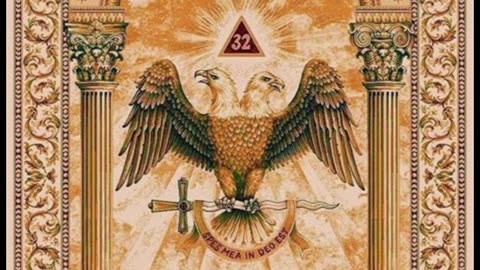
Humanum Genus (On Freemasonry) April 20, 1884 by Pope Leo XIII - Part 1/4, Sections 1-16
Deus Meum Que Jus
In this opening section of Humanum Genus, Pope Leo XIII lays the groundwork for his critical examination of Freemasonry. Sections 1-16 address several foundational themes:
1. Introduction to the Encyclical
The Pope introduces the document and its purpose, emphasizing the need to address the threats posed by Freemasonry to the Catholic Church and Christian society. He establishes the context for his critique, noting the historical and philosophical background of Freemasonry.
2. Historical Context
Leo XIII provides a historical overview of the rise and influence of Freemasonry, tracing its origins and evolution. He discusses how the Masonic movement emerged and its impact on society and the Church.
3. Philosophical Foundations
The Pope examines the philosophical principles underlying Freemasonry, including its secular and humanistic ideologies. He critiques the Masonic rejection of religious authority and its promotion of a naturalistic worldview.
4. Masonic Principles
Detailed exploration of the core principles and beliefs of Freemasonry is presented. Leo XIII argues that these principles are in direct opposition to Christian doctrine and undermine the Church's teachings.
5. The Church’s Response
Sections 1-16 include a discussion of how the Catholic Church has historically responded to the challenges posed by Freemasonry. Leo XIII outlines previous Church condemnations and the reasons for their necessity.
6. Masonic Influence
The Pope addresses the influence of Freemasonry in various societal institutions, including politics, education, and public life. He warns of the dangers posed by Masonic ideology infiltrating these areas and affecting public morality.
7. Masonic Secrecy and Rituals
Leo XIII criticizes the secretive nature of Masonic practices and rituals, arguing that they are contrary to Christian transparency and truth.
8. Call to Action
The Pope urges the faithful to be vigilant against Masonic influences and to strengthen their commitment to the Church’s teachings. He calls for a united effort to combat the spread of Masonic ideas.
Part 1 sets the stage for a comprehensive critique of Freemasonry, establishing the encyclical’s primary arguments and concerns. It provides a thorough introduction to the themes that will be explored in greater depth in the subsequent parts.
About the Author:
Pope Leo XIII (1810-1903), born Vincenzo Gioacchino Raffaele Luigi Pecci on March 2, 1810, in Carpineto Romano, Italy, served as the 226th Pope of the Roman Catholic Church from 1878 until his death in 1903. His papacy is noted for its significant contributions to Catholic social teaching and its engagement with contemporary social and political issues.
Leo XIII was educated at the Roman Seminary and later at the Pontifical Gregorian University, where he developed a deep understanding of philosophy, theology, and law. He was ordained a priest in 1837 and embarked on a career that saw him rise through various ecclesiastical positions, including bishop of Perugia and cardinal.
Pope Leo XIII is best known for his social encyclicals, particularly *Rerum Novarum* (1891), which addressed the conditions of the working classes and set forth the Church’s stance on social justice, labor rights, and the role of the state in economic matters. This encyclical marked the beginning of modern Catholic social teaching.
His works include substantial theological writings and commentaries on Church doctrine. Humanum Genus (1884), his encyclical against Freemasonry, reflects his concerns about the moral and philosophical challenges posed by secret societies and their influence on society and the Church.
Leo XIII worked to restore the authority of the papacy and the influence of the Church in a rapidly changing world. His papacy was marked by efforts to address modernity, secularism, and the shifting political landscape of the late 19th century.
Leo XIII was known for his opposition to modernist trends within the Church, advocating instead for traditional doctrines and practices. His encyclicals often criticized secularism and liberalism, which he viewed as threats to Christian values.
Humanum Genus specifically addresses his concerns about Freemasonry and other secret societies, which he believed were undermining Christian values and Church authority. His criticism was rooted in a broader defense of Church doctrine against what he saw as subversive influences.
Pope Leo XIII’s papacy left a lasting impact on the Catholic Church’s approach to social issues and its engagement with modernity. His teachings continue to influence Catholic thought on social justice, the role of the Church in public life, and the Church’s relationship with secular ideologies. He died on July 20, 1903, and was succeeded by Pope Pius X.
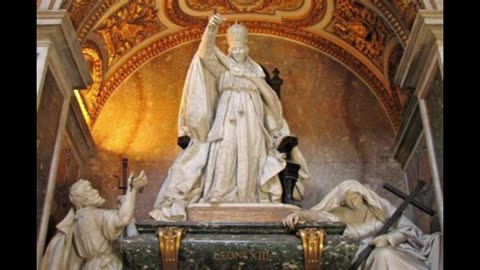
Dall'alto dell'Apostolico Seggio (On Freemasonry in Italy) by Pope Leo XIII Part 3/3: Sections 39-58
Deus Meum Que Jus
In Part 3 of the audiobook Dall'alto dell'Apostolico Seggio (On Freemasonry in Italy), covering Sections 39-64, Pope Leo XIII concludes his encyclical with a comprehensive summary of his arguments against Freemasonry and its implications for the Church and society. This final section reinforces the themes explored in the previous parts while calling for a unified response from the faithful.
1. Masonic Ideology and Its Threats:
The Pope reiterates the core tenets of Masonic ideology, emphasizing how its principles contradict Christian doctrine. He argues that Freemasonry fosters a worldview that diminishes the role of God and undermines the moral foundation of society.
2. Spiritual and Moral Consequences:
Sections 39-64 highlight the spiritual and moral consequences of Masonic influence on individuals and communities. Leo XIII stresses that accepting Masonic ideologies can lead to spiritual decay, moral relativism, and a departure from the teachings of the Church.
3. Role of the Church as Guardian:
The Pope reaffirms the role of the Catholic Church as the guardian of truth and moral order. He emphasizes the Church's responsibility to educate the faithful about the dangers posed by Freemasonry and to provide guidance in resisting its influence.
4. Unity Among Catholics:
Leo XIII calls for unity among Catholics in the face of Masonic opposition. He encourages collaboration among clergy and laity to combat the spread of Masonic ideas and to promote a robust Catholic identity.
5. Practical Measures for Resistance:
In this section, the Pope outlines practical measures for resisting Masonic influence. He encourages the faithful to engage in prayer, charitable works, and community building as ways to strengthen their faith and counteract secularism.
6. Condemnation of Compromise:
Leo XIII warns against any form of compromise with Masonic organizations. He asserts that even small concessions to Masonic principles can lead to larger betrayals of faith and doctrine.
7. Final Exhortation:
The encyclical concludes with a strong exhortation for the faithful to remain steadfast in their beliefs. The Pope calls on Catholics to uphold the teachings of the Church, to be vigilant against the encroachment of Freemasonry, and to commit themselves to the defense of Christian values.
8. Prayer for Strength:
Leo XIII emphasizes the importance of prayer as a means of seeking divine assistance in the struggle against Freemasonry. He encourages the faithful to turn to God for strength and guidance as they confront the challenges posed by secret societies.
Part 3 serves as a powerful conclusion to the encyclical, encapsulating Pope Leo XIII's comprehensive critique of Freemasonry and its implications for the Church. His call for vigilance, unity, and active resistance remains a poignant reminder of the ongoing struggle to uphold Christian values in the face of secular ideologies.
About the Author:
Pope Leo XIII (1810-1903), born Vincenzo Gioacchino Raffaele Luigi Pecci on March 2, 1810, in Carpineto Romano, Italy, served as the 226th Pope of the Roman Catholic Church from 1878 until his death in 1903. His papacy is noted for its significant contributions to Catholic social teaching and its engagement with contemporary social and political issues.
Leo XIII was educated at the Roman Seminary and later at the Pontifical Gregorian University, where he developed a deep understanding of philosophy, theology, and law. He was ordained a priest in 1837 and embarked on a career that saw him rise through various ecclesiastical positions, including bishop of Perugia and cardinal.
Pope Leo XIII is best known for his social encyclicals, particularly Rerum Novarum (1891), which addressed the conditions of the working classes and set forth the Church’s stance on social justice, labor rights, and the role of the state in economic matters. This encyclical marked the beginning of modern Catholic social teaching.
His works include substantial theological writings and commentaries on Church doctrine. Humanum Genus (1884), his encyclical against Freemasonry, reflects his concerns about the moral and philosophical challenges posed by secret societies and their influence on society and the Church.
Leo XIII worked to restore the authority of the papacy and the influence of the Church in a rapidly changing world. His papacy was marked by efforts to address modernity, secularism, and the shifting political landscape of the late 19th century.
Leo XIII was known for his opposition to modernist trends within the Church, advocating instead for traditional doctrines and practices. His encyclicals often criticized secularism and liberalism, which he viewed as threats to Christian values.
Humanum Genus specifically addresses his concerns about Freemasonry and other secret societies, which he believed were undermining Christian values and Church authority. His criticism was rooted in a broader defense of Church doctrine against what he saw as subversive influences.
Pope Leo XIII’s papacy left a lasting impact on the Catholic Church’s approach to social issues and its engagement with modernity. His teachings continue to influence Catholic thought on social justice, the role of the Church in public life, and the Church’s relationship with secular ideologies. He died on July 20, 1903, and was succeeded by Pope Pius X.
Dall'alto dell'Apostolico Seggio (On Freemasonry in Italy) by Pope Leo XIII Part 2/3: Sections 19-38
Deus Meum Que Jus
In Part 2 of the audiobook Dall'alto dell'Apostolico Seggio (On Freemasonry in Italy), covering Sections 19-38, Pope Leo XIII delves deeper into the implications of Freemasonry and its impact on various aspects of society. This section continues his critique by expanding on the themes introduced in Part 1 and providing a more detailed analysis of Masonic influence.
1. Examination of Masonic Practices:
The Pope describes the practices and rituals of Freemasonry, emphasizing their secretive nature. He critiques these rituals as being devoid of genuine spiritual value and rooted in a philosophy that opposes Christian teachings.
2. Masonic Goals and Objectives:
Leo XIII outlines the goals of Freemasonry, emphasizing its agenda to promote a secular worldview that undermines the authority of the Church. He argues that Masonic organizations aim to create a society based on materialism and rationalism, dismissing the spiritual and moral dimensions of human existence.
3. Impact on Civil Society:
Sections 19-38 address the influence of Freemasonry on civil society, particularly its role in shaping public opinion and policy. The Pope warns that Masonic ideals can lead to the erosion of traditional values and the destabilization of societal norms.
4. The Role of Education:
The Pope discusses the influence of Freemasonry in educational institutions. He critiques the secularization of education and the promotion of Masonic principles in curricula, which he believes undermines religious instruction and moral development.
5. Political Ramifications:
Leo XIII examines the political ramifications of Masonic influence, arguing that Freemasonry seeks to infiltrate and manipulate political systems for its own ends. He highlights the potential dangers of allowing Masonic ideals to shape government policies and laws.
6. Moral Decay and Its Consequences:
The encyclical continues to explore the theme of moral decay resulting from Masonic influence. The Pope asserts that the spread of Masonic ideals contributes to societal corruption and the decline of virtue, warning that such trends can have dire consequences for the future.
7. Catholic Resistance:
In this section, Leo XIII calls for a concerted effort among Catholics to resist the influence of Freemasonry. He urges the faithful to remain vigilant and to actively oppose Masonic ideologies in their communities.
8. Spiritual Strength:
Leo XIII emphasizes the importance of spiritual strength and unity among Catholics. He encourages prayer and adherence to Church teachings as vital tools in the struggle against Masonic influence and the defense of Christian values.
Part 2 of the encyclical builds on the foundations laid in the first section, offering a more comprehensive critique of Freemasonry’s influence on education, politics, and morality. Pope Leo XIII’s arguments serve as a clarion call for the Church and its members to stand firm in their faith and resist the challenges posed by secret societies.
About the Author:
Pope Leo XIII (1810-1903), born Vincenzo Gioacchino Raffaele Luigi Pecci on March 2, 1810, in Carpineto Romano, Italy, served as the 226th Pope of the Roman Catholic Church from 1878 until his death in 1903. His papacy is noted for its significant contributions to Catholic social teaching and its engagement with contemporary social and political issues.
Leo XIII was educated at the Roman Seminary and later at the Pontifical Gregorian University, where he developed a deep understanding of philosophy, theology, and law. He was ordained a priest in 1837 and embarked on a career that saw him rise through various ecclesiastical positions, including bishop of Perugia and cardinal.
Pope Leo XIII is best known for his social encyclicals, particularly Rerum Novarum (1891), which addressed the conditions of the working classes and set forth the Church’s stance on social justice, labor rights, and the role of the state in economic matters. This encyclical marked the beginning of modern Catholic social teaching.
His works include substantial theological writings and commentaries on Church doctrine. Humanum Genus (1884), his encyclical against Freemasonry, reflects his concerns about the moral and philosophical challenges posed by secret societies and their influence on society and the Church.
Leo XIII worked to restore the authority of the papacy and the influence of the Church in a rapidly changing world. His papacy was marked by efforts to address modernity, secularism, and the shifting political landscape of the late 19th century.
Leo XIII was known for his opposition to modernist trends within the Church, advocating instead for traditional doctrines and practices. His encyclicals often criticized secularism and liberalism, which he viewed as threats to Christian values.
Humanum Genus specifically addresses his concerns about Freemasonry and other secret societies, which he believed were undermining Christian values and Church authority. His criticism was rooted in a broader defense of Church doctrine against what he saw as subversive influences.
Pope Leo XIII’s papacy left a lasting impact on the Catholic Church’s approach to social issues and its engagement with modernity. His teachings continue to influence Catholic thought on social justice, the role of the Church in public life, and the Church’s relationship with secular ideologies. He died on July 20, 1903, and was succeeded by Pope Pius X.

Dall'alto dell'Apostolico Seggio (On Freemasonry in Italy) by Pope Leo XIII, Part 1/3: Sections 1-18
Deus Meum Que Jus
In Part 1 of the audiobook Dall'alto dell'Apostolico Seggio (On Freemasonry in Italy), covering Sections 1-18, Pope Leo XIII sets the stage for a detailed critique of Freemasonry and its influence on Italian society. This section outlines his concerns about the moral and spiritual dangers posed by secret societies, particularly in the context of the Catholic faith.
1. Introduction to the Encyclical:
The encyclical begins with a formal introduction, where Pope Leo XIII expresses his authority as the Bishop of Rome and outlines his intention to address the issue of Freemasonry. He emphasizes the urgency of the matter in light of its growing influence.
2. Historical Context:
Leo XIII provides a brief overview of the historical relationship between the Church and secret societies. He contextualizes the rise of Freemasonry in Italy, noting its origins and development, and warns against its encroachment on both religious and civil life.
3. Condemnation of Masonic Principles:
The Pope directly condemns the principles of Freemasonry, arguing that they are fundamentally at odds with Christian doctrine. He highlights the Masonic emphasis on rationalism and secularism, which he sees as undermining the authority of the Church.
4. Masonic Influence on Society:
Sections 1-18 discuss the pervasive influence of Freemasonry on various societal institutions, including politics, education, and morality. Leo XIII argues that Masonic ideologies corrupt public morals and promote a dangerous form of relativism that threatens traditional values.
5. The Nature of Secret Societies:
The Pope explores the secretive nature of Masonic organizations, critiquing their lack of transparency and accountability. He warns that such secrecy breeds mistrust and undermines social cohesion.
6. Moral Implications:
Leo XIII emphasizes the moral implications of Freemasonry’s teachings, which he believes encourage behavior contrary to Christian ethics. He urges Catholics to be vigilant against these influences and to uphold the teachings of the Church.
7. Call to Unity:
The Pope calls for unity among Catholics in the face of Masonic opposition. He encourages the faithful to strengthen their commitment to their beliefs and to support one another in resisting the encroachment of Freemasonry.
8. Spiritual Warfare:
Leo XIII frames the struggle against Freemasonry as a spiritual battle. He reminds the faithful that they must rely on prayer, virtue, and adherence to the teachings of the Church to overcome the challenges posed by these secret societies.
Part 1 effectively establishes the framework for the encyclical, highlighting the Pope’s concerns about Freemasonry and its impact on the Church and society. This section sets the tone for the more detailed critiques and discussions that follow in the subsequent parts.
About the Author:
Pope Leo XIII (1810-1903), born Vincenzo Gioacchino Raffaele Luigi Pecci on March 2, 1810, in Carpineto Romano, Italy, served as the 226th Pope of the Roman Catholic Church from 1878 until his death in 1903. His papacy is noted for its significant contributions to Catholic social teaching and its engagement with contemporary social and political issues.
Leo XIII was educated at the Roman Seminary and later at the Pontifical Gregorian University, where he developed a deep understanding of philosophy, theology, and law. He was ordained a priest in 1837 and embarked on a career that saw him rise through various ecclesiastical positions, including bishop of Perugia and cardinal.
Pope Leo XIII is best known for his social encyclicals, particularly Rerum Novarum (1891), which addressed the conditions of the working classes and set forth the Church’s stance on social justice, labor rights, and the role of the state in economic matters. This encyclical marked the beginning of modern Catholic social teaching.
His works include substantial theological writings and commentaries on Church doctrine. Humanum Genus (1884), his encyclical against Freemasonry, reflects his concerns about the moral and philosophical challenges posed by secret societies and their influence on society and the Church.
Leo XIII worked to restore the authority of the papacy and the influence of the Church in a rapidly changing world. His papacy was marked by efforts to address modernity, secularism, and the shifting political landscape of the late 19th century.
Leo XIII was known for his opposition to modernist trends within the Church, advocating instead for traditional doctrines and practices. His encyclicals often criticized secularism and liberalism, which he viewed as threats to Christian values.
Humanum Genus specifically addresses his concerns about Freemasonry and other secret societies, which he believed were undermining Christian values and Church authority. His criticism was rooted in a broader defense of Church doctrine against what he saw as subversive influences.
Pope Leo XIII’s papacy left a lasting impact on the Catholic Church’s approach to social issues and its engagement with modernity. His teachings continue to influence Catholic thought on social justice, the role of the Church in public life, and the Church’s relationship with secular ideologies. He died on July 20, 1903, and was succeeded by Pope Pius X.

The Wonderful Story of Ravalette by: Paschal Beverly Randolph (1863)
Deus Meum Que Jus
"The Wonderful Story of Ravalette" by Paschal Beverly Randolph (1825–1875) is a highly significant work in the realm of esoteric fiction and occult literature. Published in 1863, the novel blends autobiographical elements with mysticism, spiritualism, and occult themes that reflect Randolph's own experiences and teachings as an early figure in the Rosicrucian movement and a pioneer in sex magic.
Overview of the Plot:
The story follows the journey of a young man who embarks on a quest for self-knowledge, spiritual enlightenment, and esoteric understanding. Central to the narrative is the mysterious character Ravalette, who serves as a guide to hidden truths and spiritual realms. The novel incorporates themes of alchemy, transmutation of the self, and psychic phenomena, all hallmarks of Randolph’s philosophical and occult teachings.
Key Themes and Significance:
1. Autobiographical Connection: Many scholars believe that the protagonist's journey mirrors Randolph's own life path, particularly his exploration of spiritualism and mystical traditions. Randolph was known for his deep interest in the Rosicrucian Order and the mysteries of the East, which are reflected in the text.
2. Occult and Mysticism: The novel delves into mystical experiences, from astral projection to psychic visions, reflecting the spiritual doctrines that Randolph espoused. He was one of the first to introduce the concept of sexual magic as a path to higher spiritual states, though this theme is more subtly woven into the text.
3. Esoteric Symbolism: The novel is rich with symbolism that draws from Rosicrucian, Kabbalistic, and Eastern mystical traditions. The character of Ravalette can be seen as an archetype of the hidden master, a key figure in esoteric philosophy.
4. Influence on Later Occultists: Randolph’s work, including "The Wonderful Story of Ravalette," influenced later occult figures like Aleister Crowley and Madame Blavatsky. It remains an important text for those studying the history of Western esotericism and spiritualism.
About the Author:
Paschal Beverly Randolph was a notable figure in the occult and esoteric circles of the 19th century. He had several Degrees, was a part of multiple Orders, and had many Fraternal Associations, including his ties to Freemasonry and other mystical traditions. Here’s a comprehensive list of the associations and degrees that Randolph is known for:
1. Rosicrucian Orders:
Fraternitas Rosae Crucis (FRC):
Randolph is best known for founding the Fraternitas Rosae Crucis, a Rosicrucian Order that still exists today. He was highly influenced by Rosicrucian teachings, focusing on alchemy, spiritual transformation, and sexual magic. This organization is recognized as one of the oldest American Rosicrucian societies.
2. Freemasonry:
While there are conflicting accounts regarding Randolph’s involvement in Freemasonry, some sources suggest that he was at least loosely associated with Masonic circles in his time. However, there is no definitive record of Randolph being formally initiated into any specific Masonic Lodge or attaining any degrees within the traditional Masonic structure.
Despite this, many of Randolph’s teachings, especially on esotericism and spiritual growth, resonated with Freemasonic ideals, and he maintained intellectual and fraternal relationships with several Freemasons throughout his life.
3. Hermetic Brotherhood of Luxor:
Randolph is sometimes linked to the Hermetic Brotherhood of Luxor, a secret society focused on practical occultism and spiritual development. While he may not have formally been a member, his work significantly influenced this group's practices and beliefs.
4. Spiritualism:
Randolph was a prominent figure in the Spiritualist movement, especially in the 1850s and 1860s. He conducted lectures and seances, where he discussed his experiences with mediumship and the spirit world. His connections to Spiritualist societies further solidified his reputation in esoteric circles.
5. Societas Rosicruciana in America (SRIAm):
Randolph’s Rosicrucian philosophy also aligned with the objectives of the SRIAm, an offshoot of the Societas Rosicruciana in Anglia (SRIA). Although there’s limited documentation of formal membership, Randolph's ideas deeply influenced Rosicrucian groups both in the U.S. and Europe.
6. Sexual Magic and Occultism:
Randolph pioneered teachings related to sexual magic in the West. He is credited with developing the concept that sexual energy could be used as a means for achieving higher spiritual states, which later influenced occultists like Aleister Crowley and members of the Ordo Templi Orientis (O.T.O.). Although Randolph wasn’t a member of the O.T.O., his work laid the groundwork for the sexual magick tradition later adopted by the group.
7. Egyptian Mysticism and Eastern Traditions:
Randolph traveled extensively, including to Egypt, where he studied various Eastern mystical practices. He was deeply influenced by the mysticism of the East, particularly in terms of spirituality, sexuality, and personal enlightenment, which he integrated into his own teachings and writings.

The Mystic Will by: Charles Godfrey Leland (1899)
Deus Meum Que Jus
"The Mystic Will" by Charles Godfrey Leland is a work focused on the concept of self-suggestion and the power of the mind. First published in 1899, the book explores how individuals can harness their willpower to achieve personal goals, overcome obstacles, and improve various aspects of their lives. The core idea revolves around the practice of auto-suggestion, a technique that involves deliberately influencing the subconscious mind through repeated affirmations or mental exercises.
Key Concepts and Themes:
1. Power of the Subconscious Mind:
Leland's main argument is that the subconscious mind holds immense power over our daily actions, habits, and beliefs. By controlling what we consciously suggest to ourselves, we can change our subconscious programming and, by extension, alter our behavior and destiny.
2. Self-Suggestion:
Leland teaches the method of self-suggestion, where individuals mentally repeat positive affirmations or ideas to reprogram their subconscious minds. This technique is presented as a tool for self-improvement, personal growth, and achieving one's goals.
3. Willpower and Discipline:
A key element of the book is the emphasis on strengthening the will. Leland argues that the will is like a muscle that can be trained through conscious effort and practice. By developing strong willpower, individuals can exercise greater control over their thoughts, emotions, and actions.
4. Connection to Esotericism:
Leland was deeply influenced by occult and esoteric traditions. "The Mystic Will" integrates ideas from mesmerism, magnetism, and Hermetic philosophy, which were popular among spiritualists and occultists in the 19th century.
5. Practical Applications:
The book is not merely theoretical but offers practical advice and exercises on how to apply self-suggestion in everyday life, including areas like health, relationships, business success, and personal development. Leland believed that anyone could improve their life by systematically applying these techniques.
Impact and Legacy:
"The Mystic Will" is considered one of the early works on self-help and mind power, predating and influencing later works on the subject, such as those by Émile Coué and Napoleon Hill. Leland’s ideas about the subconscious mind and self-suggestion laid the foundation for the development of modern techniques in self-improvement and positive thinking.
Leland was also a renowned folklorist and author of works like "Aradia, or the Gospel of the Witches", but "The Mystic Will" represents his exploration of the power of the mind and the practical uses of occult concepts in everyday life.
This book remains an important part of the history of personal development literature, with its combination of occult theory and practical self-help methods.
Twenty Thousand Leagues Under the Sea by: Jules Vernes
Deus Meum Que Jus
"Twenty Thousand Leagues Under the Sea" by Jules Verne, first published in 1870, is a classic work of science fiction that combines adventure with speculative exploration of the undersea world. The novel follows the journey of Professor Pierre Aronnax, his servant Conseil, and a Canadian whaler named Ned Land after they are captured by the enigmatic Captain Nemo aboard the technologically advanced submarine, the Nautilus.
Plot Overview:
The story is set in the 19th century and begins when mysterious reports of a giant sea creature terrorizing the oceans lead to an expedition to track it down. However, when Aronnax and his companions encounter the "creature," they discover that it is, in fact, the Nautilus, a submarine far beyond the technology of the time. Captain Nemo, its captain, has renounced civilization and lives under the sea, exploring its depths and harvesting its resources.
The narrative takes the reader through magnificent and fantastical underwater landscapes, ranging from the lost city of Atlantis to deep-sea hunting expeditions. The novel explores themes of human ingenuity, isolation, and the power of nature. Nemo’s motivations remain mysterious, but he is portrayed as both a tragic hero and an antihero, driven by past trauma and a desire for revenge against the surface world.
Key Themes and Ideas:
1. Exploration and Adventure: The novel is a pioneering work of exploration fiction, delving into a part of the world (the oceans) that was largely unknown at the time.
2. Technology and Science: Verne’s depiction of the Nautilus is one of the first imaginings of a fully submersible ship. The novel is filled with details about marine biology, oceanography, and the technological innovations that make Captain Nemo's life beneath the sea possible.
3. Isolation and Freedom: Nemo’s isolation beneath the sea symbolizes his rejection of the world above. However, it also raises questions about what freedom truly means, as he becomes a prisoner of his own isolation.
4. Man vs. Nature: The novel highlights the dual relationship humans have with nature—on the one hand, as explorers and conquerors, and on the other, as part of and subject to its immense, uncontrollable forces.
Cultural Impact:
"Twenty Thousand Leagues Under the Sea" is regarded as one of Verne's most popular and influential works, having inspired numerous adaptations, including films, television shows, and even theme park attractions.
The character of Captain Nemo became a lasting symbol of rebellion, individualism, and scientific genius, and he reappears in Verne’s subsequent novel, The Mysterious Island.
The novel's balance of scientific curiosity and adventure continues to captivate readers, making it a foundational text in both literature and science fiction.
About the Author:
Jules Verne, renowned for his adventure and science fiction novels such as Twenty Thousand Leagues Under the Sea, had various associations with influential groups during his lifetime. While there is some debate and mystery surrounding his connections to fraternal orders and secret societies, here is an overview of his known or alleged associations:
1. Freemasonry:
Jules Verne was a Freemason, initiated into Amiens Lodge, Les Frères Unis (The United Brothers) in 1888. He attained the degree of Master Mason. This association has been confirmed by multiple biographers and Masonic historians.
Some scholars speculate that Masonic symbolism and themes related to Freemasonry appear subtly in his works. These include themes of exploration, progress, and humanity's connection with nature, which align with Masonic principles of enlightenment, knowledge, and discovery.
2. Speculated Rosicrucian Ties:
There is speculation (but no definitive proof) that Verne might have had connections to Rosicrucianism, another secretive, esoteric order. This theory is based on the mystical and symbolic elements in his novels. However, there is no concrete evidence that Verne was formally involved with the Rosicrucians.
3. Influence of Occult and Esoteric Thought:
Verne’s works, especially those that explore hidden knowledge, geography, and mystical realms, have led some researchers to suggest that he had contact with occult or esoteric circles in France during the 19th century. While this has not been definitively proven, Verne’s curiosity about science, philosophy, and the unknown likely brought him into contact with many intellectual and mystical ideas of his time.

The Symbolism of Freemasonry by: Albert G. Mackey
Deus Meum Que Jus
"The Symbolism of Freemasonry" by Albert G. Mackey is a comprehensive exploration of the rich and complex symbols and allegories embedded within the Masonic tradition. First published in 1869, the book serves as both an introduction to the symbolic aspects of Freemasonry and a deep dive into the philosophical meanings behind the organization’s rituals and teachings.
Detailed Overview of the Book:
Symbolic Foundation of Freemasonry:
The book meticulously examines the symbolism that forms the core of Masonic rituals, tracing its origins to ancient civilizations such as the Egyptians, Greeks, and Romans, as well as biblical references, particularly the construction of King Solomon's Temple. Mackey demonstrates how Freemasonry has inherited and evolved this symbolic language, using it to impart moral, ethical, and spiritual lessons.
The Operative and Speculative Masonry:
Mackey distinguishes between operative masonry—the historical practice of stone masonry—and speculative masonry, the philosophical system practiced by modern Freemasons. He argues that the tools of the operative masons (such as the compass, square, trowel, etc.) have been repurposed as symbolic tools for spiritual and moral instruction in speculative masonry.
Key Masonic Symbols:
Mackey offers detailed descriptions of the most important Masonic symbols and their meanings:
The Square and Compass: Representing morality and spiritual discipline, these are the most recognizable Masonic symbols, emphasizing the importance of living a virtuous life.
The All-Seeing Eye: This symbol signifies the omniscience of the Great Architect of the Universe (a term for God in Masonic teachings), observing all human actions and reminding Masons to act ethically.
The Pillars of Boaz and Jachin: These pillars, referenced in King Solomon’s Temple, symbolize strength, stability, and the balance between opposites.
The Letter G: Standing for God and Geometry, this symbol underscores the importance of divine order and the mathematical principles that structure the universe.
Moral and Spiritual Teachings:
At its core, Freemasonry is a system of moral instruction aimed at improving individuals and society. Mackey explores how Masonic rituals and symbols serve as vehicles for teaching virtue, charity, brotherhood, and self-improvement. He emphasizes the philosophical and ethical lessons that Masons are expected to internalize and apply to their daily lives.
Historical Context and Influence:
Mackey provides insight into how these symbols have been passed down through history, influenced by ancient mystery schools, early Christian teachings, and medieval guilds of stone masons. He argues that these ancient symbols continue to serve as valuable guides for personal transformation and ethical living.
Mystical and Esoteric Interpretations:
The book also delves into the more mystical and esoteric interpretations of Masonic symbols, aligning them with ideas found in Rosicrucianism, Hermeticism, and other esoteric traditions. Mackey suggests that through these symbols, Freemasons gain access to deeper spiritual truths about the nature of the universe and humanity’s place within it.
Importance and Legacy:
Mackey’s work remains one of the most authoritative guides on Masonic symbolism, revered by Freemasons and scholars of esotericism alike. His historical analysis and philosophical insights into the meaning of Masonic symbols have provided generations of Freemasons with a deeper understanding of their craft. It is not only a guide to the ritualistic elements of Freemasonry but also a philosophical treatise on the universal values and spiritual principles embodied by the symbols.
About the Author:
Albert Gallatin Mackey (1807–1881) was an American physician, Masonic scholar, and author known for his influential works on Freemasonry. Mackey was a leading figure in Masonic education and his books, particularly "The Symbolism of Freemasonry" and "Mackey's Encyclopedia of Freemasonry", remain central resources for Masons and scholars interested in the fraternity.
Freemasonry and Secret Society Connections:
Mackey's career and writings are deeply rooted in Freemasonry. Here is a detailed account of his Masonic affiliations, degrees, and influence:
1. Freemasonry:
Initiation and Degrees: Albert G. Mackey was initiated into Freemasonry in 1841 at St. Andrew's Lodge No. 10 in Charleston, South Carolina. Over time, he rose through the ranks and attained high degrees within the Masonic hierarchy. Mackey's profound knowledge of Masonic rituals and symbolism made him a key figure in both the Blue Lodge and the Scottish Rite branches of Freemasonry.
Scottish Rite Involvement: Mackey was deeply involved in the Ancient and Accepted Scottish Rite (Southern Jurisdiction), one of the most prestigious Masonic bodies. He was a 33° Mason, which is the highest degree attainable in the Scottish Rite. He served as the Secretary General of the Supreme Council for the Southern Jurisdiction from 1844 until his death in 1881.
Royal Arch Masonry: Mackey also held high positions within York Rite Masonry, including membership in the Royal Arch Masons. He was elected as Grand High Priest of the Grand Chapter of Royal Arch Masons of South Carolina in 1855.
Key Masonic Scholar: As one of the most respected Masonic scholars of his time, Mackey’s works, including his Encyclopedia of Freemasonry and his various books on Masonic rituals and symbolism, became authoritative texts for Masons worldwide. His works continue to be widely read and cited in Masonic circles.
2. Rosicrucianism:
While there is no direct evidence that Mackey was formally a member of a Rosicrucian Order, his work displayed a clear influence from Rosicrucian traditions. His writing often included references to esoteric wisdom, alchemy, and the search for hidden knowledge, which are key themes in Rosicrucian philosophy. The themes of spiritual enlightenment and the pursuit of truth align with both Freemasonry and Rosicrucian thought, although Mackey’s main focus remained within the Masonic framework.
3. Other Masonic and Esoteric Affiliations:
Masonic Research Societies: Mackey was also involved in Masonic research societies, contributing significantly to the development of Masonic education. His work aimed to educate Masons on the historical and philosophical underpinnings of Freemasonry, reinforcing its role as a tool for moral and spiritual growth.
Hermetic Influence: Mackey's writings often incorporated ideas from Hermeticism, especially in his exploration of symbols and their spiritual meanings. While not a member of any Hermetic Order, his intellectual engagement with these ideas reflects the broader occult and mystical influences in his work.
Major Contributions to Freemasonry:
Mackey's Encyclopedia of Freemasonry: Published in various editions from 1874 onward, this comprehensive reference work covers the history, rituals, symbolism, and notable figures in Freemasonry. It remains one of the most important Masonic reference books.
The Symbolism of Freemasonry: This book explores the deeper meanings behind Masonic symbols and rituals, connecting them to ancient mysteries, biblical references, and moral lessons.
Masonic Lexicon: Mackey also authored a lexicon of Masonic terms, designed to educate both new and experienced Masons about the complex language of the fraternity.
Philosophical Influence and Legacy:
Albert G. Mackey’s writings reflect a profound understanding of the spiritual, philosophical, and historical aspects of Freemasonry. His scholarship helped elevate Freemasonry from a social fraternity to a moral and philosophical system, emphasizing its roots in ancient wisdom traditions and its role as a path to self-improvement.
Mackey’s influence extended far beyond his own lifetime, with his works remaining essential to Masonic education to this day. His intellectual contributions made him one of the most important figures in the history of Freemasonry, solidifying his legacy as a major scholar in the field of esoteric philosophy and Masonic studies.
Freemasonry From A to Z by: Dr. John Coleman
Deus Meum Que Jus
Freemasonry From A to Z by Dr. John Coleman is an in-depth examination of the origins, influence, and inner workings of Freemasonry. Dr. John Coleman, a researcher known for his critical views on secret societies and global power structures, explores Freemasonry’s historical roots, its role in shaping political and societal trends, and its connections to other secretive groups. The book presents a critical perspective on how Freemasonry, in Coleman’s view, operates behind the scenes to influence world events.
Coleman traces Freemasonry's influence through centuries, emphasizing its alleged involvement in conspiracies related to global control, government operations, and financial systems. The "A to Z" format likely organizes topics alphabetically, providing a broad overview of various Masonic symbols, rituals, key figures, and doctrines. Coleman’s approach is investigative, suggesting that Freemasonry has more sinister motives than what is publicly acknowledged.
Readers interested in conspiracy theories, secret societies, or alternative histories will find Freemasonry From A to Z a provocative take on the subject. However, it is important to note that Coleman's work is often viewed as controversial, and his theories are not widely accepted in mainstream academic circles.
About the Author:
Dr. John Coleman is a researcher, author, and former intelligence officer who has gained prominence for his investigations into secret societies, global conspiracies, and governmental control systems. His work often focuses on exposing what he perceives as hidden agendas by elite groups and shadow governments. Coleman is best known for his book The Committee of 300, where he claims that a secretive group of elites controls world events for their own interests, and for his writings on organizations like the Tavistock Institute and the Club of Rome.
Throughout his career, Coleman has authored multiple books that explore themes of societal manipulation, Freemasonry, and the hidden power structures behind global institutions. His views have attracted a following among those interested in conspiracy theories and alternative explanations for historical and current events. However, his work is controversial, as many of his claims are considered speculative and lack mainstream academic support.
Dr. Coleman presents himself as someone with insider knowledge of intelligence operations, which he uses to support his theories on covert global governance and the influence of secret societies, including Freemasonry. His critical stance towards Freemasonry is evident in books like Freemasonry From A to Z, where he offers a critical analysis of the organization’s role in shaping world events, in line with his broader narrative of hidden elites working behind the scenes.
While Coleman's work is polarizing, it remains influential among those who subscribe to conspiracy theories or seek alternative explanations for world events, offering a lens through which to view history and power dynamics that differ from conventional narratives.
Zanoni by Edward Bulwer Lytton (1842)
Deus Meum Que Jus
"Zanoni" by Edward Bulwer-Lytton, first published in 1842, is a romantic occult novel that blends mysticism, philosophy, and esoteric themes with a story of love and transcendence. The novel is notable for its exploration of immortality, spiritual enlightenment, and the struggles between earthly desires and spiritual purity.
Plot Overview:
The story follows two central characters: Zanoni, an immortal Rosicrucian adept who has mastered ancient mystical secrets, and Mejnour, his counterpart and fellow adept who has renounced emotional ties and lives solely in pursuit of spiritual knowledge. Zanoni, though capable of remaining detached from humanity and the material world, falls in love with Viola Pisani, a beautiful opera singer. His love for her puts him at odds with the Rosicrucian philosophy, which demands detachment from worldly desires to maintain immortality and spiritual power.
Zanoni’s internal conflict grows as his love for Viola deepens, and he becomes torn between the eternal spiritual life he has cultivated and the mortal emotions of love and attachment that could cost him his immortality. Meanwhile, Mejnour remains steadfast in his spiritual isolation, warning Zanoni of the dangers of his emotional involvement with mortals.
Set against the backdrop of the French Revolution, the novel also follows Glyndon, a young Englishman who seeks mystical knowledge and becomes entangled in the affairs of Zanoni and Mejnour. Glyndon’s pursuit of occult wisdom exposes him to the dangers of power without discipline, as he struggles to reconcile his desires for knowledge with his lack of preparation.
Key Themes:
1. The Duality of the Spiritual and Material Worlds:
The novel explores the tension between spiritual enlightenment and worldly desires. Zanoni represents the spiritual ideal, capable of transcending death and worldly suffering through the mastery of ancient wisdom. However, his love for Viola pulls him toward the material world, risking his spiritual purity and immortality.
2. Love vs. Immortality:
Zanoni’s love for Viola forms the emotional core of the novel. This relationship symbolizes the eternal conflict between love (representing human frailty, passion, and mortality) and immortality (which demands detachment from such emotions). Zanoni must ultimately decide whether to remain immortal or surrender to his human love, with profound consequences.
3. The Quest for Knowledge and Power:
The novel delves deeply into the theme of esoteric knowledge. Both Zanoni and Mejnour possess ancient mystical wisdom that grants them power and immortality. However, the novel warns of the dangers of seeking such knowledge without the proper spiritual and emotional preparation, as seen in Glyndon’s failed attempts to follow their path.
4. The Occult and Rosicrucianism:
Rosicrucian themes pervade the novel, particularly the belief in spiritual enlightenment through ancient knowledge and the concept of immortality. The Rosicrucians were an esoteric order that pursued the hidden truths of the universe, and Lytton draws heavily on their traditions to create a mystical atmosphere throughout the book.
5. The French Revolution as a Backdrop:
The chaotic, violent period of the French Revolution provides a stark contrast to the mystical and philosophical world of the Rosicrucians. It serves as a reminder of the fragility of human societies and the upheaval caused by materialistic and worldly struggles. Zanoni, as an outsider, observes these events and is deeply affected by the intersection of his personal journey with the tumult of revolution.
Style and Structure:
"Zanoni" is written in a Victorian Gothic style, with elaborate descriptions, rich symbolism, and philosophical discussions. The novel blends romance with esotericism, using the personal struggles of the characters to explore broader philosophical and spiritual questions.
Bulwer-Lytton employs the first-person narrator who discovers and presents Zanoni’s story, adding a layer of mystery and making the reader feel as if they are being introduced to ancient knowledge.
Impact and Influence:
"Zanoni" remains one of Bulwer-Lytton’s most influential works, particularly among readers interested in occult fiction. It had a lasting impact on later writers of esoteric literature, including Madame Blavatsky and other figures in the Theosophical movement. The novel’s exploration of Rosicrucian themes, immortality, and the occult has made it a key text for those studying the Western mystery traditions.
About the Author:
Edward Bulwer-Lytton (1803-1873) was a notable English novelist, playwright, and politician, renowned for his extensive literary contributions as well as his involvement in various intellectual and esoteric circles. He was born into an aristocratic family and became one of the most popular writers of his time, with works spanning multiple genres, including historical fiction, romance, the supernatural, and early science fiction.
Masonic and Esoteric Affiliations:
Freemasonry:
Edward Bulwer-Lytton was initiated into Freemasonry, becoming an active member of the craft. While specific details about the degrees he achieved or the exact lodges he was associated with are not widely documented, it is known that Freemasonry's symbolic and philosophical teachings had a significant influence on his writing. His novels, such as Zanoni and The Coming Race, reflect themes common in Masonic philosophy, such as the pursuit of hidden knowledge and the moral implications of power.
Rosicrucianism:
Bulwer-Lytton was closely connected to the Rosicrucian movement, an esoteric order that focuses on spiritual enlightenment and the pursuit of mystical knowledge. His novel Zanoni is often cited as a Rosicrucian allegory, exploring the journey of an initiate through trials and transformations leading to higher consciousness and immortality. The philosophical and mystical ideas presented in his works align closely with the Rosicrucian worldview.
Occult Interests:
Bulwer-Lytton had a deep interest in the occult, including mesmerism (a precursor to hypnotism), spiritualism, and other mystical practices that were popular during the Victorian era. His exploration of these subjects is evident in his literature, where he often depicted the supernatural and the unseen forces that influence human life.
Influence on Later Esoteric Movements:
Although Bulwer-Lytton was not directly affiliated with later organizations such as the Hermetic Order of the Golden Dawn, his work had a considerable impact on the members of this and other esoteric societies. His portrayal of secret knowledge and advanced spiritual practices in his novels provided inspiration for many occultists in the late 19th and early 20th centuries.
Edward Bulwer-Lytton’s literary and esoteric legacy is significant, with his novels continuing to be studied for their symbolic content and insights into the mystical philosophies that captivated him. His influence extends beyond literature into the realms of occultism and mysticism, where his exploration of hidden knowledge and spiritual power remains of enduring interest.

A Practical Guide to Self-Hypnosis by: Melvin Powers
Deus Meum Que Jus
"A Practical Guide to Self-Hypnosis" by Melvin Powers is a comprehensive manual on how individuals can use self-hypnosis to achieve personal growth, overcome challenges, and enhance their mental and physical well-being. Published in 1950, this book has become a classic in the field of self-help and hypnosis, offering both theoretical insights and practical exercises to teach readers how to harness the power of the subconscious mind through self-hypnosis.
Overview of the Book:
1. Introduction to Hypnosis:
Powers begins by explaining the fundamental principles of hypnosis, dispelling common myths and misunderstandings about the process. He emphasizes that hypnosis is a natural state of focused concentration and relaxation, which can be safely practiced by anyone.
2. Understanding Self-Hypnosis:
Powers defines self-hypnosis as the process by which an individual induces a hypnotic state without the aid of a hypnotist. He highlights the benefits of self-hypnosis, which include increased self-awareness, stress reduction, improved health, and the ability to overcome personal obstacles like bad habits or negative thought patterns.
3. How to Practice Self-Hypnosis:
The core of the book provides step-by-step instructions on how to enter a hypnotic state. Powers introduces techniques for relaxation, breathing, and concentration, guiding the reader through the induction process. He describes various methods, such as fixed-gaze induction and progressive relaxation, that can help individuals enter a deeply relaxed and suggestible state.
4. Using Hypnotic Suggestions:
Once in the hypnotic state, Powers explains how to apply positive suggestions or affirmations to the subconscious mind. These suggestions are a key aspect of self-hypnosis, allowing individuals to reinforce desired behaviors or mindsets, such as quitting smoking, building confidence, or reducing anxiety.
5. Applications of Self-Hypnosis:
Powers outlines practical uses for self-hypnosis, focusing on habit control (like smoking cessation or weight loss), stress management, memory enhancement, and overcoming fears or phobias. The book highlights how individuals can use hypnosis to reprogram the subconscious for positive change and self-improvement.
6. Common Challenges and Solutions:
Powers addresses potential challenges readers may face, such as difficulty entering a hypnotic state or maintaining concentration, offering practical advice to overcome these hurdles.
Key Features of the Book:
- Easy-to-follow techniques: Powers provides clear, concise instructions, making it accessible even for beginners with no prior knowledge of hypnosis.
- Practical focus: The book emphasizes practical applications, encouraging readers to integrate self-hypnosis into their daily lives.
- Positive suggestions: The book emphasizes the importance of positive thinking and constructive suggestions in achieving personal growth.
Impact and Legacy:
- "A Practical Guide to Self-Hypnosis" has become a go-to resource for individuals interested in self-improvement through hypnosis. Its accessible writing and practical approach have made it a popular choice for both beginners and those familiar with the concept of hypnosis.
- Melvin Powers' work has influenced many in the self-help and hypnosis communities, serving as a foundational text for understanding and practicing self-hypnosis.
In conclusion, Melvin Powers offers a practical and empowering guide to harnessing the power of the mind through self-hypnosis. By following the steps outlined in this book, readers can tap into the potential of the subconscious mind to improve various aspects of their lives.
About the Author:
Melvin Powers was an American author, publisher, and entrepreneur best known for his work in the field of self-hypnosis and self-help. Born in 1924, Powers developed an early interest in the power of the mind, which led him to write some of the most accessible and practical books on hypnosis in the mid-20th century. His most popular book, "A Practical Guide to Self-Hypnosis", has become a cornerstone for those interested in using hypnosis as a tool for personal development.
In this book, Powers simplifies the often-misunderstood concept of self-hypnosis, providing clear steps and practical techniques to help readers harness their subconscious mind to overcome bad habits, reduce stress, and improve overall mental well-being. His approach made hypnosis more approachable for the general public, taking it out of the realm of mystery and into everyday practice.
Apart from his writing, Melvin Powers founded the Wilshire Book Company, a successful publishing house that specialized in self-help, metaphysical, and esoteric literature. Through his publishing efforts, Powers ensured that a wide range of readers could access books on topics like hypnosis, psychology, health, and personal growth. His work as both an author and a publisher helped shape the self-help movement of the 1950s and 1960s, making resources for personal empowerment more accessible.
Powers’ influence extended beyond his books, as he actively promoted positive thinking, self-reliance, and the belief that individuals could shape their own futures by using their mental faculties. His writings, including works like "Advanced Techniques of Hypnosis" and "Self-Hypnosis for Success", further explored ways to influence the subconscious mind and achieve personal goals.
Through his efforts in writing and publishing, Melvin Powers left a lasting legacy in the self-help genre. His work in making self-hypnosis practical and easy to understand continues to be appreciated by those seeking self-improvement techniques that empower them to take control of their lives.
Tom Clark and His Wife, the Rosicrucian's Story by Paschal Beverly Randolph (1863)
Deus Meum Que Jus
"Tom Clark and His Wife, the Rosicrucian's Story" by Paschal Beverly Randolph is a novel blending occult philosophy, spiritualism, and romance with an autobiographical undertone, reflective of Randolph’s deep engagement with esoteric traditions and Rosicrucianism. Published in 1863, the book is a unique hybrid of fiction and esoteric instruction, demonstrating Randolph’s commitment to sharing mystical knowledge through narrative storytelling.
Plot Overview:
The novel follows the life of Tom Clark, a man of humble beginnings who rises to higher levels of spiritual awareness through his encounters with Rosicrucianism. His journey is intertwined with his relationship with his wife, whom Randolph presents as a figure representing both earthly love and spiritual connection. Through their relationship, Randolph explores themes of marriage, sexual union, and spiritual enlightenment, reflecting his own teachings on the power of sexuality in spiritual development.
As Tom Clark grows in understanding, he is initiated into the Rosicrucian mysteries, learning the secret knowledge that allows him to transform his inner life and achieve a higher state of consciousness. This mystical knowledge is tied to Randolph’s broader belief in the power of self-suggestion, mental discipline, and sexual alchemy, principles that were central to his Rosicrucian teachings and later influential in the development of Western esotericism.
Key Themes:
1. Spiritual Transformation:
The central theme of the novel is personal transformation through spiritual knowledge and self-discipline. Tom Clark’s journey is one of self-discovery, where he learns the mysteries of the Rosicrucians and uses this wisdom to elevate his spiritual and personal life.
2. Marriage as a Spiritual Path:
The relationship between Tom Clark and his wife symbolizes sacred union. Randolph believed in the spiritual significance of sexuality and love, viewing marriage not just as a social institution, but as a potential path to spiritual awakening. This is reflected in Tom’s relationship with his wife, as their bond deepens through shared spiritual experiences.
3. Esoteric Wisdom:
As a Rosicrucian, Tom Clark is introduced to mystical secrets and occult practices that allow him to access hidden realms of knowledge. Randolph uses the novel to share elements of Rosicrucian philosophy, focusing on personal empowerment and esoteric wisdom.
4. Mystical Romance:
The novel is also a romantic story, where the love between Tom and his wife serves as a metaphor for the union between the human soul and divine wisdom. Their love is depicted as transcendent, representing the higher mystical truths that Randolph believed could be accessed through spiritual relationships.
5. Sexual Alchemy and Occult Practices:
In keeping with Randolph’s later works, the novel touches on the idea of sexual alchemy, the belief that sexual energy could be harnessed for spiritual purposes. Though not as explicit as his later writings on this subject, "Tom Clark and His Wife" presents sexuality as a sacred act that, when properly understood, can lead to spiritual enlightenment.
Significance and Influence:
"Tom Clark and His Wife" serves as an allegory for Randolph’s own beliefs and teachings. He was a pioneering figure in the Rosicrucian tradition in America and one of the earliest proponents of sexual magic in the Western esoteric tradition. This novel, therefore, offers not only a fictional narrative but also a guide to esoteric philosophy for those familiar with the symbolic language of the occult.
While not as widely known as Randolph’s other works, such as "The Mysteries of Eulis" or "The Ansairetic Mystery", this novel is an important early example of occult fiction and a precursor to later works that blend spiritual philosophy with narrative storytelling.
About the Author:
Paschal Beverly Randolph was a notable figure in the occult and esoteric circles of the 19th century. He had several Degrees, was a part of multiple Orders, and had many Fraternal Associations, including his ties to Freemasonry and other mystical traditions. Here’s a comprehensive list of the associations and degrees that Randolph is known for:
1. Rosicrucian Orders:
Fraternitas Rosae Crucis (FRC):
Randolph is best known for founding the Fraternitas Rosae Crucis, a Rosicrucian Order that still exists today. He was highly influenced by Rosicrucian teachings, focusing on alchemy, spiritual transformation, and sexual magic. This organization is recognized as one of the oldest American Rosicrucian societies.
2. Freemasonry:
While there are conflicting accounts regarding Randolph’s involvement in Freemasonry, some sources suggest that he was at least loosely associated with Masonic circles in his time. However, there is no definitive record of Randolph being formally initiated into any specific Masonic Lodge or attaining any degrees within the traditional Masonic structure.
Despite this, many of Randolph’s teachings, especially on esotericism and spiritual growth, resonated with Freemasonic ideals, and he maintained intellectual and fraternal relationships with several Freemasons throughout his life.
3. Hermetic Brotherhood of Luxor:
Randolph is sometimes linked to the Hermetic Brotherhood of Luxor, a secret society focused on practical occultism and spiritual development. While he may not have formally been a member, his work significantly influenced this group's practices and beliefs.
4. Spiritualism:
Randolph was a prominent figure in the Spiritualist movement, especially in the 1850s and 1860s. He conducted lectures and seances, where he discussed his experiences with mediumship and the spirit world. His connections to Spiritualist societies further solidified his reputation in esoteric circles.
5. Societas Rosicruciana in America (SRIAm):
Randolph’s Rosicrucian philosophy also aligned with the objectives of the SRIAm, an offshoot of the Societas Rosicruciana in Anglia (SRIA). Although there’s limited documentation of formal membership, Randolph's ideas deeply influenced Rosicrucian groups both in the U.S. and Europe.
6. Sexual Magic and Occultism:
Randolph pioneered teachings related to sexual magic in the West. He is credited with developing the concept that sexual energy could be used as a means for achieving higher spiritual states, which later influenced occultists like Aleister Crowley and members of the Ordo Templi Orientis (O.T.O.). Although Randolph wasn’t a member of the O.T.O., his work laid the groundwork for the sexual magick tradition later adopted by the group.
7. Egyptian Mysticism and Eastern Traditions:
Randolph traveled extensively, including to Egypt, where he studied various Eastern mystical practices. He was deeply influenced by the mysticism of the East, particularly in terms of spirituality, sexuality, and personal enlightenment, which he integrated into his own teachings and writings.

Doctor Ox's Experiment by Jules Vernes (1872)
Deus Meum Que Jus
"Doctor Ox's Experiment" (French: Une fantaisie du docteur Ox) by Jules Verne, published in 1872, is a short story that combines science fiction with satire. The story explores themes of science gone wrong, social commentary, and human nature, framed through a comedic lens. It's one of Verne’s lighter works compared to his more famous novels, but it still maintains his signature blend of speculative science and imaginative storytelling.
Plot Summary:
The story is set in the quiet, sleepy town of Quiquendone, a fictional Flemish village where everything moves at an incredibly slow pace—people, events, and even emotions are subdued. The calm life of the town’s inhabitants changes dramatically when Doctor Ox, a mysterious and eccentric scientist, proposes to install a new gas lighting system under the guise of improving public lighting. However, his real goal is to conduct a secret experiment on the town's atmosphere.
Unknown to the townspeople, Doctor Ox is pumping oxygen into the air, which begins to affect the citizens’ behavior. As the oxygen levels rise, the previously slow-moving and passive people of Quiquendone become increasingly agitated, emotional, and even violent. Arguments escalate into conflicts, and long-held grievances suddenly boil over, all while Doctor Ox and his assistant Ygène observe the chaotic results of their experiment with detached amusement.
The story reaches its climax when the townspeople are on the verge of war with a neighboring village over a trivial matter. At the last moment, Doctor Ox shuts down his experiment, and the citizens of Quiquendone revert to their usual lethargic selves, completely unaware of what had transpired.
Key Themes:
1. Satire of Science and Experimentation:
Verne pokes fun at the hubris of science, especially when used without ethical considerations. Doctor Ox's experiment is conducted purely out of curiosity, with no regard for the consequences it has on the people he’s experimenting on.
2. Social Commentary:
The story serves as a commentary on how changes in environment, particularly those influenced by science or technology, can drastically alter human behavior. It also explores how quickly people can become irrational and violent when influenced by external forces.
3. Comedic Elements:
Despite the serious themes, Verne uses comedy and satire throughout the story, making fun of the exaggerated slowness of the townspeople and the over-the-top reactions they have once their behavior changes.
4. Human Nature:
Verne reflects on the duality of human nature—how quickly people can shift from calm and composed to chaotic and irrational under the right (or wrong) conditions.
Impact and Style:
"Doctor Ox's Experiment" reflects Verne’s interest in how scientific experiments can impact society, a theme common in his larger works like "Journey to the Center of the Earth" or "Twenty Thousand Leagues Under the Sea". However, it’s unique in its satirical tone, as it leans more toward social critique than speculative adventure. The story also stands out for its lighter and more humorous approach compared to the grand, exploratory themes of his other novels.
This novella may not be as widely recognized as Verne's other works, but it still offers an insightful look into the moral questions surrounding scientific exploration, while providing an entertaining and humorous narrative.
About the Author:
Jules Verne, renowned for his adventure and science fiction novels such as Twenty Thousand Leagues Under the Sea, had various associations with influential groups during his lifetime. While there is some debate and mystery surrounding his connections to fraternal orders and secret societies, here is an overview of his known or alleged associations:
1. Freemasonry:
Jules Verne was a Freemason, initiated into Amiens Lodge, Les Frères Unis (The United Brothers) in 1888. He attained the degree of Master Mason. This association has been confirmed by multiple biographers and Masonic historians.
Some scholars speculate that Masonic symbolism and themes related to Freemasonry appear subtly in his works. These include themes of exploration, progress, and humanity's connection with nature, which align with Masonic principles of enlightenment, knowledge, and discovery.
2. Speculated Rosicrucian Ties:
There is speculation (but no definitive proof) that Verne might have had connections to Rosicrucianism, another secretive, esoteric order. This theory is based on the mystical and symbolic elements in his novels. However, there is no concrete evidence that Verne was formally involved with the Rosicrucians.
3. Influence of Occult and Esoteric Thought:
Verne’s works, especially those that explore hidden knowledge, geography, and mystical realms, have led some researchers to suggest that he had contact with occult or esoteric circles in France during the 19th century. While this has not been definitively proven, Verne’s curiosity about science, philosophy, and the unknown likely brought him into contact with many intellectual and mystical ideas of his time.

The Secret Doctrine by Blavatsky Part 9/9 Sections 86-96
Deus Meum Que Jus
Part 9 (Sections 86-96) of "The Secret Doctrine" by Helena Petrovna Blavatsky serves as a culmination of the themes discussed throughout the work, focusing on the final synthesis of esoteric philosophy, cosmic evolution, and the mystical journey of humanity. In this part, Blavatsky aims to tie together the concepts of ancient wisdom, spiritual science, and theosophical teachings that she has presented, offering a broader perspective on the purpose of life and the destiny of the universe.
Overview of Part 9:
Blavatsky explores the relationship between humanity and the divine in this final section, emphasizing how spiritual evolution is not just a personal journey but a collective cosmic process that aligns with the laws of the universe. She delves into the spiritual destiny of humankind, the role of esoteric traditions in guiding this process, and the future cycles of evolution that lie ahead for both individual souls and civilizations. Blavatsky also reflects on the role of theosophy in modern times, framing it as a spiritual revival of the ancient wisdom traditions.
Key Concepts and Sections in Part 9:
1. The Unity of All Life and the Cosmic Web:
Blavatsky emphasizes the interconnectedness of all beings, both spiritual and material, arguing that the universe is a single, living organism. She reiterates the idea that all life is interconnected through a cosmic web, where each individual soul plays a role in the grand design.
This section touches on the concept of universal consciousness, suggesting that enlightenment involves recognizing the divine spark that exists within every living being. Blavatsky draws upon Eastern teachings, such as Advaita Vedanta and Buddhist principles, to support her claims about the unity of existence.
2. The Role of Theosophy and Spiritual Science:
Blavatsky positions theosophy as a spiritual science that seeks to reconcile modern science with ancient metaphysics. She critiques the materialistic approach of contemporary science, arguing that it ignores the spiritual dimensions of reality.
In this part, she outlines the purpose of the Theosophical Society as a means of reviving ancient knowledge and guiding humanity towards a higher understanding of the laws of nature. She emphasizes that theosophy is not just a philosophy but a way of life that fosters compassion, self-awareness, and universal brotherhood.
3. Cycles of Time and Future Ages:
A significant focus in this part is on the cyclic nature of time and the future evolution of humanity. Blavatsky discusses the next root races that will arise after the current Aryan root race, predicting that these future races will possess higher spiritual capacities and greater attunement to cosmic forces.
She explores the idea of spiritual epochs and Golden Ages, where spirituality and higher consciousness flourish, followed by dark ages where materialism and ignorance dominate. According to Blavatsky, humanity is currently at a turning point, where it must choose between spiritual awakening and further descent into materiality.
4. The Secret Doctrine’s Role in Preparing for the Future:
Blavatsky sees "The Secret Doctrine" as a manual for spiritual seekers who are preparing for the coming spiritual awakening. She believes that the teachings in her work offer keys to understanding the occult laws that will become more evident as humanity enters the next stages of evolution.
She encourages readers to study the esoteric doctrines and ancient symbols presented throughout the book as a means of aligning themselves with the cosmic rhythm and spiritual truths that govern the universe.
5. Karmic Law and Spiritual Responsibility:
Blavatsky reiterates the importance of karma as a guiding principle in individual and collective evolution. She emphasizes that spiritual progress requires self-discipline, ethical living, and compassionate action, as these practices align individuals with the harmonious flow of universal law.
This part discusses the responsibility of spiritual aspirants to awaken others and to act as beacons of light in times of materialism and spiritual darkness. Blavatsky views this role as crucial for ensuring that the next cycle of spiritual awakening unfolds in accordance with the highest principles.
6. Esoteric Symbolism of Light and Darkness:
Blavatsky delves into the symbolism of light and darkness, exploring their esoteric meanings beyond their literal interpretations. Light represents spiritual wisdom, divine knowledge, and the enlightenment of the soul, while darkness symbolizes ignorance, material entrapment, and the obscuring of spiritual truths.
She draws on alchemical symbolism, Gnostic teachings, and mystical poetry to illustrate how these concepts have been used throughout history to describe the inner struggle between the spiritual self and material desires. Blavatsky suggests that alchemy, in particular, encodes the process of transforming the self from base materialism into spiritual gold.
7. Reflections on Ancient Civilizations and Their Wisdom:
In the concluding sections, Blavatsky reflects on the lost wisdom of ancient civilizations, such as Atlantis, Egypt, Babylon, and India, suggesting that they possessed a deeper understanding of the cosmic order. She believes that the esoteric knowledge of these cultures was preserved in sacred architecture, temples, pyramids, and mythological texts.
Blavatsky calls for a renewed appreciation of the ancient wisdom tradition, suggesting that humanity's future depends on its ability to reconnect with these mystical teachings. She argues that the spiritual awakening of the present age involves recovering the knowledge that has been hidden or forgotten over time.
Purpose of Part 9:
The aim of this section is to synthesize the major themes of "The Secret Doctrine", offering a vision for humanity’s future based on the universal principles and ancient wisdom outlined in earlier sections. Blavatsky emphasizes the spiritual responsibilities of individuals and esoteric groups in guiding the evolution of consciousness.
Blavatsky presents theosophy as a blueprint for spiritual regeneration, encouraging readers to view their personal growth as part of a cosmic plan that transcends individual lifetimes.
Style and Presentation:
Blavatsky’s tone in this final part is philosophical and reflective, as she weaves together the mystical, historical, and cosmological themes of her work into a cohesive vision. She writes with a sense of urgency, aiming to inspire spiritual seekers to take action in their personal lives and spiritual practices.
The style remains complex, filled with references to mystical traditions, spiritual hierarchies, and cosmic cycles, as she seeks to provide a holistic view of human evolution.
Significance of Part 9:
Part 9 serves as the culmination of Blavatsky's esoteric teachings, offering a holistic vision of humanity’s place in the cosmos and the spiritual journey that lies ahead. It reinforces the idea that spiritual enlightenment is both an individual quest and a collective process.
This part is particularly significant for students of theosophy and Western esotericism, as it lays out a framework for understanding how ancient wisdom can guide modern spiritual movements and foster a new era of spiritual understanding.
ABOUT THE AUTHOR:
Helena Petrovna Blavatsky (1831-1891)
Helena Petrovna Blavatsky—often known simply as Madame Blavatsky or HPB—was a Russian occultist, mystic, and co-founder of the Theosophical Society, a movement that sought to reconcile spirituality with science and philosophy by drawing upon ancient esoteric traditions. Born on August 12, 1831, in Ekaterinoslav, then part of the Russian Empire (now Dnipro, Ukraine), she is widely considered one of the most influential figures in the modern esoteric and occult revival of the late 19th century. Her writings and teachings, particularly "Isis Unveiled" (1877) and "The Secret Doctrine" (1888), continue to shape New Age thought, Western esotericism, and spiritual movements to this day.
Early Life and Influences
Blavatsky was born into a noble Russian family, with her mother, Helena Andreyevna von Hahn, being a novelist and her father, Colonel Peter Hahn, serving in the Russian military. From a young age, she displayed an interest in the mystical and supernatural, with accounts of her life mentioning experiences with clairvoyance, telepathy, and astral travel. Her family's access to Western literature and philosophy exposed her to esoteric ideas early on, which she later developed into her own theosophical framework.
In her early adulthood, Blavatsky embarked on extensive travels that took her across Europe, the Middle East, India, and Tibet. During these journeys, she claimed to have studied with esoteric teachers and initiates, particularly in India and Tibet, who taught her the ancient wisdom traditions that would form the core of her later teachings.
Founding of the Theosophical Society
In 1875, Blavatsky co-founded the Theosophical Society in New York City with Henry Steel Olcott and William Quan Judge. The society aimed to:
1. Promote the study of comparative religion, philosophy, and science.
2. Investigate unexplained laws of nature and the powers latent in humanity.
3. Promote universal brotherhood, transcending distinctions of race, creed, sex, caste, or color.
The Theosophical Society played a pivotal role in introducing Eastern philosophies, such as Hinduism and Buddhism, to the Western world, promoting the idea that all religions contain an underlying spiritual truth. Blavatsky served as the spiritual head of the movement, positioning herself as a messenger for the hidden masters or Mahatmas, whom she claimed were enlightened beings guiding the spiritual evolution of humanity.
Key Works and Esoteric Teachings
"Isis Unveiled" (1877): Blavatsky’s first major work sought to challenge materialism and scientific reductionism, arguing that ancient wisdom held the keys to understanding spiritual phenomena and the hidden aspects of nature. The book covered a wide range of subjects, from mythology to comparative religion, psychic phenomena, and occult sciences.
"The Secret Doctrine" (1888): This two-volume work is considered her magnum opus. It lays out a cosmological vision based on the Stanzas of Dzyan, which she claimed were ancient texts from Tibet. The first volume, "Cosmogenesis", focuses on the origin of the universe and cosmic evolution, while the second volume, "Anthropogenesis", explores the esoteric history of humanity through the seven root races. Blavatsky aimed to provide a synthesis of science, religion, and philosophy, drawing upon Eastern mysticism, Hermeticism, and Kabbalistic traditions.
Affiliations with Secret Societies
Blavatsky’s life and work were deeply intertwined with the esoteric traditions and secret societies that she studied and promoted. While there is some ambiguity surrounding her precise affiliations, her connections to various mystical and occult orders are well-documented:
1. Freemasonry:
Blavatsky claimed connections with Freemasonry, particularly through Co-Freemasonry and esoteric branches of the craft that included women, which was unusual for traditional Freemasonry. She was associated with Rite of Adoption lodges, a branch of Continental Masonry that allowed female members.
Her writings often reflect a Masonic worldview, utilizing symbolism and concepts familiar to Masonic teachings, such as the spiritual significance of geometric shapes and initiatory practices.
2. Rosicrucianism:
Blavatsky’s teachings frequently align with Rosicrucian ideals, emphasizing the existence of a hidden knowledge that dates back to ancient Egypt, Hermeticism, and alchemical traditions. She often spoke of the Rosicrucians as being among the guardians of ancient wisdom.
While no direct records confirm her initiation into a formal Rosicrucian order, Blavatsky’s writings suggest a deep sympathy for Rosicrucian principles, particularly in her emphasis on spiritual alchemy and the transmutation of the soul.
3. Hermetic Brotherhood of Luxor:
Blavatsky’s early writings and teachings have connections to the Hermetic Brotherhood of Luxor, a 19th-century occult order that combined Egyptian mysteries with Western esotericism. Some sources suggest that she had correspondences with members of this brotherhood, sharing a common interest in ancient Egyptian mysticism.
The Hermetic principles she discusses in her writings, such as the Law of Correspondence ("As above, so below"), reflect the influence of Hermetic thought on her theosophical worldview.
4. Kabbalistic Traditions:
Blavatsky’s work is heavily influenced by Jewish Kabbalah, which she viewed as a repository of esoteric wisdom with roots in ancient Chaldean and Egyptian mysticism. She believed that Kabbalistic teachings were closely related to the mysteries of the East, drawing parallels between Kabbalistic concepts and Vedic philosophy.
Although not formally initiated into any Kabbalistic society, Blavatsky incorporated Kabbalistic symbols, such as the Sephiroth and the Tree of Life, into her interpretation of the cosmos and spiritual evolution.
Controversies and Criticisms
Blavatsky’s life and work were marked by significant controversy. She faced criticism and skepticism from the scientific community of her time, as well as from Christian missionaries who opposed her promotion of Eastern religions in the West. Her claims of communication with the Mahatmas were challenged by skeptics, most notably during the Hodgson Report published by the Society for Psychical Research in 1885, which accused her of being a charlatan. However, many of her followers continued to believe in her spiritual authority and the validity of her occult experiences.
Legacy and Impact
Blavatsky’s influence extends far beyond her lifetime, shaping the New Age movement, Western occult traditions, and esoteric schools of thought. Her emphasis on the unity of all religions, the divine nature of the cosmos, and the importance of spiritual evolution has had a profound impact on mystical traditions and philosophical inquiries into the nature of reality. The Theosophical Society she co-founded continues to have branches around the world, promoting the study of esoteric philosophy and spiritual science.
Helena Petrovna Blavatsky remains a polarizing figure—revered by many as a spiritual visionary and pioneer of esoteric thought, while criticized by others as a controversial mystic with unorthodox ideas. Regardless of perspective, her role in reshaping the Western spiritual landscape and bridging Eastern and Western philosophies is undeniable, making her a central figure in the history of modern esotericism.
The Secret Doctrine by Blavatsky Part 8/9 Sections 77-85
Deus Meum Que Jus
Part 8 (Sections 77-85) of "The Secret Doctrine" by Helena Petrovna Blavatsky continues the intricate discussion of cosmic principles, esoteric evolution, and the hidden aspects of human nature. This part emphasizes the interplay between spiritual forces and physical matter, exploring how universal laws manifest in both the macrocosmic and microcosmic realms. Blavatsky delves into the influence of ancient esoteric teachings on world history and the development of religious thought, continuing her critical stance on materialist science while offering a mystical perspective on the nature of reality.
Overview of Part 8:
In this section, Blavatsky places a strong focus on the dual nature of existence, emphasizing how spirit and matter are two sides of the same coin. She explores the symbolic significance of mythological narratives, sacred texts, and occult doctrines, aiming to reveal their hidden truths about human destiny and spiritual awakening. This part serves as a continuation of the themes of inner transformation and spiritual evolution, highlighting the eternal struggle between material desires and spiritual enlightenment.
Key Concepts and Sections in Part 8:
1. Spirit and Matter: The Eternal Duality:
Blavatsky emphasizes that spirit and matter are not opposites but complementary aspects of the same reality. She explains that matter is simply spirit in its densest form, while spirit represents the highest state of subtlety and consciousness.
This duality is seen in the manifestation of the universe, where divine consciousness takes on a physical form through the process of creation. Blavatsky draws on Hindu cosmology, particularly the concepts of Purusha (spirit) and Prakriti (matter), to illustrate this interconnectedness.
The tension between material existence and spiritual aspiration is portrayed as a universal law, driving the evolution of both individual souls and entire worlds.
2. The Role of Myths and Symbols in Spiritual Knowledge:
Blavatsky explores how mythological narratives serve as allegories for spiritual truths. She believes that myths from cultures like Egyptian, Greek, Hindu, and Norse traditions encode esoteric teachings about the nature of the cosmos and the journey of the soul.
For example, she interprets the myth of Prometheus as a symbol of divine wisdom being imparted to humanity, reflecting the descent of spirit into matter and the struggle for enlightenment. Similarly, she discusses Hercules’ labors as metaphors for the challenges faced by spiritual aspirants.
Blavatsky suggests that understanding these symbolic narratives can unlock deeper spiritual insights, revealing the cosmic principles that guide human evolution.
3. The Fall and Rise of Consciousness:
A central theme in Part 8 is the cyclical nature of spiritual consciousness—the descent into materiality and the aspiration towards spiritual transcendence. Blavatsky describes this cycle as being mirrored in the history of civilizations, where periods of material focus are followed by spiritual awakenings.
This theme ties into her broader critique of modern science and dogmatic religion, which she believes focus too much on the exoteric aspects of existence without recognizing the spiritual underpinnings of reality. She argues that true knowledge comes from understanding the inner worlds and their influence on the outer world.
Blavatsky aligns this spiritual cycle with the Law of Cycles, which governs both the cosmos and human consciousness.
4. Esoteric Teachings of the Ancient East:
Part 8 draws heavily on Eastern spiritual traditions, including Vedantic and Buddhist teachings, to explain the spiritual journey. Blavatsky discusses concepts such as Maya (illusion), Atman (the soul or self), and Bodhisattva (an enlightened being who helps others).
She positions Eastern philosophy as being more closely aligned with the ancient wisdom tradition, which she argues has been lost in Western religious thought. According to Blavatsky, the esoteric doctrines of the East provide keys to understanding the invisible dimensions of the cosmos and human nature.
She connects these Eastern concepts to the teachings of the mystery schools, suggesting that they all originate from a shared esoteric source.
5. Spiritual Beings and Cosmic Hierarchies:
Blavatsky further discusses the role of spiritual beings, such as devas, archangels, planetary spirits, and elemental entities, in guiding the evolution of the universe. These beings act as intermediaries between the spiritual realms and the physical world, ensuring that cosmic laws are maintained.
She elaborates on the idea of spiritual hierarchies that influence the development of stars, planets, and life on Earth, suggesting that human spiritual growth is intimately connected to the work of these beings.
Blavatsky's view of these hierarchies is aligned with Gnostic cosmology and Hermetic traditions, where spiritual forces play a crucial role in manifesting reality.
6. The Path of Initiation and the Search for Wisdom:
A significant portion of this section is dedicated to the path of initiation, which Blavatsky describes as a journey that allows individuals to transcend the limitations of material reality and access higher states of consciousness.
She details the tests and trials that initiates undergo, which are designed to purify the mind and spirit, allowing them to access the secrets of the universe. Blavatsky emphasizes that true spiritual knowledge comes from direct experience and inner transformation, rather than merely intellectual understanding.
The path of initiation is portrayed as a universal quest, found in the teachings of Hermeticism, Kabbalah, Taoism, and Buddhism, each offering methods and practices for the seeker to align with divine consciousness.
Purpose of Part 8:
This section aims to provide deeper insight into the relationship between spiritual knowledge and mythology, emphasizing that symbolic language holds the keys to universal truths. Blavatsky seeks to demonstrate that the spiritual journey is a timeless quest, undertaken by initiates throughout history.
Blavatsky's emphasis on esoteric interpretations of sacred texts and cosmic principles is intended to challenge materialist perspectives, encouraging readers to explore the mystical dimensions of reality and their own consciousness.
Style and Presentation:
The style of Part 8 is rich in symbolism, filled with comparative references to mythology, Eastern spirituality, and Western mysticism. Blavatsky writes with a tone of spiritual authority, assuming that readers are open to exploring the hidden meanings behind mythological and religious symbols.
Her writing is layered with occult references, designed to appeal to those who are willing to delve into the deeper mysteries of existence.
Significance of Part 8:
Part 8 is significant for its attempt to synthesize ancient mystical traditions with theosophical teachings, offering readers a framework for understanding the unseen dimensions of reality and the symbolic language that expresses these truths.
This section provides a roadmap for those interested in the mystical path, highlighting how mythology, spiritual initiation, and esoteric knowledge are essential tools for self-discovery and cosmic understanding.
ABOUT THE AUTHOR:
Helena Petrovna Blavatsky (1831-1891)
Helena Petrovna Blavatsky—often known simply as Madame Blavatsky or HPB—was a Russian occultist, mystic, and co-founder of the Theosophical Society, a movement that sought to reconcile spirituality with science and philosophy by drawing upon ancient esoteric traditions. Born on August 12, 1831, in Ekaterinoslav, then part of the Russian Empire (now Dnipro, Ukraine), she is widely considered one of the most influential figures in the modern esoteric and occult revival of the late 19th century. Her writings and teachings, particularly "Isis Unveiled" (1877) and "The Secret Doctrine" (1888), continue to shape New Age thought, Western esotericism, and spiritual movements to this day.
Early Life and Influences
Blavatsky was born into a noble Russian family, with her mother, Helena Andreyevna von Hahn, being a novelist and her father, Colonel Peter Hahn, serving in the Russian military. From a young age, she displayed an interest in the mystical and supernatural, with accounts of her life mentioning experiences with clairvoyance, telepathy, and astral travel. Her family's access to Western literature and philosophy exposed her to esoteric ideas early on, which she later developed into her own theosophical framework.
In her early adulthood, Blavatsky embarked on extensive travels that took her across Europe, the Middle East, India, and Tibet. During these journeys, she claimed to have studied with esoteric teachers and initiates, particularly in India and Tibet, who taught her the ancient wisdom traditions that would form the core of her later teachings.
Founding of the Theosophical Society
In 1875, Blavatsky co-founded the Theosophical Society in New York City with Henry Steel Olcott and William Quan Judge. The society aimed to:
1. Promote the study of comparative religion, philosophy, and science.
2. Investigate unexplained laws of nature and the powers latent in humanity.
3. Promote universal brotherhood, transcending distinctions of race, creed, sex, caste, or color.
The Theosophical Society played a pivotal role in introducing Eastern philosophies, such as Hinduism and Buddhism, to the Western world, promoting the idea that all religions contain an underlying spiritual truth. Blavatsky served as the spiritual head of the movement, positioning herself as a messenger for the hidden masters or Mahatmas, whom she claimed were enlightened beings guiding the spiritual evolution of humanity.
Key Works and Esoteric Teachings
"Isis Unveiled" (1877): Blavatsky’s first major work sought to challenge materialism and scientific reductionism, arguing that ancient wisdom held the keys to understanding spiritual phenomena and the hidden aspects of nature. The book covered a wide range of subjects, from mythology to comparative religion, psychic phenomena, and occult sciences.
"The Secret Doctrine" (1888): This two-volume work is considered her magnum opus. It lays out a cosmological vision based on the Stanzas of Dzyan, which she claimed were ancient texts from Tibet. The first volume, "Cosmogenesis", focuses on the origin of the universe and cosmic evolution, while the second volume, "Anthropogenesis", explores the esoteric history of humanity through the seven root races. Blavatsky aimed to provide a synthesis of science, religion, and philosophy, drawing upon Eastern mysticism, Hermeticism, and Kabbalistic traditions.
Affiliations with Secret Societies
Blavatsky’s life and work were deeply intertwined with the esoteric traditions and secret societies that she studied and promoted. While there is some ambiguity surrounding her precise affiliations, her connections to various mystical and occult orders are well-documented:
1. Freemasonry:
Blavatsky claimed connections with Freemasonry, particularly through Co-Freemasonry and esoteric branches of the craft that included women, which was unusual for traditional Freemasonry. She was associated with Rite of Adoption lodges, a branch of Continental Masonry that allowed female members.
Her writings often reflect a Masonic worldview, utilizing symbolism and concepts familiar to Masonic teachings, such as the spiritual significance of geometric shapes and initiatory practices.
2. Rosicrucianism:
Blavatsky’s teachings frequently align with Rosicrucian ideals, emphasizing the existence of a hidden knowledge that dates back to ancient Egypt, Hermeticism, and alchemical traditions. She often spoke of the Rosicrucians as being among the guardians of ancient wisdom.
While no direct records confirm her initiation into a formal Rosicrucian order, Blavatsky’s writings suggest a deep sympathy for Rosicrucian principles, particularly in her emphasis on spiritual alchemy and the transmutation of the soul.
3. Hermetic Brotherhood of Luxor:
Blavatsky’s early writings and teachings have connections to the Hermetic Brotherhood of Luxor, a 19th-century occult order that combined Egyptian mysteries with Western esotericism. Some sources suggest that she had correspondences with members of this brotherhood, sharing a common interest in ancient Egyptian mysticism.
The Hermetic principles she discusses in her writings, such as the Law of Correspondence ("As above, so below"), reflect the influence of Hermetic thought on her theosophical worldview.
4. Kabbalistic Traditions:
Blavatsky’s work is heavily influenced by Jewish Kabbalah, which she viewed as a repository of esoteric wisdom with roots in ancient Chaldean and Egyptian mysticism. She believed that Kabbalistic teachings were closely related to the mysteries of the East, drawing parallels between Kabbalistic concepts and Vedic philosophy.
Although not formally initiated into any Kabbalistic society, Blavatsky incorporated Kabbalistic symbols, such as the Sephiroth and the Tree of Life, into her interpretation of the cosmos and spiritual evolution.
Controversies and Criticisms
Blavatsky’s life and work were marked by significant controversy. She faced criticism and skepticism from the scientific community of her time, as well as from Christian missionaries who opposed her promotion of Eastern religions in the West. Her claims of communication with the Mahatmas were challenged by skeptics, most notably during the Hodgson Report published by the Society for Psychical Research in 1885, which accused her of being a charlatan. However, many of her followers continued to believe in her spiritual authority and the validity of her occult experiences.
Legacy and Impact
Blavatsky’s influence extends far beyond her lifetime, shaping the New Age movement, Western occult traditions, and esoteric schools of thought. Her emphasis on the unity of all religions, the divine nature of the cosmos, and the importance of spiritual evolution has had a profound impact on mystical traditions and philosophical inquiries into the nature of reality. The Theosophical Society she co-founded continues to have branches around the world, promoting the study of esoteric philosophy and spiritual science.
Helena Petrovna Blavatsky remains a polarizing figure—revered by many as a spiritual visionary and pioneer of esoteric thought, while criticized by others as a controversial mystic with unorthodox ideas. Regardless of perspective, her role in reshaping the Western spiritual landscape and bridging Eastern and Western philosophies is undeniable, making her a central figure in the history of modern esotericism.
The Secret Doctrine by Blavatsky Part 7/9 Sections 69-76
Deus Meum Que Jus
Part 7 (Sections 69-76) of "The Secret Doctrine" by Helena Petrovna Blavatsky continues to expand on the themes of esoteric knowledge, human evolution, and the cosmic mysteries that guide the development of spiritual consciousness. This part delves deeper into the interaction between the physical and spiritual realms, focusing on how occult principles influence world history, humanity's spiritual heritage, and the hidden forces that shape civilizations.
Overview of Part 7:
In this section, Blavatsky examines the symbolic interpretations of sacred texts from various spiritual traditions, such as the Vedas, Bible, Kabbalah, and Hermetic writings. She emphasizes that these texts contain veiled truths about the cosmic order and the spiritual journey of humanity. Blavatsky also explores the mystery schools, esoteric orders, and hidden teachings that have preserved this ancient wisdom, revealing how initiation and spiritual discipline play crucial roles in unlocking inner truths.
Key Concepts and Sections in Part 7:
1. Esoteric Interpretation of Sacred Texts:
Blavatsky continues her comparative analysis of religious and mystical scriptures, offering symbolic interpretations that reveal their hidden meanings. She focuses on how mythological stories and religious symbols are allegories for spiritual concepts and universal laws.
For example, she revisits the Genesis narrative and the symbolism of the Garden of Eden, presenting it as an allegory for the fall of spiritual consciousness into material existence. She draws parallels with Eastern creation myths, such as those found in the Upanishads and Zoroastrian cosmology, to argue that these stories encode similar esoteric teachings.
Blavatsky highlights how exoteric interpretations of these texts have obscured their deeper meanings, advocating for a return to their mystical roots.
2. The Role of Mystery Schools:
This section discusses the ancient mystery schools, such as those of Egypt, Greece, India, and Chaldea, which Blavatsky believes held the keys to esoteric knowledge. These schools were centers for spiritual initiation, where adepts and initiates were trained in occult sciences, astral knowledge, and cosmic laws.
Blavatsky suggests that these mystery schools preserved the ancient wisdom traditions that originated from Atlantis and the ancient East, passing on their teachings through symbolic rituals and sacred ceremonies.
She emphasizes the importance of initiation—a process of spiritual transformation that allows the seeker to access hidden realms and higher states of consciousness. These mystery teachings provided a pathway to self-realization and cosmic understanding for those deemed worthy.
3. The Nature of Occult Brotherhoods and Secret Orders:
Blavatsky elaborates on the concept of occult brotherhoods that operate behind the scenes, preserving and disseminating esoteric knowledge. She mentions groups such as the Rosicrucians, Hermetic orders, and Theosophical Society, suggesting that they carry on the legacy of the mystery schools.
She presents the idea that these secret orders exist to guide humanity's spiritual evolution and to safeguard ancient wisdom from being lost or corrupted. Blavatsky claims that such brotherhoods hold the knowledge of astral realms, cosmic cycles, and spiritual hierarchies.
Blavatsky’s discussion of these orders ties into her broader goal of positioning Theosophy as a modern expression of these ancient esoteric traditions.
4. Cosmic Laws and Human Destiny:
Blavatsky explores the cosmic laws that influence humanity's progress and destiny, such as the Law of Cycles and Karma. She argues that human civilizations rise and fall according to these universal laws, which are governed by spiritual principles.
The Law of Cycles is described as a universal pattern that dictates the emergence and decline of spiritual epochs, influencing the development of religious movements and mystical traditions. She suggests that many of the major shifts in human history, such as the rise of Christianity, are influenced by cosmic rhythms.
The Law of Karma, which governs cause and effect, is emphasized as a spiritual reality that extends beyond individual lives to encompass entire civilizations and epochs. Blavatsky presents karma as a mechanism of balance, ensuring that spiritual lessons are learned over many lifetimes.
5. The Astral Light and Occult Forces:
A critical element in Part 7 is the discussion of the Astral Light, which Blavatsky describes as an etheric substance that permeates the cosmos and acts as a record of past actions, thoughts, and events. This astral plane is seen as a mirror of the physical world, where occult forces and spiritual energies operate.
Blavatsky explains that magicians, adepts, and clairvoyants can access the Astral Light to gain insight into hidden truths, past lives, and cosmic principles. The astral realm is described as a repository of knowledge that is accessible only through spiritual discipline and initiation.
She warns of the dangers of misusing the powers associated with the Astral Light, cautioning that only those who have purified their intentions and hearts should attempt to access it.
6. The Evolution of Consciousness and Spiritual Hierarchies:
Blavatsky emphasizes that human evolution is not only a physical process but also a spiritual ascent, guided by spiritual hierarchies such as devas, archangels, and planetary spirits. These beings serve as intermediaries between the material world and the divine realms, helping to guide the spiritual progress of humanity.
According to Blavatsky, humanity's purpose is to ascend through these spiritual planes, gradually awakening to higher levels of consciousness. This evolution is seen as a cosmic journey that mirrors the mythological narratives of descent and ascent, where souls descend into material form and then rise back to spiritual purity.
She links this concept to mystical teachings from ancient Egypt, Hermeticism, and Buddhism, suggesting that they all contain the blueprints for understanding the evolution of consciousness.
Purpose of Part 7:
This section aims to reconnect modern readers with the esoteric traditions that have guided spiritual seekers throughout history, offering a deeper understanding of the hidden laws that govern both the cosmos and human evolution.
Blavatsky emphasizes the importance of initiatory knowledge as a means of accessing universal truths, suggesting that spiritual enlightenment requires the ability to interpret ancient symbols and occult teachings.
Style and Presentation:
Blavatsky’s writing in this part remains dense and symbol-laden, presenting complex ideas about spiritual hierarchies and cosmic laws. Her comparative approach continues, using mythological allegories and cross-cultural analysis to reveal the unifying threads among diverse spiritual traditions.
The text is framed as a guide for spiritual seekers, offering a pathway to deeper self-understanding and a framework for understanding the mystical nature of the universe.
Significance of Part 7:
Part 7 is significant for its attempt to synthesize ancient mystical traditions into a cohesive esoteric philosophy, providing readers with a framework for understanding the spiritual journey and the hidden forces that shape human destiny.
It serves as a bridge between theosophical teachings and ancient mystery schools, positioning Theosophy as a modern expression of the timeless wisdom that has been passed down through occult orders.
ABOUT THE AUTHOR:
Helena Petrovna Blavatsky (1831-1891)
Helena Petrovna Blavatsky—often known simply as Madame Blavatsky or HPB—was a Russian occultist, mystic, and co-founder of the Theosophical Society, a movement that sought to reconcile spirituality with science and philosophy by drawing upon ancient esoteric traditions. Born on August 12, 1831, in Ekaterinoslav, then part of the Russian Empire (now Dnipro, Ukraine), she is widely considered one of the most influential figures in the modern esoteric and occult revival of the late 19th century. Her writings and teachings, particularly "Isis Unveiled" (1877) and "The Secret Doctrine" (1888), continue to shape New Age thought, Western esotericism, and spiritual movements to this day.
Early Life and Influences
Blavatsky was born into a noble Russian family, with her mother, Helena Andreyevna von Hahn, being a novelist and her father, Colonel Peter Hahn, serving in the Russian military. From a young age, she displayed an interest in the mystical and supernatural, with accounts of her life mentioning experiences with clairvoyance, telepathy, and astral travel. Her family's access to Western literature and philosophy exposed her to esoteric ideas early on, which she later developed into her own theosophical framework.
In her early adulthood, Blavatsky embarked on extensive travels that took her across Europe, the Middle East, India, and Tibet. During these journeys, she claimed to have studied with esoteric teachers and initiates, particularly in India and Tibet, who taught her the ancient wisdom traditions that would form the core of her later teachings.
Founding of the Theosophical Society
In 1875, Blavatsky co-founded the Theosophical Society in New York City with Henry Steel Olcott and William Quan Judge. The society aimed to:
1. Promote the study of comparative religion, philosophy, and science.
2. Investigate unexplained laws of nature and the powers latent in humanity.
3. Promote universal brotherhood, transcending distinctions of race, creed, sex, caste, or color.
The Theosophical Society played a pivotal role in introducing Eastern philosophies, such as Hinduism and Buddhism, to the Western world, promoting the idea that all religions contain an underlying spiritual truth. Blavatsky served as the spiritual head of the movement, positioning herself as a messenger for the hidden masters or Mahatmas, whom she claimed were enlightened beings guiding the spiritual evolution of humanity.
Key Works and Esoteric Teachings
"Isis Unveiled" (1877): Blavatsky’s first major work sought to challenge materialism and scientific reductionism, arguing that ancient wisdom held the keys to understanding spiritual phenomena and the hidden aspects of nature. The book covered a wide range of subjects, from mythology to comparative religion, psychic phenomena, and occult sciences.
"The Secret Doctrine" (1888): This two-volume work is considered her magnum opus. It lays out a cosmological vision based on the Stanzas of Dzyan, which she claimed were ancient texts from Tibet. The first volume, "Cosmogenesis", focuses on the origin of the universe and cosmic evolution, while the second volume, "Anthropogenesis", explores the esoteric history of humanity through the seven root races. Blavatsky aimed to provide a synthesis of science, religion, and philosophy, drawing upon Eastern mysticism, Hermeticism, and Kabbalistic traditions.
Affiliations with Secret Societies
Blavatsky’s life and work were deeply intertwined with the esoteric traditions and secret societies that she studied and promoted. While there is some ambiguity surrounding her precise affiliations, her connections to various mystical and occult orders are well-documented:
1. Freemasonry:
Blavatsky claimed connections with Freemasonry, particularly through Co-Freemasonry and esoteric branches of the craft that included women, which was unusual for traditional Freemasonry. She was associated with Rite of Adoption lodges, a branch of Continental Masonry that allowed female members.
Her writings often reflect a Masonic worldview, utilizing symbolism and concepts familiar to Masonic teachings, such as the spiritual significance of geometric shapes and initiatory practices.
2. Rosicrucianism:
Blavatsky’s teachings frequently align with Rosicrucian ideals, emphasizing the existence of a hidden knowledge that dates back to ancient Egypt, Hermeticism, and alchemical traditions. She often spoke of the Rosicrucians as being among the guardians of ancient wisdom.
While no direct records confirm her initiation into a formal Rosicrucian order, Blavatsky’s writings suggest a deep sympathy for Rosicrucian principles, particularly in her emphasis on spiritual alchemy and the transmutation of the soul.
3. Hermetic Brotherhood of Luxor:
Blavatsky’s early writings and teachings have connections to the Hermetic Brotherhood of Luxor, a 19th-century occult order that combined Egyptian mysteries with Western esotericism. Some sources suggest that she had correspondences with members of this brotherhood, sharing a common interest in ancient Egyptian mysticism.
The Hermetic principles she discusses in her writings, such as the Law of Correspondence ("As above, so below"), reflect the influence of Hermetic thought on her theosophical worldview.
4. Kabbalistic Traditions:
Blavatsky’s work is heavily influenced by Jewish Kabbalah, which she viewed as a repository of esoteric wisdom with roots in ancient Chaldean and Egyptian mysticism. She believed that Kabbalistic teachings were closely related to the mysteries of the East, drawing parallels between Kabbalistic concepts and Vedic philosophy.
Although not formally initiated into any Kabbalistic society, Blavatsky incorporated Kabbalistic symbols, such as the Sephiroth and the Tree of Life, into her interpretation of the cosmos and spiritual evolution.
Controversies and Criticisms
Blavatsky’s life and work were marked by significant controversy. She faced criticism and skepticism from the scientific community of her time, as well as from Christian missionaries who opposed her promotion of Eastern religions in the West. Her claims of communication with the Mahatmas were challenged by skeptics, most notably during the Hodgson Report published by the Society for Psychical Research in 1885, which accused her of being a charlatan. However, many of her followers continued to believe in her spiritual authority and the validity of her occult experiences.
Legacy and Impact
Blavatsky’s influence extends far beyond her lifetime, shaping the New Age movement, Western occult traditions, and esoteric schools of thought. Her emphasis on the unity of all religions, the divine nature of the cosmos, and the importance of spiritual evolution has had a profound impact on mystical traditions and philosophical inquiries into the nature of reality. The Theosophical Society she co-founded continues to have branches around the world, promoting the study of esoteric philosophy and spiritual science.
Helena Petrovna Blavatsky remains a polarizing figure—revered by many as a spiritual visionary and pioneer of esoteric thought, while criticized by others as a controversial mystic with unorthodox ideas. Regardless of perspective, her role in reshaping the Western spiritual landscape and bridging Eastern and Western philosophies is undeniable, making her a central figure in the history of modern esotericism.

The Secret Doctrine by Blavatsky Part 6/9 Sections 59-68
Deus Meum Que Jus
Part 6 (Sections 59-68) of "The Secret Doctrine" by Helena Petrovna Blavatsky continues the intricate exploration of esoteric teachings, moving deeper into the mystical aspects of anthropology, the nature of consciousness, and the influence of hidden spiritual laws on humanity’s development. This section integrates occult philosophy with metaphysical ideas, exploring how spiritual evolution and cosmic principles manifest within the individual soul and collective human experience.
Overview of Part 6:
Blavatsky focuses on the inner structure of the human being, discussing how spiritual energies and subtle bodies interact with physical form. She examines the connection between cosmic forces and the human soul, emphasizing that consciousness is not confined to material reality but exists across multiple planes of existence. This part also addresses the role of spiritual initiates and occult knowledge in guiding humanity's evolution, as well as the interplay between individual will and cosmic destiny.
Key Concepts and Sections in Part 6:
1. The Sevenfold Nature of Man:
A key focus in this part is the sevenfold division of the human being, a concept that parallels the sevenfold nature of the cosmos introduced earlier. Blavatsky outlines the seven principles of the human constitution, which include:
Physical Body (Sthula Sharira): The dense material form.
Vitality (Prana or Jiva): The life force or energy.
Astral Body (Linga Sharira): The subtle double that serves as a blueprint for the physical body.
Desire Body (Kama-Rupa): The seat of emotions and desires.
Mind (Manas): Split into Lower Manas (the rational mind) and Higher Manas (the spiritual mind).
Soul (Buddhi): The spiritual soul that connects to universal consciousness.
Spirit (Atma): The highest, unchanging aspect of the self, which is identical with the universal spirit.
Blavatsky emphasizes that understanding these seven principles is crucial for spiritual development, as they represent the different layers of consciousness that an individual must integrate to achieve spiritual enlightenment.
2. Interconnectedness of Microcosm and Macrocosm:
Blavatsky expands on the Law of Correspondence, asserting that man is a microcosm of the macrocosm (the universe). She argues that the same principles that govern cosmic evolution also operate within the individual soul. The sevenfold structure of human beings mirrors the seven cosmic planes, suggesting a unity between human consciousness and the greater universe.
This concept reinforces the idea that self-knowledge leads to an understanding of universal truths, as the inner worlds of thought, emotion, and spirit reflect the larger cosmic order.
3. Karma, Reincarnation, and Spiritual Progress:
Part 6 delves deeper into the law of karma and its role in the cycle of reincarnation. Blavatsky explains that karma is not just a moral law but a universal principle that governs the balance of energy across all planes of existence.
She discusses how individual actions impact spiritual progress, arguing that the karmic effects of thoughts, words, and deeds carry over from one incarnation to the next, shaping the evolution of the soul. This teaching is central to Theosophy’s view of spiritual development, where each lifetime offers opportunities to learn and grow.
The karmic law is presented as a compassionate force, offering justice and opportunities for spiritual refinement. Blavatsky stresses that understanding karma is essential for breaking free from the cycle of rebirth.
4. Role of Spiritual Initiates and Occult Brotherhoods:
This section elaborates on the existence of spiritual initiates and adepts who have mastered occult knowledge and act as guides for humanity. Blavatsky describes a spiritual hierarchy that includes hidden masters or Mahatmas—beings who have transcended ordinary human limitations and possess profound esoteric knowledge.
These Mahatmas are said to belong to occult brotherhoods that have preserved the secret teachings of ancient wisdom across the ages. They work subtly, influencing the course of human evolution through their spiritual guidance and teaching. Blavatsky’s mention of these figures aims to validate Theosophy as a continuation of an ancient esoteric tradition.
This concept links the individual spiritual journey to a larger collective process, suggesting that those who seek spiritual truth are part of a broader movement guided by these higher beings.
5. Spiritual Will and the Power of Thought:
Blavatsky discusses the power of thought and will in shaping both individual reality and spiritual destiny. She teaches that consciousness is not confined to the physical brain but is a universal force that can influence subtle realms.
The human mind has the potential to access higher planes of consciousness through meditation, concentration, and esoteric practices. Blavatsky emphasizes the importance of spiritual discipline and self-mastery for those who wish to transcend the limitations of material existence and achieve higher states of awareness.
This theme aligns with Hermetic and Rosicrucian teachings on the creative power of the mind, suggesting that the inner transformation of the individual is reflected in the outer world.
6. Astral Realms and Spiritual Perception:
In Part 6, Blavatsky introduces the concept of astral realms—subtle worlds that exist beyond physical perception. She claims that these astral planes are inhabited by spiritual beings, ranging from devas and angels to elementals and lower astral entities.
The astral body (Linga Sharira) is the vehicle through which humans can interact with these realms during dreams, trance states, and spiritual practices. Blavatsky emphasizes that clairvoyance and other psychic abilities are natural extensions of spiritual development, but warns of the dangers of misusing these powers without proper ethical guidance.
The astral realm is portrayed as a mirror of the physical world, where thoughts and desires take form. Blavatsky warns that one must cultivate spiritual purity to navigate these subtle dimensions without falling prey to illusion.
Purpose of Part 6:
Part 6 aims to deepen the reader’s understanding of the mystical relationship between the human soul and the universe, offering insights into how spiritual principles manifest within the individual and shape cosmic evolution.
Blavatsky’s teachings here are intended to empower seekers of spiritual truth by revealing the hidden potential within consciousness and encouraging inner transformation as a means of connecting to higher realities.
Style and Presentation:
Blavatsky’s writing in this part combines mystical teachings with philosophical discourse, aiming to offer a comprehensive view of occult anthropology and spiritual psychology. Her approach remains symbolic and metaphysical, presenting esoteric ideas in a style that demands contemplation and intuitive understanding.
The presentation blends theosophical concepts with references to ancient scriptures, Eastern philosophy, and Hermetic traditions, aiming to create a synthesis of spiritual knowledge.
Significance of Part 6:
Part 6 is significant for its exploration of the internal dimensions of human existence, emphasizing that the inner journey is a reflection of cosmic evolution. It provides a framework for understanding how spiritual principles influence physical life and how individual transformation is intertwined with the greater destiny of humanity.
This section is especially relevant to those interested in esoteric psychology and the development of consciousness, as it outlines a path of self-mastery that aligns with theosophical ideals.
ABOUT THE AUTHOR:
Helena Petrovna Blavatsky (1831-1891)
Helena Petrovna Blavatsky—often known simply as Madame Blavatsky or HPB—was a Russian occultist, mystic, and co-founder of the Theosophical Society, a movement that sought to reconcile spirituality with science and philosophy by drawing upon ancient esoteric traditions. Born on August 12, 1831, in Ekaterinoslav, then part of the Russian Empire (now Dnipro, Ukraine), she is widely considered one of the most influential figures in the modern esoteric and occult revival of the late 19th century. Her writings and teachings, particularly "Isis Unveiled" (1877) and "The Secret Doctrine" (1888), continue to shape New Age thought, Western esotericism, and spiritual movements to this day.
Early Life and Influences
Blavatsky was born into a noble Russian family, with her mother, Helena Andreyevna von Hahn, being a novelist and her father, Colonel Peter Hahn, serving in the Russian military. From a young age, she displayed an interest in the mystical and supernatural, with accounts of her life mentioning experiences with clairvoyance, telepathy, and astral travel. Her family's access to Western literature and philosophy exposed her to esoteric ideas early on, which she later developed into her own theosophical framework.
In her early adulthood, Blavatsky embarked on extensive travels that took her across Europe, the Middle East, India, and Tibet. During these journeys, she claimed to have studied with esoteric teachers and initiates, particularly in India and Tibet, who taught her the ancient wisdom traditions that would form the core of her later teachings.
Founding of the Theosophical Society
In 1875, Blavatsky co-founded the Theosophical Society in New York City with Henry Steel Olcott and William Quan Judge. The society aimed to:
1. Promote the study of comparative religion, philosophy, and science.
2. Investigate unexplained laws of nature and the powers latent in humanity.
3. Promote universal brotherhood, transcending distinctions of race, creed, sex, caste, or color.
The Theosophical Society played a pivotal role in introducing Eastern philosophies, such as Hinduism and Buddhism, to the Western world, promoting the idea that all religions contain an underlying spiritual truth. Blavatsky served as the spiritual head of the movement, positioning herself as a messenger for the hidden masters or Mahatmas, whom she claimed were enlightened beings guiding the spiritual evolution of humanity.
Key Works and Esoteric Teachings
"Isis Unveiled" (1877): Blavatsky’s first major work sought to challenge materialism and scientific reductionism, arguing that ancient wisdom held the keys to understanding spiritual phenomena and the hidden aspects of nature. The book covered a wide range of subjects, from mythology to comparative religion, psychic phenomena, and occult sciences.
"The Secret Doctrine" (1888): This two-volume work is considered her magnum opus. It lays out a cosmological vision based on the Stanzas of Dzyan, which she claimed were ancient texts from Tibet. The first volume, "Cosmogenesis", focuses on the origin of the universe and cosmic evolution, while the second volume, "Anthropogenesis", explores the esoteric history of humanity through the seven root races. Blavatsky aimed to provide a synthesis of science, religion, and philosophy, drawing upon Eastern mysticism, Hermeticism, and Kabbalistic traditions.
Affiliations with Secret Societies
Blavatsky’s life and work were deeply intertwined with the esoteric traditions and secret societies that she studied and promoted. While there is some ambiguity surrounding her precise affiliations, her connections to various mystical and occult orders are well-documented:
1. Freemasonry:
Blavatsky claimed connections with Freemasonry, particularly through Co-Freemasonry and esoteric branches of the craft that included women, which was unusual for traditional Freemasonry. She was associated with Rite of Adoption lodges, a branch of Continental Masonry that allowed female members.
Her writings often reflect a Masonic worldview, utilizing symbolism and concepts familiar to Masonic teachings, such as the spiritual significance of geometric shapes and initiatory practices.
2. Rosicrucianism:
Blavatsky’s teachings frequently align with Rosicrucian ideals, emphasizing the existence of a hidden knowledge that dates back to ancient Egypt, Hermeticism, and alchemical traditions. She often spoke of the Rosicrucians as being among the guardians of ancient wisdom.
While no direct records confirm her initiation into a formal Rosicrucian order, Blavatsky’s writings suggest a deep sympathy for Rosicrucian principles, particularly in her emphasis on spiritual alchemy and the transmutation of the soul.
3. Hermetic Brotherhood of Luxor:
Blavatsky’s early writings and teachings have connections to the Hermetic Brotherhood of Luxor, a 19th-century occult order that combined Egyptian mysteries with Western esotericism. Some sources suggest that she had correspondences with members of this brotherhood, sharing a common interest in ancient Egyptian mysticism.
The Hermetic principles she discusses in her writings, such as the Law of Correspondence ("As above, so below"), reflect the influence of Hermetic thought on her theosophical worldview.
4. Kabbalistic Traditions:
Blavatsky’s work is heavily influenced by Jewish Kabbalah, which she viewed as a repository of esoteric wisdom with roots in ancient Chaldean and Egyptian mysticism. She believed that Kabbalistic teachings were closely related to the mysteries of the East, drawing parallels between Kabbalistic concepts and Vedic philosophy.
Although not formally initiated into any Kabbalistic society, Blavatsky incorporated Kabbalistic symbols, such as the Sephiroth and the Tree of Life, into her interpretation of the cosmos and spiritual evolution.
Controversies and Criticisms
Blavatsky’s life and work were marked by significant controversy. She faced criticism and skepticism from the scientific community of her time, as well as from Christian missionaries who opposed her promotion of Eastern religions in the West. Her claims of communication with the Mahatmas were challenged by skeptics, most notably during the Hodgson Report published by the Society for Psychical Research in 1885, which accused her of being a charlatan. However, many of her followers continued to believe in her spiritual authority and the validity of her occult experiences.
Legacy and Impact
Blavatsky’s influence extends far beyond her lifetime, shaping the New Age movement, Western occult traditions, and esoteric schools of thought. Her emphasis on the unity of all religions, the divine nature of the cosmos, and the importance of spiritual evolution has had a profound impact on mystical traditions and philosophical inquiries into the nature of reality. The Theosophical Society she co-founded continues to have branches around the world, promoting the study of esoteric philosophy and spiritual science.
Helena Petrovna Blavatsky remains a polarizing figure—revered by many as a spiritual visionary and pioneer of esoteric thought, while criticized by others as a controversial mystic with unorthodox ideas. Regardless of perspective, her role in reshaping the Western spiritual landscape and bridging Eastern and Western philosophies is undeniable, making her a central figure in the history of modern esotericism.
The Secret Doctrine by Blavatsky Part 5/9 Sections 48-58
Deus Meum Que Jus
Part 5 (Sections 48-58) of "The Secret Doctrine" by Helena Petrovna Blavatsky delves into the esoteric interpretation of religious symbolism and mythological allegories, providing a comparative analysis between various spiritual traditions and their underlying universal truths. This section emphasizes how the ancient mystery teachings have been preserved, obscured, and misunderstood through different religious systems over time. Blavatsky aims to demonstrate that the esoteric core of all major religions is a part of a unified ancient wisdom tradition.
Overview of Part 5:
Blavatsky focuses on the symbolism present in world religions, especially in Eastern and Western traditions such as Hinduism, Buddhism, Christianity, and Kabbalistic mysticism. She argues that these symbols and narratives are not merely metaphors but encode profound cosmic truths and spiritual principles. Part 5 offers a synthesis of mythology, mysticism, and occult philosophy, with a strong emphasis on revealing the hidden meanings behind religious myths.
Key Concepts and Sections in Part 5:
1. Universal Symbolism and Hidden Allegories:
Blavatsky posits that all world religions share common symbols—such as the serpent, tree of life, lotus, cross, and sun—which represent universal spiritual truths. She provides interpretations of these symbols, arguing that their meanings have been distorted over time as religious traditions became more exoteric (outwardly focused).
For example, she explores the serpent as a symbol of wisdom and spiritual knowledge, tracing its presence in Vedic, Egyptian, and Hebrew traditions. She contrasts this interpretation with the more negative connotations the serpent received in Christianity.
2. The Esoteric Core of Hinduism and Buddhism:
A significant portion of this part is dedicated to Hindu and Buddhist esoteric teachings, which Blavatsky believes are closest to the original Ancient Wisdom. She discusses concepts such as Karma, Dharma, Maya (illusion), and Nirvana, interpreting them through a theosophical lens.
Blavatsky draws from Vedic scriptures, Upanishads, and Buddhist sutras to demonstrate how these teachings align with the esoteric principles of cosmic cycles, spiritual evolution, and the unity of all life.
3. Kabbalistic and Hermetic Interpretations:
Blavatsky draws parallels between Kabbalistic teachings (particularly the Sephiroth of the Tree of Life) and the mystical doctrines of Hermeticism and alchemy. She argues that Jewish mysticism holds encoded secrets about cosmic creation and the nature of the divine, which she believes are remnants of ancient Atlantean knowledge.
Her analysis links the Kabbalistic Tree of Life to similar cosmological diagrams in other traditions, such as the chakras in Indian philosophy and the cosmic pillars in Egyptian mythology. This comparative approach aims to show that esoteric teachings have survived through symbolic language despite cultural differences.
4. The Dual Nature of Deities and Their Cosmic Roles:
Blavatsky explains that the gods and deities of various religions represent archetypal forces and cosmic principles rather than literal beings. For instance, Shiva in Hinduism is seen as both a creator and destroyer, reflecting the dual nature of cosmic cycles—birth and death, creation and destruction.
She also examines figures such as Osiris in Egyptian mythology and Christ in Christian symbolism, presenting them as representations of spiritual regeneration and mystical transformation. This interpretation challenges literalist readings of sacred texts, emphasizing their allegorical nature.
5. The Role of the Sun in Mystical Traditions:
The sun is a recurring symbol in this section, representing spiritual illumination, divine consciousness, and the source of life. Blavatsky analyzes solar deities such as Ra in Egyptian mythology, Surya in Hinduism, and the Son/Sun symbolism in Christianity, arguing that they are metaphors for the spiritual light that guides the evolution of consciousness.
She discusses how ancient civilizations used solar allegories to encode teachings about the soul's journey, the rebirth of the spirit, and the cycles of nature. These allegories, she argues, were later misunderstood or reduced to exoteric sun worship.
6. Critique of Religious Dogmatism:
Throughout this part, Blavatsky is critical of organized religion, particularly Christianity, which she argues has lost its esoteric roots. She contends that church doctrines and dogmatic beliefs have obscured the inner meanings of the teachings of Christ and early Gnostic traditions.
Blavatsky suggests that the original mystical teachings of early Christianity, including Gnosticism, held profound esoteric wisdom that paralleled Eastern philosophies but were suppressed by orthodox church authorities. She calls for a return to the mystical and esoteric interpretation of religious texts as a way to revive spiritual understanding.
Purpose of Part 5:
The goal of this section is to unveil the hidden truths that Blavatsky believes are at the heart of all major religions, showing that their symbolic language points to a shared esoteric tradition. By comparing these symbols and myths, she seeks to demonstrate the existence of a universal spiritual philosophy that has been preserved, albeit in fragmented form.
Blavatsky emphasizes that understanding these esoteric meanings is essential for individuals seeking spiritual enlightenment, as they provide a map for navigating the spiritual path beyond the limitations of exoteric belief systems.
Style and Presentation:
Blavatsky’s writing continues to be comparative and scholarly, filled with citations of ancient texts and cross-references to mythological sources. Her style combines philosophical discourse with mystical exegesis, aiming to decode the allegorical nature of religious texts.
This section is both dense and analytical, requiring readers to be familiar with a range of religious and mythological traditions to fully grasp the symbolic connections she draws.
Significance of Part 5:
Part 5 is significant for its attempt to synthesize diverse spiritual traditions into a single esoteric framework, offering a theosophical perspective on world mythology and religion. It serves as an important resource for those seeking to understand the commonalities between mystical systems and how they relate to cosmic principles.
This part also lays the groundwork for spiritual seekers to reclaim the inner teachings of their own traditions, emphasizing that the truths encoded in religious symbols remain relevant for spiritual development today.
ABOUT THE AUTHOR:
Helena Petrovna Blavatsky (1831-1891)
Helena Petrovna Blavatsky—often known simply as Madame Blavatsky or HPB—was a Russian occultist, mystic, and co-founder of the Theosophical Society, a movement that sought to reconcile spirituality with science and philosophy by drawing upon ancient esoteric traditions. Born on August 12, 1831, in Ekaterinoslav, then part of the Russian Empire (now Dnipro, Ukraine), she is widely considered one of the most influential figures in the modern esoteric and occult revival of the late 19th century. Her writings and teachings, particularly "Isis Unveiled" (1877) and "The Secret Doctrine" (1888), continue to shape New Age thought, Western esotericism, and spiritual movements to this day.
Early Life and Influences
Blavatsky was born into a noble Russian family, with her mother, Helena Andreyevna von Hahn, being a novelist and her father, Colonel Peter Hahn, serving in the Russian military. From a young age, she displayed an interest in the mystical and supernatural, with accounts of her life mentioning experiences with clairvoyance, telepathy, and astral travel. Her family's access to Western literature and philosophy exposed her to esoteric ideas early on, which she later developed into her own theosophical framework.
In her early adulthood, Blavatsky embarked on extensive travels that took her across Europe, the Middle East, India, and Tibet. During these journeys, she claimed to have studied with esoteric teachers and initiates, particularly in India and Tibet, who taught her the ancient wisdom traditions that would form the core of her later teachings.
Founding of the Theosophical Society
In 1875, Blavatsky co-founded the Theosophical Society in New York City with Henry Steel Olcott and William Quan Judge. The society aimed to:
1. Promote the study of comparative religion, philosophy, and science.
2. Investigate unexplained laws of nature and the powers latent in humanity.
3. Promote universal brotherhood, transcending distinctions of race, creed, sex, caste, or color.
The Theosophical Society played a pivotal role in introducing Eastern philosophies, such as Hinduism and Buddhism, to the Western world, promoting the idea that all religions contain an underlying spiritual truth. Blavatsky served as the spiritual head of the movement, positioning herself as a messenger for the hidden masters or Mahatmas, whom she claimed were enlightened beings guiding the spiritual evolution of humanity.
Key Works and Esoteric Teachings
"Isis Unveiled" (1877): Blavatsky’s first major work sought to challenge materialism and scientific reductionism, arguing that ancient wisdom held the keys to understanding spiritual phenomena and the hidden aspects of nature. The book covered a wide range of subjects, from mythology to comparative religion, psychic phenomena, and occult sciences.
"The Secret Doctrine" (1888): This two-volume work is considered her magnum opus. It lays out a cosmological vision based on the Stanzas of Dzyan, which she claimed were ancient texts from Tibet. The first volume, "Cosmogenesis", focuses on the origin of the universe and cosmic evolution, while the second volume, "Anthropogenesis", explores the esoteric history of humanity through the seven root races. Blavatsky aimed to provide a synthesis of science, religion, and philosophy, drawing upon Eastern mysticism, Hermeticism, and Kabbalistic traditions.
Affiliations with Secret Societies
Blavatsky’s life and work were deeply intertwined with the esoteric traditions and secret societies that she studied and promoted. While there is some ambiguity surrounding her precise affiliations, her connections to various mystical and occult orders are well-documented:
1. Freemasonry:
Blavatsky claimed connections with Freemasonry, particularly through Co-Freemasonry and esoteric branches of the craft that included women, which was unusual for traditional Freemasonry. She was associated with Rite of Adoption lodges, a branch of Continental Masonry that allowed female members.
Her writings often reflect a Masonic worldview, utilizing symbolism and concepts familiar to Masonic teachings, such as the spiritual significance of geometric shapes and initiatory practices.
2. Rosicrucianism:
Blavatsky’s teachings frequently align with Rosicrucian ideals, emphasizing the existence of a hidden knowledge that dates back to ancient Egypt, Hermeticism, and alchemical traditions. She often spoke of the Rosicrucians as being among the guardians of ancient wisdom.
While no direct records confirm her initiation into a formal Rosicrucian order, Blavatsky’s writings suggest a deep sympathy for Rosicrucian principles, particularly in her emphasis on spiritual alchemy and the transmutation of the soul.
3. Hermetic Brotherhood of Luxor:
Blavatsky’s early writings and teachings have connections to the Hermetic Brotherhood of Luxor, a 19th-century occult order that combined Egyptian mysteries with Western esotericism. Some sources suggest that she had correspondences with members of this brotherhood, sharing a common interest in ancient Egyptian mysticism.
The Hermetic principles she discusses in her writings, such as the Law of Correspondence ("As above, so below"), reflect the influence of Hermetic thought on her theosophical worldview.
4. Kabbalistic Traditions:
Blavatsky’s work is heavily influenced by Jewish Kabbalah, which she viewed as a repository of esoteric wisdom with roots in ancient Chaldean and Egyptian mysticism. She believed that Kabbalistic teachings were closely related to the mysteries of the East, drawing parallels between Kabbalistic concepts and Vedic philosophy.
Although not formally initiated into any Kabbalistic society, Blavatsky incorporated Kabbalistic symbols, such as the Sephiroth and the Tree of Life, into her interpretation of the cosmos and spiritual evolution.
Controversies and Criticisms
Blavatsky’s life and work were marked by significant controversy. She faced criticism and skepticism from the scientific community of her time, as well as from Christian missionaries who opposed her promotion of Eastern religions in the West. Her claims of communication with the Mahatmas were challenged by skeptics, most notably during the Hodgson Report published by the Society for Psychical Research in 1885, which accused her of being a charlatan. However, many of her followers continued to believe in her spiritual authority and the validity of her occult experiences.
Legacy and Impact
Blavatsky’s influence extends far beyond her lifetime, shaping the New Age movement, Western occult traditions, and esoteric schools of thought. Her emphasis on the unity of all religions, the divine nature of the cosmos, and the importance of spiritual evolution has had a profound impact on mystical traditions and philosophical inquiries into the nature of reality. The Theosophical Society she co-founded continues to have branches around the world, promoting the study of esoteric philosophy and spiritual science.
Helena Petrovna Blavatsky remains a polarizing figure—revered by many as a spiritual visionary and pioneer of esoteric thought, while criticized by others as a controversial mystic with unorthodox ideas. Regardless of perspective, her role in reshaping the Western spiritual landscape and bridging Eastern and Western philosophies is undeniable, making her a central figure in the history of modern esotericism.
The Secret Doctrine by Blavatsky Part 4/9 Sections 37-47
Deus Meum Que Jus
Part 4 (Sections 37-47) of "The Secret Doctrine" by Helena Petrovna Blavatsky delves further into the esoteric history of humanity, focusing on the development of early civilizations and the spiritual principles underlying the evolution of humankind. This section is primarily concerned with the transformation of human beings from spiritual entities to physical forms, as well as the esoteric doctrines that guide the unfolding of human consciousness and societal development. Blavatsky continues to draw from a range of mythological and esoteric traditions, presenting an alternative narrative of human history.
Overview of Part 4:
In this part, Blavatsky expands upon the idea of root races and focuses particularly on the Atlantean and Aryan root races, discussing their rise and fall, the moral lessons embedded in their history, and their significance in the broader scheme of spiritual evolution. The content continues to be framed through the Stanzas of Dzyan, with Blavatsky providing interpretations that link ancient myths to her theosophical teachings.
Key Concepts and Sections in Part 4:
1. The Fall of Atlantis and its Spiritual Implications:
A significant portion of this part focuses on the fourth root race, known as the Atlanteans. Blavatsky describes Atlantis as a highly advanced civilization with great technological and spiritual knowledge. However, the Atlanteans ultimately fell into moral decay, leading to their destruction.
Blavatsky emphasizes that the fall of Atlantis serves as a warning about the dangers of spiritual corruption and the misuse of occult knowledge. The downfall of this civilization is linked to their overemphasis on material power and desire, which caused them to stray from their spiritual path.
The destruction of Atlantis by cataclysmic events, including floods and other natural disasters, is presented as a cosmic cleansing, intended to allow the next root race (the Aryans) to take their place.
2. The Emergence of the Aryan Race:
The fifth root race, or the Aryan race, is described as the current phase of human evolution. Blavatsky claims that this race began after the fall of Atlantis and inherited the esoteric knowledge that survived the Atlantean era.
She traces the migrations and spiritual journeys of the Aryans, particularly focusing on the ancient Indian and Persian civilizations as the inheritors of esoteric teachings. The Vedic texts, Zend-Avesta, and other sacred scriptures are cited as records that preserve the spiritual traditions of the Aryan root race.
Blavatsky emphasizes the importance of spiritual development during the Aryan era, suggesting that this race has the responsibility to balance material progress with spiritual wisdom.
3. The Doctrine of Cycles and Human Destiny:
Blavatsky elaborates on the idea of cyclical time, which she claims governs both cosmic evolution and the rise and fall of civilizations. According to this doctrine, each root race has a designated period during which it flourishes, reaches a spiritual peak, and then declines, making way for the next cycle.
These cycles are not only physical but also spiritual, guiding the transformation of consciousness over vast periods. She argues that the Aryan root race is currently in the middle of its cycle, facing the same potential pitfalls of materialism that led to the downfall of the Atlanteans.
The Law of Karma plays a significant role in this narrative, as the actions of individuals and entire races influence the karmic outcomes that shape their destinies.
4. The Role of Initiates and Adepts:
Blavatsky introduces the concept of spiritual initiates, or adepts, who act as guardians of ancient wisdom and guide the evolution of humanity from behind the scenes. These figures are described as beings of advanced spiritual development who have transcended ordinary human limitations.
According to Blavatsky, these adepts work within the mystery schools and esoteric orders to preserve the hidden knowledge that has been passed down through the ages, often in the form of symbolic teachings and occult practices.
The initiatory tradition is portrayed as a spiritual hierarchy that connects humanity with the higher spiritual realms, ensuring that the sacred mysteries are preserved even through the cycles of destruction and rebirth.
5. Ancient Mysteries and Sacred Symbolism:
Blavatsky continues to draw from a wide array of mythological sources and sacred symbols, interpreting them through an esoteric lens. She references Egyptian, Babylonian, Persian, and Hindu myths, arguing that these traditions encode spiritual truths about the evolution of humanity.
Symbols such as the sphinx, pyramids, obelisks, and sacred mountains are interpreted as representations of cosmic principles and initiatory knowledge. She suggests that these symbols have been deliberately preserved across cultures as a means of transmitting esoteric wisdom through time.
Blavatsky also discusses the occult significance of sacred geometry, seeing patterns like the triangle, pentagram, and cross as reflections of universal laws that govern the manifested world.
Purpose of Part 4:
Part 4 aims to provide a deeper understanding of the spiritual history of humanity, offering an alternative narrative that connects ancient myths and esoteric teachings to the evolution of human consciousness.
Blavatsky’s interpretations seek to challenge the conventional linear view of history, presenting instead a cyclical model where civilizations rise and fall according to spiritual laws.
Style and Presentation:
Blavatsky’s writing in this part continues to be symbolic and metaphysical, drawing heavily on comparative mythology and cross-cultural analysis. She assumes that readers have a familiarity with esoteric concepts and are open to an alternative view of history.
Her presentation blends narrative elements with philosophical discourse, aiming to weave a cohesive picture of how spiritual evolution unfolds over millennia.
Significance of Part 4:
Part 4 is significant for its detailed exploration of the rise and fall of ancient civilizations, especially Atlantis, which has become a cornerstone of esoteric lore and occult speculation. Her narrative of Atlantis and the Aryan root race has influenced many later spiritual movements and theories about ancient wisdom.
The discussion of initiatory traditions and the hidden role of spiritual adepts offers insight into Blavatsky’s belief in the spiritual guidance that shapes human history, reinforcing the theosophical perspective that ancient wisdom traditions hold the keys to understanding human destiny.
ABOUT THE AUTHOR:
Helena Petrovna Blavatsky (1831-1891)
Helena Petrovna Blavatsky—often known simply as Madame Blavatsky or HPB—was a Russian occultist, mystic, and co-founder of the Theosophical Society, a movement that sought to reconcile spirituality with science and philosophy by drawing upon ancient esoteric traditions. Born on August 12, 1831, in Ekaterinoslav, then part of the Russian Empire (now Dnipro, Ukraine), she is widely considered one of the most influential figures in the modern esoteric and occult revival of the late 19th century. Her writings and teachings, particularly "Isis Unveiled" (1877) and "The Secret Doctrine" (1888), continue to shape New Age thought, Western esotericism, and spiritual movements to this day.
Early Life and Influences
Blavatsky was born into a noble Russian family, with her mother, Helena Andreyevna von Hahn, being a novelist and her father, Colonel Peter Hahn, serving in the Russian military. From a young age, she displayed an interest in the mystical and supernatural, with accounts of her life mentioning experiences with clairvoyance, telepathy, and astral travel. Her family's access to Western literature and philosophy exposed her to esoteric ideas early on, which she later developed into her own theosophical framework.
In her early adulthood, Blavatsky embarked on extensive travels that took her across Europe, the Middle East, India, and Tibet. During these journeys, she claimed to have studied with esoteric teachers and initiates, particularly in India and Tibet, who taught her the ancient wisdom traditions that would form the core of her later teachings.
Founding of the Theosophical Society
In 1875, Blavatsky co-founded the Theosophical Society in New York City with Henry Steel Olcott and William Quan Judge. The society aimed to:
1. Promote the study of comparative religion, philosophy, and science.
2. Investigate unexplained laws of nature and the powers latent in humanity.
3. Promote universal brotherhood, transcending distinctions of race, creed, sex, caste, or color.
The Theosophical Society played a pivotal role in introducing Eastern philosophies, such as Hinduism and Buddhism, to the Western world, promoting the idea that all religions contain an underlying spiritual truth. Blavatsky served as the spiritual head of the movement, positioning herself as a messenger for the hidden masters or Mahatmas, whom she claimed were enlightened beings guiding the spiritual evolution of humanity.
Key Works and Esoteric Teachings
"Isis Unveiled" (1877): Blavatsky’s first major work sought to challenge materialism and scientific reductionism, arguing that ancient wisdom held the keys to understanding spiritual phenomena and the hidden aspects of nature. The book covered a wide range of subjects, from mythology to comparative religion, psychic phenomena, and occult sciences.
"The Secret Doctrine" (1888): This two-volume work is considered her magnum opus. It lays out a cosmological vision based on the Stanzas of Dzyan, which she claimed were ancient texts from Tibet. The first volume, "Cosmogenesis", focuses on the origin of the universe and cosmic evolution, while the second volume, "Anthropogenesis", explores the esoteric history of humanity through the seven root races. Blavatsky aimed to provide a synthesis of science, religion, and philosophy, drawing upon Eastern mysticism, Hermeticism, and Kabbalistic traditions.
Affiliations with Secret Societies
Blavatsky’s life and work were deeply intertwined with the esoteric traditions and secret societies that she studied and promoted. While there is some ambiguity surrounding her precise affiliations, her connections to various mystical and occult orders are well-documented:
1. Freemasonry:
Blavatsky claimed connections with Freemasonry, particularly through Co-Freemasonry and esoteric branches of the craft that included women, which was unusual for traditional Freemasonry. She was associated with Rite of Adoption lodges, a branch of Continental Masonry that allowed female members.
Her writings often reflect a Masonic worldview, utilizing symbolism and concepts familiar to Masonic teachings, such as the spiritual significance of geometric shapes and initiatory practices.
2. Rosicrucianism:
Blavatsky’s teachings frequently align with Rosicrucian ideals, emphasizing the existence of a hidden knowledge that dates back to ancient Egypt, Hermeticism, and alchemical traditions. She often spoke of the Rosicrucians as being among the guardians of ancient wisdom.
While no direct records confirm her initiation into a formal Rosicrucian order, Blavatsky’s writings suggest a deep sympathy for Rosicrucian principles, particularly in her emphasis on spiritual alchemy and the transmutation of the soul.
3. Hermetic Brotherhood of Luxor:
Blavatsky’s early writings and teachings have connections to the Hermetic Brotherhood of Luxor, a 19th-century occult order that combined Egyptian mysteries with Western esotericism. Some sources suggest that she had correspondences with members of this brotherhood, sharing a common interest in ancient Egyptian mysticism.
The Hermetic principles she discusses in her writings, such as the Law of Correspondence ("As above, so below"), reflect the influence of Hermetic thought on her theosophical worldview.
4. Kabbalistic Traditions:
Blavatsky’s work is heavily influenced by Jewish Kabbalah, which she viewed as a repository of esoteric wisdom with roots in ancient Chaldean and Egyptian mysticism. She believed that Kabbalistic teachings were closely related to the mysteries of the East, drawing parallels between Kabbalistic concepts and Vedic philosophy.
Although not formally initiated into any Kabbalistic society, Blavatsky incorporated Kabbalistic symbols, such as the Sephiroth and the Tree of Life, into her interpretation of the cosmos and spiritual evolution.
Controversies and Criticisms
Blavatsky’s life and work were marked by significant controversy. She faced criticism and skepticism from the scientific community of her time, as well as from Christian missionaries who opposed her promotion of Eastern religions in the West. Her claims of communication with the Mahatmas were challenged by skeptics, most notably during the Hodgson Report published by the Society for Psychical Research in 1885, which accused her of being a charlatan. However, many of her followers continued to believe in her spiritual authority and the validity of her occult experiences.
Legacy and Impact
Blavatsky’s influence extends far beyond her lifetime, shaping the New Age movement, Western occult traditions, and esoteric schools of thought. Her emphasis on the unity of all religions, the divine nature of the cosmos, and the importance of spiritual evolution has had a profound impact on mystical traditions and philosophical inquiries into the nature of reality. The Theosophical Society she co-founded continues to have branches around the world, promoting the study of esoteric philosophy and spiritual science.
Helena Petrovna Blavatsky remains a polarizing figure—revered by many as a spiritual visionary and pioneer of esoteric thought, while criticized by others as a controversial mystic with unorthodox ideas. Regardless of perspective, her role in reshaping the Western spiritual landscape and bridging Eastern and Western philosophies is undeniable, making her a central figure in the history of modern esotericism.
The Secret Doctrine by Blavatsky Part 3/9 Sections 24-36
Deus Meum Que Jus
Part 3 (Sections 24-36) of "The Secret Doctrine" by Helena Petrovna Blavatsky shifts focus from the cosmic principles and metaphysical framework outlined in the earlier parts to explore the esoteric understanding of human evolution and the origins of humanity. This part is heavily centered on anthropogenesis, or the spiritual and physical evolution of humans according to ancient esoteric teachings. Blavatsky aims to present a hidden history of humanity that challenges conventional scientific and religious narratives, integrating occult teachings, mythology, and comparative religion.
Overview of Part 3:
In this part, Blavatsky discusses the evolution of human consciousness and the development of early races that predate known history. Her account of human origins is based on the Stanzas of Dzyan, which she continues to interpret and expand upon. Blavatsky describes a series of root races, which are stages in the spiritual and physical evolution of humanity, each representing a different phase in the development of human potential and consciousness.
Key Concepts and Sections in Part 3:
1. The Concept of Root Races:
A central focus of this part is the doctrine of the Seven Root Races, a concept drawn from esoteric traditions and theosophy. Blavatsky outlines that humanity progresses through a series of seven root races, each with seven sub-races, with each stage representing a phase in both physical evolution and spiritual development.
Previous Root Races: She describes the first two root races as etheric and astral, existing in a more spiritual form before humanity became physical. These beings were not bound by the material world in the same way as modern humans.
The Lemurian Race: The third root race, known as the Lemurians, is described as a transitional phase where humans began to develop physical bodies. Lemuria, according to Blavatsky, was a vast continent that existed in what is now the Pacific Ocean. The Lemurians were giants and are said to have possessed primitive intelligence but were still spiritually connected to higher planes.
The Atlantean Race: The fourth root race, Atlantis, is described as having advanced in technology and civilization but ultimately succumbing to their material desires and spiritual decline. The fall of Atlantis serves as a cautionary tale of the dangers of misusing knowledge and disregarding spiritual values.
2. The Role of the Divine Spark and Spiritual Hierarchies:
Blavatsky describes the descent of the divine spark into physical matter, a concept which parallels Gnostic and Hermetic ideas. According to her, higher spiritual beings, including Dhyani-Chohans and Manasaputras (sons of mind), helped to incarnate this divine essence into early humanity, giving rise to self-conscious thought and individuality.
This process represents the moment when spirit fully enters the material plane, allowing human beings to develop intellect and self-awareness.
3. Esoteric Anthropology and Alternative History:
Blavatsky critiques Darwinian evolution and materialist science, arguing that they do not account for the spiritual dimension of human evolution. She presents an alternative view, where human development is guided by spiritual hierarchies and cosmic laws rather than purely natural selection.
She claims that ancient texts such as Vedic scriptures, Zohar, and Kabbalistic writings preserve records of ancient civilizations and pre-Adamic races, suggesting that modern humanity is unaware of its true spiritual heritage.
4. The Concept of Karma and Reincarnation:
A critical aspect of Blavatsky’s teachings in this section is the role of karma and reincarnation in the evolution of humanity. She explains that the spiritual development of each root race is influenced by karmic cycles, with each race contributing to the cosmic balance through its experiences.
This idea ties into her belief in periodic rebirth, where the souls of humanity evolve over many lifetimes, each time gaining new spiritual insights and lessons.
5. Symbolism of Serpents, Dragons, and Mythological Figures:
Blavatsky uses symbolic language drawn from various mythological traditions to describe the spiritual descent of early humanity. Serpents and dragons are recurrent symbols, representing wisdom and occult knowledge. These symbols appear in myths across cultures, and Blavatsky interprets them as references to esoteric teachings about humanity's divine origins.
She draws parallels between Hindu Naga serpents, Gnostic symbolism, and Western mythologies, arguing that they all point to a hidden, esoteric understanding of human development.
Purpose of Part 3:
This section serves as a detailed exploration of the spiritual journey of humanity through various epochs. Blavatsky presents a cosmic narrative that emphasizes the interconnectedness of spirit and matter, and the evolution of consciousness.
It challenges readers to rethink conventional views of history and evolution, suggesting that ancient myths hold hidden truths that modern science has yet to understand.
Style and Presentation:
Blavatsky’s writing in this part remains dense and symbolic, with extensive references to ancient scriptures, mythological stories, and occult doctrines. She writes with an authoritative tone, presenting her ideas as a synthesis of ancient knowledge and esoteric wisdom.
The structure of Part 3 combines narrative commentary on the Stanzas of Dzyan with comparative analysis, where she juxtaposes her ideas against those found in Hindu texts, Platonic philosophy, and Christian mysticism.
Significance of Part 3:
Part 3 is significant for its exploration of anthropogenesis from an esoteric perspective, offering a vision of humanity as a spiritual entity undergoing transformation through various stages of material existence.
This section is particularly important to Theosophists and students of Western esotericism, as it provides a framework for understanding the evolution of the soul and its cosmic purpose.
ABOUT THE AUTHOR:
Helena Petrovna Blavatsky (1831-1891)
Helena Petrovna Blavatsky—often known simply as Madame Blavatsky or HPB—was a Russian occultist, mystic, and co-founder of the Theosophical Society, a movement that sought to reconcile spirituality with science and philosophy by drawing upon ancient esoteric traditions. Born on August 12, 1831, in Ekaterinoslav, then part of the Russian Empire (now Dnipro, Ukraine), she is widely considered one of the most influential figures in the modern esoteric and occult revival of the late 19th century. Her writings and teachings, particularly "Isis Unveiled" (1877) and "The Secret Doctrine" (1888), continue to shape New Age thought, Western esotericism, and spiritual movements to this day.
Early Life and Influences
Blavatsky was born into a noble Russian family, with her mother, Helena Andreyevna von Hahn, being a novelist and her father, Colonel Peter Hahn, serving in the Russian military. From a young age, she displayed an interest in the mystical and supernatural, with accounts of her life mentioning experiences with clairvoyance, telepathy, and astral travel. Her family's access to Western literature and philosophy exposed her to esoteric ideas early on, which she later developed into her own theosophical framework.
In her early adulthood, Blavatsky embarked on extensive travels that took her across Europe, the Middle East, India, and Tibet. During these journeys, she claimed to have studied with esoteric teachers and initiates, particularly in India and Tibet, who taught her the ancient wisdom traditions that would form the core of her later teachings.
Founding of the Theosophical Society
In 1875, Blavatsky co-founded the Theosophical Society in New York City with Henry Steel Olcott and William Quan Judge. The society aimed to:
1. Promote the study of comparative religion, philosophy, and science.
2. Investigate unexplained laws of nature and the powers latent in humanity.
3. Promote universal brotherhood, transcending distinctions of race, creed, sex, caste, or color.
The Theosophical Society played a pivotal role in introducing Eastern philosophies, such as Hinduism and Buddhism, to the Western world, promoting the idea that all religions contain an underlying spiritual truth. Blavatsky served as the spiritual head of the movement, positioning herself as a messenger for the hidden masters or Mahatmas, whom she claimed were enlightened beings guiding the spiritual evolution of humanity.
Key Works and Esoteric Teachings
"Isis Unveiled" (1877): Blavatsky’s first major work sought to challenge materialism and scientific reductionism, arguing that ancient wisdom held the keys to understanding spiritual phenomena and the hidden aspects of nature. The book covered a wide range of subjects, from mythology to comparative religion, psychic phenomena, and occult sciences.
"The Secret Doctrine" (1888): This two-volume work is considered her magnum opus. It lays out a cosmological vision based on the Stanzas of Dzyan, which she claimed were ancient texts from Tibet. The first volume, "Cosmogenesis", focuses on the origin of the universe and cosmic evolution, while the second volume, "Anthropogenesis", explores the esoteric history of humanity through the seven root races. Blavatsky aimed to provide a synthesis of science, religion, and philosophy, drawing upon Eastern mysticism, Hermeticism, and Kabbalistic traditions.
Affiliations with Secret Societies
Blavatsky’s life and work were deeply intertwined with the esoteric traditions and secret societies that she studied and promoted. While there is some ambiguity surrounding her precise affiliations, her connections to various mystical and occult orders are well-documented:
1. Freemasonry:
Blavatsky claimed connections with Freemasonry, particularly through Co-Freemasonry and esoteric branches of the craft that included women, which was unusual for traditional Freemasonry. She was associated with Rite of Adoption lodges, a branch of Continental Masonry that allowed female members.
Her writings often reflect a Masonic worldview, utilizing symbolism and concepts familiar to Masonic teachings, such as the spiritual significance of geometric shapes and initiatory practices.
2. Rosicrucianism:
Blavatsky’s teachings frequently align with Rosicrucian ideals, emphasizing the existence of a hidden knowledge that dates back to ancient Egypt, Hermeticism, and alchemical traditions. She often spoke of the Rosicrucians as being among the guardians of ancient wisdom.
While no direct records confirm her initiation into a formal Rosicrucian order, Blavatsky’s writings suggest a deep sympathy for Rosicrucian principles, particularly in her emphasis on spiritual alchemy and the transmutation of the soul.
3. Hermetic Brotherhood of Luxor:
Blavatsky’s early writings and teachings have connections to the Hermetic Brotherhood of Luxor, a 19th-century occult order that combined Egyptian mysteries with Western esotericism. Some sources suggest that she had correspondences with members of this brotherhood, sharing a common interest in ancient Egyptian mysticism.
The Hermetic principles she discusses in her writings, such as the Law of Correspondence ("As above, so below"), reflect the influence of Hermetic thought on her theosophical worldview.
4. Kabbalistic Traditions:
Blavatsky’s work is heavily influenced by Jewish Kabbalah, which she viewed as a repository of esoteric wisdom with roots in ancient Chaldean and Egyptian mysticism. She believed that Kabbalistic teachings were closely related to the mysteries of the East, drawing parallels between Kabbalistic concepts and Vedic philosophy.
Although not formally initiated into any Kabbalistic society, Blavatsky incorporated Kabbalistic symbols, such as the Sephiroth and the Tree of Life, into her interpretation of the cosmos and spiritual evolution.
Controversies and Criticisms
Blavatsky’s life and work were marked by significant controversy. She faced criticism and skepticism from the scientific community of her time, as well as from Christian missionaries who opposed her promotion of Eastern religions in the West. Her claims of communication with the Mahatmas were challenged by skeptics, most notably during the Hodgson Report published by the Society for Psychical Research in 1885, which accused her of being a charlatan. However, many of her followers continued to believe in her spiritual authority and the validity of her occult experiences.
Legacy and Impact
Blavatsky’s influence extends far beyond her lifetime, shaping the New Age movement, Western occult traditions, and esoteric schools of thought. Her emphasis on the unity of all religions, the divine nature of the cosmos, and the importance of spiritual evolution has had a profound impact on mystical traditions and philosophical inquiries into the nature of reality. The Theosophical Society she co-founded continues to have branches around the world, promoting the study of esoteric philosophy and spiritual science.
Helena Petrovna Blavatsky remains a polarizing figure—revered by many as a spiritual visionary and pioneer of esoteric thought, while criticized by others as a controversial mystic with unorthodox ideas. Regardless of perspective, her role in reshaping the Western spiritual landscape and bridging Eastern and Western philosophies is undeniable, making her a central figure in the history of modern esotericism.
1
comment
The Secret Doctrine by Blavatsky Part 2/9 Sections 13-23
Deus Meum Que Jus
Part 2 (Sections 13-23) of "The Secret Doctrine" by Helena Petrovna Blavatsky delves deeper into the esoteric interpretation of cosmic evolution, focusing on the symbolic and spiritual meanings behind ancient texts and the mystical processes that shape the universe. This part continues to unpack the Stanzas of Dzyan, providing more detailed commentaries and expanding on the esoteric cosmology introduced in Part 1.
Overview of Part 2:
In this section, Blavatsky shifts her focus from the broader cosmic principles and the origins of the universe to a more intricate analysis of cosmic and planetary formation. She provides a theosophical interpretation of various ancient myths and religious symbols, arguing that these represent universal truths about the structure and evolution of the cosmos.
Key Concepts and Sections in Part 2:
1. Elaboration on the Stanzas of Dzyan:
Blavatsky offers a continued commentary on the Stanzas of Dzyan, which she presents as ancient records of cosmological knowledge. These stanzas describe the formation of stars, planets, and celestial bodies, as well as the invisible forces that govern them.
She emphasizes that the Stanzas of Dzyan are symbolic and should be interpreted through an esoteric lens, as they contain hidden meanings about the spiritual nature of the cosmos and the forces of creation.
2. The Sevenfold Nature of the Universe:
A central theme in Part 2 is the sevenfold division of the universe. Blavatsky posits that the cosmos, as well as all beings within it, operate through seven principles or planes of existence. This concept aligns with Eastern traditions, such as Hindu and Buddhist cosmologies, which often divide existence into seven layers.
These seven principles extend to spiritual beings and celestial bodies, such as planets, which are said to have their own spiritual entities guiding their evolution.
3. Cycles and Rounds:
Blavatsky elaborates on the cosmic cycles and rounds, concepts she introduced in Part 1. These cycles refer to the recurring periods of creation and dissolution that shape the universe.
She explains that each round represents a cycle in which life evolves on different planetary bodies, and the spiritual aspects of the universe unfold through these cycles, leading to periods of manifestation and dormancy.
This cyclic understanding of time aligns with Hindu cosmology (the concept of Kalpas) and the Buddhist idea of cosmic cycles.
4. Symbolism and Sacred Geometry:
Part 2 places a strong emphasis on sacred geometry and its role in cosmic design. Blavatsky interprets ancient symbols, such as the circle, triangle, and square, as representations of universal forces. These symbols are not just geometric shapes but are seen as archetypes that represent the laws of nature.
She delves into how these symbols appear across different mystical traditions, from Kabbalistic thought to Pythagoreanism, suggesting that they encode the same esoteric knowledge about the creation and structure of the universe.
5. Occult Physics and Metaphysics:
This part of "The Secret Doctrine" also attempts to bridge ancient wisdom with scientific concepts, as Blavatsky explores ideas akin to vibrations, energy, and ether—concepts that were part of the scientific discourse in the 19th century.
She critiques the materialistic science of her time, arguing that true knowledge must consider spiritual principles that exist beyond the physical plane. Blavatsky presents her own metaphysical model, where spiritual energy and subtle matter are essential to the structure of the universe.
6. The Role of Spiritual Hierarchies:
Blavatsky discusses spiritual beings such as Dhyani-Chohans, planetary spirits, and divine intelligences who oversee the evolution of worlds. These beings act as intermediaries between the higher spiritual realms and the physical universe.
These hierarchies are central to her cosmology, as they are believed to guide the karmic processes that shape life on Earth and other planets, helping to maintain cosmic order.
Purpose of Part 2:
The purpose of this section is to provide a detailed, symbolic analysis of the esoteric teachings that Blavatsky claims were handed down through various mystical traditions. It seeks to interpret cosmological and metaphysical concepts that ancient wisdom traditions encoded in myths, symbols, and sacred texts.
Part 2 serves as a bridge between cosmic principles and their manifestations in the material universe, linking spiritual knowledge with ancient science.
Style and Presentation:
Blavatsky's writing remains dense and complex, filled with references to mythological sources, Eastern philosophy, and occult traditions. She uses comparative analysis to draw connections between Hindu scriptures, Egyptian symbolism, and Kabbalistic teachings, positioning these as part of a unified ancient wisdom.
Her commentary is written in a style that combines mystical reverence with intellectual critique, aiming to challenge the materialism of 19th-century science and offer an alternative spiritual framework.
Significance of Part 2:
Part 2 is significant because it deepens the reader’s understanding of Blavatsky’s vision of the universe as a spiritually structured reality, governed by esoteric laws that can be decoded through the study of ancient symbols.
It is also crucial for those interested in theosophy and Western esotericism, as it presents Blavatsky’s interpretation of how spiritual hierarchies and cosmic cycles influence earthly existence.
ABOUT THE AUTHOR:
Helena Petrovna Blavatsky (1831-1891)
Helena Petrovna Blavatsky—often known simply as Madame Blavatsky or HPB—was a Russian occultist, mystic, and co-founder of the Theosophical Society, a movement that sought to reconcile spirituality with science and philosophy by drawing upon ancient esoteric traditions. Born on August 12, 1831, in Ekaterinoslav, then part of the Russian Empire (now Dnipro, Ukraine), she is widely considered one of the most influential figures in the modern esoteric and occult revival of the late 19th century. Her writings and teachings, particularly "Isis Unveiled" (1877) and "The Secret Doctrine" (1888), continue to shape New Age thought, Western esotericism, and spiritual movements to this day.
Early Life and Influences
Blavatsky was born into a noble Russian family, with her mother, Helena Andreyevna von Hahn, being a novelist and her father, Colonel Peter Hahn, serving in the Russian military. From a young age, she displayed an interest in the mystical and supernatural, with accounts of her life mentioning experiences with clairvoyance, telepathy, and astral travel. Her family's access to Western literature and philosophy exposed her to esoteric ideas early on, which she later developed into her own theosophical framework.
In her early adulthood, Blavatsky embarked on extensive travels that took her across Europe, the Middle East, India, and Tibet. During these journeys, she claimed to have studied with esoteric teachers and initiates, particularly in India and Tibet, who taught her the ancient wisdom traditions that would form the core of her later teachings.
Founding of the Theosophical Society
In 1875, Blavatsky co-founded the Theosophical Society in New York City with Henry Steel Olcott and William Quan Judge. The society aimed to:
1. Promote the study of comparative religion, philosophy, and science.
2. Investigate unexplained laws of nature and the powers latent in humanity.
3. Promote universal brotherhood, transcending distinctions of race, creed, sex, caste, or color.
The Theosophical Society played a pivotal role in introducing Eastern philosophies, such as Hinduism and Buddhism, to the Western world, promoting the idea that all religions contain an underlying spiritual truth. Blavatsky served as the spiritual head of the movement, positioning herself as a messenger for the hidden masters or Mahatmas, whom she claimed were enlightened beings guiding the spiritual evolution of humanity.
Key Works and Esoteric Teachings
"Isis Unveiled" (1877): Blavatsky’s first major work sought to challenge materialism and scientific reductionism, arguing that ancient wisdom held the keys to understanding spiritual phenomena and the hidden aspects of nature. The book covered a wide range of subjects, from mythology to comparative religion, psychic phenomena, and occult sciences.
"The Secret Doctrine" (1888): This two-volume work is considered her magnum opus. It lays out a cosmological vision based on the Stanzas of Dzyan, which she claimed were ancient texts from Tibet. The first volume, "Cosmogenesis", focuses on the origin of the universe and cosmic evolution, while the second volume, "Anthropogenesis", explores the esoteric history of humanity through the seven root races. Blavatsky aimed to provide a synthesis of science, religion, and philosophy, drawing upon Eastern mysticism, Hermeticism, and Kabbalistic traditions.
Affiliations with Secret Societies
Blavatsky’s life and work were deeply intertwined with the esoteric traditions and secret societies that she studied and promoted. While there is some ambiguity surrounding her precise affiliations, her connections to various mystical and occult orders are well-documented:
1. Freemasonry:
Blavatsky claimed connections with Freemasonry, particularly through Co-Freemasonry and esoteric branches of the craft that included women, which was unusual for traditional Freemasonry. She was associated with Rite of Adoption lodges, a branch of Continental Masonry that allowed female members.
Her writings often reflect a Masonic worldview, utilizing symbolism and concepts familiar to Masonic teachings, such as the spiritual significance of geometric shapes and initiatory practices.
2. Rosicrucianism:
Blavatsky’s teachings frequently align with Rosicrucian ideals, emphasizing the existence of a hidden knowledge that dates back to ancient Egypt, Hermeticism, and alchemical traditions. She often spoke of the Rosicrucians as being among the guardians of ancient wisdom.
While no direct records confirm her initiation into a formal Rosicrucian order, Blavatsky’s writings suggest a deep sympathy for Rosicrucian principles, particularly in her emphasis on spiritual alchemy and the transmutation of the soul.
3. Hermetic Brotherhood of Luxor:
Blavatsky’s early writings and teachings have connections to the Hermetic Brotherhood of Luxor, a 19th-century occult order that combined Egyptian mysteries with Western esotericism. Some sources suggest that she had correspondences with members of this brotherhood, sharing a common interest in ancient Egyptian mysticism.
The Hermetic principles she discusses in her writings, such as the Law of Correspondence ("As above, so below"), reflect the influence of Hermetic thought on her theosophical worldview.
4. Kabbalistic Traditions:
Blavatsky’s work is heavily influenced by Jewish Kabbalah, which she viewed as a repository of esoteric wisdom with roots in ancient Chaldean and Egyptian mysticism. She believed that Kabbalistic teachings were closely related to the mysteries of the East, drawing parallels between Kabbalistic concepts and Vedic philosophy.
Although not formally initiated into any Kabbalistic society, Blavatsky incorporated Kabbalistic symbols, such as the Sephiroth and the Tree of Life, into her interpretation of the cosmos and spiritual evolution.
Controversies and Criticisms
Blavatsky’s life and work were marked by significant controversy. She faced criticism and skepticism from the scientific community of her time, as well as from Christian missionaries who opposed her promotion of Eastern religions in the West. Her claims of communication with the Mahatmas were challenged by skeptics, most notably during the Hodgson Report published by the Society for Psychical Research in 1885, which accused her of being a charlatan. However, many of her followers continued to believe in her spiritual authority and the validity of her occult experiences.
Legacy and Impact
Blavatsky’s influence extends far beyond her lifetime, shaping the New Age movement, Western occult traditions, and esoteric schools of thought. Her emphasis on the unity of all religions, the divine nature of the cosmos, and the importance of spiritual evolution has had a profound impact on mystical traditions and philosophical inquiries into the nature of reality. The Theosophical Society she co-founded continues to have branches around the world, promoting the study of esoteric philosophy and spiritual science.
Helena Petrovna Blavatsky remains a polarizing figure—revered by many as a spiritual visionary and pioneer of esoteric thought, while criticized by others as a controversial mystic with unorthodox ideas. Regardless of perspective, her role in reshaping the Western spiritual landscape and bridging Eastern and Western philosophies is undeniable, making her a central figure in the history of modern esotericism.
The Secret Doctrine by Blavatsky Part 1/9 Sections 1-12
Deus Meum Que Jus
Part 1 (Sections 1-12) of "The Secret Doctrine" by Helena Petrovna Blavatsky serves as an introduction to the core themes of her monumental work. This part lays the foundation for the cosmological and metaphysical teachings that Blavatsky elaborates on throughout the text. It introduces the reader to the esoteric philosophy that Blavatsky claims is based on ancient wisdom from a variety of spiritual traditions, including Hinduism, Buddhism, Kabbalah, Gnostic Christianity, and Hermeticism. This initial section is highly complex, involving a blend of mythology, theosophy, and occult teachings.
Overview of Part 1:
The first part of "The Secret Doctrine" is largely focused on the cosmogony or the origin of the universe according to ancient wisdom. Blavatsky argues that all religious systems have a common source of truth, which she calls the Ancient Wisdom Religion or Esoteric Tradition. Her aim is to demonstrate that these truths have been passed down through sacred texts and mystical traditions across time, though often hidden or misunderstood.
Key Concepts and Sections in Part 1:
1. The Proem:
The Proem serves as an introduction to the entire work, offering an overview of the metaphysical concepts that will be explored. Here, Blavatsky lays out the Three Fundamental Propositions of the Secret Doctrine:
1st Proposition: The existence of an omnipresent, eternal, boundless, and immutable principle that underlies all existence. This is often equated with concepts like Parabrahman in Hinduism or the Absolute in Western esotericism.
2nd Proposition: The principle of periodicity, which refers to the cyclical nature of the universe, including the creation, destruction, and recreation of worlds. This concept is central to her vision of cosmic evolution.
3rd Proposition: The belief in the fundamental unity of all souls and the idea that consciousness is universal, with individual consciousness being an expression of this greater whole.
2. Cosmic Evolution:
Blavatsky introduces the Stanzas of Dzyan, an ancient Tibetan text that she claims to have translated. These stanzas describe the formation of the universe, beginning with a primordial void and the emergence of cosmic principles that shape reality. Each stanza is followed by Blavatsky's commentary, where she attempts to decode the symbolic language of the stanzas.
In these sections, Blavatsky outlines the seven stages or rounds of universal evolution, where each round represents a cycle in which spiritual and material elements interact to bring about manifestation.
3. The Role of the Logos and Divine Mind:
Blavatsky describes the Logos, or divine creative force, which acts as a mediator between the Absolute and the manifested universe. This concept is akin to Brahma in Hindu cosmology or the Word in Christian mysticism.
She discusses the role of cosmic intelligence, or the Universal Mind, which brings order to chaotic matter. This intelligence is said to operate through spiritual hierarchies or Dhyani-Chohans (spiritual beings or deities), who assist in the formation of the cosmos.
4. Symbolism and Mythology:
Blavatsky frequently draws parallels between the Stanzas of Dzyan and myths from various cultures, such as Hindu, Egyptian, Greek, and Gnostic traditions. She claims that these myths are allegorical descriptions of cosmic events and spiritual truths.
The symbolism in this section is dense, filled with references to serpents, dragons, lotuses, and sacred geometrical forms, which she believes represent deeper universal principles.
5. The Law of Correspondences:
A recurring theme in Part 1 is the Law of Correspondences, which asserts that as above, so below—the microcosm reflects the macrocosm. Blavatsky applies this idea to everything from the structure of atoms to the evolution of galaxies, suggesting that the same principles govern all levels of existence.
This idea is fundamental to understanding Blavatsky’s belief that esoteric teachings can reveal the hidden laws of nature and spirit.
Purpose of Part 1:
This part serves as the cosmic blueprint of Blavatsky's theosophical worldview. It sets the stage for the detailed discussions of anthropogenesis (the evolution of humanity) and occult science that follow in later sections.
By emphasizing the commonalities among world religions and mythologies, Blavatsky aims to validate the universal nature of the Ancient Wisdom Religion, which she believes has been partially preserved in the esoteric doctrines of the world’s great traditions.
Style and Presentation:
Blavatsky’s writing in Part 1 is dense and complex, characterized by arcane references and symbolic interpretations. She often assumes a background knowledge of esoteric concepts, making the work challenging for those unfamiliar with occult terminology.
The structure of Part 1 alternates between commentary on the Stanzas of Dzyan and philosophical expositions, creating a blend of mystical poetry and metaphysical discourse.
Significance of Part 1:
Part 1 is crucial for understanding Blavatsky’s cosmology and serves as the foundation for the philosophical framework that guides the rest of "The Secret Doctrine." It is a complex introduction to her vision of the universe as an interconnected and cyclical reality governed by hidden spiritual laws.
It also represents Blavatsky's attempt to bridge ancient wisdom with modern science, positioning her teachings as a continuation of hidden knowledge that has been preserved across mystical traditions.
ABOUT THE AUTHOR:
Helena Petrovna Blavatsky (1831-1891)
Helena Petrovna Blavatsky—often known simply as Madame Blavatsky or HPB—was a Russian occultist, mystic, and co-founder of the Theosophical Society, a movement that sought to reconcile spirituality with science and philosophy by drawing upon ancient esoteric traditions. Born on August 12, 1831, in Ekaterinoslav, then part of the Russian Empire (now Dnipro, Ukraine), she is widely considered one of the most influential figures in the modern esoteric and occult revival of the late 19th century. Her writings and teachings, particularly "Isis Unveiled" (1877) and "The Secret Doctrine" (1888), continue to shape New Age thought, Western esotericism, and spiritual movements to this day.
Early Life and Influences
Blavatsky was born into a noble Russian family, with her mother, Helena Andreyevna von Hahn, being a novelist and her father, Colonel Peter Hahn, serving in the Russian military. From a young age, she displayed an interest in the mystical and supernatural, with accounts of her life mentioning experiences with clairvoyance, telepathy, and astral travel. Her family's access to Western literature and philosophy exposed her to esoteric ideas early on, which she later developed into her own theosophical framework.
In her early adulthood, Blavatsky embarked on extensive travels that took her across Europe, the Middle East, India, and Tibet. During these journeys, she claimed to have studied with esoteric teachers and initiates, particularly in India and Tibet, who taught her the ancient wisdom traditions that would form the core of her later teachings.
Founding of the Theosophical Society
In 1875, Blavatsky co-founded the Theosophical Society in New York City with Henry Steel Olcott and William Quan Judge. The society aimed to:
1. Promote the study of comparative religion, philosophy, and science.
2. Investigate unexplained laws of nature and the powers latent in humanity.
3. Promote universal brotherhood, transcending distinctions of race, creed, sex, caste, or color.
The Theosophical Society played a pivotal role in introducing Eastern philosophies, such as Hinduism and Buddhism, to the Western world, promoting the idea that all religions contain an underlying spiritual truth. Blavatsky served as the spiritual head of the movement, positioning herself as a messenger for the hidden masters or Mahatmas, whom she claimed were enlightened beings guiding the spiritual evolution of humanity.
Key Works and Esoteric Teachings
"Isis Unveiled" (1877): Blavatsky’s first major work sought to challenge materialism and scientific reductionism, arguing that ancient wisdom held the keys to understanding spiritual phenomena and the hidden aspects of nature. The book covered a wide range of subjects, from mythology to comparative religion, psychic phenomena, and occult sciences.
"The Secret Doctrine" (1888): This two-volume work is considered her magnum opus. It lays out a cosmological vision based on the Stanzas of Dzyan, which she claimed were ancient texts from Tibet. The first volume, "Cosmogenesis", focuses on the origin of the universe and cosmic evolution, while the second volume, "Anthropogenesis", explores the esoteric history of humanity through the seven root races. Blavatsky aimed to provide a synthesis of science, religion, and philosophy, drawing upon Eastern mysticism, Hermeticism, and Kabbalistic traditions.
Affiliations with Secret Societies
Blavatsky’s life and work were deeply intertwined with the esoteric traditions and secret societies that she studied and promoted. While there is some ambiguity surrounding her precise affiliations, her connections to various mystical and occult orders are well-documented:
1. Freemasonry:
Blavatsky claimed connections with Freemasonry, particularly through Co-Freemasonry and esoteric branches of the craft that included women, which was unusual for traditional Freemasonry. She was associated with Rite of Adoption lodges, a branch of Continental Masonry that allowed female members.
Her writings often reflect a Masonic worldview, utilizing symbolism and concepts familiar to Masonic teachings, such as the spiritual significance of geometric shapes and initiatory practices.
2. Rosicrucianism:
Blavatsky’s teachings frequently align with Rosicrucian ideals, emphasizing the existence of a hidden knowledge that dates back to ancient Egypt, Hermeticism, and alchemical traditions. She often spoke of the Rosicrucians as being among the guardians of ancient wisdom.
While no direct records confirm her initiation into a formal Rosicrucian order, Blavatsky’s writings suggest a deep sympathy for Rosicrucian principles, particularly in her emphasis on spiritual alchemy and the transmutation of the soul.
3. Hermetic Brotherhood of Luxor:
Blavatsky’s early writings and teachings have connections to the Hermetic Brotherhood of Luxor, a 19th-century occult order that combined Egyptian mysteries with Western esotericism. Some sources suggest that she had correspondences with members of this brotherhood, sharing a common interest in ancient Egyptian mysticism.
The Hermetic principles she discusses in her writings, such as the Law of Correspondence ("As above, so below"), reflect the influence of Hermetic thought on her theosophical worldview.
4. Kabbalistic Traditions:
Blavatsky’s work is heavily influenced by Jewish Kabbalah, which she viewed as a repository of esoteric wisdom with roots in ancient Chaldean and Egyptian mysticism. She believed that Kabbalistic teachings were closely related to the mysteries of the East, drawing parallels between Kabbalistic concepts and Vedic philosophy.
Although not formally initiated into any Kabbalistic society, Blavatsky incorporated Kabbalistic symbols, such as the Sephiroth and the Tree of Life, into her interpretation of the cosmos and spiritual evolution.
Controversies and Criticisms
Blavatsky’s life and work were marked by significant controversy. She faced criticism and skepticism from the scientific community of her time, as well as from Christian missionaries who opposed her promotion of Eastern religions in the West. Her claims of communication with the Mahatmas were challenged by skeptics, most notably during the Hodgson Report published by the Society for Psychical Research in 1885, which accused her of being a charlatan. However, many of her followers continued to believe in her spiritual authority and the validity of her occult experiences.
Legacy and Impact
Blavatsky’s influence extends far beyond her lifetime, shaping the New Age movement, Western occult traditions, and esoteric schools of thought. Her emphasis on the unity of all religions, the divine nature of the cosmos, and the importance of spiritual evolution has had a profound impact on mystical traditions and philosophical inquiries into the nature of reality. The Theosophical Society she co-founded continues to have branches around the world, promoting the study of esoteric philosophy and spiritual science.
Helena Petrovna Blavatsky remains a polarizing figure—revered by many as a spiritual visionary and pioneer of esoteric thought, while criticized by others as a controversial mystic with unorthodox ideas. Regardless of perspective, her role in reshaping the Western spiritual landscape and bridging Eastern and Western philosophies is undeniable, making her a central figure in the history of modern esotericism.
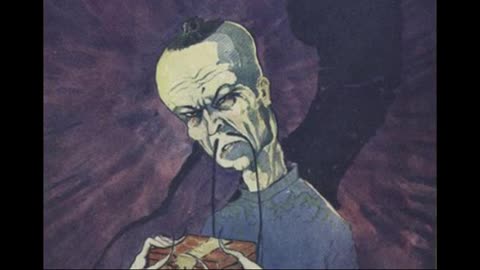
Shadow Forms: A Collection of Occult Stories by: Manly P. Hall (1930)
Deus Meum Que Jus
The stories in this book not only serve as entertaining narratives but also embody profound occult teachings, each offering a unique moral that aligns with Manly P. Hall's esoteric philosophy. The collection stands as a reflection of Hall’s broad knowledge of mystical traditions, combining fiction with spiritual lessons that resonate with seekers of wisdom.
Here is a breakdown of each story:
1. Black Hat Sorcery
This story delves into the dark arts and explores the destructive power of selfish magic. The protagonist encounters a practitioner of black magic, uncovering the consequences of misusing spiritual forces for personal gain. The tale serves as a cautionary narrative about the karmic repercussions of unethical actions.
Moral of the Story: The misuse of spiritual powers for personal benefit leads to self-destruction, emphasizing the importance of moral integrity in esoteric practices.
2. The Witch Doctor
Set in a remote village, this story examines the healing practices and mystical knowledge of a local witch doctor. It explores the tension between traditional spiritual healing and the encroaching influence of modern medicine. The tale reflects on the value of ancient wisdom and the spiritual dimension of healing.
Moral of the Story: True healing involves the spiritual plane as much as the physical, and modern approaches often overlook the importance of holistic well-being.
3. The Teapot of Mandarin Wong
This story blends Eastern philosophy with the mystical, following the journey of a magical teapot owned by Mandarin Wong. The teapot possesses the ability to manifest desires, but with unintended consequences. This narrative explores the dangers of material greed and the misunderstandings around magical objects.
Moral of the Story: The pursuit of material wealth and desires without spiritual understanding leads to unforeseen consequences, underscoring the need for inner clarity.
4. Silver Souls
A deeply spiritual story, Silver Souls reflects on the idea of reincarnation and the continuity of the soul. The narrative follows several characters as they navigate different lifetimes, bound by karmic ties and spiritual lessons that persist across their incarnations.
Moral of the Story: The soul's journey transcends lifetimes, and spiritual growth comes through understanding and learning from the karmic bonds that link us across lifetimes.
5. Third Eye
This story focuses on the mystical powers of the Third Eye, a symbol of spiritual awakening and clairvoyant abilities. A seeker of esoteric knowledge learns the power of intuition and inner vision, but is warned of the dangers of using these abilities for the wrong reasons.
Moral of the Story: The development of inner sight should be pursued with caution and ethical intent, as misuse of spiritual insight can lead to chaos.
6. The Spirit of the Snows
Set in a mountainous region, this story weaves together themes of nature mysticism and spiritual purity. The protagonist encounters an ethereal presence— the Spirit of the Snows—that teaches him about the sacredness of nature and the importance of spiritual discipline.
Moral of the Story: Nature is a profound teacher, and spiritual lessons are learned by attuning to the sacred forces present in the natural world.
7. The Lota of the Great God Shiva
This story explores Hindu mysticism, centering on a sacred vessel (Lota) blessed by the God Shiva. The protagonist’s journey through this spiritual quest emphasizes the themes of surrender to divine will and the acquisition of spiritual powers through humility.
Moral of the Story: Spiritual enlightenment is achieved through surrender to divine forces and the cultivation of inner purity.
8. The Temple of Sin
This tale explores the idea of spiritual redemption within the context of a mysterious temple. The protagonist must confront his own inner demons and the consequences of past misdeeds, symbolizing the universal process of spiritual atonement.
Moral of the Story: True redemption is achieved through self-awareness, moral accountability, and facing the shadows within.
9. The Dance of the Veils
A mystical story about unveiling the hidden layers of spiritual knowledge, The Dance of the Veils uses the metaphor of a dance to illustrate the gradual revelation of occult wisdom. Each veil represents an aspect of illusion that must be transcended to reach the truth.
Moral of the Story: Spiritual awakening is a gradual process of lifting the veils of illusion, and true wisdom is revealed only to those with patience and inner discipline.
10. The Emerald Tablet
Based on Hermetic teachings, this story draws from the famous Emerald Tablet and the principle of "As Above, So Below." It explores how the microcosm reflects the macrocosm and teaches the protagonist the importance of balance between the spiritual and physical realms.
Moral of the Story: The universal laws governing the cosmos are mirrored in the individual, and spiritual wisdom requires understanding this balance.
11. Your God and My God
This story reflects on the unity of religions and the shared spiritual truths that transcend dogma. Through encounters with different belief systems, the characters come to understand the commonality of divine principles across cultures and religions.
Moral of the Story: All paths lead to the same spiritual truth, and true wisdom comes from recognizing the unity of all faiths.
12. The Cave of the Apes
A unique story that explores the primal aspects of human consciousness and the link between humanity and its animalistic origins. The protagonist undergoes a transformative experience in the cave, confronting the dual nature of human beings—both animalistic and divine.
Moral of the Story: Spiritual evolution requires embracing and transcending the lower instincts to realize our divine potential.
About the Author:
Manly P. Hall was one of the most influential figures in the 20th century in the fields of esotericism, mysticism, and occult studies. His intellectual contributions to ancient wisdom and spiritual traditions are best exemplified by his magnum opus, The Secret Teachings of All Ages. Hall's works continue to be cornerstones of modern occult scholarship, and his writings have had a significant impact on those exploring Freemasonry, Hermeticism, and various mystical traditions.
Early Life and Background:
Born in Peterborough, Ontario, Canada on March 18, 1901, Hall moved to Los Angeles, California, in 1919. There, he encountered emerging spiritual movements that shaped his lifelong passion for metaphysical exploration. By his early twenties, Hall became a prolific writer and lecturer, rapidly gaining recognition for his depth of knowledge on esoteric and occult subjects.
Key Works:
1. The Secret Teachings of All Ages (1928):
Hall’s most famous work, an extensive compendium of ancient and mystical traditions, covers alchemy, astrology, Hermeticism, Rosicrucianism, Kabbalah, and Freemasonry. It remains an essential reference for students of the occult.
2. The Lost Keys of Freemasonry (1923):
This book delves into the symbolism and spiritual aspects of Freemasonry, portraying the craft as a journey toward personal enlightenment.
3. The Secret Destiny of America (1944):
Hall explores the esoteric foundation of the United States, suggesting that the country was destined to fulfill a role in advancing universal enlightenment, influenced by Masonic and Rosicrucian ideals.
4. The Initiates of the Flame (1922):
One of Hall’s earliest works, discussing the symbolism of fire in alchemical and spiritual traditions.
5. The Ways of the Lonely Ones: A Collection of Mystical Allegories (1945):
A collection of allegories presenting spiritual teachings through symbolic narratives, emphasizing personal transformation.
6. Lectures and Essays:
Throughout his life, Hall authored more than 150 books and delivered over 8,000 lectures on metaphysics, philosophy, and mysticism.
Degrees, Orders, and Affiliations:
1. 33rd Degree Scottish Rite Freemason (1973) – Honorary degree awarded in recognition of his contributions to Masonic philosophy.
2. Initiated into Freemasonry at Jewel Lodge No. 374 in San Francisco (1954).
3. Strongly associated with Rosicrucianism, though no formal initiation into a specific order is confirmed.
4. Deeply influenced by Hermeticism, particularly the teachings of Hermes Trismegistus.
5. Founder of the Philosophical Research Society (PRS) in 1934, dedicated to the study of esotericism, philosophy, and religion.
Philosophical Contributions and Legacy:
Manly P. Hall's approach to esotericism was inclusive, drawing from a wide array of mystical and spiritual traditions. He believed in the perennial philosophy, which posits that all spiritual traditions share a common origin. Hall’s goal was to uncover hidden meanings in religious symbols, rituals, and myths to guide individuals toward self-realization and spiritual enlightenment.
His work, especially The Secret Teachings of All Ages, remains a cornerstone for those studying occult philosophy, alchemy, and mysticism.
Legacy:
- Hall passed away on August 29, 1990, leaving behind a vast body of work that continues to influence students of the occult, mysticism, and comparative religion.
- His Philosophical Research Society continues to promote ancient wisdom, hosting lectures and maintaining a significant library of esoteric knowledge.
- Hall’s contributions have deeply impacted both academic and spiritual communities, especially those interested in Freemasonry, Hermeticism, and the esoteric traditions of both the East and West.
Manly P. Hall’s legacy as an occult scholar, author, and lecturer endures, inspiring those who seek a deeper understanding of ancient wisdom traditions and their relevance in modern spiritual exploration. His ability to synthesize complex esoteric teachings into accessible knowledge continues to make him one of the most respected figures in the study of mysticism and esotericism.
1
comment
The Bohemian Club 1969 Little Red Book - By-Laws & Officers
Deus Meum Que Jus
This rare text outlines the inner workings, customs, and governance of the Bohemian Club as of 1969. Known for its elite membership and secretive meetings, the book provides key insights into the club’s structure, including its by-laws, officer positions, and governing committees, and history.
By-Laws
The book extensively covers the by-laws, detailing the rules that govern member conduct and the procedures for disciplining members. There is an emphasis on maintaining harmony and protecting the club’s reputation, with consequences like reprimands, fines, suspensions, or expulsions for those who violate its standards. The by-laws outline not only behavioral expectations but also the protocols for appeals, with members given the chance to contest disciplinary actions.
Membership and Fees
Members of the Bohemian Club, their privileges, and guest policies are also discussed. Membership rules include clear regulations on introducing visitors, limits on issuing visitor cards, and the scope of privileges afforded to members. Fees, dues, and financial obligations required for both regular members and visitors are explained, including special fees for events such as the famous "Midsummer Encampment."
Committees
The text details the committees responsible for the club’s operations, including their respective duties. For example, committees regulate membership invitations, maintain the club’s properties, and oversee key events like the “Grove Stage,” where club performances and ceremonies occur. Notably, there’s mention of the Stage Committee and Jinks Committee, which handle entertainment aspects like the renowned Cremation of Care ritual.
Officers and Former Leadership
The book includes a section listing the club's officers from various years. This section provides a record of the leadership and administrative roles held by notable figures, including the President, Vice President, Secretary, Treasurer, and Directors. The list of former officers helps establish the club's long history of prominent membership.
The "List of 50"
This section, referred to as the Honorary Life List or List of 50, recognizes members who made significant contributions or held positions of great importance within the club. It provides a ceremonial acknowledgment of these members.
Special Events and Grove Activities
The text offers insights into the Midsummer Encampment, one of the club's most significant gatherings. Rules around who can attend, guest invitations, and the importance of maintaining privacy during these events are stressed, with additional notes on rituals like the Cremation of Care, where an effigy is symbolically burned to cast away worries.
House and Grove Rules
House rules outline daily club operations, including meal arrangements, restrictions on photography, and quiet hours. These ensure the privacy and exclusivity of the Bohemian Club are maintained. The Grove Rules cover activities specific to the Bohemian Grove property, including guidelines for camp structures, private parties, and the prohibition of women and minors in certain areas.
The 1969 Little Red Book is an administrative guide, offering both logistical details and a glimpse into the rituals, traditions, and structure of the Bohemian Club. While its contents are dense with regulations, it also emphasizes the club's commitment to exclusivity, tradition, and the protection of its elite members' privacy.
1973's Little Red Book:
The Bohemian Club 1973 Little Red Book - History, Former Officers, In Memorium, Rules:
https://rumble.com/v5js4i5-the-bohemian-club-1973-little-red-book-history-former-officers-in-memorium-.html
Annals of Bohemian Club Vol. IX - Music & Musicians in Bohemia The First One Hundred Years [A Symphonic Summary], by Richard P. Buck:
https://rumble.com/v5jsujl-annals-of-bohemian-club-vol.-ix-music-and-musicians-in-bohemia-the-first-on.html
The Bohemian Club 1973 Little Red Book - History, Former Officers, In Memorium, Rules
Deus Meum Que Jus
This rare book, similar to previous editions of the Bohemian Club's Little Red Book, offers a detailed snapshot of the club’s governance, culture, and inner workings during the early 1970s. While maintaining many of its long-held traditions and secretive customs, this edition includes updated details on by-laws, committees, and officers. Here is a structured overview of the key elements:
By-Laws
This 1973-1974 edition continues to emphasize strict governance and decorum within the club. The by-laws detail procedures for addressing disputes, disciplining members, and managing the club’s finances. Penalties like suspension or expulsion are clearly outlined for breaches of decorum, with emphasis on maintaining confidentiality and order among members. Members are expected to adhere strictly to all regulations to protect the club's reputation.
Appeals processes are in place, similar to previous editions, allowing members a formal path to contest decisions, reflecting a tightly structured hierarchical governance. The by-laws also regulate how the club interacts with the outside world, strictly limiting any publicity or third-party access to club functions.
Membership and Fees
Membership rules remain stringent, as outlined in previous years. There are specific limits on guest privileges, including the number of visitors a member can invite and the procedures for obtaining guest cards. This edition also continues to highlight the exclusivity of key events, such as the Midsummer Encampment, by requiring special fees and outlining detailed procedures for attendance.
Fees for club services and events, including the initiation fee and membership dues, are discussed. These financial obligations are mandatory and critical to retaining membership, with financial penalties for non-compliance.
Committees
The 1973-1974 book provides updated information on committees, which are essential for the club’s internal management. Committees such as the Grove Committee, Jinks Committee, and House Committee oversee various operational aspects from property maintenance to event organization. The Grove Committee, in particular, plays a crucial role in regulating events held at the Bohemian Grove, the club’s famous retreat, while the Jinks Committee is responsible for organizing theatrical performances, including the club's secretive rituals such as the Cremation of Care.
New mentions of administrative positions such as Assistant Secretary and Manager reflect evolving administrative structures within the club.
Officers and Leadership
A key feature of this edition is the list of current and past officers, which highlights the leadership roles held by prominent members from the club's long history. These positions include President, Vice President, Secretary, Treasurer, and Directors. The book traces several years of leadership changes, demonstrating the continuity of the club's governance. The 1973-1974 edition also provides a historical overview of former officers dating back decades, underscoring the club's long-standing elite membership.
Special Events
The Midsummer Encampment remains one of the most significant club events. As in previous editions, the book strictly outlines who may attend, how guests are to be managed, and the need for maintaining secrecy throughout the event. The Cremation of Care ritual, a central feature of the Encampment, is discussed, continuing to serve as a symbolic event where members cast away worldly concerns.
House and Grove Rules
The House Rules detail daily operations at the San Francisco clubhouse, specifying rules around guest introductions, meal services, and quiet hours. Photography, interviews, and any form of publicity remain strictly forbidden to protect the club’s privacy.
The Grove Rules offer specific guidelines on the use of the Bohemian Grove property. The rules cover everything from camp construction to the organization of private parties. Notably, the Grove Rules still prohibit women and minors from entering certain areas, maintaining a men-only policy in particular spaces. Strict rules against photography, filming, or any kind of public documentation at the Grove are reiterated, protecting the sanctity and secrecy of the property.
In Memoriam
This section includes an In Memoriam section, which solemnly honors deceased members. It lists members by name and provides the year of their death, offering a reflection on the club’s storied past and acknowledging those who contributed significantly to its legacy.
This 1973 edition of the Bohemian Club’s Little Red Book offers a structured view of the club’s governance, rules, and events. It maintains many of the traditional elements of past editions but also provides important updates on membership fees, officers, and committee functions. The emphasis on privacy, exclusivity, and tradition remains paramount, while the rules governing both the San Francisco clubhouse and the Bohemian Grove ensure the club’s operations continue to be strictly controlled and shrouded in secrecy.
1969's Little Red Book:
The Bohemian Club 1969 Little Red Book - By-Laws & Officers:
https://rumble.com/v5jsujl-annals-of-bohemian-club-vol.-ix-music-and-musicians-in-bohemia-the-first-on.html
Annals of Bohemian Club Vol. IX - Music & Musicians in Bohemia The First One Hundred Years [A Symphonic Summary], by Richard P. Buck:
https://rumble.com/v5jsujl-annals-of-bohemian-club-vol.-ix-music-and-musicians-in-bohemia-the-first-on.html

Annals of Bohemian Club Vol. IX - Music & Musicians in Bohemia The First One Hundred Years
Deus Meum Que Jus
Complete Title:
Annals of Bohemian Club Vol. IX - Music & Musicians in Bohemia The First One Hundred Years [A Symphonic Summary], by Richard P. Buck.
Published by the Bohemian Club, San Francisco, 2007. Limited to 3,000 copies.
This volume offers a comprehensive musical history of the Bohemian Club, spanning the first century of its existence. Richard P. Buck, a distinguished historian within the Bohemian Club, meticulously chronicles the role that music played in the club's traditions, rituals, and gatherings.
Music and the Bohemian Club
The book explores the vital role that music has held in the Bohemian Club’s cultural identity. From its earliest days, members composed original songs, orchestrated elaborate performances, and hosted regular musical events like the Jinks and High Jinks. The index mentions specific performances, such as Babes in Toyland (Herbert, 68), I Saw a Star (Brown, 130), and the Faro’s Daughter (Cook, 143), reflecting the diversity of musical tastes and talents within the club.
Symphonic and Popular Music
Buck divides the book into sections that highlight both symphonic and popular music traditions, revealing how they coexisted and thrived within the club. The Bohemian Club Symphony Orchestra and the Bohemian Jazz Ensemble are just two examples of the groups that performed regularly, helping to solidify music as a central part of the club's ethos. Famous orchestral concerts, such as A Grand Orchestral Concert (Grofé, 138) and Gypsy Camp (Stewart, 57), are detailed, showcasing the impressive range of performances that graced the stage at both the clubhouse and the Grove.
Jinks, Recitals, and Rituals
The index reveals how integral music was to the club’s celebrated Jinks and other rituals. Notably, the Cremation of Care ceremony, a symbolic burning of worries and care, is underscored by musical pieces like Ode to Care (Stewart, 25). Similarly, Low Jinks performances like The Gypsy Camp (Stewart, 57) provided both humor and reflection. These events combined theatrical performances with original compositions by club members, many of whom were also accomplished musicians.
Significant Figures
Buck highlights key musicians who shaped the club’s sound over the years. From renowned conductors like Yehudi Menuhin (122) to prolific composers such as Adolph Bauer (34), the Annals traces how both in-house and guest musicians contributed to Bohemian performances. Musicians like Edward Diffenderfer (134) and Harold Nachtrieb (111) played crucial roles in these productions, either as conductors or performers in recurring shows like Gypsy Camp (Stewart, 57) and Songs of the Sierras (Miller, 17).
Preserving Tradition
The Bohemian Club’s commitment to preserving and evolving its musical traditions is emphasized, with extensive records of performances dating back to the late 19th century. Entries like Birds of Rhiannon (Harris, 98) and Sons of Baldur (Stewart, 58) represent how mythological and esoteric themes intertwined with the club’s musical events, lending a rich, symbolic layer to the already impressive artistic legacy.
This limited edition of 3,000 copies serves as both a historical document and a testament to the enduring spirit of music within the Bohemian Club. Buck’s work meticulously details a century of performances, from grand symphonic undertakings to intimate, humorous Low Jinks. It is a must-have for those interested in the intersection of elite cultural societies and the performing arts.
More of these books:
1969's Little Red Book:
The Bohemian Club 1969 Little Red Book - By-Laws & Officers:
rumble.com/v5jrsul-the-bohemian-club-1969-little-red-book-by-laws-and-officers.html?e9s=src_v1_ucp
1973's Little Red Book:
The Bohemian Club 1973 Little Red Book - History, Former Officers, In Memorium, Rules:
rumble.com/v5js4i5-the-bohemian-club-1973-little-red-book-history-former-officers-in-memorium-.html

The Annals of the Bohemian Club Volume VII: 1988-1996
Deus Meum Que Jus
The Annals of the Bohemian Club Volume VII: 1988-1996 is a comprehensive historical account of the Bohemian Club's operations and activities during an eight-year period. It is divided into sections covering the club’s organization, various internal groups, and events both at the City Club and in the Grove. The book also highlights key members through biographies and includes corrections from previous records. Additionally, it features appendices with official reports, officer listings, acknowledgments, and a significant "In Memoriam" section honoring deceased members. An index provides easy reference to important individuals and events.
Here is the "Table of Contents" from the book:
Part One: Organization of the Club
Part Two: Organized Groups
Part Three: Activities in the City Club
Part Four: Activities in the Grove
Part Five: Bohemiana
Part Six: Biographies
Part Seven: Omissions & Corrections
Appendix A
President's Reports
Officers, Directors and Committees
Club Events 1987-1996
Appendix B
Acknowledgements by Jerry C. Cole
Appendix C
In Memoriam
Index
This part has all of the names of the people in the book.
More of their books:
1969's Little Red Book:
The Bohemian Club 1969 Little Red Book - By-Laws & Officers:
https://rumble.com/v5jrsul-the-bohemian-club-1969-little-red-book-by-laws-and-officers.html?e9s=src_v1_ucp
1973's Little Red Book:
The Bohemian Club 1973 Little Red Book - History, Former Officers, In Memorium, Rules:
https://rumble.com/v5js4i5-the-bohemian-club-1973-little-red-book-history-former-officers-in-memorium-.html
Annals of Bohemian Club Vol. IX - Music & Musicians in Bohemia The First One Hundred Years [A Symphonic Summary], by Richard P. Buck:
https://rumble.com/v5jsujl-annals-of-bohemian-club-vol.-ix-music-and-musicians-in-bohemia-the-first-on.html
Great Ghost Stories by: Various Authors
Deus Meum Que Jus
The House and the Brain, by Lord Edward Bulwer-Lytton
This gothic horror tale follows the narrator's investigation of a haunted house in London. Strange supernatural occurrences and eerie phenomena suggest a connection between the house and dark powers of the mind. Bulwer-Lytton explores themes of mesmerism, telepathy, and the occult in a story that delves into the tension between science and the supernatural.
The Roll-Call of the Reef, by A.T. Quiller-Couch
Set in Cornwall, this eerie ghost story centers on the legend of a shipwreck that occurred many years ago. The haunting tale is triggered by the discovery of a wrecked ship’s boat during a winter storm, and it culminates in the ghostly roll-call of the crew members who perished. The story reflects themes of maritime tragedy and the inescapable grip of fate.
The Open Door, by Margaret Oliphant
This Victorian ghost story involves a young boy who becomes ill after hearing mysterious cries near a seemingly abandoned door in the ruins of a Scottish house. His father embarks on a quest to uncover the source of these cries, leading to the discovery of a tragic past tied to the door. Oliphant mixes supernatural elements with deep emotional and psychological undercurrents in this haunting tale.
The Deserted House, by Ernst Theodor Amadeus Hoffmann
In this eerie story, a group of friends encounter a strange, abandoned house that holds an inexplicable power over those who come near it. Hoffmann combines the supernatural with psychological horror as the protagonist is drawn deeper into the mystery of the house, exploring themes of obsession, madness, and the unseen forces that influence human behavior.
The Mysterious Sketch, by Erckmann-Chatrian
This tale involves an artist who becomes obsessed with a sketch of a beautiful but enigmatic woman. As the artist works on the sketch, strange and inexplicable events occur, blurring the line between art and reality. The authors explore themes of artistic creation, obsession, and the supernatural, weaving a mysterious and unsettling atmosphere throughout the story.
Green Branches, by Fiona Macleod
Set in the mystical and atmospheric Scottish Highlands, this story reflects Fiona Macleod’s deep connection to Celtic folklore. The narrative is imbued with a sense of loss, magic, and the spiritual presence of nature. In the story, a tragic love is entwined with the ancient, sacred connection to the natural world, leading to a haunting and lyrical exploration of love and death.
The Four-Fifteen Express, by Amelia B. Edwards
A psychological ghost story, The Four-Fifteen Express tells the story of a man haunted by a mysterious event during a train ride. Edwards skillfully uses the then-new technology of railways to create a suspenseful and eerie atmosphere. The supernatural and the mundane collide as the story builds to a chilling revelation, exploring themes of guilt, death, and fate.
The Were-Wolf, by H. B. Marryatt
A chilling early take on the werewolf myth, this story centers on a noblewoman cursed to transform into a wolf during the full moon. Marryatt explores the duality of human nature, with the protagonist struggling between her refined, civilized self and the primal beast within. This gothic horror tale delves into themes of transformation, identity, and inner conflict.
The Withered Arm, by Thomas Hardy
In this tale, Hardy intertwines the supernatural with the stark realism of rural life. A milkmaid named Rhoda Brooks experiences an eerie connection with the new wife of her former lover. Rhoda's jealousy manifests as a physical affliction on the woman, leading to a tragic series of events. Hardy explores themes of guilt, jealousy, and the mysterious forces that shape human destiny.
Clarimonde, by Theophile Gautier
A decadent and sensual tale of love and the supernatural, Clarimonde tells the story of a priest who becomes enchanted by the beautiful and mysterious Clarimonde, a woman who seems to defy death. Torn between his religious vows and his passion for Clarimonde, the priest experiences a surreal journey into a world of pleasure and sin. Gautier’s tale explores themes of desire, temptation, and the blurring of life and death.
The Stalls of Barchester Cathedral, by Montague Rhodes James
This ghost story revolves around an antiquarian who uncovers a dark secret hidden within the records of Barchester Cathedral. As he investigates the strange events surrounding the death of an archdeacon, he comes to realize that the cathedral’s stalls are haunted by malevolent forces. James masterfully blends scholarly intrigue with the supernatural, creating an unsettling atmosphere of creeping dread.
What Was It?, by Fitz-James O'Brien
Set in a boarding house in New York, this story tells of a strange and invisible creature that attacks the protagonist during the night. O'Brien uses a mix of gothic horror and early science fiction to explore the limits of perception and the unknown. The story raises questions about the nature of reality and the boundaries between the seen and the unseen.
Baron Trump’s Marvellous Underground Journey (1893)
Deus Meum Que Jus
Baron Trump’s Marvellous Underground Journey, written by Ingersoll Lockwood in 1893, is a curious and whimsical adventure novel that follows the young protagonist, Wilhelm Heinrich Sebastian Von Troomp, known as "Baron Trump," as he embarks on an underground journey to explore mysterious worlds. Baron Trump is portrayed as an aristocratic, intelligent, and mischievous young boy with a penchant for adventure, who, despite his wealth and privilege, often finds himself entangled in perplexing and surreal situations. This story is the second in Lockwood’s series, following Travels and Adventures of Little Baron Trump and His Wonderful Dog Bulgar (1890).
The story begins with Baron Trump, a young and highly educated nobleman, who is guided by the wisdom found in an ancient manuscript written by the mysterious Don Fum. Following Don Fum's guidance, Baron Trump and his loyal dog, Bulgar, set out to explore a series of strange realms deep beneath the Earth’s surface. Each realm is inhabited by bizarre and often satirical characters, embodying human vices and oddities. The underground journey unfolds as a series of episodic adventures, where Trump encounters peculiar beings, including the Giant Gog, the frozen land of the Land of Transparent Folk, and many other strange societies and creatures.
Lockwood’s writing is a blend of satire, fantasy, and social commentary. Through Baron Trump’s encounters, he parodies the cultural norms of the late 19th century, poking fun at aristocracy, manners, and the quirks of different societies. The character of Baron Trump is also portrayed as skeptical, resourceful, and occasionally arrogant, embodying traits that Lockwood seems to satirize. While written as a children’s book, its clever humor and social observations make it accessible to an older audience as well.
The novel is also notable for its prophetic undertones, as some readers have drawn attention to curious coincidences between the character of Baron Trump and modern-day figures in politics. Lockwood’s use of the name "Trump," and themes of exploration, ambition, and power, has led to renewed interest in the book, sparking theories about its “predictive” nature.
Stylistically, Baron Trump’s Marvellous Underground Journey is reminiscent of Alice’s Adventures in Wonderland and Gulliver’s Travels, combining elements of fantasy and satire. Lockwood’s writing reflects both the Victorian fascination with exploration and the era’s literary tradition of using fantastical voyages as allegories for human behavior.
In sum, Baron Trump’s Marvellous Underground Journey is a unique and imaginative tale that combines adventure, social satire, and a touch of mystery. Its layered narrative invites readers to question reality, explore the eccentricities of society, and perhaps even consider the role of destiny in our lives.
About the Author:
Ingersoll Lockwood (1841–1918) was an American lawyer, diplomat, lecturer, and author, known for his whimsical and satirical writing style. Born in Ossining, New York, Lockwood came from a family with notable ties to law and politics. His father, Munson Ingersoll Lockwood, was a prominent attorney and a strong influence on Lockwood’s own legal career. Ingersoll studied law in New York and was admitted to the bar at a young age, quickly establishing himself as a respected lawyer with an active interest in social and political issues.
Lockwood’s career as a diplomat took him abroad, where he served as the U.S. consul to the Kingdom of Hanover in Germany under President Abraham Lincoln. This exposure to European culture and politics not only broadened his worldview but also inspired his later works, which often feature sharp social commentary and a European sensibility. Despite his success in law and diplomacy, Lockwood had a passion for storytelling and fantasy, leading him to explore literary pursuits.
In the 1890s, Lockwood turned to fiction, where he combined elements of satire, fantasy, and adventure. His most famous works, Travels and Adventures of Little Baron Trump and His Wonderful Dog Bulgar (1890) and Baron Trump’s Marvellous Underground Journey (1893), were published during this period. These novels, which follow the young and adventurous Baron Trump, blend social satire with fantastical themes, drawing on Lockwood’s observations of aristocratic society. His other notable work, 1900: Or, The Last President (1896), explores political themes and reflects Lockwood’s fascination with the future, an interest that has fueled renewed interest in his writings in recent years.
Lockwood’s unique approach to storytelling, often filled with wit and satire, reflected his critical view of contemporary society and politics. His writings, though originally intended for children, contain layers of social and political critique that appeal to adult readers as well. Although he never achieved widespread literary fame during his lifetime, Lockwood’s works have experienced a resurgence in popularity due to their “predictive” elements and intriguing connections to modern-day figures and events.
Ingersoll Lockwood passed away in Saratoga Springs, New York, in 1918. Today, he is remembered for his contributions to American literature as a writer ahead of his time, whose works continue to spark curiosity and debate among readers and scholars alike.
2.8K
views
The Hidden Church of the Holy Graal 2/2 by: Edward Arthur Waite
Deus Meum Que Jus
The Hidden Church of the Holy Graal (1909) is Edward Arthur Waite’s magnum opus on the mystical and esoteric dimensions of the Holy Grail legend. In this dense and richly annotated work, Waite examines the Grail as far more than a Christian relic; he presents it as a profound spiritual symbol and a veiled tradition that transcends religious orthodoxy. The book combines literary criticism, historical research, and mystical insight to uncover the Grail’s hidden meaning as a representation of humanity’s spiritual quest for divine union and enlightenment.
Key Themes and Sections:
1. The Symbolism of the Grail:
Waite interprets the Grail not as a physical object but as a symbol of divine grace, spiritual fulfillment, and the transformative journey of the soul. He examines its connections to the Eucharist, Christ’s passion, and alchemical transformation, positing that the Grail holds the keys to hidden spiritual teachings.
2. The Hidden Church:
Central to Waite’s thesis is the idea of a "Hidden Church" represented by the Grail. This esoteric spiritual tradition, existing beyond orthodox religion, unites seekers who strive for enlightenment. Waite links this invisible church to the mystical aspects of Christianity, particularly those lost or obscured by institutional dogma.
3. Arthurian Context:
The Grail legend is deeply intertwined with Arthurian myth, and Waite explores the roles of key figures like King Arthur, Sir Galahad, and Sir Percival. He interprets these characters as archetypal spiritual seekers and illuminates their quests as allegories for the soul’s journey toward divine truth.
4. Historical and Literary Examination:
Waite delves deeply into the literary origins of the Grail legend, analyzing texts like Chrétien de Troyes’ Perceval, Wolfram von Eschenbach’s Parzival, and Robert de Boron’s Grail narratives. He critiques their development and provides a comprehensive analysis of how the Grail myth evolved from its early Christian roots to its medieval romantic interpretations.
5. Mystical and Alchemical Parallels:
Waite highlights the connections between the Grail legend and alchemical traditions. The Grail becomes a metaphor for the "Philosopher’s Stone" or the ultimate spiritual attainment, reflecting the process of purification and enlightenment.
6. The Quest for the Grail:
The quest for the Grail, Waite argues, mirrors humanity’s universal longing for transcendence and divine union. He suggests that the Grail serves as a guidepost for those seeking to reconcile earthly existence with higher spiritual ideals.
Waite’s Approach:
Waite’s analysis is both scholarly and mystical. He approaches the Grail legend as a sacred allegory, rich with layers of symbolic meaning. His detailed exploration spans Christian theology, medieval literature, Rosicrucianism, alchemy, and esotericism. Throughout the book, Waite draws connections between the Grail and various mystical traditions, presenting the Grail as a universal symbol that transcends any single religion or culture.
The Book’s Structure:
Introduction: Waite outlines his purpose, explaining the Grail’s significance as a spiritual symbol and its relevance to mysticism.
Early Grail Legends: An indepth analysis of the origins and development of the Grail narratives.
The Hidden Church: Waite’s thesis on the invisible spiritual tradition symbolized by the Grail.
Arthurian Mythology: Examination of Arthurian characters and their allegorical roles in the Grail quest.
The Grail as Alchemical Symbol: Exploration of the parallels between the Grail legend and the alchemical process.
Conclusion: Waite reflects on the Grail’s enduring significance as a symbol of humanity’s spiritual journey.
Key Insights:
The Grail is not merely a Christian relic but a universal symbol of enlightenment.
The "Hidden Church" represents a mystical, esoteric tradition unbound by religious orthodoxy.
The quest for the Grail mirrors the spiritual seeker’s journey toward divine union.
Arthurian myth provides a rich allegorical framework for understanding the Grail legend.
Impact and Legacy:
Waite’s The Hidden Church of the Holy Graal is a seminal work for students of mysticism, mythology, and the occult. It offers a comprehensive exploration of the Grail legend’s symbolic depth and its connection to universal spiritual truths. While the book’s dense prose and detailed analysis may challenge casual readers, its insights remain invaluable for those seeking to understand the Grail as more than a medieval myth, but as a profound spiritual guide.
About the Author:
Arthur Edward Waite (1857–1942) was a British mystic, occultist, scholar, and prolific author known for his exhaustive studies of esoteric traditions, mysticism, and symbolism. Waite dedicated his life to uncovering hidden spiritual truths and sought to bridge the gap between mysticism and orthodox Christianity. His works remain essential reading for those interested in the deeper meanings of symbols, rituals, and mystical traditions.
Early Life and Education:
Born in Brooklyn, New York, Waite moved to England after the death of his father. Raised by his mother, Waite’s early life was marked by financial struggles, which drove him to seek deeper spiritual meaning. His interest in mysticism was sparked by the untimely death of his sister, which led him to explore spiritualism and esoteric philosophies.
Secret Societies and Fraternal Connections:
1. Hermetic Order of the Golden Dawn:
Waite joined the Hermetic Order of the Golden Dawn in 1891, a key esoteric organization devoted to ceremonial magic, alchemy, and mysticism. However, Waite’s focus on Christian mysticism and spiritual alchemy often clashed with the group’s emphasis on magical practices. In 1903, he formed his own splinter group, known as the Independent and Rectified Rite of the Golden Dawn, emphasizing mysticism and esoteric Christianity over ritual magic.
2. Freemasonry:
Waite was a dedicated Freemason, joining the fraternity in 1901. He became a member of the Societas Rosicruciana in Anglia (SRIA), a Masonic organization focused on Rosicrucian philosophy. Freemasonry deeply influenced Waite’s work, particularly his focus on symbolism, initiation, and spiritual enlightenment.
3. The Fellowship of the Rosy Cross:
In 1915, Waite founded the Fellowship of the Rosy Cross, an esoteric Christian order inspired by Rosicrucian ideals. The order emphasized spiritual regeneration, divine wisdom, and the pursuit of the mystical Christ, rejecting traditional magical practices in favor of spiritual contemplation.
4. Theosophy:
Though not formally a member of the Theosophical Society, Waite corresponded with prominent Theosophists and drew inspiration from their emphasis on spiritual unity and hidden wisdom.
Scholarly Contributions:
Waite was a prolific writer, producing works on alchemy, Rosicrucianism, Freemasonry, Christian mysticism, and the occult. His books, including The Holy Kabbalah (1929), The Book of Ceremonial Magic (1911), and The Pictorial Key to the Tarot (1910), display his breadth of knowledge and ability to synthesize complex traditions into cohesive narratives. He also cocreated the RiderWaite Tarot Deck, one of the most famous and enduring tarot decks, emphasizing its use as a tool for spiritual reflection rather than divination.
Waite’s scholarship often sought to reveal the hidden spiritual truths underlying esoteric traditions. He viewed mysticism and Christian spirituality as deeply interconnected, often referring to the "secret doctrine" that transcends orthodox dogma. His work on The Hidden Church of the Holy Graal reflects this synthesis, presenting the Grail as both a Christian relic and a universal symbol of spiritual attainment.
Legacy:
Arthur Edward Waite’s dedication to uncovering the esoteric underpinnings of mystical traditions has left a lasting impact on the study of symbolism, mysticism, and the occult. His membership in and contributions to secret societies shaped his scholarship, providing him with access to esoteric teachings that informed his writings. Though criticized by some for his dense prose and selective interpretations, Waite’s works remain foundational for students of mysticism, Freemasonry, and occult traditions. His life’s work reflects a tireless pursuit of spiritual wisdom and the unification of esoteric and Christian teachings.
1
comment
The Hidden Church of the Holy Graal 1/2 by: Edward Arthur Waite
Deus Meum Que Jus
The Hidden Church of the Holy Graal (1909) is Edward Arthur Waite’s magnum opus on the mystical and esoteric dimensions of the Holy Grail legend. In this dense and richly annotated work, Waite examines the Grail as far more than a Christian relic; he presents it as a profound spiritual symbol and a veiled tradition that transcends religious orthodoxy. The book combines literary criticism, historical research, and mystical insight to uncover the Grail’s hidden meaning as a representation of humanity’s spiritual quest for divine union and enlightenment.
Key Themes and Sections:
1. The Symbolism of the Grail:
Waite interprets the Grail not as a physical object but as a symbol of divine grace, spiritual fulfillment, and the transformative journey of the soul. He examines its connections to the Eucharist, Christ’s passion, and alchemical transformation, positing that the Grail holds the keys to hidden spiritual teachings.
2. The Hidden Church:
Central to Waite’s thesis is the idea of a "Hidden Church" represented by the Grail. This esoteric spiritual tradition, existing beyond orthodox religion, unites seekers who strive for enlightenment. Waite links this invisible church to the mystical aspects of Christianity, particularly those lost or obscured by institutional dogma.
3. Arthurian Context:
The Grail legend is deeply intertwined with Arthurian myth, and Waite explores the roles of key figures like King Arthur, Sir Galahad, and Sir Percival. He interprets these characters as archetypal spiritual seekers and illuminates their quests as allegories for the soul’s journey toward divine truth.
4. Historical and Literary Examination:
Waite delves deeply into the literary origins of the Grail legend, analyzing texts like Chrétien de Troyes’ Perceval, Wolfram von Eschenbach’s Parzival, and Robert de Boron’s Grail narratives. He critiques their development and provides a comprehensive analysis of how the Grail myth evolved from its early Christian roots to its medieval romantic interpretations.
5. Mystical and Alchemical Parallels:
Waite highlights the connections between the Grail legend and alchemical traditions. The Grail becomes a metaphor for the "Philosopher’s Stone" or the ultimate spiritual attainment, reflecting the process of purification and enlightenment.
6. The Quest for the Grail:
The quest for the Grail, Waite argues, mirrors humanity’s universal longing for transcendence and divine union. He suggests that the Grail serves as a guidepost for those seeking to reconcile earthly existence with higher spiritual ideals.
Waite’s Approach:
Waite’s analysis is both scholarly and mystical. He approaches the Grail legend as a sacred allegory, rich with layers of symbolic meaning. His detailed exploration spans Christian theology, medieval literature, Rosicrucianism, alchemy, and esotericism. Throughout the book, Waite draws connections between the Grail and various mystical traditions, presenting the Grail as a universal symbol that transcends any single religion or culture.
The Book’s Structure:
Introduction: Waite outlines his purpose, explaining the Grail’s significance as a spiritual symbol and its relevance to mysticism.
Early Grail Legends: An indepth analysis of the origins and development of the Grail narratives.
The Hidden Church: Waite’s thesis on the invisible spiritual tradition symbolized by the Grail.
Arthurian Mythology: Examination of Arthurian characters and their allegorical roles in the Grail quest.
The Grail as Alchemical Symbol: Exploration of the parallels between the Grail legend and the alchemical process.
Conclusion: Waite reflects on the Grail’s enduring significance as a symbol of humanity’s spiritual journey.
Key Insights:
The Grail is not merely a Christian relic but a universal symbol of enlightenment.
The "Hidden Church" represents a mystical, esoteric tradition unbound by religious orthodoxy.
The quest for the Grail mirrors the spiritual seeker’s journey toward divine union.
Arthurian myth provides a rich allegorical framework for understanding the Grail legend.
Impact and Legacy:
Waite’s The Hidden Church of the Holy Graal is a seminal work for students of mysticism, mythology, and the occult. It offers a comprehensive exploration of the Grail legend’s symbolic depth and its connection to universal spiritual truths. While the book’s dense prose and detailed analysis may challenge casual readers, its insights remain invaluable for those seeking to understand the Grail as more than a medieval myth, but as a profound spiritual guide.
About the Author:
Arthur Edward Waite (1857–1942) was a British mystic, occultist, scholar, and prolific author known for his exhaustive studies of esoteric traditions, mysticism, and symbolism. Waite dedicated his life to uncovering hidden spiritual truths and sought to bridge the gap between mysticism and orthodox Christianity. His works remain essential reading for those interested in the deeper meanings of symbols, rituals, and mystical traditions.
Early Life and Education:
Born in Brooklyn, New York, Waite moved to England after the death of his father. Raised by his mother, Waite’s early life was marked by financial struggles, which drove him to seek deeper spiritual meaning. His interest in mysticism was sparked by the untimely death of his sister, which led him to explore spiritualism and esoteric philosophies.
Secret Societies and Fraternal Connections:
1. Hermetic Order of the Golden Dawn:
Waite joined the Hermetic Order of the Golden Dawn in 1891, a key esoteric organization devoted to ceremonial magic, alchemy, and mysticism. However, Waite’s focus on Christian mysticism and spiritual alchemy often clashed with the group’s emphasis on magical practices. In 1903, he formed his own splinter group, known as the Independent and Rectified Rite of the Golden Dawn, emphasizing mysticism and esoteric Christianity over ritual magic.
2. Freemasonry:
Waite was a dedicated Freemason, joining the fraternity in 1901. He became a member of the Societas Rosicruciana in Anglia (SRIA), a Masonic organization focused on Rosicrucian philosophy. Freemasonry deeply influenced Waite’s work, particularly his focus on symbolism, initiation, and spiritual enlightenment.
3. The Fellowship of the Rosy Cross:
In 1915, Waite founded the Fellowship of the Rosy Cross, an esoteric Christian order inspired by Rosicrucian ideals. The order emphasized spiritual regeneration, divine wisdom, and the pursuit of the mystical Christ, rejecting traditional magical practices in favor of spiritual contemplation.
4. Theosophy:
Though not formally a member of the Theosophical Society, Waite corresponded with prominent Theosophists and drew inspiration from their emphasis on spiritual unity and hidden wisdom.
Scholarly Contributions:
Waite was a prolific writer, producing works on alchemy, Rosicrucianism, Freemasonry, Christian mysticism, and the occult. His books, including The Holy Kabbalah (1929), The Book of Ceremonial Magic (1911), and The Pictorial Key to the Tarot (1910), display his breadth of knowledge and ability to synthesize complex traditions into cohesive narratives. He also cocreated the RiderWaite Tarot Deck, one of the most famous and enduring tarot decks, emphasizing its use as a tool for spiritual reflection rather than divination.
Waite’s scholarship often sought to reveal the hidden spiritual truths underlying esoteric traditions. He viewed mysticism and Christian spirituality as deeply interconnected, often referring to the "secret doctrine" that transcends orthodox dogma. His work on The Hidden Church of the Holy Graal reflects this synthesis, presenting the Grail as both a Christian relic and a universal symbol of spiritual attainment.
Legacy:
Arthur Edward Waite’s dedication to uncovering the esoteric underpinnings of mystical traditions has left a lasting impact on the study of symbolism, mysticism, and the occult. His membership in and contributions to secret societies shaped his scholarship, providing him with access to esoteric teachings that informed his writings. Though criticized by some for his dense prose and selective interpretations, Waite’s works remain foundational for students of mysticism, Freemasonry, and occult traditions. His life’s work reflects a tireless pursuit of spiritual wisdom and the unification of esoteric and Christian teachings.

The Kybalion: A Study of the Hermetic Philosophy of Ancient Egypt and Greece By: The Three Initiates
Deus Meum Que Jus
Introduction to Hermetic Philosophy
The opening chapters of The Kybalion set the stage for an exploration into Hermeticism, an ancient philosophical tradition attributed to Hermes Trismegistus, also known as Thoth in Egyptian mythology. This philosophy is presented as a universal spiritual tradition, not bound by dogma but rather offering practical wisdom for spiritual and personal development. The authors, under the pseudonym "The Three Initiates," begin by discussing the secrecy that typically surrounds Hermetic teachings, traditionally reserved for the initiated. However, The Kybalion breaks from this tradition by making these teachings accessible to a broader audience, encouraging an experiential approach where readers are urged to apply these principles in their daily lives.
The Seven Hermetic Principles
1. The Principle of Mentalism:
- "The All is Mind; The Universe is Mental."
- This principle posits that the universe is fundamentally mental in nature. It suggests that by understanding and mastering one's thought processes, an individual can influence their reality. This concept parallels modern psychological theories where the power of mindset and belief systems in shaping one's life is emphasized.
2. The Principle of Correspondence:
- "As above, so below; as below, so above."
- This principle reflects the idea of fractal patterns in nature; what happens on one level of reality reflects what happens on others. It has influenced fields like chaos theory and fractal geometry, suggesting a deeper interconnectedness of all things.
3. The Principle of Vibration:
- "Nothing rests; everything moves; everything vibrates."
- Here, the text aligns with contemporary scientific understanding where everything, from the smallest particles to the largest galaxies, exhibits vibrational behavior. Hermetic philosophy uses this principle to advocate for personal transformation through altering one's vibrational state.
4. The Principle of Polarity:
- "Everything is dual; everything has poles; everything has its pair of opposites."
- This principle explores the concept of duality but also teaches that these opposites are not separate but two extremes of the same thing. Modern psychology might interpret this as cognitive flexibility, where one learns to see beyond black-and-white thinking.
5. The Principle of Rhythm:
- "Everything flows, out and in; everything has its tides."
- The cyclical nature of life, seasons, and even human emotions are described here, encouraging individuals to understand and flow with these cycles rather than resist them, akin to Taoist philosophy.
6. The Principle of Cause and Effect:
- "Every cause has its effect; every effect has its cause."
- This principle is reminiscent of Newton's third law in physics but extends into the realm of personal responsibility and karma, suggesting that we are creators of our destiny through our actions and thoughts.
7. The Principle of Gender:
- "Gender is in everything; everything has its Masculine and Feminine Principles."
- Gender in Hermeticism is not merely biological but symbolic of the creative and receptive forces within all things. This principle has been interpreted in modern times through Jungian psychology's concepts of anima and animus.
Contemporary Interpretations and Influence
The principles laid out in The Kybalion have found resonance in various modern fields:
- Psychology: The idea that mental states influence physical reality supports cognitive behavioral therapy approaches where altering one's thoughts changes one's experiences.
- Quantum Physics: Some interpretations of quantum mechanics suggest a universe where consciousness plays a role in the collapse of wave functions, echoing the Hermetic Principle of Mentalism.
- New Age Movement: The Law of Attraction, popularized through works like The Secret, can be seen as a modern derivative of Hermetic principles, particularly Mentalism and Vibration.
About the Author(s): The Three Initiates
The identity of "The Three Initiates" remains a subject of much speculation, adding to the book's mystique:
William Walker Atkinson (1862–1932):
- Atkinson, an American author involved in the New Thought movement, is widely speculated to be the primary author due to:
- Stylistic Similarities: His writing style and thematic focus in other works align with The Kybalion.
- Philosophical Alignment: His exploration of mental science and the power of thought dovetails with Hermetic teachings.
- Publishing Connection: The Kybalion was published by the Yogi Publication Society, which also published many of Atkinson's works.
Other Speculated Contributors:
- Paul Foster Case: Known for his work in Tarot and founding the Builders of the Adytum, his deep knowledge of Hermeticism could have influenced or contributed to The Kybalion.
- Harriet Case: Her involvement in esoteric circles suggests she might have been part of the writing process.
While these connections are plausible, the anonymity of the authors underscores a Hermetic tradition where the teachings themselves are paramount, not the identity of the teacher.
The Kybalion serves not only as a bridge to ancient wisdom but also as a guide for modern seekers of truth. Its principles have permeated various aspects of contemporary culture, from self-help philosophies to scientific theories, demonstrating their timeless applicability. The book encourages a life of introspection, balance, and mastery over one’s inner and outer worlds, proposing that through understanding these universal laws, one can achieve a higher state of consciousness and personal freedom.
1.32K
views
Pawns in the Game by: William Guy Carr
1 year ago
762
This is is a book that delves into the theory of a global conspiracy orchestrated by a small, elite group of individuals. Carr, a former Canadian naval officer, presents a detailed account of what he believes to be a hidden agenda by international bankers and powerful families to control world events and manipulate governments. The book covers various historical events and figures, suggesting that many significant occurrences, such as wars and economic crises, are part of a larger plan to establish a New World Order. Carr's work is considered controversial and has been both criticized and praised for its perspective on global power structures. Published in 1958, it remains a significant piece of literature in conspiracy theory circles.
Loading comments...
-
 6:04:05
Deus Meum Que Jus
3 days agoOrthodoxy by G. K. Chesterton (1908)
353 -
 1:57:00
Badlands Media
12 hours agoBaseless Conspiracies Ep. 163: False Memories, MKUltra & the Machinery of Disbelief
60.5K10 -
 LIVE
LIVE
Drew Hernandez
1 day agoERIKA KIRK / CANDACE OWENS CEASEFIRE SUMMIT & BACK TO BACK MASS SHOOTINGS?
791 watching -
 1:37:33
efenigson
15 hours agoUnapologetically Yourself: The Courage to Speak & Be Different - Zuby | Ep. 111
31.8K2 -
 1:07:27
Inverted World Live
5 hours agoAI Person of the Year & Robot Wolves in Japan | Ep. 153
70.5K7 -
 3:03:11
TimcastIRL
6 hours agoRob Reiner MURDERED, Son Arrested, Trump Faces Backlash Over Comments | Timcast IRL
262K138 -
![ON THE SUBJECT: Top Christmas Movies That Raised Millennials [Part 1]](https://1a-1791.com/video/fww1/d4/s8/1/M/E/t/I/MEtIz.0kob-small-ON-THE-SUBJECT-Top-Christma.jpg) 1:46:20
1:46:20
megimu32
5 hours agoON THE SUBJECT: Top Christmas Movies That Raised Millennials [Part 1]
46.5K8 -
 57:22
57:22
Flyover Conservatives
1 day agoChina and India are Draining Silver — Prices Are Responding Fast - Dr. Kirk Elliott; Natural Remedy You Don't Know About - Dr. Troy Spurrill | FOC Show
48.9K6 -
 LIVE
LIVE
MissesMaam
5 hours agoARC NOOBS 💚✨
276 watching -
 2:30:28
Anthony Rogers
12 hours agoEpisode 393 - Psychic Readings
21.8K2