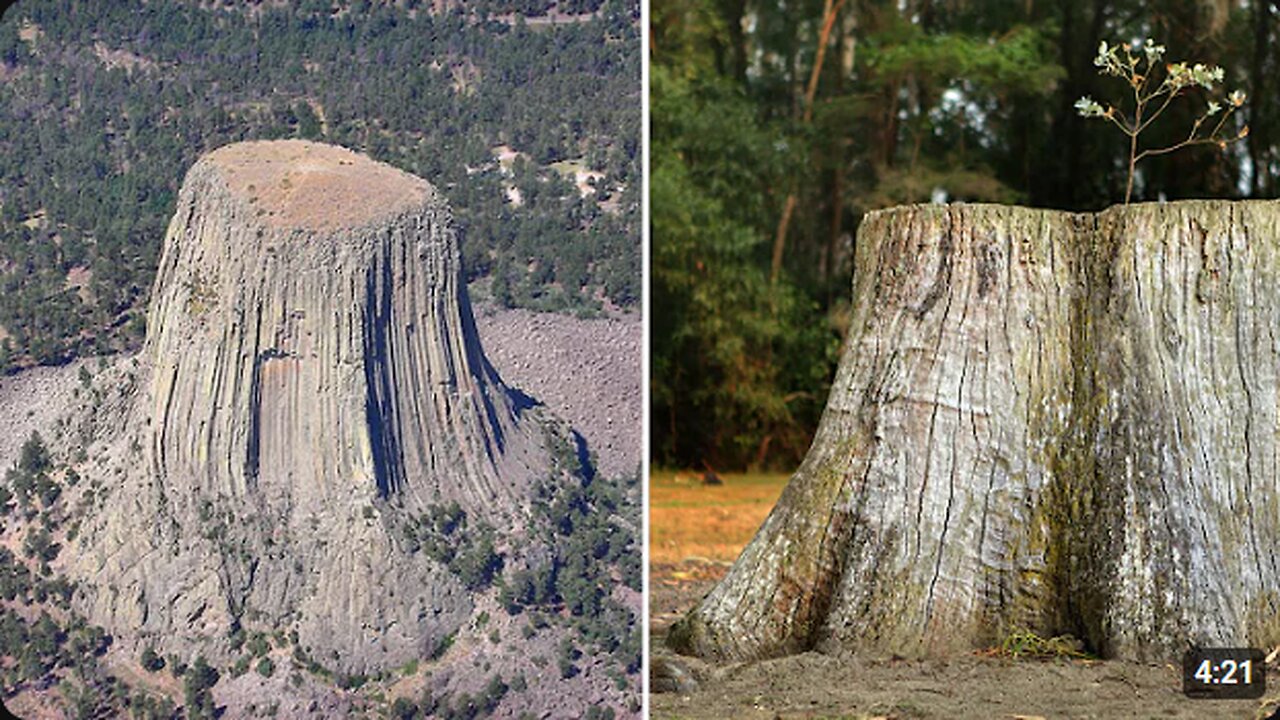
The TREES before the GREAT FLOOD
In botany, a tree is a perennial plant with an elongated stem, or trunk, usually supporting branches and leaves. In some usages, the definition of a tree may be narrower, including only woody plants with secondary growth, plants that are usable as lumber or plants above a specified height. In wider definitions, the taller palms, tree ferns, bananas, and bamboos are also trees.
Trees are not a monophyletic taxonomic group but consist of a wide variety of plant species that have independently evolved a trunk and branches as a way to tower above other plants to compete for sunlight. The majority of tree species are angiosperms or hardwoods; of the rest, many are gymnosperms or softwoods. Trees tend to be long-lived, some reaching several thousand years old. Trees evolved around 370 million years ago, and it is estimated that there are around three trillion mature trees in the world currently.
A tree typically has many secondary branches supported clear of the ground by the trunk, which typically contains woody tissue for strength, and vascular tissue to carry materials from one part of the tree to another. For most trees the trunk is surrounded by a layer of bark which serves as a protective barrier. Below the ground, the roots branch and spread out widely; they serve to anchor the tree and extract moisture and nutrients from the soil. Above ground, the branches divide into smaller branches and shoots. The shoots typically bear leaves, which capture light energy and convert it into sugars by photosynthesis, providing the food for the tree's growth and development.
Trees usually reproduce using seeds. Flowers and fruit may be present, but some trees, such as conifers, instead have pollen cones and seed cones. Palms, bananas, and bamboos also produce seeds, but tree ferns produce spores instead.
Trees play a significant role in reducing erosion and moderating the climate. They remove carbon dioxide from the atmosphere and store large quantities of carbon in their tissues. Trees and forests provide a habitat for many species of animals and plants. Tropical rainforests are among the most biodiverse habitats in the world. Trees provide shade and shelter, timber for construction, fuel for cooking and heating, and fruit for food as well as having many other uses. In much of the world, forests are shrinking as trees are cleared to increase the amount of land available for agriculture. Because of their longevity and usefulness, trees have always been revered, with sacred groves in various cultures, and they play a role in many of the world's mythologies.
-
 3:20
3:20
TOWERCLIPS
1 year agoGravity Energy Machine
1432 -
 10:19
10:19
Dr. Nick Zyrowski
4 days agoHigh Dose Vitamin D Treats Incurable Diseases? Shocking Details!
6.8K10 -
 16:14
16:14
Sponsored By Jesus Podcast
24 days agoCan Christians Get LIP FILLER? | Body Image, Beauty Standards & Battling Insecurity
7.14K1 -
 2:02:46
Badlands Media
13 hours agoDevolution Power Hour Ep. 414 – Spies, Lies & The Election-Integrity Trap
96.1K17 -
 2:58:17
TimcastIRL
8 hours agoWAR! US SEIZES Venezuelan Oil Tanker, War Feared Amid Escalation | Timcast IRL
313K168 -
 5:04:59
Drew Hernandez
1 day agoERIKA KIRK FINALLY CLAPS BACK: CANDACE OWENS RESPONDS
44.3K42 -
 35:33
35:33
Stephen Gardner
12 hours agoThe Supreme Court Just Changed History FOREVER!
124K94 -
 14:14
14:14
Robbi On The Record
13 days ago $12.20 earnedThe Identity Crisis No One Wants to Admit | Identity VS. Personality
70.6K16 -
 2:17:43
ThatStarWarsGirl
7 hours agoTSWG LIVE: Supergirl Is COMING!
46.6K3 -
 28:03
28:03
Welker Farms
12 hours ago $2.31 earnedNo Stopping The International Harvester 9370! ...except for that fuel leak...
34.8K1