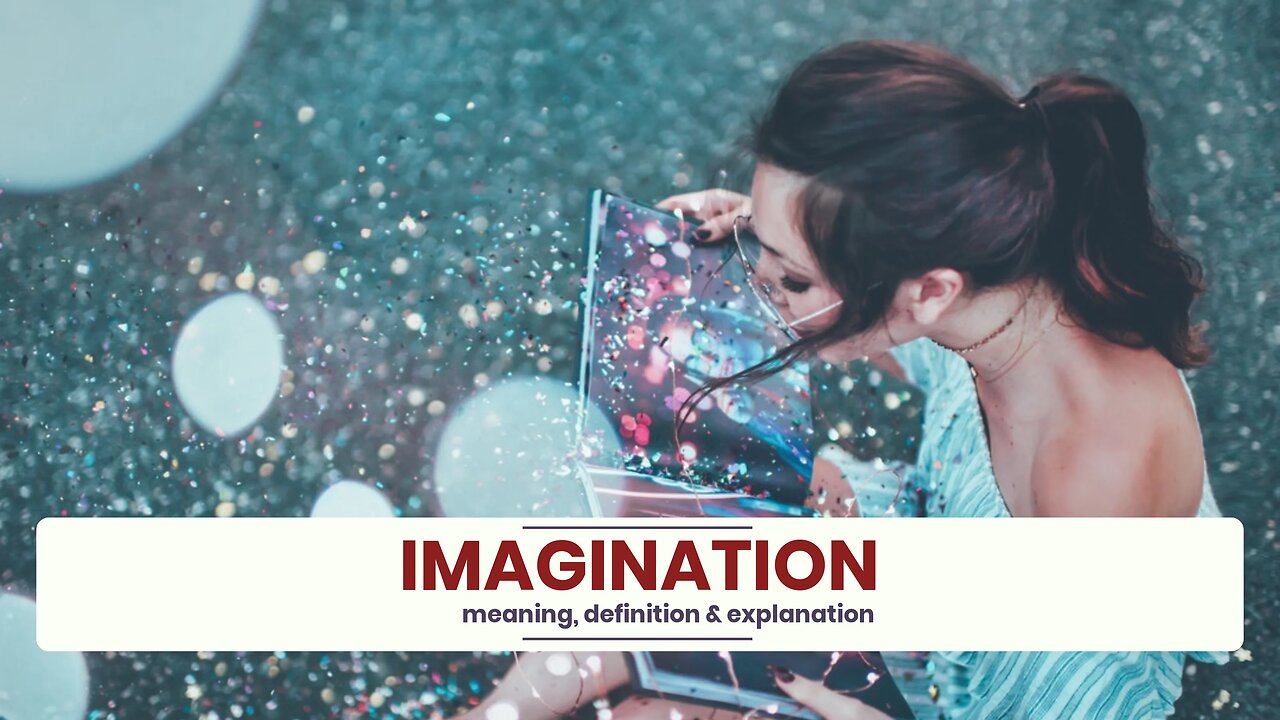
What is IMAGINATION?
✪✪✪✪✪
http://www.theaudiopedia.com
✪✪✪✪✪
What does IMAGINATION mean? IMAGINATION meaning - IMAGINATION definition - IMAGINATION explanation. What is the meaning of IMAGINATION? What is the definition of IMAGINATION? What does IMAGINATION stand for? What is IMAGINATION meaning? What is IMAGINATION definition?
Imagination, also called the faculty of imagining, is the creative ability to form images, ideas, and sensations in the mind without direct input from the senses, such as seeing or hearing. Imagination helps make knowledge applicable in solving problems and is fundamental to integrating experience and the learning process. A basic training for imagination is listening to storytelling (narrative), in which the exactness of the chosen words is the fundamental factor to "evoke worlds".
It is accepted as the innate ability and process of inventing partial or complete personal realms within the mind from elements derived from sense perceptions of the shared world. The term is technically used in psychology for the process of reviving in the mind, percepts of objects formerly given in sense perception. Since this use of the term conflicts with that of ordinary language, some psychologists have preferred to describe this process as "imaging" or "imagery" or to speak of it as "reproductive" as opposed to "productive" or "constructive" imagination. Imagined images are seen with the "mind's eye".
Imagination can also be expressed through stories such as fairy tales or fantasies. Children often use such narratives and pretend play in order to exercise their imaginations. When children develop fantasy they play at two levels: first, they use role playing to act out what they have developed with their imagination, and at the second level they play again with their make-believe situation by acting as if what they have developed is an actual reality.
Psychologists have studied imaginative thought, not only in its exotic form of creativity and artistic expression but also in its mundane form of everyday imagination. Ruth M.J. Byrne has proposed that everyday imaginative thoughts about counterfactual alternatives to reality may be based on the same cognitive processes on which rational thoughts are also based. Children can engage in the creation of imaginative alternatives to reality from their very early years. Cultural psychology is currently elaborating a view of imagination as a higher mental function involved in a number of everyday activities, both at the individual and collective level that enables people to manipulate complex meanings of both linguistic and iconic forms in the process of experiencing.
-
 2:24
2:24
The Audiopedia
1 year agoWhat is AUSTERITY?
92 -
 LIVE
LIVE
EXPBLESS
1 hour agoLets Hunt On Hunt Showdown. | #RumbleGamin 💚
17 watching -
 1:33
1:33
WildCreatures
7 days ago $0.82 earnedCoati has found an unusual means of getting fresh water
9.89K5 -
 LIVE
LIVE
DoldrumDan
2 hours agoLIFE IN RUINS SO LETS PLAY DEPTH 5 ELDEN RING NIGHTREIGN TO IGNORE OUR RESPONSIBILITIES
153 watching -
![Late Night Stream! The Suffering (2004) [END] / Don't Starve](https://1a-1791.com/video/fww1/93/s8/1/C/d/n/T/CdnTz.0kob-small-Beyond-the-Bars-Escaping-Ca.jpg) 7:05:34
7:05:34
Antrod Gaming
8 hours ago $0.09 earnedLate Night Stream! The Suffering (2004) [END] / Don't Starve
4.35K -
 LIVE
LIVE
FyrBorne
12 hours ago🔴The Division Live Gameplay: What Made This Game Special?
115 watching -
 31:40
31:40
The Kevin Trudeau Show Limitless
2 days agoSECRET SOCIETY: The 3 Ancient Rituals To Create Wealth Revealed
30.4K9 -
 20:33
20:33
Amy Dangerfield
1 day ago $15.15 earnedWhy Everyone Is Talking about Clavicular & Looksmaxxing
83.2K61 -
 11:47
11:47
stateofdaniel
2 days agoSMUG Activist Gets HUMBLED By Scott Jennings on CNN Live: Forced to Issue Apology!
67.4K41 -
 4:33
4:33
Paul Joseph Watson
2 days agoA Strange Thing To Say
21.1K110