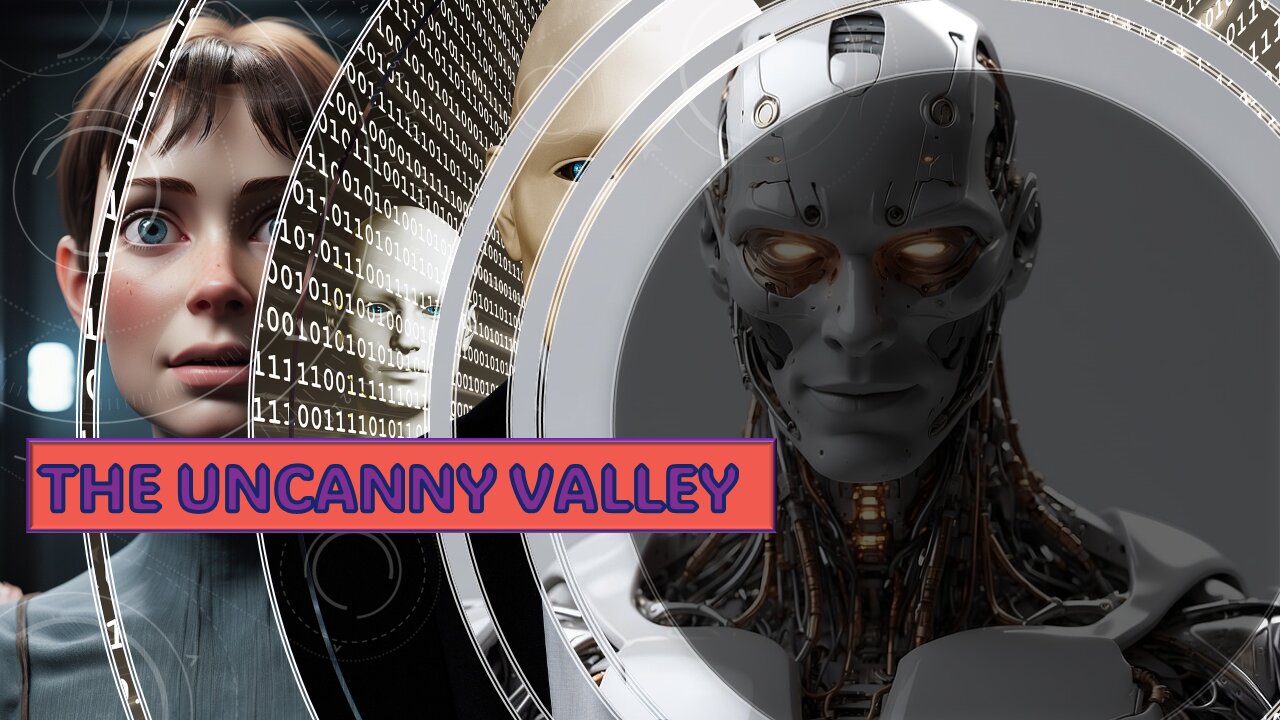
The Thinking Phoenix Episode 3: The Uncanny Valley
Welcome back to our channel, where we explore fascinating topics in the world of technology and psychology. Today, we are diving deep into the concept of the Uncanny Valley. This phenomenon has intrigued scientists, artists, and filmmakers for decades, and we are here to uncover its secrets and explore its implications on our society.
First and foremost, let's define what the Uncanny Valley is. Coined by Japanese roboticist Masahiro Mori in 1970, the Uncanny Valley is the hypothesis that as robots or animated characters become more human-like, there is a point at which they elicit feelings of eeriness or discomfort in humans. This is due to a mismatch between their appearance and their behavior, leading to a sense of unease that is hard to shake off.
[History]
To understand the Uncanny Valley better, let's take a trip back in time to the origins of this concept. Masahiro Mori's initial observation was based on his work in robotics, where he noticed that as robots became more human-like, they became more appealing to humans, up to a certain point. However, once they crossed that threshold and became almost indistinguishable from real humans, the response from people changed from positive to negative. This dip in acceptance and likability became known as the Uncanny Valley.
[Examples]
Now that we have a better understanding of the Uncanny Valley, let's look at some real-world examples of this phenomenon in action. One of the most famous instances is in the field of CGI in movies. Think about the digitally animated characters in films like "The Polar Express" or "Polar Express." While these characters may look incredibly realistic, there is something off-putting about them that prevents us from fully connecting with them emotionally.
The Uncanny Valley has deep psychological roots that explain why we react the way we do to humanoid robots or animated characters. Evolutionarily, humans are wired to be wary of things that mimic us too closely but aren't quite right. This could be a survival mechanism to protect us from potential threats or danger. Additionally, our brains are finely tuned to detect subtle discrepancies in appearance or behavior, which triggers a sense of unease when we encounter something that falls into the Uncanny Valley.
The implications of the Uncanny Valley are far-reaching and have significant implications for various industries. In the world of robotics, designers and engineers must find a delicate balance between creating robots that are human-like enough to be relatable and approachable, but not so realistic that they trigger feelings of creepiness or discomfort. This can be a challenging task that requires a deep understanding of human psychology and behavior.
Despite its challenges, the Uncanny Valley has also opened up new possibilities in fields such as virtual reality, artificial intelligence, and entertainment. By understanding the principles of the Uncanny Valley, designers can create more engaging and immersive experiences that blur the line between reality and fantasy. Imagine a virtual world where you interact with realistic avatars that feel almost indistinguishable from real humans – the possibilities are endless.
In conclusion, the Uncanny Valley is a fascinating concept that sheds light on the intricacies of human perception and emotion. As technology continues to advance, we will undoubtedly encounter more instances of the Uncanny Valley in our daily lives. By studying and understanding this phenomenon, we can harness its power to create truly revolutionary and breathtaking experiences that push the boundaries of what is possible. Thank you for joining us on this journey into the Uncanny Valley – we hope you found it as enlightening as we did. Stay tuned for more intriguing topics in the world of technology and psychology. Until next time, stay curious and keep exploring.
-
 LIVE
LIVE
The Mel K Show
1 hour agoMORNINGS WITH MEL K - The Kakistocracy on Full Display in DC 2-12-26
752 watching -
 LIVE
LIVE
The Shannon Joy Show
2 hours ago🔥SJ LIVE Feb 12 - Pam Bondi LOSES IT On Capital Hill, Screams At Tom Massie About Epstein Coverup🔥
259 watching -
 LIVE
LIVE
Trumpet Daily
1 hour agoTrumpet Daily LIVE | Feb. 12, 2026
223 watching -

Grant Stinchfield
1 hour agoPolice Respect A Killer's Pronouns More than the Rights of His Victims!
2.02K3 -
 1:13:34
Chad Prather
2 hours agoHow To Biblically Overcome Depression, Anxiety, & Fear + Is Pam Bondi Doing Enough?
15.9K10 -
 1:09:44
Graham Allen
4 hours agoSAVE ACT Passes The House! More Epstein Horror! War In Iran?! + Erika Kirk Must Sue!
164K603 -
 1:09:37
The HotSeat With Todd Spears
18 hours agoEP 249: Interview with Dr. Bruce and Mr. Ron From Nutronics Labs!
20.3K1 -
 2:12:01
Matt Kohrs
15 hours agoLIVE! Day Trading, Bondi Crash Out & Breaking Market News
45.8K4 -
 1:18:17
The Big Mig™
2 hours agoJohn Brennan “High Stakes Treason” w/ Ian Trottier
31.1K8 -
 1:16:28
Chad Prather
19 hours agoTwo Masters, One Heart: Laying Up Treasure That Lasts
101K39