Spacecraft Makers: Testing Europa Clipper’s Magnetometer
#spacecraft #spacecraftmakers #testingeuropaclippers #europaclippers #magnetometer #nasa #nasaspacemission #nasa2030 #spacecraft2030 #jetpropulsion #launch #jupiter #jupiterexploration #jupiterjourney #spaceexploration #wc1 #wolfchamp
Spacecraft Makers: Testing Europa Clipper’s Magnetometer
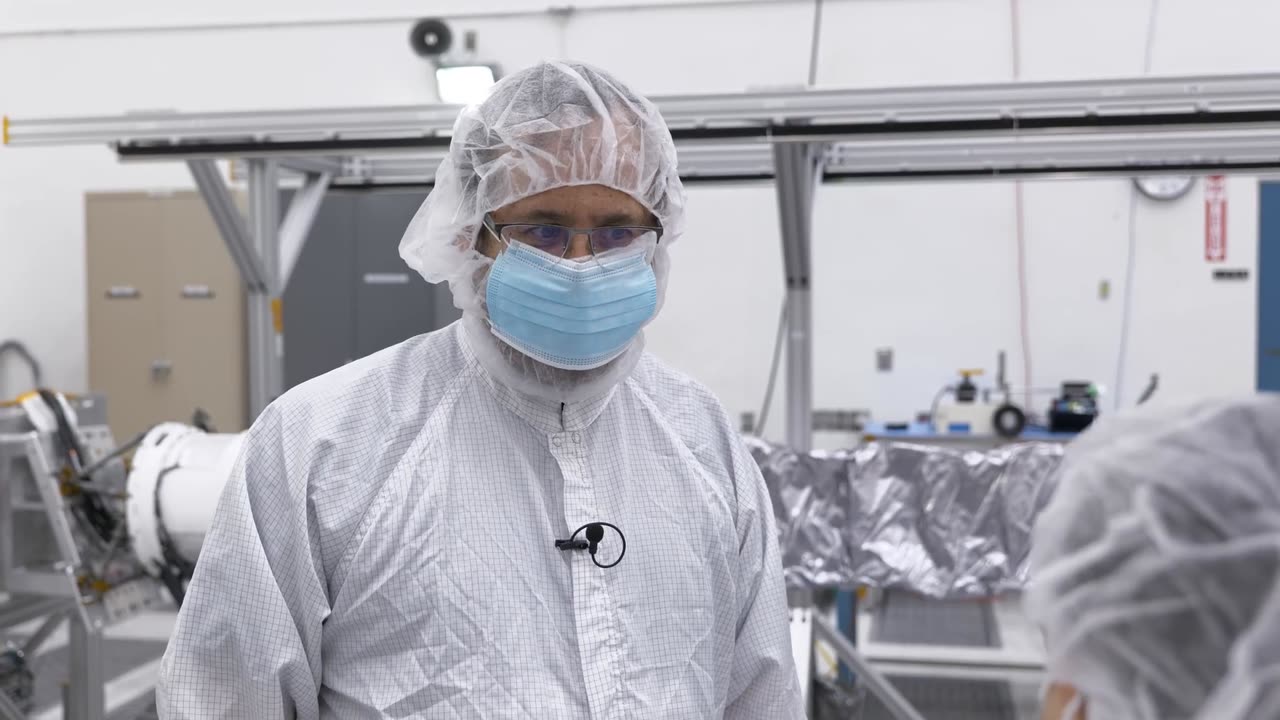
Join team members from NASA’s Europa Clipper mission in a clean room at NASA’s Jet Propulsion Laboratory to learn about testing of the spacecraft’s magnetometer, which will help scientists answer the question, “Does Europa have an ocean?”
The magnetometer is made up of a long, 28-foot (6.5-meter) boom and three fluxgate sensors, which are compressed in a canister on the side of the spacecraft until the boom is deployed after launch. The electronics for the instrument are contained in the vault of the spacecraft, along with electronics for the other science instruments.
Spacecraft Makers is a video series that takes audiences behind the scenes to learn more about how space missions, like Europa Clipper, come together. Europa Clipper will explore this icy moon of Jupiter to see if there are conditions suitable for life. Scientists have evidence that a global ocean lies under the moon’s surface, and the mission aims to confirm the existence of the ocean.
The spacecraft needs to be hardy enough to survive a 1.6-billion-mile, six-year journey to Jupiter – and sophisticated enough to perform a detailed science investigation of Europa once it arrives at the Jupiter system in 2030.
Europa Clipper is expected to launch in October 2024 from Kennedy Space Center in Florida.
Spacecraft Makers: Testing Europa Clipper’s Magnetometer
Join team members from NASA’s Europa Clipper mission in a clean room at NASA’s Jet Propulsion Laboratory to learn about testing of the spacecraft’s magnetometer, which will help scientists answer the question, “Does Europa have an ocean?”
The magnetometer is made up of a long, 28-foot (6.5-meter) boom and three fluxgate sensors, which are compressed in a canister on the side of the spacecraft until the boom is deployed after launch. The electronics for the instrument are contained in the vault of the spacecraft, along with electronics for the other science instruments.
Spacecraft Makers is a video series that takes audiences behind the scenes to learn more about how space missions, like Europa Clipper, come together. Europa Clipper will explore this icy moon of Jupiter to see if there are conditions suitable for life. Scientists have evidence that a global ocean lies under the moon’s surface, and the mission aims to confirm the existence of the ocean.
The spacecraft needs to be hardy enough to survive a 1.6-billion-mile, six-year journey to Jupiter – and sophisticated enough to perform a detailed science investigation of Europa once it arrives at the Jupiter system in 2030.
Europa Clipper is expected to launch in October 2024 from Kennedy Space Center in Florida.
Spacecraft Makers: Testing Europa Clipper’s Magnetometer
Join team members from NASA’s Europa Clipper mission in a clean room at NASA’s Jet Propulsion Laboratory to learn about testing of the spacecraft’s magnetometer, which will help scientists answer the question, “Does Europa have an ocean?”
The magnetometer is made up of a long, 28-foot (6.5-meter) boom and three fluxgate sensors, which are compressed in a canister on the side of the spacecraft until the boom is deployed after launch. The electronics for the instrument are contained in the vault of the spacecraft, along with electronics for the other science instruments.
Spacecraft Makers is a video series that takes audiences behind the scenes to learn more about how space missions, like Europa Clipper, come together. Europa Clipper will explore this icy moon of Jupiter to see if there are conditions suitable for life. Scientists have evidence that a global ocean lies under the moon’s surface, and the mission aims to confirm the existence of the ocean.
The spacecraft needs to be hardy enough to survive a 1.6-billion-mile, six-year journey to Jupiter – and sophisticated enough to perform a detailed science investigation of Europa once it arrives at the Jupiter system in 2030.
Europa Clipper is expected to launch in October 2024 from Kennedy Space Center in Florida.
Spacecraft Makers: Testing Europa Clipper’s Magnetometer
Join team members from NASA’s Europa Clipper mission in a clean room at NASA’s Jet Propulsion Laboratory to learn about testing of the spacecraft’s magnetometer, which will help scientists answer the question, “Does Europa have an ocean?”
The magnetometer is made up of a long, 28-foot (6.5-meter) boom and three fluxgate sensors, which are compressed in a canister on the side of the spacecraft until the boom is deployed after launch. The electronics for the instrument are contained in the vault of the spacecraft, along with electronics for the other science instruments.
Spacecraft Makers is a video series that takes audiences behind the scenes to learn more about how space missions, like Europa Clipper, come together. Europa Clipper will explore this icy moon of Jupiter to see if there are conditions suitable for life. Scientists have evidence that a global ocean lies under the moon’s surface, and the mission aims to confirm the existence of the ocean.
The spacecraft needs to be hardy enough to survive a 1.6-billion-mile, six-year journey to Jupiter – and sophisticated enough to perform a detailed science investigation of Europa once it arrives at the Jupiter system in 2030.
Europa Clipper is expected to launch in October 2024 from Kennedy Space Center in Florida.
Spacecraft Makers: Testing Europa Clipper’s Magnetometer
Join team members from NASA’s Europa Clipper mission in a clean room at NASA’s Jet Propulsion Laboratory to learn about testing of the spacecraft’s magnetometer, which will help scientists answer the question, “Does Europa have an ocean?”
The magnetometer is made up of a long, 28-foot (6.5-meter) boom and three fluxgate sensors, which are compressed in a canister on the side of the spacecraft until the boom is deployed after launch. The electronics for the instrument are contained in the vault of the spacecraft, along with electronics for the other science instruments.
Spacecraft Makers is a video series that takes audiences behind the scenes to learn more about how space missions, like Europa Clipper, come together. Europa Clipper will explore this icy moon of Jupiter to see if there are conditions suitable for life. Scientists have evidence that a global ocean lies under the moon’s surface, and the mission aims to confirm the existence of the ocean.
The spacecraft needs to be hardy enough to survive a 1.6-billion-mile, six-year journey to Jupiter – and sophisticated enough to perform a detailed science investigation of Europa once it arrives at the Jupiter system in 2030.
Europa Clipper is expected to launch in October 2024 from Kennedy Space Center in Florida.
-
 28:30
28:30
Standpoint with Gabe Groisman
4 hours agoSenator John Fetterman on The Democratic Party, Socialism, Israel and More
13.9K2 -
 LIVE
LIVE
Film Threat
16 hours agoSILENT NIGHT, DEADLY NIGHT + DUST BUNNY + HAMNET + MORE | Film Threat Livecast
145 watching -
 LIVE
LIVE
The Shannon Joy Show
2 hours ago🔥SJ LIVE: The NYS Vaccine Mafia! The State Is Trying To Take A Dedicated Pediatricians Son.🔥
158 watching -
 LIVE
LIVE
The Mel K Show
22 hours agoMel K & Matt Ehret | The International Intelligence Deception Post WW2 | 12-12-25
629 watching -
 LIVE
LIVE
Daniel Davis Deep Dive
4 hours agoOne Way or Another Russia Will Get the Land /Patrick Henningsen & Lt Col Daniel Davis
100 watching -
 1:37:19
Graham Allen
4 hours agoThis GOP SUCKS!! Time For A Redo! + Now Candace Hates The Bible?!
149K502 -
 1:53:04
Badlands Media
8 hours agoBadlands Daily: 12/12/25
64.9K12 -
 2:59:45
Wendy Bell Radio
7 hours agoWillows Vs Warriors
74.3K103 -
 15:21
15:21
Bearing
5 hours agoAustralia Just BANNED Social Media for Teens 🚨 Deploy the Fun Police 👮
25.7K21 -
 1:10:47
The Big Mig™
2 hours agoColorado Rejects Trump’s Pardon For Tina Peters
3.67K10