Why Does NASA Want to Explore Jupiter’s Ocean Moon? (Europa Clipper Science Overview)
#europa #clipper #science #europaclipper #nasa #jupitersocean #nasaexploration #jupiterwater #nasamission #earthwater #europascience #nasascience #spacetechnology #spaceexploration #jupiter #overview #viral #trending #follow #foryou #views #rumblevideo #nasavideos
Why Does NASA Want to Explore Jupiter’s Ocean Moon? (Europa Clipper Science Overview)
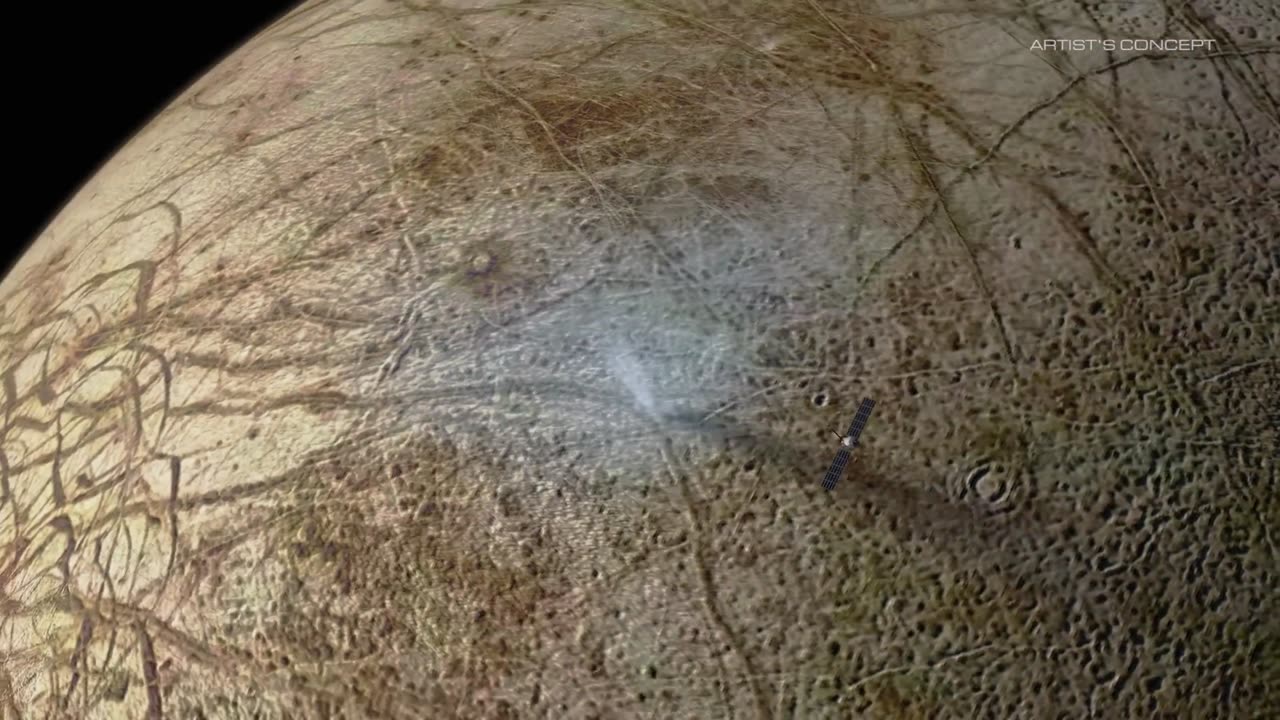
Everywhere there’s water on Earth, there’s life. Does that hold true elsewhere in our solar system? NASA’s Europa Clipper mission will investigate Jupiter’s icy moon Europa, which — with its subsurface ocean — is one of the most promising places in our solar system to find environments capable of supporting life.
While Europa Clipper isn’t a life-detection mission, it will be the first to conduct a detailed survey of this icy moon to answer questions about Europa’s potential habitability and composition. The mission’s main goals are to determine the thickness of Europa’s icy shell; confirm the presence of an ocean; investigate the make-up of that ocean; and characterize the geology of the surface. The spacecraft will orbit Jupiter and make approximately 50 flybys of Europa. It’s equipped with a powerful suite of instruments that will work in sync to gather measurements and high-resolution images.
Europa Clipper is expected to launch in October 2024 from NASA’s Kennedy Space Center in Florida. It will arrive at the Jupiter system in 2030.
For more information on the mission go to: https://europa.nasa.gov/.
Credit: NASA/JPL-Caltech/APL
Why Does NASA Want to Explore Jupiter’s Ocean Moon? (Europa Clipper Science Overview)
Everywhere there’s water on Earth, there’s life. Does that hold true elsewhere in our solar system? NASA’s Europa Clipper mission will investigate Jupiter’s icy moon Europa, which — with its subsurface ocean — is one of the most promising places in our solar system to find environments capable of supporting life.
While Europa Clipper isn’t a life-detection mission, it will be the first to conduct a detailed survey of this icy moon to answer questions about Europa’s potential habitability and composition. The mission’s main goals are to determine the thickness of Europa’s icy shell; confirm the presence of an ocean; investigate the make-up of that ocean; and characterize the geology of the surface. The spacecraft will orbit Jupiter and make approximately 50 flybys of Europa. It’s equipped with a powerful suite of instruments that will work in sync to gather measurements and high-resolution images.
Europa Clipper is expected to launch in October 2024 from NASA’s Kennedy Space Center in Florida. It will arrive at the Jupiter system in 2030.
For more information on the mission go to: https://europa.nasa.gov/.
Credit: NASA/JPL-Caltech/APL
Why Does NASA Want to Explore Jupiter’s Ocean Moon? (Europa Clipper Science Overview)
Everywhere there’s water on Earth, there’s life. Does that hold true elsewhere in our solar system? NASA’s Europa Clipper mission will investigate Jupiter’s icy moon Europa, which — with its subsurface ocean — is one of the most promising places in our solar system to find environments capable of supporting life.
While Europa Clipper isn’t a life-detection mission, it will be the first to conduct a detailed survey of this icy moon to answer questions about Europa’s potential habitability and composition. The mission’s main goals are to determine the thickness of Europa’s icy shell; confirm the presence of an ocean; investigate the make-up of that ocean; and characterize the geology of the surface. The spacecraft will orbit Jupiter and make approximately 50 flybys of Europa. It’s equipped with a powerful suite of instruments that will work in sync to gather measurements and high-resolution images.
Europa Clipper is expected to launch in October 2024 from NASA’s Kennedy Space Center in Florida. It will arrive at the Jupiter system in 2030.
For more information on the mission go to: https://europa.nasa.gov/.
Credit: NASA/JPL-Caltech/APL
Why Does NASA Want to Explore Jupiter’s Ocean Moon? (Europa Clipper Science Overview)
Everywhere there’s water on Earth, there’s life. Does that hold true elsewhere in our solar system? NASA’s Europa Clipper mission will investigate Jupiter’s icy moon Europa, which — with its subsurface ocean — is one of the most promising places in our solar system to find environments capable of supporting life.
While Europa Clipper isn’t a life-detection mission, it will be the first to conduct a detailed survey of this icy moon to answer questions about Europa’s potential habitability and composition. The mission’s main goals are to determine the thickness of Europa’s icy shell; confirm the presence of an ocean; investigate the make-up of that ocean; and characterize the geology of the surface. The spacecraft will orbit Jupiter and make approximately 50 flybys of Europa. It’s equipped with a powerful suite of instruments that will work in sync to gather measurements and high-resolution images.
Europa Clipper is expected to launch in October 2024 from NASA’s Kennedy Space Center in Florida. It will arrive at the Jupiter system in 2030.
For more information on the mission go to: https://europa.nasa.gov/.
Credit: NASA/JPL-Caltech/APL
Why Does NASA Want to Explore Jupiter’s Ocean Moon? (Europa Clipper Science Overview)
Everywhere there’s water on Earth, there’s life. Does that hold true elsewhere in our solar system? NASA’s Europa Clipper mission will investigate Jupiter’s icy moon Europa, which — with its subsurface ocean — is one of the most promising places in our solar system to find environments capable of supporting life.
While Europa Clipper isn’t a life-detection mission, it will be the first to conduct a detailed survey of this icy moon to answer questions about Europa’s potential habitability and composition. The mission’s main goals are to determine the thickness of Europa’s icy shell; confirm the presence of an ocean; investigate the make-up of that ocean; and characterize the geology of the surface. The spacecraft will orbit Jupiter and make approximately 50 flybys of Europa. It’s equipped with a powerful suite of instruments that will work in sync to gather measurements and high-resolution images.
Europa Clipper is expected to launch in October 2024 from NASA’s Kennedy Space Center in Florida. It will arrive at the Jupiter system in 2030.
For more information on the mission go to: https://europa.nasa.gov/.
Credit: NASA/JPL-Caltech/APL
Why Does NASA Want to Explore Jupiter’s Ocean Moon? (Europa Clipper Science Overview)
Everywhere there’s water on Earth, there’s life. Does that hold true elsewhere in our solar system? NASA’s Europa Clipper mission will investigate Jupiter’s icy moon Europa, which — with its subsurface ocean — is one of the most promising places in our solar system to find environments capable of supporting life.
While Europa Clipper isn’t a life-detection mission, it will be the first to conduct a detailed survey of this icy moon to answer questions about Europa’s potential habitability and composition. The mission’s main goals are to determine the thickness of Europa’s icy shell; confirm the presence of an ocean; investigate the make-up of that ocean; and characterize the geology of the surface. The spacecraft will orbit Jupiter and make approximately 50 flybys of Europa. It’s equipped with a powerful suite of instruments that will work in sync to gather measurements and high-resolution images.
Europa Clipper is expected to launch in October 2024 from NASA’s Kennedy Space Center in Florida. It will arrive at the Jupiter system in 2030.
For more information on the mission go to: https://europa.nasa.gov/.
Credit: NASA/JPL-Caltech/APL
Why Does NASA Want to Explore Jupiter’s Ocean Moon? (Europa Clipper Science Overview)
Everywhere there’s water on Earth, there’s life. Does that hold true elsewhere in our solar system? NASA’s Europa Clipper mission will investigate Jupiter’s icy moon Europa, which — with its subsurface ocean — is one of the most promising places in our solar system to find environments capable of supporting life.
While Europa Clipper isn’t a life-detection mission, it will be the first to conduct a detailed survey of this icy moon to answer questions about Europa’s potential habitability and composition. The mission’s main goals are to determine the thickness of Europa’s icy shell; confirm the presence of an ocean; investigate the make-up of that ocean; and characterize the geology of the surface. The spacecraft will orbit Jupiter and make approximately 50 flybys of Europa. It’s equipped with a powerful suite of instruments that will work in sync to gather measurements and high-resolution images.
Europa Clipper is expected to launch in October 2024 from NASA’s Kennedy Space Center in Florida. It will arrive at the Jupiter system in 2030.
For more information on the mission go to: https://europa.nasa.gov/.
Credit: NASA/JPL-Caltech/APL
-
 LIVE
LIVE
Film Threat
16 hours agoSILENT NIGHT, DEADLY NIGHT + DUST BUNNY + HAMNET + MORE | Film Threat Livecast
161 watching -
 LIVE
LIVE
The Shannon Joy Show
2 hours ago🔥SJ LIVE: The NYS Vaccine Mafia! The State Is Trying To Take A Dedicated Pediatricians Son.🔥
172 watching -
 LIVE
LIVE
The Mel K Show
22 hours agoMel K & Matt Ehret | The International Intelligence Deception Post WW2 | 12-12-25
603 watching -
 LIVE
LIVE
Daniel Davis Deep Dive
4 hours agoOne Way or Another Russia Will Get the Land /Patrick Henningsen & Lt Col Daniel Davis
103 watching -
 1:37:19
Graham Allen
4 hours agoThis GOP SUCKS!! Time For A Redo! + Now Candace Hates The Bible?!
149K502 -
 1:53:04
Badlands Media
8 hours agoBadlands Daily: 12/12/25
39.3K12 -
 2:59:45
Wendy Bell Radio
7 hours agoWillows Vs Warriors
54.7K103 -
 15:21
15:21
Bearing
5 hours agoAustralia Just BANNED Social Media for Teens 🚨 Deploy the Fun Police 👮
25.7K21 -
 1:10:47
The Big Mig™
2 hours agoColorado Rejects Trump’s Pardon For Tina Peters
3.67K10 -
 1:12:06
Chad Prather
18 hours agoWhen God Breaks Your Barriers: The Power that Reaches Farther Than You Think
88.7K47