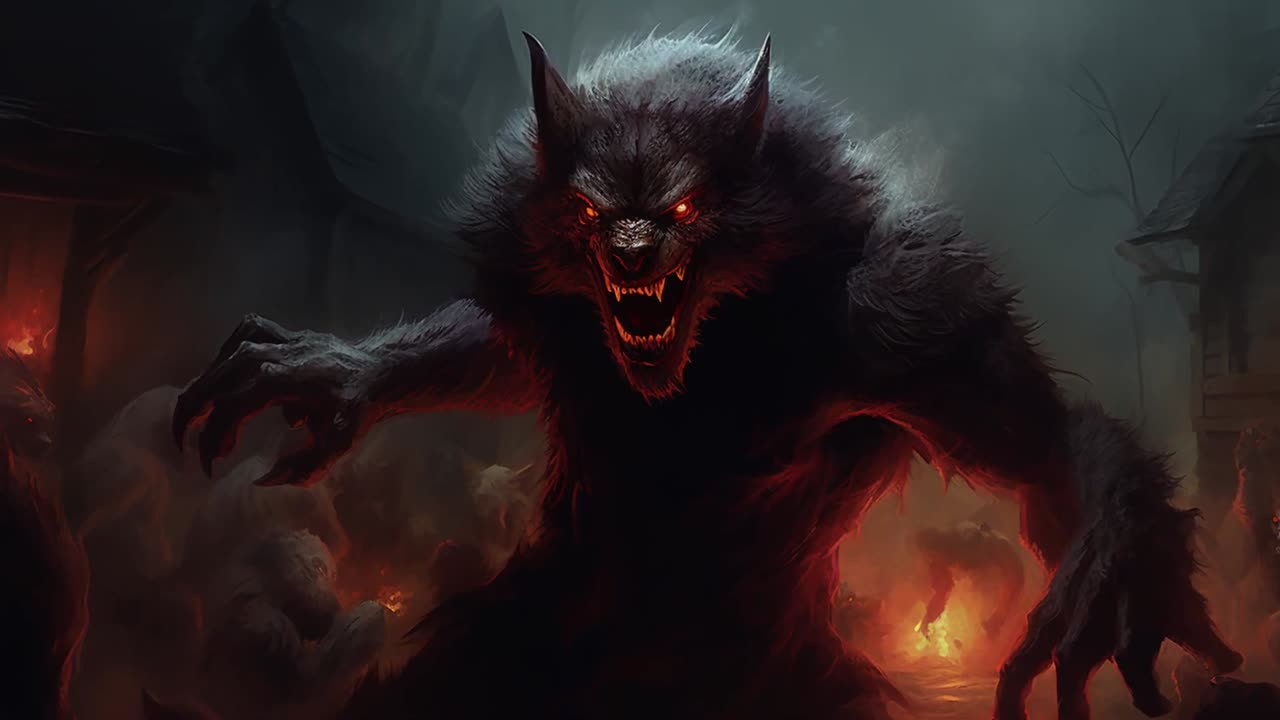
74 Werewolf Facts
Number 1 Werewolves, prevalent in global folklore, often embody the dual nature of humanity, exploring themes of transformation, primal instincts, and societal fears. These mythical creatures have diverse origins, appearing in Greek, Roman, Norse, Slavic, and various other traditions.
Number 2 Greek mythology introduces the term "lycanthropy," derived from "lykos" (wolf) and "anthropos" (man), encapsulating the essence of werewolf transformation as a fusion of human and wolf attributes.
Number 3 Norse sagas feature Ulfhednar, warriors believed to channel wolf spirits for increased battle prowess, showcasing the intertwining of wolf symbolism with heroic qualities.
Number 4 The concept of werewolf transformation through a curse, often transmitted by a bite or scratch, is a recurring motif in folklore, leading to the association of werewolves with contagious supernatural conditions.
Number 5 Germanic folklore introduces the idea of werewolf transformation through a magical artifact, such as a wolf belt, demonstrating the diverse methods through which individuals acquire lycanthropic abilities.
Number 6 French folklore contributes the Loup-Garou, a werewolf-like entity often linked to moralistic themes, serving as a cautionary figure punishing immoral behavior within the cultural context.
Number 7 Russian folklore features the Volkolak, a shape-shifting creature capable of voluntary transformations into a wolf, distinct from involuntary transformations associated with curses or enchantments.
Number 8 In Slavic traditions, the ability to transform into a wolf is inherited, creating familial lineages of werewolves and establishing a unique cultural perspective on lycanthropy.
Number 9 Some legends attribute werewolf powers to enchanted ointments, magical substances applied to the skin, highlighting the diverse methods cultures use to explain the origins of lycanthropy.
Number 10 Medieval Europe witnessed numerous werewolf trials, reflecting societal fears and superstitions, as well as the historical intertwining of folklore with legal accusations during periods of collective paranoia.
Number 11 The motif of the full moon as a trigger for werewolf transformations is widespread, with lunar cycles playing a significant role in the mythology surrounding these creatures.
12 In Chinese folklore, stories of wolf-like creatures, such as the Huli Jing, reflect cultural perceptions of shape-shifting entities with mystical attributes, showcasing diverse interpretations of werewolf-like beings.
13 Indigenous American legends often include skinwalkers, entities capable of shape-shifting into animal forms, paralleling the werewolf concept but rooted in distinct cultural contexts.
14 The Varcolac in Romanian folklore is a werewolf-like creature feared for its shape-shifting abilities and association with darkness, contributing to the rich tapestry of global werewolf lore.
15 The link between werewolves and enhanced physical traits, such as heightened senses, agility, and strength during transformations, is a recurring theme in lycanthropic narratives across various cultures.
16 Silver, often depicted as a werewolf deterrent or weakness, is a prevalent element in werewolf folklore, with silver bullets symbolizing lethality to these mythical creatures in many traditions.
17 Psychological conditions, like clinical lycanthropy, involve individuals believing they transform into animals, with wolves being a common choice in reported cases, blurring the lines between folklore and mental health.
18 In Hindu mythology, the Rakshasa, shape-shifting demons, can assume various forms, including that of a wolf or werewolf-like creature, illustrating the universality of shape-shifting themes in global mythology.
19 In Mesopotamian mythology, the goddess Ishtar transforms a lover into a wolf as punishment for betrayal, showcasing early werewolf-like narratives with divine consequences.
20 The fear of werewolves has influenced cultural practices, with societies adopting rituals to ward off these mythical creatures during specific lunar phases, emphasizing the cultural significance of lunar cycles in werewolf folklore.
2` In African folklore, the Bultungin is a werewolf-like creature, believed to be a sorcerer transformed into a hyena through dark rituals, emphasizing the diverse manifestations of werewolf-like beings across different cultural landscapes.
22 Middle Eastern legends describe the "Kitayna," individuals cursed to transform into wolves, mirroring themes of divine punishment and transformation present in global werewolf narratives, highlighting the universal resonance of these myths.
23 The intricate tapestry of werewolf lore transcends cultural boundaries, reflecting humanity's enduring fascination with shape-shifting beings and the exploration of the dual nature of human existence.
-
 35:16
35:16
Tactical Advisor
1 hour agoNew Pivoting Rifle for Backpacks | Vault Room Live Stream 048
8.17K -
 LIVE
LIVE
Amish Zaku
5 hours agoRumble Spartans December Event
46 watching -
 LIVE
LIVE
OhHiMark1776
5 days ago🟢12-06-25 ||||| HMR. 21: King of the Hill ||||| Halo MCC (2019)
70 watching -
 20:08
20:08
MYLUNCHBREAK CHANNEL PAGE
8 hours agoThe Field Museum is From Another Timeline
54.7K10 -
 LIVE
LIVE
BigTallRedneck
44 minutes agoRUMBLE SPARTANS HALO NIGHT
67 watching -
 LIVE
LIVE
AirCondaTv Gaming
1 hour agoHalo: The Master Chief Collection - Conda a Clause is Spreading some Plasma Holiday Cheer (Collab)
61 watching -
 3:22:01
SpartakusLIVE
4 hours agoSOLOS on ARC Raiders || WZ Stream LATER
126K1 -
 LIVE
LIVE
GritsGG
6 hours agoBO7 Warzone Is Here! Win Streaking! New Leaderboard?
245 watching -
 1:00:55
Jeff Ahern
5 hours ago $8.75 earnedThe Saturday show with Jeff Ahern
54.3K16 -
 LIVE
LIVE
Ouhel
8 hours agoSATURDAY | Battlefield 6 | Going for the Queen in Arc after | O'HELL LIVE |
42 watching