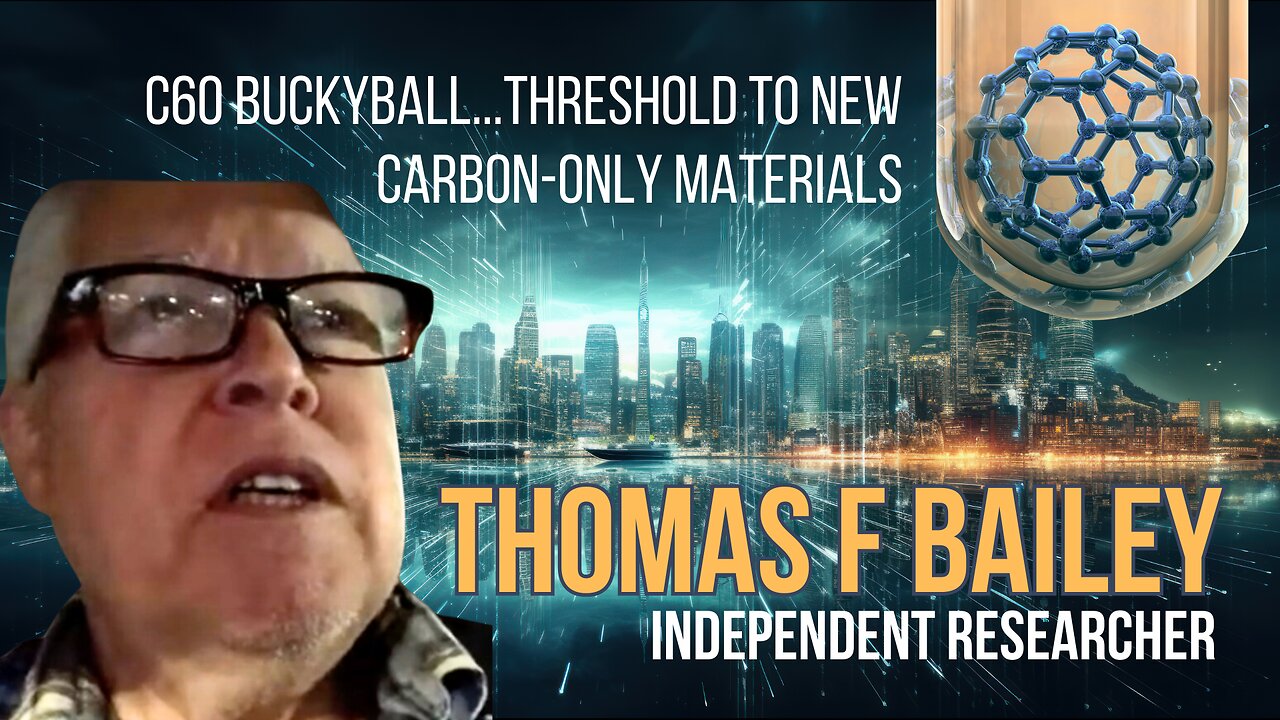
Thomas F Bailey
C60 BuckyBall | Threshold to new chemical bonding concepts and new carbon-only materials.
Mass spectrometric examination of volatiles emitted upon laser defoliation of graphite in the first ten days of September 1985 at Rice University led to discovery of an exceptionally stable volatile freak never-before encountered molecule consisting of only 60 carbon atoms. The discovery arose from three molecular spectroscopists seeking to confirm the existence of carbon molecules in outer space. The glob of 60 carbon atoms was theorized to be spherical of a truncated icosahedron 3D geometry and was reported within the year in the prestigious Nature journal. The nanometer diameter molecule caught the imagination of the world as a nano-sized soccer ball, thus “Buckyball,” short for Buckminsterfullerene named after the recently deceased iconic geodesic dome enthusiast architect, Richard Buckminster Fuller.
Most unfortunate was architectural considerations overwhelming truly elucidating organic chemistry principles developed by August Kekulé 150 years ago regarding benzene that introduced the new bonding concept of aromaticity responsible for the planarity seen in benzene and the 2D graphite allotrope of carbon. The newly discovered fullerene allotrope of carbon and its fullerenic bonding nature is a 3D version of aromaticity with both allotropes involving habitats for free-roaming or delocalized electrons that are responsible for their observed exceptional thermodynamic stabilities. A new allotrope of carbon of even greater electron delocalization and thermodynamic stability was recently patented known as crossene (US 11,718,530).
-
 13:14
13:14
Upper Echelon Gamers
19 hours agoThe "Slop YouTubers" Are Angry... (And the Reason is Hilarious)
3305 -
 1:06:28
A Cigar Hustlers Podcast Every Day
1 day agoHustler Every Week Day Episode 433 "Oscars And Chill"
26 -
 4:26
4:26
GreenMan Studio
1 day agoGREENMANS STOCKING STUFFERS 5 – GREENMAN AI
525 -
 5:00
5:00
SethDrums
4 days ago $6.01 earnedStaind – It's Been Awhile if it was 1980s
47.7K9 -
 20:18
20:18
itsSeanDaniel
2 days agoCandace Owens CALLED OUT by Piers Morgan, So She FIRES BACK
14.2K10 -
 4:57:14
Akademiks
11 hours ago21 Savage Wants Young Thug, Wham & Gunna to SQUASH IT! Future Sneak Dissing? Jim Jones Pays 50 Cent?
384K13 -
 6:01:38
Right Side Broadcasting Network
2 days agoLIVE: President Trump to Deliver Remarks in Rocky Mount, NC - 12/19/25
143K58 -
 3:24:48
VapinGamers
10 hours ago $46.66 earnedDestiny 2 - Dungeons and Loot with Friends - !rumbot !music
107K1 -
 2:07:44
TimcastIRL
11 hours agoTrump's Secret Plan To Make Charlie Kirk VP, America Fest IN CIVIL WAR | Timcast IRL
234K221 -
 4:09:13
I_Came_With_Fire_Podcast
19 hours agoLive Fire: Christmas Special
53.6K9