A Christmas Carol by: Charles Dickens (1843)

The Jesus of History by: Terrot R. Glover (1917)
The Atrocities of the Pirates by: Aaron Smith (1724)
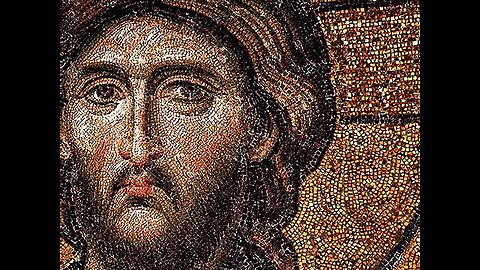
The Imitation of Christ by: Thomas à Kempis (between 1418 and 1427)
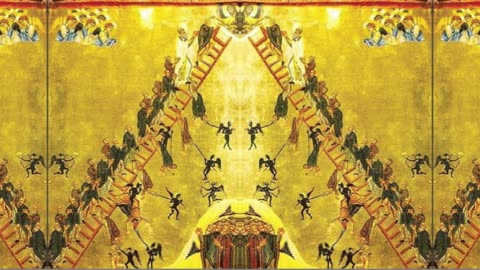
The Pilgrim’s Progress by John Bunyan (1678)
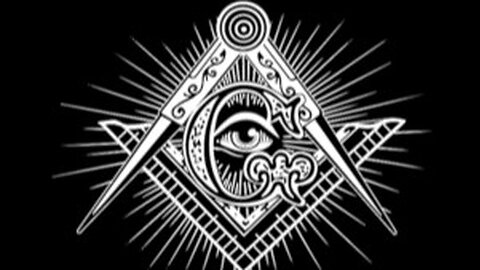
The Symbolism of Freemasonry by: Albert Gallatin Mackey, M.D. (1896)
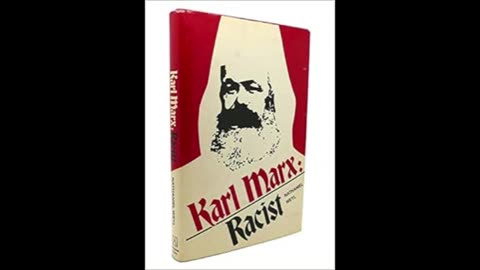
Karl Marx: Racist by Nathaniel Weyl (1968)

None Dare Call it Conspiracy by: Gary Allen (1971)
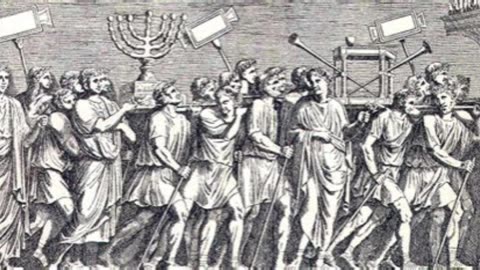
Stories of the Wars of the Jews by: Charlotte Maria Tucker (A.L.O.E.)
Montezuma’s Castle and Other Weird Tales by Charles B. Cory (1899)
Christianity in the Apostolic Age by: George T. Purves (1900)
Enchiridion Militis Christiani (English: Handbook of a Christian Knight, 1503)

The Thirty Years' War, 1618-1648 by: Samuel Rawson Gardiner
The Origins of Christianity by Thomas Whittaker (1856–1935)

The Historical Jesus: Lecture Series by Professor Bart D. Ehrman
The Camp of the Saints by: Jean Raspail
The Franklin Cover-up: Child Abuse, Satanism, and Murder in Nebraska by: John W. DeCamp
12 Major World Religions: The Beliefs, Rituals, and Traditions of Humanity’s Most Influential Faiths

The Fourth Turning: An American Prophecy by: William Strauss and Neil Howe
The Hill of Dreams by Arthur Machen (1907)
The Great God Pan by Arthur Machen (1894)
The White People by Arthur Machen (Written 1899, Published 1904)
The Republic by: Plato
Protagoras by: Plato
The Shining Pyramid: The Definitive Edition by: Arthur Machen
Paradise Lost by: Milton
A Modern Utopia by H. G. Wells (1905)

The World Set Free by H. G. Wells (1914)
The Revolutions of Civilization by William Matthew Flinders Petrie (1911)
The Discovery of the Future by H. G. Wells (1902)
Men Like Gods by H. G. Wells (1923)
The Psychology of Peoples: Its Influence on Their Evolution by Gustave Le Bon (1894)
Household Gods by: Aleister Crowley (1912)
Courts and Criminals by: Arthur Cheney Train (1914)

Hitler's Last Witness: The Memoirs of Hitler's Bodyguard by Rochus Misch (2008)
The Anti-Christ by Friedrich Nietzsche
The Manisis Chronicles: A Novel of Fantasy or Prophecy? by Dr. Eugene J. Bruington
Compendium of Occult Laws by: Dr. R. Swinburne Clymer
The Case Against the Fed by: Murray N. Rothbard
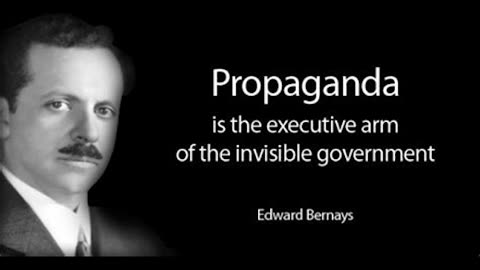
"Propaganda" by: Edward Bernays (1928)

Psychological Warfare by: Paul Linebarger
Dante's Inferno (Modern English Translation)
The Book of Luck by: Anonymous
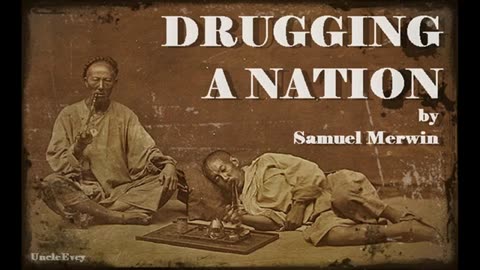
Drugging a Nation: The Story of China & the Opium Curse by Samuel Merwin (1908)
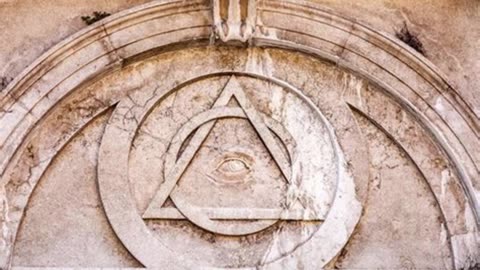
Ghosts, A Message From The Illuminati (1906) by Alexander J. McIvor-Tyndall
Marx & Satan by: Richard Wurmbrand (1986)
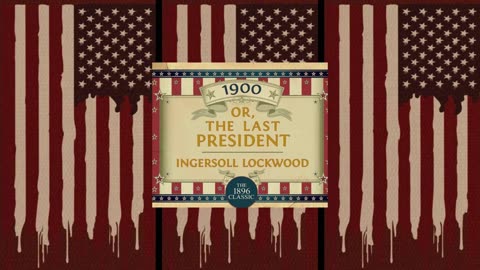
1900 Or, The Last President by Ingersoll Lockwood
The Flying Eyes by J. Hunter Holly
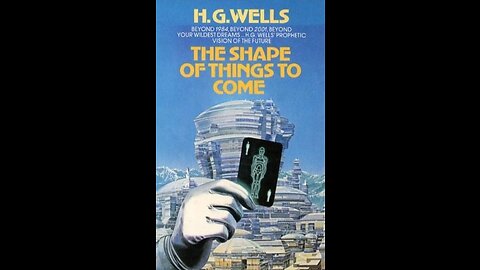
The Shape of Things to Come by: H. G. Wells (1933)
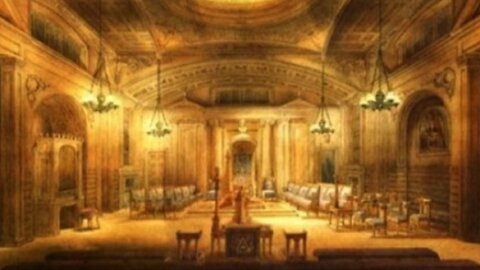
The Regius Manuscript - A Poem of Moral Duties (c. 1390)

The Matthew Cooke Manuscript (c. 1450)
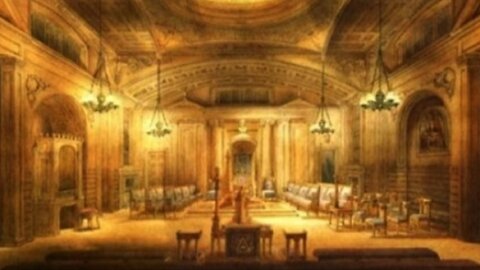
Dowland's Manuscript (c. 1500)
The Charges of a Freemason (1723, Anderson's Constitution's 2/3)

The History of Freemasonry (1723, Anderson's Constitution's 1/3)
The General Regulations of Freemasonry (1723, Anderson's Constitution's 3/3)

Anderson's Constitutions (1723) FULL
Secret Societies: A Sinister Agenda Exposed by: William Cooper (1983)

Silent Weapons for Quiet Wars
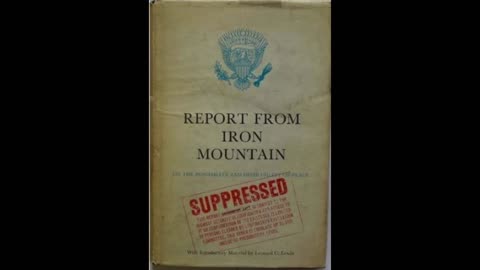
Report From Iron Mountain on the Possibility and Desirability of Peace
A Proposed Constitutional Model for the Newstates of America

The Secret Teachings of All Ages by: Manly P. Hall
![The Official C.I.A. Manual of Trickery and Deception [DECLASSIFIED]](https://1a-1791.com/video/s8/1/K/R/T/v/KRTvm.oq1b-small-The-Official-C.I.A.-Manual-.jpg)
The Official C.I.A. Manual of Trickery and Deception [DECLASSIFIED]
Racing Toward Armageddon: The Three Great Religions and the Plot to End the World by Michael Baigent (audiobook)
The United Nations Charter

The Initiates of the Flame by Manly P. Hall (1922)

The Initiates of the Flame by Manly P. Hall, 1922 (just the illustrations)
Atlantis: An Interpretation by: Manly P. Hall (1976)
The Secret Destiny of America by: Manly P. Hall

The Lost Keys of Masonry: The Legend of Hiram Abiff by: Manly Hall (2nd Edition)

The Brotherhood: The Secret World of the Freemasons by: Stephen Knight

None Dare Call It Conspiracy by: Gary Allen, co-authored with Larry Abraham

The Ways Of The Lonely Ones: A Collection of Mystical Allegories by: Manly Hall
Masonry: Beyond the Light by William Schnoebelen
On the Origins of Free-Masonry by: Thomas Paine
The Club of Rome by Dr. John Coleman
The History of the Clergy During The French Revolution: A Work Dedicated to the English Nation
The Story of Freemasonry by: W. G. Sibley (1904)

The Mysticism of Freemasonry by: Swinburne Clymer (1924)

Brain-Washing: A Synthesis of the Russian Textbook on Psychopolitics

The Question of Freemasonry by: Ed Decker
Secret Societies: A Sinister Agenda Exposed by: Milton William Cooper (1999)
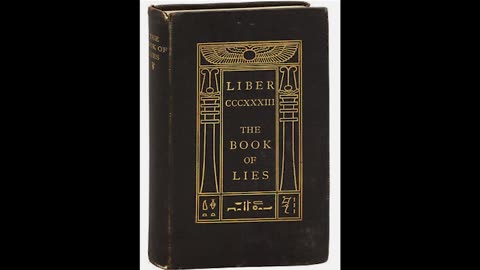
The Book of Lies by: Edward Alexander Crowley (Aleister Crowley)

Pawns in the Game by: William Guy Carr

Unrestricted Warfare by: Qiao Liang and Wang Xiangsui

The Ancient Arabic Order of the Nobles of the Mystic Shrine for North America

The Unanimous Declaration of the Thirteen United States of America

Mystic Masonry by: J.D. Buck
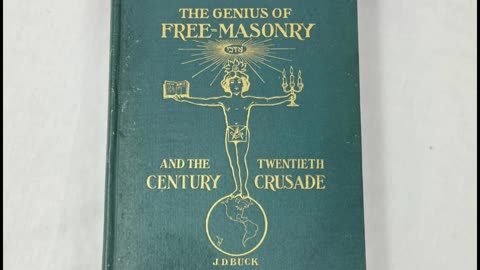
The Genius of Freemasonry and the Twentieth-Century Crusade by: J.D. Buck (1914)

Freemasonry its Hidden Meaning by George H. Steinmetz
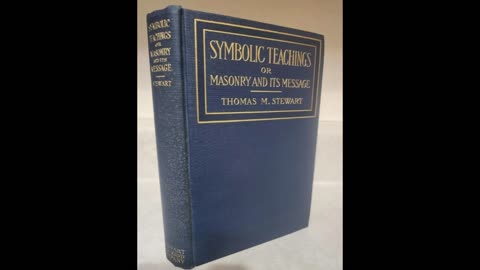
Symbolic Teachings or Masonry and its Message by: Thomas Milton Stewart
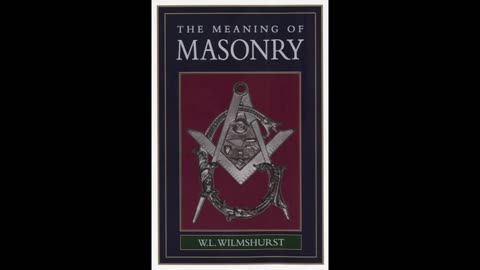
The Meaning of Masonry by W.L. Wilmshurst
Symbolism by: Milton A. Pottenger
The Pythagorean Triangle or The Science of Numbers by: Milton A. Pottenger
Hamlet by: Shakespeare

The War of Antichrist with the Church and Christian Civilization by: Monsignor George F. Dillon (1885)
Mormonism and Masonry by Samuel H. Goodwin (1920)
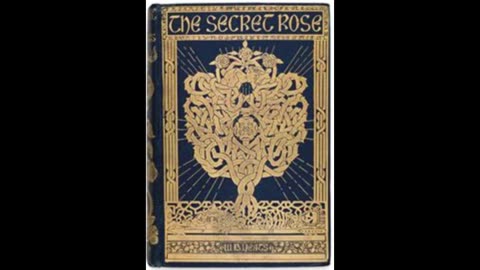
The Secret Rose and Rosa Alchemica by: William Butler Yeats (1897)
The Book of Mormon: Part 9 - Ether & Moroni
The Book of Mormon Part 8 - 4 Nephi & Mormon
The Book of Mormon Part 7 - 3 Nephi 1-30

The Book of Mormon: Part 6 - Helaman 1-16

The Book of Mormon: Part 5 - Alma 1-63
The Book of Mormon: Part 4 - Words of Mormon 1 & Mosiah 1-29
The Book of Mormon: Part 3 - Enos 1, Jarom 1, and Omni 1

The Book of Mormon: Part 2 - Jacob 1-7
The Book of Mormon: Part 1 - 1 Nephi, 2 Nephi
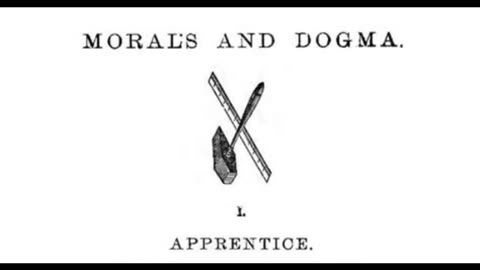
Chapter 1º - Apprentice - Morals & Dogma of the Ancient & Accepted Scottish Rite of Freemasonry
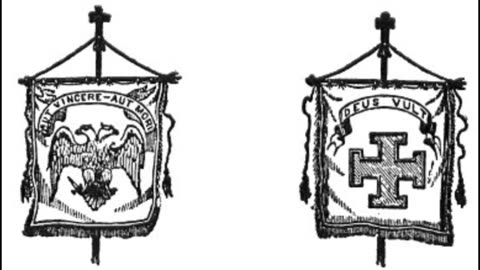
Chapter 30º - Knight Kadosh - Morals & Dogma of the Ancient & Accepted Scottish Rite of Freemasonry
The Mission of Masonry by: Joseph Fort Newton

Nox Niijosa by: Walter Leslie Wilmshurst (1917)
The Rosicrucian Mysteries: An Elementary Exposition of Their Secret Teachings by Max Heindel (1911)

Gleanings of a Mystic: A Series of Essays on Practical Mysticism by Max Heindel (1922)

The New Atlantis by Francis Bacon (1627)

The Wisdom of the Ancients, A Series of Mythological Fables by: Francis Bacon (1609)

Atlantis: The Antediluvian World by Ignatius Loyola Donnelly (1831 - 1901)
The Lost Island of Atlantis by: Edward Taylor Fletcher (1891)

The Coming Race by: Edward George Earle Lytton Bulwer-Lytton (1871)
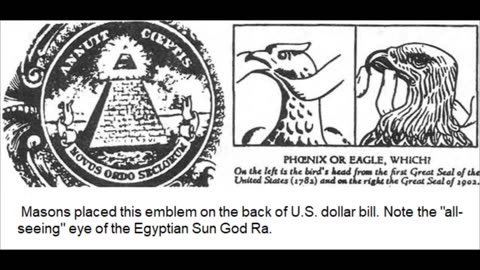
The Watchtower and the Masons by: Fritz Springmeier

The New World Order by: H.G. Wells

Programmed to Kill: The Politics of Serial Murder by David McGowan (2004)
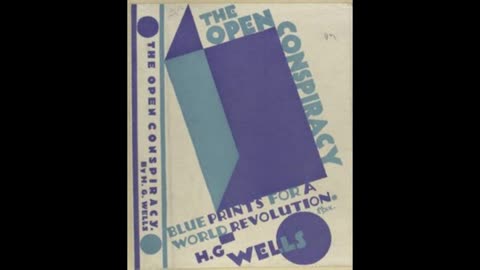
The Open Conspiracy: Blueprints for a World Revolution is a book by H.G. Wells (1928)
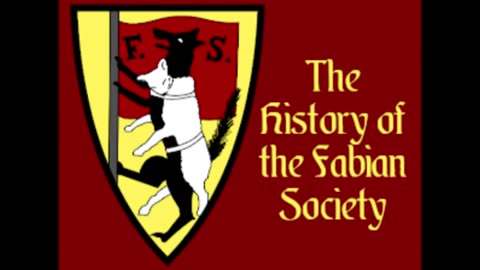
The History of the Fabian Society by Edward R. Pease (1916)

The New Machiavelli by: H.G. Wells (1911)

When the Sleeper Wakes by: H.G. Wells (1899)

The Chymical Wedding of Christian Rosenkreutz by: Johann Valentin (1616)

A Wonderful Visit by: H.G. Wells (1895)

The Treatise on Christ and Antichrist by Hippolytus of Rome (c. 200-220 AD)
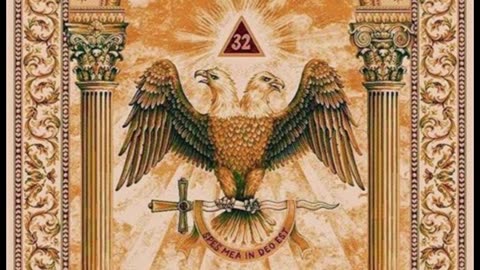
Humanum Genus (On Freemasonry) April 20, 1884 by Pope Leo XIII - Part 4/4, Sections 51-58
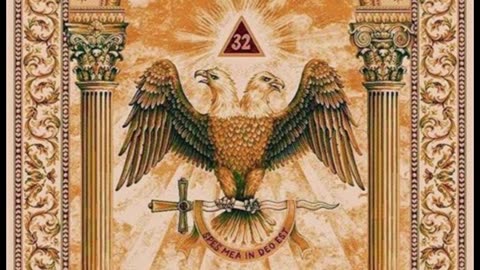
Humanum Genus (On Freemasonry) April 20, 1884 PART 3/4, Sections 36-50

Humanum Genus (On Freemasonry) April 20, 1884 by Pope Leo XIII - Part 2/4, Sections 17-35
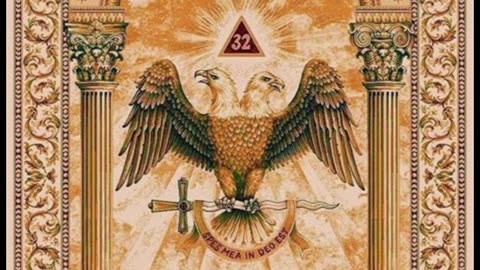
Humanum Genus (On Freemasonry) April 20, 1884 by Pope Leo XIII - Part 1/4, Sections 1-16
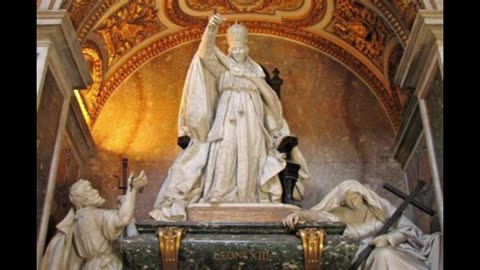
Dall'alto dell'Apostolico Seggio (On Freemasonry in Italy) by Pope Leo XIII Part 3/3: Sections 39-58
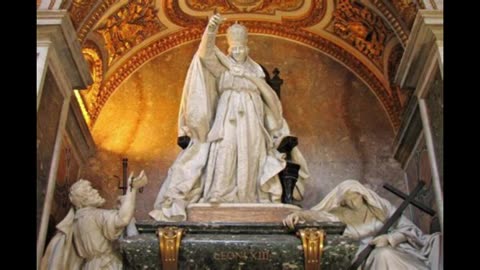
Dall'alto dell'Apostolico Seggio (On Freemasonry in Italy) by Pope Leo XIII Part 2/3: Sections 19-38

Dall'alto dell'Apostolico Seggio (On Freemasonry in Italy) by Pope Leo XIII, Part 1/3: Sections 1-18
The Wonderful Story of Ravalette by: Paschal Beverly Randolph (1863)

The Mystic Will by: Charles Godfrey Leland (1899)
Twenty Thousand Leagues Under the Sea by: Jules Vernes

The Symbolism of Freemasonry by: Albert G. Mackey
Freemasonry From A to Z by: Dr. John Coleman
Zanoni by Edward Bulwer Lytton (1842)

A Practical Guide to Self-Hypnosis by: Melvin Powers
Tom Clark and His Wife, the Rosicrucian's Story by Paschal Beverly Randolph (1863)

Doctor Ox's Experiment by Jules Vernes (1872)

The Secret Doctrine by Blavatsky Part 9/9 Sections 86-96
The Secret Doctrine by Blavatsky Part 8/9 Sections 77-85
The Secret Doctrine by Blavatsky Part 7/9 Sections 69-76

The Secret Doctrine by Blavatsky Part 6/9 Sections 59-68
The Secret Doctrine by Blavatsky Part 5/9 Sections 48-58
The Secret Doctrine by Blavatsky Part 4/9 Sections 37-47
The Secret Doctrine by Blavatsky Part 3/9 Sections 24-36
The Secret Doctrine by Blavatsky Part 2/9 Sections 13-23
The Secret Doctrine by Blavatsky Part 1/9 Sections 1-12
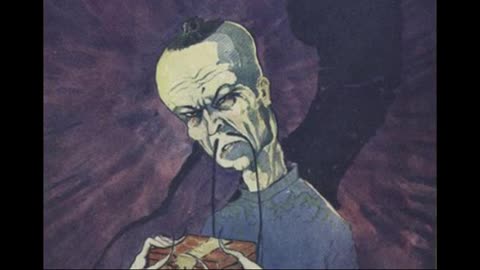
Shadow Forms: A Collection of Occult Stories by: Manly P. Hall (1930)
The Bohemian Club 1969 Little Red Book - By-Laws & Officers
The Bohemian Club 1973 Little Red Book - History, Former Officers, In Memorium, Rules
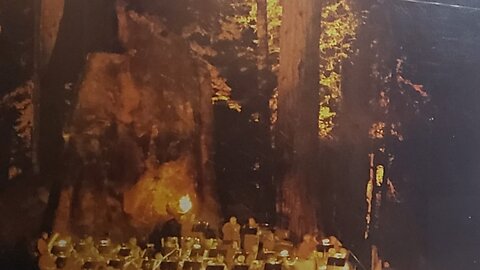
Annals of Bohemian Club Vol. IX - Music & Musicians in Bohemia The First One Hundred Years

The Annals of the Bohemian Club Volume VII: 1988-1996
Great Ghost Stories by: Various Authors
Baron Trump’s Marvellous Underground Journey (1893)
The Hidden Church of the Holy Graal 2/2 by: Edward Arthur Waite
The Hidden Church of the Holy Graal 1/2 by: Edward Arthur Waite

The Kybalion: A Study of the Hermetic Philosophy of Ancient Egypt and Greece By: The Three Initiates
Chapter 1º - Apprentice - Morals & Dogma of the Ancient & Accepted Scottish Rite of Freemasonry
This chapter addresses the first degree of the Scottish Rite of Freemasonry, the Entered Apprentice. This chapter serves as an introduction to the fundamental principles of Freemasonry, setting the stage for the deeper and more esoteric lessons explored in subsequent degrees. The Entered Apprentice degree is depicted as the gateway through which one enters the world of Masonic symbolism, philosophy, and ethics.
Pike uses this chapter to discuss the symbols and tools associated with the degree, such as the rough ashlar, the square, and the compasses, interpreting them as tools for personal and moral development. He emphasizes the importance of knowledge, self-awareness, and the continuous pursuit of truth as foundational virtues for any Mason. The chapter is rich with allegorical content, aiming to instruct the new initiate in the virtues of silence, obedience, and humility—qualities essential for the building of character and the foundation of a meaningful Masonic journey.
Moreover, Pike explores the themes of light and darkness, knowledge and ignorance, which are central to the Masonic initiation experience. The Apprentice is encouraged to seek light through education and moral rectitude, moving from a state of spiritual darkness to a state of enlightenment. This transformation is symbolic of the broader Masonic goal of improving oneself and, by extension, society.
The discourse in this chapter provides listeners with insights into how Masonry views the role of the individual in society and the importance of ethical conduct and continuous learning. It sets the tone for the intricate teachings of the Scottish Rite and underscores the lifelong commitment to personal and communal improvement that Masonry advocates.
About the Book:
Morals & Dogma of the Ancient and Accepted Scottish Rite of Freemasonry was first published in 1871 and authored by Albert Pike, who was a deeply influential figure within the Scottish Rite. The book is a comprehensive collection of philosophical and instructional essays on each degree of the Scottish Rite, from the 1st to the 33rd. It is considered one of the most profound and enduring works on Freemasonry, reflecting Pike’s vast knowledge of philosophy, esotericism, and various religious traditions.
The work is structured into 32 chapters, each corresponding to one of the Masonic degrees of the Scottish Rite, with an additional introductory chapter on the 33rd degree. Pike elaborates on the symbolic, ethical, and philosophical teachings associated with each degree, making extensive use of allegorical and scriptural references to explore themes such as morality, justice, and truth.
Morals & Dogma is revered not only for its depth in explaining the symbolic meanings of Masonic rituals but also for Pike’s efforts to contextualize Masonic teachings within the broader scope of Western and Eastern philosophical thought. His interpretations draw from a myriad of sources, including Biblical scriptures, classical philosophy, medieval Kabbalah, and other mystical and religious texts, showcasing Freemasonry as a unique conduit for spiritual and moral development.
The book’s enduring relevance comes from its ability to weave complex theological, philosophical, and historical threads into a coherent system of moral conduct and metaphysical understanding. It serves as both a guide and a philosophical treatise, intended to inspire contemplation and ethical conduct among Masons.
While Morals & Dogma has historically been a key manual for those within the Scottish Rite, its appeal extends beyond Masonic circles due to its rich discussions of morality and spirituality. It remains a significant work for anyone interested in the philosophical underpinnings of fraternal orders or in the broader dialogue between ancient wisdom traditions and modern ethical challenges.
About the Author:
Albert Pike (1809–1891) was a multifaceted American figure known for his roles as a lawyer, writer, soldier, and influential Freemason. Born in Boston, Massachusetts, Pike moved to the frontier, which today is Arkansas, where he practiced law, worked as a journalist, and engaged in various political activities.
Pike's Masonic journey is as storied and complex as his public life. He was deeply involved in the development of the Scottish Rite of Freemasonry and became the Sovereign Grand Commander of the Southern Jurisdiction of the Scottish Rite from 1859 until his death in 1891. Under his leadership, the Scottish Rite flourished, and Pike authored Morals and Dogma of the Ancient and Accepted Scottish Rite of Freemasonry in 1871, a book that remains a cornerstone of Masonic literature.
Beyond the Scottish Rite, Pike was active in many other Masonic bodies. He was a founding officer of the Knights of the Golden Circle and was involved in the development of several York Rite bodies. His Masonic work extended internationally; he played a crucial role in promoting and organizing Freemasonry in Europe and Latin America.
During the American Civil War, Pike served as a brigadier general in the Confederate States Army, commanding the District of Indian Territory. His service in this capacity was marked by controversies, including disagreements with superior officers and the government's policies toward Native American tribes. Despite his military and political engagements, his contributions to Masonic scholarship and ritual remain his most enduring legacy.
Pike's interests and writings spanned a wide range of subjects, including philosophy, astrology, and comparative religion, which influenced his Masonic writings and teachings. His intellectual pursuits reflected his belief in the universality of all religions and the synthesis of philosophical truths across different cultures.
Albert Pike's life was characterized by his vigorous intellect, his dedication to the ideals of Freemasonry, and his controversial role in the historical events of his time. His Masonic work, especially through Morals and Dogma, continues to be studied and revered in Masonic circles worldwide, cementing his place as one of the most significant figures in the history of Freemasonry.
-
 7:37:26
Deus Meum Que Jus
8 days agoThe Imitation of Christ by: Thomas à Kempis (between 1418 and 1427)
4901 -
 1:21:27
Kim Iversen
4 hours agoPutin Says Russia is Ready for WAR With Europe
21.2K62 -
 LIVE
LIVE
The Jimmy Dore Show
3 hours agoTrump DOJ REFUSES to Release Full Epstein Files! Ben Shapiro ATTACKS Tucker & Megyn Kelly at #AMFEST
9,189 watching -
 LIVE
LIVE
Nerdrotic
4 hours ago $6.87 earnedHollywood's DOOMSDAY! WB FIRESALE! - Friday Night Tights 385 w Zachary Levi
1,174 watching -
 LIVE
LIVE
The Daily Signal
2 hours ago🚨BOMBSHELL: 315,000+ Illegal Ballots in Georgia, Terrorists Released, Rubio Slashes Foreign Aid
277 watching -
 LIVE
LIVE
The Mike Schwartz Show
4 hours agoTHE MIKE SCHWARTZ SHOW Evening Edition 12-19-2025
615 watching -
![[Ep 814] LIVE From AmFest 2025 with Kaitlin Bennett](https://1a-1791.com/video/fwe2/7e/s8/1/6/O/v/J/6OvJz.0kob-small-Ep-814-LIVE-From-AmFest-202.jpg) 37:38
37:38
The Nunn Report - w/ Dan Nunn
3 hours ago[Ep 814] LIVE From AmFest 2025 with Kaitlin Bennett
29.3K8 -
 27:40
27:40
Stephen Gardner
6 hours agoYES! Rubio & Hegseth Get Trump's 2 National Security Orders
28.1K22 -
 1:48:18
vivafrei
5 hours agoBrown Shooter Identified - Suspect or Patsy? Judge CONVICTED for Aiding Illegals! Bongino Resigns!
58K46 -
 48:41
48:41
Turning Point Tonight
6 hours ago $2.25 earnedJobob LIVE at AmFest 2025!
30.1K