
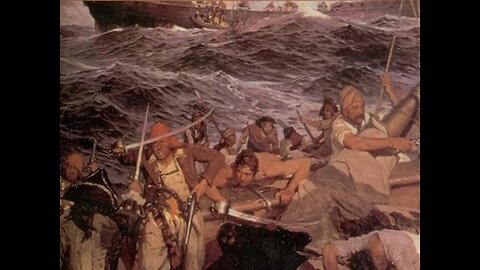
The Atrocities of the Pirates by: Aaron Smith (1724)
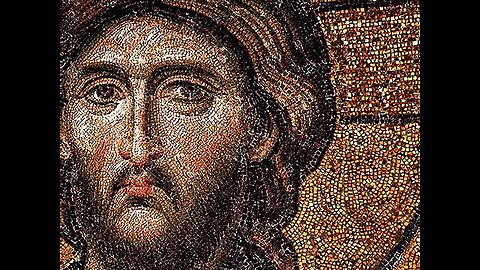
The Imitation of Christ by: Thomas à Kempis (between 1418 and 1427)
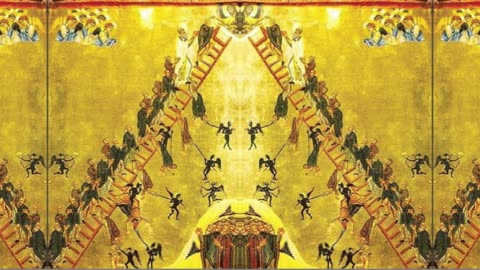
The Pilgrim’s Progress by John Bunyan (1678)
The Symbolism of Freemasonry by: Albert Gallatin Mackey, M.D. (1896)
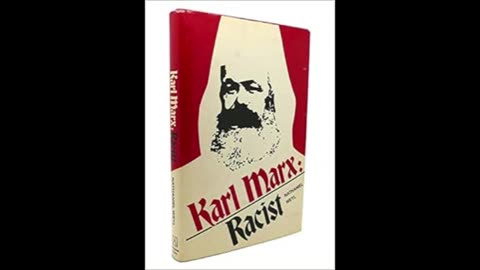
Karl Marx: Racist by Nathaniel Weyl (1968)

None Dare Call it Conspiracy by: Gary Allen (1971)
Stories of the Wars of the Jews by: Charlotte Maria Tucker (A.L.O.E.)
Montezuma’s Castle and Other Weird Tales by Charles B. Cory (1899)
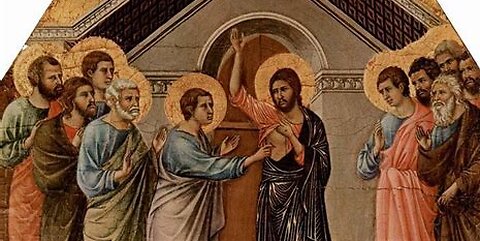
Christianity in the Apostolic Age by: George T. Purves (1900)
Enchiridion Militis Christiani (English: Handbook of a Christian Knight, 1503)

The Thirty Years' War, 1618-1648 by: Samuel Rawson Gardiner
The Origins of Christianity by Thomas Whittaker (1856–1935)

The Historical Jesus: Lecture Series by Professor Bart D. Ehrman
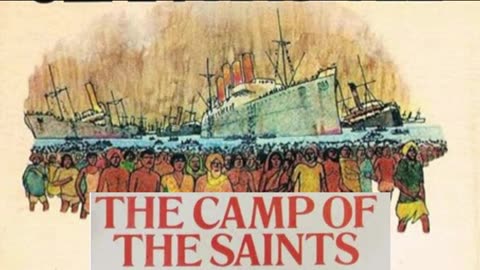
The Camp of the Saints by: Jean Raspail
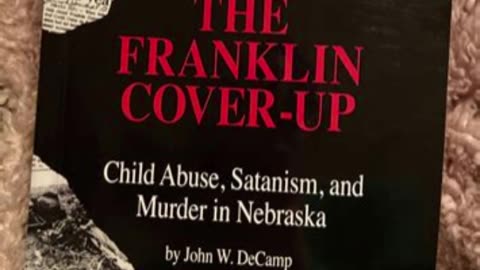
The Franklin Cover-up: Child Abuse, Satanism, and Murder in Nebraska by: John W. DeCamp
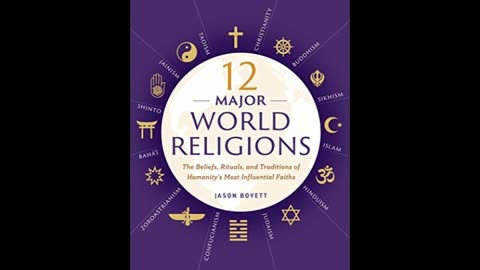
12 Major World Religions: The Beliefs, Rituals, and Traditions of Humanity’s Most Influential Faiths

The Fourth Turning: An American Prophecy by: William Strauss and Neil Howe
The Hill of Dreams by Arthur Machen (1907)
The Great God Pan by Arthur Machen (1894)
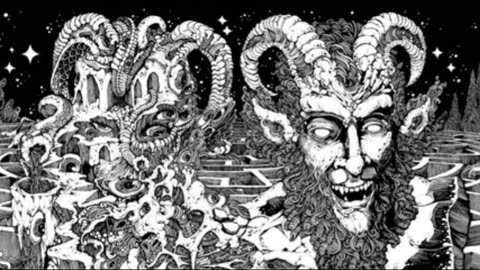
The White People by Arthur Machen (Written 1899, Published 1904)
The Republic by: Plato
Protagoras by: Plato
The Shining Pyramid: The Definitive Edition by: Arthur Machen
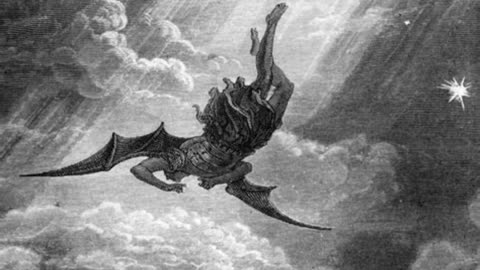
Paradise Lost by: Milton
A Modern Utopia by H. G. Wells (1905)

The World Set Free by H. G. Wells (1914)
The Revolutions of Civilization by William Matthew Flinders Petrie (1911)
The Discovery of the Future by H. G. Wells (1902)
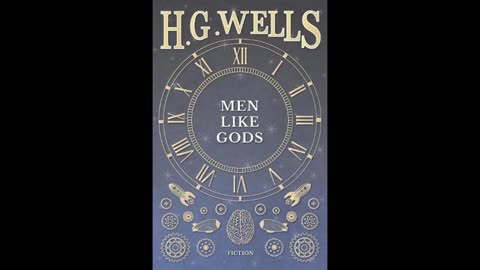
Men Like Gods by H. G. Wells (1923)
The Psychology of Peoples: Its Influence on Their Evolution by Gustave Le Bon (1894)
Household Gods by: Aleister Crowley (1912)
Courts and Criminals by: Arthur Cheney Train (1914)
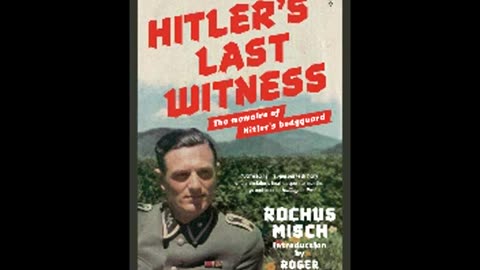
Hitler's Last Witness: The Memoirs of Hitler's Bodyguard by Rochus Misch (2008)
The Anti-Christ by Friedrich Nietzsche
The Manisis Chronicles: A Novel of Fantasy or Prophecy? by Dr. Eugene J. Bruington
Compendium of Occult Laws by: Dr. R. Swinburne Clymer
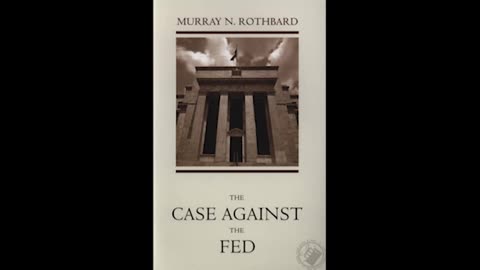
The Case Against the Fed by: Murray N. Rothbard
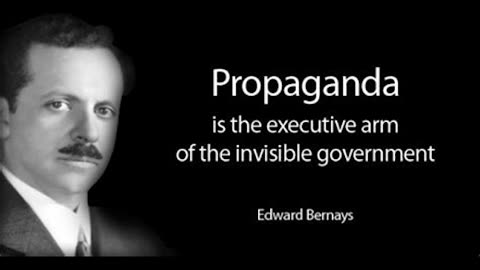
"Propaganda" by: Edward Bernays (1928)

Psychological Warfare by: Paul Linebarger
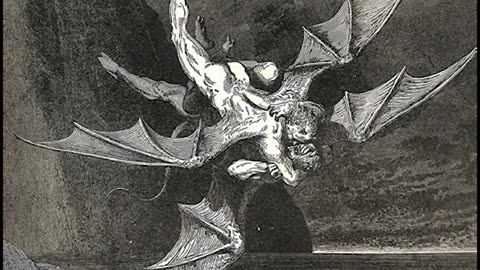
Dante's Inferno (Modern English Translation)
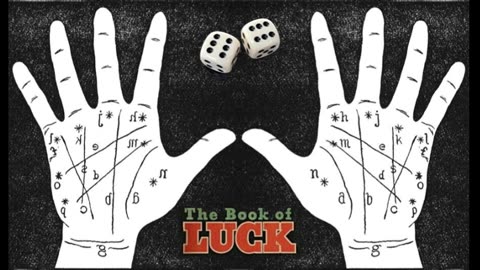
The Book of Luck by: Anonymous
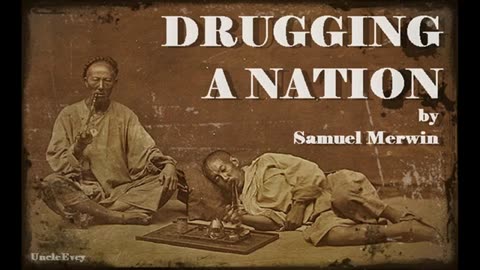
Drugging a Nation: The Story of China & the Opium Curse by Samuel Merwin (1908)
Ghosts, A Message From The Illuminati (1906) by Alexander J. McIvor-Tyndall
Marx & Satan by: Richard Wurmbrand (1986)
1900 Or, The Last President by Ingersoll Lockwood
The Flying Eyes by J. Hunter Holly
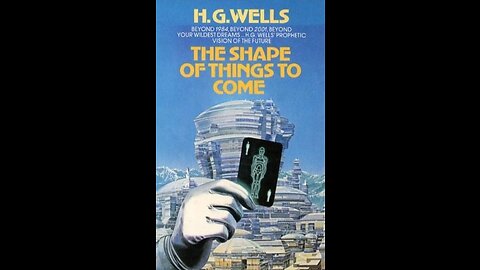
The Shape of Things to Come by: H. G. Wells (1933)
The Regius Manuscript - A Poem of Moral Duties (c. 1390)

The Matthew Cooke Manuscript (c. 1450)
Dowland's Manuscript (c. 1500)
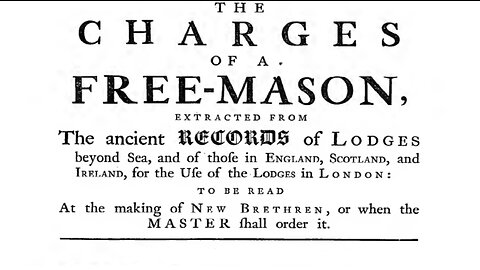
The Charges of a Freemason (1723, Anderson's Constitution's 2/3)

The History of Freemasonry (1723, Anderson's Constitution's 1/3)
The General Regulations of Freemasonry (1723, Anderson's Constitution's 3/3)

Anderson's Constitutions (1723) FULL
Secret Societies: A Sinister Agenda Exposed by: William Cooper (1983)
Silent Weapons for Quiet Wars
Report From Iron Mountain on the Possibility and Desirability of Peace
A Proposed Constitutional Model for the Newstates of America

The Secret Teachings of All Ages by: Manly P. Hall
![The Official C.I.A. Manual of Trickery and Deception [DECLASSIFIED]](https://1a-1791.com/video/s8/1/K/R/T/v/KRTvm.oq1b-small-The-Official-C.I.A.-Manual-.jpg)
The Official C.I.A. Manual of Trickery and Deception [DECLASSIFIED]
Racing Toward Armageddon: The Three Great Religions and the Plot to End the World by Michael Baigent (audiobook)
The United Nations Charter

The Initiates of the Flame by Manly P. Hall (1922)

The Initiates of the Flame by Manly P. Hall, 1922 (just the illustrations)
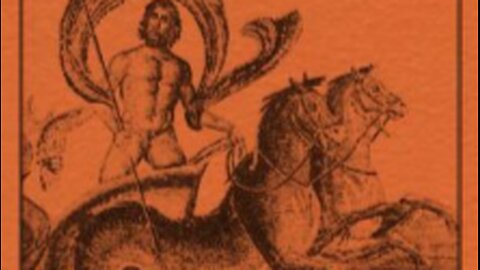
Atlantis: An Interpretation by: Manly P. Hall (1976)
The Secret Destiny of America by: Manly P. Hall

The Lost Keys of Masonry: The Legend of Hiram Abiff by: Manly Hall (2nd Edition)

The Brotherhood: The Secret World of the Freemasons by: Stephen Knight

None Dare Call It Conspiracy by: Gary Allen, co-authored with Larry Abraham

The Ways Of The Lonely Ones: A Collection of Mystical Allegories by: Manly Hall
Masonry: Beyond the Light by William Schnoebelen
On the Origins of Free-Masonry by: Thomas Paine
The Club of Rome by Dr. John Coleman
The History of the Clergy During The French Revolution: A Work Dedicated to the English Nation
The Story of Freemasonry by: W. G. Sibley (1904)

The Mysticism of Freemasonry by: Swinburne Clymer (1924)
Brain-Washing: A Synthesis of the Russian Textbook on Psychopolitics

The Question of Freemasonry by: Ed Decker
Secret Societies: A Sinister Agenda Exposed by: Milton William Cooper (1999)
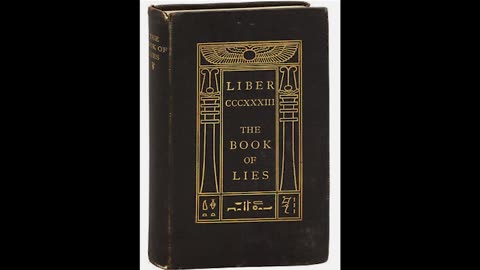
The Book of Lies by: Edward Alexander Crowley (Aleister Crowley)

Pawns in the Game by: William Guy Carr

Unrestricted Warfare by: Qiao Liang and Wang Xiangsui

The Ancient Arabic Order of the Nobles of the Mystic Shrine for North America

The Unanimous Declaration of the Thirteen United States of America

Mystic Masonry by: J.D. Buck
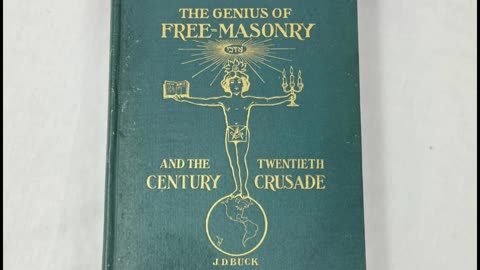
The Genius of Freemasonry and the Twentieth-Century Crusade by: J.D. Buck (1914)

Freemasonry its Hidden Meaning by George H. Steinmetz
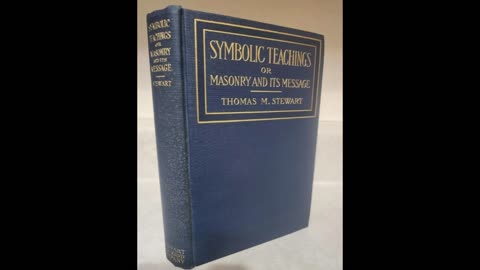
Symbolic Teachings or Masonry and its Message by: Thomas Milton Stewart
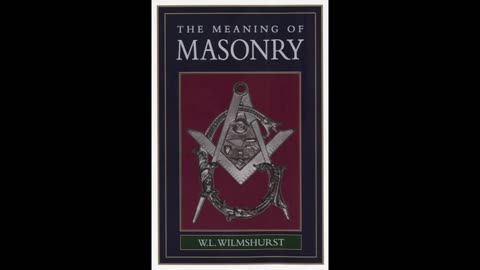
The Meaning of Masonry by W.L. Wilmshurst
Symbolism by: Milton A. Pottenger
The Pythagorean Triangle or The Science of Numbers by: Milton A. Pottenger
Hamlet by: Shakespeare

The War of Antichrist with the Church and Christian Civilization by: Monsignor George F. Dillon (1885)
Mormonism and Masonry by Samuel H. Goodwin (1920)
The Secret Rose and Rosa Alchemica by: William Butler Yeats (1897)
The Book of Mormon: Part 9 - Ether & Moroni
The Book of Mormon Part 8 - 4 Nephi & Mormon
The Book of Mormon Part 7 - 3 Nephi 1-30

The Book of Mormon: Part 6 - Helaman 1-16

The Book of Mormon: Part 5 - Alma 1-63
The Book of Mormon: Part 4 - Words of Mormon 1 & Mosiah 1-29
The Book of Mormon: Part 3 - Enos 1, Jarom 1, and Omni 1

The Book of Mormon: Part 2 - Jacob 1-7
The Book of Mormon: Part 1 - 1 Nephi, 2 Nephi
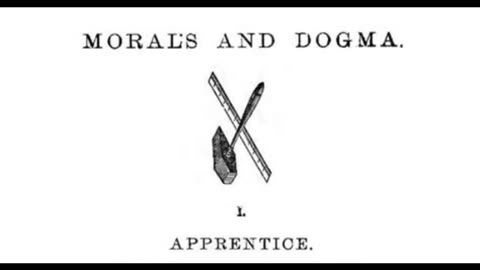
Chapter 1º - Apprentice - Morals & Dogma of the Ancient & Accepted Scottish Rite of Freemasonry
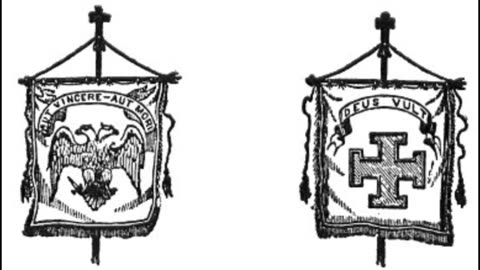
Chapter 30º - Knight Kadosh - Morals & Dogma of the Ancient & Accepted Scottish Rite of Freemasonry
The Mission of Masonry by: Joseph Fort Newton

Nox Niijosa by: Walter Leslie Wilmshurst (1917)
The Rosicrucian Mysteries: An Elementary Exposition of Their Secret Teachings by Max Heindel (1911)

Gleanings of a Mystic: A Series of Essays on Practical Mysticism by Max Heindel (1922)

The New Atlantis by Francis Bacon (1627)

The Wisdom of the Ancients, A Series of Mythological Fables by: Francis Bacon (1609)

Atlantis: The Antediluvian World by Ignatius Loyola Donnelly (1831 - 1901)
The Lost Island of Atlantis by: Edward Taylor Fletcher (1891)

The Coming Race by: Edward George Earle Lytton Bulwer-Lytton (1871)
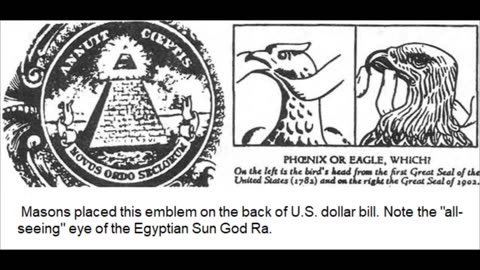
The Watchtower and the Masons by: Fritz Springmeier

The New World Order by: H.G. Wells

Programmed to Kill: The Politics of Serial Murder by David McGowan (2004)
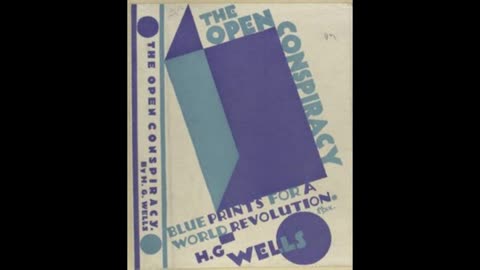
The Open Conspiracy: Blueprints for a World Revolution is a book by H.G. Wells (1928)
The History of the Fabian Society by Edward R. Pease (1916)

The New Machiavelli by: H.G. Wells (1911)

When the Sleeper Wakes by: H.G. Wells (1899)

The Chymical Wedding of Christian Rosenkreutz by: Johann Valentin (1616)

A Wonderful Visit by: H.G. Wells (1895)

The Treatise on Christ and Antichrist by Hippolytus of Rome (c. 200-220 AD)
Humanum Genus (On Freemasonry) April 20, 1884 by Pope Leo XIII - Part 4/4, Sections 51-58
Humanum Genus (On Freemasonry) April 20, 1884 PART 3/4, Sections 36-50

Humanum Genus (On Freemasonry) April 20, 1884 by Pope Leo XIII - Part 2/4, Sections 17-35
Humanum Genus (On Freemasonry) April 20, 1884 by Pope Leo XIII - Part 1/4, Sections 1-16
Dall'alto dell'Apostolico Seggio (On Freemasonry in Italy) by Pope Leo XIII Part 3/3: Sections 39-58
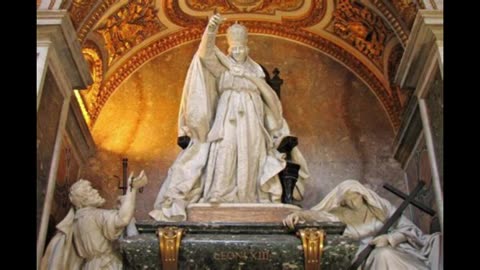
Dall'alto dell'Apostolico Seggio (On Freemasonry in Italy) by Pope Leo XIII Part 2/3: Sections 19-38

Dall'alto dell'Apostolico Seggio (On Freemasonry in Italy) by Pope Leo XIII, Part 1/3: Sections 1-18
The Wonderful Story of Ravalette by: Paschal Beverly Randolph (1863)

The Mystic Will by: Charles Godfrey Leland (1899)
Twenty Thousand Leagues Under the Sea by: Jules Vernes

The Symbolism of Freemasonry by: Albert G. Mackey
Freemasonry From A to Z by: Dr. John Coleman
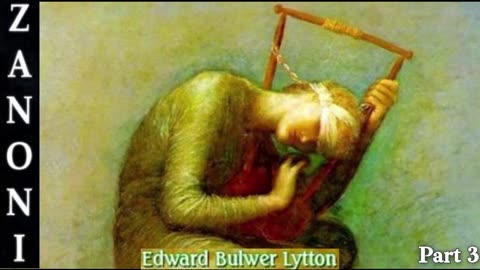
Zanoni by Edward Bulwer Lytton (1842)

A Practical Guide to Self-Hypnosis by: Melvin Powers
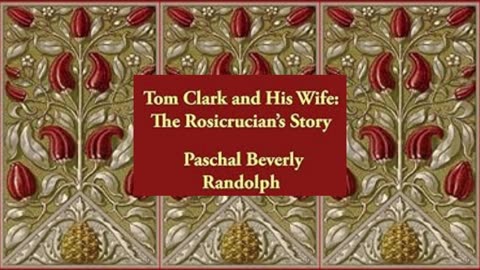
Tom Clark and His Wife, the Rosicrucian's Story by Paschal Beverly Randolph (1863)

Doctor Ox's Experiment by Jules Vernes (1872)

The Secret Doctrine by Blavatsky Part 9/9 Sections 86-96
The Secret Doctrine by Blavatsky Part 8/9 Sections 77-85
The Secret Doctrine by Blavatsky Part 7/9 Sections 69-76

The Secret Doctrine by Blavatsky Part 6/9 Sections 59-68
The Secret Doctrine by Blavatsky Part 5/9 Sections 48-58
The Secret Doctrine by Blavatsky Part 4/9 Sections 37-47
The Secret Doctrine by Blavatsky Part 3/9 Sections 24-36
The Secret Doctrine by Blavatsky Part 2/9 Sections 13-23
The Secret Doctrine by Blavatsky Part 1/9 Sections 1-12
Shadow Forms: A Collection of Occult Stories by: Manly P. Hall (1930)
The Bohemian Club 1969 Little Red Book - By-Laws & Officers
The Bohemian Club 1973 Little Red Book - History, Former Officers, In Memorium, Rules
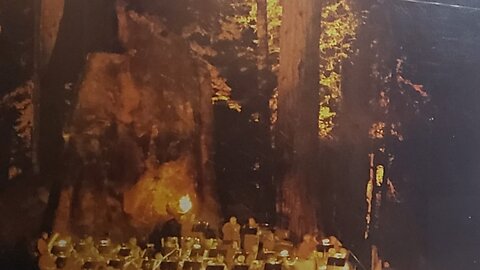
Annals of Bohemian Club Vol. IX - Music & Musicians in Bohemia The First One Hundred Years
The Annals of the Bohemian Club Volume VII: 1988-1996
Great Ghost Stories by: Various Authors
Baron Trump’s Marvellous Underground Journey (1893)
The Hidden Church of the Holy Graal 2/2 by: Edward Arthur Waite
The Hidden Church of the Holy Graal 1/2 by: Edward Arthur Waite

The Kybalion: A Study of the Hermetic Philosophy of Ancient Egypt and Greece By: The Three Initiates
The New Atlantis by Francis Bacon (1627)
The New Atlantis by Francis Bacon is a seminal work in utopian literature and a key text in the history of science and philosophy. Written in 1626 and published posthumously in 1627, The New Atlantis presents an idealized society centered around knowledge, discovery, and the advancement of science. The work is a fictional narrative that reflects Bacon’s vision for the role of scientific inquiry in society, blending elements of utopian ideals with the structure of a learned society.
The story is set on the fictional island of Bensalem, located in the Pacific Ocean. The inhabitants of Bensalem live in a society characterized by peace, prosperity, and enlightenment, all made possible through their devotion to scientific research and discovery. The island is governed by a group of wise men known as the "House of Salomon," a scientific institution dedicated to understanding the natural world through observation, experimentation, and the accumulation of knowledge.
The House of Salomon functions as the heart of Bensalem’s society, embodying Bacon’s ideal of the "scientific method." It is a place where researchers and scholars are free to explore the mysteries of nature, develop new technologies, and apply their discoveries for the benefit of society. The institution’s members are depicted as selfless, working solely for the betterment of humanity rather than for personal gain or power.
In addition to its focus on science, The New Atlantis explores themes of religion, morality, and governance. The society of Bensalem is portrayed as both spiritually devout and intellectually advanced, with a strong sense of social order, charity, and communal responsibility. Bacon’s vision of a utopia is not only a place of material progress but also one of ethical and moral integrity, where the pursuit of knowledge serves a higher purpose.
The New Atlantis is considered a key text in the development of modern scientific thought. It presents a model for the integration of science, ethics, and governance, inspiring later works that explore the relationship between knowledge and society. The House of Salomon is often seen as a precursor to modern scientific academies, such as the Royal Society, which was founded in 1660 and was influenced by Bacon’s ideas.
Bacon’s work is also notable for its allegorical and symbolic dimensions, blending elements of mysticism and esoteric traditions with his rationalist vision. Some interpretations suggest that The New Atlantis reflects Bacon’s own involvement with secret societies, such as the Rosicrucians, though this remains a topic of scholarly debate.
The New Atlantis remains an influential text, not only in literature but also in the history of scientific philosophy. It exemplifies Bacon’s belief in the potential of human reason and empirical inquiry to transform society for the better. The work has been praised for its visionary approach to science and its foresight in imagining a society where knowledge is power, but used responsibly for the collective good.
For those interested in the history of science, utopian literature, or the intersection of philosophy and society, The New Atlantis is an essential read, offering a glimpse into Bacon’s enduring vision of a world where enlightenment and progress are achieved through the dedicated pursuit of knowledge.
About the Author:
Francis Bacon (1561-1626) was an English philosopher, statesman, scientist, and author whose contributions to the development of empiricism and the scientific method laid the foundation for modern scientific inquiry. Serving as Attorney General and Lord Chancellor of England, Bacon was a major political figure, but his true legacy lies in his intellectual work, which bridged science, literature, and esoteric traditions.
Bacon’s writings, including Novum Organum and The Advancement of Learning, argued for a methodical approach to scientific investigation through observation and inductive reasoning. This approach fundamentally challenged the scholastic traditions of the Middle Ages and propelled the development of modern science. His vision was of a world where knowledge could be systematically gathered, tested, and applied to improve society—a vision encapsulated in his utopian work The New Atlantis.
1. Rosicrucianism:
Francis Bacon is often linked to the Rosicrucians, a mystical brotherhood that emerged in the early 17th century, which claimed to possess secret knowledge blending science, alchemy, and spiritual wisdom. Some researchers and esoteric scholars suggest that Bacon was either directly involved in the Rosicrucian movement or inspired its principles. The New Atlantis has been interpreted as an allegory for the ideals of Rosicrucianism, particularly in its portrayal of a society dedicated to the pursuit of hidden knowledge and spiritual enlightenment.
2. Freemasonry:
Although the official formation of Freemasonry occurred after Bacon’s death, many Masonic historians and scholars speculate that Bacon’s influence was instrumental in shaping its early structure and philosophy. Some even consider him the "founder" or guiding spirit behind early speculative Freemasonry, citing his emphasis on knowledge, symbolism, and moral philosophy as aligned with Masonic principles. His intellectual legacy is said to have informed the development of Masonic rituals, particularly those relating to the search for truth and the betterment of humanity.
3. The Order of the Helmet:
Bacon is rumored to have founded a secret literary society called the "Order of the Helmet," dedicated to the protection and promotion of esoteric knowledge and literature. This group, supposedly comprised of intellectual elites, is said to have operated in secrecy, exploring the deeper meanings behind classical texts, philosophy, and spiritual practices.
4. The Shakespeare Authorship Debate:
One of the most enduring theories surrounding Bacon is the claim that he was the true author of the works attributed to William Shakespeare. Proponents of this theory argue that Bacon’s vast knowledge, literary skill, and involvement in secret societies gave him the resources and motivation to write the plays and sonnets under a pseudonym. They suggest that hidden codes and allegories within Shakespeare’s works reveal Bacon’s authorship and his connection to esoteric traditions.
Francis Bacon’s influence extends beyond his contributions to science and literature; he is revered in various esoteric and mystical traditions for his visionary ideas on knowledge and enlightenment. His works are considered foundational texts for those studying the intersection of science, spirituality, and secret societies. Whether as a scientist, philosopher, or esotericist, Bacon’s intellectual endeavors were consistently aimed at uncovering the hidden truths of the universe, making him a key figure in the history of Western esotericism.
Bacon’s legacy is both celebrated and shrouded in mystery, with his influence resonating in Freemasonry, Rosicrucianism, and beyond. His vision of a world united by the pursuit of knowledge and truth continues to inspire those in both scientific and mystical fields.
-
 7:37:26
Deus Meum Que Jus
4 days agoThe Imitation of Christ by: Thomas à Kempis (between 1418 and 1427)
452 -
 1:22:19
FreshandFit
6 hours agoGirls Try To Get 60 Year Old Granny To Do OF
224K97 -
 3:05:53
Decoy
6 hours agoNobody is talking about this..
66.8K16 -
 1:57:00
Badlands Media
12 hours agoBaseless Conspiracies Ep. 163: False Memories, MKUltra & the Machinery of Disbelief
60.5K10 -
 LIVE
LIVE
Drew Hernandez
1 day agoERIKA KIRK / CANDACE OWENS CEASEFIRE SUMMIT & BACK TO BACK MASS SHOOTINGS?
792 watching -
 1:37:33
efenigson
15 hours agoUnapologetically Yourself: The Courage to Speak & Be Different - Zuby | Ep. 111
40.6K2 -
 1:07:27
Inverted World Live
5 hours agoAI Person of the Year & Robot Wolves in Japan | Ep. 153
64.8K7 -
 3:03:11
TimcastIRL
6 hours agoRob Reiner MURDERED, Son Arrested, Trump Faces Backlash Over Comments | Timcast IRL
262K138 -
![ON THE SUBJECT: Top Christmas Movies That Raised Millennials [Part 1]](https://1a-1791.com/video/fww1/d4/s8/1/M/E/t/I/MEtIz.0kob-small-ON-THE-SUBJECT-Top-Christma.jpg) 1:46:20
1:46:20
megimu32
5 hours agoON THE SUBJECT: Top Christmas Movies That Raised Millennials [Part 1]
41.4K8 -
 57:22
57:22
Flyover Conservatives
1 day agoChina and India are Draining Silver — Prices Are Responding Fast - Dr. Kirk Elliott; Natural Remedy You Don't Know About - Dr. Troy Spurrill | FOC Show
41.9K6