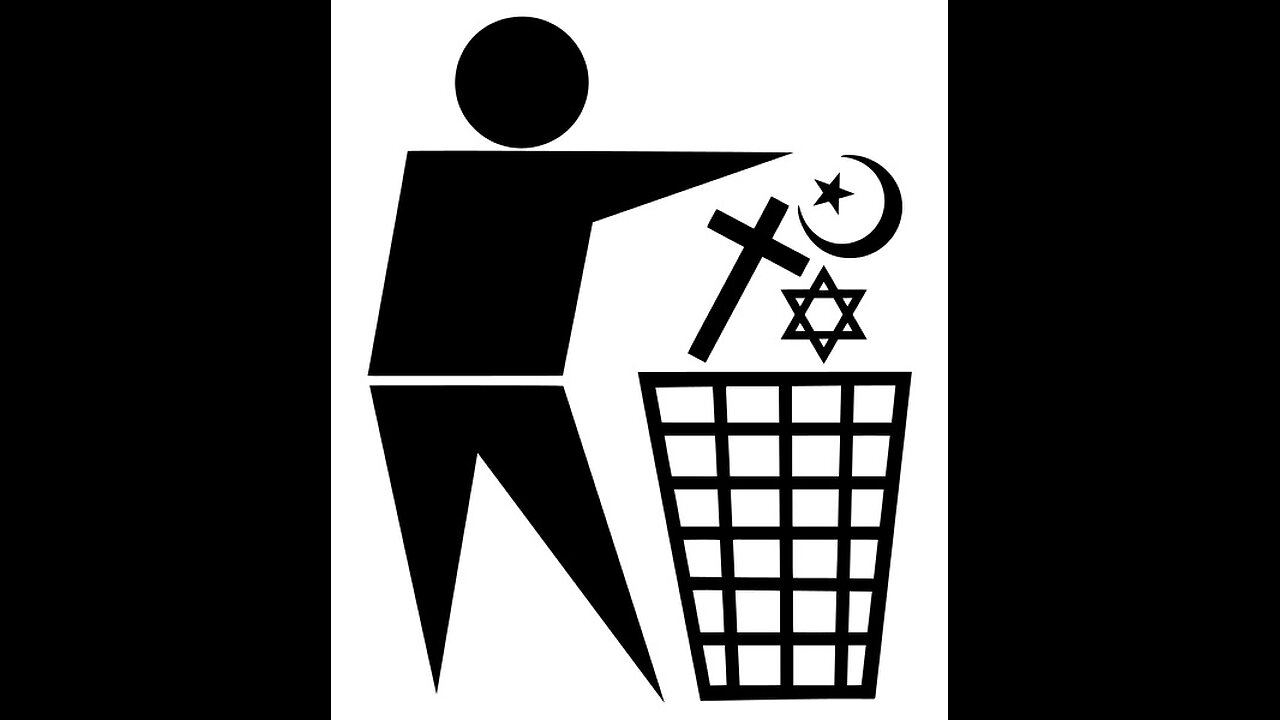
Censorship could lead to ban on prayer.
The Censorship Song
You know, censorship suffocates
All dissension, all debates
It's like a creeping fog
Or, better yet, a chocking smog
Governments and corporations too
Can determine what they think is true
And what they don't like, they will deem
Misinformation and conspiracy scheme
They'll say opinions aren't science based
Or maybe jokes are in bad taste
They can block their opponents speech
To put those ideas out of reach
And on and on and on it goes
Where it stops nobody knows
Until one day they post a sign
That reads "Saying prayers is out of line"
Now you may say I've gone insane
And my warning here is quite a strain
And they may censor my view too
But next they'll surely will censor you
Words and music by The Author.
Copyright 2024. All Rights Reserved.
Photos in video:
Some photos public domain.
Courtesy Pexels.com - in the public domain.
Thank you: Markus Siske, Anete Lusina, Pavel Danilyuk, Harrah Suhail, and Daniel Adeyelu.
Creative Commons: https://creativecommons.org/licenses/by/2.0/deed.en
Thank you: Mark Meid, Cory Doctorow, Tokoname 3205, Time 3000, Tomchen 1989, mike macmarketing, Mark Fahey, Amparo Torres, Navy Hub, rofrol, Mutant 669, and Tomasz Molina.
Thumb nail photo: "An anti-religion logo" by Jsjsjs1111.
This file is licensed under the Creative Commons Attribution-Share Alike 3.0 license.
Censorship, the control or suppression of information, has been a contentious issue throughout history. It is often employed by authorities to maintain social order, protect certain values, or prevent harm. However, censorship raises significant concerns about the infringement of fundamental rights, particularly the right to freedom of expression.
Historically, censorship has been used by governments and religious institutions to control knowledge and suppress dissent. The Roman Catholic Church, for instance, maintained the Index Librorum Prohibitorum, a list of prohibited books, to prevent the spread of ideas it deemed heretical. Similarly, in ancient China, Emperor Qin Shi Huang ordered the burning of books and the execution of scholars to consolidate his power and eliminate dissenting views.
In modern times, censorship is often justified on the grounds of national security, public morality, and the protection of vulnerable groups. Governments may censor content to prevent the spread of terrorism, hate speech, or child exploitation, arguing that such measures are necessary to safeguard society. For example, during times of war, censorship is commonly imposed to control information that could benefit the enemy or undermine public morale. In these instances, censorship is seen as a necessary evil to protect the greater good.
However, censorship is frequently criticized for infringing on the right to freedom of expression, a cornerstone of democratic societies. The ability to express diverse viewpoints and challenge authority is crucial for the advancement of knowledge and the functioning of a healthy democracy. When authorities control what can be said, they limit individuals' capacity to think critically and make informed decisions. This can lead to a homogenized society where dissent is stifled, and citizens are more easily manipulated.
The rise of the internet and digital media has intensified debates over censorship. On one hand, the internet has democratized access to information, enabling people to share ideas and opinions more freely than ever before. On the other hand, the vast amount of content available online has led to calls for increased regulation to prevent the spread of harmful or false information. Social media platforms, in particular, are at the center of these debates, as they struggle to balance the need for open communication with the responsibility to prevent harm.
Censorship has also had a significant impact on the arts and culture. Throughout history, artists have challenged social norms, often facing backlash and attempts to censor their work. Notable examples include James Joyce’s Ulysses and George Orwell’s 1984, both of which were banned in various places for their perceived subversive content. While censorship in art is often justified on the grounds of protecting public morality, it can stifle creativity and prevent important societal conversations from taking place.
The ethical dilemma of censorship lies in balancing the need to protect society from harm with the need to preserve freedom of expression. When a small group of people controls what can be said or shown, it can lead to abuses of power and the suppression of dissent. Yet, leaving content entirely unregulated can also have serious consequences, such as the spread of misinformation and hate speech.
Censorship is a complex issue with the potential both to protect and to harm. Finding the right balance between regulation and freedom is crucial in ensuring a society where diverse ideas can flourish while protecting the well-being of all.
-
 LIVE
LIVE
heathen_streamz
1 hour agoLet's get Bent in ARC RAIDERS | Happy Tiddy Tuesday!
59 watching -
 41:54
41:54
Katie Miller Pod
4 hours ago $2.24 earnedPete & Jen Hegseth on Family Values, Job Transition, & Military Readiness | KMP Ep. 17
8.86K8 -
 LIVE
LIVE
ItsMossy
2 hours ago🍃time to finally lock in on quests 2🍃WINTER IS COMING🍃snow tracking n more incoming🍃come here🍃
29 watching -
 21:05
21:05
MetatronGaming
17 hours agoThe Witcher 4 Tech Demo Metatron Reaction
26 -
 1:04:57
The Nick DiPaolo Show Channel
4 hours agoHegseth “War Criminal” My Ass | The Nick Di Paolo Show #1824
14K35 -
 59:47
59:47
TheCrucible
5 hours agoThe Extravaganza! EP: 68 with guest co-host Rob Noerr (12/02/25)
94.2K6 -
 1:20:19
Kim Iversen
4 hours agoHegseth Throws Admiral Bradely Overboard | Kash Patel's Bomber Jacket Tantrum
27K52 -
 LIVE
LIVE
LFA TV
23 hours agoLIVE & BREAKING NEWS! | TUESDAY 12/02/25
736 watching -
 LIVE
LIVE
The Bold Lib
1 hour agoBOLDCHAT: Trump Accounts | Venezuela | Somalia w/ANGELA BELCAMINO
46 watching -
 23:01
23:01
Jasmin Laine
4 hours agoCTV Catches Carney LYING!—Poilievre Drops a NUCLEAR Fact-Check
15.8K14