The Atrocities of the Pirates by: Aaron Smith (1724)

The Imitation of Christ by: Thomas à Kempis (between 1418 and 1427)
The Pilgrim’s Progress by John Bunyan (1678)
The Symbolism of Freemasonry by: Albert Gallatin Mackey, M.D. (1896)
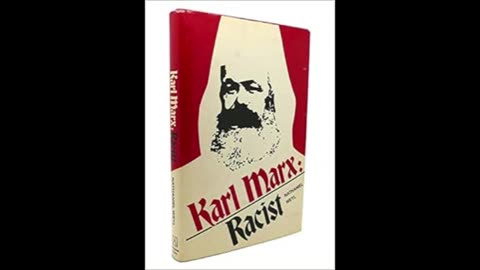
Karl Marx: Racist by Nathaniel Weyl (1968)

None Dare Call it Conspiracy by: Gary Allen (1971)
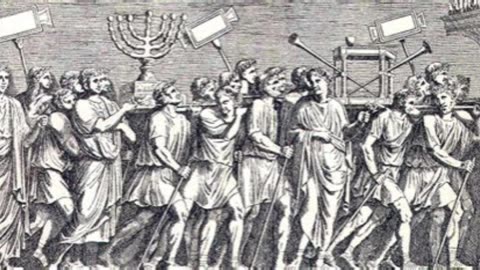
Stories of the Wars of the Jews by: Charlotte Maria Tucker (A.L.O.E.)
Montezuma’s Castle and Other Weird Tales by Charles B. Cory (1899)
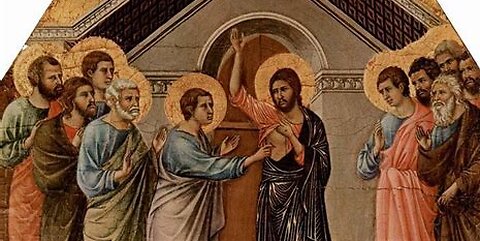
Christianity in the Apostolic Age by: George T. Purves (1900)
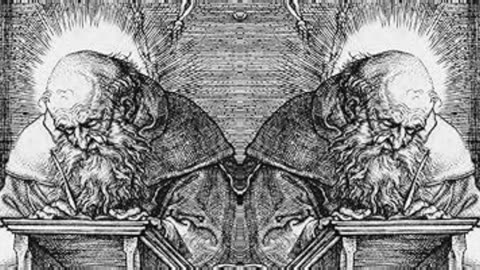
Enchiridion Militis Christiani (English: Handbook of a Christian Knight, 1503)

The Thirty Years' War, 1618-1648 by: Samuel Rawson Gardiner
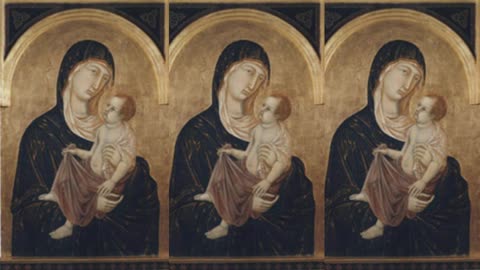
The Origins of Christianity by Thomas Whittaker (1856–1935)

The Historical Jesus: Lecture Series by Professor Bart D. Ehrman
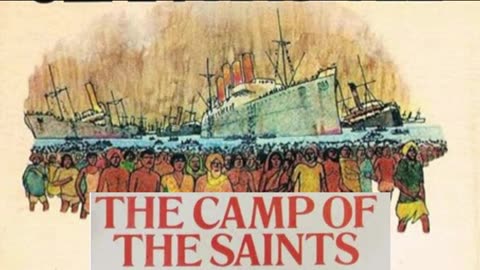
The Camp of the Saints by: Jean Raspail
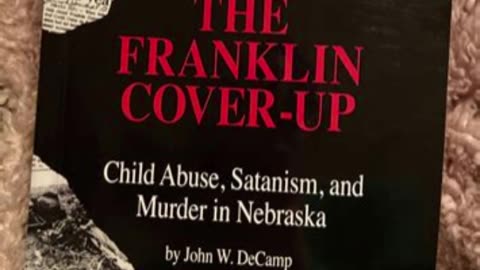
The Franklin Cover-up: Child Abuse, Satanism, and Murder in Nebraska by: John W. DeCamp
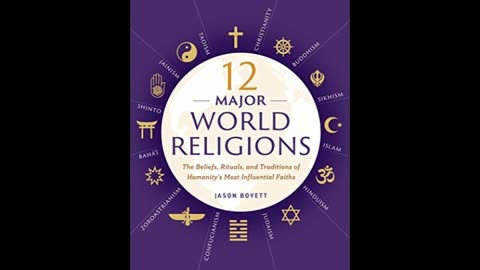
12 Major World Religions: The Beliefs, Rituals, and Traditions of Humanity’s Most Influential Faiths

The Fourth Turning: An American Prophecy by: William Strauss and Neil Howe
The Hill of Dreams by Arthur Machen (1907)
The Great God Pan by Arthur Machen (1894)
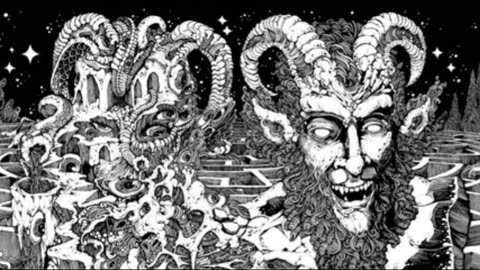
The White People by Arthur Machen (Written 1899, Published 1904)
The Republic by: Plato
Protagoras by: Plato
The Shining Pyramid: The Definitive Edition by: Arthur Machen
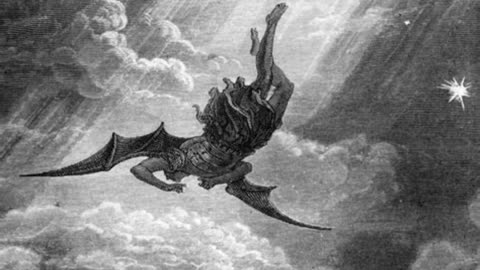
Paradise Lost by: Milton
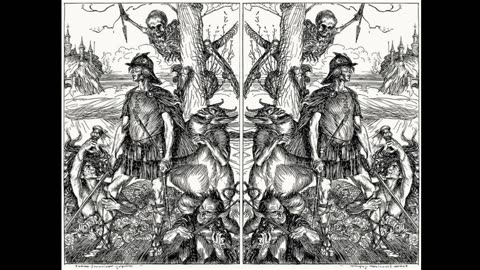
A Modern Utopia by H. G. Wells (1905)

The World Set Free by H. G. Wells (1914)
The Revolutions of Civilization by William Matthew Flinders Petrie (1911)
The Discovery of the Future by H. G. Wells (1902)
Men Like Gods by H. G. Wells (1923)
The Psychology of Peoples: Its Influence on Their Evolution by Gustave Le Bon (1894)
Household Gods by: Aleister Crowley (1912)
Courts and Criminals by: Arthur Cheney Train (1914)

Hitler's Last Witness: The Memoirs of Hitler's Bodyguard by Rochus Misch (2008)
The Anti-Christ by Friedrich Nietzsche
The Manisis Chronicles: A Novel of Fantasy or Prophecy? by Dr. Eugene J. Bruington
Compendium of Occult Laws by: Dr. R. Swinburne Clymer
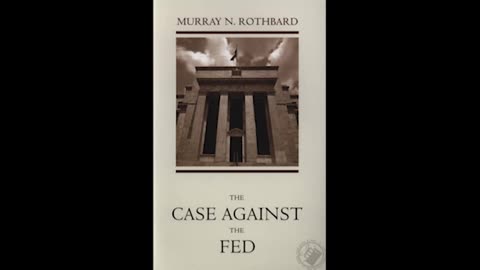
The Case Against the Fed by: Murray N. Rothbard
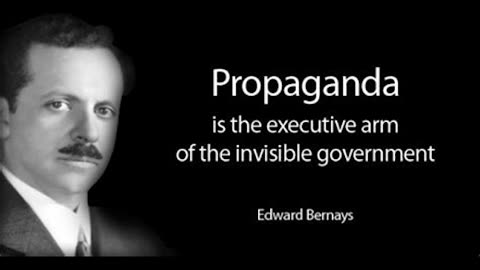
"Propaganda" by: Edward Bernays (1928)

Psychological Warfare by: Paul Linebarger
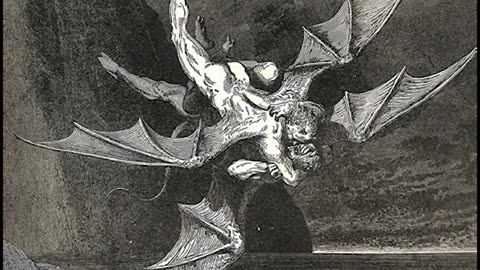
Dante's Inferno (Modern English Translation)
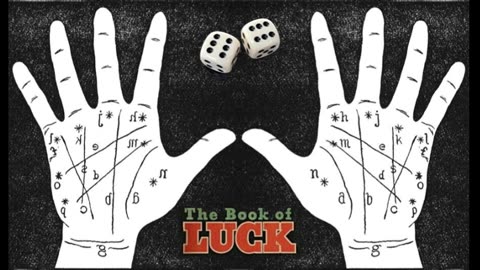
The Book of Luck by: Anonymous
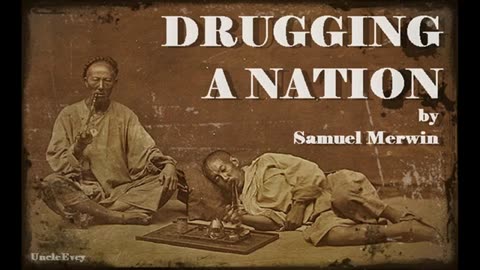
Drugging a Nation: The Story of China & the Opium Curse by Samuel Merwin (1908)
Ghosts, A Message From The Illuminati (1906) by Alexander J. McIvor-Tyndall
Marx & Satan by: Richard Wurmbrand (1986)

1900 Or, The Last President by Ingersoll Lockwood
The Flying Eyes by J. Hunter Holly
The Shape of Things to Come by: H. G. Wells (1933)
The Regius Manuscript - A Poem of Moral Duties (c. 1390)

The Matthew Cooke Manuscript (c. 1450)
Dowland's Manuscript (c. 1500)
The Charges of a Freemason (1723, Anderson's Constitution's 2/3)

The History of Freemasonry (1723, Anderson's Constitution's 1/3)
The General Regulations of Freemasonry (1723, Anderson's Constitution's 3/3)

Anderson's Constitutions (1723) FULL
Secret Societies: A Sinister Agenda Exposed by: William Cooper (1983)

Silent Weapons for Quiet Wars
Report From Iron Mountain on the Possibility and Desirability of Peace

A Proposed Constitutional Model for the Newstates of America

The Secret Teachings of All Ages by: Manly P. Hall
![The Official C.I.A. Manual of Trickery and Deception [DECLASSIFIED]](https://1a-1791.com/video/s8/1/K/R/T/v/KRTvm.oq1b-small-The-Official-C.I.A.-Manual-.jpg)
The Official C.I.A. Manual of Trickery and Deception [DECLASSIFIED]
Racing Toward Armageddon: The Three Great Religions and the Plot to End the World by Michael Baigent (audiobook)

The United Nations Charter

The Initiates of the Flame by Manly P. Hall (1922)

The Initiates of the Flame by Manly P. Hall, 1922 (just the illustrations)
Atlantis: An Interpretation by: Manly P. Hall (1976)

The Secret Destiny of America by: Manly P. Hall

The Lost Keys of Masonry: The Legend of Hiram Abiff by: Manly Hall (2nd Edition)

The Brotherhood: The Secret World of the Freemasons by: Stephen Knight

None Dare Call It Conspiracy by: Gary Allen, co-authored with Larry Abraham

The Ways Of The Lonely Ones: A Collection of Mystical Allegories by: Manly Hall
Masonry: Beyond the Light by William Schnoebelen
On the Origins of Free-Masonry by: Thomas Paine
The Club of Rome by Dr. John Coleman
The History of the Clergy During The French Revolution: A Work Dedicated to the English Nation
The Story of Freemasonry by: W. G. Sibley (1904)

The Mysticism of Freemasonry by: Swinburne Clymer (1924)

Brain-Washing: A Synthesis of the Russian Textbook on Psychopolitics

The Question of Freemasonry by: Ed Decker
Secret Societies: A Sinister Agenda Exposed by: Milton William Cooper (1999)
The Book of Lies by: Edward Alexander Crowley (Aleister Crowley)

Pawns in the Game by: William Guy Carr

Unrestricted Warfare by: Qiao Liang and Wang Xiangsui

The Ancient Arabic Order of the Nobles of the Mystic Shrine for North America

The Unanimous Declaration of the Thirteen United States of America

Mystic Masonry by: J.D. Buck
The Genius of Freemasonry and the Twentieth-Century Crusade by: J.D. Buck (1914)

Freemasonry its Hidden Meaning by George H. Steinmetz
Symbolic Teachings or Masonry and its Message by: Thomas Milton Stewart
The Meaning of Masonry by W.L. Wilmshurst
Symbolism by: Milton A. Pottenger
The Pythagorean Triangle or The Science of Numbers by: Milton A. Pottenger
Hamlet by: Shakespeare

The War of Antichrist with the Church and Christian Civilization by: Monsignor George F. Dillon (1885)
Mormonism and Masonry by Samuel H. Goodwin (1920)
The Secret Rose and Rosa Alchemica by: William Butler Yeats (1897)
The Book of Mormon: Part 9 - Ether & Moroni
The Book of Mormon Part 8 - 4 Nephi & Mormon
The Book of Mormon Part 7 - 3 Nephi 1-30

The Book of Mormon: Part 6 - Helaman 1-16

The Book of Mormon: Part 5 - Alma 1-63
The Book of Mormon: Part 4 - Words of Mormon 1 & Mosiah 1-29
The Book of Mormon: Part 3 - Enos 1, Jarom 1, and Omni 1

The Book of Mormon: Part 2 - Jacob 1-7
The Book of Mormon: Part 1 - 1 Nephi, 2 Nephi
Chapter 1º - Apprentice - Morals & Dogma of the Ancient & Accepted Scottish Rite of Freemasonry
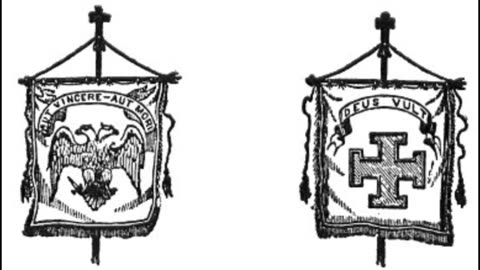
Chapter 30º - Knight Kadosh - Morals & Dogma of the Ancient & Accepted Scottish Rite of Freemasonry
The Mission of Masonry by: Joseph Fort Newton

Nox Niijosa by: Walter Leslie Wilmshurst (1917)
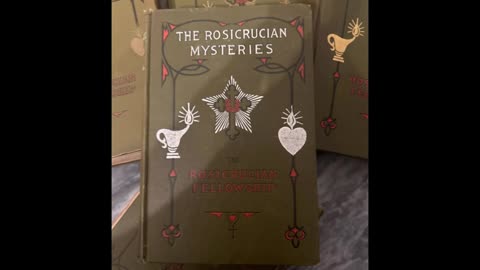
The Rosicrucian Mysteries: An Elementary Exposition of Their Secret Teachings by Max Heindel (1911)

Gleanings of a Mystic: A Series of Essays on Practical Mysticism by Max Heindel (1922)

The New Atlantis by Francis Bacon (1627)

The Wisdom of the Ancients, A Series of Mythological Fables by: Francis Bacon (1609)

Atlantis: The Antediluvian World by Ignatius Loyola Donnelly (1831 - 1901)

The Lost Island of Atlantis by: Edward Taylor Fletcher (1891)

The Coming Race by: Edward George Earle Lytton Bulwer-Lytton (1871)
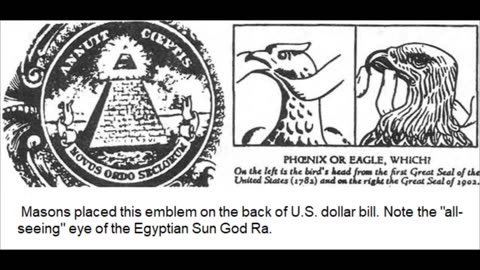
The Watchtower and the Masons by: Fritz Springmeier

The New World Order by: H.G. Wells

Programmed to Kill: The Politics of Serial Murder by David McGowan (2004)
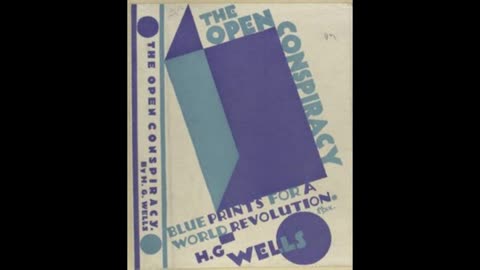
The Open Conspiracy: Blueprints for a World Revolution is a book by H.G. Wells (1928)
The History of the Fabian Society by Edward R. Pease (1916)

The New Machiavelli by: H.G. Wells (1911)

When the Sleeper Wakes by: H.G. Wells (1899)

The Chymical Wedding of Christian Rosenkreutz by: Johann Valentin (1616)

A Wonderful Visit by: H.G. Wells (1895)

The Treatise on Christ and Antichrist by Hippolytus of Rome (c. 200-220 AD)
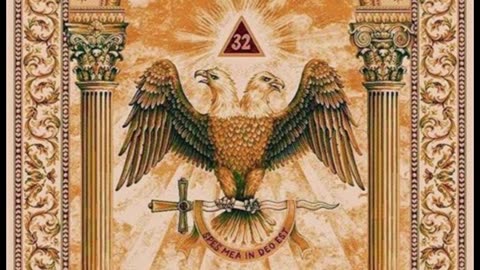
Humanum Genus (On Freemasonry) April 20, 1884 by Pope Leo XIII - Part 4/4, Sections 51-58
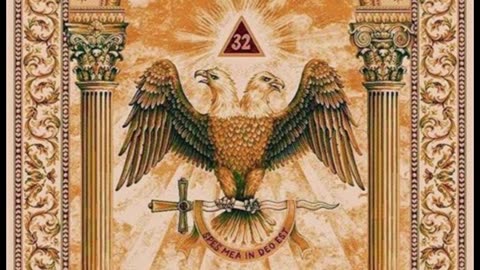
Humanum Genus (On Freemasonry) April 20, 1884 PART 3/4, Sections 36-50

Humanum Genus (On Freemasonry) April 20, 1884 by Pope Leo XIII - Part 2/4, Sections 17-35
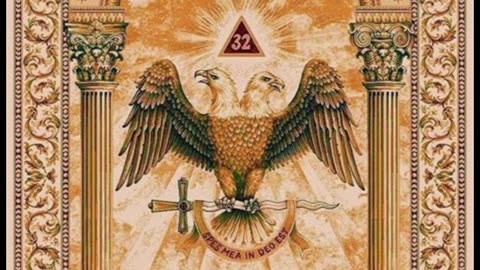
Humanum Genus (On Freemasonry) April 20, 1884 by Pope Leo XIII - Part 1/4, Sections 1-16
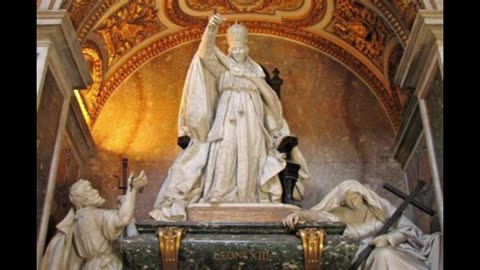
Dall'alto dell'Apostolico Seggio (On Freemasonry in Italy) by Pope Leo XIII Part 3/3: Sections 39-58
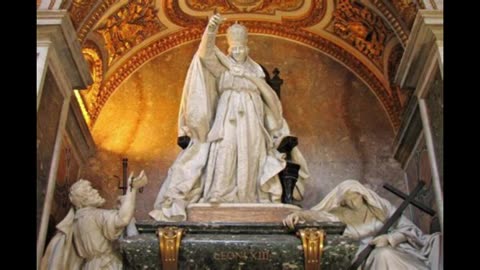
Dall'alto dell'Apostolico Seggio (On Freemasonry in Italy) by Pope Leo XIII Part 2/3: Sections 19-38

Dall'alto dell'Apostolico Seggio (On Freemasonry in Italy) by Pope Leo XIII, Part 1/3: Sections 1-18
The Wonderful Story of Ravalette by: Paschal Beverly Randolph (1863)

The Mystic Will by: Charles Godfrey Leland (1899)
Twenty Thousand Leagues Under the Sea by: Jules Vernes

The Symbolism of Freemasonry by: Albert G. Mackey
Freemasonry From A to Z by: Dr. John Coleman
Zanoni by Edward Bulwer Lytton (1842)

A Practical Guide to Self-Hypnosis by: Melvin Powers
Tom Clark and His Wife, the Rosicrucian's Story by Paschal Beverly Randolph (1863)

Doctor Ox's Experiment by Jules Vernes (1872)

The Secret Doctrine by Blavatsky Part 9/9 Sections 86-96
The Secret Doctrine by Blavatsky Part 8/9 Sections 77-85
The Secret Doctrine by Blavatsky Part 7/9 Sections 69-76

The Secret Doctrine by Blavatsky Part 6/9 Sections 59-68
The Secret Doctrine by Blavatsky Part 5/9 Sections 48-58
The Secret Doctrine by Blavatsky Part 4/9 Sections 37-47
The Secret Doctrine by Blavatsky Part 3/9 Sections 24-36
The Secret Doctrine by Blavatsky Part 2/9 Sections 13-23
The Secret Doctrine by Blavatsky Part 1/9 Sections 1-12
Shadow Forms: A Collection of Occult Stories by: Manly P. Hall (1930)
The Bohemian Club 1969 Little Red Book - By-Laws & Officers
The Bohemian Club 1973 Little Red Book - History, Former Officers, In Memorium, Rules

Annals of Bohemian Club Vol. IX - Music & Musicians in Bohemia The First One Hundred Years

The Annals of the Bohemian Club Volume VII: 1988-1996
Great Ghost Stories by: Various Authors
Baron Trump’s Marvellous Underground Journey (1893)
The Hidden Church of the Holy Graal 2/2 by: Edward Arthur Waite
The Hidden Church of the Holy Graal 1/2 by: Edward Arthur Waite

The Kybalion: A Study of the Hermetic Philosophy of Ancient Egypt and Greece By: The Three Initiates
The Secret Doctrine by Blavatsky Part 4/9 Sections 37-47
Part 4 (Sections 37-47) of "The Secret Doctrine" by Helena Petrovna Blavatsky delves further into the esoteric history of humanity, focusing on the development of early civilizations and the spiritual principles underlying the evolution of humankind. This section is primarily concerned with the transformation of human beings from spiritual entities to physical forms, as well as the esoteric doctrines that guide the unfolding of human consciousness and societal development. Blavatsky continues to draw from a range of mythological and esoteric traditions, presenting an alternative narrative of human history.
Overview of Part 4:
In this part, Blavatsky expands upon the idea of root races and focuses particularly on the Atlantean and Aryan root races, discussing their rise and fall, the moral lessons embedded in their history, and their significance in the broader scheme of spiritual evolution. The content continues to be framed through the Stanzas of Dzyan, with Blavatsky providing interpretations that link ancient myths to her theosophical teachings.
Key Concepts and Sections in Part 4:
1. The Fall of Atlantis and its Spiritual Implications:
A significant portion of this part focuses on the fourth root race, known as the Atlanteans. Blavatsky describes Atlantis as a highly advanced civilization with great technological and spiritual knowledge. However, the Atlanteans ultimately fell into moral decay, leading to their destruction.
Blavatsky emphasizes that the fall of Atlantis serves as a warning about the dangers of spiritual corruption and the misuse of occult knowledge. The downfall of this civilization is linked to their overemphasis on material power and desire, which caused them to stray from their spiritual path.
The destruction of Atlantis by cataclysmic events, including floods and other natural disasters, is presented as a cosmic cleansing, intended to allow the next root race (the Aryans) to take their place.
2. The Emergence of the Aryan Race:
The fifth root race, or the Aryan race, is described as the current phase of human evolution. Blavatsky claims that this race began after the fall of Atlantis and inherited the esoteric knowledge that survived the Atlantean era.
She traces the migrations and spiritual journeys of the Aryans, particularly focusing on the ancient Indian and Persian civilizations as the inheritors of esoteric teachings. The Vedic texts, Zend-Avesta, and other sacred scriptures are cited as records that preserve the spiritual traditions of the Aryan root race.
Blavatsky emphasizes the importance of spiritual development during the Aryan era, suggesting that this race has the responsibility to balance material progress with spiritual wisdom.
3. The Doctrine of Cycles and Human Destiny:
Blavatsky elaborates on the idea of cyclical time, which she claims governs both cosmic evolution and the rise and fall of civilizations. According to this doctrine, each root race has a designated period during which it flourishes, reaches a spiritual peak, and then declines, making way for the next cycle.
These cycles are not only physical but also spiritual, guiding the transformation of consciousness over vast periods. She argues that the Aryan root race is currently in the middle of its cycle, facing the same potential pitfalls of materialism that led to the downfall of the Atlanteans.
The Law of Karma plays a significant role in this narrative, as the actions of individuals and entire races influence the karmic outcomes that shape their destinies.
4. The Role of Initiates and Adepts:
Blavatsky introduces the concept of spiritual initiates, or adepts, who act as guardians of ancient wisdom and guide the evolution of humanity from behind the scenes. These figures are described as beings of advanced spiritual development who have transcended ordinary human limitations.
According to Blavatsky, these adepts work within the mystery schools and esoteric orders to preserve the hidden knowledge that has been passed down through the ages, often in the form of symbolic teachings and occult practices.
The initiatory tradition is portrayed as a spiritual hierarchy that connects humanity with the higher spiritual realms, ensuring that the sacred mysteries are preserved even through the cycles of destruction and rebirth.
5. Ancient Mysteries and Sacred Symbolism:
Blavatsky continues to draw from a wide array of mythological sources and sacred symbols, interpreting them through an esoteric lens. She references Egyptian, Babylonian, Persian, and Hindu myths, arguing that these traditions encode spiritual truths about the evolution of humanity.
Symbols such as the sphinx, pyramids, obelisks, and sacred mountains are interpreted as representations of cosmic principles and initiatory knowledge. She suggests that these symbols have been deliberately preserved across cultures as a means of transmitting esoteric wisdom through time.
Blavatsky also discusses the occult significance of sacred geometry, seeing patterns like the triangle, pentagram, and cross as reflections of universal laws that govern the manifested world.
Purpose of Part 4:
Part 4 aims to provide a deeper understanding of the spiritual history of humanity, offering an alternative narrative that connects ancient myths and esoteric teachings to the evolution of human consciousness.
Blavatsky’s interpretations seek to challenge the conventional linear view of history, presenting instead a cyclical model where civilizations rise and fall according to spiritual laws.
Style and Presentation:
Blavatsky’s writing in this part continues to be symbolic and metaphysical, drawing heavily on comparative mythology and cross-cultural analysis. She assumes that readers have a familiarity with esoteric concepts and are open to an alternative view of history.
Her presentation blends narrative elements with philosophical discourse, aiming to weave a cohesive picture of how spiritual evolution unfolds over millennia.
Significance of Part 4:
Part 4 is significant for its detailed exploration of the rise and fall of ancient civilizations, especially Atlantis, which has become a cornerstone of esoteric lore and occult speculation. Her narrative of Atlantis and the Aryan root race has influenced many later spiritual movements and theories about ancient wisdom.
The discussion of initiatory traditions and the hidden role of spiritual adepts offers insight into Blavatsky’s belief in the spiritual guidance that shapes human history, reinforcing the theosophical perspective that ancient wisdom traditions hold the keys to understanding human destiny.
ABOUT THE AUTHOR:
Helena Petrovna Blavatsky (1831-1891)
Helena Petrovna Blavatsky—often known simply as Madame Blavatsky or HPB—was a Russian occultist, mystic, and co-founder of the Theosophical Society, a movement that sought to reconcile spirituality with science and philosophy by drawing upon ancient esoteric traditions. Born on August 12, 1831, in Ekaterinoslav, then part of the Russian Empire (now Dnipro, Ukraine), she is widely considered one of the most influential figures in the modern esoteric and occult revival of the late 19th century. Her writings and teachings, particularly "Isis Unveiled" (1877) and "The Secret Doctrine" (1888), continue to shape New Age thought, Western esotericism, and spiritual movements to this day.
Early Life and Influences
Blavatsky was born into a noble Russian family, with her mother, Helena Andreyevna von Hahn, being a novelist and her father, Colonel Peter Hahn, serving in the Russian military. From a young age, she displayed an interest in the mystical and supernatural, with accounts of her life mentioning experiences with clairvoyance, telepathy, and astral travel. Her family's access to Western literature and philosophy exposed her to esoteric ideas early on, which she later developed into her own theosophical framework.
In her early adulthood, Blavatsky embarked on extensive travels that took her across Europe, the Middle East, India, and Tibet. During these journeys, she claimed to have studied with esoteric teachers and initiates, particularly in India and Tibet, who taught her the ancient wisdom traditions that would form the core of her later teachings.
Founding of the Theosophical Society
In 1875, Blavatsky co-founded the Theosophical Society in New York City with Henry Steel Olcott and William Quan Judge. The society aimed to:
1. Promote the study of comparative religion, philosophy, and science.
2. Investigate unexplained laws of nature and the powers latent in humanity.
3. Promote universal brotherhood, transcending distinctions of race, creed, sex, caste, or color.
The Theosophical Society played a pivotal role in introducing Eastern philosophies, such as Hinduism and Buddhism, to the Western world, promoting the idea that all religions contain an underlying spiritual truth. Blavatsky served as the spiritual head of the movement, positioning herself as a messenger for the hidden masters or Mahatmas, whom she claimed were enlightened beings guiding the spiritual evolution of humanity.
Key Works and Esoteric Teachings
"Isis Unveiled" (1877): Blavatsky’s first major work sought to challenge materialism and scientific reductionism, arguing that ancient wisdom held the keys to understanding spiritual phenomena and the hidden aspects of nature. The book covered a wide range of subjects, from mythology to comparative religion, psychic phenomena, and occult sciences.
"The Secret Doctrine" (1888): This two-volume work is considered her magnum opus. It lays out a cosmological vision based on the Stanzas of Dzyan, which she claimed were ancient texts from Tibet. The first volume, "Cosmogenesis", focuses on the origin of the universe and cosmic evolution, while the second volume, "Anthropogenesis", explores the esoteric history of humanity through the seven root races. Blavatsky aimed to provide a synthesis of science, religion, and philosophy, drawing upon Eastern mysticism, Hermeticism, and Kabbalistic traditions.
Affiliations with Secret Societies
Blavatsky’s life and work were deeply intertwined with the esoteric traditions and secret societies that she studied and promoted. While there is some ambiguity surrounding her precise affiliations, her connections to various mystical and occult orders are well-documented:
1. Freemasonry:
Blavatsky claimed connections with Freemasonry, particularly through Co-Freemasonry and esoteric branches of the craft that included women, which was unusual for traditional Freemasonry. She was associated with Rite of Adoption lodges, a branch of Continental Masonry that allowed female members.
Her writings often reflect a Masonic worldview, utilizing symbolism and concepts familiar to Masonic teachings, such as the spiritual significance of geometric shapes and initiatory practices.
2. Rosicrucianism:
Blavatsky’s teachings frequently align with Rosicrucian ideals, emphasizing the existence of a hidden knowledge that dates back to ancient Egypt, Hermeticism, and alchemical traditions. She often spoke of the Rosicrucians as being among the guardians of ancient wisdom.
While no direct records confirm her initiation into a formal Rosicrucian order, Blavatsky’s writings suggest a deep sympathy for Rosicrucian principles, particularly in her emphasis on spiritual alchemy and the transmutation of the soul.
3. Hermetic Brotherhood of Luxor:
Blavatsky’s early writings and teachings have connections to the Hermetic Brotherhood of Luxor, a 19th-century occult order that combined Egyptian mysteries with Western esotericism. Some sources suggest that she had correspondences with members of this brotherhood, sharing a common interest in ancient Egyptian mysticism.
The Hermetic principles she discusses in her writings, such as the Law of Correspondence ("As above, so below"), reflect the influence of Hermetic thought on her theosophical worldview.
4. Kabbalistic Traditions:
Blavatsky’s work is heavily influenced by Jewish Kabbalah, which she viewed as a repository of esoteric wisdom with roots in ancient Chaldean and Egyptian mysticism. She believed that Kabbalistic teachings were closely related to the mysteries of the East, drawing parallels between Kabbalistic concepts and Vedic philosophy.
Although not formally initiated into any Kabbalistic society, Blavatsky incorporated Kabbalistic symbols, such as the Sephiroth and the Tree of Life, into her interpretation of the cosmos and spiritual evolution.
Controversies and Criticisms
Blavatsky’s life and work were marked by significant controversy. She faced criticism and skepticism from the scientific community of her time, as well as from Christian missionaries who opposed her promotion of Eastern religions in the West. Her claims of communication with the Mahatmas were challenged by skeptics, most notably during the Hodgson Report published by the Society for Psychical Research in 1885, which accused her of being a charlatan. However, many of her followers continued to believe in her spiritual authority and the validity of her occult experiences.
Legacy and Impact
Blavatsky’s influence extends far beyond her lifetime, shaping the New Age movement, Western occult traditions, and esoteric schools of thought. Her emphasis on the unity of all religions, the divine nature of the cosmos, and the importance of spiritual evolution has had a profound impact on mystical traditions and philosophical inquiries into the nature of reality. The Theosophical Society she co-founded continues to have branches around the world, promoting the study of esoteric philosophy and spiritual science.
Helena Petrovna Blavatsky remains a polarizing figure—revered by many as a spiritual visionary and pioneer of esoteric thought, while criticized by others as a controversial mystic with unorthodox ideas. Regardless of perspective, her role in reshaping the Western spiritual landscape and bridging Eastern and Western philosophies is undeniable, making her a central figure in the history of modern esotericism.
-
 7:37:26
Deus Meum Que Jus
4 days agoThe Imitation of Christ by: Thomas à Kempis (between 1418 and 1427)
452 -
![ON THE SUBJECT: Top Christmas Movies That Raised Millennials [Part 1]](https://1a-1791.com/video/fww1/d4/s8/1/M/E/t/I/MEtIz.0kob-small-ON-THE-SUBJECT-Top-Christma.jpg) 1:46:20
1:46:20
megimu32
6 hours agoON THE SUBJECT: Top Christmas Movies That Raised Millennials [Part 1]
46.5K8 -
 57:22
57:22
Flyover Conservatives
1 day agoChina and India are Draining Silver — Prices Are Responding Fast - Dr. Kirk Elliott; Natural Remedy You Don't Know About - Dr. Troy Spurrill | FOC Show
48.9K6 -
 LIVE
LIVE
MissesMaam
5 hours agoARC NOOBS 💚✨
281 watching -
 2:30:28
Anthony Rogers
12 hours agoEpisode 393 - Psychic Readings
24.7K3 -
 44:52
44:52
Donald Trump Jr.
10 hours agoShip Outta Luck, Plus FBI Foils LA Terror Plot and Much More | Triggered Ep.300
247K120 -
 12:50
12:50
Dr. Nick Zyrowski
4 days agoThe AMAZING Health Benefits of NAC ( N-Acetyl Cysteine) - Must See!
47.3K20 -
 1:15:43
We Like Shooting
18 hours ago $5.79 earnedDouble Tap 440 (Gun Podcast)
26.3K -
 59:03
59:03
BonginoReport
9 hours agoEvil Terrorists Target Jewish Celebration - Nightly Scroll w/ Hayley Caronia (Ep.197)
69.3K79 -
 1:02:27
The Nick DiPaolo Show Channel
11 hours agoRob Reiner, Wife Slaughtered | The Nick Di Paolo Show #1828
55.5K51