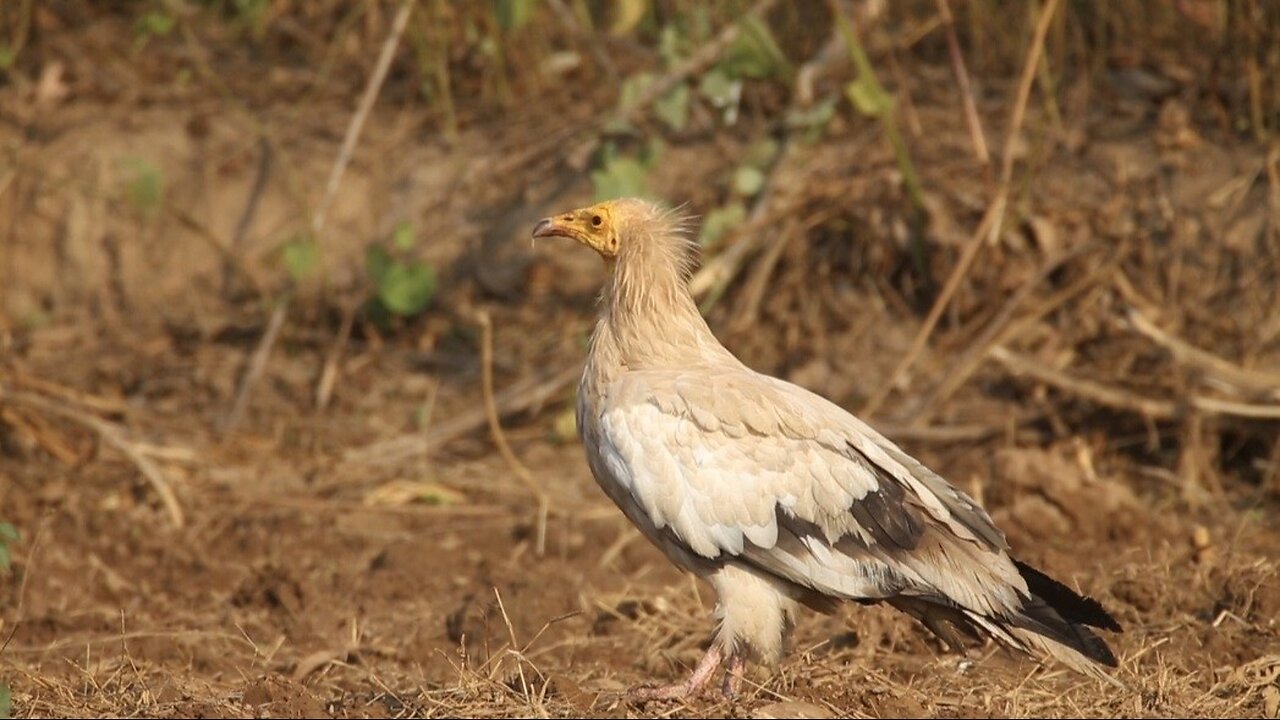
"Majestic Egyptian Vulture: Nature's Cleanup Crew in Action"
The Egyptian vulture (Neophron percnopterus) is a striking bird of prey known for its distinctive appearance and vital role in the ecosystem. Here’s an overview of its key characteristics and importance:
Physical Features:
Size: Medium-sized vulture, with a wingspan of about 1.65–1.7 meters (5.4–5.6 feet).
Plumage: Adults have white plumage with contrasting black flight feathers, a sharp contrast when they soar in the sky.
Head: Its small, bare, yellowish face is unmistakable, with piercing dark eyes.
Beak: The slender, hooked beak is perfectly adapted to scavenging.
Tail: A wedge-shaped tail, adding to its aerodynamic form in flight.
Behavior and Feeding:
Diet: Egyptian vultures are scavengers, primarily feeding on carrion (dead animals), which helps prevent the spread of disease by cleaning up decaying matter in their environment.
Tools: Uniquely among birds, Egyptian vultures are known for using tools. They use rocks to break open large eggs, such as those of ostriches.
Role in the Ecosystem: They play a crucial role in maintaining environmental health by consuming waste and reducing the presence of harmful bacteria and pathogens in decaying carcasses.
Habitat and Range:
Geographic Distribution: These vultures are widespread, found across southern Europe, North Africa, and parts of the Middle East and Central Asia. They prefer open landscapes like savannas, deserts, and semi-arid areas.
Migration: Many populations of Egyptian vultures are migratory, traveling between breeding and wintering grounds.
Conservation Status:
Threats: The Egyptian vulture is currently classified as "Endangered" by the IUCN. Major threats include habitat destruction, poisoning (often due to ingesting lead or toxins from carcasses), and collisions with wind turbines or power lines.
Conservation Efforts: Conservationists are working to protect this species through breeding programs, anti-poisoning campaigns, and habitat preservation.
Cultural Significance:
Symbolism: In ancient Egypt, the vulture was a symbol of protection and motherhood, often associated with the goddess Nekhbet. Egyptian vultures were revered for their role as nature’s cleaners, safeguarding the environment.
This species is a fascinating example of how nature's less glamorous creatures play a vital part in maintaining ecosystem balance, and their majestic presence in the wild highlights the interconnectedness of all life.
-
 11:26
11:26
stateofdaniel
2 days agoGavin Newsom DESTROYS His Presidential Ambitions with a SINGLE Photo
130K43 -
 23:40
23:40
Nikko Ortiz
16 hours agoYou Wont Survive Earths Coldest Village...
94.5K17 -
 8:51
8:51
MattMorseTV
14 hours ago $13.70 earnedTrump’s $12 Billion COUNTER-PUNCH.
43.4K60 -
 2:04:48
Side Scrollers Podcast
22 hours agoRIP Blabs + Hasan ROASTED at Streamer Awards + Xbox HUMILIATED... Again + More | Side Scrollers
94.8K19 -
 2:46:29
MetatronGaming
3 days agoNo I'm Not Human PART 1
28.4K3 -
 20:04
20:04
GritsGG
18 hours agoNew Factory POI is TOUGH! Most Winning Player's POV!
25.5K -
 1:39:49
PandaSub2000
14 hours agoBehemoth - Part I | PSVR 2000 (Edited Replay)
28.5K1 -
 47:55
47:55
TruthStream with Joe and Scott
21 hours agoDecoding Andalusia Spain with David Mahoney! Part 1 of 3 with commentary by Joe and Lisa Schermerhorn. Premiers 12/8 10 am pacific
28.9K7 -
 LIVE
LIVE
Lofi Girl
3 years agolofi hip hop radio 📚 - beats to relax/study to
412 watching -
 3:28:47
FreshandFit
20 hours agoShe CLAIMS She's A High Value Woman. But Gets A RUDE Awakening...
282K82