Chemical Hazard Recognition_ TRIC
**Chemical Hazard Recognition: TRIC**
The acronym **TRIC** can be used as a systematic approach to recognize and address chemical hazards. It stands for **Toxicity, Reactivity, Ignitability, and Corrosivity**. Here's how each component helps in chemical hazard recognition:
---
### **1. Toxicity**
- **Definition**: The potential of a chemical to cause harm to living organisms through inhalation, ingestion, or skin contact.
- **Indicators**:
- Pictograms or labels indicating "Toxic," "Harmful," or "Dangerous."
- Consult the Safety Data Sheet (SDS) for information on lethal doses (LD50) and permissible exposure limits (PEL).
- **Recognition**:
- Examples: Carbon monoxide, cyanide, and pesticides.
- Observe symptoms like dizziness, nausea, or irritation.
---
### **2. Reactivity**
- **Definition**: The chemical's tendency to react violently or release energy when exposed to certain conditions (e.g., heat, water, or other chemicals).
- **Indicators**:
- Terms like "Unstable," "Explosive," or "Reactive" on labels.
- SDS section on stability and reactivity.
- **Recognition**:
- Examples: Sodium reacts with water; peroxides are shock-sensitive.
- Look for storage warnings like "Keep away from heat or incompatible substances."
---
### **3. Ignitability**
- **Definition**: The ability of a chemical to catch fire under certain conditions.
- **Indicators**:
- Flashpoint data on the SDS.
- Flammable or combustible warnings.
- Pictograms like the flame symbol.
- **Recognition**:
- Examples: Gasoline, ethanol, and acetone.
- Check for proper grounding and storage in fire-safe cabinets.
---
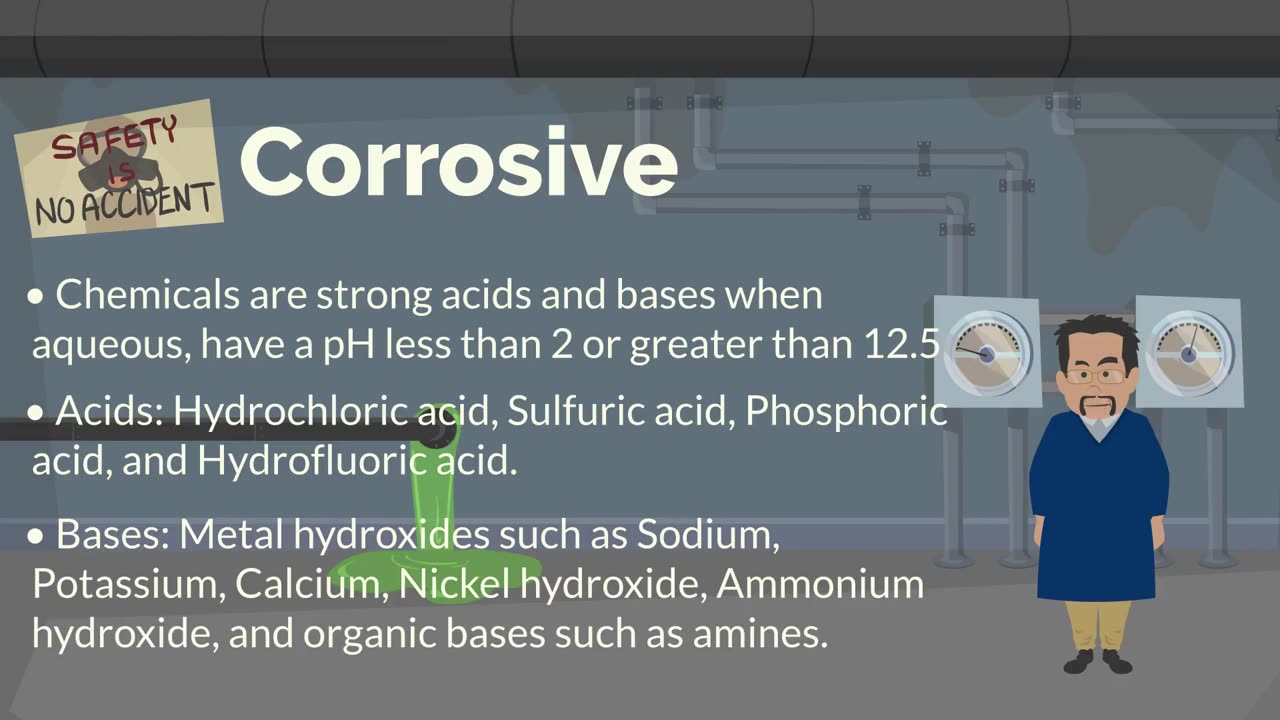
### **4. Corrosivity**
- **Definition**: The ability of a chemical to destroy or irreversibly damage materials, including skin and metals.
- **Indicators**:
- Pictograms or warnings indicating "Corrosive."
- SDS sections on handling precautions.
- **Recognition**:
- Examples: Sulfuric acid, sodium hydroxide, and hydrochloric acid.
- Observe physical signs of damage to containers or PPE.
---
### **Application of TRIC in Safety**
1. **Assessment**: Use TRIC to evaluate the potential risks of chemicals during storage, transportation, and usage.
2. **Training**: Educate employees about recognizing hazards and understanding labels and SDS.
3. **Controls**: Implement engineering controls (e.g., fume hoods), administrative controls (e.g., safe work practices), and PPE to mitigate risks.
Would you like this concept expanded into a training presentation or animation script?
-
 1:35
1:35
HSESafetyInformation
1 year agoMutton Chops two ways- baked & grilled Recipe by Food Fusion (Eid Recipe)
87 -
 18:09
18:09
World2Briggs
5 hours ago $0.45 earnedBlue Cities vs Red States: Why People Move Opposite Their Politics
14.7K2 -
 11:05
11:05
Amy Dangerfield
2 days ago $0.58 earnedAmy Finally RESPONDS to Groypette Allegations
8067 -
 21:13
21:13
Stephen Gardner
4 hours agoPam Bondi’s BIG MISTAKE – Trump MUST Fix This NOW!
45.8K71 -
 11:06
11:06
Clyde Do Something
6 hours ago $2.44 earnedMentally Unstable Man Commits FATAL Shooting in Rhode Island
36.5K6 -
![[Ep 848] Another Shooting, Another Trans | Islam vs US Dogs | Guest Sam Anthony [your]NEWS](https://1a-1791.com/video/fww1/0b/s8/1/2/R/x/0/2Rx0z.0kob-small-Ep-848-Another-Shooting-Ano.jpg) LIVE
LIVE
The Nunn Report - w/ Dan Nunn
3 hours ago[Ep 848] Another Shooting, Another Trans | Islam vs US Dogs | Guest Sam Anthony [your]NEWS
205 watching -
 1:33:29
The HotSeat With Todd Spears
3 hours agoEP 252: What Bible Are YOU Reading????
23.8K20 -
 1:04:50
DeVory Darkins
5 hours agoPolice Chief confirms SHOCKING details regarding Rhode Island Fatal shooting
161K50 -
 2:48:28
Decoy
5 hours agoNick just found something in CA..
42.3K3 -
 19:19
19:19
Robbi On The Record
4 days ago $6.64 earnedWhy You’re Tired, Stressed & Gaining Weight
64.1K5