Trenching and Excavation Training
### **Trenching and Excavation Safety Training Outline**
This training program aims to educate workers about the hazards of trenching and excavation activities and provide practical knowledge to minimize risks and comply with safety standards.
---
### **1. Introduction to Trenching and Excavation Safety**
- **Purpose of training:**
- Protect workers from potential hazards.
- Ensure compliance with OSHA standards (e.g., OSHA 1926 Subpart P).
- **Definition:**
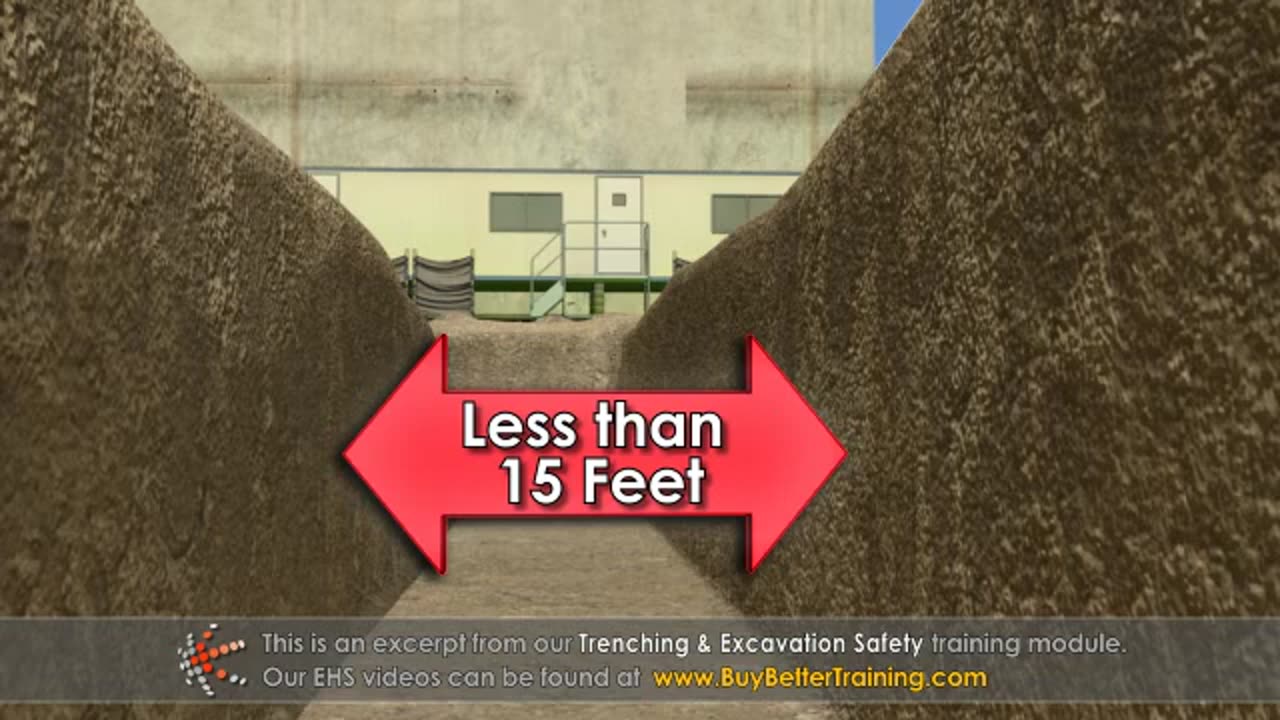
- **Trench:** A narrow excavation (depth greater than width, less than 15 feet wide).
- **Excavation:** Any man-made cut, cavity, trench, or depression in the earth's surface.
- **Importance of safety in trenching and excavation:**
- Risks of collapse, injuries, and fatalities.
- Highlight relevant statistics.
---
### **2. Hazards Associated with Trenching and Excavation**
- **Cave-ins:** The most common and deadly hazard.
- **Falling loads:** Tools, equipment, or materials falling into the trench.
- **Hazardous atmospheres:** Lack of oxygen, toxic gases, or flammable materials.
- **Water accumulation:** Flooding or erosion weakening trench walls.
- **Utility strikes:** Contact with underground utilities like gas, water, or electrical lines.
- **Vehicular hazards:** Equipment or traffic near the excavation site.
---
### **3. Pre-Planning and Site Preparation**
- **Competent person:** A trained individual responsible for identifying hazards and implementing corrective measures.
- **Pre-work inspections:**
- Assess soil type and stability.
- Identify underground utilities using locators or utility maps.
- Evaluate weather conditions.
- **Permits and notifications:** Ensure required permits are obtained and notifications to local utility companies are made.
---
### **4. Protective Systems**
- **Types of protective systems:**
- **Sloping:** Cutting the trench walls at an angle away from the excavation.
- **Shoring:** Installing supports to prevent cave-ins.
- **Shielding:** Using trench boxes to protect workers from collapsing walls.
- **Selection of protective systems based on:**
- Soil classification.
- Depth and width of the trench.
- Water conditions.
---
### **5. Soil Classification**
- **Types of soil:**
- **Stable rock:** Natural solid material.
- **Type A soil:** Most stable (e.g., clay, silty clay).
- **Type B soil:** Medium stability (e.g., silt, sandy clay).
- **Type C soil:** Least stable (e.g., gravel, sand).
- **Testing methods:**
- Manual (visual inspection, pocket penetrometer).
- Laboratory analysis.
---
### **6. Safe Work Practices**
- **Access and egress:**
- Ladders, ramps, or stairways must be provided every 25 feet for trenches deeper than 4 feet.
- **Distance from trench edges:**
- Place spoil piles, tools, and equipment at least 2 feet away.
- **Monitoring conditions:**
- Continuous assessment of the trench, especially after rain or vibrations.
- **Prohibited activities:**
- No working under suspended loads.
- No unprotected entry into trenches deeper than 5 feet.
---
### **7. Emergency Preparedness**
- **Response to cave-ins:**
- Do not attempt to rescue trapped workers without proper equipment and training.
- Call emergency services immediately.
- **First aid:** Treat injuries while waiting for professional help.
- **Evacuation plans:** Establish clear communication and exit strategies.
---
### **8. Roles and Responsibilities**
- **Workers:**
- Follow instructions and use protective systems.
- Report hazards or unsafe conditions immediately.
- **Supervisors:**
- Conduct regular inspections.
- Ensure protective systems are in place and workers are trained.
- **Competent person:**
- Evaluate soil, protective systems, and overall safety.
---
### **9. Equipment Safety**
- **Heavy machinery:** Ensure proper operation and regular maintenance.
- **Utility detection tools:** Use equipment to locate underground hazards accurately.
- **Protective gear:** Wear appropriate PPE (helmets, steel-toed boots, high-visibility clothing).
---
### **10. Regulatory Compliance**
- Overview of OSHA trenching and excavation standards:
- Protective system requirements.
- Inspections by a competent person.
- Proper design and depth limits for trenches.
---
### **11. Hands-On Training**
- **Site walkthrough:** Identify potential hazards in a simulated or real trench site.
- **Soil testing demonstration:** Perform simple soil classification tests.
- **Protective system installation:** Show how to set up trench boxes or shoring systems.
---
### **12. Assessment and Certification**
- Conduct a written or practical evaluation.
- Issue certificates for successful participants.
---
Would you like this training tailored for a specific industry or include detailed hands-on exercises? Let me know!
-
 1:35
1:35
HSESafetyInformation
11 months agoMutton Chops two ways- baked & grilled Recipe by Food Fusion (Eid Recipe)
85 -
 LIVE
LIVE
lunaticoin
7 hours agoWhen Muun? con Dario Sneidermanis en PlanB Forum El Salvador
324 watching -
 1:04:57
Peter Schiff
6 hours agoPlan ₿ Forum El Salvador 2026 – Day 2
84.9K6 -
 58:24
58:24
LFA TV
7 hours agoTHE CREST REPORT LIVE ON LFA | 1.31.26 @1PM EST
26.5K6 -
 20:37
20:37
Simply Bitcoin
7 hours ago $2.23 earnedRod Roudi Interview at Plan B El Salvador 2026
23.2K -
 4:03:01
LFA TV
18 hours agoRUMBLE RUNDOWN with JEREMY HERRELL SHAWN FARASH 1.31.25 9AM
132K21 -
 8:23:28
FyrBorne
9 hours ago🔴The Division Live Gameplay: Wrapping Up NYC, then off to Washington DC
34.5K2 -
 1:22:29
I_Came_With_Fire_Podcast
13 hours agoKratos Built the Navy’s Unbeatable Unmanned Aircraft
29K1 -
 29:57
29:57
Simply Bitcoin
7 hours ago $3.24 earnedTone Vays Interview at Plan B El Salvador 2026
59.3K3 -
 42:55
42:55
Simply Bitcoin
7 hours ago $4.38 earnedJack Mallers Interview at Plan B El Salvador 2026
65.6K1