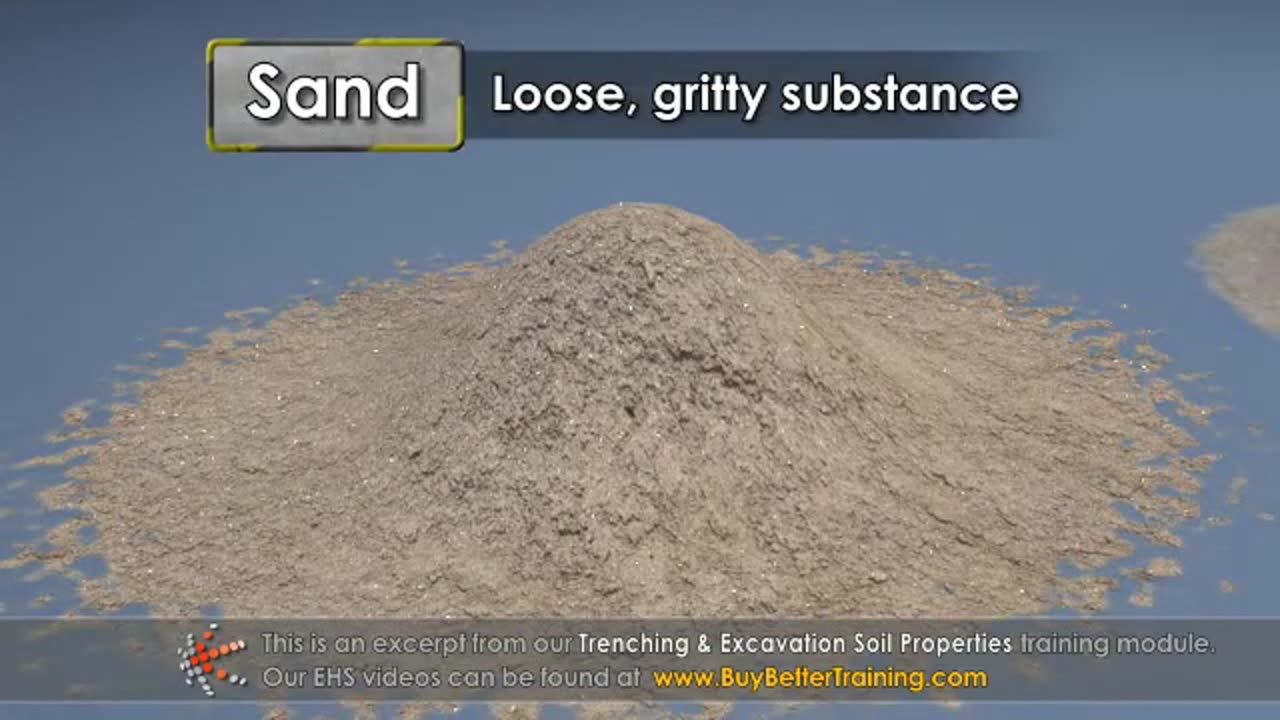
Trenching and Excavation - Soil Properties Training
### **Trenching and Excavation: Soil Properties Training Outline**
This training focuses on understanding soil properties critical for trenching and excavation safety. Recognizing and classifying soil types helps prevent cave-ins, the leading cause of injuries and fatalities in excavation work.
---
### **1. Introduction to Soil Properties**
- **Objective of training:**
- Teach workers and supervisors how to identify and classify soil.
- Ensure the correct selection and application of protective systems.
- **Why soil properties matter:**
- Soil stability determines the likelihood of a trench collapse.
- Proper assessment minimizes hazards and ensures compliance with safety regulations.
---
### **2. Soil Hazards in Trenching and Excavation**
- **Cave-ins:** Resulting from unstable or improperly classified soil.
- **Water in soil:** Weakens stability and increases risks.
- **Vibrations:** From machinery or nearby traffic that can destabilize soil.
- **Heavy loads:** Applied pressure from equipment or spoil piles near trench edges.
---
### **3. Soil Classification**
#### **Types of Soil (Based on OSHA Standards):**
- **Stable rock:** Natural solid material capable of sustaining vertical excavation walls.
- **Type A soil:**
- Most stable.
- Examples: Clay, silty clay, and hardpan.
- Can hold its shape in vertical excavations.
- **Type B soil:**
- Moderately stable.
- Examples: Silt, sandy loam, medium clay, angular gravel.
- Typically requires protective measures.
- **Type C soil:**
- Least stable.
- Examples: Gravel, sand, and saturated soils.
- Most prone to cave-ins and requires the highest level of protective systems.
#### **Factors Influencing Soil Stability:**
- **Cohesion:** Ability of soil particles to stick together (e.g., clay vs. sand).
- **Moisture content:** Affects cohesion and stability.
- **Grain size:** Impacts permeability and structural integrity.
- **Slope and depth:** Deeper and steeper excavations increase risks.
---
### **4. Soil Testing Methods**
- **Visual Inspection:**
- Look for signs of instability: Cracks, fissures, and water seepage.
- Observe soil texture and moisture level.
- **Manual Testing:**
- **Pocket penetrometer:** Measures compressive strength.
- **Thumb test:** Press thumb into soil to assess consistency.
- **Dry strength test:** Examine soil fragments' ability to break apart.
- **Plasticity test:** Roll soil into threads to check for pliability.
- **Advanced Laboratory Tests:** Used for critical projects requiring precise soil analysis.
---
### **5. Protective Systems Based on Soil Properties**
- **Stable rock or Type A soils:** May allow steeper slopes with fewer protective measures.
- **Type B soils:** Require more gradual slopes, shoring, or trench boxes.
- **Type C soils:** Necessitate protective systems like trench shields and sloping to at least 1½:1 (horizontal to vertical).
---
### **6. Recognizing Hazardous Soil Conditions**
- **Waterlogged or saturated soil:** Increases weight and reduces stability.
- **Previously disturbed soil:** Less cohesive and more prone to shifting.
- **Soil layering:** Different layers of soil types can reduce overall stability.
- **Weather impact:** Rain, freeze-thaw cycles, or drought conditions can alter soil properties quickly.
---
### **7. Competent Person's Role in Soil Classification**
- **Responsibilities:**
- Perform soil analysis before excavation begins.
- Monitor conditions continuously during excavation activities.
- Adjust protective measures as needed when soil properties change.
- **Knowledge required:** Understanding of soil mechanics, testing methods, and OSHA standards.
---
### **8. Hands-On Training**
- **Soil identification exercises:**
- Classify soil samples into Type A, B, or C categories.
- Perform pocket penetrometer and plasticity tests.
- **Simulated trench setup:**
- Demonstrate how soil classification affects protective system design.
- Discuss real-world examples of trench failures due to improper soil analysis.
---
### **9. Regulatory Compliance**
- Overview of OSHA requirements for soil classification:
- Soil testing before trenching starts.
- Daily and as-needed inspections by a competent person.
- Documentation of soil conditions and protective systems used.
---
### **10. Case Studies and Lessons Learned**
- Analyze real-life trenching incidents:
- Causes of collapse related to soil misclassification.
- Corrective actions and prevention strategies.
---
### **11. Assessment and Certification**
- Conduct a written or practical evaluation to assess understanding of soil properties.
- Issue certificates to participants who demonstrate competency.
---
Would you like additional emphasis on testing methods or real-world examples for this training? Let me know!
-
 7:58
7:58
HSESafetyInformation
9 months agoAuthentic Peshawari Rosh _ Namkeen Gosht Recipe __ Traditional KPK and Baluchistan
801 -
 57:27
57:27
Sarah Westall
1 hour agoWhat Congress Isn’t Saying About UFO Disclosure — And 3I/ATLAS w/ Ron James
3.09K1 -
 LIVE
LIVE
GritsGG
2 hours ago#1 Warzone Victory Leaderboard! 203+ Ws !
76 watching -
 LIVE
LIVE
VapinGamers
2 hours ago $0.22 earnedMegaBonk and Risk of Rain 2 - The Flu Cometh! - !rumbot !music
124 watching -
 LIVE
LIVE
Due Dissidence
12 hours agoBari Weiss SLAMMED For Erika Kirk Town Hall, MAGA World COMES FOR Candace, NEW EPSTEIN PHOTOS Drop
1,734 watching -
 1:44:10
Joker Effect
2 hours agoDRAMA NEWS: IDUNCLE nukes his own streaming career! @Antislave, AK, Nokster, RKStackz chime in!
8.41K -
 33:55
33:55
MattMorseTV
3 hours ago $0.57 earned🔴Trump announces MASSIVE LAWSUIT.🔴
25.6K57 -
![Surviving During The Ice Age [15,000 Years Ago]](https://1a-1791.com/video/fwe2/c0/s8/1/g/j/a/I/gjaIz.0kob-small-Surviving-During-The-Ice-Ag.jpg) 11:54
11:54
Forrest Galante
5 hours agoSurviving During The Ice Age [15,000 Years Ago]
48K19 -
 1:45:42
Total Horse Channel
3 hours agoWhat is Vaulting?
10K -
 DVR
DVR
IsaiahLCarter
21 hours ago $0.51 earnedA Night For Parental Rights. || APOSTATE RADIO 037 (w/Erin4ParentalRights, Dr. Travis Morrell)
10K1