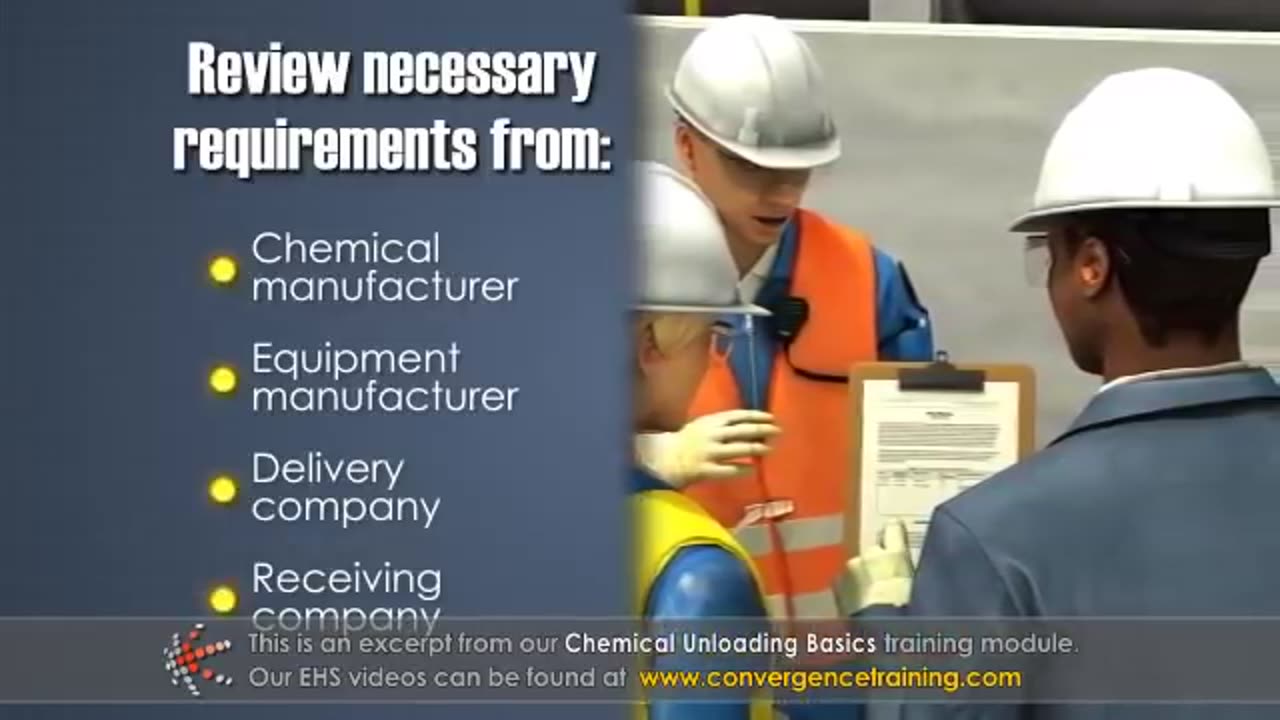
Chemical Unloading Basics Training
**Chemical Unloading Basics Training** is essential for employees who handle the unloading of hazardous chemicals to ensure safety, prevent accidents, and comply with regulatory standards. Here's an outline of the critical elements typically covered in this training program:
---
### **1. Objectives of the Training**
- To understand the risks associated with chemical unloading.
- To learn proper unloading procedures.
- To recognize and use safety equipment effectively.
- To identify and respond to potential hazards and emergencies.
---
### **2. Who Needs This Training?**
- Warehouse and plant operators.
- Tanker and bulk chemical truck drivers.
- Supervisors overseeing chemical handling processes.
- Maintenance staff working near unloading areas.
---
### **3. Understanding Chemicals and Their Risks**
- **Types of Chemicals Unloaded:**
- Acids, bases, solvents, gases, and other industrial chemicals.
- **Hazards Associated With Chemicals:**
- Flammability, reactivity, corrosivity, and toxicity.
- **Reading Safety Data Sheets (SDS):**
- Information on chemical properties, risks, and handling precautions.
---
### **4. Personal Protective Equipment (PPE)**
- Common PPE used during chemical unloading:
- Chemical-resistant gloves and suits.
- Goggles and face shields.
- Respiratory protection, if necessary.
- Inspection and proper use of PPE to ensure effectiveness.
---
### **5. Equipment and Tools for Chemical Unloading**
- Types of unloading systems:
- Hoses, pumps, valves, and connections.
- Inspection and maintenance of unloading equipment.
- Proper use of grounding and bonding to prevent static discharge.
---
### **6. Step-by-Step Unloading Procedures**
- **Preparation:**
- Verifying permits, documentation, and pre-unloading inspections.
- **Unloading:**
- Connecting equipment securely.
- Monitoring pressure, flow rates, and chemical levels.
- **Post-Unloading:**
- Disconnecting equipment safely.
- Cleaning and securing the unloading area.
---
### **7. Emergency Preparedness and Response**
- Identifying spills, leaks, or other incidents.
- Using spill kits and containment measures.
- Evacuation procedures and emergency shutdown processes.
- Reporting incidents to supervisors and regulatory agencies.
---
### **8. Regulatory Compliance**
- Overview of applicable regulations, such as:
- OSHA's Hazard Communication Standard.
- EPA regulations (e.g., Spill Prevention, Control, and Countermeasure [SPCC]).
- Local or industry-specific requirements.
- Documentation and record-keeping for unloading operations.
---
### **9. Best Practices for Chemical Unloading**
- Maintaining clear communication with all team members.
- Keeping the unloading area clean and organized.
- Regular training updates and drills to reinforce safety practices.
---
### **10. Duration and Certification**
- Training typically lasts 2–6 hours, depending on the depth and complexity of the materials.
- Certification is often provided upon completion, with periodic refresher courses required.
Would you like detailed guidance on a specific unloading process or related safety measures?
-
 1:35
1:35
HSESafetyInformation
11 months agoMutton Chops two ways- baked & grilled Recipe by Food Fusion (Eid Recipe)
85 -
 LIVE
LIVE
TheGuySwann
2 hours agoLive From Plan-B El Salvador - Guest Jonathan Bier
224 watching -
 LIVE
LIVE
LFA TV
13 hours agoRUMBLE RUNDOWN with JEREMY HERRELL SHAWN FARASH 1.31.25 9AM
3,964 watching -
 LIVE
LIVE
Wendy Bell Radio
5 hours agoPet Talk With The Pet Doc
474 watching -
 22:19
22:19
marcushouse
2 hours ago $0.10 earnedThe First Starship Version 3 Flight Target Revealed!
1.79K1 -
 28:10
28:10
Squaring The Circle, A Randall Carlson Podcast
5 hours agoThe Younger Dryas Series S1:E3.
2.96K3 -
 8:52
8:52
Hollywood Exposed
3 hours agoThis Kurt Russell Interview Goes Off Script Very Quickly
554 -
 4:01
4:01
scoutthedoggie
14 hours agoHospital Battle in Scotland
109K2 -
 16:24
16:24
Degenerate Jay
22 hours ago $2.12 earnedSpider-Man 4 Won't Be Made... Ever?
11.6K3 -
 26:50
26:50
RealReaper
1 day ago $5.43 earnedFallout S02E03 A Show By Morons For Morons
22.2K16