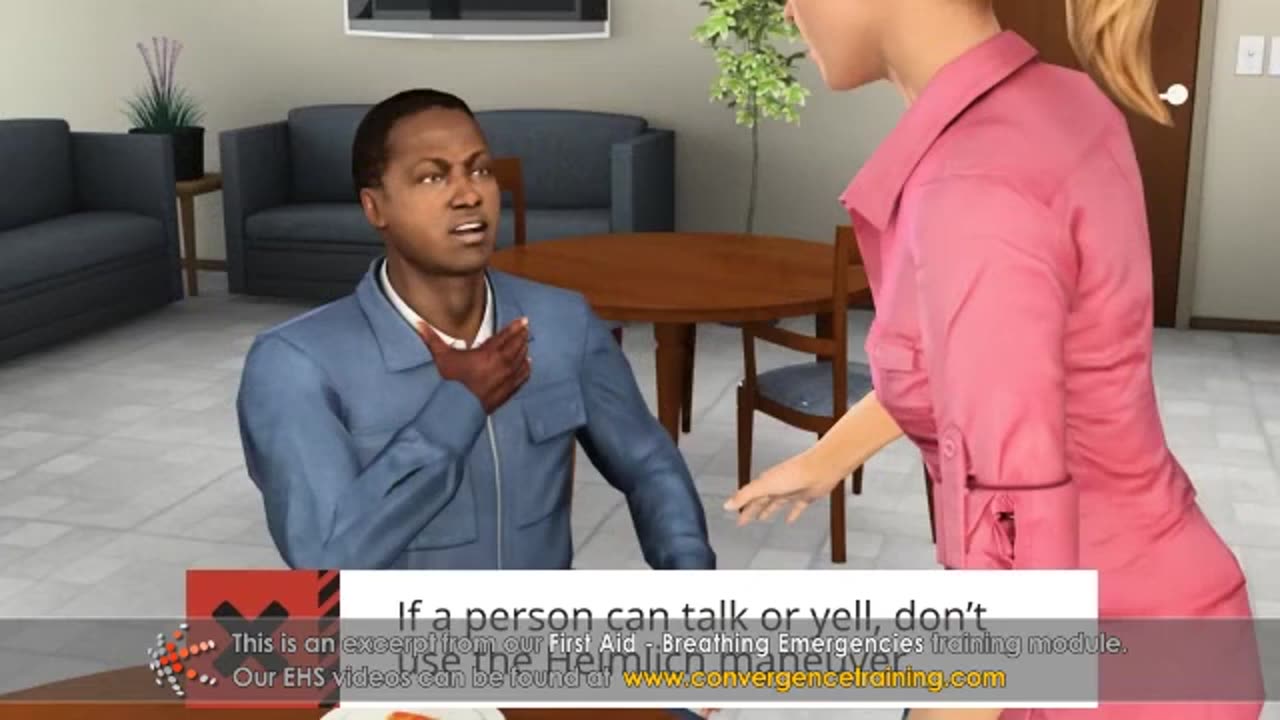
First Aid - Breathing Emergencies Training
### **First Aid for Breathing Emergencies Training**
Breathing emergencies, such as choking, respiratory distress, or cessation of breathing, require immediate and effective first aid to prevent severe injury or death. This training guide outlines the steps to assess, respond to, and manage breathing emergencies.
---
#### **Objectives of the Training**
1. Recognize signs and symptoms of breathing emergencies.
2. Learn first aid techniques for choking, asthma attacks, and other respiratory issues.
3. Understand when and how to call for professional medical assistance.
---
### **1. Types of Breathing Emergencies**
1. **Choking:**
- Caused by a foreign object blocking the airway.
- Signs: Inability to speak, high-pitched noises, clutching the throat, or turning blue.
2. **Asthma Attack:**
- Triggered by allergens, exercise, or other factors causing airway constriction.
- Signs: Wheezing, coughing, shortness of breath, or chest tightness.
3. **Hyperventilation:**
- Rapid or deep breathing due to stress, anxiety, or underlying medical conditions.
- Signs: Dizziness, lightheadedness, tingling in the hands or feet.
4. **Severe Allergic Reactions (Anaphylaxis):**
- Caused by exposure to allergens like food, insect stings, or medication.
- Signs: Swelling of the throat or tongue, difficulty breathing, hives, or drop in blood pressure.
5. **Respiratory Arrest:**
- Complete cessation of breathing, often due to drowning, trauma, or cardiac arrest.
---
### **2. First Aid Steps for Breathing Emergencies**
#### **A. General Steps**
1. **Assess the Situation:**
- Check for danger and ensure the area is safe for yourself and the victim.
- Determine if the victim is responsive or unresponsive.
2. **Call for Help:**
- Dial emergency services (e.g., 911).
- If someone else is available, ask them to call while you provide care.
3. **Position the Victim:**
- If the victim is conscious, encourage them to sit upright to ease breathing.
- If unconscious, place them on their back on a firm surface and check for breathing.
---
#### **B. Specific Techniques**
1. **Choking (Conscious Adult or Child):**
- Perform the **Heimlich Maneuver (Abdominal Thrusts):**
1. Stand behind the victim and wrap your arms around their waist.
2. Make a fist with one hand and place it just above their navel.
3. Grasp your fist with your other hand and perform quick, upward thrusts.
4. Repeat until the object is expelled or the victim becomes unresponsive.
- **Infants:** Use 5 back blows followed by 5 chest thrusts (two fingers at the center of the chest).
2. **Asthma Attack:**
- Help the victim use their prescribed inhaler (typically 1-2 puffs, repeat as needed).
- Encourage slow, deep breathing.
- If no improvement after medication, seek emergency help.
3. **Anaphylaxis:**
- Use an epinephrine auto-injector (if available).
- Assist the victim in sitting upright unless they are dizzy or faint.
- Call emergency services immediately, even if symptoms improve.
4. **Hyperventilation:**
- Encourage the victim to slow their breathing by inhaling through their nose and exhaling through pursed lips.
- Reassure and calm them; remove any stressors.
5. **Respiratory Arrest:**
- **Perform Rescue Breathing (if trained):**
1. Check for a clear airway and remove visible obstructions.
2. Provide 2 rescue breaths, ensuring chest rise.
3. Begin CPR if there is no pulse.
---
### **3. Preventive Measures**
- Educate individuals on choking hazards and encourage careful eating practices.
- Encourage asthma patients to carry their inhalers.
- Identify and avoid potential allergens.
- Promote workplace safety to reduce risks of respiratory injuries.
---
### **4. Training Activities**
1. **Scenario Practice:**
- Simulate choking, asthma attacks, and other breathing emergencies. Use mannequins or role-play to practice first aid steps.
2. **Using Rescue Devices:**
- Teach the correct use of inhalers, epinephrine auto-injectors, and airway devices.
3. **CPR and Rescue Breathing Practice:**
- Provide hands-on training in CPR and rescue breathing techniques.
4. **Symptom Recognition Drill:**
- Present case studies or scenarios where participants identify symptoms and determine the best course of action.
---
### **Key Takeaways**
- Quick response can save lives in breathing emergencies.
- Always call for emergency help if symptoms are severe or do not improve.
- Practice regularly to ensure confidence and skill retention in emergency situations.
Let me know if you'd like additional resources like checklists, videos, or printable guides!
-
 6:43
6:43
HSESafetyInformation
11 months agoLahori Chanay Recipe - Lahori Cholay Recipe - Chana Chana Masala
68 -
 11:08:58
Plan ₿ Forum
8 days agoPlan ₿ Forum El Salvador 2026 – Day 1 Live from the WAGMI Stage
234K17 -
 2:46:22
Laura Loomer
7 hours agoEP168: STAGED?! Ilhan Omar Uses Fake "Attack" To Cover Up Somali Fraud
63.3K34 -
 3:02:11
Nerdrotic
9 hours ago $8.08 earnedHollywood STRIKES Again?! | Star Trek Crash and Burn | Cancel Disney Plus - Friday Night Tights 391
100K6 -
 1:05:53
Candace Owens
7 hours agoAND ANOTHER ONE: Charlie's Text On September 9th. | Candace Ep 299
103K558 -
 1:47:50
Kim Iversen
8 hours agoDon Lemon ARRESTED: Who Could Be Next?
63.9K145 -
 33:18
33:18
TheGuySwann
8 hours ago $1.16 earnedLive From Plan-B El Salvador - Guest Giacomo Zucco
53.3K1 -
 32:01
32:01
Stephan Livera
1 day ago $1.09 earnedStephan Livera hosts Plan B Podcast in El Salvador
47.3K3 -
 1:05:27
Russell Brand
12 hours agoMedia Manipulation and the Manufacturing of Reality — SF676
178K85 -
 38:31
38:31
Stephan Livera
1 day ago $1.72 earnedStephan Livera hosts Plan B Podcast in El Salvador
36.4K2