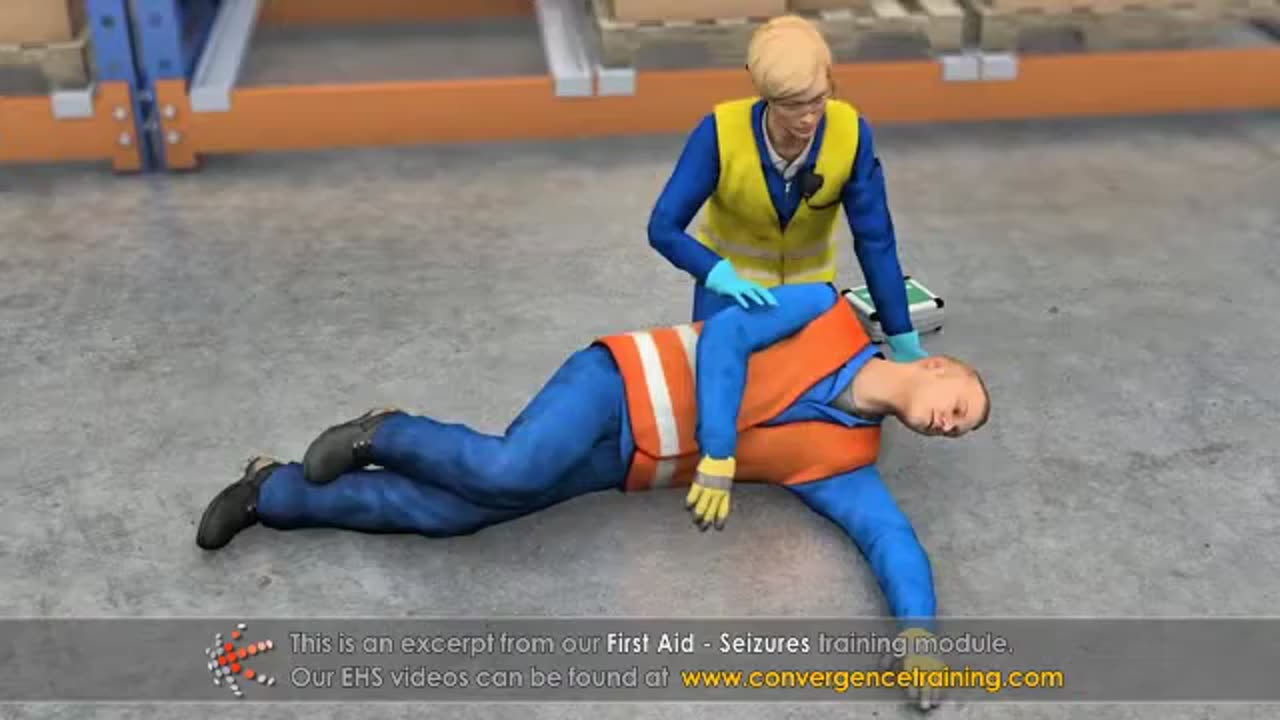
First Aid - Seizures Training
**First Aid Training for Seizures** equips individuals with the knowledge to provide effective care during and after a seizure episode. Below is a structured guide for training purposes:
---
## **1. Understanding Seizures**
- **What Are Seizures?**
- Sudden, uncontrolled electrical activity in the brain.
- Can cause changes in behavior, movements, sensations, or awareness.
- **Common Causes**:
- Epilepsy (most common cause).
- Fever (febrile seizures in children).
- Head injury, infections, or stroke.
- Low blood sugar, dehydration, or drug use.
- **Types of Seizures**:
- **Generalized Seizures**:
- Affect the entire brain. Example: tonic-clonic (grand mal) seizures.
- **Focal Seizures**:
- Affect one part of the brain, with symptoms localized to one area.
---
## **2. Recognizing Seizures**
### **Tonic-Clonic (Grand Mal) Seizure Symptoms**:
1. Sudden loss of consciousness.
2. Stiffening of the body (tonic phase).
3. Jerking movements (clonic phase).
4. Difficulty breathing or turning blue during the seizure.
5. Post-seizure confusion or fatigue (postictal state).
### **Absence Seizures (Petit Mal)**:
- Brief loss of awareness, often mistaken for daydreaming.
- May involve blinking or lip-smacking.
### **Focal Seizures**:
- Muscle twitching or jerking in one part of the body.
- Unusual sensations or confusion.
---
## **3. Immediate First Aid for Seizures**
### **DO**:
1. **Stay Calm**:
- Seizures are usually not life-threatening.
2. **Protect the Person from Injury**:
- Move objects away from them (furniture, sharp items).
- Cushion their head with a folded item, such as a jacket or towel.
3. **Positioning**:
- Turn the person onto their side (recovery position) to prevent choking.
- Ensure their airway is clear, but **do not force anything into their mouth**.
4. **Time the Seizure**:
- Most seizures last 1–3 minutes.
- Note the time and duration to provide information to medical professionals.
5. **Stay with Them**:
- Offer reassurance as they regain consciousness.
- Keep the area quiet and calm.
---
### **DO NOT**:
- **Put Anything in Their Mouth**:
- It is a myth that people can swallow their tongue.
- Placing objects in the mouth can cause choking or injury.
- **Restrict Movements**:
- Let the seizure run its course; restraining them can cause harm.
- **Perform CPR**:
- Only necessary if they are not breathing after the seizure ends.
---
## **4. When to Call Emergency Services**
Call 911 or local emergency services if:
- The seizure lasts more than **5 minutes**.
- The person has multiple seizures in a row without regaining consciousness.
- It is their **first seizure**.
- They have difficulty breathing or significant injury during the seizure.
- The person has a known condition, such as diabetes or pregnancy.
---
## **5. Post-Seizure Care (Recovery Phase)**
1. **Stay with the Person**:
- They may be confused, drowsy, or emotional after the seizure.
- Offer reassurance and a calm environment.
2. **Check for Injuries**:
- Look for cuts, bruises, or head injuries.
3. **Ensure Safe Recovery**:
- Help them sit up or rest once they are fully conscious.
- Offer water only after they are alert.
4. **Avoid Overstimulation**:
- Keep the area quiet and dimly lit.
5. **Encourage Follow-Up**:
- Suggest they see a healthcare provider if this is their first seizure or if seizures have become more frequent.
---
## **6. Seizures in Specific Situations**
1. **Seizures in Water**:
- Support their head and bring them to safety as soon as possible.
- Check for breathing after the seizure ends.
2. **Seizures While Standing or Walking**:
- Ease the person to the ground to prevent falls.
3. **Febrile Seizures (in Children)**:
- Remove excess clothing and cool the child with a damp cloth.
- Seek medical attention to determine the cause of the fever.
---
## **7. Training Exercises**
1. **Role-Playing Scenarios**:
- Practice responding to a simulated seizure.
- Include different environments (e.g., at home, in public, or at work).
2. **Video Demonstrations**:
- Watch and discuss footage showing proper first aid for seizures.
3. **Timed Drills**:
- Emphasize quick yet calm responses, including timing the seizure and repositioning.
---
## **8. Addressing Myths**
- Myth: "You should restrain someone having a seizure."
- Fact: Restraining increases the risk of injury.
- Myth: "People can swallow their tongue during a seizure."
- Fact: The tongue cannot be swallowed; attempting to "save" it can cause harm.
---
## **9. Summary and Key Points**
- Stay calm and protect the person from harm.
- Do not place anything in their mouth or restrain them.
- Time the seizure and monitor breathing.
- Provide reassurance and care during recovery.
- Call emergency services for prolonged or complicated seizures.
---
Would you like additional materials, such as printable guides, symptom charts, or videos for this training?
-
 6:54
6:54
HSESafetyInformation
1 year ago6 Must Try Breakfast recipes By Food Fusion
471 -
![[Ep 848] Another Shooting, Another Trans | Islam vs US Dogs | Guest Sam Anthony [your]NEWS](https://1a-1791.com/video/fww1/0b/s8/1/2/R/x/0/2Rx0z.0kob-small-Ep-848-Another-Shooting-Ano.jpg) LIVE
LIVE
The Nunn Report - w/ Dan Nunn
2 hours ago[Ep 848] Another Shooting, Another Trans | Islam vs US Dogs | Guest Sam Anthony [your]NEWS
196 watching -
 LIVE
LIVE
The HotSeat With Todd Spears
1 hour agoEP 252: What Bible Are YOU Reading????
432 watching -
 1:04:50
DeVory Darkins
4 hours agoPolice Chief confirms SHOCKING details regarding Rhode Island Fatal shooting
140K35 -
 2:48:28
Decoy
3 hours agoNick just found something in CA..
29.9K2 -
 19:19
19:19
Robbi On The Record
4 days ago $6.19 earnedWhy You’re Tired, Stressed & Gaining Weight
54.1K5 -
 15:01
15:01
Tactical Advisor
6 hours agoVortex AMG 1-10x LPVO (FIRST LOOK)
17.3K4 -
 1:00:29
Timcast
5 hours agoRhode Island SHOOTER Identified As TRANS, Shot Family, America Is An INSANE ASYLUM
167K79 -
 1:12:59
Sean Unpaved
5 hours agoNew USC DC Gary Patterson Is WORKING 24/7! | UNPAVED
31.1K -
 1:12:05
BonginoReport
6 hours agoClean Up On Aisle AOC! - Scrolling w/ Hayley (Ep. 237) - 02/17/26
118K64