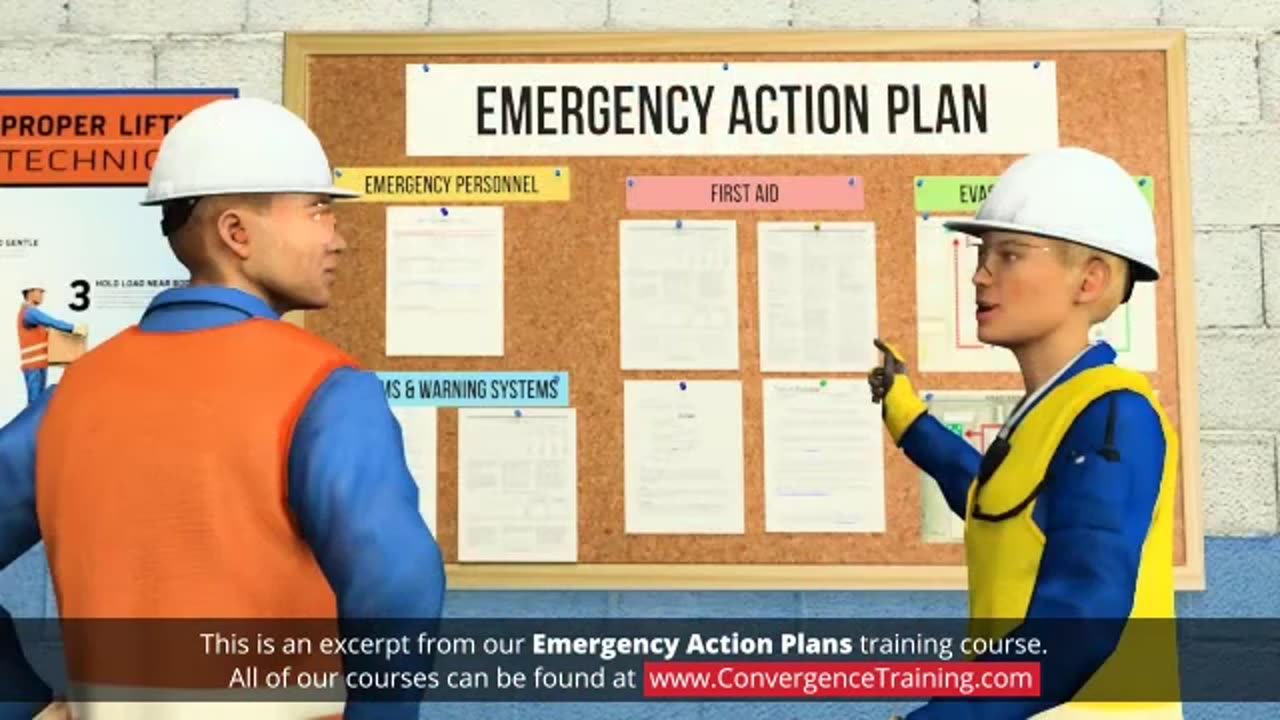
Emergency Action Plans Training
### **Emergency Action Plans (EAP) Training Guide**
**Objective**: Train employees and stakeholders to effectively respond to workplace emergencies through a comprehensive understanding of the Emergency Action Plan (EAP), ensuring safety and minimizing harm.
---
### **1. Understanding Emergency Action Plans (EAP)**
- **What is an EAP?**
A detailed document outlining procedures for handling workplace emergencies, including evacuations, medical crises, and natural disasters.
- **Purpose of an EAP**:
- Protect lives and property.
- Ensure quick and organized responses during emergencies.
- Comply with OSHA and local regulations.
---
### **2. Common Types of Workplace Emergencies**
- Fires and explosions.
- Natural disasters (earthquakes, floods, hurricanes, tornadoes).
- Medical emergencies (injuries, heart attacks, etc.).
- Hazardous material spills or leaks.
- Active shooter situations.
- Power outages or equipment failures.
---
### **3. Key Components of an Emergency Action Plan**
1. **Emergency Notification Procedures**:
- How to report emergencies (e.g., dialing 911, internal alarms).
- Communicating with local authorities, employees, and other stakeholders.
2. **Evacuation Procedures**:
- Clear evacuation routes and exits.
- Assembly points and headcount protocols.
- Assistance plans for individuals with disabilities.
3. **Roles and Responsibilities**:
- Emergency coordinators: Oversee response actions.
- Floor wardens: Assist with evacuation and headcounts.
- First-aid responders: Provide initial medical assistance.
4. **Shelter-in-Place Guidelines**:
- When to stay indoors and close windows and doors.
- Identify safe locations for sheltering.
5. **Fire and Medical Response**:
- Use of fire extinguishers (PASS method).
- First-aid basics and contacting emergency medical services.
6. **Shutdown Procedures**:
- Safely shutting down equipment to prevent additional hazards.
---
### **4. Communication and Notification Systems**
- **Alarms and Alerts**:
- Fire alarms, public address systems, or digital notifications.
- **Emergency Contact Lists**:
- Up-to-date contact information for key personnel and external responders.
- **Mass Communication Tools**:
- Use email, text, or apps for quick notifications.
---
### **5. Emergency Response Roles and Responsibilities**
- Assign specific roles, such as:
- **Emergency Coordinator**: Leads and organizes response efforts.
- **Evacuation Warden**: Ensures orderly evacuations and assists those in need.
- **Communications Officer**: Maintains contact with emergency services and staff.
- **First Responders**: Provide basic medical or hazard containment support.
---
### **6. Evacuation Procedures**
- **Evacuation Routes**:
- Clearly mark all exit paths with signs and lighting.
- Keep routes unobstructed at all times.
- **Assembly Points**:
- Identify safe gathering areas away from hazards.
- Conduct headcounts to ensure everyone is accounted for.
- **Special Considerations**:
- Develop plans for individuals with disabilities or limited mobility.
---
### **7. Training and Drills**
- **EAP Awareness Training**:
- Introduce the EAP to all employees, including new hires.
- Provide accessible copies of the EAP.
- **Emergency Drills**:
- Conduct regular fire drills, evacuation exercises, and specific scenario drills (e.g., active shooter, chemical spill).
- Review outcomes and identify areas for improvement.
- **Role-Specific Training**:
- Train emergency coordinators, wardens, and first responders on their specific duties.
---
### **8. First Aid and Emergency Supplies**
- **Emergency Kits**:
- First aid supplies, flashlights, batteries, water, non-perishable food, and communication devices.
- **Automated External Defibrillators (AEDs)**:
- Train staff on AED use for cardiac emergencies.
- **Personal Protective Equipment (PPE)**:
- Equip staff with gloves, masks, and other protective gear as needed.
---
### **9. Compliance and Updates**
- **Regulatory Compliance**:
- Ensure EAP meets OSHA and local safety standards.
- **Plan Reviews**:
- Review and update the EAP annually or after significant changes in operations or facilities.
- **Post-Emergency Evaluation**:
- Conduct reviews after emergencies to identify lessons learned and areas for improvement.
---
### **10. Practice Scenarios**
- Simulate real-life emergencies such as:
- A fire requiring evacuation.
- A chemical spill requiring shelter-in-place.
- A medical emergency requiring immediate first aid.
- Provide feedback after each scenario to improve readiness.
---
### **11. Key Takeaways for Participants**
- Always prioritize personal safety during emergencies.
- Follow the EAP procedures and instructions from coordinators or wardens.
- Stay calm and assist others when possible without compromising your safety.
---
Would you like this formatted as a checklist, a slide deck for presentation, or a detailed guide? I can also provide templates for evacuation maps, emergency contact lists, or drill logs.
-
 7:58
7:58
HSESafetyInformation
1 year agoAuthentic Peshawari Rosh _ Namkeen Gosht Recipe __ Traditional KPK and Baluchistan
891 -
 UPCOMING
Game On!
15 hours agoTiger Woods HINTS He May Return To Golf For THE MASTERS!
2422 -
 12:14
12:14
VSOGunChannel
17 hours ago $0.08 earnedRareBreed Might Lose Their Patent
2111 -
 37:44
37:44
Uncommon Sense In Current Times
16 hours agoMiracles, Evidence & the Flood with Cold Case Christianity Author J. Warner Wallace
7.08K1 -
 6:29
6:29
The Official Steve Harvey
16 hours agoHe Still Lives at Home… But Is He Building or Just Comfortable?
2571 -
 LIVE
LIVE
BEK TV
22 hours agoTrent Loos in the Morning - 2/28/2026
186 watching -
 23:24
23:24
DeVory Darkins
18 hours agoAuthorities release shocking update regarding Rhode Island shooter
24.2K15 -
 55:18
55:18
Coin Stories with Natalie Brunell
18 hours agoLyn Alden: Why This Bitcoin Cycle Was a Disappointment, And What Comes Next
9.93K4 -
 14:41
14:41
James Klüg
2 days agoAnti-ICE Activists RAGE QUIT After I Call Them Out
14.7K20 -
 16:12
16:12
Actual Justice Warrior
3 days agoSeattle Democrats SHOCKED After Minimum Wage BACKFIRES
17.2K40