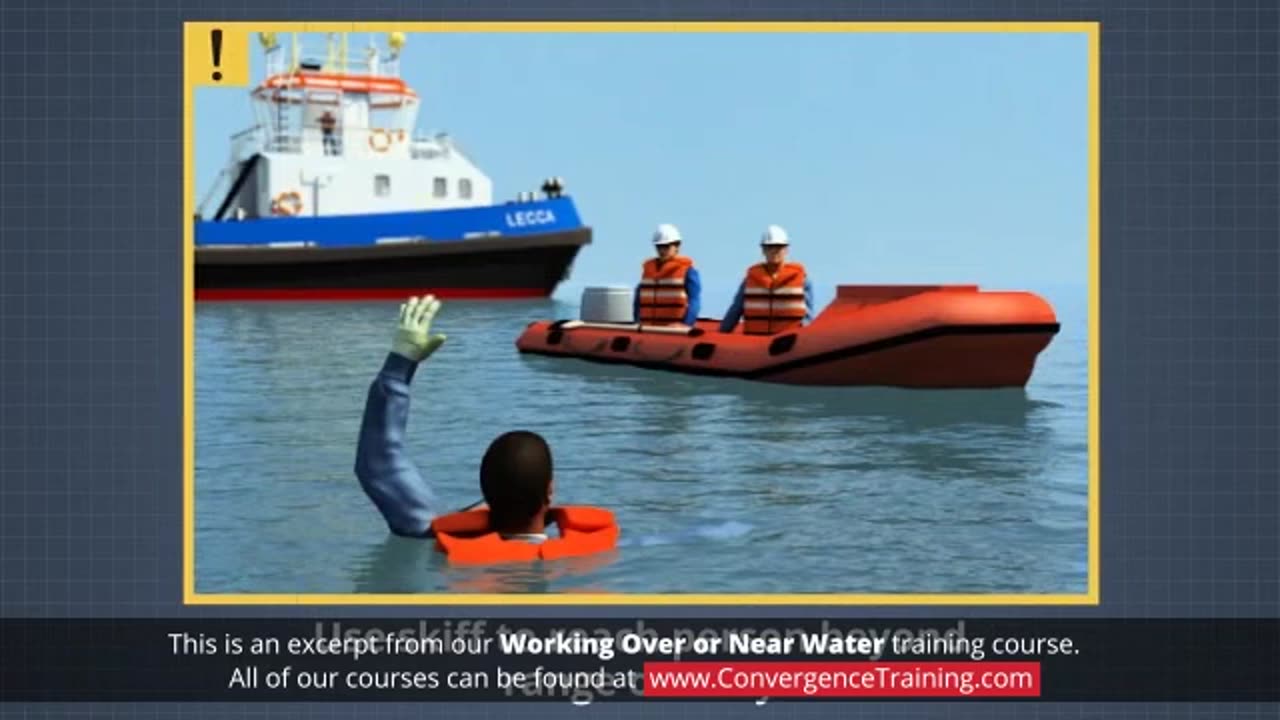
Working Over or Near Water Training
### **Working Over or Near Water Training Guide**
**Objective**: Equip workers with the skills and knowledge necessary to safely perform tasks over or near water, emphasizing hazard awareness, use of protective equipment, and emergency response procedures.
---
### **1. Importance of Water Safety Training**
- **Hazards**:
- Drowning risks.
- Hypothermia from cold water exposure.
- Slips, trips, and falls on wet surfaces.
- Strong currents or tides.
- **Regulatory Compliance**:
- Adherence to OSHA standards (e.g., 29 CFR 1926.106 for fall protection and life-saving equipment).
---
### **2. Hazard Identification**
- **Assess Worksite Risks**:
- Evaluate weather conditions, water currents, and depth.
- Identify potential slip hazards on docks, barges, or boats.
- Inspect equipment for potential failures.
- **Environmental Factors**:
- Be aware of water temperatures and potential wildlife hazards.
---
### **3. Personal Protective Equipment (PPE)**
- **Life Jackets or Personal Flotation Devices (PFDs)**:
- Ensure all workers wear U.S. Coast Guard-approved PFDs.
- Inspect PFDs regularly for damage or wear.
- **Fall Protection Systems**:
- Use harnesses and lanyards when working on elevated surfaces over water.
- Secure anchor points to prevent falls into water.
- **Other PPE**:
- Wear slip-resistant boots and gloves to maintain grip.
- Use helmets to protect against falling objects.
---
### **4. Safe Work Practices**
- **General Guidelines**:
- Maintain three points of contact when climbing onto docks, boats, or other platforms.
- Avoid running or horseplay near water.
- Use designated walkways and barriers.
- **Equipment Safety**:
- Secure tools and materials to prevent them from falling into the water.
- Avoid overloading boats or floating platforms.
- **Buddy System**:
- Never work alone; always have a coworker nearby for assistance.
---
### **5. Emergency Response Procedures**
#### **Rescue Plans**
- **Reach, Throw, Row, Go Method**:
1. **Reach**: Extend a pole, rope, or object to the person in the water.
2. **Throw**: Toss a buoyant object, such as a life ring, to them.
3. **Row**: Approach the person using a boat if possible.
4. **Go**: Enter the water only as a last resort if trained in rescue techniques.
- **Emergency Equipment**:
- Keep life rings, rescue lines, and throw bags readily available.
- Equip worksites with ladders for quick water exit.
#### **Medical Assistance**
- Perform CPR or first aid as needed until professional help arrives.
- Address hypothermia by warming the person and removing wet clothing.
---
### **6. Training on Survival Techniques**
- **Swimming Skills**:
- Teach workers basic swimming techniques and water survival skills.
- **Self-Rescue**:
- How to stay calm and conserve energy in the water.
- Use PFDs to float until rescued.
---
### **7. Use of Boats and Floating Platforms**
- **Boat Safety**:
- Conduct pre-use inspections for mechanical issues.
- Train workers on proper boarding, balancing, and operation.
- **Floating Platforms**:
- Ensure platforms are stable and securely anchored.
- Monitor weight limits to prevent capsizing.
---
### **8. Weather and Environmental Awareness**
- **Monitor Conditions**:
- Check weather forecasts for storms, high winds, or extreme temperatures.
- Adjust schedules to avoid working during hazardous conditions.
- **Tidal Awareness**:
- Understand tide charts and how tides can impact water levels and currents.
---
### **9. Post-Incident Reviews**
- Conduct reviews after incidents to identify causes and improve procedures.
- Document findings and use them to update training and safety protocols.
---
### **10. Drills and Exercises**
- **Rescue Drills**:
- Practice using life rings, throw bags, and rescue ropes.
- Simulate real-life scenarios to build confidence and preparedness.
- **Emergency Evacuations**:
- Practice evacuating from boats, platforms, or water-adjacent structures.
---
### **11. Key Takeaways**
- Always wear appropriate PPE, especially PFDs.
- Be aware of environmental hazards and changing weather conditions.
- Know emergency procedures, including rescue techniques and CPR.
- Use the buddy system and avoid working alone near water.
---
Would you like this material formatted as a checklist, presentation slides, or a printable guide? I can also include templates for rescue plans or inspection logs.
-
 7:58
7:58
HSESafetyInformation
1 year agoAuthentic Peshawari Rosh _ Namkeen Gosht Recipe __ Traditional KPK and Baluchistan
901 -
 1:02:14
The Culture War with Tim Pool
2 hours agoTRUMP LOSES | Timcast Noon LIVE
107K37 -
 LIVE
LIVE
MattMorseTV
2 hours ago $7.47 earned🔴Trump''s EMERGENCY Press Conference.🔴
4,992 watching -
 59:04
59:04
BonginoReport
3 hours agoExposing Big Food w/ Patrick & Ashley Sullivan - Scrolling w/ Hayley (Ep. 240) - 02/20/2026
62.6K15 -

Professor Nez
2 hours ago🚨MAJOR RULING: SCOTUS STABS Trump on Tariffs! TRUMP RESPONDS
8.51K4 -
 1:22:03
Steven Crowder
5 hours agoBREAKING: Supreme Court Rules on Trump's Tariffs
297K238 -
 2:07:16
Side Scrollers Podcast
4 hours agoSide Scrollers Podcast Live | Friday February 20th 2026
10.2K -
 1:44:51
The Dan Bongino Show
5 hours agoObama Deep Stater Melts Down In Vicious Attack (Ep. 2457) - 02/20/2026
472K573 -
 2:32:34
Nikko Ortiz
3 hours agoThis Is The Next Best Milsim... | Rumble LIVE
9.95K1 -
 LIVE
LIVE
LFA TV
17 hours agoLIVE & BREAKING NEWS! | FRIDAY 2/20/26
2,445 watching