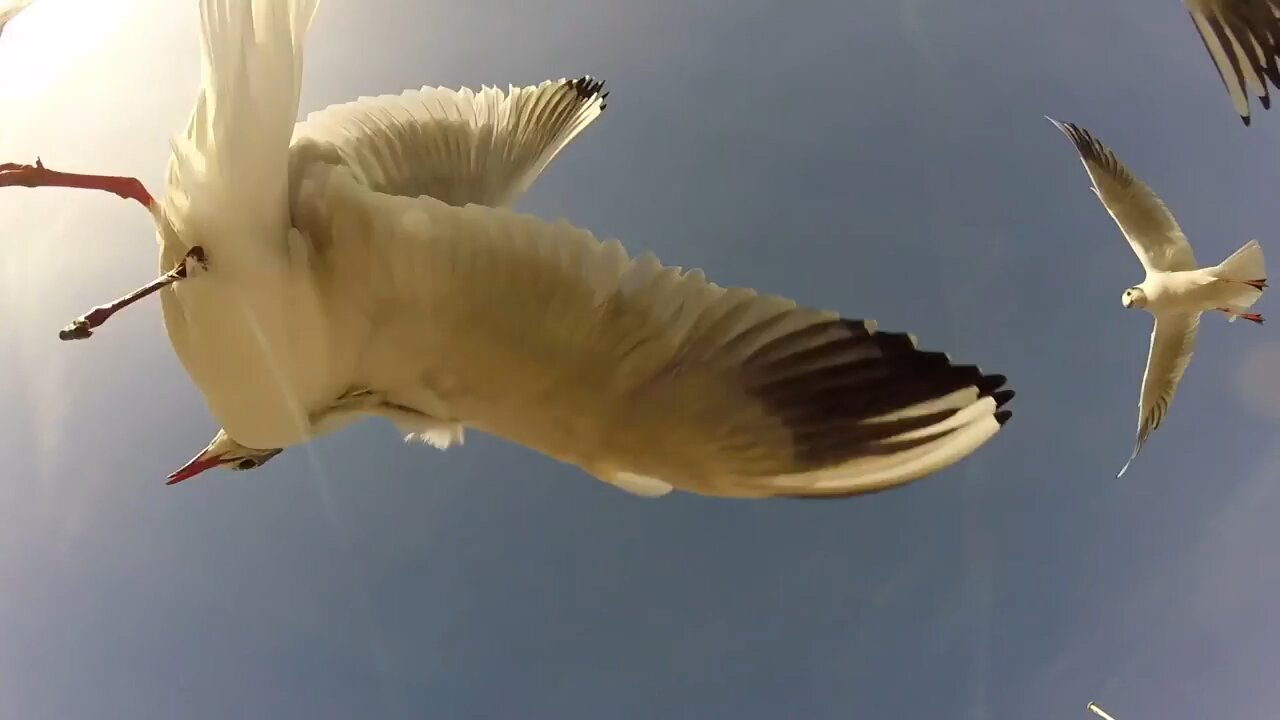
Chroicocephalus ridibundus Black-Headed Gull In Flight Slow Motion.
The black-headed gull (Chroicocephalus ridibundus) is a small gull that breeds in much of the Palearctic including Europe and also in coastal eastern Canada. Most of the population is migratory and winters further south, but some birds reside in the milder westernmost areas of Europe. Small numbers also occur in northeastern North America, where it was formerly known as the common black-headed gull. As is the case with many gulls, it was previously placed in the genus Larus.
The black-headed gull displays a variety of compelling behaviours and adaptations. Some of these include removing eggshells from the nest after hatching, begging co-ordination between siblings, differences between sexes, conspecific brood parasitism, and extra-pair paternity. They are an overwintering species, found in a variety of different habitats
This gull is 37–44 cm (14+1⁄2–17+1⁄2 in) long with a 94–110 cm (37–43+1⁄2 in) wingspan and weighs 190–400 g (6+3⁄4–14+1⁄8 oz).
In flight, the white leading edge to the wing is a good field mark. The summer adult has a chocolate-brown head (not black, although does look black from a distance), pale grey body, black tips to the primary wing feathers, and red bill and legs. The hood is lost in winter, leaving just two dark spots. Immature birds have a mottled pattern of brown spots over most of the body,[4] and a black band on the tail. There is no difference in plumage between the sexes.[5]
It breeds in colonies in large reed beds or marshes, or on islands in lakes, nesting on the ground.[5] Like most gulls, it is highly gregarious in winter, both when feeding or in evening roosts. It is not a pelagic species and is rarely seen at sea far from coasts.
The black-headed gull is a bold and opportunistic feeder. It eats insects, fish, seeds, worms, scraps, and carrion in towns, or invertebrates in ploughed fields with equal relish.[5] It is a noisy species, especially in colonies, with a familiar "kree-ar" call. Its scientific name means laughing gull.
This species takes two years to reach maturity. First-year birds have a black terminal tail band, more dark areas in the wings, and, in summer, a less fully developed dark hood. Like most gulls, black-headed gulls are long-lived birds, with a maximum age of at least 32.9 years recorded in the wild, in addition to an anecdote now believed of dubious authenticity regarding a 63-year-old bird
-
 LIVE
LIVE
GritsGG
4 hours ago#1 Warzone Victory Leaderboard! 203+ Ws !
360 watching -
 36:37
36:37
TampaAerialMedia
11 hours ago $0.33 earnedST AUGUSTINE | Florida's First Coast - The Beaches, Old Town, & Night of Lights
2.19K2 -
 LIVE
LIVE
iCkEdMeL
6 hours ago $69.39 earned🔴 BREAKING: Active Shooter 20 SHOT!! Reported at Brown University — Police Request Mass Rescues
2,103 watching -
 2:51
2:51
Memology 101
1 day ago $0.46 earnedTop EU official says the way to stop ILLEGAL migration is to make EVERYONE asking for a job LEGAL
3.26K15 -
 4:04:00
FrizzleMcDizzle
5 hours ago $1.63 earnedNEW VIDEO OUT NOW - A little NightReign for now
14.9K1 -
 1:08:51
Jeff Ahern
6 hours ago $2.65 earnedThe Saturday Show with Jeff Ahern
24.7K3 -
 LIVE
LIVE
GrimmHollywood
8 hours ago🔴LIVE • GRIMM HOLLYWOOD • GRIMMBAS • DAY 1 of 12 • GRIMMDY'S + GAMES RECON GOT ME • LINDY'S SHOW •
116 watching -
 LIVE
LIVE
NeoX5
6 hours agoIndies for the Holidays | Holiday Rush | Ep 8 | Rumble Gaming
77 watching -
 19:54
19:54
Professor Nez
6 hours ago🚨BIDEN MUST GO TO PRISON NOW! LEAKED Memo PROVES Immigration Plan
32.9K77 -
 2:01:23
Amish Zaku
5 hours agoArc Raiders - cash runs before reset week
17K