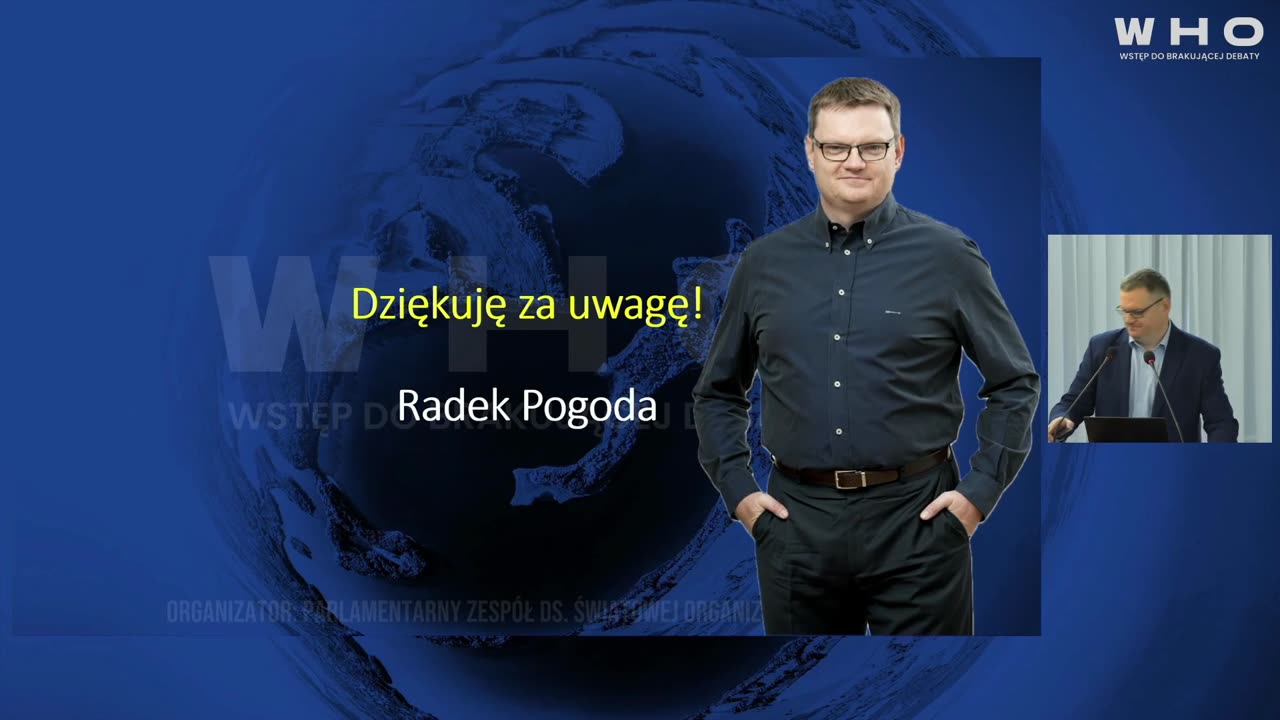
WHO - the background by Radek Pogoda
The World Health Organization (WHO for “World Health Organization”) is a United Nations specialized agency dealing with international public health issues, established with the best of intentions to help coordinate responses to major health problems and advise governments accordingly.
It was founded on April 7, 1948, two years later it had 60 member states, the number rose to 103 in 1960, and by 1980 WHO had 154 members. Poland - then the People's Republic of Poland - was introduced to the WHO by Comrade Bierut, adding the People' s Republic of Poland to the authoritarian member states mostly making up the organization. In the 1980s, the majority of WHO members - as many as 64% - were regime states. Today, the situation is not much better. In 2023, according to The Economist Intelligence Unit's Democracy Index, of the 167 countries in the WHO, only 14.4% of the countries are classified as “full democracies,” 29.9% of the countries are described as so-called “flawed democracies,” and the remaining countries are “hybrid regimes ‘ (20.4% of the countries in the ranking), and ’authoritarian regimes”, which account for as much as 35.3% of the member countries - the total of regime states is 55.7%.
WHO can create international laws that are binding on members, without the need to ratify resolutions or resolutions, laws that come into force by decision of most non-democratic states. An example is the International Health Regulations (IHR), an instrument of international law binding on member states, creating rights and obligations for all of them. Of course, the effectiveness of the agreements requires the consent of the members, but this consent is given in what is known as an opt-out procedure, meaning that if a state does not notify rejection or make reservations, then after a specified period in the resolution, the agreement automatically becomes binding, without debate or the need for parliamentary ratification.
For decades, we have witnessed a significant change in the trend of the intended noble mission of advising on health issues, as funding streams have shifted toward private financing. This has led the WHO to become a much more centralized and externally driven body, with private and corporate funders creating and directing programs. Noble in intent, its mission to advise on health issues has been disrupted for many years by the financial and personnel scandals that afflict WHO.
-
 LIVE
LIVE
Wendy Bell Radio
5 hours agoTrump is +5
7,217 watching -
 LIVE
LIVE
DML
17 minutes agoDML LIVE: Why We Are Losing Our Youth
126 watching -
 1:11:10
Chad Prather
12 hours agoThe Ripple Effect of a Changed Life: How God Uses Your Transformation
62.9K51 -
 1:40:06
MichaelBisping
10 hours agoBelieve You Me 660: UFC 323 Was A PROBLEM Ft. Chris "The Problem" Duncan
981 -
 8:03
8:03
Navy Media
4 days agoHow Aircraft Carriers Prepare 17,000 Meals A Day For 5,000 US Navy Sailors
3433 -
 LIVE
LIVE
LFA TV
13 hours agoLIVE & BREAKING NEWS! | TUESDAY 12/09/25
3,406 watching -
 13:32
13:32
China Uncensored
21 hours agoChina Just Messed Up BIG
27K16 -
 25:32
25:32
RealReaper
21 hours ago $2.39 earnedThe New Witcher Movie - The Rats Is Unbearably Cringe
18.7K6 -
 11:29
11:29
ARFCOM Reviews
19 hours ago $1.68 earnedSmith & Wesson Making a Comeback || S&W Model 19 No Lock
20.5K4 -
 2:55
2:55
Canadian Crooner
2 years agoPat Coolen | Christmas Blues
72.9K5