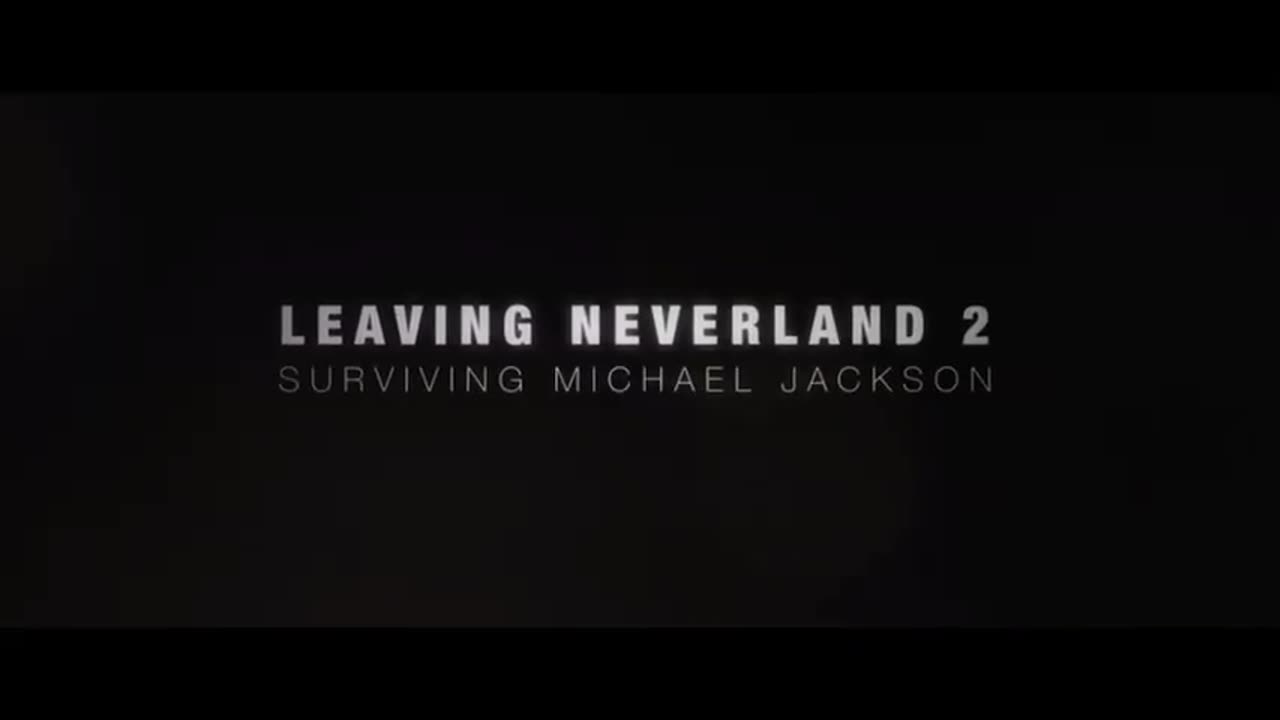
Leaving Neverland 2: Surviving Michael Jackson (2025) | Trailer
Continuing the story of Wade Robson and James Safechuck on their decade-long quest to have their day in court against Michael Jackson’s companies.
Produced by the award-winning AMOS Pictures and filmed over five years with full access to Wade, James, their families and legal teams, Leaving Neverland 2: Surviving Michael Jackson tells the story of a difficult journey and its many twists, turns and setbacks. Returning multi award-winning director Dan Reed documents the second stage of Wade and James’s quest which is now close to fruition.
The third and final film will cover the trial, scheduled for late 2026, thus completing the Leaving Neverland trilogy. If their cases are successful, the potential positive impact on the United States’ entertainment industry will be huge. Music and movie companies will no longer be able to shrug off responsibility when one of their stars sexually abuses a minor in their care.
The documentary also examines the impact of its 2019 predecessor Leaving Neverland and of Oprah Winfrey’s follow-up programme on the two men and their families, and on the hard-core MJ fan community.
#LeavingNeverland #SurvivingMichaelJackson
Leaving Neverland director Dan Reed says he has been targeted with thousands of death threats from Michael Jackson fans, as a result of making a documentary about two men who say the superstar abused them when they were children.
Reed told The Guardian newspaper: “I’ve had murderers try to find me. I’ve had people threaten to shoot me who are armed. I’ve been threatened many, many times.”
Reed spoke to Deadline earlier this week about the process of making Leaving Neverland 2, the sequel to his incendiary first film, which was released by HBO in 2019. The award-winning documentary featured Wade Robeson and James Safechuck, who alleged they had been sexually assaulted as juveniles by Michael Jackson, during the peak of his career.
Both the filmmaker and its subjects were targeted at the time of the first film by ardent fans of Jackson, claiming they were all out to make money from an innocent man no longer here to defend himself.
Watch on Deadline
This weekend in The Guardian, Reed went further about threats targeting him personally:
“I’ve kept company with very violent people for a very long time. I don’t want to say I’m a tough guy, but the needle doesn’t go into the red until I’ve got something quite specific. The threats delivered face to face I took seriously. People trying to find my home address to post me a parcel I took seriously. People in China sending me emails? I don’t take so seriously. They’re going to have to get on a plane.”
Leaving Neverland 2 picks up the story where the first film left off in 2019, chronicling Robson and Safechuck’s legal battle with the Jackson estate as they seek to hold the singer’s enablers accountable for the abuse they claim to have suffered.
HBO is not a partner for the new documentary, which will premiere in North America on Real Stories, the Little Dot Studios premium documentary channel on YouTube, and Reed is “genuinely excited” about it reaching as broad an audience as possible. The documentary will first premiere on Channel 4 in the UK on March 18.
Copyright Disclaimer under section 107 of the Copyright Act 1976, allowance is made for “fair use” for purposes such as criticism, comment, news reporting, teaching, scholarship, education and research.
Fair use is a use permitted by copyright statute that might otherwise be infringing.
Non-profit, educational or personal use tips the balance in favor of fair use.
FAIR USE DEFINITION:
(Source: http://en.wikipedia.org/wiki/Fair_use)
Fair use is a doctrine in the United States copyright law that allows limited use of copyrighted material without requiring permission from the rights holders, such as for commentary, criticism, news reporting, research, teaching or scholarship. It provides for the legal, non-licensed citation or incorporation of copyrighted material in another author’s work under a four-factor balancing test. The term “fair use” originated in the United States. A similar principle, fair dealing, exists in some other common law jurisdictions. Civil law jurisdictions have other limitations and exceptions to copyright.
U.S. COPYRIGHT OFFICE- FAIR USE DEFINITION
(Source: http://www.copyright.gov/fls/fl102.html)
-
 15:22
15:22
James Klüg
2 days agoSmug Lawyer Can’t Keep It Together
1.41K13 -
 LIVE
LIVE
The Chris Salcedo Show
16 hours agoDesperation Sets In For Longtime Backstabber
1,009 watching -
 LIVE
LIVE
LFA TV
12 hours agoLIVE & BREAKING NEWS! | TUESDAY 2/17/26
2,102 watching -
 14:03
14:03
Upper Echelon Gamers
14 hours ago $1.30 earnedThe Kids Are Getting Dumber...
12.4K12 -
 26:08
26:08
Jasmin Laine
16 hours agoO’Leary Says Canada Must Choose NOW—Rubio’s Munich Line Puts Carney on NOTICE
15.5K21 -
 37:15
37:15
stevemorrisengines
21 hours ago $0.78 earnedOur Engines DOMINATE!! SMX, SML, BBC, LS, We Do It All!
13.8K3 -
 3:54
3:54
MudandMunitions
19 hours agoCustom Glock Slides That Look Like Art — SHOT Show Floor Find You Need to See
16.4K2 -
 52:03
52:03
A Cigar Hustlers Podcast Every Day
1 day agoHustler Every Week Day Episode 468 No Gravity?
13.8K -
 2:05:13
BEK TV
1 day agoTrent Loos in the Morning - 2/17/2026
14.5K -
 1:38:24
Badlands Media
19 hours agoBaseless Conspiracies Ep. 172: 9/11 Videographer, Missing Evidence & the Kurt Sonnenfeld Case
348K45