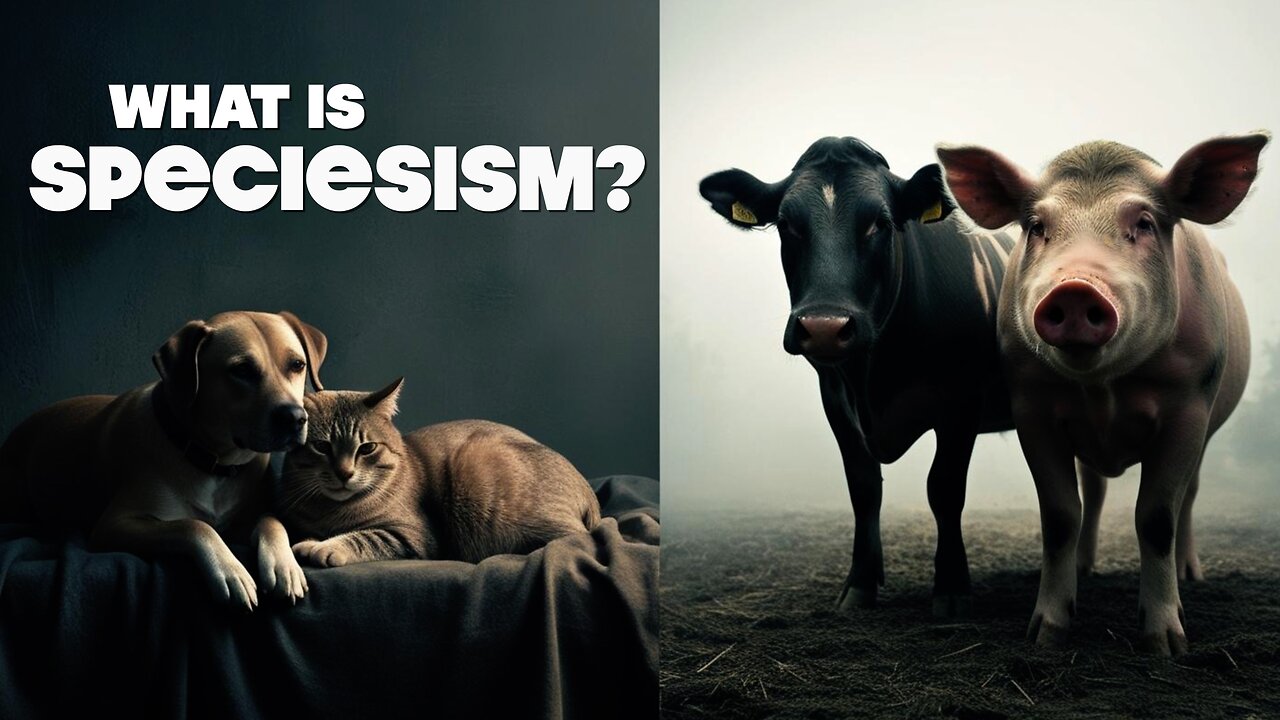
What is Speciesism?
For video production services contact [email protected] https://www.inspiredrisk.com/
Speciesism is the belief that one species, typically humans, is superior to others. It influences how we treat animals daily. People adore their pets, dogs, cats, birds, but when it comes to cows, pigs, or chickens, they're often treated as commodities for food, clothing, or entertainment.
Historically, many cultures and religions have ingrained the belief that humans are superior to animals. Religious texts, like the Bible, have been interpreted to place humans at the top of the "creation hierarchy," justifying animal exploitation. This speciesism has become normalized in many societies.
Humans often favor their own species, creating biases that justify unequal treatment of non-human animals. These biases allow us to overlook the suffering of animals simply because they are different from us, even though they experience pain and emotions similarly.
The rise of industrial farming in the 20th century, coupled with the mass production of meat and dairy, has desensitized people to animal suffering. Industries that profit from animal exploitation work to maintain speciesist attitudes, using marketing to downplay the suffering of animals and normalize their exploitation.
From a young age, people are taught that some animals, like dogs and cats, are companions, while others, like cows and pigs, are resources for food. This socialization reinforces the idea that some animals deserve compassion more than others. For example, many are unaware that cows must be impregnated to produce milk.
Though many are aware that animals suffer, they often disconnect emotionally from the animals used for food, clothing, or entertainment. This defense mechanism allows them to continue their behavior despite the ethical implications. How many refuse to watch footage of factory farm abuse but still consume products like bacon or milk?
Modern farming practices have distanced people from the realities of animal exploitation. The suffering of animals is hidden from view, perpetuating speciesism by keeping the truth out of sight.
There’s also Anthropocentrism, the belief that humans are the most important species on Earth, reinforcing the idea that animals exist solely for human use. This worldview leads to the belief that human needs always outweigh the needs of non-human animals.
Speciesism is deeply rooted in culture, economics, psychology, and socialization. It’s perpetuated by historical norms, cognitive biases, and industries benefiting from animal exploitation. Practices like eating meat, wearing animal products, and using animals for labor or entertainment have been passed down through generations, becoming normalized.
At the core of speciesism is the belief in human superiority, which leads us to disregard the well-being of non-human animals. But is it fair? Is it ethical?
The term "speciesism" was popularized by philosopher Peter Singer in his 1975 book Animal Liberation. Singer argued that the primary consideration in how we treat animals should be their ability to suffer, not their species. He compared speciesism to racism or sexism, as all involve discrimination based on an arbitrary characteristic.
This matters because, like other forms of discrimination, speciesism leads to unnecessary suffering. Non-human animals can feel pain, fear, and joy, just like humans. Many animals, like pigs and cows, are more intelligent than we often give them credit for. And considering these are some of the most exploited animals in the Western world through factory farming, this truth is troubling.
The issue isn’t just about species but sentience—the capacity to feel. Animal rights activists argue that we must treat all sentient beings with equal moral consideration, meaning their ability to suffer should matter, regardless of species. This belief has fueled the rise of the vegan movement and plant-based diets, which have grown exponentially in the past decade.
Equal moral consideration means caring for animals not just because they look cute but because they can feel and have emotions like us.
The good news is that you can make a difference. Many are shifting to plant-based diets, choosing cruelty-free products, and rejecting unethical entertainment venues that exploit animals. By making mindful choices, we can help reduce speciesism’s impact. Whether it’s choosing plant-based foods, supporting animal welfare organizations, or simply being kinder to animals, it all adds up.
-
 1:09:55
BonginoReport
2 hours agoDEI will NEVER Make America Great! - Scrolling w/ Hayley (Ep. 232) - 02/10/26
72K33 -
 LIVE
LIVE
Wendy Bell Radio
6 hours agoSo Many Smokescreens
5,464 watching -
 LIVE
LIVE
Sean Unpaved
3 hours agoCan Klint Kubiak SAVE The Las Vegas Raiders? | UNPAVED
72 watching -
 LIVE
LIVE
MattMorseTV
2 hours ago $7.05 earned🔴MASSIVE White House PRESS CONFERENCE.🔴
4,241 watching -
 LIVE
LIVE
Side Scrollers Podcast
3 hours agoSide Scrollers Podcast Live | Tuesday February 10th 2026
666 watching -
 1:59:04
Steven Crowder
4 hours agoThe Definitive Jeffrey Epstein Recap: Dissecting the Incoherent Narrative
373K173 -
 DVR
DVR
TheAlecLaceShow
2 hours agoTrump Epstein Narrative DESTROYED | Guests: Peter Schweizer & Jan Jekielek | The Alec Lace Show
4.61K -
 31:57
31:57
MYLUNCHBREAK CHANNEL PAGE
2 hours agoFinding Giants on an Island?
11.7K3 -
 1:42:16
The Dan Bongino Show
5 hours agoNo Dudes In Dresses (Ep. 2449) - 02/10/2026
573K552 -
 56:58
56:58
The Rubin Report
3 hours ago‘The View’s’ Sunny Hostin Didn’t Realize How Condescending She Sounded Lecturing Her Audience
61.6K41