"The Needle" ( Rashid Nugmanov, 1988 )
"The Needle" ( "Igla", 1988 )
Director: Rashid Nugmanov
Moro returns to Alma Ata to collect money owed to him. While waiting out an unexpected delay, he visits his former girlfriend Dina, and discovers she has become a morphine addict. He decides to help her kick the habit and to fight the local drug mafia responsible for her condition. But Moro finds a deadly opponent in "the doctor," the mafia kingpin who is exploiting Dina.—Forrest Ciesol
https://www.imdb.com/title/tt0097561/
_ _ _
The Needle (Russian: Игла, romanized: Igla) is a 1988 Soviet thriller film. It stars rock musicians Viktor Tsoi (of Kino) and Pyotr Mamonov (of Zvuki Mu). The film premiered on 16 September 1988 in Almaty and in February 1989 in Moscow.
The Needle is known for being one of the first Kazakh new wave films, and was one of the most watched films in the Soviet Union in 1989.[1]
https://en.wikipedia.org/wiki/The_Needle_(1988_film)
_ _ _
The Needle is a 1988 film by director Rachid Nugmanov made in the Kazakh Republic of the former Soviet Union. Released shortly before the collapse of the USSR, when the Party censored art less stringently, the film was one of the first to portray the use of heroin by Soviet citizens and depict an openly rebellious James Dean-type protagonist.
The story follows young Moro, played by counter-culture icon Viktor Tsoi, whose songs feature in the film's soundtrack. He travels to the Kazakh capital of Almaaty to collect debts from a former associate, nicknamed Spartak. Right from the start, as he arrives at the train station, it becomes apparent that Moro is far from a Soviet cinematic hero. He gives a train attendant the finger when she instructs him to step away from the tracks, uses a retrievable coin on a string when making a call from a phone booth, and smokes frequently. Moro discovers, not only that Spartak cannot pay him, but that he also owes money to other gangs roaming the capital.
Meanwhile, Moro stays at the apartment of his friend Dina, a nurse who, as Moro finds out, is a heroin addict supplied by a mysterious man named Arthur, a doctor and dealer who is evidently also sleeping with Dina. To help her out, Moro takes her on a trip to the Aral Sea, where he disposes of her heroin and forces her to give up her addiction by going “cold turkey,” abruptly terminating her drug use and going through intense withdrawal symptoms while Moro takes care of her.
Upon returning to the city, Moro finds out that Spartak’s troubles are worsening, while Arthur insists on being compensated for the heroin Moro destroyed. Moro is heroic, certainly, in his disdain for unnecessary words and in his natural, nonchalant cool. He is an on-screen rebel, using terms such as “трахаться/trakhatsya” (to fuck), while other characters in the film use criminal jargon, like “стекло/steklo,” which literally means “glass” but is used to refer to “heroin;” and “сваливай/svalyvay,” a slang term for "leave” or "get out."
Beyond its openly provocative subject matter, The Needle also distances itself stylistically from the clean-cut Soviet past, functioning as a commentary on the deterioration of the system. Nugmanov achieves this through the use of atypical and at times surreal imagery, frequently intercutting the story with close-ups of Soviet TV shows and sarcastically using bits of voice-over narration from these shows over images of the crippled, exhausted Soviet Union that Nugmanov presents to viewers. Through the use of uncomfortable imagery, such as close-ups of mingling scorpions intercut with Dina’s “cold turkey” attempt, the film deliberately sets its focus on the aforementioned deterioration of the system, becoming a gloomy observation of the system’s last breaths instead of a mere gangster story.
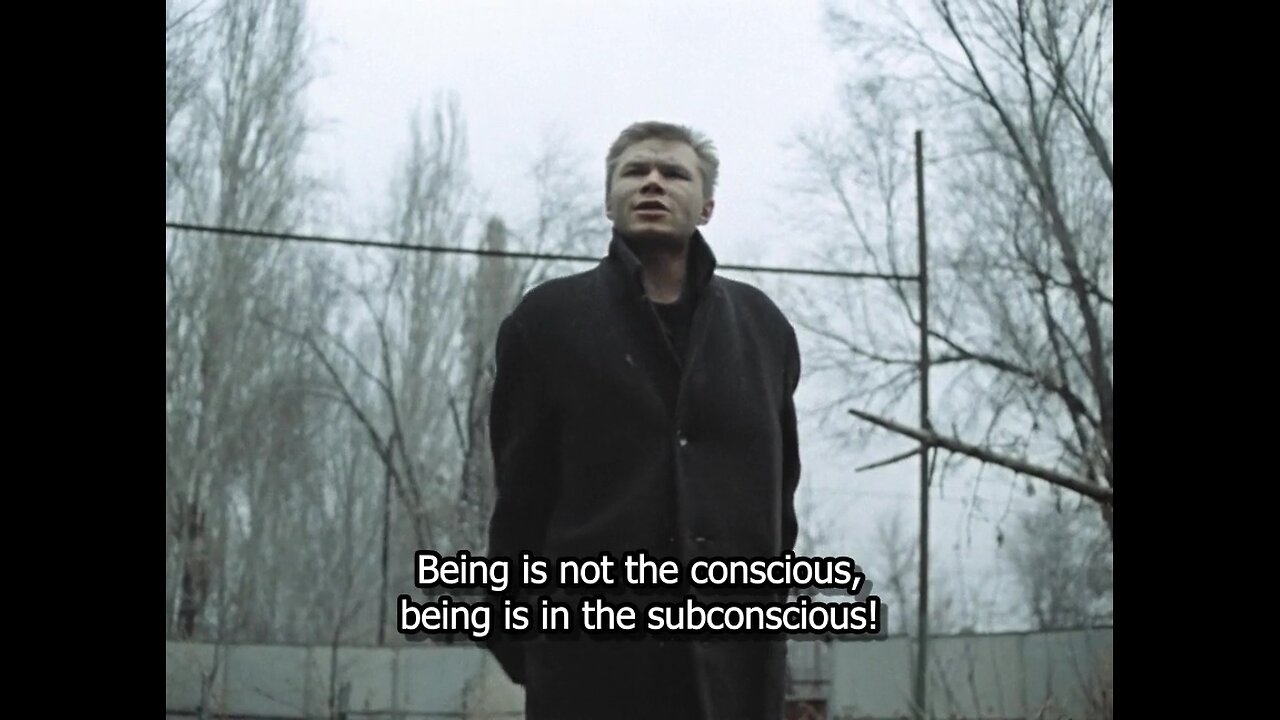
The places where the characters meet are usually dark and virtually empty, either abandoned or simply full of shady and unpleasant faces. The film also makes seasonal transitions throughout the story, with each season evoking this sense of abandonment through imagery unique to that time of the year: an abandoned ship roasting under the desert sun during Dina’s and Moro's getaway; Spartak’s purposefully dramatic farewell speech amid a deserted playground covered in thick autumn leaves; and the legendary final scene, set to Tsoi's most famous song, "Blood Group," on a dark street brimming with fresh snow.
https://www.languagetrainers.com/reviews/foreign-film-reviews/russia/the-needle
_ _ _
-
 LIVE
LIVE
Steven Crowder
2 hours ago🔴 We Need More Deportations Now - No Matter What Woke Podcasters Want You To Believe
51,498 watching -
 LIVE
LIVE
The Rubin Report
53 minutes agoErika Kirk Breaks Silence on Candace Owens’ Charlie Kirk Conspiracies
1,793 watching -
 LIVE
LIVE
Simply Bitcoin
1 day agoThe Bitcoin Crucible w/ Alex Stanczyk & Bob Burnett - Episode 12
226 watching -
 1:01:20
VINCE
2 hours agoPresident Trump Found Oil In The Ocean! | Episode 186 - 12/11/25 VINCE
62.1K47 -
 LIVE
LIVE
LFA TV
14 hours agoLIVE & BREAKING NEWS! | THURSDAY 12/11/25
3,921 watching -
 1:27:27
Graham Allen
3 hours agoErika Kirk Officially Calls Out Candace Owens!! + Turns Out Candace Is Pure Evil?!
127K749 -
 1:50:00
LadyDesireeMusic
2 hours ago $0.01 earnedLive Piano Music & Convo -There is Good in this World & It's Worth Fighting For
96 -
 LIVE
LIVE
Badlands Media
10 hours agoBadlands Daily: 12/11/25
3,729 watching -
 LIVE
LIVE
Viss
1 hour ago🔴LIVE - Helping Raiders & 5 Million Currency Grind! - Arc Raiders
148 watching -
 LIVE
LIVE
The Big Mig™
2 hours agoGlyphosate, The Silent Killer w/ Stacy Malkan
2,270 watching