Leviticus 27 - The commandments given in this chapter are valuable beyond measure. 2022

RVTA
Lev 27:33
'He is not to be concerned whether it is good or bad, nor shall he exchange it; or if he does exchange it, then both it and its substitute shall become holy. It shall not be redeemed.'"
Lev 27:34
These are the commandments which the LORD commanded Moses for the sons of Israel at Mount Sinai.
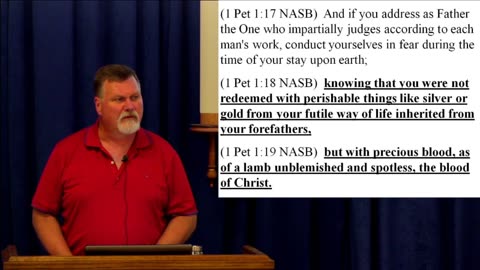
The commandments given in this chapter are valuable beyond measure. We are given the price of redemption for things dedicated to Elohim for His use. The price is determined according to the value of the person, place or land. The cost of redemption is cast in stone in Scripture and must be adhered to. We cannot be redeemed by something of lesser or even equal value according to Scripture. Therefore Elohim sent His most beloved possession, His only begotten Son, His Word made flesh, to redeem us by the spilling of His precious blood (1 Peter 1:17-19). Yeshua did not come into this world to do away with Torah as some claim. He came to make it more full. And He came that we might have life and have it abundantly.
1
comment
Leviticus 26 – Israel's judgment has only been fulfilled in the very recent past. 2022
RVTA
Lev 26:18
'If also after these things, you do not obey Me, then I will punish you seven times more for your sins.
Elohim is saying that if the Israelites don't obey Him, then He is going to punish them severely. If they still do not turn to Him and obey Him after the warning period, Elohim will multiply the remainder of their punishment by seven times. this is a very important part of Elohim's judgment. We often think of Elohim's dealing with Israel as Old Testament history, but we can now see this part of Israel's judgment has only been fulfilled in the very recent past.
Leviticus 25 – How did the people eat during the Sabbatical year? 2022
RVTA
Lev 25:5
'Your harvest's aftergrowth you shall not reap, and your grapes of untrimmed vines you shall not gather; the land shall have a sabbatical year.
Lev 25:6
'And all of you shall have the sabbath products of the land for food; yourself, and your male and female slaves, and your hired man and your foreign resident, those who live as aliens with you.
Lev 25:7
'Even your cattle and the animals that are in your land shall have all its crops to eat.
How did the people eat during the Sabbatical year? This passage tells us. The land was so fertile that it would produce crop on it's own during the seventh year. Enough food grew naturally to feed the people, their servants, the strangers, and the livestock. There was plenty to eat, but they were not to harvest it for market and profit.
Leviticus 24 - This is one of the main reasons it is wrong to marry an unbeliever. 2022
RVTA
Lev 24:10
Now the son of an Israelite woman, whose father was an Egyptian, went out among the sons of Israel; and the Israelite woman's son and a man of Israel struggled with each other in the camp.
Lev 24:11
And the son of the Israelite woman blasphemed the Name and cursed. So they brought him to Moses. (Now his mother's name was Shelomith, the daughter of Dibri, of the tribe of Dan.)
Lev 24:12
And they put him in custody so that the command of the LORD might be made clear to them.
The one who did the blaspheming is a young man or boy of mixed nationality whose mother was an Israelite from the tribe of Dan and whose father was an Egyptian. There was a mixed multitude that left in the exodus from Egypt (Ex. 12:37-38). This is one of the main reasons it is wrong to marry an unbeliever. One problem is with the offspring of the marriage. They don't know if they should follow the father or the mother. Even if they make the right decision, they will always look back and wonder if they made the right decision. This boy got into a fight. That is easy to envision because he is not really a member of either camp. During the fight, he blasphemed Elohim. Israel considered Elohim's name extremely sacred. Jews take this so seriously that they have not pronounced His name for centuries. Because of this, all we know is that the name consisted of the consonants YHWH. To this day, we don't know if we are to pronounce it "Yahweh" or "Yahuah." But this boy knew how to pronounce it.
1
comment
Leviticus 23 - There is not one verse in Scripture that says we are not to honor the Sabbath. 2022
RVTA
Lev 23:3
'For six days work may be done; but on the seventh day there is a sabbath of complete rest, a holy convocation. You shall not do any work; it is a sabbath to the LORD in all your dwellings.
When the Israelites were slaves in Egypt, they worked every day. The Sabbath day is tied to deliverance (Deut. 5:15). The Sabbath Day is a symbol of the covenant between Elohim and His people, Israel. The Sabbath is mentioned 138 times in 116 verses. There is not one verse in Scripture that says we are not to honor the Sabbath. There is not one righteous example in Scripture where it is broken. The Sabbath Day was implemented at creation and was never eradicated or changed to a different day.
Leviticus 22 - You should not treat those things that are set apart as commonplace. 2022
RVTA
Lev 22:1
Then the LORD spoke to Moses, saying,
Lev 22:2
"Tell Aaron and his sons to be careful with the holy gifts of the sons of Israel, which they dedicate to Me, so as not to profane My holy name; I am the LORD.
There was to be a separation between the sacred and the secular. You should not treat those things that are set apart for Elohim as commonplace.
Leviticus 21 - Pagans did this mourning for their dead. 2022
RVTA
Lev 21:5
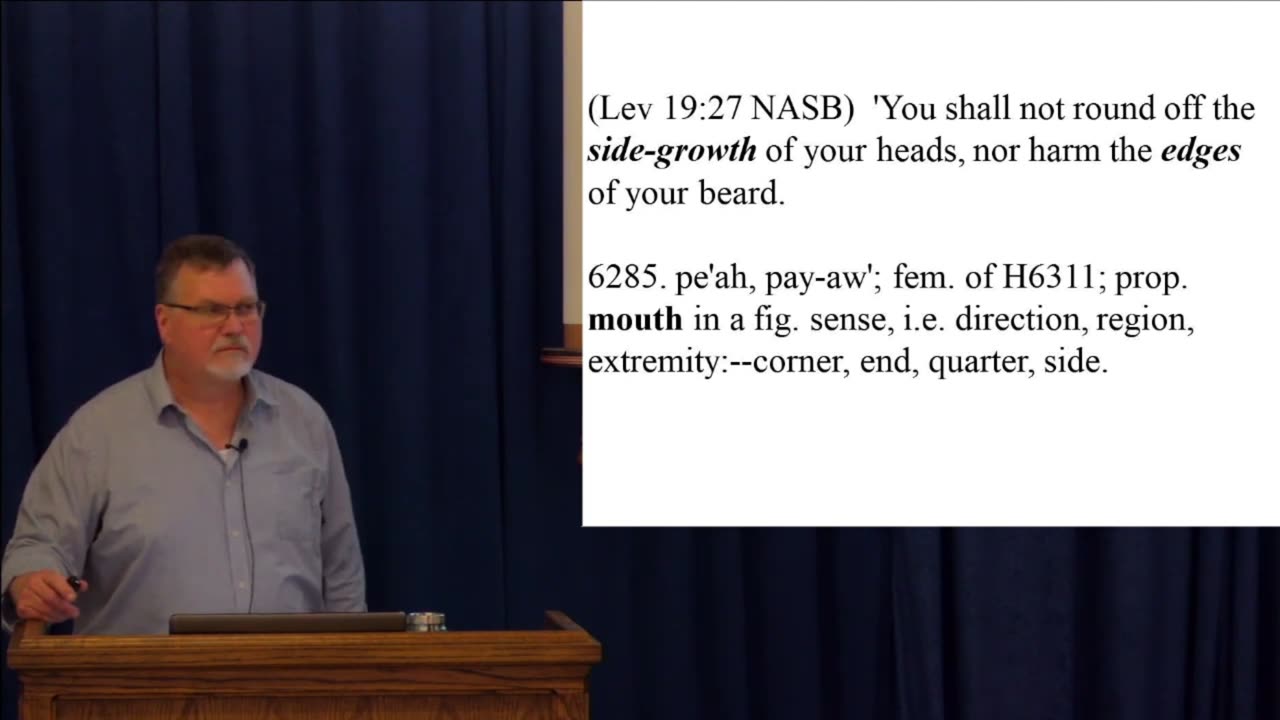
'They shall not make any baldness on their heads, nor shave off the edges of their beards, nor make any cuts in their flesh.
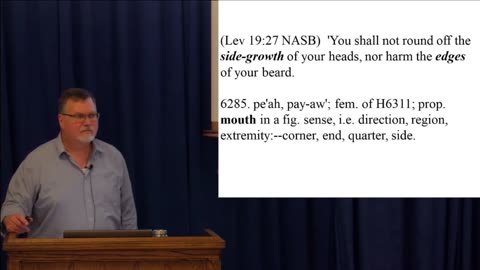
This was something the pagans did in mourning for their dead. Elohim's people are to avoid doing things like the heathen. The shaving of the edges of their beards is the Hebrew word peah which is a reference to around the mouth.
1
comment
Leviticus 20 - This chapter deals with the death penalty. 2022
RVTA
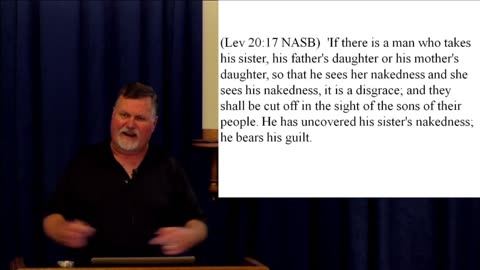
This chapter deals with the death penalty. This is a penalty that was instituted by Elohim for breaking many of His commandments. Elohim instituted this law for good reason. Adequate punishment of crime is for the moral good of the people. Justice and righteousness demands punishment. We do not believe in the death penalty much any more in today's world. When we do have it used, it is always so long after the crime that the criminal scarcely remembers what he did. Do you remember when two boys gunned down students in Jonesboro, Arkansas? Only half the people surveyed think that the 11 and 13 year old boys who killed those five people in Jonsboro should even be tried as adults, much less think they should be put to death. We tend to keep thinking, "what if that were my little boy who did those attrocious things?" That's the wrong way to look at it. We need to ask, "what if that were your little girl or boy who was mercilessly gunned down?" Softhearted and softheaded men have decided that we are too enlightened to have the death penalty today. But Elohim's Word says that it is the most humanitarian procedure for the good of mankind.
1
comment
Leviticus 19 – A command that has not changed. 2022
RVTA
Lev 19:1
Then the LORD spoke to Moses, saying,
Lev 19:2
"Speak to all the congregation of the sons of Israel and say to them, 'You shall be holy, for I the LORD your God am holy.
We are to be holy because Elohim is holy. That command has not changed (2 Cor. 6:14-16, 1 Pet. 1:14-16, Matt. 5:48).
Leviticus 18 - We are not to act like the pagan nations. 2022
RVTA
Lev 18:1
Then the LORD spoke to Moses, saying,
Lev 18:2
"Speak to the sons of Israel and say to them, 'I am the LORD your God.
Lev 18:3
'You shall not do what is done in the land of Egypt where you lived, nor are you to do what is done in the land of Canaan where I am bringing you; you shall not walk in their statutes.
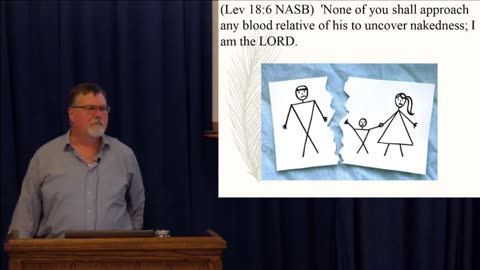
We are told not to do what is done in Egypt or in Canaan. We are not to act like the pagan nations. The customs of the pagan nations are to be avoided by Elohim's people (Psalm 106:34-35, Ex. 23:24-25, Deut. 12:2-4, 30-31).
1
comment
Leviticus 17 - The great debate amongst Jews and Rabbis. 2022
RVTA
Lev 17:3
"Any man from the house of Israel who slaughters an ox, or a lamb, or a goat in the camp, or who slaughters it outside the camp,
Lev 17:4
and has not brought it to the doorway of the tent of meeting to present it as an offering to the LORD before the tabernacle of the LORD,
bloodguiltiness is to be reckoned to that man. He has shed blood and that man
shall be cut off from among his people.
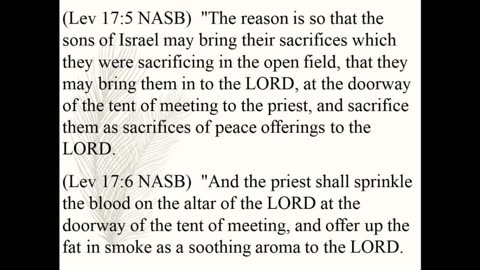
There has been great debate amongst Jews and rabbis concerning this verse and the passage in Deuteronomy 12:15-16. There are two schools of thought on these passages. One is that the people had to bring their animals to the Tabernacle for slaughter before they ate them while they were wandering in the wilderness (Leviticus 17:1-6). But after they entered the land (Deut. 12:15-16), they could slaughter their
animals for food anywhere they were located.
The other explanation seems to fit the context of this passage better. Leviticus 17 is speaking of the slaughter of animals for offerings (sacrifices) only. The passage in Deuteronomy is speaking of animals slaughtered for food.
Leviticus Chapter 16 - This is the highest holy day of the year and must be treated as such. 2022
RVTA
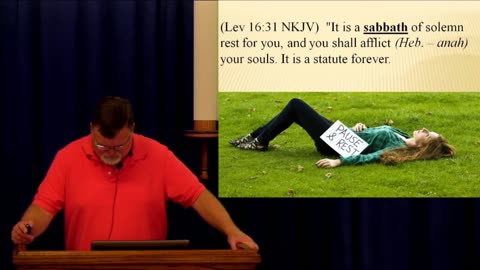
We study this chapter every year on Yom Kippur, or the Day of Atonement. We go over this chapter on that day as well as Isaiah 58, which also focuses on Yom Kippur. This holiday (Feast Day) is celebrated on the tenth day of the seventh month. The word atonement means "to cover up." This is the highest holy day of the year and must be treated as such.
The Day of Atonement reveals Messiah as our Great High Priest, going into the Holy of Holies for us. (Heb. 9:11-12).
It has been stated by some that we should not celebrate this great Feast of our Heavenly Father. He commands us to celebrate it throughout the generations (Lev. 23:26-32). Even Paul celebrated it later in his life (Acts 27:9).
The Day of Atonement is a time to reflect on two things. 1. We are to reflect on our sin and how we have been in offense to Elohim and His perfect ways. 2. We reflect on Yeshua as our High Priest and the sacrifice He had to make for our redemption because of our sin.
Leviticus Chapter 15 – Our secret sins can cause some very big problems. 2022
RVTA
This chapter of Leviticus covers secret sin and Elohim's view of it. Our secret sins can cause some very big problems.
David referred to secret sin his heart (Psalm 51:3-12).
Today's world is trying to tell us that our secret sin shouldn't be secret anymore. The world thinks they should be public. The world tells everyone to bring their secret sin out in the open and wear it as a badge of honor. Decades ago, people talked about a "new morality." Nowadays the term "morality" is never even brought up. It has disappeared. It's funny how those same old diseases haven't disappeared. Along with some other new ones.
The promiscuous sex of today has bred new and untreatable problems. We will save the majority of our discussion of AIDS for chapter 18, but there are plenty of other diseases involved in just heterosexual promiscuity. The human papilloma virus (HPV) has a transmission rate of 100%, even when condoms are used. The HPV virus causes infections, warts, and has strong links to cancer of the cervix and penis. Many have never even heard of this venereal disease. HPV infection is now considered to be the most common sexually transmitted infection (sexually transmitted disease, STD) in the U.S., and it is believed that at least 75% of the reproductive-age population has been infected with sexually transmitted HPV at some point in life. When I first did a study on this chapter, some 18 years ago or so, there are over 6.2 million people new cases of HPV reported every year in the US, and approximately 50% of those infected are between the ages of 15 and 25. However, times have changed. There were about 43 million new HPV infections in 2018, many among people in their late teens and early 20s. For women who have HPV, it will show up in an abnormal pap smear. But for men, there is not a test for detecting the disease. If genital warts do not show up on a man (which they often don't), then he will never know he has the disease. He will simply be a carrier of the disease to spread it to every woman with whom he has sexual contact. The virus has no cure. Promiscuous sex is a very risky business.
So much for "safe sex."
Elohim tells us to confess our sins to Him, then we are to turn away from those sins. This is for our own good and for the good of our relationship with Him and with each other (1 Cor. 6:9-11).
3
comments
Leviticus 14 – A disease like no others, part medical condition, part spiritual pathology. 2022
RVTA
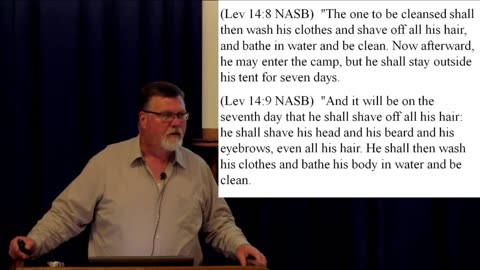
This chapter is a continuation of the laws written in chapter 13. This chapter can be divided up into two parts. Verses 1-32 describe the purification rites of someone who had previously been declared infected with tsara'ath . Verses 32-53 describe mud covered or plastered building stones that are infected with tsara'ath .
Strong's Concordance tsara'ath
Original Word: צָרַעַת
Transliteration: tsara'ath
Phonetic Spelling: (tsaw-rah'-ath)
Tzara'ath is a Biblical affliction, most commonly known and mistranslated as leprosy. Tzara'ath is a skin disease that can take many different forms, bad cases can manifest itself on one’s clothing, belongings, and house, in addition to the skin. According to the rabbis, tzara'ath is caused by sin. This makes it a disease like no others, part medical condition, part spiritual pathology.
Leviticus Chapter 13 – Is it possible to enter the kingdom of heaven on your own works? 2022
RVTA
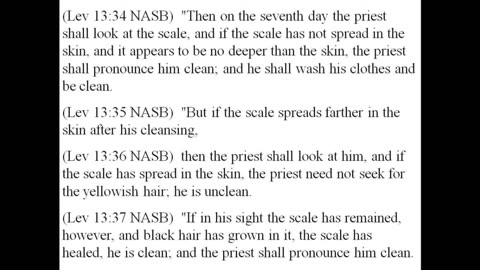
We now come to the appetizing chapter of "running sores and leprosy." This chapter discusses a skin affliction that is termed "leprosy," but leprosy as we know it today (Hansen's Disease) does not at all fit the description given here. The name of the disease is tsara'ath. The disease described here is unknown today and was possibly a result of sin in one's life. We know that Miriam was struck with leprosy when she rebelled against Moses and his wife who was a Cushite. Whether or not this disease was always a result of sin is unknown.
While this chapter deals directly with the physical aspects of this disease, a drash of this chapter shows us the exceeding awfulness of sin.
Leviticus is a book of worship of Elohim. However, it has an extended section on this skin disease of tsara'ath. This disease is an accurate symbol of sin in the heart of mankind. It shows the exceeding awfulness of sin and the effect of sin in action. We are going to see here how Elohim sees us in our sinful condition.
The hopelessness and dreadfulness of sin are accurately portrayed in the leper trudging down the hot dusty road crying out, "Unclean, unclean!!!!" This is a reminder to the Israelite in that day, and to us today, that the moral leper is in need of cleansing also.
Many people have the false impression that they may enter the kingdom of heaven on their own works. If that were possible (which it's not) then you would travel the streets of the kingdom shouting "Unclean, unclean!!" You could touch nothing and no person could come within sight distance of you. However, we are told that nothing unclean will be a part of the redeemed Kingdom (Rev. 21:23-27).
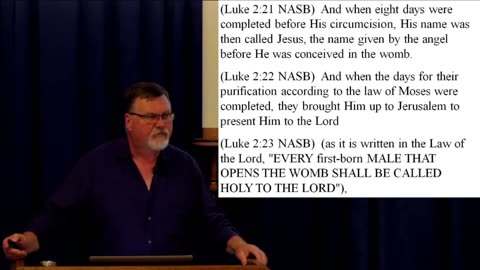
Leviticus Chapter 12 –What is the external character of sin? 2022
RVTA
We start this video with a short explanation of why many of our friends, family, or various acquaintances reject most of Scripture and seem almost allergic to the discussion. What are we doing wrong??
The previous chapter showed us that the world around us is filled with unclean things and we can be contaminated by contact with them. The external character of sin is characterized by the physical elements of certain animals, fish, birds, and insects and all dead things. Sin is all around us. It is everywhere in this lost world.
This chapter is going to show that we are imperfect and in need of reconciliation with Elohim. We cannot reconcile with Him on our own because we are imperfect creatures trying to reconcile to an infinitely perfect Elohim. We will not be fully reconciled with Him until the resurrection. Paul speaks of this also (1 Cor. 15:50-58).
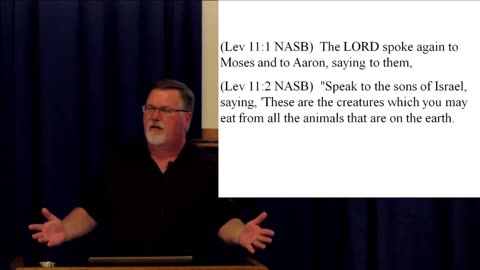
Leviticus 11 - Some people use a phrase or two from Paul to justify their sinful habits. 2022
RVTA
This chapter is one of the high points in Scripture, but it is one of the most ignored chapters by Christianity. In Leviticus 11 and Deuteronomy 14, Elohim gives us explicit orders as to what is considered food and what is not considered food. Christians for some 1600 years have thought this chapter doesn't apply anymore and can and should be ignored. This chapter describes what has been called the "Levitical Diet." But nowhere in this chapter are Levites even mentioned.
Many Christians point to the event where Peter was allegedly told not to call certain animals "unholy." (Acts 10:10-27). However, this is a misunderstood passage that is an attack on the Pharasaic rules that declare Gentiles unclean. It has nothing whatsoever to do with dietary laws and Torah.
Yeshua states "what goes into the mouth does not defile the person" (Matt 15:1-19). But Yeshua was not referring to eating unclean foods. He was once again attacking the Rabbinic laws that demanded ritual handwashing. The disciples were being criticized for not following this tradition before eating (Matt. 15:20). Yeshua is saying that it is not considered a sin to not wash your hands before you eat, although the traditions of the Jews commanded it. While we all know that handwashing is a good thing, it is not a sin to not follow the traditions of man.
Some people use a phrase or two from Paul's letters to justify their sinful habits of eating poisonous things. Peter warned us against using Paul's letters to justify our lawlessness (2 Peter 3:14-17).
Dr. Rex Russell, in his book, "What the Bible Says About Healthy Living," gives a wonderful defense of the Levitical diet. If we think that modern science has shown how we can safely cook many foods that Elohim has declared unclean, we have been deceived. There are many foods eaten daily that are toxic to our bodies and toxic to our souls.
Most people ignore these dietary laws and think that they can cook the viruses, bacteria, and disease out of unclean meats. This is an absurd proposition. Dr. Russell gives the example of the puffer fish. If you eat just a small amount of it when it is not prepared just exactly right, you will die in a few minutes. But the Japanese consider it a delicacy. They have chefs that are skilled in the preparation of the puffer fish. Does that mean you should eat it? Of course not. Why should we? Even if it weren't a sin (which it is), it is not worth the gamble.
But that is exactly the gamble we take with our present diets. Many of the unclean animals we eat cause hepatitis, cholera, and other deadly and crippling diseases. But we still try to tell ourselves, "the Levitical Diet doesn't apply anymore." To disregard the dietary commands in Scripture will not only shorten your lifespan, but this type of intentional disobedience will prevent you from knowing the Father.
1
comment
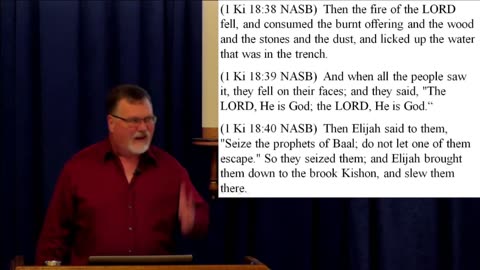
Leviticus Chapters 9 & 10 – Did Messiah enter the priesthood in the same way as the Levites? 2022
RVTA
This section starts on the eighth day. This is a reference to the eighth day that Aaron and his sons were consecrated as priests. It is not a reference to the eighth day of the month.
Seven days of cleansing is a typical time period and was commanded at the end of the previous chapter (Lev. 8:33-36).
In the previous chapter, we saw that the consecration of the High Priest was very similar to many events that occurred near the end of the life of Yeshua. He was being set-apart for very special work for His Father. He was consecrated for the priesthood, then the offering takes place just as we see in this chapter in Leviticus. Yeshua apparently became His own offering for His own ordination into the Priesthood.
Some have said that these things that happened to Yeshua near the end of His life are not part of any ordination because it was not done in the exact same places and by the correct people as described in the Torah. However, Yeshua is not entering the priesthood in the same way as the Levites. Just as Melchizedek was High Priest of the Father without the Levites (actually, Melchizedek pre-existed the Levites) Yeshua is High Priest in the same way as was Melchizedek. Yeshua is High Priest not by the ritual of Levitical ordination, but by declaration of the Father (Psalm 110:1-4, Heb. 5:5-10). Join us and see if you don't agree!
1
comment
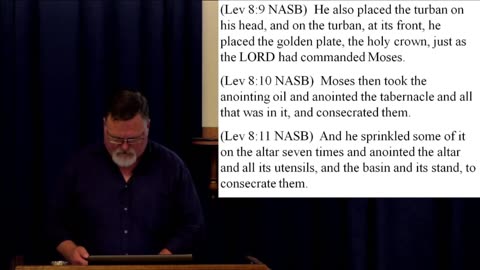
Leviticus 8 – Why did Messiah wash the feet of His disciples the night before He was crucified? 2022
RVTA
This chapter has to do with the consecration of the priests. While that may not sound important to us today, it is vital to help us understand why Yeshua washed the feet of His disciples the night before He was killed on a stake.
How is that possible? Watch and see if you don't agree!
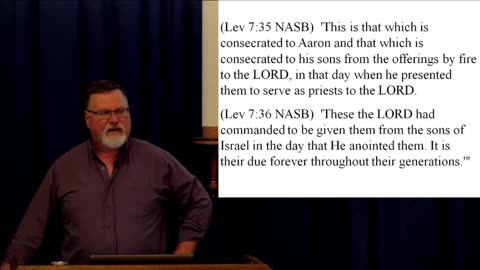
Leviticus Chapter 7 – What offering is for cleansing of the unclean condition of the offender? 2022
RVTA
This section of Scripture (chapters 6 & 7) tell us various laws and rules concerning the offerings.
The guilt offering is similar in mechanics to the sin offering. But the purpose of the two is different. The sin offering is compensation to Elohim (after one compensates to those who were offended) for your unintentional sin. The guilt offering is for cleansing of the unclean condition of the offender.
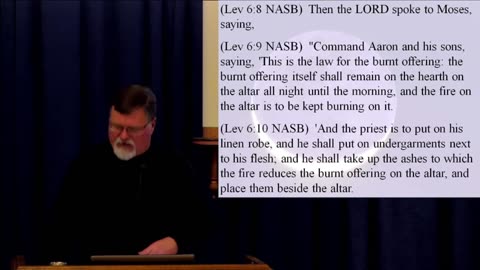
Leviticus Chapter 6 – Do you know the care the priests must take in handling the offerings? 2022
RVTA
The first five chapters in Leviticus detailed the mechanics of the five offerings. These next two chapters emphasize the ritual of the sacrifices. They detail the care the priests must take in handling the offerings.
Leviticus Chapter 5 – What is a trespass? 2022
RVTA
This chapter covers the trespass (or guilt) offering. What is a trespass? What does a sign that says "No Trespassing," mean? A trespass means you invaded on the rights of others. You can go around swinging your fist anywhere you want, but your right to do that ends where my nose begins.
A trespass can occur against Elohim or against man. Even when a trespass occurs against another person, the trespass is also against Elohim. It is our trespasses against Him that separates us from Him. This offering is the penalty paid for unintentional trespasses against Elohim.
Leviticus Chapter 4 – The other non-sweet savor offering is called? 2022
RVTA
This offering is the first of the non-sweet savor offerings. The first three offerings were sweet savor offerings and pointed to the person of Messiah and our relationship with Elohim.
The last two offerings are non-sweet savor offerings. They do not point to the perfect person of Messiah or of His Diety. Instead, they refer to the work of Yeshua Messiah on the tree for our sins. This offering is called the sin offering and the other non-sweet savor offering is called the trespass offering.
This chapter on the sin offering is much longer than any of the others. There must be much importance here.
This offering became the most important of all the offerings because it points to the fact that man is unclean because of his unintentional sin. The next offering is the trespass offering and speaks of the sin that man does. While there has been debate over the differences between the two offerings, the sin offering speaks of what man is because of sin, not necessarily what man does.
These two offerings secure atonement and forgiveness from Elohim for unintentional sin. This sacrifice does not apply to defiant acts or premeditated crimes. The laws of chapters 4 & 5 do not delineate which crimes for which sacrifices are mandated. If such sins are defiant or premeditated, then the penalty is what is known as the "karet," or the "cutting off" from among the people.
The punishment of the karet is viewed as a punishment from Elohim and not a punishment by the people or judges. Karet, or the cutting off from the people (or more stringent punishments such as death), was involved in a variety of religious sins such as adultery, murder, desecration of the Sabbath, or eating leaven on the Feast of the Unleavened Bread.
The difference between the sin offering and the trespass offering of chapter five is in their purpose. The sin offering purifies the accidental offender. The trespass offering (or guilt offering) is a penalty paid in the form of a sacrificial offering to Elohim. If someone could not fulfill their obligation in a vow made to someone else, the fact that it was a broken vow brought Elohim in. The offender must perform these offerings in order to make amends with Elohim. However, that person still must make amends with any person that was wronged by his breaking of the vow. That repayment must also be met with a penatly of 20% extra.
The objective of the offerings in chapters 4 and 5 is to maintain sanctity in the priesthood and among the people. Sin is a very serious issue. Most people probably take their own sin much too lightly. But that is not the case with Elohim. He takes our sin VERY seriously. Our sin must be atoned for, plus our sin makes us impure, or unclean. There are then two very important issues that must be addressed. That is the purpose of the these last two offerings.
Leviticus Chapter 3– What offering is shared by the priests and by the one making the offering? 2022
RVTA
This offering is called the "shelamim" offering. It is translated as "peace offering." The word "shelamim" is related to the word "shalom," which means "well-being."
There are some similarities between this offering and the previous two. Some of the same animals could be used for this offering as for the burnt offering. The same altar was used by all three offerings. But unlike the Burnt Offering, the zevah shelamim ("sacred gift of greeting"), is not totally consumed by fire. Parts of the Peace Offering are shared by the priests and by the offeror.
The peace offering speaks of the fellowship believers have with Elohim through Yeshua Messiah. The only way we can come to Elohim is through Messiah. He is the only way to peace.
No one single offering can show us how Elohim sees His Son. This is what Elohim was showing the Israelites through these offerings and throughout His Torah. He was showing them His Son. Elohim used these offerings and His entire books of Torah and prophecy to present Yeshua Messiah to His people (Luke 24:44 and John 1:45).
This peace offering dramatized peace and reconciliation between the offeror and Elohim.
Leviticus Chapter 2 – What is the only offering that involved no meat whatsoever? 2022
RVTA
All the offerings in Leviticus speak of Messiah Yeshua and our relationship with the Father. This offering is called the "meat offering" in the King James Version because all food was referred to as meat in that day. But this is the only offering that involved no meat whatsoever. It reads very much like a bread recipe. Most modern translations refer to this as the grain offering or meal offering.
The grain offering could be given baked or unbaked. Aaron, the high priest, and his sons will eat a portion of it.
This offering shows us the perfect humanity of Yeshua Messiah. Yeshua is Elohim's ultimate plan for mankind in that man is to be perfect in his humanness. This is Elohim's goal for man (1 John 3:2).
Elohim's plan for man is perfection and He showed us that in Messiah Yeshua. He was pleasing to Elohim. "This is my beloved Son in whom I am well pleased," is mentioned several times in Scripture in reference to Yeshua. We still fall way short when it comes to pleasing Him with our own attitudes and works. But Yeshua didn't fall short. He was Elohim's intention for mankind.
Leviticus Chapter 1 - Sacrifices were not done away with when Messiah became our sacrifice. 2022
RVTA
Leviticus is not known for being the thrilling book in Scripture to read or study. As a matter of fact, the first time I read through it, I couldn't wait for it to be over. This book consists of worship, sacrifice, ceremony, ritual, liturgy, instructions, washings, convocations, holy days, observances, conditions, and warnings. In and of itself, the book seemed downright boring to my "Christian" nature in those days.
This book is largely overlooked by Christianity altogether because they are under the delusion that Elohim changed and that His specific rules for righteousness are no longer valid. For most of my life, I felt the same way. It wasn't until I realized my identity in Israel that I saw the tremendous importance of Torah. At one time I believed that this book could only be considered in light of the New Testament. That is simply not true. While this book does point to the Messiah in many and various ways, Leviticus defines for us the righteousness and right-rulings of Elohim Himself. Paul says in many places that the Torah (law) was also written for our instruction (Romans 15:4).
This book gives Israel the rules for living, conduct, family, sexual practice, personal conduct, business conduct, and worship (and more). What we will find out in Leviticus is that the commanded ritual and ceremony in this book points to the person of Yeshua Messiah.
Leviticus tells us that the only way for a sinner to approach Elohim is through a sacrifice. The word atonement is used 45 times in Leviticus. "Atonement" means to "cover up." The blood of goats and bulls never did wash away the sins of those making the sacrifices, but it did cover them up.
The book of Leviticus tells us the way to Elohim is by sacrifice. There is no remission of sins without sacrifice and the shedding of blood (Lev. 17:11). Through these sacrifices the awfulness of our sin is made clear in a very real and graphic manner (Heb. 10:1-3).
Christianity falsely teaches that sacrifices were done away with when Yeshua became our sacrifice. This is simply not true. The death of Yeshua did not put an end to the sacrificial system at all. The death of Yeshua gave more MEANING to the sacrificial system. And the sacrificial system was still practiced after the time of Yeshua by His followers. Peter and John took part in the Temple sacrifices after Yeshua ascended in Acts (Acts 3:1). We know that Paul took part in the sacrifices of the Feast days like the Feast of Weeks (Pentecost) (Acts 20:16). The celebration of Pentecost involved sacrifices (Num. 28:26-27). Paul took the Nazarite vow which involved offerings (sacrifices) (Acts 21:23-24). Paul also offered sacrifices later in his life (Acts 24:17-18). We are told that after Yeshua returns, the Temple will be rebuilt and sacrifices will resume (Zech. 14:16-21, Isa. 19:19-25, Zeph. 3:9-11, Mal. 1:11). We are told in detail of the sacrifices that will be performed when Messiah returns in the last chapters of Ezekiel (Ezek. 40-48).
Leviticus also teaches us we cannot walk with Elohim unless He sanctifies us. (Sanctification means to be made holy, or "set apart.") The word holiness occurs 87 times in this book.
Those who are redeemed by the shed blood of Yeshua Messiah must live a holy (set apart) life in order to have fellowship with Him and worship and enjoy Him (Heb 13:20-21).
These things, the sacrificial death of Yeshua Messiah, the awfulness of our sin, and the importance of sanctification are the main themes for His people in the book of Leviticus. There is no more important book in Scripture.
1
comment
Leviticus 19 – A command that has not changed. 2022
7 months ago
14
Loading comments...
-
 LIVE
LIVE
The Quartering
2 hours agoChristmas Eve Yule Log (A Place To Hang & Chat Follow For Daily News)
2,079 watching -
 LIVE
LIVE
GrimmHollywood
9 hours ago🔴LIVE • GRIMM HOLLYWOOD • GRIMMBAS • DAY 12 of 12 • THE FINAL DAY • FIRST TIME in DEAD SPACE •
618 watching -
 11:20
11:20
MudandMunitions
8 hours ago10 Rounds MAX in New York… So Why NOT Carry 10mm or .45 ACP?
1.5K4 -
 LIVE
LIVE
Purrfect Music
4 days ago $19.77 earnedChristmas Classics by Tchaikovsky, Anderson, Vivaldi, Gruber, Beethoven… And More!
1,736 watching -
 11:40
11:40
MattMorseTV
1 day ago $14.52 earnedThe Democrat NARRATIVE just IMPLODED.
39.8K88 -
 19:08
19:08
DeVory Darkins
18 hours agoDemocrat Mayor gets NIGHTMARE NEWS over immigration raids
48K161 -
 1:55:02
freecastle
8 hours agoTAKE UP YOUR CROSS-We have REDEMPTION through HIS blood, forgiven trespasses according to HIS grace!
8.05K12 -
 LIVE
LIVE
Lofi Girl
3 years agolofi hip hop radio 📚 - beats to relax/study to
216 watching -
 1:01:58
The Quartering
8 hours agoLiberals Humiliated Again, Drunk Democrat Debacle & Joe Rogan On Epstein
256K149 -
 3:23:25
ZWOGs
6 hours ago🔴LIVE IN 1440p! -Christmas Eve Gaming! ARC Raiders and More! - Come Hang Out!
28.6K1