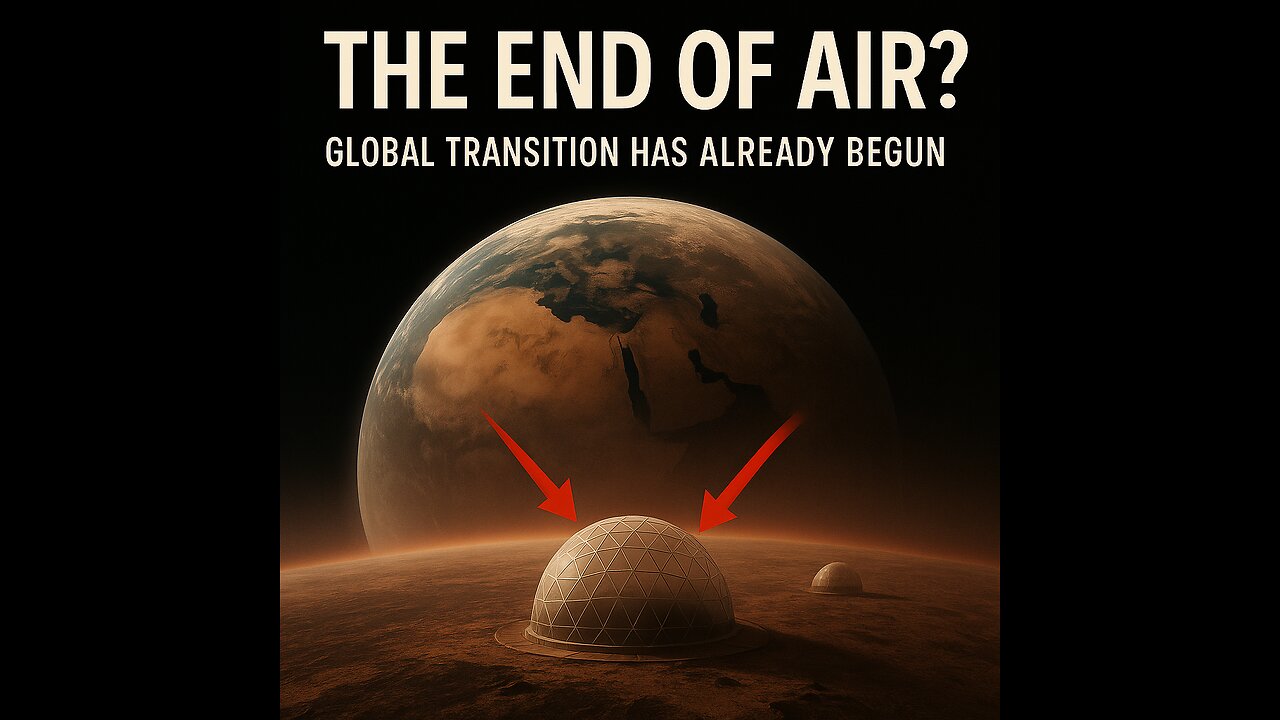
Thermodynamic Limit of Civilization: Why We Must Eventually Reduce the Atmosphere
Hello, I'm Andrej. I apologize for using AI narration — I believe my accent and pronunciation could be distracting for some viewers.
This video is not about speculation or doomsday predictions. It's a mathematical projection based on a simple but unavoidable truth: energy production generates heat. Even in a perfectly green, emission-free world, the production and use of energy itself leads to planetary warming. And as civilization grows, so does this effect — exponentially.
The core of the video is a function: the growth of global energy production over time. Historically, even through wars, plagues, and global lockdowns, this growth line has never truly broken. My assumption — based on both data and logic — is that it won’t in the future either. This analysis simply shows the thermodynamic implications if that growth continues as it has.
Key points:
Around the year 2360, we reach a critical threshold: 10% of the solar energy received by Earth is matched by human energy output.
At that point, the Earth can no longer passively radiate the excess heat — temperature begins to rise exponentially.
We face four scenarios:
Reduce energy use — which would result in billions of deaths due to failing infrastructure, food shortages, medical collapse, and unmanageable waste.
Remove the atmosphere — allowing heat to dissipate directly into space.
A Venus-like runaway greenhouse effect — total biosphere collapse.
A new, currently unknown solution — one that must be far more efficient than anything we currently have.
Realistically, all proposed solutions so far are temporary. Our atmosphere has been stable by luck during our technological development. That luck is running out.
In the future, we may need to:
Transition to closed, self-regulating habitats.
Use inert gases like argon to maintain pressure without toxic buildup.
Control food, water, energy — and air.
Think in planetary terms — and thermodynamic terms — not political or local ones.
And yes, if an asteroid like the one from 65 million years ago hits us, none of this will matter. We won’t have problems anymore — much like the dinosaurs don’t. But I wouldn’t call that a success.
-
 29:58
29:58
Stephen Gardner
1 hour ago🔥IT'S BAD! NEW report just DROPPED!
1.44K1 -
 54:53
54:53
The Quartering
4 hours agoDan Bongino Quits, New Break In Tyler Robinson Case & Brown Shooting!
37K37 -
 2:12:49
Side Scrollers Podcast
4 hours agoTrans Surgeries For Kids CRIMINALIZED + Harassed Target Employee Speaks Out + More | Side Scrollers
60.6K11 -
 1:01:16
Timcast
3 hours agoTrump TROLLS Legacy Media, Announces WARRIOR DIVIDEND, Venezuela Fake Out
157K71 -
 1:04:30
Sean Unpaved
2 hours agoSeahawks Looking For REVENGE Against Rams! | UNPAVED
15.8K -
 46:32
46:32
The Amber May Show
5 hours ago $1.66 earnedLaw & Disorder: FBI Shakeups, Arrest Waves, and a Culture That’s Gone Off the Rails
11.9K1 -
 12:52
12:52
The Kevin Trudeau Show Limitless
1 day agoBeyond Good And Bad: The Hidden Reality Code
16.4K10 -
 1:25:01
Misfits Mania
1 day ago $10.48 earnedMISFITS MANIA: Press Conference
33.5K10 -
 1:31:26
Graham Allen
4 hours agoLive From AMFEST 2025: Day 1
50.3K13 -
 1:56:43
Steven Crowder
7 hours agoLWC Christmas Special 2025 | Giving Back with Santa Crowder
266K155