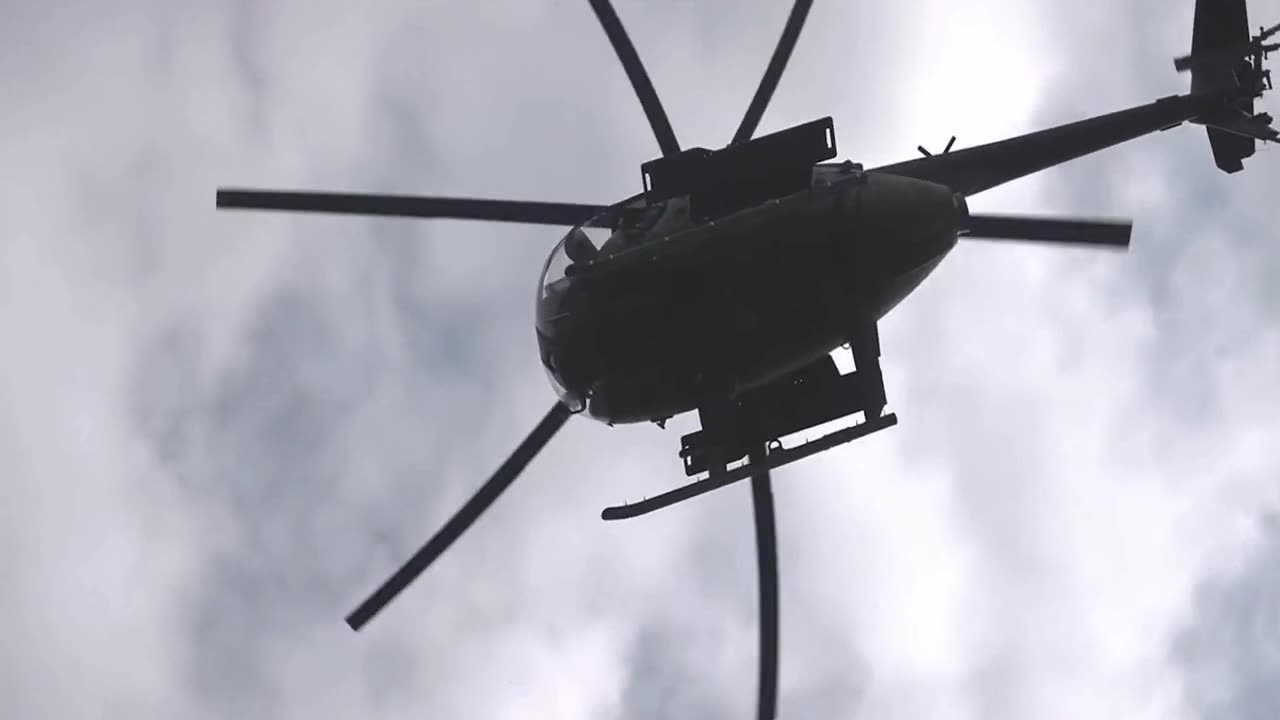
Why Can't We Be Friends Cisco Kid Lowrider War
Why Can't We Be Friends? Album: Why Can't We Be Friends? (1975)
Cisco Kid Album: Why Can't We Be Friends? (1975)
Lowrider Album: Why Can't We Be Friends? (1975)
by War
The band got the idea for "Why Can't We Be Friends?" when they were traveling in Japan in the early '70s. War drummer Harold Brown said "We're all connected by language, and by our food, and by our culture. Most racists don't know why they're racist. But you pick them up and take them over and drop them in a country, like India or Pakistan, guess what? 'Why can't we be friends?' Because all of a sudden you find out we're more alike inside than we are on the outside. We started realizing that that's really important. You travel all over the world, you can't speak a lot of their language. But one thing they do know, they know your body language, how you may react."
Each verse was sung by a different member of the band, with Brown singing the first. The line, "I may not speak right, but I know what I'm talking about," is harmonica player Lee Oskar, who is from Denmark and was just learning how to speak English.
War started out in the early '60s as a black band called The Creators, and they managed to break down barriers, becoming the first black band to be booked on the Sunset Strip in Los Angeles. As they evolved into War and went through member changes over the years, the band integrated, often playing with white musicians like Eric Burdon, who was their lead singer for two albums.
Harold Brown explains his philosophy: "I like exemplary people around me. I don't judge you by your name, your color, or your money. I judge you by whether or not you're an exemplary person. Because if I know you're an exemplary person, and I want you to move this equipment from here to there, or you're building a house or you're shining shoes or stuff, then I know you're gonna do it the best you know how. That's the bottom line. See, that's where people keep falling off of America here, because we get inferior people in positions they have no business being in."
War recorded this at Crystal Studios in Hollywood, where artists like Stevie Wonder and The Fabulous Thunderbirds would also record.
The band name ties into this song. Harold Brown said "We Are Righteous, that's what War stood for. It was trying to bring everybody together through our music."
In 2005, XM Satellite Radio used this in commercials to promote their Major League Baseball broadcasts. The idea was that fans of different teams could still get along as long as they could listen to the games anywhere an XM radio could be found.
Four of the five original surviving members of War formed the Lowrider Band after losing the name in the mid-1990s to Far Out Productions (producer and songwriter Jerry Goldstein), who allows original keyboardist Lonnie Jordan to use the name. Brown harbors no ill will toward Jordan, and feels that "ultimately, natural justice will prevail."
Smash Mouth covered this on their first CD, Fush Yu Mang.
The original video for this song features a cast of multiracial, multi-occupational, multicultural earthlings. One segment features a man parachuting in on a couple celebrating their love. He brings them a bottle of wine and pours it into their glasses. Look closely at the woman's ring. It is not on her left hand, she is holding the glass with her right hand. The man might be married, as his ring is on his wedding ring finger on his left hand, but it is not clear if he is married to the woman or if the woman is married at all.
This song shows up in many movies, often to lighten the mood during scenes with some comedic tension. One example is Fast & Furious Presents: Hobbs & Shaw (2019), where two frenemies come together for a common cause (and lots of mayhem). Other films to use the song include:
Cats & Dogs: The Revenge of Kitty Galore (2010)
College Road Trip (2008)
Semi-Pro (2008)
The Nanny Diaries (2007)
Bridge to Terabithia (2007)
Cheaper by the Dozen 2 (2005)
Mr. 3000 (2004)
Welcome to Mooseport (2004)
Cheats (2002)
The Mexican (2001)
BASEketball (1998)
Lethal Weapon 4 (1998)
Wild Things (1998)
Dazed and Confused (1993)
The Muppets performed this in a 1979 episode (the one with John Denver as the guest star) in a bit where various Muppets sing it on a battlefield as they blow each other up. We see Frenchmen, Romans, Native Americans, hillbillies, and even Germans doing some trench warfare while asking the musical question, "why can't we be friends." It's quite a profound statement, and not without precedent: in 1914, World War I soldiers on both sides called a truce and became friends until officers ordered them to start shooting each other again.
The Cisco Kid was a popular TV show that ran from 1950-1956, and also a series of movies. The title character, played by Duncan Renaldo in the TV show, was a Mexican cowboy who embarked on various adventures in the Old West.
War guitarist Howard Scott came up with the idea for this song. Drummer Harold Brown told us how it came together: "Howard has always been a major contributor. He was in Compton, he had this apartment. I came up there and when I got up there he was sitting on his amp. He said, 'Harold, I got this idea. Cisco kid was a friend of mine.' That idea came about because there were no ethnic heroes at that time. Mainly, we were seeing people like Hopalong Cassidy, Gene Autry, Roy Rogers. There wasn't really anybody to relate to except Cisco Kid. He was like the total different kind of person.
We wanted to give kids, people, another alternative besides the ones that were right in our face, obvious heroes. And it worked out really good, because it had the right kind of hook, it was a fun song. People at that time didn't want to be hearing about no more wars or anything, they just wanted fun music. And the tonality was brilliant."
Brown's drumming was inspired by a Sam & Dave song called "I Thank You." He used a technique where he played on the rim.
The band got to meet Cisco Kid star Duncan Renaldo. Says Brown: "We went up to his house, and his wife made sure to let everybody know, 'He don't drink. He don't drink no wine.' I remember that to this day. They were beautiful, warm people. We sat there with him. He lived up in Camarillo, up outside of Santa Barbara, California."
During War's live shows, they sometimes used a Cisco Kid movie clip to open the show. In the clip, The Cisco Kid would say, "See you later, amigo," and War would go into this song. (Thanks to Harold Brown for speaking with us about this song. Along with 3 other original members of War, Brown formed The Lowrider Band in 2007.
"Low Rider" is a song written by American funk band War and producer Jerry Goldstein, which appeared on their album Why Can't We Be Friends?, released in June 1975. It reached number one on the Billboard R&B singles chart, peaked at number seven on the Hot 100 singles chart on November 29, 1975, and number six in Canada (number 69 in the Canadian year-end chart). The song was also used in the 1978 Cheech and Chong movie “Up In Smoke”, and appeared as track 3 of the associated original sound track album.
The Beastie Boys sampled "Low Rider" on their song "Slow Ride", from 1986's Licensed to Ill. Three years later, thrash metal band, Exodus covered the song, on their third studio album, Fabulous Disaster and nearly a decade later, the song was covered by nu metal band Korn on their 1996 studio album Life Is Peachy. Beginning in 1996, "Low Rider" featured for several years on British television in adverts for Marmite, as part of their 'Love it or hate it' campaign. In 1999, Barry White recorded a version on his album Staying Power. "Low Rider" was later used as the theme song for the George Lopez self-titled ABC sitcom, which ran from 2002 to 2007. The song was inducted into the Grammy Hall of Fame in 2014. Canadian rapper bbno$ sampled "Low Rider" on his single, "Check" in 2025.
-
 10:52
10:52
Psychological operations
24 days agoControl Psycho She Hates Me Puddle Of Mudd
150 -
 58:55
58:55
The Rubin Report
1 hour agoBill Maher Makes Ana Kasparian Squirm by Refusing to Let Her Avoid This Question
6.43K11 -
 LIVE
LIVE
The Shannon Joy Show
2 hours ago🔥SJ Show Dec 9: Food Price Controls & Welfare For Farmers * War With Venezuela * Epstein Victims Update W/ Investigative Reporter Nick Bryant🔥
210 watching -
 LIVE
LIVE
The Mel K Show
1 hour agoMORNINGS WITH MEL K Bread & Circuses: People Worldwide Standing for Freedom and Sovereignty 12-9-25
670 watching -
 LIVE
LIVE
LFA TV
15 hours agoLIVE & BREAKING NEWS! | TUESDAY 12/09/25
4,303 watching -
 35:01
35:01
Clintonjaws
3 hours agoNick Fuentes Visibly Angry as Piers Morgan Stops His Show & Adds Surprise Guest
668 -
 1:00:51
VINCE
4 hours agoHOT MIC: President Trump Is Fed Up! | Episode 184 - 12/09/25 VINCE
201K127 -
 1:56:44
Benny Johnson
2 hours agoBOMBSHELL: Confirmed Proof Biden FBI Identified Pipe Bomber in 2021, Cover Up EXPOSED In New Docs
25.1K33 -
 LIVE
LIVE
Trumpet Daily
52 minutes agoTrumpet Daily LIVE | Dec. 9, 2025
409 watching -
 LIVE
LIVE
Daniel Davis Deep Dive
5 hours agoCol Doug Macgregor: Ukraine Won't Give Up Land
103 watching