Was the Universe Created?

J W
universe had a beginning. (Genesis 1:1) In contrast, many ancient myths describe the universe, not as being created, but as being organized from existing chaos. The Babylonians believed that the gods that gave birth to the universe came from two oceans. Other legends say that the universe came from a giant egg.
Is God Real ?
J W
The Bible’s Viewpoint Is God a Real Person? AWED by nature, many people are compelled to believe in a supernatural force, a deity. Are you impressed by the complexity of the universe? Do you marvel at our planet’s natural wonders and the intricate design of the human body?

Does God Have a Name?
J W
Does God have a name? SOME PEOPLE SAY that he has no name, others say that it is God or Lord, and still others say that he has dozens of names. What do you think? WHAT THE BIBLE SAYS “You, whose name is Jehovah, you alone are the Most High over all the earth.”—Psalm 83:18.
Who Is the Author of the Bible?
J W
What Is the Bible?
The Bible’s Answer The Bible is a collection of 66 sacred books. It was written over a period of approximately 1,600 years. The Bible contains a divine message—“the word of God.”—1 Thessalonians 2:13. In this article Facts about the Bible What is the Bible about? Has the Bible been changed?

Is Friendship With God Possible?
J W
Having a close relationship with God makes you feel secure, complete, and stable.May the God who gives hope fill you with all joy and peace”—Romans 15:13 Morning 9:20 Music-Video Presentation 9:30 Song No. 101 and Prayer 9:40 SYMPOSIUM: How They Sowed and Reaped Peace • Joseph and His Brothers (Galatians 6:7, 8; Ephesians 4:32) • The Gibeonites (Ephesians 5:17) • Gideon (Judges 8:2, 3) • Abigail (1 Samuel 25:27-31)
How Can We Be Sure the Bible Is True?
J W
If you are wondering whether you can fully trust the Bible, please see the short video
Why Did God Create the Earth?
J W
JW.ORG
Change site language
Log In (opens new window)
Search JW.ORG
SHOW MENU
Library
Books & Brochures
Good News From God!
READ IN
English
LESSON 5
What Is God’s Purpose for the Earth?
LESSON 05—What Is God’s Purpose for the Earth?
Current time 0:00
/
Duration -:-
Play
Back 5 seconds
Forward 15 seconds
Previous
Mute
Settings
1. Why did God create the earth?
Adam and Eve in the garden of Eden and later being put out of the garden
Jehovah gave the earth to men and women. It is our home. Therefore, the first human couple, Adam and Eve, were not created to populate the heavens—God had already created angels to live in heaven. (Job 38:4, 7) Rather, God took the first man and settled him in a delightful paradise called the garden of Eden. (Genesis 2:15-17) Jehovah gave him and his future offspring the prospect of enjoying life without end on earth.
1
comment
What Is the Purpose of Life?
J W
What Is the Will of God for My Life?
The Bible’s answer God’s will is that you come to know him as a Person, draw close to him, and then love and serve him with your whole heart. (Matthew 22:37, 38; James 4:8) You can learn how to do God’s will from the life and teachings of Jesus. (John 7:16, 17) Jesus didn’t just talk about the will of God—he lived it. In fact, Jesus said that his purpose in life was “to do, not my will, but the will of him that sent me.”—John 6:38.


What Is the Condition of the Dead?
J W
What Is the Condition of the Dead?
FEAR of the dead rests on one premise—that the deceased has a soul or spirit that lives on after death. If the Bible plainly teaches that this concept is false, then the question of whether the dead can harm you is laid to rest. So, then, what does the Bible say?
Concerning the condition of the dead, God’s Word says: “The living are conscious that they will die; but as for the dead, they are conscious of nothing at all, neither do they anymore have wages, because the remembrance of them has been forgotten. Also, their love and their hate and their jealousy have already perished, and they have no portion anymore to time indefinite in anything that has to be done under the sun.”—Ecclesiastes 9:5, 6.
In view of that, can the dead help or harm you? No, say the Scriptures. The dead are unconscious and in silence. They are incapable of communicating with the living or of expressing any emotion—love or hate—or of carrying out any action. You need not have any fear of them.
‘Well, yes, that may be true if you refer to death of the physical body,’ some may say. ‘But a physical death is not the end of life; it just releases the spirit from the body. That spirit could help or harm the living.’ Millions of people earth wide feel that way.
For example, in Madagascar life is considered a mere transition, so a funeral and an exhumation are considered more important than a wedding. It is thought that the person came from his ancestors and returns to them at death. Hence, houses for the living are made of wood and adobe, materials that disintegrate in time, whereas tombs, the “homes” for the dead, are generally more elaborate and durable. At an exhumation, family and friends feel that they will be blessed, and women believe that if they touch the bones of the dead relative, they will become fertile. But, again, what does God’s Word say?
1
comment

Is Hell a Real Place of Torment?
J W
Is hell a place of eternal suffering?
No. The original words translated as “hell” in some older Bible translations (Hebrew, “Sheol”; Greek, “Hades”) basically refer to “the Grave,” that is, the common grave of mankind. The Bible shows that people in “the Grave” are in a state of nonexistence.
The dead are unconscious and so cannot feel pain. “Neither work, nor reason, nor wisdom, nor knowledge, shall be in hell.” (Ecclesiastes 9:10, Douay-Rheims Version) Hell is not filled with sounds of pain. Instead, the Bible says: “Let the wicked be ashamed, and let them be silent in the grave [hell, Douay-Rheims].”—Psalm 31:17; King James Version (30:18, Douay-Rheims); Psalm 115:17.
God has set death, not torment in a fiery hell, as the penalty for sin. God told the first man, Adam, that the penalty for breaking God’s law would be death. (Genesis 2:17) He said nothing about eternal torment in hell. Later, after Adam sinned, God told him what his punishment would be: “Dust you are and to dust you will return.” (Genesis 3:19) He would pass out of existence. If God were actually sending Adam to a fiery hell, He surely would have mentioned it. God has not changed the punishment for defying his laws. Long after Adam sinned, God inspired a Bible writer to say: “The wages sin pays is death.” (Romans 6:23) No further penalty is justified, because “the one who has died has been acquitted from his sin.”—Romans 6:7.
The idea of eternal torment is repugnant to God. (Jeremiah 32:35) Such an idea is contrary to the Bible’s teaching that “God is love.” (1 John 4:8) He wants us to worship him out of love, not fear of eternal torment.—Matthew 22:36-38.
Good people went to hell. The Bibles that use the word “hell” indicate that faithful men, such as Jacob and Job, expected to go to hell. (Genesis 37:35; Job 14:13) Even Jesus Christ is spoken of as being in hell between the time of his death and his resurrection. (Acts 2:31, 32) Obviously, then, when “hell” is used in these Bibles, it simply refers to the Grave. b
1
comment
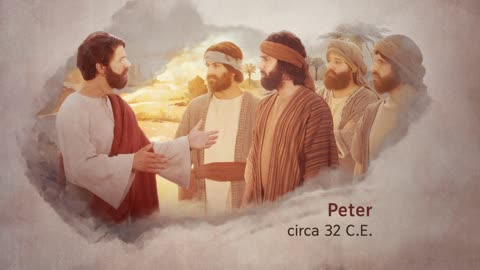
Is Jesus Christ God?
J W
Jesus Christ—God, Man, or Myth?
A ROCK musical that opened on Broadway in New York City in 1971 proved to be controversial, dealing as it did with a religious subject. But probably the subject was no more controversial than was the identity of its main character.
One of this musical’s hit songs asked: “Jesus Christ Superstar, do you think you’re what they say you are?” Who did people back in the first century say Jesus was? Jesus himself asked his disciples that question and received several different answers. (Matthew 16:13, 14) Today, almost 2,000 years later, the identity of Jesus Christ is still controversial.
Does it really matter who Jesus was? What effect can his identity have on us? Well, prominent people of bygone days shaped world history, thus affecting all of us, if only indirectly. But today they are dead. Thus, although they have affected us by what they did, in no way can they affect us by what they are doing.
In the case of Jesus Christ, however, the situation is entirely different. Millions believe, and have conclusive evidence for such belief, that Jesus is very much alive today, not as a human on earth but as a powerful spirit in heaven. What Jesus has been doing, especially in this 20th century, has had a profound effect on all humans. Moreover, Jesus’ effect on our lives is not limited to what he has done in the past. It reaches out to include what he is doing at present and, happily, what he will do in the future.
Returning to our theme: Jesus Christ—God, man, or myth? What do you think? A mythical Jesus Christ would mean that he was neither God nor man, making further consideration pointless. On the other hand, we should be eager to learn about a Jesus who is alive and who is empowered by God to bring lasting benefits to mankind.
2
comments

Why Did Jesus Die?
J W
The Bible’s answer
Jesus died so that humans could have their sins forgiven and receive endless life. (Romans 6:23; Ephesians 1:7) Jesus’ death also proved that a human can remain loyal to God even when faced with the severest of tests.—Hebrews 4:15.
Consider how the death of one man could accomplish so much.
Jesus died for “the forgiveness of our sins.”—Colossians 1:14.
The first human, Adam, was created perfect, without sin. However, he chose to disobey God. Adam’s disobedience, or sin, profoundly affected all his descendants. “Through the disobedience of the one man,” the Bible explains, “many were made sinners.”—Romans 5:19.
Jesus was also perfect, but he never sinned. Therefore, he could be “an atoning sacrifice for our sins.” (1 John 2:2; footnote) Just as Adam’s disobedience contaminated the human family with sin, so Jesus’ death removed the stain of sin from all who exercise faith in him.
In a sense, Adam sold the human race into sin. Jesus, by willingly dying in our behalf, repurchased humankind as his own. As a result, “if anyone does commit a sin, we have a helper with the Father, Jesus Christ, a righteous one.”—1 John 2:1.
Jesus died “so that everyone exercising faith in him might not be destroyed but have everlasting life.”—John 3:16.
Although Adam was created to live forever, his sin brought upon him the penalty of death. Through Adam, “sin entered into the world and death through sin, and so death spread to all men because they had all sinned.”—Romans 5:12.
In contrast, Jesus’ death not only removed the blemish of sin but also canceled the death sentence for all who exercise faith in him. The Bible sums up matters this way: “Just as sin ruled as king with death, so also undeserved kindness might rule as king through righteousness leading to everlasting life through Jesus Christ our Lord.”—Romans 5:21.
Of course, humans today still have a limited life span. However, God promises that he will grant righteous humans everlasting life and resurrect the dead so that they too can benefit from Jesus’ sacrificial death.—Psalm 37:29; 1 Corinthians 15:22.
Jesus “became obedient to the point of death,” thus proving that a human could be faithful to God under any test or trial.—Philippians 2:8.
Despite having a perfect mind and body, Adam disobeyed God because he selfishly desired something that did not belong to him. (Genesis 2:16, 17; 3:6) Later, God’s chief enemy, Satan, suggested that no human would unselfishly obey God, especially if his life were on the line. (Job 2:4) Yet, the perfect man Jesus obeyed God and remained loyal to him, even undergoing a disgraceful and painful death. (Hebrews 7:26) This completely settled the matter: A human can remain faithful to God under whatever test or trial may be brought upon him.

God's Kingdom Began Ruling in 1914
J W
The Bible’s answer
Bible chronology indicates that God’s Kingdom was established in heaven in 1914. This is shown by a prophecy recorded in chapter 4 of the Bible book of Daniel.
Overview of the prophecy. God caused King Nebuchadnezzar of Babylon to have a prophetic dream about an immense tree that was chopped down. Its stump was prevented from regrowing for a period of “seven times,” after which the tree would grow again.—Daniel 4:1, 10-16.
The prophecy’s initial fulfillment. The great tree represented King Nebuchadnezzar himself. (Daniel 4:20-22) He was figuratively ‘chopped down’ when he temporarily lost his sanity and kingship for a period of seven years. (Daniel 4:25) When God restored his sanity, Nebuchadnezzar regained his throne and acknowledged God’s rulership.—Daniel 4:34-36.
Evidence that the prophecy has a greater fulfillment. The whole purpose of the prophecy was that “people living may know that the Most High is Ruler in the kingdom of mankind and that he gives it to whomever he wants, and he sets up over it even the lowliest of men.” (Daniel 4:17) Was proud Nebuchadnezzar the one to whom God ultimately wanted to give such rulership? No, for God had earlier given him another prophetic dream showing that neither he nor any other political ruler would fill this role. Instead, God would himself “set up a kingdom that will never be destroyed.”—Daniel 2:31-44.
Previously, God had set up a kingdom to represent his rulership on earth: the ancient nation of Israel. God allowed that kingdom to be made “a ruin” because its rulers had become unfaithful, but he foretold that he would give kingship to “the one who has the legal right.” (Ezekiel 21:25-27) The Bible identifies Jesus Christ as the one legally authorized to receive this everlasting kingdom. (Luke 1:30-33) Unlike Nebuchadnezzar, Jesus is “lowly in heart,” just as it was prophesied.—Matthew 11:29.
What does the tree of Daniel chapter 4 represent? In the Bible, trees sometimes represent rulership. (Ezekiel 17:22-24; 31:2-5) In the greater fulfillment of Daniel chapter 4, the immense tree symbolizes God’s rulership.
What does the tree’s being chopped down mean? Just as the chopping down of the tree represented an interruption in Nebuchadnezzar’s kingship, it also represented an interruption in God’s rulership on earth. This happened when Nebuchadnezzar destroyed Jerusalem, where the kings of Israel sat on “Jehovah’s throne” as representatives of God himself.—1 Chronicles 29:23.
What do the “seven times” represent? The “seven times” represent the period during which God allowed the nations to rule over the earth without interference from any kingdom that he had set up. The “seven times” began in October 607 B.C.E., when, according to Bible chronology, Jerusalem was destroyed by the Babylonians. a—2 Kings 25:1, 8-10.
How long are the “seven times”? They could not be merely seven years as in Nebuchadnezzar’s case. Jesus indicated the answer when he said that “Jerusalem [a symbol of God’s rulership] will be trampled on by the nations until the appointed times of the nations are fulfilled.” (Luke 21:24) “The appointed times of the nations,” the period during which God allowed his rulership to be “trampled on by the nations,” are the same as the “seven times” of Daniel chapter 4. This means that the “seven times” were still under way even when Jesus was on earth.
The Bible provides the way to determine the length of those prophetic “seven times.” It says that three and a half “times” equal 1,260 days, so “seven times” equal twice that number, or 2,520 days. (Revelation 12:6, 14) Applying the prophetic rule “a day for a year,” the 2,520 days represent 2,520 years. Therefore, the “seven times,” or 2,520 years, would end in October 1914.—Numbers 14:34; Ezekiel 4:6.
1
comment



Why Does God Allow Suffering?
J W
Why Does God Allow Suffering?
“Human beings are unique in being able to be wicked, because they are unique in being conscious of what they are doing and in making deliberate choices.”—Arnold Toynbee, historian, Mankind and Mother Earth.
ALL of us make deliberate choices. We do it every day. Most of our decisions have to do with the trivia of daily life—what to eat, what to drink, what to wear, where to go. But some decisions have graver consequences that can affect us for the rest of our lives—or can even shorten our lives.
When a doctor recommends an operation, the need to make a choice immediately arises. Is it worth the risk? How experienced and reliable is the surgeon? Will it extend or shorten my life? A serious decision has to be made.
Away back in history, deliberate choices were made that have affected mankind ever since. And those decisions have a direct bearing on our question, Why does God allow suffering?
Man—‘Unique in Being Wicked’?
The Biblical account of early history indicates that man was not the first intelligent creation with free will and the ability to choose. Nor was he, in fact, either first or “unique in being able to be wicked.” A higher form of life already existed—“godlike ones,” spirit creatures, also called angels.—Psalm 8:5.
One of these “godlike ones,” of whom there are millions, saw his opportunity to become a real god-ruler for the first man and woman, instead of Jehovah their Creator. Using his free will, he deliberately lied to the woman to induce her and, through her, her husband to be disobedient to God. He implied that God was a liar and a deceiver. He told her that independent thinking and acting would not lead to death, as God had stated, but asserted: “You are bound to be like God, knowing good and bad.”—Genesis 3:1-5.
By his course of action, this godlike one started a rebellion against God’s rulership—a rebellion witnessed by millions of angels. In this way the exercise of rightful sovereignty became a universal issue. That opposing angel became God’s adversary, which from Hebrew is translated “Satan.” By putting in doubt God’s truthfulness, Satan also became the first slanderer, which from Greek is translated “Devil.” This initial rebellion triggered the chain of events that has led to mankind’s sufferings
1
comment

Does God Accept All Forms of Worship?
J W
Does God Accept All Forms of Worship?
Common answers:
▪ “All religions are paths leading to God.”
▪ “It doesn’t matter what you believe if you are sincere.”
What did Jesus say?
▪ “Go in through the narrow gate; because broad and spacious is the road leading off into destruction, and many are the ones going in through it; whereas narrow is the gate and cramped the road leading off into life, and few are the ones finding it.” (Matthew 7:13, 14) Jesus did not believe that all roads lead to God.
▪ “Many will say to me in that day, ‘Lord, Lord, did we not prophesy in your name, and expel demons in your name, and perform many powerful works in your name?’ And yet then I will confess to them: I never knew you! Get away from me, you workers of lawlessness.” (Matthew 7:22, 23) Jesus does not accept all those who claim to follow him.
MANY religious people treasure their own beliefs and traditions. But what happens if these teachings are not in harmony with what is found in God’s Word, the Bible? Jesus showed the danger of following man-made traditions when he said to the religious leaders of his day: “You have made the word of God invalid because of your tradition.” He then went on to quote these words of God: “This people honors me with their lips, yet their heart is far removed from me. It is in vain that they keep worshiping me, because they teach commands of men as doctrines.”—Matthew 15:1-9; Isaiah 29:13.
Conduct is also important, not just beliefs. The Bible says of some who claim to worship God: “They publicly declare they know God, but they disown him by their works.” (Titus 1:16) In fact, the Bible says of those living in our time: “Instead of loving God, they will love pleasure. Even though they will make a show of being religious, their religion won’t be real. Don’t have anything to do with such people.”—2 Timothy 3:4, 5, Contemporary English Version.
Sincerity is required, but more is needed. Why? Because a person can be sincerely wrong. So accurate knowledge about God is vital. (Romans 10:2, 3) Taking in this knowledge and acting in harmony with what the Bible says will enable us to be pleasing to God. (Matthew 7:21) Really, then, right religion involves right motive, right belief, and right action. And right action means doing the will of God daily!—1 John 2:17.
If you would like to know more regarding what the Bible tells us about God, contact Jehovah’s Witnesses for a free home Bible study.

Must You Belong to an Organized Does Religion to Worship God?
J W
Is It Necessary to Belong to an Organized Religion?
The Bible’s answer Yes, because God wants people to gather for worship. The Bible says: “Let us consider one another so as to motivate to love and fine works, not forsaking our meeting together.”—Hebrews 10:24, 25, footnote.
1
comment
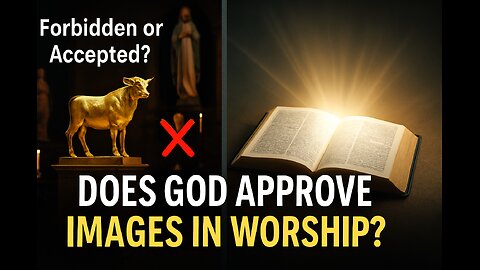
Does God Approve the Use of Images in Worship?
J W
The Bible’s answer
No, we should not. Describing the laws that God gave to the nation of Israel, the New Catholic Encyclopedia notes: “From various Biblical accounts it is evident that the true worship of God was devoid of images.” Consider these Bible verses:
“You must not make for yourself a carved image or a form like anything that is in the heavens above or that is on the earth underneath or that is in the waters under the earth. You must not bow down to them nor be induced to serve them, because I Jehovah your God am a God exacting exclusive devotion.” (Exodus 20:4, 5) Since God requires “exclusive devotion,” he is not pleased if we praise or worship images, pictures, idols, icons, statues, or symbols.
“I will not let statues take the praise that should be mine.” (Isaiah 42:8, Easy-to-Read Version) God rejects worship given to him through images. When some Israelites tried to worship him using a statue of a calf, God said that they had committed “a terrible sin.”—Exodus 32:7-9, Easy-to-Read Version.
“We ought not to imagine that the Divine Being is like gold or silver or stone, like something sculptured by the art and contrivance of man.” (Acts 17:29) In contrast to pagan worship, which often uses images “sculptured by the art and contrivance of man,” Christians should be “walking by faith, not by sight,” as the Bible says.—2 Corinthians 5:7.
“Guard yourselves from idols.” (1 John 5:21) In commands given both to the nation of Israel and to Christians, the Bible consistently exposes as a myth the teaching that God approves of the use of images and icons in worship.
Does God Listen to All Prayers?
J W
Our heavenly Father, Jehovah God, is willing and pleased to hear our sincere prayers. But there are things that would stop him from answering our prayers. What are these things, and what should we keep in mind when we pray? Here are some Bible guidelines.“When praying, do not say the same things over and over again.”—Matthew 6:7.
Jehovah does not want us to repeat memorized prayers or read them out of a prayer book. Rather, he wants us to speak from the heart. Imagine how frustrating it would be to have a friend recite the same words to you day in and day out. Good friends are open and sincere. When we pray in our own words, we are saying something personal to our heavenly Father.
A man looking upward while he scratches a lottery ticket.
“When you do ask, you do not receive because you are asking for a wrong purpose.”—James 4:3.
We would certainly not expect God to answer our prayers if we were to ask for things we know he does not want us to do or to have. For example, would Jehovah grant a gambler’s request for good luck when He has clearly warned against greediness and the superstitious belief in luck? (Isaiah 65:11; Luke 12:15) How illogical to expect Jehovah to answer such prayers! For God to answer when we pray to him, we must make sure that our requests are in harmony with what he tells us in the Bible.
A clergyman praying for a group of soldiers.
“The one refusing to listen to the law—even his prayer is detestable.”—Proverbs 28:9.
In Bible times, God did not answer those who rejected his righteous laws. (Isaiah 1:15, 16) His feelings have not changed. (Malachi 3:6) If we want God to answer our prayers, we must do what we can to live in harmony with his laws. What, though, if we did things in the past that are wrong? Does that mean Jehovah will never listen to us? Of course not! God will lovingly forgive us if we turn our life around and do our best to please him.—Acts 3:19.
1
comment
What Is God's View of Marriage?
J W
The Bible’s answer
God approves of marriage between a man and a woman of different races because all races are equal in his sight. The Bible says: “God treats everyone on the same basis . . . , no matter what race.”—Acts 10:34, 35, Good News Translation.
Consider some other Bible principles that bear on racial equality and marriage.
All races come from a common source
All humans descended from the first man, Adam, and his wife, Eve, whom the Bible calls “the mother of everyone living.” (Genesis 3:20) For this reason, the Bible says of God: “He made out of one man every nation of men.” (Acts 17:26) Regardless of their race, all humans are part of just one family. What, though, if racial prejudice or class distinctions are strong where you live?
Wise people ‘consult together’
While interracial marriage is perfectly acceptable to God, not all people share his view. (Isaiah 55:8, 9) If you are considering marrying someone of another race, you and your prospective mate should discuss the following:
How will you deal with the pressures you might face from your community or family?
How will you help your children to deal with prejudice?
“Consulting together” in this way can help you to make your marriage a success.—Proverbs 13:10; 21:5.

Comfort for Those Who Mourn
J W
JW.ORG
Change site language
Log In (opens new window)
Search JW.ORG
SHOW MENU
Library
Magazines
Awake! | May 8, 2002
READ IN
English
Comfort for Those Who Mourn
Comfort for Those Who Mourn
THE terrorist attacks that took place on September 11, 2001, in New York City and in Washington, D.C., horrified people all over the world. In one day, thousands died, including hundreds of heroic fire fighters, policemen, and paramedics.
Since that event, Jehovah’s Witnesses have made a concerted effort to comfort those who have lost loved ones in the tragedy. They have done this in order “to bind up the brokenhearted” and “to comfort all the mourning ones.”—Isaiah 61:1, 2.
Over the years, Jehovah’s Witnesses have found that those who lose loved ones in death often ponder over the questions that follow. The Bible has the answers. Why not check the Scriptural references below in your own copy of the Bible?
Is a person’s death predestined?
At Ecclesiastes 9:11, the Bible states that “time and unforeseen occurrence” (“chance,” New English Bible) befall all mankind. If death is predestined, why does the Bible encourage us to take safety precautions?—For instance, see Deuteronomy 22:8.
Why do we die?
The first human pair, Adam and Eve, were placed in an earthly paradise. If they had remained obedient, they would not have died. Death was to result only if humans disobeyed God. (Genesis 1:28; 2:15-17) Sadly, Adam and Eve did disobey their Creator. As a result, they paid the penalty—death. Since all humans have descended from Adam and Eve, all have inherited sin and death. The Bible explains: “Through one man [Adam] sin entered into the world and death through sin, and thus death spread to all men.”—Romans 5:12.
What is the condition of the dead?
After Adam rebelled, God said: “You [will] return to the ground, for out of it you were taken. For dust you are and to dust you will return.” (Genesis 3:19) Hence, death is a state of total unconsciousness—really, nonexistence. The Bible states: “The living are conscious that they will die; but as for the dead, they are conscious of nothing at all.” (Ecclesiastes 9:5) The Bible also says that when a person dies, “he goes back to his ground; in that day his thoughts do perish.”—Psalm 146:3, 4.
Don’t we have a soul that survives death?
The Bible clearly teaches that your soul is simply you, not some abstract entity that will survive your death. (Genesis 2:7; Proverbs 2:10; Jeremiah 2:34) Since this is so, we can say that when a person dies, a soul has died. The Bible clearly states: “The soul [that is, the person] that is sinning . . . will die.”—Ezekiel 18:4.
What hope is there for those who have died?
The Bible reveals that it is God’s purpose to restore the dead to life by means of a resurrection to a paradise earth, where sickness and death will be no more. Jesus said: “The hour is coming in which all those in the memorial tombs will hear his voice and come out.”—John 5:28, 29; Revelation 21:1-4.
When speaking of his recently deceased friend Lazarus, Jesus compared death to sleep. (John 11:11-13) Moreover, after Jesus resurrected him, Lazarus said nothing about having been in a place of torment or a place of bliss during the brief period of his death. (John 11:37-44) This is understandable, for the dead are unconscious. They do not experience suffering but await the “hour” in which they will be raised. In any event, the fact that Jesus resurrected Lazarus shows that the dead can live again. Indeed, by this miracle Jesus showed on a small scale what will take place on earth under the rule of God’s Kingdom. (Acts 24:15) What a comfort that is for those who lose their loved ones in death during this turbulent time!

When a Loved One Dies
J W
“God knows best, baby. . . . Don’t . . . you . . . cry.”
Those words were whispered into the ear of a woman named Bebe. She was at the funeral of her father, who had died in a car accident.
Bebe had been very close to her father. The remark came from a well-meaning family friend, but Bebe found it more cutting than comforting. “His death wasn’t for the best,” she kept repeating to herself. It was clear that when Bebe recounted the incident in a book years later, she was still grieving.
As Bebe came to see, it can take a long time for someone to overcome grief, especially when the bereaved person was very close to the deceased. In the Bible, death is aptly described as “the last enemy.” (1 Corinthians 15:26) It breaks into our lives with irresistible force, often when we are completely unprepared, and it robs us of those we hold dear. None of us are immune to its ravages. So it is not surprising if we feel at a loss when it comes to coping with death and its aftermath.
Perhaps you have wondered: ‘How long does it take to get over grief? How can a person cope with grief? How can I comfort others who have been bereaved? Is there any hope for our loved ones who have died?’

Why Study the Bible?-Full Length
J W
Why does it matter whether there is a Creator? If the evidence convinces you that an almighty God exists, then you may want to examine the evidence that the Bible is inspired by him. And if you trust what the Bible says, then you stand to benefit in the following ways. Add meaning to your life
? Is Pornography a Sin Against God?
J W
What Is the Bible’s View?
Pornography—Is It Really Harmful?
IN RECENT years major cities throughout the earth have been hit by an avalanche of books, pictures, films, plays and shows that portray sexual relations as a form of entertainment. This is called “pornography” and has become a multimillion-dollar business in the United States alone.
Some argue that pornography is harmful but others claim that it does no harm. In fact, the Commission on Obscenity and Pornography, appointed by the president of the United States, expressed the view that American adults should “be allowed to read or see any sexual materials they wish.”
What is the truth of the matter? Is pornography really harmful? To answer that question correctly we must go to someone who has full authority to speak on the subject. That is why the Bible’s view is so important, for the Holy Scriptures contain “God’s word,” not that of imperfect men.—Eph. 6:17.
The Bible shows that Jehovah God created the reproductive organs to be used in honorable marriage. It is, therefore, quite normal for individuals to want to know about their proper function. But a person must exercise caution as to where he obtains information about sex. Much that is written about it is inaccurate and goes contrary to God’s Word. Pornography is an example.
But does the Bible speak of pornography? It repeatedly warns against por·neiʹa, and that is a Greek word related to pornography. Greek lexicographers tell us that por·neiʹa refers to illicit sexual intercourse in general, without more precise definition. It is broad in meaning and includes “‘unnatural vice,’ . . . sodomy.” (Theological Dictionary of the New Testament) Because of this, Bible translators render this word variously as “fornication,” “gross immorality,” “sexual immorality,” “sexual sins,” or by similar expressions.
The Bible has much to say on this subject. At Ephesians 5:5, we read: “No fornicator [porʹnos] or unclean person or greedy person—which means being an idolater—has any inheritance in the kingdom of the Christ and of God.”
Someone may object that there is a difference between reading or viewing pornography and actually committing sexual sins. But is the difference really that great? Jesus stated that “out of the heart come . . . fornications” and that one could even commit adultery “in his heart.” (Matt. 15:19; 5:28) This is because desire originates in the heart. If one indulges one’s desire for something that God prohibits, by reading about it or dwelling upon it mentally, that desire can become overpowering. It can get to the point where one actually commits the sin “in his heart.” How so? Because he has voluntarily enticed himself to the point where he becomes fully motivated to do what he has been thinking about and he will do so if he can find the opportunity.—Jas. 1:13-15.
With good reason the Bible gives similar counsel at Colossians 3:5: “Deaden, therefore, your body members that are upon the earth as respects fornication, uncleanness, sexual appetite, hurtful desire, and covetousness, which is idolatry.” How can one succeed in this? Ephesians 5:3 directs: “Let fornication and uncleanness of every sort or greediness not even be mentioned among you.” This would include all ‘mention’ of such things, whether in conversation, in films, on stage or in print with a view to deriving sensual pleasure therefrom. So the Bible does not simply prohibit outright acts of sexual immorality. It also cautions against the steps leading up to such acts.
Now, what about pornography? Can anyone deny that pornography contains mention of “fornication and uncleanness of every sort”? This, in itself, makes it harmful. But the harm does not stop there. In an interview a convicted sex offender admitted: “You want to practice what you’ve been reading.” Another said of erotic movies: “I would go to one, then go out and attack some woman.”
Of course, not all individuals are so readily influenced to commit perversion. Nevertheless, Professor Ernest van den Haag of New York University cautioned: “Too many grownups are far from the self-restrained healthy types envisaged by much libertarian theory. They may easily be given a last (or first) push by obscene literature.”
Author Gladys Denny Shultz mentions a further harmful effect of pornography: “It gives a false, lying impression of sex and the way normal, civilized men and women behave. The unavoidable fact is that pornography sets up sexually sick people as models of behavior, and emphasizes bestiality, perversion, cruelty—as if that were the norm.” Yet, at Ephesians 4:25, God’s Word instructs: “Now that you have put away falsehood, speak truth each one of you with his neighbor.”
The Bible encourages its readers: “Above all things, have intense love for one another.” (1 Pet. 4:8) Pornography works directly against such admonition. In what way? Psychiatrist Dr. Fredric Wertham stated: “By and large, the trend in pornographic literature is toward sadism, toward brutality. . . . There have been cases of sadistic murder where it was proved in the courtroom that the murderer used sadistic pornography as a textbook.” Do you wish to saturate your mind with material that has had such a damaging effect upon others?
Pornography can even make one guilty of the sin of idolatry. How can that be? Because it promotes a form of covetousness, “which is idolatry.” (Col. 3:5) The Interpreter’s Bible explains the meaning of the Greek word for “covetousness” (ple·o·ne·xiʹa) as follows: “‘sensual self-indulgence,’ which gratifies self at whatever cost to others.” Ple·o·ne·xiʹa is “concerned with nothing but the satisfaction of its own impulses.”
Pornography promotes this type of selfishness. Author Irving Kristol, writing in the New York Times Magazine, explains: “The sexual pleasure one gets from pornography and obscenity is autoerotic [self-generated and directed to oneself] . . .; put bluntly, it is a masturbatory exercise of the imagination, when it is not masturbation pure and simple.” Thus pornography can cause a person to make an object of worship out of his own fleshly appetite. In effect, he makes an idol out of himself.
Pornography is indeed harmful. It gives a lying impression of God’s gift of sex and its proper use in honorable marriage; it leads to sexual sins committed either “in [the] heart” or out in the open (Matt. 5:28); it promotes sadism and brutality and can even cause one to become a worshiper of oneself. How loving of Jehovah God to warn us against it and to provide in his Word things ‘true, of serious concern, righteous, chaste, virtuous and praiseworthy’!—Phil. 4:8.2

Take Delight in God’s Promises of Peace
J W
Life and Ministry Meeting Schedule for December 30, 2024–January 5, 2025
Song 144 and Prayer | Opening Comments (1 min.) TREASURES FROM GOD’S WORD Repatriated Israelites reaping with joy because of Jehovah’s blessing on their hard work 1. They Sowed With Tears, but Reaped With Joy (10 min.) The Israelites were happy when they were freed from Babylon to restore pure worship (Ps 126:1-3)

“Jehovah Will Treat His Loyal One in a Special Way”
J W
Psalm 4:3
Know that Jehovah will treat his loyal one in a special way; Jehovah will hear when I call to him.

As the Storm Approaches, Maintain Your Focus on Jesus!-Future Kingdom Blessings
J W
What are your daily struggles? Are you a family head juggling many responsibilities? Are you a single parent trying hard to make ends meet? Are you a young one in school who faces harassment from peers? Are you dealing with poor health or the effects of advanced age? Everyone is dealing with something. Many Christians are dealing with multiple trials at the same time. Yet, we know that we will soon be liberated from these trials.—2Co 4:16-18.

Lessons From the Book of Job-Natural Forces
J W
BIBLE QUESTIONS ANSWERED
Is God an Impersonal Force?
The Bible’s answer God exercises unsurpassed force throughout the universe. Regarding the way he created the countless billions of stars, the Bible says: “Raise your eyes high up and see. Who has created these things? It is the One who is bringing forth the army of them even by number, all of whom he [God] calls even by name. Due to the abundance of dynamic energy, he also being vigorous in power, not one of them is missing.”—Isaiah 40:25, 26. But God is much more than a powerful force. The Bible says that he has feelings, such as love and hate. (Psalm 11:5; John 3:16) It also reveals that the way humans act can affect God’s emotions.—Psalm 78:40, 41.

Follow Jesus' Pattern-Keep On Asking, Seeking, and Knocking!
J W
Do Jesus’ Sayings Influence Your Prayers?
Do Jesus’ Sayings Influence Your Prayers? “When Jesus finished these sayings, the effect was that the crowds were astounded at his way of teaching.”—MATT. 7:28. 1, 2. Why were the crowds astounded at Jesus’ way of teaching


The Resurrection-Soon a Reality.
J W
The Bible’s answer In the Bible, the word translated as “resurrection” comes from the Greek a·naʹsta·sis, which means “raising up” or “standing up again.” A person who is resurrected is raised up from death and restored to life as the person he was before.—1 Corinthians 15:12, 13.


Take Delight in God's Promises of Peace-Excerpt.
J W
Peace on Earth—How Will It Come?
The Bible’s answer Peace on earth will come, not by human efforts, but by means of God’s Kingdom, a heavenly government ruled by Christ Jesus. Notice how the Bible teaches us about this wonderful hope

What Is the Purpose of Life?
6 months ago
4
What Is the Will of God for My Life?
The Bible’s answer God’s will is that you come to know him as a Person, draw close to him, and then love and serve him with your whole heart. (Matthew 22:37, 38; James 4:8) You can learn how to do God’s will from the life and teachings of Jesus. (John 7:16, 17) Jesus didn’t just talk about the will of God—he lived it. In fact, Jesus said that his purpose in life was “to do, not my will, but the will of him that sent me.”—John 6:38.
Loading comments...
-
 34:26
34:26
Misfits Mania
4 hours ago $7.97 earnedMISFITS MANIA: Launch Press Conference
95.4K14 -
 LIVE
LIVE
Dr Disrespect
4 hours ago🔴LIVE - DR DISRESPECT - WARZONE x BLACK OPS 7 - SEASON 1 INTEGRATION
1,471 watching -

DeVory Darkins
3 hours agoBOMBSHELL: Congress drops BRUTAL NEWS for Tim Walz after Comer announces Probe
168K45 -
 1:15:17
Sean Unpaved
3 hours agoPlayoff Implications On The Line For Cowboys vs. Lions NFC SHOWDOWN! | UNPAVED
38.5K -
 59:30
59:30
Simply Bitcoin
22 hours ago $0.31 earnedThe Bitcoin Crucible w/ Alex Stanczyk & Daniel Batten - Episode 11
10.2K3 -
 8:44
8:44
Jamesons Travels
17 hours ago $0.85 earnedCongress Created This Mess…Now Troops Pay the Price
21.8K15 -
 1:00:13
Timcast
3 hours agoTrump DUNKS On Somalis, Calls For Ilhan Omar To Be DEPORTED
170K47 -
 2:30:27
Steven Crowder
6 hours agoNick Fuentes Sits Down with Crowder
531K1.51K -
 1:07:12
The Rubin Report
5 hours agoHost Gets Visibly Angry as Scott Bessent Rips Him to Shreds in Front of NY Times Crowd
64.7K37 -
 4:42
4:42
Buddy Brown
5 hours ago $1.03 earnedThe Most GHETTO Chick-fil-A Customer EVER! | Buddy Brown
20.2K12