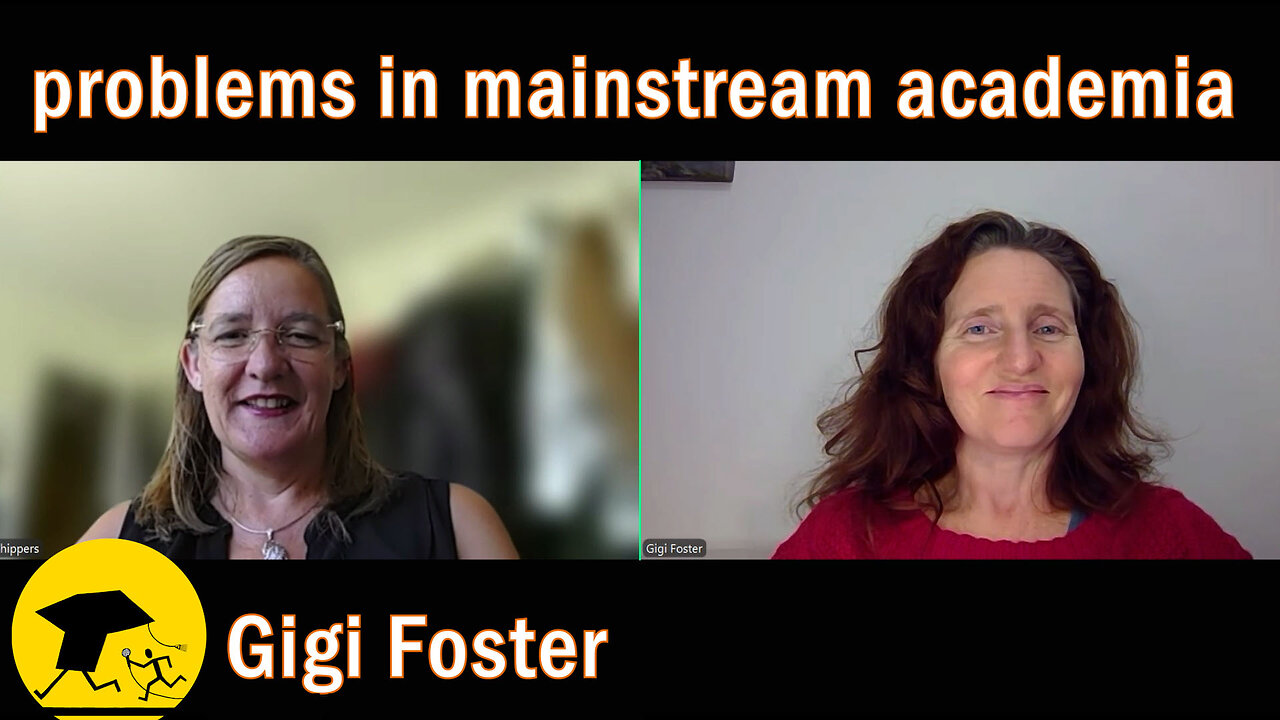
Problems in Mainstream Academia - Gigi Foster
This conversation critically examines the modern misuse of language, particularly the appropriation of moral virtues such as compassion, environmental care, and inclusivity, to justify ideologically driven agendas. Gigi Foster (professor of economics at the University of New South Wales, Sydney Australia) argues that certain values—once universally respected—are being weaponized in a manner akin to “Trojan horses”: they retain their positive connotations while being used to promote policies and ideas that, in practice, can be misleading, coercive, or harmful.
A key example is the invocation of environmental concern. The speaker highlights how the phrase “caring for the Earth,” though genuinely meaningful to most people, is often co-opted to justify extreme or “anti-human” policies—specifically referencing “net zero” climate mandates. While the speaker affirms a genuine commitment to environmental stewardship, they reject the way this virtue has been bundled with restrictive or damaging political measures. The point is not to deny climate change or the need for responsible policy, but to resist uncritically accepting radical solutions simply because they are branded with virtuous language.
This misuse of language, the speaker argues, leads to a kind of moral confusion. People are pressured to conform to ideological agendas because resisting them appears to mean opposing compassion, justice, or care. The speaker challenges this false dichotomy, asserting that it is entirely possible—and necessary—to uphold core values while opposing the ways they are being distorted for political purposes.
The conversation further explores how modern discourse encourages collective labeling and identity-based politics at the expense of individual freedom and shared humanity. The speaker notes that this trend toward categorization and ideological tribalism often divides rather than unites, creating a culture of compliance where critical voices are dismissed or demonized.
There is particular concern with the influence of institutions—governments, educational systems, corporations, and media—that reinforce these distortions. These institutions often promote particular narratives under the guise of moral or scientific authority, making dissent appear illegitimate or harmful. This environment fosters intellectual authoritarianism, where questioning dominant ideas, even thoughtfully and respectfully, is treated as a social or ethical transgression.
Despite these critiques, the speaker maintains an optimistic and constructive tone. They advocate for a cultural reclamation of virtues—urging people to reassert ownership of values like truth, love, responsibility, and care, free from ideological manipulation. The idea is not to reject modern ideals altogether, but to disentangle them from the dogmatic and coercive methods now associated with them.
The speaker insists that reclaiming these virtues does not mean moving backward or abandoning progress; rather, it means ensuring that the ideals themselves are not corrupted by political expediency or cultural pressure. For instance, one can support environmental protection without endorsing authoritarian climate mandates, or support diversity without endorsing speech control or compelled ideology.
In emphasizing this distinction, the speaker warns against what they describe as “virtue packaging”—where desirable terms are bundled with unrelated, often radical policies. This tactic relies on people’s natural desire to do good, exploiting their good intentions to secure support for agendas they might otherwise oppose if presented plainly.
The speaker references personal experiences, including giving a TEDx talk, to illustrate how these themes play out in real-world settings. They encourage listeners to be brave, thoughtful, and articulate in their values, even when it means challenging dominant narratives. Courage and clarity, they argue, are crucial in an age where moral language is often used to manipulate rather than illuminate.
Ultimately, the conversation is a call to intellectual and moral sovereignty. It urges individuals to think critically, speak honestly, and remain anchored in authentic values rather than ideological trends. It encourages compassion that is grounded in truth, not slogans. And it promotes the idea that virtue must be protected—not only from neglect but also from exploitation.
The speaker concludes with a hopeful outlook: that more people are beginning to notice the gap between rhetoric and reality, and that reclaiming language and values is not only possible but necessary. The path forward, they argue, is not through cynicism or reactionary resistance, but through courageous honesty, moral clarity, and deep respect for human dignity and freedom.
-
 LIVE
LIVE
ThatStarWarsGirl
2 hours agoTSWG LIVE: Stargate Is BACK! EFAPing Michael Shanks Interview with GUEST!!!
151 watching -
 LIVE
LIVE
MissesMaam
3 hours agoStardew Co-Op 💚✨
45 watching -
 1:32:46
Glenn Greenwald
4 hours agoHillary Blames TikTok for Anti-Israel Sentiment; MAGA Sycophants Gain Pentagon Press Access; Who Should Win Anti-Semite of the Year? See the Top 10 Finalists | SYSTEM UPDATE #552
97.8K83 -
 DVR
DVR
Flyover Conservatives
21 hours ago100% Chance the Grid Fails: Why No One Is Fixing It (and How Easy It Is) - Tommy Waller | FOC Show
11.9K4 -
 LIVE
LIVE
JDubGameN
3 hours agoStarlink Network Test Stream! | Road to 100 Followers
141 watching -
 2:17:31
The Daily Signal
6 hours ago $0.21 earned🚨BREAKING: Tennessee Congressional Election Results, Minneapolis Police to "Intervene" Against ICE,
16.8K6 -

megimu32
2 hours agoON THE SUBJECT: Christmas Vacation Is UNTOUCHABLE!
9.99K6 -
 59:56
59:56
Sarah Westall
3 hours agoNeurostrike, Cognitive Targeting & the New Tech Arms Race w/ Professor Armin Krishnan
9.77K -
 2:52:28
Nikko Ortiz
5 hours agoNo More Gear Fear... | Rumble LIVE
18.6K1 -
 LIVE
LIVE
Razeo
3 hours agoTopside carnage with some fries.,
23 watching