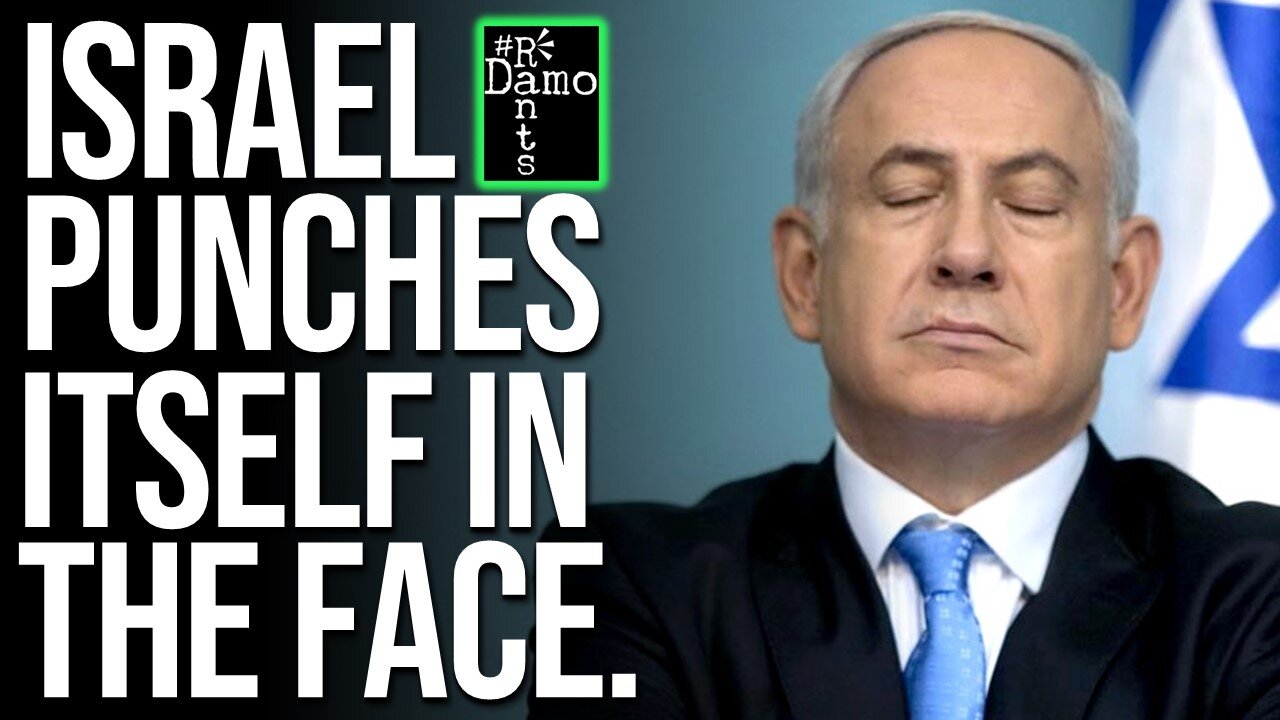
Israel Attacks Syria – And Hits a Major Snag!
Right, so if hypocrisy were a currency, southern Syria would be one of the richest places on earth right now as HTS, the self-anointed saviours of post-Assad Syria, Al-Qaeda cosplaying as legitimate politicians as they are, promise protection on one hand whilst punishing the very minorities it claims to represent and which has become emblematic of the rule of their leader Ahmed Al Sharaa, who is still better known as the terrorist Al Jolani, no matter how many Western leaders shake his hand and endorse him. Israel, meanwhile, wraps itself in the cloak of humanitarianism as it bombs Druze villages and casually entertains regime assassination, all as Al Jolani still wants to normalise relations with Israel. And caught between these two moral bankrupts are the Druze—proud, stubborn, and historically impossible to subdue—now forced to choose between being branded collaborators or rebels by one side or the other, regardless of which side they actually choose. The Mountain of the Druze has roared before, and if history is any guide, those who think they can play kingmaker on its slopes are in for a nasty surprise.
Right, so southern Syria is again drowning in blood, betrayal, and hypocrisy. Suwayda, long known as the “Mountain of the Druze,” has always been a byword for resilience and stubborn autonomy, a place where survival has depended on rejecting domination by both imperial and domestic rulers. Today, that same mountain has been turned into a battlefield where two very different powers—HTS’s religious extremist-led transitional government in Damascus and Israel, having invaded southern Syria post Assad and continuing to make itself at home there—are locked in a cynical struggle. Both claim to be protectors: HTS frames itself as the future of a united Syria, while Israel insists its intervention is purely humanitarian. Both are lying.
The reality is brutal. Nearly thirty Druze fighters were killed in a single HTS operation, according to, for example Press TV and Kurdistan24 reports that at least 89 people—mostly civilians and local fighters—have been killed in the latest wave of violence. Israel, claiming to defend the Druze, bombed Suwayda just hours after a ceasefire was announced, as Al Jazeera confirmed, further devastating already weakened infrastructure.
The present crisis is only the latest chapter in a long history of betrayal. The Druze have repeatedly been promised protection and autonomy by central powers, only to be manipulated and attacked when they asserted their independence. Under Ottoman rule, Druze mountain strongholds enjoyed a degree of self-governance but faced repeated punitive campaigns when they resisted imperial authority. The French Mandate initially promised minority self-rule, yet when the Druze, led by Sultan al Atrash, launched the Great Syrian Revolt of 1925, the French responded with bombardments and brutal repression.
This history cemented a collective memory of betrayal that informs Druze politics to this day. Even under the Assad dynasty, the pattern persisted. Hafez al Assad relied on co-opting Druze elites into the Ba’athist system while keeping the broader community politically marginalised and economically neglected. In return for nominal loyalty, the Druze were left alone. But when jihadist militias attacked Druze villages during the civil war, Bashar al Assad’s government offered little real protection.
This explains why Druze protesters earlier this year demanded local governance, greater autonomy, and an end to forced conscription. Their demands are not new and nor are they particularly radical. Historically, the Druze have relied on semi-autonomy and pragmatic alliances to maintain security. But that strategy is failing due to the mess Southern Syria now lies in. HTS refuses to tolerate local autonomy, and Israel’s intervention has made pragmatism dangerous—any cooperation risks branding the Druze as collaborators in the eyes of other Syrians.
HTS’s rise to power was hailed by far too many who were ready to forgive a guy who not so long ago had a $10m bounty on his head for terror offences, if it meant the end of Assad. The promise of a new beginning for an all new and inclusive Syria, because Salafist religious extremists were bound to deliver that weren’t they? Ahmed al Sharaa promised that all Syrians, including minorities, would be respected partners in rebuilding the country. The events in Suwayda, not to mention all the months of HTS persecution of other minorities such as the Alawites and Christians, expose that promise as empty rhetoric.
HTS’s failure is not merely incompetence; it is deliberate negligence and coercion. For weeks before the latest clashes, Bedouin tribal militias terrorised Druze villages with kidnappings, highway robberies, and attacks. The Long War Journal has reported that these provocations sparked retaliatory violence by Druze militias, escalating into open fighting. HTS security forces failed to intervene, standing by while tensions worsened. When they finally acted, it was not to protect civilians but to crush resistance. Nearly thirty Druze fighters were killed in a single operation, as aforementioned
The Suwayda Military Council, quoted by NPA Syria, accused Damascus of “standing by while our villages burned, then sending troops to punish those who defended them.” And certainly we saw abuses like that on social media, Syrian forces coming in and forcibly shaving the moustaches off Druze men, which is considered a sin to them. This was not an isolated incident but part of a strategy to weaken local self-defence forces and force minorities into submission. By tolerating tribal violence and then intervening punitively, HTS sends a clear message: autonomy will not be tolerated by this unelected, Western endorsed, extremist regime.
HTS’s ideological baggage makes its promises of inclusivity even less believable. Though it now brands itself as a nationalist movement, its jihadist origins are fresh in the minds of Syria’s minorities and certainly their actions lend credence to that.
For communities that remember HTS’s campaigns in Idlib and Latakia, where minorities were treated as second-class citizens and far worse since taking power, massacres, particularly amongst Alawites, this suspicion is justified.
Most damning is HTS’s pursuit of foreign approval at the expense of domestic legitimacy. Reports in Times of Israel amongst others ever since Assad was deposed really, have shown that Damascus has been exploring diplomatic channels with Israel, they want normalised relations with them. For the Druze, this is an unforgivable betrayal. A government that will not protect its own citizens but courts the same power bombing its territory cannot claim to be a legitimate representative of Syria.
If HTS’s failure lies in neglect and coercion, Israel’s failure is rooted in hypocrisy and manipulation.
Now you might be thinking at this point, well hang on Damo, Israel like the Druze. Well, Israel has presented itself as a protector of Syria’s Druze minority, but this is a narrative crafted for strategic convenience. It continues to occupy the Golan Heights, as we know, seized by Israel from Syria in 1967 during the 6 day war and Israel have no intention of withdrawing, yet it demands that HTS forces withdraw from southern Syria, as AP News have reported. This double standard exposes Israel’s true motive: maintaining a de facto buffer zone under its control and protecting the Druze is convenient. The Druze also form much of the population of the Golan Heights, so by invoking protectionism of the Druze, it excuses israel’s presence in southern Syria too.
But its airstrikes on Suwayda, a Druze city, justified as humanitarian interventions, have only worsened civilian suffering. As the English version of Syrian news outlet Enab Baladi have reported, these strikes destroyed critical infrastructure, deepening the humanitarian crisis there. By targeting HTS forces while ignoring Bedouin tribal militias, Israel has deliberately kept the south fragmented, ensuring that minorities remain dependent on alleged Israeli protection.
The mask of humanitarian concern fell completely though, when Amichai Chikli, Israel’s Diaspora Affairs Minister, called for al Sharaa’s assassination, describing him as a “terrorist” who should be “eliminated without delay.” Now, it’s a horrid sensation to agree with that description of al-Sharaa coming from a member of Netanyahu’s government, but this is not the language of a state interested in stabilisation either; it is the language of regime change once more and Syria is on Israel’s Greater Israel project list after all. It also makes al-Sharaa’s ongoing calls for Israeli normalisation with Syria even harder to swallow – Israel can do what it likes in Syria and he will still want diplomatic ties. It’s all quite mad and an utter failure of the people he purports to now rule.
For the Druze, Chikli’s words are a double-edged sword though. Many have tolerated Israeli involvement out of pragmatism, but open calls for regime decapitation make them targets for reprisals by HTS, which now frames any minority demands for autonomy as Israeli collaboration, such is their extremism.
The crisis in southern Syria is the product of a toxic feedback loop. HTS’s negligence and coercion created a power vacuum. Israel exploited that vacuum militarily, claiming to protect minorities while destabilising the region further. Weakened by Israeli pressure and driven by teir own religious extremism, HTS cracked down harder on minorities, provoking more resistance. That resistance, in turn, justifies further Israeli strikes.
This cycle traps the Druze in an impossible position. If they defend themselves against HTS, they are branded outlaws. If they accept Israeli assistance, they are branded collaborators. Either way, they suffer.
The greatest tragedy of this double betrayal is the human cost. Civilians in Suwayda are caught between Israeli bombs, HTS crackdowns, and Bedouin militias. Hospitals are overwhelmed, with shortages of medical supplies and electricity. Displacement is rising, with hundreds fleeing to nearby villages or even attempting to cross into Jordan.
Psychologically, the toll is immense. Minority communities that once identified strongly with the Syrian state are losing faith in its future. The Druze, historically among the most resilient Syrians, are asking a painful question: if both Damascus and Tel Aviv treat them as expendable, do they still have a future in Syria at all?
If these dynamics continue, southern Syria could become the next major flashpoint amid all the regional warfare we’re seeing, mostly instigated by Israel, but in this case, the new Syrian administration is just as bad as Israel. What began as a local conflict risks escalating into a confrontation pulling in more regional state actors and allies.
The Druze face grim choices. Submitting to HTS means enforced marginalisation and suppression of their historic autonomy. Accepting Israeli protection offers temporary security but permanent vulnerability to accusations of collaboration. Negotiated autonomy is the only sustainable solution, but this would require unprecedented international pressure on both HTS and Israel, which is completely non-existent in the current geopolitical climate, when the West is forging stronger ties with both.
The Druze and other minorities do have agency. There are discussions of stronger coordination between Druze militias, Christian groups, and even disaffected Sunni factions to form a counterweight to HTS dominance. But without external support, such alliances are unlikely to shift the balance of power.
HTS governs like Assad did, just in a more extremist fashion, while Israel claims to be a protector even as it bombs indiscriminately and now openly calls for regime change. Both have treated minorities as expendable pawns. But the Druze are not passive victims. History shows that every attempt to subdue them has only strengthened their resolve.
Chikli’s call for al Sharaa’s assassination may prove to be a major strategic blunder on Israel’s part. By turning southern Syria into an explicit regime-change battlefield, Israel risks creating the very instability it claims to fear, while alienating the Druze it purports to protect. HTS, too, cannot continue governing for foreign approval while ignoring the legitimate grievances of its own people.
If either power truly wants stability, it must abandon this cynical game and respect minority rights. Extremists as both sides are, you just can’t see it though.
A not dissimilar picture is emerging in Lebanon too, the Lebanese also caught between Israel and Syria, the threats to the Lebanese government to forcibly disarm Hezbollah or else being the driving narrative, despite Israel also illegally occupying territory that isn’t theirs, but unlike the Druze, there’s a more concerted pushback here. Check out all the details of that story in this video recommendation as your suggested next watch.
Please do also hit like, share and subscribe if you haven’t done so already so as to ensure you don’t miss out on all new daily content as well as spreading the word and helping to support the channel at the same time which is very much appreciated, holding power to account for ordinary working class people and I will hopefully catch you on the next vid. Cheers folks.
-
 LIVE
LIVE
The Chris Salcedo Show
15 hours ago $1.24 earnedSCOTUS Must Give Us Justice On Birthright Citizenship
784 watching -
 LIVE
LIVE
Game On!
15 hours ago $1.16 earnedMONDAY MADNESS! NFL Week 14 REACTION And MNF BEST BETS!
444 watching -
 1:11:26
LIVE WITH CHRIS'WORLD
11 hours agoTHE WAKE UP CALL - 12/08/2025 - Episode 20
27.8K3 -
 8:29
8:29
Millionaire Mentor
12 hours agoCIA Operative Reveals the Clinton's Dirty Secret America Was Never Told
10.1K5 -
 1:10:33
Mike Mac - Say Something
14 hours agoSAY SOMETHING: BEYOND PART 2 OF INSURRECTION BARBIE w/ MikeMac
12.7K3 -
 LIVE
LIVE
BEK TV
2 days agoTrent Loos in the Morning - 12/08/2025
197 watching -
 1:08
1:08
From Zero → Viral with AI
16 hours ago $1.05 earnedAI Influencers are coming....
13.9K1 -
 LIVE
LIVE
The Bubba Army
2 days agoMTG TURNS ON TRUMP! Explosive 60 Mins Interview - Bubba the Love Sponge® Show | 12/08/25
1,430 watching -
 13:09
13:09
Forrest Galante
11 hours agoI Went Bowfishing For America's Most Invasive Fish
140K2 -
 11:42
11:42
MattMorseTV
17 hours ago $25.75 earnedShe ADMITTED to ALL OF IT.
41.7K191