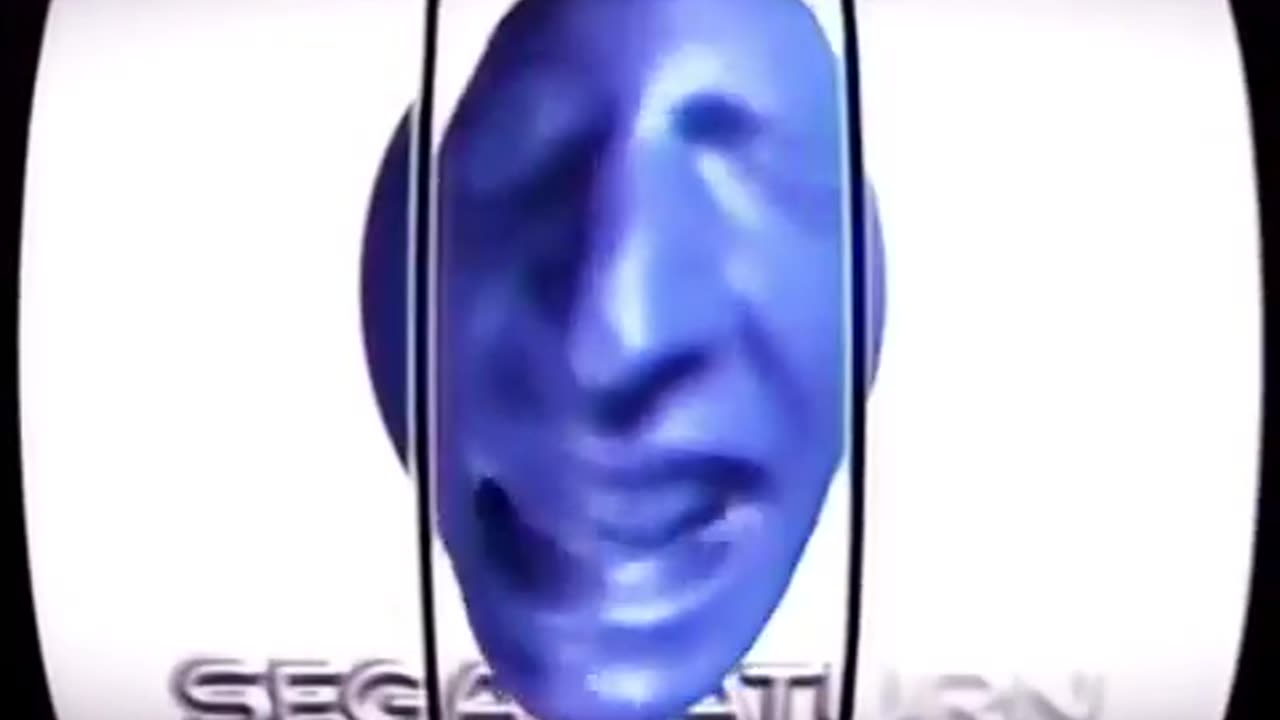
Sega Saturn Commercial 90's
The Sega Saturn is a 32-bit fifth-generation home video game console developed by Sega and first released on November 22, 1994, in Japan, May 11, 1995, in North America, and July 8, 1995, in Europe.
It was designed as a successor to the Sega Genesis (known as the Mega Drive in most countries outside of North America) and was intended to excel at rendering both two-dimensional sprites and three-dimensional polygons.
The console features a dual-CPU architecture with two Hitachi SH-2 processors, along with additional processors for graphics and sound.
The Sega Saturn used CD-ROMs as its primary media format, which allowed for larger game storage and the inclusion of audio and video content. It also had a cartridge slot for backup memory or RAM cartridges, which were used to extend save game space or augment the console's limited memory.
The console's hardware was complex, with a multi-processor system that included three DSP math processors, two inside the SH-2 CPUs and one inside the SCU. This complexity made it challenging for developers to create games, especially for third-party developers who struggled with the console's difficult 3D development environment.
The Saturn's main competitors were the Sony PlayStation, which was released just a week after the Saturn in Japan, and the Nintendo 64, which launched in June 1996.
Despite its powerful hardware, the Saturn faced challenges in the Western market, where it was often considered a commercial failure. In Japan, however, it was more successful, with strong support for 2D sprite games, 3D arcade ports, and marketing campaigns.
The Saturn sold between 9.5 million and 17 million units worldwide, with the majority of sales in Japan.
The console was succeeded by the Sega Dreamcast in late 1998.
The Saturn's game library included several arcade ports and original titles, with 1028 games listed, of which 775 were Japan-only exclusives.
Notable games include Virtua Fighter, Panzer Dragoon, and NiGHTS into Dreams.
However, the Saturn's complex hardware and limited third-party support contributed to its mixed reception and eventual decline.
The Sega Saturn is now considered a retro console, with many enthusiasts collecting and playing it today. It is often regarded as a technological marvel of its time, though its difficulty in development and the surprise launch in North America in 1995 are seen as factors that contributed to its commercial struggles.
-
 LIVE
LIVE
The Mike Schwartz Show
16 hours agoTHE MIKE SCHWARTZ SHOW with DR. MICHAEL J SCHWARTZ 12-08-2025
229 watching -
 LIVE
LIVE
LFA TV
14 hours agoLIVE & BREAKING NEWS! | MONDAY 12/08/25
2,849 watching -
 23:44
23:44
DeVory Darkins
1 day agoDemocrats dealt HUGE LEGAL SETBACK after SCOTUS hands Texas a stunning win
16.4K41 -
 2:04:54
The Chris Salcedo Show
17 hours ago $4.03 earnedSCOTUS Must Give Us Justice On Birthright Citizenship
17.5K2 -
 1:39:30
Game On!
16 hours ago $1.69 earnedMONDAY MADNESS! NFL Week 14 REACTION And MNF BEST BETS!
24.9K1 -
 37:09
37:09
daniellesmithab
2 days agoAlberta Update: Defending Law-Abiding Firearms Owners
4.6K2 -
 1:11:26
LIVE WITH CHRIS'WORLD
13 hours agoTHE WAKE UP CALL - 12/08/2025 - Episode 20
39.6K3 -
 8:29
8:29
Millionaire Mentor
14 hours agoCIA Operative Reveals the Clinton's Dirty Secret America Was Never Told
19.5K10 -
 1:10:33
Mike Mac - Say Something
16 hours agoSAY SOMETHING: BEYOND PART 2 OF INSURRECTION BARBIE w/ MikeMac
21.4K5 -
 LIVE
LIVE
BEK TV
3 days agoTrent Loos in the Morning - 12/08/2025
102 watching