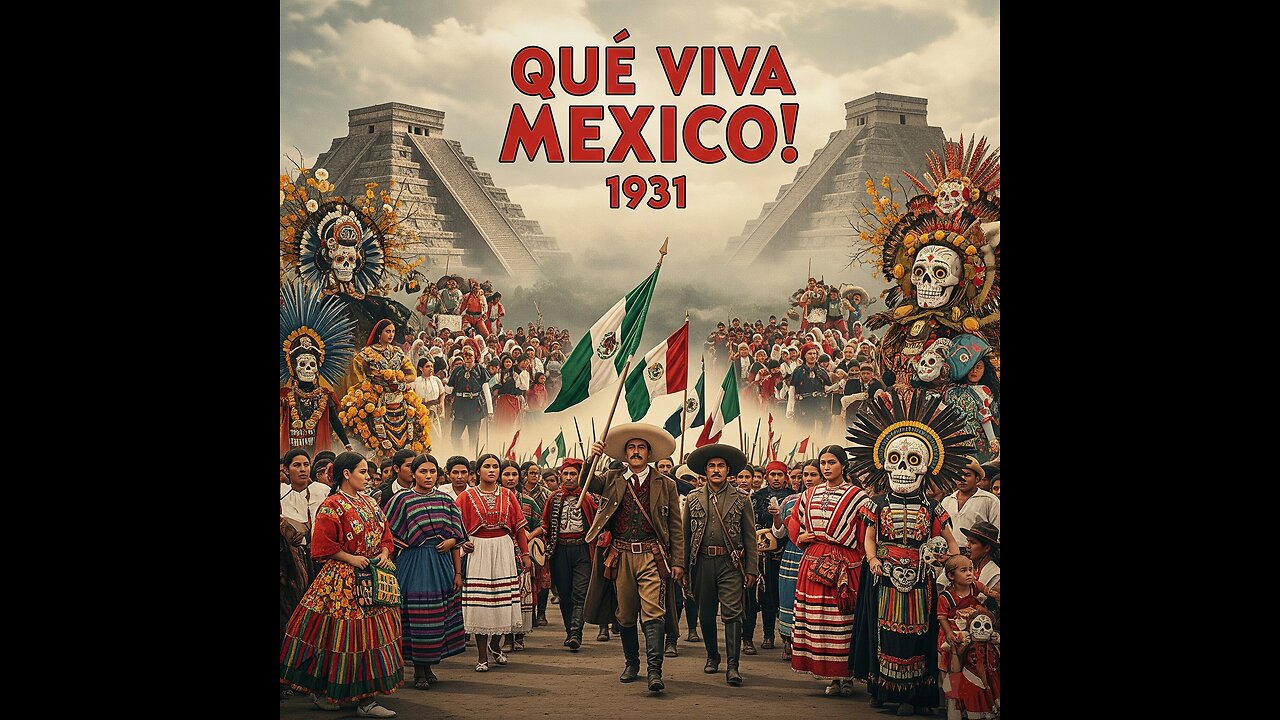
1931 Que Viva Mexico (Eisenstein-ITALIAN_VERSION)
I can provide you with a description of "1931 Que Viva Mexico (Eisenstein-ITALIAN_VERSION)".
"Que Viva Mexico!" is an extraordinary and famously unfinished film project by the legendary Soviet filmmaker Sergei M. Eisenstein. Although filmed primarily between 1931 and 1932, it was never completed and released in its intended form by Eisenstein himself. The "ITALIAN_VERSION" refers to one of the various attempts by others to compile and present the vast amount of footage after Eisenstein's death or after the project was controversially abandoned.
Here's a description of the intended film and its context:
Title: Que Viva Mexico!
Release Year (Filmed): 1931-1932 (various posthumous versions released later, like the 1979 Soviet restoration often considered definitive of Eisenstein's intent)
Genre: Epic, Documentary-Drama, Ethnographic Film
Director: Sergei M. Eisenstein
Producer: Upton Sinclair and his wife Mary Craig Sinclair (American socialist authors and patrons)
Original Concept: Sergei M. Eisenstein
Original Concept and Intended Plot (as envisioned by Eisenstein):
Eisenstein envisioned "Que Viva Mexico!" as an epic and ambitious cinematic fresco that would depict the entire history and culture of Mexico, from its ancient civilizations through the Mexican Revolution and into modern times, all while celebrating the resilience and spirit of the Mexican people.
The film was designed to be structured into six distinct episodes or "novellas," each with its own unique style and focus, but woven together by recurring themes and a unifying "prologue" and "epilogue."
The planned segments included:
Prologue ("Sandunga"): A vibrant and poetic portrayal of ancient Mayan and Aztec civilizations, focusing on their rituals, art, and the beauty of the indigenous people.
"Maguey": Depicting life under the oppressive hacienda system (large land estates) during the pre-revolutionary period, focusing on the exploitation of the peons (peasant laborers) and their deep connection to the land and the agave plant (maguey).
"Fiesta": Showcasing a bullfight and the colorful, often brutal, traditions associated with it, symbolizing the clash of cultures and passions in Mexico.
"Soldadera": Honoring the female soldiers who played a crucial role in the Mexican Revolution, highlighting their strength, resilience, and often tragic fate.
"Calvary" (or "Zapotec"): Presenting the post-revolutionary Mexico, possibly focusing on the indigenous Zapotec people and their integration into the new society.
Epilogue ("Day of the Dead"): A powerful and iconic segment depicting Mexico's unique celebration of the Day of the Dead, intertwining themes of life, death, tradition, and the cyclical nature of existence.
Significance and Unfinished Nature:
Ambitious Vision: Eisenstein's vision was monumental, aiming to capture the essence of an entire nation and its history in an unprecedented way.
Conflict and Abandonment: The project was famously fraught with difficulties. Eisenstein faced creative differences with his American patrons, Upton and Mary Sinclair, regarding the film's length, content, and his work methods. Political tensions (the Great Depression in the US, Stalin's growing influence in the USSR) also played a role. Ultimately, the Sinclairs withdrew their funding and confiscated the thousands of feet of exposed negative film, which was sent back to the U.S.
Lost Masterpiece: Eisenstein never gained control of the footage again and died without seeing his magnum opus completed as he intended.
Posthumous Versions: Over the decades, various filmmakers and film historians attempted to assemble the footage into different versions, often with varying interpretations of Eisenstein's original intent. These include "Thunder Over Mexico" (1933), "Death Day" (1934), "Time in the Sun" (1940), and finally, "Que Viva Mexico!" (1979), assembled by Soviet director Grigori Alexandrov (Eisenstein's collaborator) attempting to follow Eisenstein's original script.
Impact: Despite its unfinished state, the existing footage and Eisenstein's detailed plans have had a profound influence on documentary filmmaking and the study of cinematic montage. It remains a legendary "what if" in film history.
The "ITALIAN_VERSION" you mention would be one of these later attempts to edit and release the footage, likely with an Italian narration or subtitles. Each version offers a different glimpse into what could have been a truly groundbreaking film.
-
 LIVE
LIVE
Timcast
33 minutes agoTRUMP DOUBLES DOWN, "NO GOING BACK" On Greenland Takeover
13,924 watching -
 LIVE
LIVE
Steven Crowder
2 hours ago🔴Straight to Jail: The Trump Admin Vows to Prosecute Minnesota Ice Protesters
26,752 watching -
 LIVE
LIVE
Wendy Bell Radio
4 hours agoOh, the Irony.
5,345 watching -
 58:44
58:44
The Rubin Report
1 hour ago‘Shark Tank’ Legend Explains the Real Reason Gavin Newsom’s 2028 Chances Just Died
4.54K19 -
 LIVE
LIVE
LFA TV
15 hours agoLIVE & BREAKING NEWS! | TUESDAY 1/20/26
4,292 watching -
 LIVE
LIVE
The Mel K Show
1 hour agoMORNINGS WITH MEL K -Trump Brings the Heat to Davos Elite With Noor Bin Ladin- 1-20-26
700 watching -
 LIVE
LIVE
The Shannon Joy Show
1 hour ago🔥SJ LIVE Jan 20 - Epstein COVERUP Continues * Palantir ELITE App Ushers In Surveillance State - With Technocracy Founder Patrick Wood🔥
166 watching -
 LIVE
LIVE
Grant Stinchfield
1 hour agoThe Left's Newest Attack... Whole Milk is Not Just White… It's Also Racist!
151 watching -
 1:03:16
BonginoReport
3 hours agoTheir Excuses Aren't Working Anymore | Episode 207 - 01/20/26 VINCE
158K67 -
 1:23:20
Steve-O's Wild Ride! Podcast
4 days ago $0.49 earnedMrBeast (Jimmy Donaldson) Had A Problem With Steve-O | Wild Ride #277
16.2K15