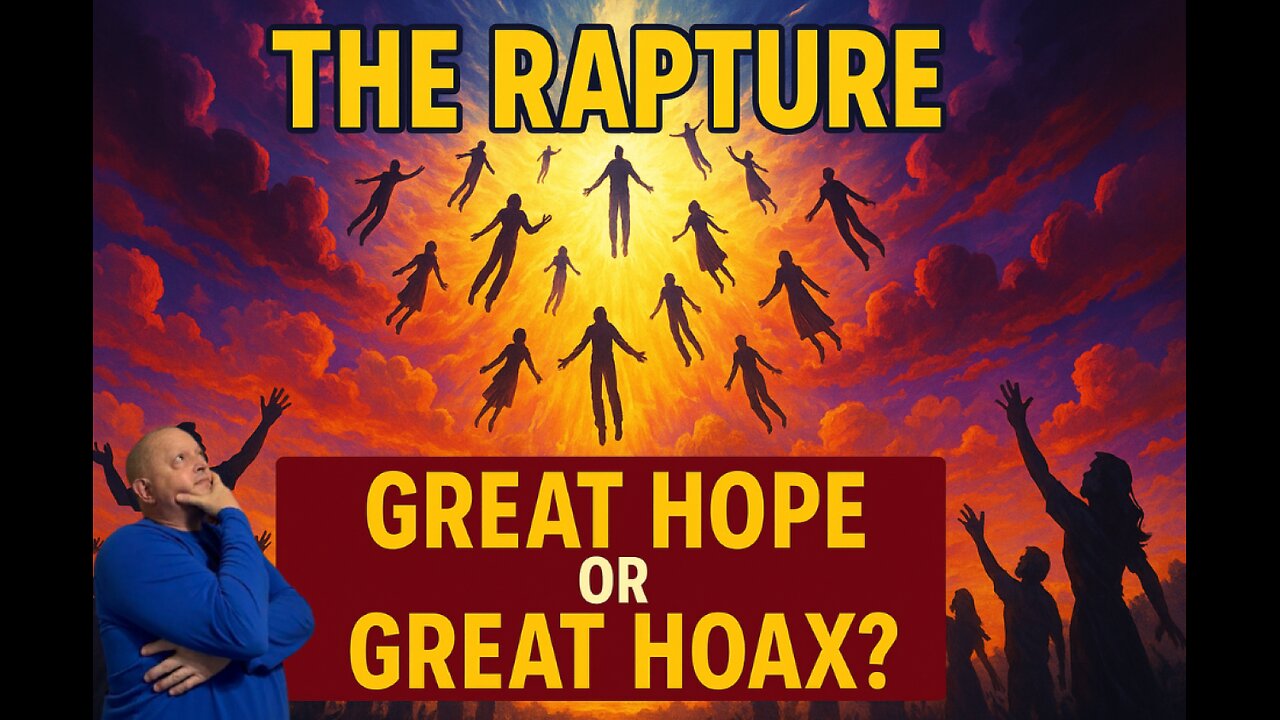
The Rapture: Greatest Hope or Greatest Hoax
The Rapture: Great Hope or Great Hoax?
For centuries, believers and skeptics alike have debated one of the most dramatic and controversial teachings in Christianity: the Rapture. Is it a literal, world-shaking event where millions suddenly vanish, taken up into the clouds to meet Christ in the air? Or is it a misunderstood theological concept—perhaps even a hoax, fueled more by human imagination and cultural storytelling than by Scripture itself?
In this in-depth exploration, we dive into the heart of the debate, carefully examining the biblical foundations, historical interpretations, cultural portrayals, and critical objections surrounding the doctrine of the Rapture.
What Is the Rapture?
The term “rapture” comes from the Latin word rapturo, a translation of the Greek word harpazō, meaning “to snatch away” or “to seize suddenly.” This idea originates primarily from passages such as 1 Thessalonians 4:16–17, where the Apostle Paul writes that believers will be “caught up” to meet the Lord in the air. Over time, this passage—and a few others like 1 Corinthians 15:51–52 and John 14:1–3—has been interpreted by many Christians to describe a sudden removal of the faithful from the earth prior to a time of great tribulation.
To many, this event represents the ultimate hope: a dramatic rescue from the chaos, judgment, and suffering that the Bible warns will precede the return of Christ. To others, however, it raises more questions than answers.
Why Believers See It as Great Hope
A Promise of Rescue
Many Christians view the Rapture as God’s ultimate act of deliverance, sparing His people from the wrath and destruction of the end times. It symbolizes hope, safety, and the assurance that Christ will not abandon His church.
Encouragement in Hardship
For persecuted believers—both historically and in modern times—the Rapture represents a comforting promise that no matter how bad things get, relief is coming. This is why Paul instructed the early church to “encourage one another with these words” (1 Thessalonians 4:18).
Anticipation of Christ’s Return
The Rapture keeps the focus on Christ’s imminent return. Believers live with a sense of urgency, striving to remain faithful and ready. This watchfulness is seen as spiritually healthy and motivating.
Theological Consistency
Those who affirm the Rapture often argue that it harmonizes with God’s pattern in Scripture—just as Noah’s family was spared from the flood and Lot was rescued before Sodom’s destruction, so too will the church be delivered before divine judgment falls on the earth.
Why Critics Call It a Hoax
Lack of Explicit Mention
Skeptics point out that the word “rapture” never actually appears in the Bible. While the concept of being “caught up” is present, critics argue that much of what modern Christians believe about the Rapture has been read into the text rather than drawn directly from it.
Recent Historical Development
Many scholars note that the doctrine of a pre-tribulation Rapture (believers being taken before a seven-year tribulation) gained popularity in the 19th century through figures like John Nelson Darby and the rise of dispensationalist theology. This raises the question: if it is a core biblical teaching, why was it not universally emphasized by early church fathers?
Confusion with the Second Coming
Some argue that Scripture describes only one climactic return of Christ—not two separate events (a secret Rapture followed by a visible Second Coming). To them, the Rapture is simply the resurrection at Christ’s return, not an earlier removal of the faithful.
Exploitation in Popular Culture
From the Left Behind novels to Hollywood films, the Rapture has been sensationalized in ways that critics believe distort biblical teaching. To skeptics, it looks more like fear-based marketing than solid theology.
Key Scriptures in the Debate
1 Thessalonians 4:16–17 – The primary “rapture passage.”
1 Corinthians 15:51–52 – A mystery revealed: “We will not all sleep, but we will all be changed… in the twinkling of an eye.”
Matthew 24:40–41 – Jesus speaks of people being “taken” while others are left.
Revelation 3:10 – A promise to the faithful church to be kept “from the hour of trial.”
John 14:1–3 – Jesus promises to return and take His followers to be with Him.
These verses form the backbone of the Rapture doctrine, yet interpretations differ widely on whether they describe a literal event, a symbolic truth, or something else entirely.
The Emotional Divide
The debate over the Rapture is not just academic—it touches deep emotional chords.
For believers, rejecting the Rapture often feels like robbing the church of hope.
For skeptics, embracing it feels like endorsing a teaching that fuels fear and distracts from Christ’s broader mission.
For seekers, it can be confusing—why do Christians disagree so strongly about something that seems so central?
This divide has fueled heated discussions within the church, with some denominations making the Rapture a cornerstone of their theology, while others dismiss it as misguided or even dangerous.
Modern Relevance
Whether real or hoax, the Rapture continues to shape Christian culture today. It influences:
Preaching & Evangelism – Urgency about “being ready” often leads to altar calls and revival events.
Politics & Society – Beliefs about the end times affect how Christians engage with world events, Israel, and global crises.
Entertainment & Media – Books, films, and even music have capitalized on the imagery of sudden disappearances and global panic.
But beyond cultural impact, the doctrine raises deeply personal questions: Am I ready? Do I believe in this? What does my faith mean in light of eternity?
Final Thoughts: Hope or Hoax?
So, is the Rapture the great hope of the church—or one of the greatest hoaxes in Christian history? The truth depends on one’s interpretation of Scripture, one’s theological framework, and ultimately, one’s personal faith in Christ.
If real, it will be the most dramatic event in human history, an unimaginable moment of deliverance for believers worldwide. If false, it remains a powerful story that continues to capture imaginations, stir controversy, and provoke people to wrestle with eternal truths.
Either way, the doctrine of the Rapture forces us to confront life’s biggest questions: What happens when time runs out? What does it mean to live ready? And is our hope grounded in speculation—or in the unchanging promises of God?
Why This Matters to You
This video is not about fear. It’s about truth, hope, and discernment. Whether you believe the Rapture is literal, symbolic, or fabricated, the deeper reality is this: life is short, eternity is long, and the Bible calls each of us to be prepared to meet our Creator.
Watch the full video to dive deep into the debate—discover the Scriptures, the arguments, the history, and the hope.
#Hashtags:
#Rapture #BibleProphecy #EndTimes #ChristianFaith #HopeOrHoax #SecondComing #ScrollSessions
-
 1:08:50
Sean Unpaved
2 hours agoAre CJ Stroud & Texans About To Make A SUPER BOWL RUN? | UNPAVED
22.8K2 -
 LIVE
LIVE
Committee on House Administration
1 day agoSubcommittee on Elections Hearing: “Examining Potential Updates to the NVRA”
47 watching -
 15:07
15:07
Clownfish TV
1 hour agoNintendo BANS Indie Game from Switch Because of POLITICS?! | Clownfish TV
918 -
 LIVE
LIVE
Jeff Ahern
1 hour agoNever Woke Wednesday with Jeff Ahern
73 watching -
 1:04:49
Timcast
4 hours agoTrump Goes NUCLEAR At Rally, Demands Ilhan Omar Be DEPORTED
172K46 -
 14:22
14:22
Silver Dragons
2 hours agoBullion Dealer Reacting to $60 Silver Price (Insane)
11.4K -
 1:51:30
Steven Crowder
6 hours agoTrump Unloads on Europe...and Who Can Really Be American?
442K294 -
 1:01:15
The Rubin Report
5 hours agoIlhan Omar Just Got Scared After Trump’s Brutal Threat to Her
51.9K82 -
 LIVE
LIVE
LFA TV
17 hours agoLIVE & BREAKING NEWS! | WEDNESDAY 12/10/25
1,747 watching -
 1:00:55
VINCE
6 hours agoIt Was a Bad Night For the Liberal Lunatics | Episode 185 - 12/10/25 VINCE
257K172