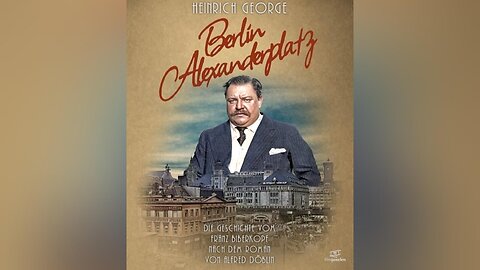
Berlin-Alexanderplatz - The Story of Franz Biberkopf (Film 1931 - MULTISUB)

Adaneth - Cinema&TV
Berlin-Alexanderplatz or The Story of Franz Biberkopf (German: Die Geschichte vom Franz Biberkopf) is a 1931 German drama film directed by Phil Jutzi and starring Heinrich George, Maria Bard and Margarete Schlegel.
Audio in German with subtitles in English, French, Russian and German. Click on CC for subtitles)
A blue collar Berliner and small-time criminal recently released from prison finds himself being drawn into the Berlin underworld of the 1920s after his prostitute lover is murdered.
The film was adapted from the 1929 novel of the same title by Alfred Döblin, who also co-wrote the screenplay.
It was filmed on various locations around Berlin including the Alexanderplatz. Jutzi cut out much of the novel's complex story, preferring to focus on just one character.
Cast & Characters:
Heinrich George as Franz Biberkopf
Maria Bard as Cilly
Margarete Schlegel as Sonja / Mieze
Bernhard Minetti as Reinhold
Gerhard Bienert as Klempner-Karl
Albert Florath as Pums
Paul Westermeier as Henschke
Jakob Tiedtke as Guest at Henschke
Hans Deppe as Guest at Henschke
Käthe Haack as Schwester Paula
Julius Falkenstein as Dieb
Jakob Tiedtke as Gast bei Henschke
Siegfried Berisch
Karel Štěpánek
Ernst Behmer
Paul Rehkopf
Anna Müller-Lincke
Heinrich Schroth
Heinrich Gretler
Willi Schur
Walter Werner
Karl Harbacher
Franz Weber
Paul Kemp
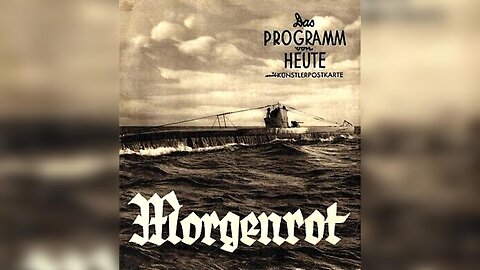
Morgenrot (Film 1933 - ENG SUB)
Adaneth - Cinema&TV
Morgenrot is a 1933 German submarine film set during World War I. The film was directed by Vernon Sewell (in his directorial debut) and Gustav Ucicky. Audio in German with English subtitles (click on CC for subtitles).
The title (literally "morning-red") is the German term for the reddish coloring of the eastern sky in advance of sunrise. Dawn was the U.S. title. It was filmed in Kiel, Schleswig-Holstein, the first German submarine movie made after World War I.
Morgenrot was shot in October–November 1932 at Kiel and in Helsinki with the Baltic sea "playing" the North Sea. To provide realism, the scenes abroad the U-boat were shot abroad a submarine borrowed from the Finnish Navy.
The National Board of Review of Motion Pictures awarded it with Best Foreign Film for 1933.
Cast & Characters:
Rudolf Forster - Kapitanleutnant Helmut Liers
Fritz Genschow - Oberleutnant 'Phipps' Fredericks
Adele Sandrock - Liers' Mother
Camilla Spira - GreteJaul, Fredericks' girl
Paul Westermeier - Seaman Jaul
Gerhard Bienert - Seaman Böhm
Friedrich Gnaß - Juraczik
Franz Nicklisch - Petermann
Hans Leibelt - Bürgermeister von Meerskirchen
Else Knott - Helga, Jaul's girl
Eduard von Winterstein - Hauptmann Kolch

Berge in Flammen/Mountains on Fire (Film 1931 - ENG SUB)
Adaneth - Cinema&TV
Berge in Flammen (English: Mountains on Fire) is a 1931 German war film directed by Karl Hartl and Luis Trenker and starring Trenker, Lissy Arna and Luigi Serventi. Audio in German with English subtitles (click on CC for subtitles).
The film was developed from Luis Trenker's novel of the same title, partly based on his own experiences.
Filming took place partly in the Kalkkögel mountains southwest of Innsbruck and on the Nordkette mountain range.
Shortly before the First World War, an Italian and an Austrian take part in a mountaineering expedition together. Not long afterwards they find themselves fighting on different sides. The plot also features references to the mines on the Italian front.
Cast & Characters:
Luis Trenker as Florian Dimai
Lissy Arna as Pia, his wife
Luigi Serventi as Count Artur Franchini, his friend
Claus Clausen as Leutnant (lieutenant) Kall
Erika Dannhoff
Paul Graetz as Field phone operator
Michael von Newlinsky
Emmerich Albert as Tyrolean Mountain Guide Company soldier
Luis Gerold as Tyrolean Mountain Guide Company soldier
Hans Jamnig as Tyrolean Mountain Guide Company soldier
Hugo Lehner as Tyrolean Mountain Guide Company soldier
Roland von Rossi as Tyrolean Mountain Guide Company soldier
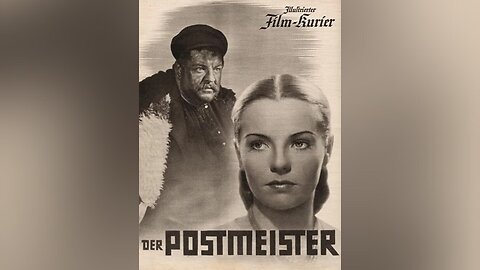
Der Postmeister/The Postmaster (Film 1940 - EN SUB)
Adaneth - Cinema&TV
Postmeister (English: The Postmaster or The Stationmaster) is a 1940 Austrian-German drama film directed by Gustav Ucicky. Audio in German with English subtitles (click on CC for subtitles).
Very loosely based on The Station Master, an 1831 short story from The Belkin Tales series by Alexander Pushkin, it was remade in 1955 as Dunja. An earlier adaptation was the French film Nostalgie (1938) with Harry Baur, directed by Victor Tourjansky.
The film's sets were designed by art directors Kurt Herlth and Werner Schlichting. It was produced in Austria during its occupation by Nazi Germany, by the Wien Film company, and distributed by UFA. At the Venice Film Festival, Der Postmeister won the Mussolini Cup for best foreign film. Released during the Molotov–Ribbentrop Pact, it depicts Russians in a sympathetic light, unlike their portrayals in such films as Frisians in Peril before or GPU after.
Cast & Characters:
Heinrich George as Der Postmeister
Hilde Krahl as Dunja
Siegfried Breuer as Rittmeister Minskij
Hans Holt as Fähnrich Mitja
Ruth Hellberg as Elisawetha
Margit Symo as Mascha
Erik Frey as Sergej
Alfred Neugebauer as Gutsbesitzer
Franz Pfaudler as Knecht Pjotr
Leo Peukert as Oberst
Reinhold Häussermann as Schneider
Auguste Pünkösdy as Wirobowa
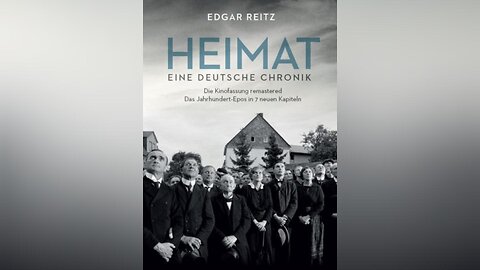
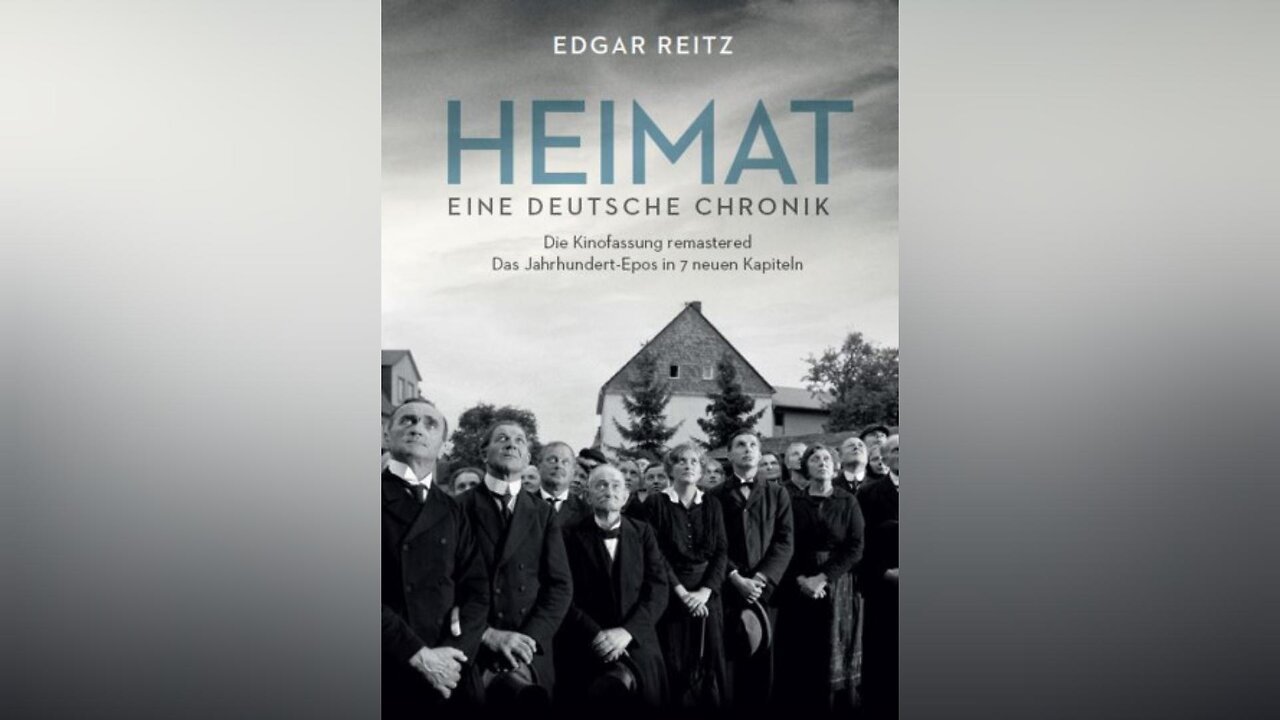
Heimat: A Chronicle of Germany - Part 1 (Film Series 1984 - ENG & FRE SUB)
Adaneth - Cinema&TV
Heimat is a series of films written and directed by Edgar Reitz about life in Germany from the 1840s to 2000 through the eyes of a family from the Hunsrück area of the Rhineland-Palatinate. The family's personal and domestic life is set against the backdrop of wider social and political events. Audio in German with English & French subtitles (click on CC for subtitles).
The combined length of the five films — broken into 32 episodes — is 59 hours and 32 minutes, making it one of the longest series of feature-length films in cinema history. The title Heimat (pronounced [ˈhaɪmaːt]) is a German word, often translated as "homeland" or "native region", but due to its German cultural connotations the word has no exact English equivalent. Usage has come to include that of an ironic reference to the Heimatfilm genre which was popular in Germany in the 1950s. Heimat films were characterised by rural settings, sentimental tone and simplistic morality.
Aesthetically, the series is notable for the frequent switching between colour and black-and-white film to convey different emotional states. In 1987 it won a BAFTA for "Foreign Television Programme".
After premiering in Germany, Heimat was shown in Venice, London and New York festivals. It was shown in movie screens around the world in separate parts. However, it gained its worldwide exposure on television, across 26 countries. In order to shape the film into eleven episodes, Reitz devised introductory segments in which Kurt Wagner as Glasisch narrated the brief story so far, over photographs by Eduard Simon. In Germany, the broadcast received over fifteen million viewers.
The first film, Heimat, which covers the years 1918 to 1982, was released in 1984. It was followed in 1993 by Die Zweite Heimat, which is set during the 1960s. A direct sequel, Heimat 3 (about the period 1989–2000), was released in 2004, with lead actors from both previous films returning as their characters. Heimat Fragments, released in 2006, was made using unused footage from the previous three films, along with newly filmed material. A prequel film to the original, Home from Home, was released in 2013.
Starting with episode two, there is an introductory narration by Glasisch-Karl who recaps events during and between the previous episodes, using snapshots of the main characters to jog viewers' memories.
Part 1 - The Call of Faraway Places 1919-1928: After serving in World War 1, Paul Simon returns home to his family in the (fictional) rural village of Schabbach in the hills and mountains of the Hunsrück Province of the Rhineland-Palatinate. There to welcome him are Paul's parents, Mathias Simon and Katharina (née Schirmer), and his brother and sister, Pauline and Eduard. Eduard did not fight in the war, he has a bad lung and his mother is very protective of him. Also there is Paul's cousin, Glassich-Karl, also a veteran. He was sent home earlier with a disfiguring skin condition caused by poison gas. Because of his appearance Glassich-Karl will never be a full participant in village life. This gives him something of the perspective of an outsider and he will gradually become the narrator of the series. Paul's first act on returning home was to strike an iron in the family forge. But although brought up in the family trade as a blacksmith, Paul no longer feels at home in Schabbach. He seeks wider horizons and is determined instead to pursue his passion for radio communications in every spare moment.
Cast & Characters:
Marita Breuer as Maria Simon (née Wiegand) (7 August 1900 – 18 September 1982).
Michael Lesch (episodes 1&2) and Dieter Schaad (episodes 8, 10&11) as Paul Simon (1898–1984)
Karin Kienzler (episodes 1&2) and Eva Maria Bayerwaltes (episodes 3–8) as Pauline Kröber (née Simon) (1904–75)
Rüdiger Weigang as Eduard Simon (1897–1967).
Gertrud Bredel as Katharina Simon (née Schirmer) (10 November 1875 – 10 May 1947)
Willi Berger as Mathias Simon (11 June 1872 – 23 January 1945)
Johannes Lobewein as Alois Wiegand (1870–1965).
Kurt Wagner as Glasisch-Karl (1900–1982)
Eva Maria Schneider as Marie-Goot (1882–1960)
Alexander Scholz as Hänschen Betz (c.1908 – 15 January 1944)
Arno Lang as Robert Kröber (1902–1944)
Karin Rasenack as Lucie Simon (née Hardtke) (1906–1978)
Jörg Hube as Otto Wohlleben. Hermann's father.
Gudrun Landgrebe as Klärchen Sisse (c. 1929– )
Part 2: https://rumble.com/v6z0qt4-heimat-film-series-1984-eng-and-fre-sub-the-centre-of-the-world-1929-1933-p.html
2
comments
Heimat: A Chronicle of Germany - Part 2 (Film Series 1984 - ENG & FRE SUB)
Adaneth - Cinema&TV
Part 2 - The Centre of the World 1929-1933 : Episode two and those following are introduced by Glasisch-Karl who recaps events using snapshots of the main characters to jog viewers' memories.
We see Paul's arrival at Ellis Island in New York, while back home in Schabbach, Maria is devastated by Paul's departure. When the townswomen rush to inform her that the murdered woman's blood-soaked clothes have been found in the woods, she sobs angrily that Paul had nothing to do with the victim. The pine marten is caught in the trap Paul had made.
Part 3&4: https://rumble.com/v6z0u9s-heimat-a-chronicle-of-germany-part-3-and-4-film-series-1984-eng-and-fre-sub.html
2
comments
Heimat: A Chronicle of Germany - Part 3&4 (Film Series 1984 - ENG & FRE SUB)
Adaneth - Cinema&TV
Part 3 - The Best Christmas Ever 1935: Pauline and Robert Kröber have since had two children, Gabi and Robertchen. Eduard and Lucie have a young child, Horst. A new telephone network now connects Schabbach to the outside world. Lucie is disappointed with the village and most of all with her husband's lack of ambition, for Eduard's consuming obsession with photography leaves little room for other interests. Lucie becomes friendly with the district's new Gauleiter, who by coincidence shares the Simon surname and is also interested in photography.
Part 4 - The Highway 1938: Maria and Pauline visit the cinema in Simmern to see the latest movie starring Zarah Leander. They are taken with the fashionable clothes and striking hairstyle of the movie star. When they return to Pauline's house they have a few drinks and playfully try to copy the star's elaborate curls on their own foreheads. Maria, who has hitherto led a completely self-effacing life caring for her two boys and helping her husband's parents, confides to her sister-in-law that she is attracted to Otto Wohlleben, the civil engineer who is supervising the Organisation Todt a road-building crew that is building a highway through the region.
Part 5&6: https://rumble.com/v6z0x2u-heimat-a-chronicle-of-germany-part-5-and-6-film-series-1984-eng-and-fre-sub.html
1
comment
Heimat: A Chronicle of Germany - Part 5&6 (Film Series 1984 - ENG & FRE SUB)
Adaneth - Cinema&TV
Part 5 v- Up and Away and Back 1938-1939: Lucie crashes her car, which kills her visiting parents who become the first people to be buried in the land, without ever having seen it.
Maria and Otto are now together and watch Zarah Leander in Carl Froelich's new film Heimat. Martina flirts with Rudolf Pollach, an apprentice clockmaker staying with Robert and Pauline. Robert leaves home with their car to go to the Western Front as the war needs all vehicles they can find. Robert is not heard from again.
Part 6 - The Home Front 1943: With the war turning against the Nazis, Hunsrück men have been called up, leaving the women to manage farmland with the help of French POWs. Katharina feeds two of the men, but Wilfried, now the region's SS commander openly threatens that if she were not family, he would condemn her to higher authorities. She retorts he is not a real man for staying home instead of fighting.
Part 7&8: https://rumble.com/v6z27to-heimat-a-chronicle-of-germany-part-7-and-8-film-series-1984-eng-and-fre-sub.html
1
comment
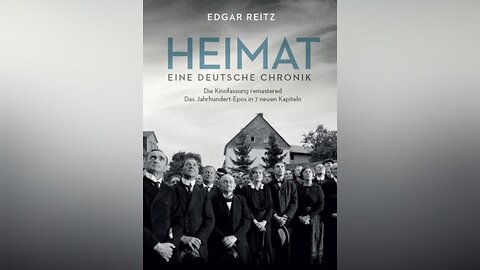
Heimat: A Chronicle of Germany - Part 7&8 (Film Series 1984 - ENG & FRE SUB)
Adaneth - Cinema&TV
Part 7 - Soldiers and Love 1944: Anton's propaganda unit is detailed to make fake newsreel footage.
The war conflict becomes close to home, with Allied bombers passing over the Hunsrück on a regular basis. When a bomb falls in the neighbourhood and fails to explode, it provides Otto with a reason to visit Schabbach. He meets his young son Hermann for the first time. Otto and Maria spent the night discussing what might have been for them both. The next day however, Otto is killed while attempting to defuse a bomb.
Part 8 - The American 1945-47: In Berlin, Martina searches for Rudolf Pollack and finds him badly wounded. While she plays a piano in hopes it will keep him conscious, Pollack dies. She dresses in his uniform and deliberately heads out into the street, where she is killed by Soviet soldiers, having been taken for a German soldier.
Ernst has been shot down over France, but is kept hidden by a Frenchman while he recuperates. In Schabbach, things are easier and the village have created a good rapport with their occupiers.
Part 9: https://rumble.com/v6z2fkq-heimat-a-chronicle-of-germany-part-9-film-series-1984-eng-and-fre-sub.html
1
comment
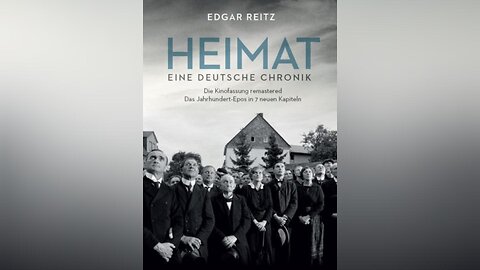
Heimat: A Chronicle of Germany - Part 9 (Film Series 1984 - ENG & FRE SUB)
Adaneth - Cinema&TV
Part 9 - Little Herman 1955-56: Hermann aims to become the first member of his family to go to University. Wanting to stay in Ernst's large home, teenage Hermann along with his friends, including Clemens Bengardt, cycle to the Rhine. Ernst has acquired a Sikorsky helicopter and is transporting lumber for his father-in-law's sawmills. Outside a carnival by the river bank, Schnüsschen Schneider, teaches Hermann how to kiss. Anton's company has boomed, and many locals, including Lotti, Klärchen and Pieritz, now living in the region, work at his factory. During a festival to celebrate Anton's company and the way it is putting Schabbach on the map, Anton tries to persuade local smaller farmers to sell and join him.
Part 10&11: https://rumble.com/v6z2i38-heimat-a-chronicle-of-germany-part-10-and-11-film-series-1984-eng-and-fre-s.html
1
comment
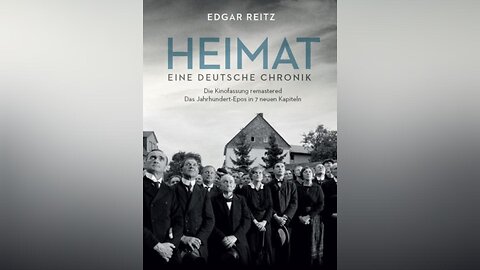
Heimat: A Chronicle of Germany - Part 10&11 (Film Series 1984 - ENG & FRE SUB)
Adaneth - Cinema&TV
Part 10 - The Proud Years 1967-1969: The town gets colour television, impressing Anton's children Marlies and Hartmut.
Anton's factory gains an international reputation and industrialists from Brussels arrive with a takeover offer of sixty million marks. Needing time to think and unsure on what to do Anton contacts his father Paul, who has since sold his business and is now in Germany at Baden-Baden. Paul has set up a studio with Hermann, who since studying in America, has become a well known composer of electronic music
Part 11 - The Feast of the Living and the Dead 1982: Glasisch-Karl narrates over a family tree that details the ancestry of the Simon, Wiegard and Schirmer families.
1
comment

The Lost Honour of Katharina Blum (Film 1975-ENG SUB)
Adaneth - Cinema&TV
The Lost Honour of Katharina Blum , or: How violence develops and where it can lead is a 1975 West German political drama film based on Heinrich Böll's 1974 novel of the same name, adapted for the screen and directed by Volker Schlöndorff and Margarethe von Trotta. Audio in German with English subtitles (click on CC for subtitles).
Schlöndorff and von Trotta wrote the script with an emphasis on the vindictive and harsh treatment of an innocent woman by the public, police, and media. The film stars Angela Winkler as Blum, Mario Adorf as Kommissar Beizmenne, Dieter Laser as Tötges, and Jürgen Prochnow as Ludwig.
Produced during a time of political controversy in West Germany, when journalists would stop at nothing to get their names known. Following the kidnapping and execution of a West German corporate leader, Hanns Martin Schleyer, and several other prison deaths, The Lost Honour of Katharina Blum reflects the conflicts in West Germany during the 1960s and 1970s, when student movements and a political struggle were occurring. Militant terrorists such as the Red Army Faction (the Baader-Meinhof Group) had holds in the government and their violent tendencies soon made citizens question their government as reforms began to turn into repressions. This was a period when media coverage was expanding and journalism was becoming one of the most popular careers. Journalists were ruthless about digging for stories.
The film has a documentary style, with little lighting or special effects. The camera is largely stationary. There is only one crane shot, in the final scene. Cinematographer Jost Vacano felt this would make it easier to get into the audience's heads. The film was shot during carnival season and uses many bright, vibrant colors, but as the film progresses it becomes darker to reflect Katharina's pain.
The film uses almost no makeup. Vacano wanted the viewer to see Katharina's skin imperfections and feel she was a real person. The sets are intentionally abstract. Police offices are intentionally depicted as large open spaces with empty desks, which was not the case in West Germany at the time. This abstract, empty set design was influenced by the American painter Allen Tucker.
Hans Werner Henze chose Wagnerian themes for his score. The opening scene takes place at the Rhine River, so Henze wrote themes influenced by Das Rheingold. He called it "the poisoned river" because the dirty water was a metaphor for a toxic German society. The music is a bit disjointed at times to reflect this. Many of the musical themes are brought together in a rondo at the end.
Cast & Characters:
Angela Winkler – Katharina Blum
Mario Adorf – Kommissar Beizmenne (Inspector Beizmenne)
Dieter Laser – Werner Tötges
Jürgen Prochnow – Ludwig Götten
Heinz Bennent – Dr. Hubert Blorna
Hannelore Hoger – Trude Blorna
Rolf Becker – Prosecutor Hach
Harald Kuhlmann – Moeding
Herbert Fux – Weninger
Regine Lutz – Else Woltersheim
Werner Eichhorn – Konrad Beiters
Karl Heinz Vosgerau – Alois Sträubleder
Angelika Hillbrecht – Frau Pletzer
Horatius Häberle – Prosecutor Dr. Korten
Henry van Lyck – 'Scheich' Karl
Stephanie Thönnessen – Claudia Sterm
Peter Franke – Dr. Heinen
2
comments

M (Film 1931 - ENG SUB)
Adaneth - Cinema&TV
M (German: M – Eine Stadt sucht einen Mörder, lit. M – A City Searches for a Murderer). Audio in German with English subtitles (Click on CC for subtitles).
M is a 1931 German thriller film directed by Fritz Lang and starring Peter Lorre in his breakthrough role as Hans Beckert, a serial killer of children. An early example of a procedural drama, the film centers on the manhunt for Lorre’s character, conducted by both the police and the criminal underworld.
The film's screenplay was written by Lang and his wife Thea von Harbou and was the director's first sound film. It features many cinematic innovations, including the use of long, fluid tracking shots, and a musical leitmotif in the form of "In the Hall of the Mountain King" whistled by Lorre's character. Now considered a timeless classic, the film was deemed by Lang to be his magnum opus. It is widely considered one of the greatest films of all time, and an indispensable influence on modern crime and thriller fiction.
Cast & Characters:
- Peter Lorre as Hans Beckert. M was Lorre's first major starring role, and it boosted his career, even though he was typecast as a villain for years afterward in films such as Mad Love and Crime and Punishment. Before M, Lorre had been mostly a comedic actor. After fleeing from the Nazis, he landed a major role in Alfred Hitchcock's first version of The Man Who Knew Too Much (1934), picking up English along the way.
- Otto Wernicke as Inspector Karl Lohmann. Wernicke made his breakthrough with M after playing many small roles in silent films for over a decade. After his part in M he was in great demand due to the success of the film, including returning to the role of Karl Lohmann in The Testament of Doctor Mabuse, and he played supporting roles for the rest of his career.
- Gustaf Gründgens as Der Schränker (The Safecracker). Gründgens received acclaim for his role in the film and established a successful career for himself under Nazi rule, ultimately becoming director of the Staatliches Schauspielhaus (National Dramatic Theatre).

The Red Baron (Film 2008)
Adaneth - Cinema&TV
The Red Baron (also known by its original German title, Der Rote Baron) is a 2008 German-British biographical action war film written and directed by Nikolai Müllerschön about the World War I flying ace Manfred von Richthofen, known as the "Red Baron". Audio in English with English subtitles (click on CC).
The film stars Matthias Schweighöfer, Joseph Fiennes, Til Schweiger and Lena Headey. To improve its chances on the international market, The Red Baron was filmed entirely in the English language, although it is a German production depicting Germans. With an estimated budget of 18 million euros, it is one of the most expensive and at the same time lowest-grossing films in German history.
The Red Baron premiered on 31 March 2008 in Berlin and was released a week later in the German cinemas but was quite controversial in Germany, where glorification of war heroes has become taboo. The reviews after the first public performances of the film were mainly negative, criticizing in particular the high level of historical inaccuracy.
Reviewing the movie, Manfred von Richthofen, the Baron's nephew said "It's a remarkable movie". "Somehow it did not turn into a war film. The personality and especially the thoughtfulness of my uncle are true to life."
Richthofen biographer Joachim Castan, called Richthofen's and Otersdorf's affair "complete rubbish"; "The historical Richthofen was the James Dean of World War I, an idol of his time, but he had no affairs with women. He also did not drink and did not visit brothels." And it is true that on three occasions he waved his enemy to the ground rather than shooting them out of the sky. (In one case, seeing that an enemy pilot's gun had jammed, Von Richthofen waved him down to the ground, jumped out, shook his hand and then took off again.) But in other respects, Von Richthofen was "cold-blooded," says Castan. "He was mainly interested in his strike rate. He did not try to conceal the fact that he was aiming to kill."
Cast & Characters:
Matthias Schweighöfer as Rittmeister Manfred Freiherr von Richthofen
Lena Headey as Nurse Käte Otersdorf
Til Schweiger as Leutnant Werner Voss
Volker Bruch as Oberleutnant Lothar Freiherr von Richthofen
Maxim Mehmet as Leutnant Friedrich Sternberg
Hanno Koffler as Leutnant Lohmann
Tino Mewes as Oberleutnant Kurt Wolff
Steffen Schroeder as Oberleutnant Karl Bodenschatz
Axel Prahl as General der Kavallerie Ernst von Hoeppner
Joseph Fiennes as "Captain" Roy Brown "RCFC"[Note 1]
Tomáš Koutník as Young Manfred von Richthofen
Tomáš Ibl as Young Lothar von Richthofen
Albert Franc as Young Wolfram Freiherr von Richthofen
Richard Krajčo as Major Lanoe Hawker VC RFC
Lukáš Příkazký as Oberleutnant Stefan Kirmaier
Gitta Schweighöfer as Kunigunde von Richthofen
Branislav Holiček as Leutnant Wolfram Freiherr von Richthofen
Julie Engelbrecht as Ilse von Richthofen
Jan Vlasák as Major Albrecht Freiherr von Richthofen
Luise Bähr as Sophie
Irena Máchová as Clara
Robert Nebřenský as Feldwebel Räuber
Ralph Misske as Menzke
Josef Vinklář as Generalfeldmarschall Paul von Hindenburg
Ladislav Frej as Kaiser Wilhelm II
Patrik Plesinger as Hauptmann Doering
Jiří Laštovka as Oberleutnant Ernst Udet
Rostislav Novák as Oberleutnant Erich Loewenhardt
Zdeněk Pecha as Leutnant Werner Steinhäuser
Jiří Kout as Leutnant Eberhard Mohnicke
Karsten Kaie as Anthony Fokker
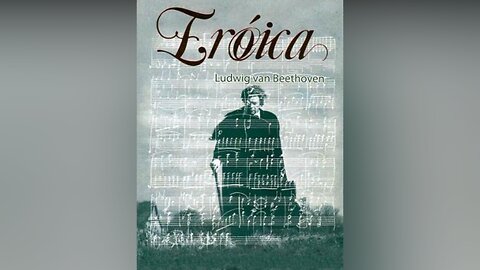
Eroica (Film 1949 - ENG SUB)
Adaneth - Cinema&TV
Eroica is a 1949 Austrian film depicting composer Ludwig van Beethoven's life and work. Audio in German with English subtitles.
The film is directed by Walter Kolm-Veltée, produced by Guido Bagier with Walter Kolm-Veltée and written by Walter Kolm-Veltée with Franz Tassié. The leading role is performed by Ewald Balser-one of the most distinguished actors of his day. The film was entered into the 1949 Cannes Film Festival.
Cast & Characters:
Ewald Balser — Ludwig van Beethoven
Marianne Schönauer — Therese von Brunswick
Judith Holzmeister — Giulietta Guicciardi
Oskar Werner — Karl, Beethoven's nephew
Dagny Servaes — Karl's mother
Iván Petrovich — Prince Lichnowsky
Ludmilla Hell — Princess Lichnovsky
Auguste Pünkösdy — Housekeeper
Hans Kraßnitzer — Amenda
Alfred Neugebauer — Organist Albrechtsberger
Richard Eybner — Schuppanzigh
Karl Günther — Country doctor
Gustav Waldau — Country parson
Erik Frey — French Officer
Franz Pfaudler — Theatre Director
Julius Brandt — Painter
Hans Hais — French Officer
Helmut Janatsch — Austrian Cavalryman
Karl Kalwoda — Caretaker
2
comments

Titanic (Film 1943 - ENG SUB)
Adaneth - Cinema&TV
Titanic is a 1943 German film made during World War II in Berlin by Tobis Productions for UFA, depicting the catastrophic sinking of RMS Titanic in 1912. This was the third German language dramatization of the event, following a silent film released in 1912 just four months after the sinking and the British produced German film Atlantik released in 1929. Audio in German with English subtitles.
The film was commissioned by Nazi Propaganda Minister Joseph Goebbels with the intent of showing not only the superiority of German filmmaking, but also as a propaganda vehicle which would depict British and American capitalism as being responsible for the disaster. The addition of an entirely fictional heroic German officer, Petersen, to the ship's crew was intended to demonstrate the superior bravery and selflessness of German men as compared to the British officers. The film's original director, Herbert Selpin, was arrested during production after making disparaging comments about the German army and the war in the east. He was found hanged in prison, and the film was completed by Werner Klingler, who was not credited.
The film was the first on the subject which was simply titled Titanic, and the first to combine various fictional characters and subplots with the true events of the sinking; both conventions went on to become a staple of Titanic films.
Cast & Characters:
Hans Nielson as Herr Peterson
Sybille Schmitz as Sigrid Olinsky
Kirsten Heiberg as Gloria
E.F. Fürbringer as Sir Bruce Ismay
Karl Schönböck as John Jacob Astor
Charlotte Thiele as Lady Astor
Otto Wernicke as Captain Edward J. Smith
Franz Schafheitlin as Hunderson
Herbert Tiede as 2nd officer Lightoller
Sepp Rist as Jan
Monika Burg as Maniküre Heidi
Jolly Bohnert as Marcia
Fritz Böttger as Lord Douglas
Hermann Brix as Head of Orchestra Gruber
Lieselott Klinger as Anne
Theodor Loos as Privy Councillor Bergmann
Karl Meixner as Hopkins
Theo Shall as 1st Officer Murdoch
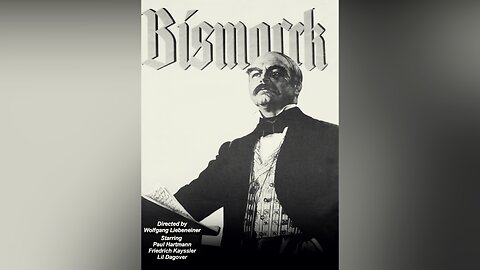
Bismarck (Film 1940-ENG SUB)
Adaneth - Cinema&TV
Bismarck is a 1940 German historical film directed by Wolfgang Liebeneiner and starring Paul Hartmann, Friedrich Kayßler, and Lil Dagover. Audio in German with English subtitles (click on CC for subtitles).
A biographical film of Otto von Bismarck, the Prime Minister of Prussia, and how he and his policies helped to unite Germany.
The film recalls the nineteenth century desire for German unification which at the time was threatened from several corners. From the liberals, from crown prince Frederich (who is shown as an English puppet) and the French who attempt to annex the left bank of the Rhine. The historical feature opens in 1862 with King Wilhelm I appointing Bismarck as head of the Prussian government. With Germany divided into 35 different political entities and power transferred to various principalities.
The last scene of the movie, the signing of the foundation of the German Empire in Versailles 1871, is a recreation of the painting "Die Proklamierung des Deutschen Kaiserreiches (18. Januar 1871)" The proclamation of the German Empire (18th January 1871) by Anton von Werner from the same year.
The film was made at the Johannisthal Studios in Berlin by Tobis Film one of the leading German companies of the era. It was shot at a variety of locations involving several related to the historic events of film including in Berlin, Vienna, Bad Gastein and Babelsberg Palace. Plau am See in Mecklenburg was also used for shooting. The film's sets were designed by the art directors Karl Machus and Erich Zander.
Cast & Characters:
Paul Hartmann as Otto von Bismarck
Friedrich Kayßler as King Wilhelm I
Lil Dagover as Empress Eugénie
Käthe Haack as Johanna von Bismarck
Maria Koppenhöfer as Queen Augusta
Walter Franck as Emperor Napoleon III
Ruth Hellberg as Princess Victoria
Werner Hinz as Prince Friedrich
Margret Militzer as Countess Marie von Bismarck
Karl Schönböck as Kaiser Franz Joseph
Günther Hadank as Minister Moltke
Hellmuth Bergmann as Minister von Roon
Karl Haubenreißer as Dr. Rudolf Virchow
Otto Gebühr as King John of Saxony
Jaspar von Oertzen as Prince Friedrich Karl
Harald Paulsen as Benedetti
Karl Meixner as Ludwig Loewe
Hans Junkermann as Field Marshall Wrangel
Otto Graf as Robert von Keudell
Franz Schafheitlin as Prince Metternich
Bruno Hübner as Count Rechberg
Paul Hoffmann as Count von Blome
Otto Stoeckel as Minister President Beust
Otto Below as Lothar Bucher
Eduard von Winterstein as General von Manstein
Karl Fochler as Count Karolyi
Wilhelm P. Krüger as Lakai Kuhn
Der Große König/The Great King (Film 1942 - ENG SUB)
Adaneth - Cinema&TV
The Great King (German: Der große König) is a 1942 German drama film directed by Veit Harlan and starring Otto Gebühr. It depicts the life of Frederick the Great, who ruled Prussia from 1740 to 1786. Audio in German with English subtitles (click on CC for subtitles).
King Frederick II (aka "Frederick the Great") of Prussia is engaged in a major battle against the Austrian army at Kunersdorf, and things aren't going well. The Austrians are inflicting major casualties, and his army is beginning to crumble. Defeat seems inevitable when a combination of events gives him hope that he may pull victory from the jaws of defeat after all.
The film received the rare "Film of the Nation" distinction. It was part of a popular cycle of "Prussian films". Director Veit Harlan won the Mussolini Cup for Best Foreign Film at the 1942 Venice Film Festival. This is the 16th and last time when Otto Gebühr is portraying King Frederic II. of Prussia.
The eagle on the Prussian flag at the beginning of the movie was used in Prussia after WWI, about 200 years after Frederic the Great. The closing credits show the lyrics to the poem "You black eagle" while a song with these words are sang.
The opening credits says "The work on this movie started in the early summer of the year 1940. In its important scenes it stays faithful to the historical facts and depicts mostly the tasks of the 7-year-war in which the superior character of the king had to be challenged. Especially here he grew to a height which is unique in whole history. The main quotes of the king are from his own mouth."
The filming of the movie started in 1940, still during the Hitler-Stalin pact. After Germany attacked the Soviet Union in June 1941 the portrayal of the Russian army was reworked and the scene had to be reworked to make them more negative. Especially the character of Sachar Tchernyshov was changed to more negative cliches, being portrayed as a greedy but simple-minded Russian while the actual Tchernyshov was the leader of a corp with 15000 men, which Czar Peter III of Russia gave to the Prussian King.
Otto Gebühr as Frederick II.
Kristina Söderbaum as Luise Treskow
Gustav Fröhlich as Treskow
Hans Nielsen as Niehoff
Paul Wegener as General Czernitscheff
Paul Henckels as Grenadier Spiller
Elisabeth Flickenschildt as Spiller's Wife
Kurt Meisel as Alfons
Hilde Körber as Elisabeth Christine
Claus Clausen as Prince Henry the Older
Klaus Detlef Sierck as Prince Henry the Younger
Herbert Hübner as Count Finkenstein
Franz Schafheitlin as Commandant Bernburg
Otto F. Henning as General von Finken
Reginald Pasch as General Manteufel
Otto Graf as General Seydlitz
Heinrich Schroth as General Balthasar Rudolf von Schenckendorf
Leopold von Ledebur as General von Retzow
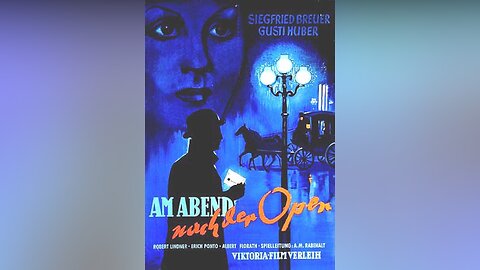
Am Abend nach der Oper/That Evening After The Opera (Film 1945 - ENG SUB)
Adaneth - Cinema&TV
That Evening After The Opera (Original title: Am Abend nach der Oper) is a German film directed by Arthur Maria Rabenalt. Audio in German with English subtitles (harcoded).
Originally produced in 1944, censors demanded that changes be made in the movie to pass their restrictions. The changes were made; the censors approved the film; then changed their minds ten days later. The film languished on the shelf throughout the last days of the War, when it finally found its premier in 1945 in East Berlin!
Vienna, around 1910. Factory owner Peter Manders and his wife Julia have just dropped their secretary Merk off at home after a lovely evening at the opera when Merk does something extremely bold: in front of her husband, he asks Julia to visit him that very night. Julia nods in agreement, thereby dealing her husband a bitter blow.
When Julia later gets ready for her rendezvous, Manders does not hold her back - he grabs his pistol, but before he follows her, he writes her a farewell letter in which he explains his behavior.
Cast: Gusti Huber, Siegfried Breuer, Robert Lindner, Erich Ponto, Klaus Pohl, Albert Florath, Alfred Maack, Anton Pointner, Gerhard Dammann, Julius Brandt
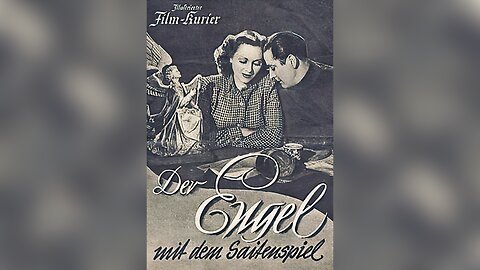
Der Engel mit dem Saitenspiel/The Angel With a Harp (Film 1944 - ENG SUB)
Adaneth - Cinema&TV
Der Engel mit dem Saitenspiel (Englih: The Angel With a Harp) is a 1944 German film Directed by Heinz Rühmann. Starring: Hertha Feiler, Hans Söhnker, Hans Nielsen, Erich Ponto, Lina Carstens, Otto Graf, Susanne von Almassy. Audio in German with English subtitles.
Achim and Vera are friends and live an uncomplicated and happy life … that is, until they get into their first serious argument on how they should spend New Year’s Eve. Vera wants to celebrate with friends, while Achim wants to go off to a lonely mountain hut. And so, he goes off alone into the mountains. In the hut, he meets the student Susanne, with whom he spends New Years’ Eve; gets to know well; and falls in love with. Unfortunately, through misfortune, they lose sight of each other afterwards…
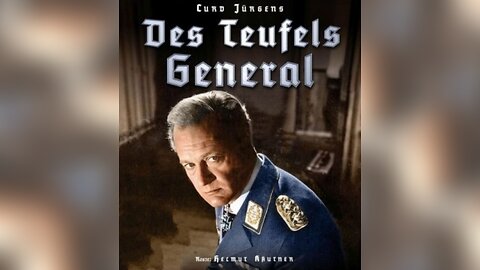
Des teufels general/The Devil's General (Film 1955 - ENG & GER SUB)
Adaneth - Cinema&TV
The Devil's General (German: Des Teufels General) is a 1955 black and white West German film based on the play of the same title by Carl Zuckmayer. Audio in German with subtitles in English and German (click on CC).
The film features Curd Jürgens as General Harras, Marianne Koch, Viktor de Kowa, Karl John, Eva Ingeborg Scholz, and Harry Meyen. It was one of a number of films made in Germany in the 1950s that emphasized resistance to Hitler among German generals in WW II.
The film was based on a play by Carl Zuckmayer who wrote it while in exile in the USA. In December, 1941, he read about the death of a personal friend, Ernst Udet, who was a World War One ace who later became an important figure within the Nazi-era Luftwaffe, but eventually grew disillusioned with the regime and committed suicide. Zuckmayer wrote the play after World War Two and it had its debut in Zurich in 1946 and in Frankfurt in 1947. The play was hugely popular in Germany and within a few years was the most frequently performed play in the country.
The film was shot in Hamburg and Berlin using Swedish-built Junkers Ju 86 bombers with license-built Bristol Mercury engines on a local airfield including its offices with Esselte Files on the shelf. The parking lot contains a post-war VW Bus. All uniforms were of a material and tailoring standard unknown in wartime Germany.
Cast & Characters:
Curd Jürgens as Harras, whose character is supposedly based upon German Luftwaffe General Ernst Udet
Bum Krüger as Lüttjohann, Harras's adjutant.
Paul Westermeier as Korrianke, Harras's chauffeur.
Albert Lieven as Friedrich Eilers, Colonel & squadron leader.
Harry Meyen as Hartmann, Luftwaffe officer.
Hans Daniel as Hastenteuffel, Luftwaffe officer.
Beppo Brem as Pfundtmayer, Luftwaffe officer.
Karl Ludwig Diehl as Sigbert von Mohrungen, President of the Raw Materials Procurement Department.
Werner Fuetterer as Baron Pflungk, Attaché in the Ministry of Foreign Affairs.
Viktor de Kowa as Dr. Schmidt-Lausitz, Nazi Party official.
Karl John as Oderbruch, engineer in the Ministry of Aviation.
Erica Balqué as Anne Eilers, Friedrich Eilers' wife.
Eva Ingeborg Scholz as Waltraut von Mohrungen, nicknamed Pützchen, Anne's sister.
Camilla Spira as Olivia Geiss, diva.
Marianne Koch as Diddo Geiss, Olivia's niece; love interest of General Harras, despite how much younger than him she is.
Ingrid van Bergen as Lyra Schoeppke, named "die Tankstelle," which means "The Gas Station."
Inge Meysel as Frau Korrianke.
Joseph Offenbach as Zernick, SS-Hauptsturmführer.
Wolfgang Neuss as police photographer.
Robert Meyn as von Stetten, Generalleutnant.
Werner Riepel as Kleinschmidt,, Göring's chauffeur.
Werner Schumacher as SS-Wachtmeister.
Wolfried Lier as Herr Detlev, restaurant waiter.
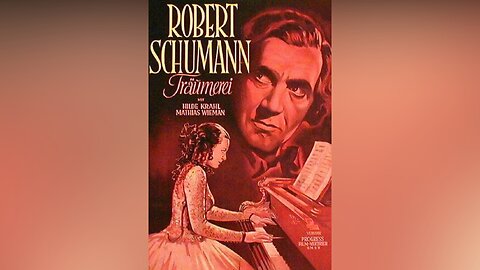
Träumerei/Dreaming (Film 1944)
Adaneth - Cinema&TV
Dreaming (German: Träumerei) is a 1944 German historical musical drama film directed by Harald Braun and starring Hilde Krahl, Mathias Wieman and Friedrich Kayssler. Audio n German with English subtitles.
It portrays the lives of the pianist Clara Schumann and her composer husband Robert Schumann.
The film was shot at the Babelsberg and Tempelhof Studios in Berlin and on location around Xanten in the Rhineland.
It premiered in Zwickau, the birthplace of Robert Schumann, two days before it was first screened at the Marmorhaus cinema in the capital. Originally, the film was going to star Zarah Leander as Clara Schumann, and movie posters featuring her were even distributed. However, Leander fled to Sweden, due to the ongoing war, and was recast.
The future star Hildegard Knef shot some scenes, which would have marked her film debut, but these were left out of the final cut.
Cast & Characters:
Hilde Krahl as Clara Wieck Schumann
Mathias Wieman as Robert Schumann
Friedrich Kayssler as Friedrich Wieck
Elly Burgmer as Fräulein Leser
Ullrich Haupt as Johannes Brahms
Emil Lohkamp as Franz Liszt
Erika Helmke as Madame Hülsebusch
Rudolf Drexler as Tausch, Konzertmeister
Paul Henckels as Baron Fölkersam
Ernst Karchow as Gerichtspräsident
Emil Hess as Dr. Körber
Carl Napp as Bürgermeister
Karl Hellmer as Pistazy
Helmuth Schneider as Student
Walter Tarrach as Flügeladjutant
Leni Sponholz as Hausmädchen
Bruno Harprecht as König Karl IV. von Schweden
Waldo Favre as Kapellmeister
Clemens Hasse as Clemens Rollfuß
Rudolf Klix as Würdenträger am Königshof
Astrid Seiderer as Ballonverkäuferin beim Karneval
Toni Tetzlaff as Konzertbesucherin
Hella Thornegg as Solistin im Chor
2
comments
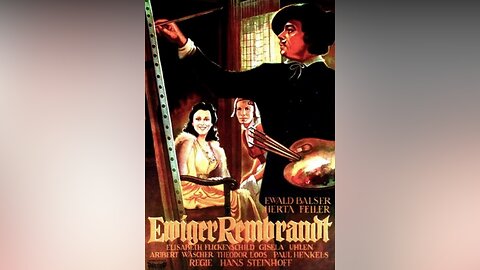
Rembrandt (Film 1942 - ENG SUB)
Adaneth - Cinema&TV
Rembrandt is a 1942 German historical drama film directed by Hans Steinhoff and starring Ewald Balser, Hertha Feiler, Gisela Uhlen, and Aribert Wäscher. It was based on the novel Zwischen Hell und Dunkel by Valerian Tornius and depicts the life of the Dutch painter Rembrandt. Audio in German with English subtitles.
The film's sets were designed by the art director Walter Röhrig. It was shot at the Tempelhof and Babelsberg Studios in Berlin. Location shooting took place in German-occupied Amsterdam and the Cinetone Studios in the city were also used.
Cast & Characters:
Ewald Balser as Rembrandt
Hertha Feiler as Saskia van Rijn
Gisela Uhlen as Hendrickje Stoffels
Elisabeth Flickenschildt as Geertje Dierks
Theodor Loos as Jan Six
Aribert Wäscher as Uylenburgh, Saskia's relative
Paul Henckels as Radierer Seeghers
Hildegard Grethe as Ms. Seeghers
Wilfried Seyferth as Ulricus Vischer
Paul Rehkopf as brother Adriaen
Rolf Weih as student Eeckhout
Clemens Hasse as student Philip
Helmut Weiss as student Cornelis
Heinrich Schroth as doctor Tulp
Robert Bürkner as notary Wilkens
Karl Dannemann as Banning Cocq
Walther Süssenguth as Piet
1
comment

Der Alte Und Der Junge König/The Old And The Young King (Film 1935 - ENG SUB)
Adaneth - Cinema&TV
The Old and the Young King (German: Der alte und der junge König) is a 1935 German historical drama film directed by Hans Steinhoff and starring Emil Jannings, Werner Hinz and Leopoldine Konstantin. Audio in German with English subtitles.
The film's sets were designed by the art directors Fritz Maurischat and Karl Weber. It was produced by a subsidiary of Tobis Film. Location shooting took place around Potsdam, including at the Garrison Church. Interiors were shot at the Grunewald and Johannisthal Studios. It premiered at the Ufa-Palast am Zoo.
Part of the tradition of Prussian films of the Weimar and Nazi eras, the film ostensibly deals with the intense conflict between Prussian King Friedrich Wilhelm I and his son and heir, Crown Prince Friedrich – the future King Friedrich II "The Great". This is a well-known incident of 18th century German history, which had drawn much public attention in the time itself, and been artistically treated before.
Cast & Characters
Emil Jannings as King Friedrich Wilhelm I
Leopoldine Konstantin as Queen Sophie
Werner Hinz as Crown Prince Friedrich
Carola Höhn as Crown Princess
Marieluise Claudius as Princess Wilhelmine
Claus Clausen as Lieutenant Katte
Friedrich Kayßler as Katte's Father
Georg Alexander as The Margrave of Bayreuth
Walter Janssen as von Natzmer
Theodor Loos as Friedrich Eberhard von Rochow
Heinrich Marlow as Grumbkow
Fritz Odemar as Hotham
Rudolf Klein-Rogge as Dessauer
Leopold von Ledebur as von Waldow
Friedrich Ulmer as von Reichmann
Harry Hardt as von Seckendorff
Luise Morland as Frau von Kamecke
Emilia Unda as Frau von Ramen
Ruth Eweler as Frl. von Sonsfeld
Eugen Rex as Eversmann
Ellen Frank as Countess Arnim
Paul Henckels as Pesne
Hans Leibelt as Knobelsdorf
Walter Steinbeck as Kaiserlingk
Hadrian Netto as First Usurer
Egon Brosig as Second Usurer
Burgtheater/Court Theatre (Film 1936)
Adaneth - Cinema&TV
Court Theatre (German: Burgtheater) is a 1936 Austrian drama film directed by Willi Forst and starring Werner Krauss, Carl Esmond and Hortense Raky. Audio in German with English subtitles.
Friedrich Mitterer is the eccentric and basically socio-phobic star of the Viennese Burg Theater. His prompter takes care of his social interactions. When Mitterer meets the young Leni he relies on the prompter to establish contact.
Much of the film was shot on location in the Burgtheater in Vienna. The Sievering Studios were also used for the production. The film's sets were designed by the art directors Kurt Herlth, Werner Schlichting and Emil Stepanek.
Cast & Characters:
Werner Krauss as Friedrich Mitterer
Carl Esmond as Josef Rainer
Hortense Raky as Leni Schindler
Olga Chekhova as Baroness Seebach
Hans Moser as Souffleur Sedlmayer
Karl Günther as Baron Seebach
Karl Skraup as Schindler
Josefine Dora as Frau Schindler
Franz Herterich as Direktor des Burgtheaters
Erik Frey as Schauspieler des Burgtheaters
O. W. Fischer as Schauspieler des Burgtheaters
Maria Holst as Fritzi
Camilla Gerzhofer as Frau von S. Gesellschaftsdame
Karl Paryla as Erster junger Schauspieler
Fred Steinbacher as Zweiter junger Schauspieler
Marietta Weber as Erste Schauspielerin
Kurt von Lessen as Der Kritiker
Georg Schmieter as Opernsänger
Babette Devrient as Fürstin
Rudolf Teubler as Majordomus
Irma Eckert as Zofe
Otto Hartmann as Vorsprechender Schauspieler
Maria Lehdin as Gretchen
Marie Hilde as Lintschi
August Keilholz as Diener
Ady Berber as Heurigensänger

Mazurka (Film 1935 - ENG SUB)
Adaneth - Cinema&TV
Mazurka is a 1935 German drama film directed by Willi Forst and starring Pola Negri, Albrecht Schoenhals, and Ingeborg Theek. Audio in German with English subtitles.
A female cabaret singer is put on trial for murdering a predatory musician. It takes its name from the Mazurka, a Polish folk dance.
Cast & Characters:
Pola Negri as Vera, a singer
Albrecht Schoenhals as Grigorij Michailow
Ingeborg Theek as Lisa
Franziska Kinz as Mother
Paul Hartmann as Boris Kierow
Hans Hermann Schaufuss as Defense lawyer
Inge List as Hilde
Friedrich Kayßler as Judge
Georg Georgi
Antonie Jaeckel
1
comment

Im Trommelfeuer der Westfront/In the Drumfire of the Western Front (Film 1936)
Adaneth - Cinema&TV
Im Trommelfeuer der Westfront (English: In the Drumfire of the Western Front) is a 1936 German war movie Directed by Charles Willy Kayser. Starring Paul Rehkopf and Ernst Rückert. Audio in German with English subtitles.
"The earth in a fiery bloodbath. Howling of hell, savage wrath. Thunderous booming and clamor. This is war in its truest form. They lie under fire refusing to shirk their duty, the heroes of the front!" Thus begins Charles Willy Kayser's film Im Trommelfeuer der Westfront (In the Drumfire of the Western Front), the most unique motion picture of WW I ever produced. Incorporating historical film material from German, British and French archives and combining it with suspenseful, re-enacted scenes, this extraordinary docudrama maintains a sense of historical fidelity and an absolutely seamless tapestry of warfare in the trenches and in the air. It is testimony to the carnage and destruction that set the stage for the rise of National Socialism in the following decade.
The original footage selected is among the best ever recorded of men fighting and dying in battle and is affirmation of the unparalleled bravery of the front-line cinematographers as well. Over 90 percent of German footage shot during WW I was destroyed during aerial bombings in WW II. This surviving material is both rare and captivating. It generates suspense throughout, as the scene depicting a vignette of a clock ticking while on the face of that clock, a soldier's foot is superimposed nervously tapping as he awaits the next assault.
Released by Berlin's Herzog-Film in 1936, Im Trommelfeuer became a virtually lost film, despite being the most authentic picture of World War I ever made. G.W. Papst's Westfront 1918, produced in 1931, recreated the horrors of the war masterfully, but Im Trommelfeuer depicts the war as it really was and is a major rediscovery.
1
comment

D III 88 (Film 1939 - ENG SUB)
Adaneth - Cinema&TV
D III 88 is a 1939 German drama film directed by Herbert Maisch and Hans Bertram, the latter also co-writing the script. It stars Christian Kayßler, Otto Wernicke and Heinz Welzel. Audio in German with English subtitles.
The film was made with the support of Luftwaffe chief Hermann Göring, and was the last of a series of aviation films to be made before the outbreak of World War II. It was one of the most commercially successful films released during the Nazi era. The title, referring to the serial number of the Albatros D.III flown by one of the characters in the World War I.
Two extraordinary young pilots engage in a competitive rivalry and also fight over the same girl. In an effort to show off both fly into a dangerous storm, damaging their planes and are suspended from duty. They are finally convinced by their commanding officer, a veteran of World War I, to use their talents in a more disciplined way for their country.
Cast & Characters:
Christian Kayßler as Oberleutnant Mithoff
Otto Wernicke as Oberwerkmeister Bonicke
Heinz Welzel as Obergefreiter Fritz Paulsen
Hermann Braun as Obergefreiter Robert Eckhard
Adolf Fischer as Gefreiter Zeissler
Horst Birr as Monteur Hasinger
Karl Martell as Lt. Ludwig Becker
Fritz Eberth as Funker Lindner
Carsta Löck as Bauernmagd Lina
Paul Otto as General
Paul Bildt as Stabsarzt der Flugstaffel
Hans Bernuth as Flieger
Ernst Dernburg as Adm. beim Manöver
Erich Dunskus as Bauer
Heinz Engelmann as Lt. Frank
Ilse Fürstenberg as Bäuerin
Malte Jäger as 1. Funker
Ferry Reich as 2. Funker
Josef Kamper as Bauernknecht
Hilde Land as Kantinenwirtin
Guenther Markert as Marineoffizier
Hans Meyer-Hanno as Kantinenwirt
Egon Vogel as Sanitäter
Eduard von Winterstein as Landarzt
Wolfgang Staudte as Marineoffizier
Walter Gross as Funker
Theo Brandt as Fliegeroffizier
Heimat: A Chronicle of Germany - Part 10&11 (Film Series 1984 - ENG & FRE SUB)
2 months ago
161
Part 10 - The Proud Years 1967-1969: The town gets colour television, impressing Anton's children Marlies and Hartmut.
Anton's factory gains an international reputation and industrialists from Brussels arrive with a takeover offer of sixty million marks. Needing time to think and unsure on what to do Anton contacts his father Paul, who has since sold his business and is now in Germany at Baden-Baden. Paul has set up a studio with Hermann, who since studying in America, has become a well known composer of electronic music
Part 11 - The Feast of the Living and the Dead 1982: Glasisch-Karl narrates over a family tree that details the ancestry of the Simon, Wiegard and Schirmer families.
Loading 1 comment...
-
 26:18
26:18
GritsGG
14 hours agoHow to Activate Heat Map & Find Self Revives On Warzone!
4.79K -
 29:01
29:01
The Pascal Show
1 day ago $8.54 earnedRUNNING SCARED! Candace Owens DESTROYS TPUSA! Are They Backing Out?!
39.6K49 -
 24:45
24:45
Blabbering Collector
1 day agoUnboxing The 2025 Diagon Alley Advent Calendar By Carat Shop | Harry Potter
5.77K -
 0:43
0:43
Gaming on Rumble
1 day ago $5.65 earnedLvl UP (Raids)
38.9K2 -
 19:07
19:07
MetatronGaming
1 day agoWe need to find a way out NOW!
5.88K -
 1:11:16
omarelattar
4 days agoHow I Went From Depressed w/ $0 To $500 Million Per Year In My 20's (COMFRT CEO Hudson Leogrande)
6.5K -
 2:22:42
Badlands Media
23 hours agoDevolution Power Hour Ep. 413 – The J6 Narrative Cracks, Media Meltdowns, and the Intel Nobody Trusts
229K34 -
 7:13:51
MattMorseTV
12 hours ago $94.15 earned🔴THE STREAMER AWARDS🔴
192K57 -
 5:50:33
Side Scrollers Podcast
17 hours agoSide Scrollers Presents: QUEEN OF THE Wii
113K22 -
 2:08:11
TundraTactical
13 hours ago $4.08 earnedMatt Hover (CRS Firearms) Released This Week, Glock Gen 6 is Here, and More Tonight At 9pm CST
21.2K