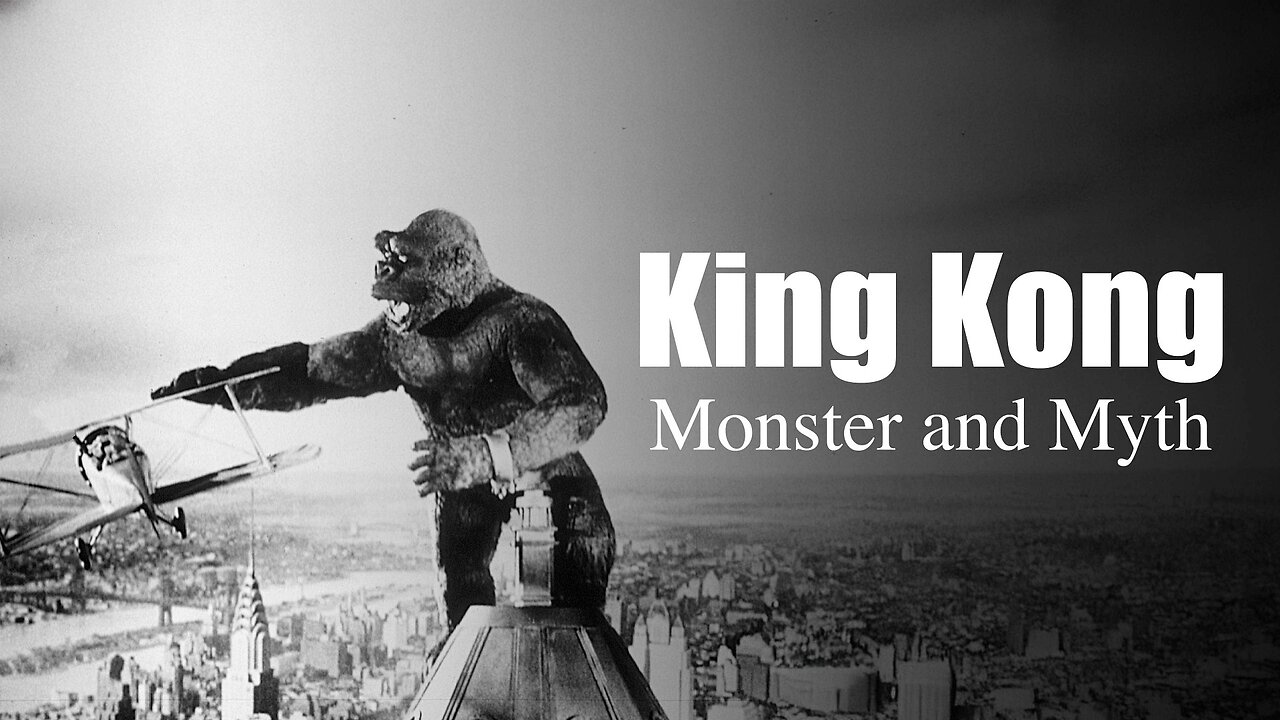
King Kong: Monster and Myth

Adaneth - Cinema&TV
A 2023 Documentary Film directed by Laurent Herbiet. Audio in French with subtitles in English, Italian, Spanish and French (click on CC for subtitles).
In 1933, two bold and visionary directors dared to make a film that eclipsed everything that had gone before. When King Kong was released, the Hollywood film was celebrated as an artistic and technical revolution and became the first myth created by the young artform of cinema.

Hollywood: The Pioneers (Episode 1)

Adaneth - Arts & Literature
Hollywood (also known as Hollywood: A Celebration of the American Silent Film) is a British television documentary miniseries produced by Thames Television and originally broadcast on ITV in 1980. Written and directed by film historians Kevin Brownlow and David Gill, narrated by James Mason.
The award-winning team of David Gill and Kenneth Brownlow present a definitive and unparalleled look at the history of silent film in America: "Hollywood," narrated by James Mason. This 13-part series celebrates the birth of an industry, the town and people who made it all happen. People who, in a few short years, produced an enormous range of spectacular, inventive and exciting films. From the arrival of the film making pioneers early at the dawn of a new century, through the outbreak of the first World War; from the rise of romance, to the demise of the Old West; from when comedy was king, until the advent of sound. These are the stars, the scandals, the directors, producers, cameramen, stuntmen and, of course, the films themselves that created the legend we know as "Hollywood." The series showcased, for the first time on television, the greatest silent films as they were meant to be seen -- with the proper running speeds and orchestral scores. It was literally produced in the nick of time, as many of those interviewed would be deceased in a few short years – their wonderful memories lost forever. Episodes include interviews with notable directors and actors from the era along with family members of stars.
The series has seldom been released on home video formats, apparently due to the complexity of obtaining home video rights to all of the film clips used. As of early 2024 it remains unavailable.
Episode 1: What started as a flickering curiosity shown in penny arcades soon grew into an art form. In just a few short years, Hollywood began turning out spectacular films, with original musical scores--often performed live by a symphony orchestra, and shown in glittering picture palaces. In 1903, "The Great Train Robbery" drew wildly enthusiastic audiences who cheered and called for more. Twelve years later, D.W. Griffith produced "The Birth of a Nation"- one of the greatest films ever made, and the first to prove the power of the medium. It provoked riots and demonstrations, brought audiences flocking, and gave birth to the financial fortunes of Hollywood.
Includes rare footage and excerpts from WINGS (1927), THE WIND (1928), NOAH'S ARK (1928), and, in early Technicolor, THE BLACK PIRATE (1926); interviews with Lillian Gish, Dolores Costello, Blanche Sweet, Jackie Coogan, King Vidor, and more.
Episode 2: https://rumble.com/v55xa7e-hollywood-in-the-beginning-episode-2.html
Hollywood: In the Beginning (Episode 2)
Adaneth - Arts & Literature
Episode 2: In 1900, Hollywood was a peaceful village with sheep, goats and pigs wandering along its dusty streets. Then filmmakers arrived in search of permanent sunshine, and changed the town forever. Cecil B. DeMille directed Hollywood's first feature-length film, "The Squaw Man", in an old stable on Vine Street. Residents watched with disapproval and amazement as the sets for D.W. Griffith's "Intolerance" reared above their bungalows. The silent films produced by Hollywood transcended national boundaries and languages to become the most powerful medium of mass entertainment the world had ever known.
Includes rare footage and excerpts from THE SQUAW MAN (1914), INTOLERANCE (1916), and JOAN THE WOMAN (1916); interviews with Henry King, Allan Dwan, Agnes de Mille, Lillian Gish, Anita Loos, and more.
https://rumble.com/v55xfdi-hollywood-single-beds-and-double-standards-episode-3.html
2
comments
Hollywood: Single Beds and Double Standards (Episode 3)
Adaneth - Arts & Literature
Episode 3: Hollywood had become a fairy-tale city of fabulous wealth and dizzying success, when a series of scandals shattered the dream. Details of the Fatty Arbuckle case so shocked America that producers appointed Will Hays to clean up the industry before the public's moral outrage put them all out of work. Hays encouraged "human, heartwarming pictures" and issued a production code designed to keep films wholesome. The code was strictly enforced, yet directors still managed to get their message across. Hollywood had found its savior. But his price was self-imposed censorship which would rule Hollywood for forty years.
Includes rare footage and excerpts from CONEY ISLAND (1917), THE TEN COMMANDMENTS (1923), and A WOMAN OF AFFAIRS (1928); interviews with Colleen More, Gloria Swanson, Henry Hathaway, King Vidor, and more.
Episode 4: https://rumble.com/v55xlgd-hollywood-hollywood-goes-to-war-episode-4.html
1
comment

Hollywood: Hollywood Goes to War (Episode 4)
Adaneth - Arts & Literature
Episode 4: The outbreak of World War I provided Hollywood with one of its greatest sources of plots - and profits. As the American mood shifted away from neutrality, Hollywood followed, abandoning films with pacificst themes for stories of war at the front. With the arrival of peace war films vanished until King Vidor made "The Big Parade" in 1925. Acclaimed by critics and audiences alike, it made a fortune for MGM. "What Price Glory?", directed by Raoul Walsh, quickly followed. Lewis Milestone's "All Quiet on the Western Front" showed the German side of the conflict, and became the most powerful statement on the war by the generation that fought it.
Includes rare footage and excerpts from HEARTS OF THE WORLD (1918), THE BIG PARADE (1925), WHAT PRICE GLORY? (1926), and WINGS (1927); interviews with Douglas Fairbanks Jr., King Vidor, Lillian Gish, Blanche Sweet, and more.
Episode 5: https://rumble.com/v55yi0c-hollywood-hazard-of-the-game-episode-5.html
1
comment

Hollywood: Hazard of the Game (Episode 5)
Adaneth - Arts & Literature
Episode 5: Silent films are often remembered for their physical gags--always good for a laugh, over in a second. But behind these gags lay planning, courage and skill. Stuntmen took the risks while the stars took the credit--and it was a firm rule that no stuntman could reveal the tricks of his trade. They have kept silent-until now. Here at last, legendary stuntmen Yakima Canutt, Harvey Parry, Bob Rose and Paul Malvern tell the hair-raising stories behind their greatest stunts.
Includes rare footage and excerpts from PLAY SAFE (1923), THE BLACK PIRATE (1926) and LILAC TIME (1928); also interviewed are Colleen More, Douglas Fairbanks, Jr., Leatrice Joy, and more.
Episode 6: https://rumble.com/v55ym0a-hollywood-swanson-and-valentino-episode-6.html
Hollywood: Swanson and Valentino (Episode 6)

Adaneth
Episode 6: Two great stars personified Hollywood: Gloria Swanson and Rudolph Valentino. She sacrificed everything for stardom. He did nothing to seek the adoration which ultimately engulfed him. Swanson recalls her meteoric rise--and fall--with remarkable candor. Valentino's brother helps tell the story of the young Italian who became the silver screen's Great Lover--but whose private life failed to match his public image.
Includes rare footage and excerpts from SADIE THOMPSON (1928), QUEEN KELLY (1928), THE SHEIK (1921) and THE EAGLE (1925); interviews with Gloria Swanson, Alberto Valentino, Ben Lyon, Colleen More, Adella Rogers St. Johns, and more.
Episode 7: https://rumble.com/v55yqzp-hollywood-the-autocrats-episode-7.html
Hollywood: The Autocrats (Episode 7)
Adaneth - Arts & Literature
Episode 7: Two of Hollywood's greatest directors were Cecil B. DeMille and Erich von Stroheim. But what they shared in achievement, they never shared in success. DeMille worked within the studio system, von Stroheim against it. And while DeMille's lavish productions reaped huge profits for the studios despite the millions they cost, von Stroheim's films were doomed to be hatcheted by the studio, if even released.
Includes rare footage and excerpts from MALE AND FEMALE (1919), THE TEN COMMANDMENTS (1923), FOOLISH WIVES (1922), GREED (1925) and QUEEN KELLY (1928); interviews with Gloria Swanson, Agnes de Mille, Henry King, Paul Ivano, and more.
Episode 8: https://rumble.com/v55z9z8-hollywood-comedy-a-serious-business-episode-8.html
Hollywood: Comedy - A Serious Business (Episode 8)
Adaneth - Arts & Literature
One of the first things filmmakers learned in Hollywood was how to make people laugh. Comedy was king, and battling for the throne were four box office rivals--Harold Lloyd, Buster Keaton, Harry Langdon and Charlie Chaplin. In an era brimming with the visual, their comedy was the work of genius.
Includes rare footage and excerpts from MAKING A LIVING (1914), THE PAWNSHOP (1916), LUKE'S MOVIE MUDDLE (1916), THE GENERAL (1926); interviews with Hal Roach, Jackie Coogan, Buster Keaton, Harold Lloyd, and more.
Episode 9: https://rumble.com/v563mit-hollywood-out-west-episode-9.html
Hollywood: Out West (Episode 9)
Adaneth - Arts & Literature
Episode 8: The Old West was still there when the movies arrived. Cowboys and outlaws saw a heaven-sent chance to relive their youth--and get paid for it--by working in films. The man who really started the "Western Craze" was the Wild West showman William Cody, who made "The life of Buffalo Bill" in 1913. Tom Mix was the next western screen hero, followed by William S. Hart, who dignified the genre with films like "Narrow Trail" and "Tumbleweeds". These films were a celebration of the West, establishing a tradition that continues to this day.
Includes rare footage and excerpts from THE MASSACRE (1912), THE RETURN OF DRAW EGAN (1916), and HELL'S HINGES (1916); interviews with "Iron Eyes" Cody, Colonel Tim McCoy, Yakima Canutt, Harvey Parry, John Wayne, and more.
Episode 10: https://rumble.com/v563xf6-hollywood-the-man-with-the-megaphone-episode-10.html
Hollywood: The Man with the Megaphone (Episode 10)
Adaneth - Arts & Literature
Episode 10: Silent film directors were a flamboyant breed--pioneers who invented the art of film direction as they went along. Working conditions were chaotic. Open sets were built side by side and back to back, and live "mood" music was provided according to each star's taste. Despite deafening noise and constant distraction, directors talked their cast through every move and emotion, and from this confusion came great films--including F.W. Murnau's expressionistic "Sunrise" and King Vidor's classic "The Crowd".
Includes rare footage and excerpts from MARE NOSTRUM (1926), SUNRISE (1927) and THE CROWD (1928); interviews with Bessie Love, Janet Gaynor, Blanche Sweet, King Vidor, Allan Dwan, and more.
Episode 11: https://rumble.com/v5645u3-hollywood-trick-of-the-light-episode-11.html
Hollywood: Trick of the Light (Episode 11)
Adaneth - Arts & Literature
Episode 11: In the early days of Hollywood, directors relied heavily on their cameramen. While their cameras may have looked primitive, when handled by a skilled craftsman, a pretty girl was transformed into a "screen goddess." Individual cameramen were invaluable to both studios and stars. With the help of art directors, they achieved some of the most amazing and dangerous sequences ever filmed.
Includes rare footage and excerpts from WAY DOWN EAST (1920), INTOLERANCE (1916), THE BIRTH OF A NATION (1915), and THE HUNCHBACK OF NOTRE DAME (1926); interviews with Colleen More, Lillian Gish, Bessie Love, Allan Dwan, William Wyler, and more.
Episode 12: https://rumble.com/v564a65-hollywood-star-treatment-episode-12.html
2
comments

Hollywood: Star Treatment (Episode 12)
Adaneth - Arts & Literature
Episode 12: Producers discovered that if they didn't have a star, they didn't have a hit. Creating stars became business in itself, and soon the Hollywood Star System was born. From it came such greats as Clara Bow, Lillian Gish and John Gilbert, who inherited the title "Great Lover" from Valentino. The career of John Gilbert vividly illustrates how producers could make or break a star. When he fell in love with Greta Garbo, shrewd studio heads capitalized on their romance and teamed them in a number of successful films. But when Gilbert punched Louis B. Mayer after Mayer passed a remark about Garbo, Mayer vowed to ruin Gilbert's career--and made good on his threat.
Includes rare footage and excerpts from THE MERRY WIDOW (1925), THE BIG PARADE (1925), FLESH AND THE DEVIL (1926) and LOVE (1927); interviews with Louise Brooks, Charles "Buddy" Rogers, King Vidor, Eleanor Boardman, and more.
Episode 13: https://rumble.com/v564fiy-hollywood-end-of-an-era-episode-13.html
1
comment

Hollywood: End of an Era (Episode 13)
Adaneth - Arts & Literature
Episode 13: Sound films did not arrive overnight. Throughout the early to mid-twenties, more and more films were made with synchronized sound and music, but it wasn't until 1927 that Warner Brothers gambled on "talking" pictures with "The Jazz Singer." From that moment on, all that had shaped and created Hollywood was utterly transformed. Talking pictures were here to stay, and the art of silent film-making-along with many of the stars, directors and producers devoted to it-was sacrificed to technology.
Includes rare footage and excerpts from THE JAZZ SINGER (1927), LILAC TIME (1928), LIGHTS OF NEW YORK (1928) and ANNA CHRISTIE (1930); interviews with Lillian Gish, Mary Astor, Janet Gaynor, Colleen More, Frank Capra, George Cukor, and more.
1
comment

Writing With Light - Vittorio Storaro
Adaneth - Arts & Literature
A 1993 Documentary Film directed by David M. Thompson.
It traces the career of the cinematographer Vittorio Storaro, responsible for the photography on films like 'Apocalypse Now', `The Conformist', `Last Tango in Paris', `The Last Emperor', `Dick Tracy' and `The Sheltering Sky'.
Three-Time Oscar-Winning Cinematographer Vittorio Storaro has worked with some of the most extraordinary film directors of our time, including Bernardo Bertolucci, Francis Ford Coppola, Warren Beatty, and Carlos Saura, to make some of the most breathtaking films of our time. Over the course of his remarkable thirty-five-year career, Storaro has brought visual life to many of the films that have become centerpieces of contemporary cinema.
The film follows Storaro at work with Francis Ford Coppola, Warren Beatty and Bernardo Bertolucci. Explores Storaro's methods of working and his philosophy of lighting.
1
comment
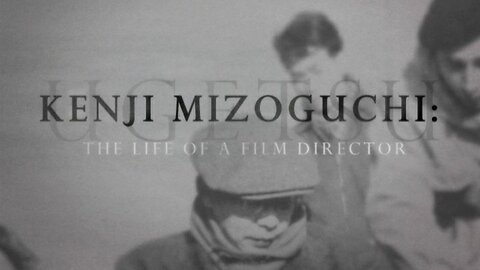
Kenji Mizoguchi - The Life of a Film Director
Adaneth - Arts & Literature
A 1975 Documentary film directed by Kaneto Shindo about the life of the great Japanese master of cinematography Kenji Mizoguchi (1898 - 1956). Audio in Japanese with English subtitles.

Le Voyage Dans La Lune/A Trip to the Moon (Silent Film 1902 - Colour Version)
Adaneth - Cinema&TV
A Trip to the Moon (French: Le voyage dans la lune)is a 1902 French science-fiction adventure film directed by Georges Méliès.
No hand-colored prints of A Trip to the Moon were known to survive until 1993, when one was given to the Filmoteca de Catalunya by an anonymous donor as part of a collection of two hundred silent films.[94] It is unknown whether this version, a hand-colored print struck from a second-generation negative, was colored by Elisabeth Thuillier's lab, but the perforations used imply that the copy was made before 1906. The flag waved during the launching scene in this copy is colored to resemble the flag of Spain, indicating that the hand-colored copy was made for a Spanish exhibitor.
In 1999, Anton Gimenez of the Filmoteca de Catalunya mentioned the existence of this print, which he believed to be in a state of total decomposition, to Serge Bromberg and Eric Lange of the French film company Lobster Films. Bromberg and Lange offered to trade a recently rediscovered film by Segundo de Chomón for the hand-colored print, and Gimenez accepted. Bromberg and Lange consulted various specialist laboratories in an attempt to restore the film, but because the reel of film had apparently decomposed into a rigid mass, none believed restoration to be possible. Consequently, Bromberg and Lange themselves set to work separating the film frames, discovering that only the edges of the film stock had decomposed and congealed together, and thus that many of the frames themselves were still salvageable.
Between 2002 and 2005, various digitisation efforts allowed 13,375 fragments of images from the print to be saved. In 2010, a complete restoration of the hand-colored print was launched by Lobster Films, the Groupama Gan Foundation for Cinema, and the Technicolor Foundation for Cinema Heritage. The digitised fragments of the hand-colored print were reassembled and restored, with missing frames recreated with the help of a black-and-white print in the possession of the Méliès family, and time-converted to run at an authentic silent-film speed, 16 frames per second. The restoration was completed in 2011 at Technicolor's laboratories in Los Angeles. Restoration costs were $1 million.
The restored version premiered on 11 May 2011, eighteen years after its discovery and 109 years after its original release, at the 2011 Cannes Film Festival, with a new soundtrack by the French band Air.
1
comment
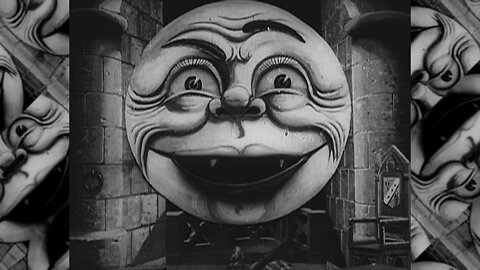
The Astronomer's Dream, or the Man in the Moon & The Eclipse, or the Courtship of the Sun and Moon
Adaneth - Cinema&TV
1. The Astronomer's Dream, or the Man in the Moon (French: La Lune à un mètre, literally "The Moon from One Meter Off") is an 1898 French short silent film by Georges Méliès. Based on one of his stage magic acts, and starring Méliès himself, the film presents a varied assortment of images and imaginings dreamed by the astronomer of the title, focusing on themes of astronomy and especially the Moon.
In an observatory, an astronomer is studying at his desk. Satan appears, then a caped woman appears and makes him vanish before disappearing herself. The astronomer draws a globe on a blackboard. The globe develops a sun-like head and limbs and starts to move on the blackboard. Objects the astronomer attempts to interact with transform or move away from him. The Moon suddenly appears in the building as a large face, eating the astronomer's telescope. Two small clowns tumble from its mouth, but the upset astronomer throws them back in. As the astronomer attempts to attack the Moon, it instantly moves back to the sky. All objects the astronomer astronomer tries to use to attack the Moon vanish in thin air.
Once the astronomer sits back down, the Moon becomes a crescent and the mythological goddess Phoebe (i.e., Selene) appears from it. The astronomer attempts to embrace her, but she flies up to the sky. A woman appears in the crescent of the Moon and reclines into its C shape, but as the astronomer tries to reach her, the Moon appears as a prominent face again and he inadvertently jumps into its mouth. The moon spits out distinct body parts of the astronomer. Satan reappears, but he is sent away by the caped woman again. She quickly puts the astronomer back together, piece by piece. Then, in the observatory, the astronomer wakes up.
2. The Eclipse: Courtship of the Sun and Moon (originally L'éclipse du soleil en pleine lune) is a French silent film made in 1907 by director Georges Méliès.
A professor of astronomy gives a lecture instructing on an impending solar eclipse. The class rushes to an observation tower to witness the event, which features an anthropomorphic Sun and Moon coming together. The Moon and the Sun lick their lips in anticipation as the eclipse arrives, culminating in a romantic encounter between the two celestial bodies. Various heavenly bodies, including planets and moons, hang in the night sky; a meteor shower is depicted using the ghostly figures of girls. The professor of astronomy, shocked by all he has witnessed, topples from the observation tower. Fortunately, he lands in a rain barrel, and is revived by his students.
Cast & Characters:
Mlle. Bodson as Comet
Manuel as The Class Supervisor
Georges Méliès as Professor of Astronomy
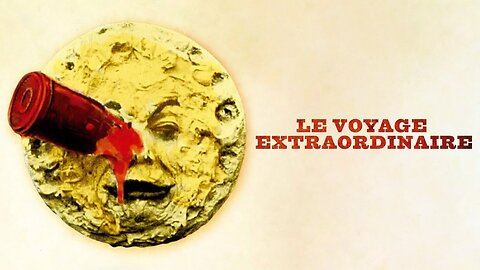
The Extraordinary Voyage
Adaneth - Cinema&TV
A 2011 documentary Serge Bromberg and Eric Lange, that chronicles the cinematic journey of the iconic film "A Trip to the Moon" (1902).
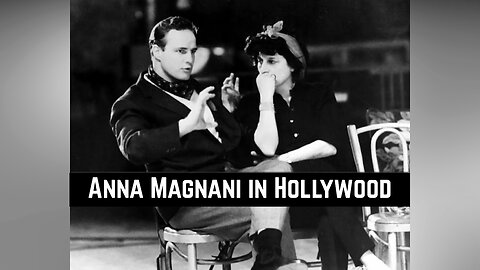
Anna Magnani in Hollywood
Adaneth - Arts & Literature
A 2014 Doc Short Written and directed by Marco Spagnoli for "Donne nel Mito" (“Women in Myth”) series, narrated by Olivia Magnani. Audio in Italian with English subtitles.
The years in Hollywood of the first Italian actress to win the Oscar e the story of her great friendship with the playwright Tennessee Williams. With the participation of; Caterina D’Amico, Matilde HochKofler, Enrico Lucherini, Luca Magnani.
Anna Magnani, the diva best known in America as an emblem of the great Italian cinema and of the years of Hollywood on the Tiber and the Dolce Vita. The only one who won the Oscar for a film interpreted in English and to have won a second nomination for the most coveted film award in the world for another film also recited not in her native language.
Women in the Myth: Anna Magnani in Hollywood recounts the American period of the great actress through the words of his son Luca, of the most important Italian press agent Enrico Lucherini, of Anna Magnani's biographer, Matilde Hockhofler and of Caterina D'Amico, daughter of the legendary screenwriter Suso Cecchi D'Amico, great friend of Anna Magnani.
The film produced for the “Women in Myth” series explores, for the first time, the relationship between Anna Magnani and her great friend Tennessee Williams, one of the main playwrights of the history of literature who wrote some of her most famous plays especially for her loved and who made Italy his retreat. Using unpublished material, found in the archives of Rai and the Istituto Luce, Donne nel Mito: Anna Magnani in Hollywood celebrates the story of a woman and a diva who anticipated the times of her and who was one of the great protagonists of culture, theater and cinema among the fifties and seventies.
A well-rounded portrait that not only tells the story of Magnani through direct testimonies with anecdotes and reflections on her talent and her art, he also offers a story intimate and private of a mother who never thought of sacrificing her relationship with her son Luca and his Roma, in exchange for a great career in Hollywood. The documentary is enriched by the narrative voice of Olivia Magnani, also an actress and granddaughter of the great one diva.
La passione di Anna Magnani
Adaneth - Arts & Literature
Un film documentario del 2019 diretto da Enrico Cerasuolo.
Un racconto senza filtri e con materiali inediti di una delle più grandi attrici italiane. Le immagini dell'archivio personale, insieme a quelle della Rai e dell'Istituto Luce, rivelano il vero volto di Anna Magnani: il suo carattere vulcanico, le passioni, gli scontri, l'anima rivoluzionaria. Dopo di lei il cinema ha smesso di cercare la bellezza stereotipata, scoprendo il carattere interiore e misterioso di un'attrice che ha cambiato lo sguardo delle donne e sulle donne.
Abel Gance - The Charm of Dynamite
Adaneth - Arts & Literature
A 1968 BBC Documentary Film written and directed by Kevin Brownlow, narrated by Lindsay Anderson
A Blue Ribbon winner at the American Film Festival of 1976, this documentary, along with Brownlow's history of silent film The Parade's Gone By and his restoration of Gance's 1927 Napoleon, was instrumental in bringing Gance's cinematic genius to a new generation of film enthusiasts.
The documentary employs footage from Napoleon, La Roue (1923), and J'Accuse (1919) to reveal Gance's pioneering techniques, which included work with hand-held cameras, wide-angle lenses, rapid cutting and three-screen projection. Filmmaker/critic Lindsay Anderson narrates.
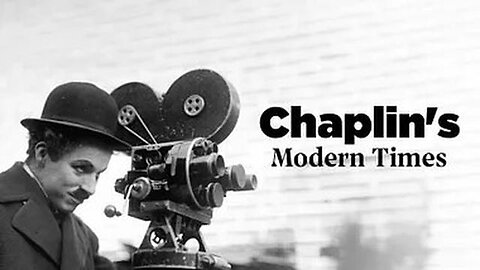
Chaplin's Modern Times: The End of Silent Film (MULTISUB)
Adaneth - Arts & Literature
A 2024 Art Documentary directed by Gregory Monro. Audio in French with subtitles in English, Italian and Spanish (click on CC for subtitles)
A look back at the making of Charlie Chaplin's most famous film, "Modern Times": a work of resistance born of adversity, which marked the last appearance of Charlie Chaplin as the iconic Little Tramp, struggling to fit in in the frenetic, industrialised world.
1
comment
Cold War Classic - Denise J. Youngblood on War and Peace
Adaneth - Cinema&TV
War & Peace Bonus Material, Blueray Disc. Audio in English.
Cold War Classic is a program, created by Criterion for this release, that focuses on the film’s historical and cultural context. It features insights by historian Denise J. Youngblood (author of the book Bondarchuk’s War and Peace: Literary Classic to Soviet Cinematic Epic, available here on Amazon).
Professor Youngblood worked for the American Association for the Advancement of Slavic Studies. At UVM, she has also served as department chair, 1999-2003, and as Vice Provost for Faculty & Academic Affairs, 2003-2005, and President of United Academics, 2013-2015. She retired from UVM in 2017. She serves on the editorial boards of Studies in Russian and Soviet Cinema, the Historical Journal of Film, Radio & Television, Russian Life, and New Academia Publishing. She has written extensively on Russian and Soviet cinema including seven books: Bondarchuk's War and Peace: Literary Classic to Soviet Cinematic Epic (2014); Cinematic Cold War: The American and Soviet Struggle for Hearts and Minds (2010) with Tony Shaw; Russian War Films: On the Cinema Front, 1914-2005 (2007), which has been named a Choice Outstanding Academic Title for 2007; Repentance: A Companion Guide ( 2001, with Josephine Woll); The Magic Mirror: Moviemaking in Russia, 1908-1918 (1999); Movies for the Masses: Popular Cinema and Soviet Society in the 1920s (1992); and Soviet Cinema in the Silent Era, 1918-1935 (1991). Her articles have appeared in the American Historical Review, the Historical Journal of Film, Radio & Television, the Russian Review, and Film & History as well as in numerous anthologies.
Les Sovietiques/The Soviets (1967 French Documentary - ENG SUB)
Adaneth - Cinema&TV
War & Peace Bonus Material, Blueray Disc. Audio in French with English subtitles.
Produced for French TV at the time of the film’s release, it’s a fascinating profile of star Lyudmila Savelyeva (Bondarchuk appears briefly as well) and life in Soviet-era Moscow.
Director of Photography Anatoly Petritsky on War & Peace (2019 Interview)
Adaneth - Cinema&TV
War & Peace Bonus Material, Blueray Disc. Audio in Russian with English subtitles.
Anatoly Petritsky is a Soviet and Russian cinematographer. Awarded the title of Merited Artist of the RSFSR in 1969. Graduate of Gerasimov Institute of Cinematography in Moscow. Notable projects include War and Peace, Mimino, and A Hunting Accident.
In this interview, he discusses his relationship with the director, some of the challenges he faced during the production, and various creative solutions he came up with to achieve certain shots.
Anatoly Petritsky is a Soviet and Russian cinematographer. Awarded the title of Merited Artist of the RSFSR in 1969. Graduate of Gerasimov Institute of Cinematography in Moscow. Notable projects include War and Peace, Mimino, and A Hunting Accident.
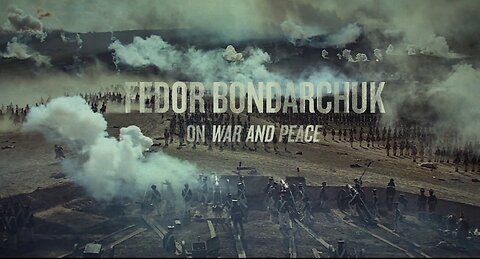
Fedor Bondarchuk on War & Peace (2019 Interview)
Adaneth - Cinema&TV
War & Peace Bonus Material, Blueray Disc. Audio in Russian with English subtitles.
Fedor Bondarchuk in an interview with Criterion talks about his father’s journey in making the film. The production of War and Peace took an enormous toll on the actor/director, even leading to a pair of heart attacks. After the second, Bondarchuk was clinically dead for four minutes until he was resuscitated (an experience that influenced a powerful scene later in the film).
Fyodor Sergeyevich Bondarchuk is a Russian film director, actor, TV and film producer, TV host, founder of production company Art Pictures Studio. Specializes in action, war, and science fiction films. Fyodor was born on 9 May 1967 in Moscow, his mother actress Irina Skobtseva and his father director Sergei Bondarchuk.

A Making-Of Film - War & Peace (1968 Mosfilm Documentary - ENG SUB)
Adaneth - Cinema&TV
War & Peace Bonus Material, Blueray Disc. Audio in Russian with English subtitles.
Making War and Peace is an additional behind-the-scenes documentary produced in 1968 by Mosfilm itself. It offers a bit more detail on the making of the film and complements the German documentary nicely.

The Making of the Epic Soviet Film War & Peace (1966 German Documentary - ENG SUB)
Adaneth - Cinema&TV
War & Peace Bonus Material, Blueray Disc. Audio in German with English subtitles.
Voyna i mir/War & Peace is a black and white documentary shot during the production with Bondarchuk’s blessing. It’s in German mono audio with English subtitles, and it does offer a nice look behind-the-scenes on Bondarchuk’s design and approach to the material, the crew filming both on soundstages at Mosfilm and out on location, and even some of the massive battle scene staging.
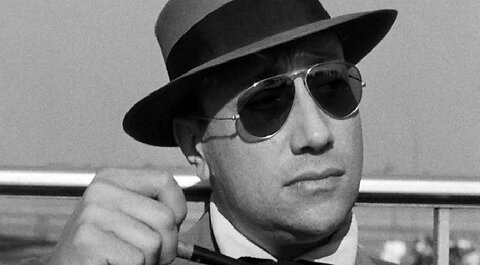
Jean-Pierre Melville at "L'invité du Dimanche" (The Sunday Invitation - 1969)
Adaneth - Cinema&TV
Army Of Shadows - DVD Bonus material.
L'invite du dimanche - A selection of excerpts from the French television program L'invite du dimanche (The Sunday Invitation), containing interviews with Jean-Pierre Melville, actors Paul Crauchet, Jean-Pierre Cassel, and Simone Signoret, writer Joseph Kessel, and Andre Dewavrin (a.k.a Colonel Passy). Originally aired in 1969.
"L'Invité Du Dimanche" (The Sunday Invitation) was an innovative program because it rehabilitated the live broadcast which had fallen into disuse since the advent of recorded programmes. A live which is not only a means of transmission, but also pretended, which does not show the event, but provoke it..., with all the risks that this implies, and the happy surprises - also called the "miracle" - which may result from this. The show was broadcast continuously on Sunday afternoons, allowing a meeting around a character. The Guest, for four hours, confronted his ideas, discovered a crush, a casual discussion.
2
comments
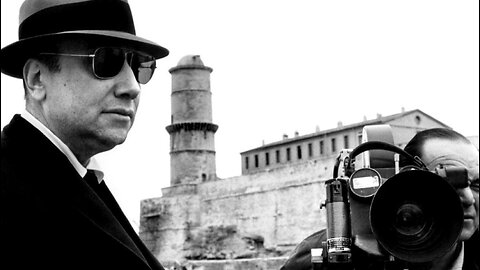
Jean Pierre Melville: Filmmaker
Adaneth - Cinema&TV
Army Of Shadows - DVD Bonus material.
"Jean-Pierre Melville, Filmmaker" - In this introductory piece, directed by Jacques Dupont and part of the show Chroniques de France, Jean-Pierre Melville discusses what inspired him to shoot Army of Shadows, how he interacts with the actors he likes to work with, etc.
Jean-Pierre Melville and Army of Shadows
Adaneth - Cinema&TV
Army Of Shadows - DVD Bonus material.
Melville et "L'armee des ombres - A documentary film, produced by Philippe Quinconneau for Studio Canal, in which actor Jean-Pierre Cassel, editor Francoise Bonnot, Writer and filmmaker Philippe Labro, composer Eric Demarsan, cinematographer Pierre Lhomme, and director Bertrand Tavernier discuss the legacy and public image of Jean-Pierre Melville.
1
comment

Army of Shadows - Pierre Lhomme, cinematographer
Adaneth - Cinema&TV
Army Of Shadows - DVD Bonus material.
Pierre Lhomme - In this interview, cinematographer Pierre Lhomme, who supervised the restoration of Army of Shadows, discusses the various obstacles that had to be overcome to reproduce as best as possible the original look of the film. A collection of stills from the film is also included.
Army of Shadows - Francoise Bonnot: Editing with Melville
Adaneth - Cinema&TV
Army Of Shadows - DVD Bonus material.
Francoise Bonnot - In this interview, recorded for Criterion in 2006, Oscar-winning editor Francoise Bonnot discusses Jean-Pierre Melville's legacy and her family's relationship with the director.
Françoise Bonnot (17 August 1939 – 9 June 2018) was a French film editor with more than 40 feature film credits. Bonnot was the daughter of Monique Bonnot, a film editor noted for several films directed by Jean-Pierre Melville. In her first film credit, Françoise Bonnot was the assistant to her mother on Melville's 1959 film, Two Men in Manhattan (1959).
Bonnot won the Academy Award for Film Editing for Z (1969), and the BAFTA Award for Best Editing for Missing (1982). She was nominated three times for the César Award for Best Editing (for The Simple Past (1977), Hannah K. (1983) and Place Vendôme (1998)). She had been elected to membership in the American Cinema Editors.

Army Of Shadows - Simone Signoret and Lucie Aubrac
Adaneth - Cinema&TV
Army Of Shadows - DVD Bonus material.
Simone Signoret and Lucie Aubrac - Short interview excerpts from Liberation, liberation: Le cinema de l'ombre in which Simone Signoret and Lucie Aubrac, who was an inspiration for Mathilde in Army of Shadows, discuss Jean-Pierre Melville's film.
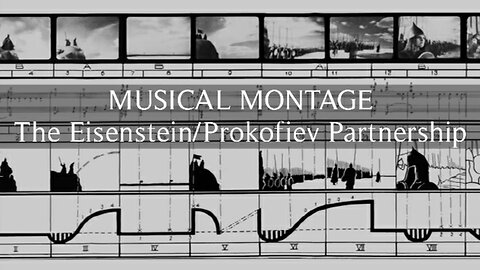
Musical Montage: The Eisenstein/Prokofiev Partnership
Adaneth - Arts & Literature
Russell Merritt's multimedia essay on Eisenstein-Prokofiev collaboration.
In one of the great artistic collaborations of the 20th century, Sergei Eisenstein and composer Sergei Prokofiev worked closely on three films together. Here Russell Merritt, author of "Recharging Alexander Nevsky: Tracking the Eisenstein-Prokofiev War-horse," details their partnership and outlines the aesthetic results in this exclusive audio essay, juxtaposed with photographs and clips from the film.
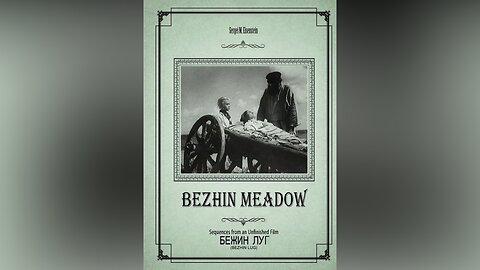
Eisenstein: The Sound Years | Bezhin Meadow - Sequences from an Unfinished Film (1937)
Adaneth - Cinema&TV
Bezhin Meadow (Бежин луг, Bezhin lug) is a 1937 Soviet propaganda film, famous for having been suppressed and believed destroyed before its completion.
Directed by Sergei Eisenstein, it tells the story of a young farm boy whose father attempts to betray the government for political reasons by sabotaging the year's harvest and the son's efforts to stop his own father to protect the Soviet state, culminating in the boy's murder and a social uprising.
Banned and destroyed in 1937, all that survives are the first and last frames of each shot, preserved by Eisenstein's wife, Pera Atasheva. The 1967 reconstruction, by Naum Kleiman of the Eisenstein Museum and Sergei Yutkevich of Gosfilmofond, places these frames in order, approximating the original film.
The film draws its title from a story by Ivan Turgenev, but is based on the life of Pavlik Morozov, a young Russian boy who became a political martyr following his death in 1932, after he denounced his father to Soviet government authorities and subsequently died at the hands of his family.
Commissioned by a communist youth group, the film's production ran from 1935 to 1937, until it was halted by the central Soviet government, which said it contained artistic, social, and political failures.
Bezhin Meadow was long thought lost in the wake of World War II bombings. In the 1960s, however, cuttings and partial prints of the film were found; from these, a reconstruction of Bezhin Meadow, based on the original script, was undertaken. Rich in religious symbolism, the film and its history became the focus of academic study. The film was extensively discussed both inside and outside of the film industry for its historical nature, the odd circumstances of its production and failure, and its imagery, which is considered some of the greatest in cinema.
The film, as mentioned by Shumyatsky and Eisenstein, is rich in religious iconography and the symbolic struggle between good and evil. Additionally, Birgit Beumers writes, "The peasants here are grey-bearded prophets; the young men are broad-shouldered Renaissance apostles; the fleshy girls are earthly Madonnas; the peasant wrecking the iconostasis is a biblical Samson; the chubby young boy in the shirt, raised high under the cupola towards the slanting sun-ray which turns his locks golden, is the young Jesus Christ ascending to the Heavenly Throne."
More info: https://en.wikipedia.org/wiki/Bezhin_Meadow
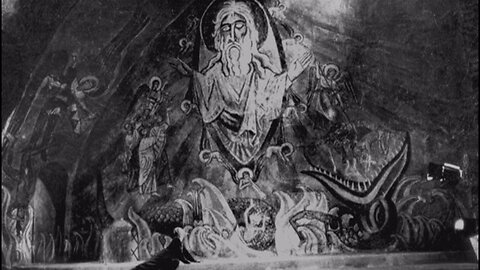
Eisenstein: The Sound Years | Ivan The Terrible: Sketches from unmade Part III
Adaneth - Cinema&TV
A short clip I put together with Drawings from the unmade Part III, present in the DVD Bonus material from "Eisenstein: The Sound Years" Criterion Collection.
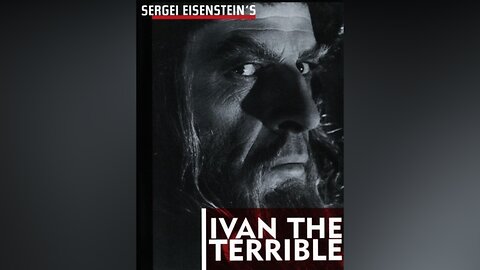
Eisenstein: The Sound Years | Ivan The Terrible: The History of Ivan
Adaneth - Cinema&TV
Sergei Eisenstein, long regarded as a pioneer of film art, changed cinematic strategies halfway through his career. Upon returning from Hollywood and Mexico in the late 1930s, he left behind the densely edited style of celebrated silents like Battleship Potemkin and October, turning instead to historical sources, contradictory audiovisuals, and theatrical sets for his grandiose yet subversive sound-era work. This trio of rousing action epics reveals a deeply unsettling portrait of the Soviet Union under Stalin, and provided battle-scene blueprints for filmmaking giants from Laurence Olivier in Henry V to Akira Kurosawa in Seven Samurai.
Austin, Joan Neuberger draws on her extensive archival research for this multimedia essay. In it, she examines the complex, nuanced relationship between Eisenstein and Stalinism through Ivan the Terrible's use of medieval Russian history.
Navigating the deadly waters of Stalinist politics, Eisenstein was able to film two parts of his planned trilogy about the troubled sixteenth-century tsar who united Russia. Visually stunning and powerfully acted, Ivan the Terrible charts the rise to power and descent into terror of this veritable dictator. Though pleased with the first installment, Stalin detested the portrait in the second film—with its summary executions and secret police—and promptly banned it.
DVD Bonus material from "Eisenstein: The Sound Years" Criterion Collection.
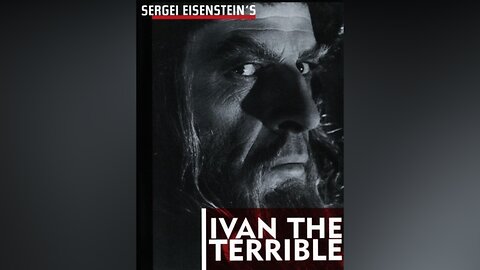
Eisenstein: The Sound Years | Ivan The Terrible: Eisentein's Visual Vocabulary
Adaneth - Cinema&TV
Multimedia essay on Eisenstein's visual vocabulary by Yuri Tsivian, art history professor at the University of Chicago.
DVD Bonus material from "Eisenstein: The Sound Years" Criterion Collection.
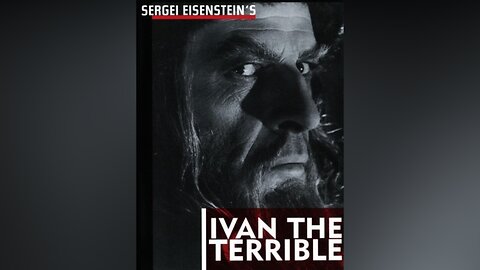
Eisenstein: The Sound Years | Ivan The Terrible: The Unknown Ivan (Original Prologue & Deleted Scenes)
Adaneth - Cinema&TV
Edited and narrated by Naum Kleiman, curator of Moscow's Eisenstein Museum, this video piece combines rare footage of Eisenstein, screen and costume tests, and drawings of several deleted scenes from Ivan The Terrible. Audio in Russian with English subtitles.
These include scenes from Part I's Battle of Kazan sequence, as well as one from the unfinished Part III, featuring the German knight Heinrich von Staden. Also Included is a longer version of Part II's Prologue (a scene from Ivan's childhood), which was originally to begin Part I.
DVD Bonus material from "Eisenstein: The Sound Years" Criterion Collection.

More than Love (Larisa Shepitko and Elem Klimov)
Adaneth - Cinema&TV
A 2012 TV program which focuses upon the relationship between Larisa Shepitko and Elem Klimov. Audio in Russian with English subtitles.
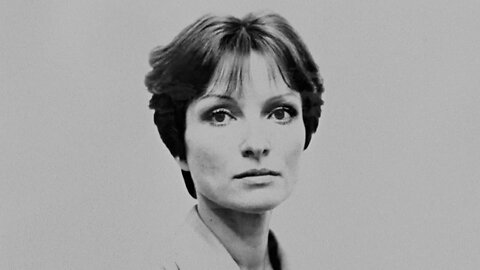
Larisa - 1980 Short Documentary by Elem Klimov
Adaneth - Cinema&TV
In 1979, Klimov's wife Larisa Shepitko died in a car accident while directing an ecological fable based on a famous novel by Valentin Rasputin called Farewell to Matyora. A year after her death, Klimov filmed a 25-minute tribute to his wife entitled "Larisa" (1980), then went on to finish the film she had started. Despite being shelved for two years after completion, Farewell was still released in 1983.
The film includes photos and audio recordings of Shepitko, as well as clips from all her films. There is even a snippet of raw footage from the film she had just begun when she was killed in a car accident.
The Ascent was Shepitko's last film before her death in a car accident in 1979. The film won the Golden Bear award at the 27th Berlin International Film Festival in 1977.
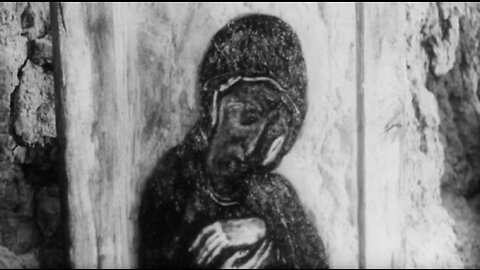
The Homeland of Electricity (Short Film by Larisa Shepitko - 1967)
Adaneth - Cinema&TV
This is a 1967 short film by Larisa Shepitko. Audio in Russian with English subtitles.
Intended for an omnibus film about the October Revolution, this 1967 short follows a young engineer as he tries to bring irrigation to a parched village. Originally banned for its themes of individualism, the film is a powerful and striking example of Shepitko's work that has thankfully been restored.

A Talk With Larisa
Adaneth - Cinema&TV
A 1999 program with introduction by Elem Klimov and Irina Rubanova (scholar and film expert of the State Institute for Art Studies in Moscow). It features a 1978 program where Larisa Shepitko is interviewed by German critic Felicia von Nostitz after The Ascent won the Golden Bear at the Berlin Film Festival. Introduction
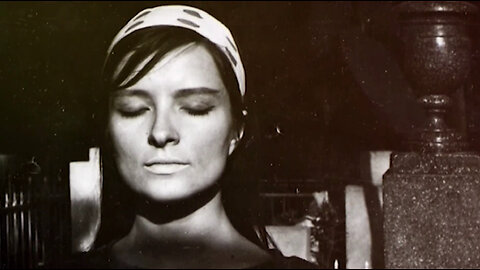
Islands (Larisa Shepitko)
Adaneth - Cinema&TV
A 2012 TV program about Larisa Shepitko. It combines personal biographical recollections from relatives and friends with reflections upon her work by film critics. Audio in Russian with English subtitles.
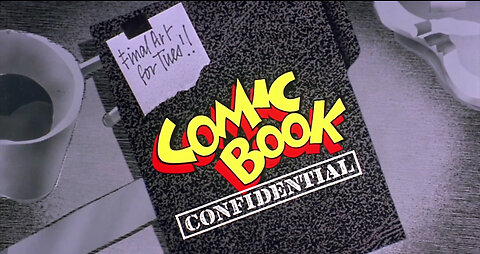
Comic Book Confidential
Adaneth - Cinema&TV
A 1988 Arts Documentary published by Sphinx Productions and directed by Ron Mann.
This classic Ron Mann documentary profiles 22 of the most significant artists working in comic books in North America today. With interviews, historical footage and state-of-the-art animation, it traces the creative development of the incredibly popular comic medium.
From Jack Kirby's Captain America via the irreverence of Mad Magazine, to the underground movement of the ' 60s, with it's "anything goes" cartoonists, Comic Book Confidential also updates the story to the ' 80s, when comics exploded into so many genres and styles that even our superheroes can't keep up with them anymore.
With : Will Eisner, Robert Crumb, Al Feldstein, Harvey Pekar, Gilbert Shelton, Lynda Barry, Stan Lee, Victor Moscosco and many others.
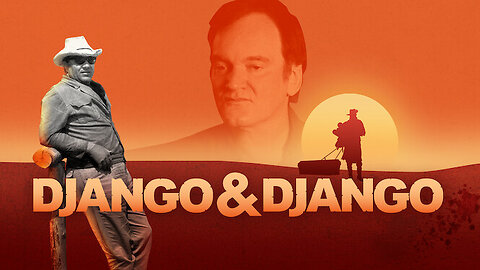
Django & Django: Sergio Corbucci Unchained
Adaneth - Cinema&TV
Django & Django: Sergio Corbucci Unchained is a 2021 Documentary film, directed by Luca Rea, with Quentin Tarantino, Franco Nero, Ruggero Deodato, Sergio Corbucci. English subtitles.
Quentin Tarantino, exceptional narrator, tells why Sergio Corbucci is "the second best director of Italian westerns", as stated by a character in his film "Once Upon a Time in Hollywood" and as confirmed by his choice to make Django Unchained inspired by a Corbucci film from the 1960s. Unpublished period materials, testimonies, reconstructions to tell a cinema and an unrepeatable era.
Django, Il Grande Silenzio, Gli specialisti, Il Mercenario, Vamos a matar compañeros, Che c’entriamo noi con la rivoluzione?: Corbucci's westerns as cinema of cruelty, but also as a great invention and as a metaphor for all the ideas that circulated in Italy in the 1960s. A documentary that tells the story of Sergio Corbucci, one of the masters of Italian cinema of the 1960s, 70s and 80s and author of extraordinary western films, created following the success of Sergio Leone's Dollar Trilogy.
Quentin Tarantino drew inspiration from two works by Corbucci: Django (1966) and The Great Silence (1968) were extensively referenced in Django Unchained (2012) and The Hateful Eight (2015), but also Once Upon a Time in Hollywood ( 2019) included a tribute to the Italian director.
Thanks to archive materials and the testimonies of those who knew him, this documentary outlines a portrait of Corbucci, who managed to establish himself both on the Italian and international scene, always following his own style, still now explored and debated within of contemporary criticism.

Jodorowsky's Dune
Adaneth - Cinema&TV
Jodorowsky's Dune is a 2013 American-French documentary film directed by Frank Pavich. Audio in English, Spanish and French, with English subtitles (Click on CC).
The film explores cult film director Alejandro Jodorowsky's unsuccessful attempt to adapt and film Frank Herbert's 1965 science fiction novel Dune in the mid-1970s.
3
comments
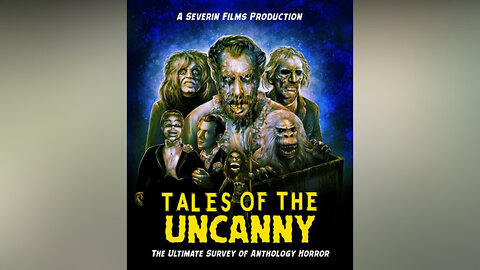
Tales of the Uncanny: The Ultimate Survey of Anthology Horror
Adaneth - Cinema&TV
A 2020 documentary film by David Gregory, exploring the theme of horror anthology films. Audio in English with English subtitles (click on CC for subtitles).
2
comments
King Kong: Monster and Myth
2 months ago
115
A 2023 Documentary Film directed by Laurent Herbiet. Audio in French with subtitles in English, Italian, Spanish and French (click on CC for subtitles).
In 1933, two bold and visionary directors dared to make a film that eclipsed everything that had gone before. When King Kong was released, the Hollywood film was celebrated as an artistic and technical revolution and became the first myth created by the young artform of cinema.
Loading comments...
-
 LIVE
LIVE
Amarok_X
2 hours ago🟢LIVE WARZONE | LETS SQUAD UP | PREMIUM CREATOR | VETERAN GAMER
168 watching -
 27:03
27:03
The Kevin Trudeau Show Limitless
3 days agoThey're Not Hiding Aliens. They're Hiding This.
55.6K76 -
 22:17
22:17
MetatronGaming
6 days agoI spent 7 days in the 1980s
19.1K8 -
 LIVE
LIVE
FrizzleMcDizzle
2 hours agoGRINDING new NightReign content - COME HANG
71 watching -
 26:02
26:02
Planet 3 Outdoors
28 days ago $1.20 earnedBuilding a Treehouse and Catch & Cook a Giant Fish by the River 🌧️🍳
18.3K5 -
 LIVE
LIVE
Shield_PR_Gaming
3 hours ago12/06/25 | Mobius Final Fantasy Reborn & other games!? Follow me on PickAx (referral in description)
3 watching -
 34:21
34:21
Demons Row
18 hours ago $21.51 earnedJason Momoa Reveals His REAL Life in the REDRUM Motorcycle Club ⚠️🔥
163K30 -
 31:07
31:07
Blackstone Griddles
18 hours agoTop 4 Burgers of the Year | Blackstone Griddles
19.4K6 -
 15:37
15:37
True Crime | Unsolved Cases | Mysterious Stories
2 days ago $0.34 earned5 Disturbing 911 and 999 Calls Made by Killers
4.6K -
 11:32
11:32
Geoff_Tac
18 hours agoIWI Masada 9S Elite
37.5K1