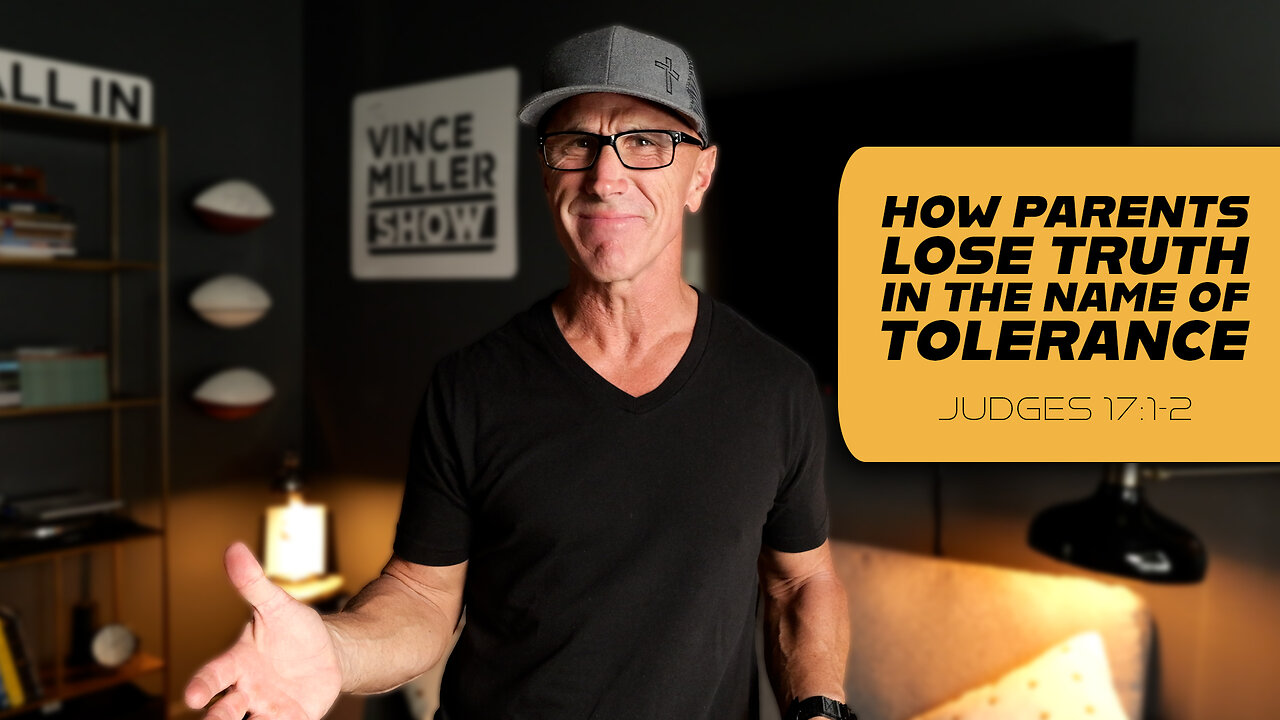
How Parents Lose Truth in the Name of Tolerance | Judges 17:1-2
Welcome to The Daily, where we study the Bible verse by verse, chapter by chapter, every day.
Read more about Project23 and partner with us as we teach every verse of the Bible on video.
Our text today is Judges 17:1-2:
There was a man of the hill country of Ephraim, whose name was Micah. And he said to his mother, "The 1,100 pieces of silver that were taken from you, about which you uttered a curse and also spoke it in my ears—behold, the silver is with me; I took it." And his mother said, "Blessed be my son by the Lord." — Judges 17:1-2
This scene looks simple—a son confesses theft, and a mother blesses him. But underneath it is something tragic. Micah steals from his own mother, admits it, and instead of correction, she offers him a blessing in God’s name. It sounds spiritual—but it’s sentimental.
Micah’s mom believes in God, but she won’t confront sin. She wants to keep peace, not stir conflict. Her love is sincere, but her silence is deadly. She redefines righteousness as “being nice,” and in doing so, she turns blessing into approval of sin.
And here’s the cost: when parents won’t draw the line, children stop seeing one. When we’re silent about sin, we teach the next generation that God’s boundaries are optional—that His truth bends for our emotions. Micah’s mother wasn’t leading her son to God; she was leading him away by confusing blessing with permission.
Sound familiar? We see it every day. Christian parents who believe in the Bible—but when their kids walk into sin, they go quiet. They’re afraid to offend, afraid to seem “judgmental,” afraid to lose the relationship. So they soften the truth, stay silent, or even give their blessing to lifestyles and choices that God clearly calls sin.
It’s the Micah mistake—wanting God’s blessing without His boundaries. We say things like, “I just want my kids to be happy,” when God calls us to want our kids to be holy. We call it love, but it’s really fear wearing a mask of compassion.
We live in a world that calls confrontation “hate” and tolerance “love.” But God calls love something higher—truth spoken with courage, even when it hurts. Real love doesn’t wink at sin; it weeps over it. It points people, even our own children, back to the God who saves, not the one we invent to make everyone comfortable.
Micah’s mother wanted God in her home but not on His terms. And that’s where idolatry always starts—in homes that believe but won’t obey.
God doesn’t bless sentimental faith. He blesses surrendered faith. Love without truth isn’t love—it’s permission. And truth without love isn’t truth—it’s pride. The real God won’t bend to our emotions, preferences, or family politics. He is the same yesterday, today, and forever. Our job isn’t to adjust Him—it’s to align with Him.
ASK THIS:
Have you ever confused love with tolerance in your home or relationships?
What message does silence about sin send to your children or those you influence?
Where do you need to speak truth in love, even if it risks tension?
How can you model both conviction and compassion like Jesus did?
DO THIS:
Identify one area where you’ve softened God’s truth out of fear or sentimentality.
Pray for wisdom and courage to address it with both love and clarity.
PRAY THIS:
Father, forgive me for loving comfort more than conviction. Help me to love my family enough to tell them the truth. Give me courage to draw boundaries that lead to life—and grace to speak truth in love. Amen.
PLAY THIS:
“Fear Is Not My Future.”
-
 4:05
4:05
Through the Bible with Vince Miller
3 days agoThe Cost of Toxic Empathy In Gaza | Judges 16:18-21
91 -
 LIVE
LIVE
poepah
42 minutes agoPLAYING ARC RAIDERS🚨NEW PLATFORM VIBES🚨
40 watching -
 38:45
38:45
Tactical Advisor
5 hours agoQuitting my Job & Giveaway Winner! | Vault Room Live Stream 010
22.8K2 -
 LIVE
LIVE
S0lidJ
2 hours ago🟢Live -S0lidJ- Finishing Up Quests
37 watching -
 2:10:52
GamerGril
3 hours agoBlocking Chainsaw Attacks With My Arm 💕Resident Evil 7💕
41.7K7 -

ttvglamourx
7 hours ago $6.69 earnedPLAYING WITH VIEWERS !DISCORD
26K4 -
 1:41:18
ItzSufari
3 hours ago🔴The Lords Sunday - Come join us in prayer - Amen
9.85K1 -

BenderOdoyle
6 hours agoBO7 - with Friends, The Return
12.9K3 -
 17:17
17:17
Fit'n Fire
5 hours ago $0.91 earnedDraco Owners Won't Like This...Zastava M85 & M92 Are Better
16K2 -
 DVR
DVR
NSSKEnt
8 hours ago5 Mil Easy | Max Level EASY | ARC Raiders
15.7K3