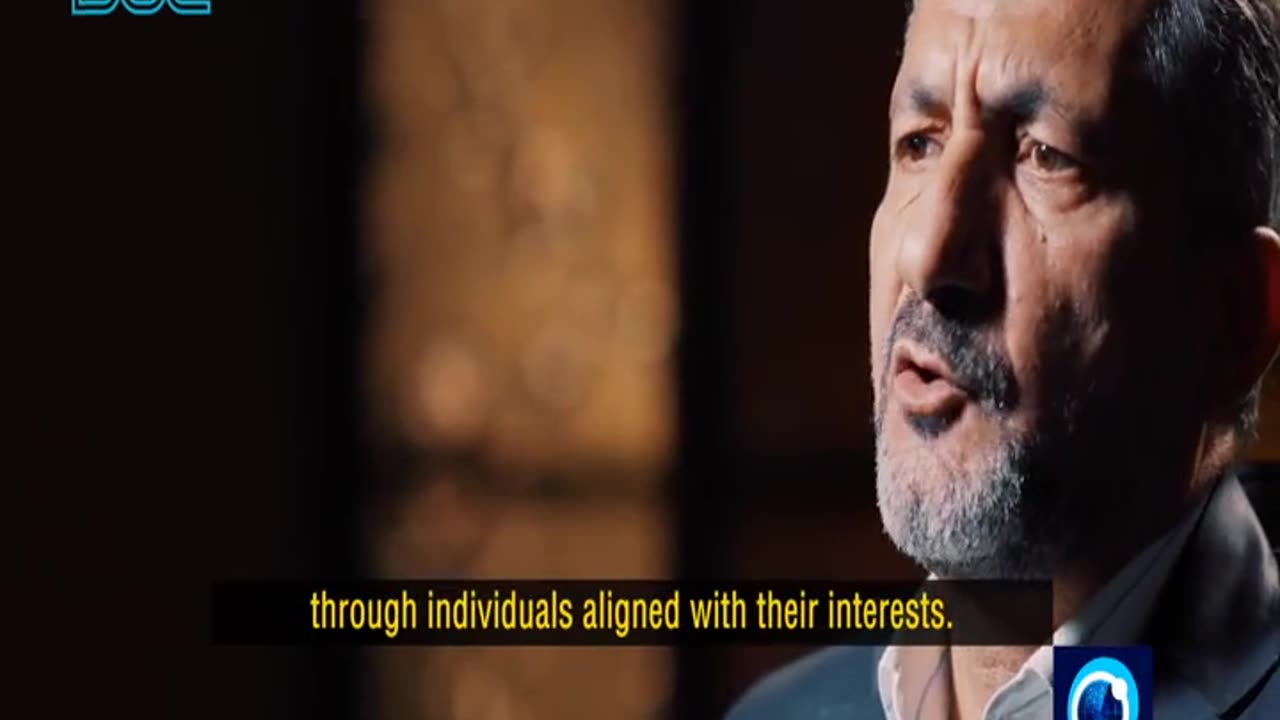
Iran and Iraq - Part 5 US Opens Pandora’s Box
Iran and Iraq - Part 5 US Opens Pandora’s Box
The American occupation of Iraq, which happened right after the fall of Saddam Hussein, brought no traces of democracy the Americans had promised to the Iraqi people.
Instead, all they witnessed was the tearing of the country with religious and sectarian conflicts through the policy of divide and rule. The terrorist attacks of various organizations came to haunt the country for the years to come. In the absence of a powerful central government, the hastened withdrawal of US troops from Iraq created a breeding ground for extremism and terrorism. Terrorist groups reared their ugly heads here and there throughout the country. Against such a backdrop, the resistance movement rose to confront the danger that was wreaking havoc in the country.
Google AI Overview
The American occupation of Iraq did not bring an unambiguous, stable democracy, though it did lead to the establishment of democratic institutions. The outcome is widely regarded as a flawed and deeply problematic system, which has been severely hampered by ongoing political instability, corruption, and sectarian divisions.
Establishment of democratic institutions
Following the 2003 invasion, the U.S. oversaw a political transition that created formal democratic structures.
A new constitution was enacted in 2005, establishing a federal parliamentary system with an elected Council of Representatives.
Multiple elections have been held for parliament and provincial councils since 2005. In 2005, for example, Iraqis voted in three separate national elections.
Formal divisions of power were codified, calling for the prime minister to be a Shia, the speaker of parliament a Sunni, and the president a Kurd. However, this power-sharing arrangement is informal and has fueled sectarian tension.
Significant failures and obstacles to genuine democracy
Despite the creation of democratic frameworks, the U.S. occupation and subsequent political processes laid the groundwork for a deeply dysfunctional system that undermined democratic governance.
Sectarian and ethnic divisions were exacerbated by the U.S. approach to power-sharing, which formalized ethnic and sectarian identity as the foundation of the political system.
Rampant corruption, fueled by a system known as muhasasa (quotas), entrenched political parties and militias. This system distributes government positions and economic spoils among competing sectarian and ethnic groups, undermining the state and blocking accountability.
Political paralysis is a recurring problem, with factions often taking months or even a year to form a government after elections. The results frequently do not align with voters' choices, which deepens public mistrust.
Rise of armed actors: The post-occupation chaos led to the empowerment of armed non-state actors and militias, including those backed by Iran. The proliferation of arms directly threatens electoral processes and government stability.
Public dissatisfaction: A significant portion of the Iraqi population has lost faith in the political system, citing government failures to address corruption, poor public services, and economic problems. In the view of many Iraqis, the system is a corrupt oligarchy controlled by U.S.-backed elites, not a true democracy.
The legacy of failure
In its 2023 evaluation, Freedom House continued to score Iraq as "Not Free," reflecting a failure to establish a stable and functional democracy. Many analysts believe the U.S. invasion and occupation not only failed to establish true democracy but also intensified existing divisions and undermined America's credibility as a promoter of democracy in the Middle East.
The Ashtar missile in Iraq was used to attack the Shaab military base in 2007.
Google AI Overview
While it is accurate that the Ashtar rocket was used in an attack on the Shaab military base in Baghdad in 2007, it was not the sole target during that operation. The attack was carried out by the Iran-backed militia Kataib Hezbollah.
Details of the 2007 attack:
On November 18, 2007, Kataib Hezbollah fired 31 Ashtar rockets at two American bases in Baghdad: the Shaab military base and the Rustamiyah base.
The rockets were Improvised Rocket-Assisted Munitions (IRAMs), which U.S. forces had also referred to as "flying IEDs".
The attack wounded 12 Americans.
The rocket strikes were not the first by Iranian-sourced weapons. Just two months earlier, in September 2007, a 240-millimeter rocket from an Iranian source was used in an attack on Camp Victory near Baghdad, killing one person and wounding 11.
Join the Weekly Video Call
constitutinhelp.com
-
 4:46:47
Drew Hernandez
23 hours agoPRESIDENT TRUMP CONTINUES TO CLASH WITH MTG?
42.5K18 -
 21:46
21:46
Stephen Gardner
6 hours ago🟢YES! HUGE TRUMP NEWS TODAY!!
36.6K97 -
 6:20:28
SpartakusLIVE
7 hours agoAim Assist NERFED - I LOVE IT || #1 Spartan Solo Session
40.8K7 -
 55:59
55:59
Adam Does Movies
12 hours ago $3.15 earnedBest Sci-Fi Movies! - Live
29.2K2 -
 54:09
54:09
Patriots With Grit
4 hours agoWoke's Destruction of Men | Dr. Gilda Carle
23.4K4 -
 49:00
49:00
MattMorseTV
6 hours ago $23.35 earned🔴Musk is FINALLY talking about it…🔴
58.3K70 -
 1:09:29
Sarah Westall
5 hours agoCDC Lawsuit, Genome Sequencing and Automated Medical Doctors w/ Dr. Nick and Leah Wilson
46.3K -
 1:41:04
Anthony Rogers
14 hours agoEpisode 392 - This is a Podcast
18.2K1 -
 1:19:29
Glenn Greenwald
9 hours agoJasmine Crockett: The Avatar of Democratic Emptiness; Bari Weiss Chooses Fanatical Israel Supporter as New CBS Anchor | SYSTEM UPDATE #556
117K58 -
 4:03:42
Barry Cunningham
1 day agoLIVE BREAKING NEWS: He's Back!! President Trump Hosts a Rally In Pennsylvania!
58K23