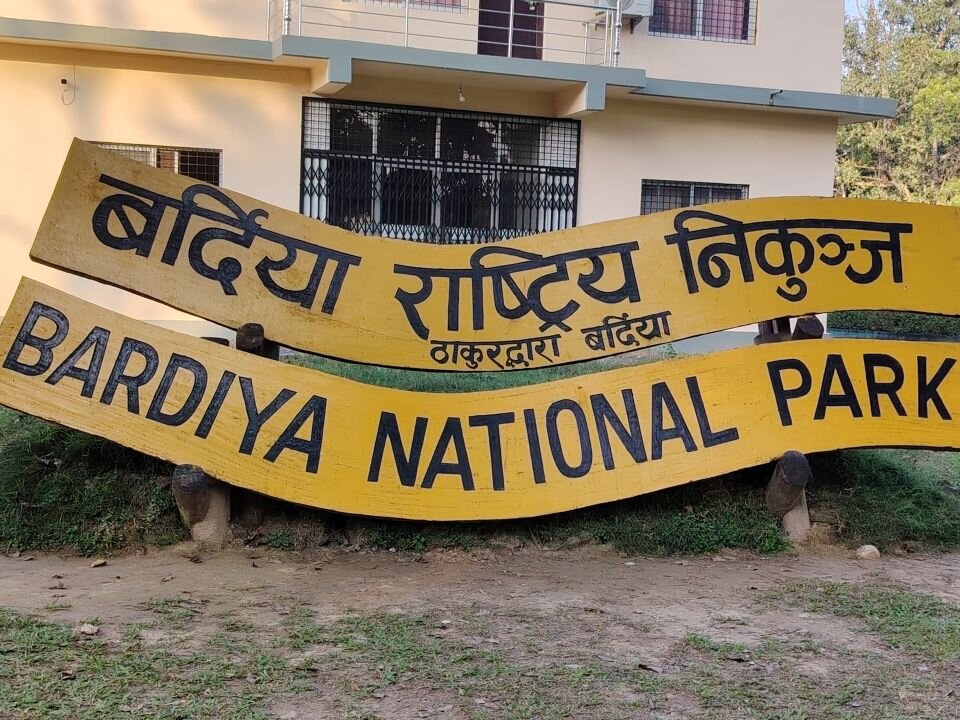
Bardiya National Park
Bardiya National Park, situated in the western Terai region of Nepal, is one of the country’s most extensive and ecologically diverse protected areas. Covering an area of approximately 968 square kilometers, the park lies in Bardiya District of Lumbini Province and was officially established in 1988. Before its designation as a national park, the area was a royal hunting reserve known as the Bardiya Wildlife Reserve, which was created in 1976. Its transformation into a national park marked a significant milestone in Nepal’s efforts to conserve the rich biodiversity of the lowland Terai ecosystem.
The park is bordered by the Karnali River to the west, while the Babai River flows through its core, creating a mosaic of habitats that support a wide variety of flora and fauna. The landscape is dominated by dense sal (Shorea robusta) forests, interspersed with grasslands, riverine forests, and wetlands. This combination of habitats provides a refuge for some of the most endangered wildlife species in Asia. Bardiya is particularly famous for its population of Royal Bengal tigers, one-horned rhinoceroses, Asian elephants, gharial crocodiles, and Gangetic dolphins. It also shelters more than 400 species of birds, including the great hornbill, lesser adjutant stork, and bengal florican.
In addition to its ecological importance, Bardiya National Park holds significant cultural and social value. The area surrounding the park is home to the Tharu community, an indigenous ethnic group known for their unique traditions, dances, and harmonious relationship with nature. Their traditional lifestyle and knowledge systems contribute to sustainable resource use and help maintain the ecological balance of the region.
Bardiya offers rich opportunities for eco-tourism and wildlife observation, with jungle safaris, rafting on the Karnali River, and birdwatching among the most popular activities. Visitors may also encounter species such as spotted deer, wild boar, swamp deer, blue bull, and various species of monkeys. Despite its natural beauty and abundance of wildlife, Bardiya remains less commercialized than Chitwan National Park, giving visitors a more tranquil and authentic wilderness experience.
Today, Bardiya National Park stands as a symbol of Nepal’s commitment to biodiversity conservation and sustainable development. Through continued efforts in anti-poaching, community involvement, and habitat restoration, the park not only protects rare species but also supports the livelihoods and cultural heritage of local people. It remains a vital part of Nepal’s natural heritage — a sanctuary of life, culture, and beauty where the rhythm of the wild still beats strong.
-
 LIVE
LIVE
LFA TV
13 hours agoLIVE & BREAKING NEWS! | FRIDAY 12/12/25
4,321 watching -
 1:00:47
VINCE
3 hours agoKristi Noem's Hearing Turns Into Full-Blown Circus | Episode 187 - 12/12/25 VINCE
152K89 -
 1:36:34
Benny Johnson
2 hours agoFBI Finally Charges BLM Leader ARRESTED for Fraud, Money Laundering | Ilhan Ensnared…?
24.2K46 -
 28:30
28:30
Standpoint with Gabe Groisman
3 hours agoSenator John Fetterman on The Democratic Party, Socialism, Israel and More
2.11K2 -
 UPCOMING
Film Threat
15 hours agoSILENT NIGHT, DEADLY NIGHT + DUST BUNNY + HAMNET + MORE | Film Threat Livecast
497 -
 UPCOMING
The Shannon Joy Show
2 hours ago🔥SJ LIVE: The NYS Vaccine Mafia! The State Is Trying To Take A Dedicated Pediatricians Son.🔥
192 -
 LIVE
LIVE
The Mel K Show
21 hours agoMel K & Matt Ehret | The International Intelligence Deception Post WW2 | 12-12-25
99 watching -
 UPCOMING
Daniel Davis Deep Dive
3 hours agoOne Way or Another Russia Will Get the Land /Patrick Henningsen & Lt Col Daniel Davis
99 -
 1:37:19
Graham Allen
3 hours agoThis GOP SUCKS!! Time For A Redo! + Now Candace Hates The Bible?!
128K486 -
 1:53:04
Badlands Media
7 hours agoBadlands Daily: 12/12/25
39.3K12