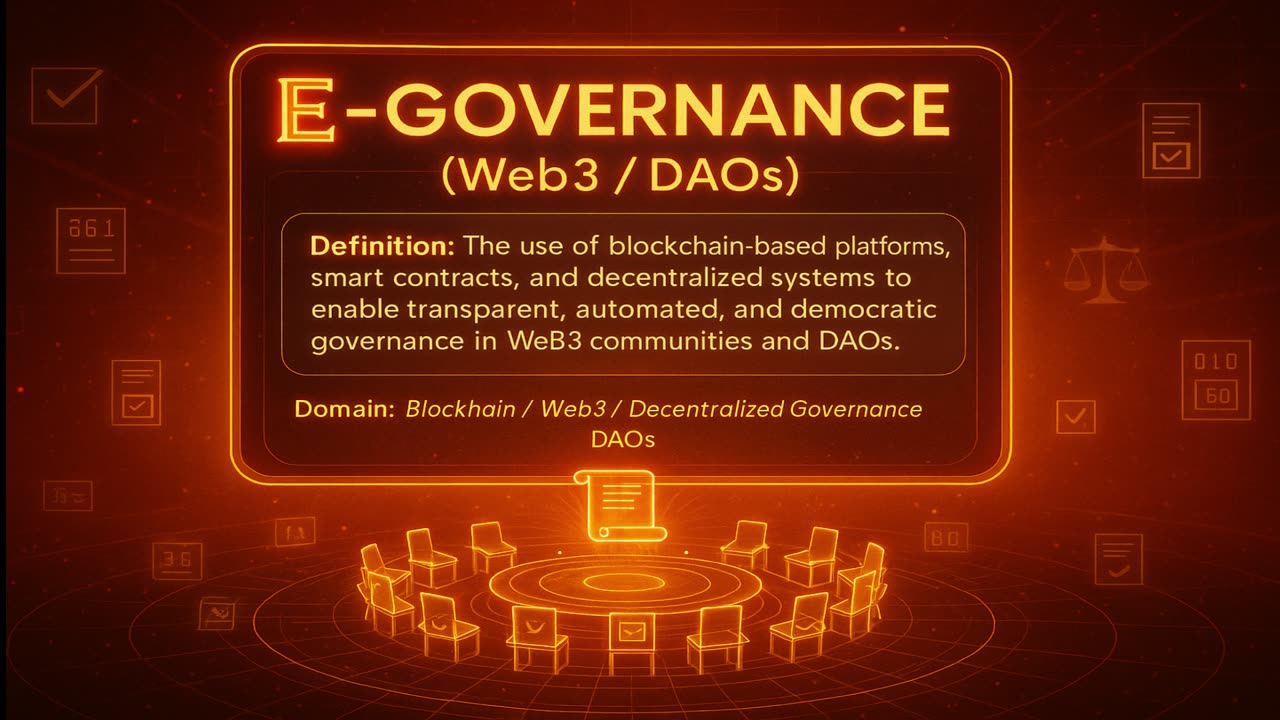
E-Governance (Electronic Governance)
E-Governance (Electronic Governance) refers to the use of digital technologies — such as the Internet, mobile devices, and data systems — by governments to deliver public services, enhance transparency, and strengthen citizen participation. It represents a major shift from traditional, paper-based administration to efficient, technology-driven governance.
In this video, we explore what E-Governance really means, how it works, and why it’s becoming the backbone of modern public administration. You’ll learn about its four main types:
G2C (Government to Citizen) – Online services like ID applications, e-tax, and digital payments.
G2B (Government to Business) – Simplifying regulations, licensing, and trade systems.
G2G (Government to Government) – Inter-departmental communication and data sharing.
G2E (Government to Employee) – E-training, payroll, and HR systems.
We’ll also examine global examples such as India’s Digital India initiative, Estonia’s e-Residency program, and the UAE’s Smart Government strategy — all showing how E-Governance enhances efficiency, accountability, and accessibility.
By the end of this video, you’ll understand how E-Governance is reshaping democracy, promoting transparency, and empowering citizens through technology.
-
 LIVE
LIVE
Matt Kohrs
12 hours agoStocks Drop, Crypto Plummets & The Week Ahead || Live Day Trading
589 watching -
 LIVE
LIVE
Wendy Bell Radio
5 hours agoThe Dam Has Broken
8,073 watching -
 1:18:54
MTNTOUGH Podcast w/ Dustin Diefenderfer
8 hours agoAdam Davis: Cop Abused as Child Contemplates Suicide, Finds God & Becomes Warrior | MTNPOD #144
2.56K -
 1:12:14
Chad Prather
16 hours agoAlignment, Anointing, and the Battle for Your Focus
64.7K26 -
 11:16
11:16
Paul Joseph Watson
5 hours agoEveryone Is Afraid
19.1K38 -
 LIVE
LIVE
LFA TV
15 hours agoLIVE & BREAKING NEWS! | MONDAY 12/01/25
2,938 watching -
 1:56:09
The Chris Salcedo Show
20 hours ago $5.72 earnedHow Much More Will Americans Take?!
23.8K1 -
 1:29:47
LIVE WITH CHRIS'WORLD
13 hours agoTHE WAKE UP CALL - 12/01/2025 - Episode 15
26.8K3 -
 1:33:52
Game On!
16 hours ago $1.74 earnedUnderdogs WIN BIG In The NFL Week 13 Games!
26.3K2 -
 14:57
14:57
Upper Echelon Gamers
13 hours ago $6.50 earnedNot Even The Tech Bros Want Their Own Tech
45.5K4