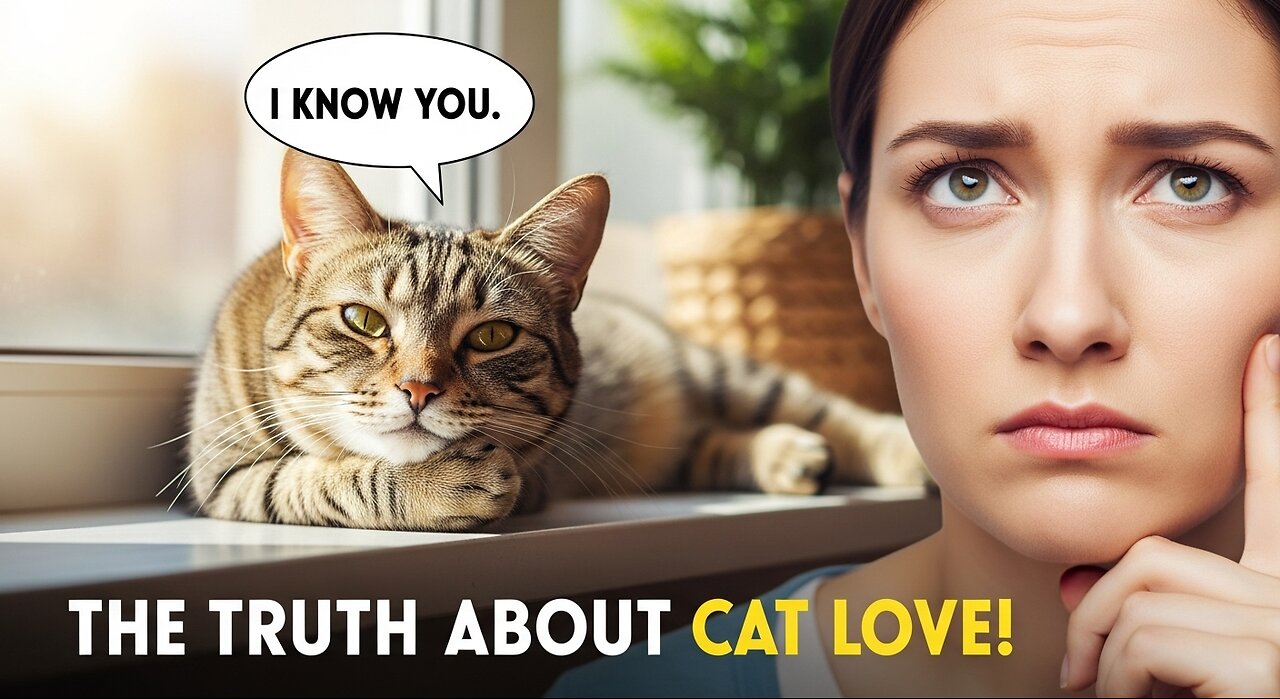
Do Cats Really Love Us?
Do Cats Really Love Us?
Did you know that cats can recognize their owners just by their voices, but they often choose to ignore us? You might think your feline friend is indifferent, but the truth is far more fascinating. Today, we’re diving deep into the enigmatic world of cats and the surprising science behind their relationships with humans. Are they truly connecting with us, or are they merely territorial creatures that recognize the space we occupy?
Imagine coming home after a long day, and there’s your cat, perched in its favorite spot, seemingly unfazed by your arrival. You call its name, and it glances your way, only to turn back to its nap. Frustrating, right? But here’s the kicker: studies show that cats can distinguish their owner's voice from others! They may not always respond, but they know who you are. So, what’s going on in that furry little head of theirs?
Cats are fascinating beings, and their social behavior has puzzled pet owners for centuries. Unlike dogs, which have been bred for companionship and loyalty, cats are more independent. They evolved as solitary hunters, which makes their social interactions quite unique. This independence might explain why they sometimes seem aloof or indifferent when we call them. They’re not ignoring you; they’re just prioritizing their own whims over your requests.
Now, let’s dig deeper. Researchers conducted an experiment where they played recorded meows of either the owner or a stranger. The cats consistently showed a greater response to their owner’s meow, even if they didn’t necessarily get up or come over. This reveals a level of recognition that’s both impressive and a bit mind-boggling. It means your cat knows who feeds it, who plays with it, and who provides that cozy lap to curl up on. But it also means they might not care as much as we hope they do.
But wait, it gets even more interesting. Cats are incredibly territorial, which raises another question: do they recognize you because you’re their owner, or do they just see you as part of their territory? Think about it. Cats are savvy survivalists, and they have a strong instinct to protect their home. They recognize the humans that come with their territory, but that doesn’t mean they see you as family. They might just see you as a resource, a provider of food and warmth in their little kingdom.
Yet, there’s more! When cats are socialized from a young age, they form stronger bonds with their humans. This bond can lead to affectionate behaviors like head nudging, purring, and even following you around the house. These signs indicate that your cat does recognize and care for you, even if they don’t respond to your calls like a dog would. This complex relationship is a blend of independence and companionship. They love you, but on their own terms.
So, what about those moments when your cat seems to seek you out? Have you ever noticed your cat coming to you when you’re sad or stressed? It turns out, there’s a fascinating aspect of feline behavior that suggests they may pick up on our emotions. Cats are observant creatures. They can sense changes in our tone of voice, body language, and even our scent. When you’re feeling down, they might curl up next to you for comfort, proving that their recognition goes beyond just knowing who you are.
And here’s a wild twist: some studies suggest that cats may even understand some human emotions. They can respond to our happiness or sadness, sometimes mirroring our feelings. Isn’t that incredible? Your cat may not come when called, but it knows when you’re feeling off. This shows that, while they may be solitary animals, they can form emotional connections with their humans.
Now, you might be wondering: so, do they really love us? The answer isn’t straightforward. Love for cats is different than love for dogs. Dogs have been bred for companionship, but cats have retained their wild instincts. They show affection in subtle ways, like slow blinking or bringing you "gifts." It’s their way of saying, “You’re part of my world.” While they may not be as overtly loving as dogs, they form attachments that are meaningful in their own unique way.
Let’s not overlook the other side of the coin. What about the cats that seem to bond more with other pets in the house than with their human owners? This can happen if they’re more socialized with those animals than with people. In multi-pet households, cats can form strong bonds with their fellow companions, showcasing that their social structures can be complex and varied.
As we wrap up this exploration, let’s reflect on this: Cats may not always show their love in the ways we expect, but they definitely recognize us as part of their lives. They know who provides for them, who cares for them, and who gives them that cozy spot to snooze. They might not come when you call, but they’re always aware of your presence.
So, the next time your feline friend ignores you, remember, it’s not personal. They’re simply living life on their own terms. And what’s more, they might just be silently appreciating you from across the room. Knowing this adds a new depth to our relationships with our cats, reminding us that love comes in many forms even if it’s not always what we expect. Keep observing, and you might just uncover the many ways your cat shows its unique affection for you.
Did you know that cats can recognize their owners just by their voices, but they often choose to ignore us? You might think your feline friend is indifferent, but the truth is far more fascinating. Today, we’re diving deep into the enigmatic world of cats and the surprising science behind their relationships with humans. Are they truly connecting with us, or are they merely territorial creatures that recognize the space we occupy?
Imagine coming home after a long day, and there’s your cat, perched in its favorite spot, seemingly unfazed by your arrival. You call its name, and it glances your way, only to turn back to its nap. Frustrating, right? But here’s the kicker: studies show that cats can distinguish their owner's voice from others! They may not always respond, but they know who you are. So, what’s going on in that furry little head of theirs?
Cats are fascinating beings, and their social behavior has puzzled pet owners for centuries. Unlike dogs, which have been bred for companionship and loyalty, cats are more independent. They evolved as solitary hunters, which makes their social interactions quite unique. This independence might explain why they sometimes seem aloof or indifferent when we call them. They’re not ignoring you; they’re just prioritizing their own whims over your requests.
Now, let’s dig deeper. Researchers conducted an experiment where they played recorded meows of either the owner or a stranger. The cats consistently showed a greater response to their owner’s meow, even if they didn’t necessarily get up or come over. This reveals a level of recognition that’s both impressive and a bit mind-boggling. It means your cat knows who feeds it, who plays with it, and who provides that cozy lap to curl up on. But it also means they might not care as much as we hope they do.
But wait, it gets even more interesting. Cats are incredibly territorial, which raises another question: do they recognize you because you’re their owner, or do they just see you as part of their territory? Think about it. Cats are savvy survivalists, and they have a strong instinct to protect their home. They recognize the humans that come with their territory, but that doesn’t mean they see you as family. They might just see you as a resource, a provider of food and warmth in their little kingdom.
Yet, there’s more! When cats are socialized from a young age, they form stronger bonds with their humans. This bond can lead to affectionate behaviors like head nudging, purring, and even following you around the house. These signs indicate that your cat does recognize and care for you, even if they don’t respond to your calls like a dog would. This complex relationship is a blend of independence and companionship. They love you, but on their own terms.
So, what about those moments when your cat seems to seek you out? Have you ever noticed your cat coming to you when you’re sad or stressed? It turns out, there’s a fascinating aspect of feline behavior that suggests they may pick up on our emotions. Cats are observant creatures. They can sense changes in our tone of voice, body language, and even our scent. When you’re feeling down, they might curl up next to you for comfort, proving that their recognition goes beyond just knowing who you are.
And here’s a wild twist: some studies suggest that cats may even understand some human emotions. They can respond to our happiness or sadness, sometimes mirroring our feelings. Isn’t that incredible? Your cat may not come when called, but it knows when you’re feeling off. This shows that, while they may be solitary animals, they can form emotional connections with their humans.
Now, you might be wondering: so, do they really love us? The answer isn’t straightforward. Love for cats is different than love for dogs. Dogs have been bred for companionship, but cats have retained their wild instincts. They show affection in subtle ways, like slow blinking or bringing you "gifts." It’s their way of saying, “You’re part of my world.” While they may not be as overtly loving as dogs, they form attachments that are meaningful in their own unique way.
Let’s not overlook the other side of the coin. What about the cats that seem to bond more with other pets in the house than with their human owners? This can happen if they’re more socialized with those animals than with people. In multi-pet households, cats can form strong bonds with their fellow companions, showcasing that their social structures can be complex and varied.
As we wrap up this exploration, let’s reflect on this: Cats may not always show their love in the ways we expect, but they definitely recognize us as part of their lives. They know who provides for them, who cares for them, and who gives them that cozy spot to snooze. They might not come when you call, but they’re always aware of your presence.
So, the next time your feline friend ignores you, remember, it’s not personal. They’re simply living life on their own terms. And what’s more, they might just be silently appreciating you from across the room. Knowing this adds a new depth to our relationships with our cats, reminding us that love comes in many forms even if it’s not always what we expect. Keep observing, and you might just uncover the many ways your cat shows its unique affection for you.
-
 57:22
57:22
Flyover Conservatives
1 day agoChina and India are Draining Silver — Prices Are Responding Fast - Dr. Kirk Elliott; Natural Remedy You Don't Know About - Dr. Troy Spurrill | FOC Show
32.9K1 -
 LIVE
LIVE
MissesMaam
4 hours agoARC NOOBS 💚✨
237 watching -
 2:30:28
Anthony Rogers
11 hours agoEpisode 393 - Psychic Readings
17.9K2 -
 44:52
44:52
Donald Trump Jr.
8 hours agoShip Outta Luck, Plus FBI Foils LA Terror Plot and Much More | Triggered Ep.300
241K116 -
 12:50
12:50
Dr. Nick Zyrowski
4 days agoThe AMAZING Health Benefits of NAC ( N-Acetyl Cysteine) - Must See!
43K19 -
 1:15:43
We Like Shooting
17 hours ago $3.53 earnedDouble Tap 440 (Gun Podcast)
23.9K -
 59:03
59:03
BonginoReport
8 hours agoEvil Terrorists Target Jewish Celebration - Nightly Scroll w/ Hayley Caronia (Ep.197)
66.3K69 -
 1:02:27
The Nick DiPaolo Show Channel
9 hours agoRob Reiner, Wife Slaughtered | The Nick Di Paolo Show #1828
53.7K44 -
 22:03
22:03
Jasmin Laine
13 hours agoCBC Host Left SPEECHLESS as Poilievre Uses Their OWN Words Against Them
30.5K26 -
 13:09:53
LFA TV
1 day agoLIVE & BREAKING NEWS! | MONDAY 12/15/25
221K54