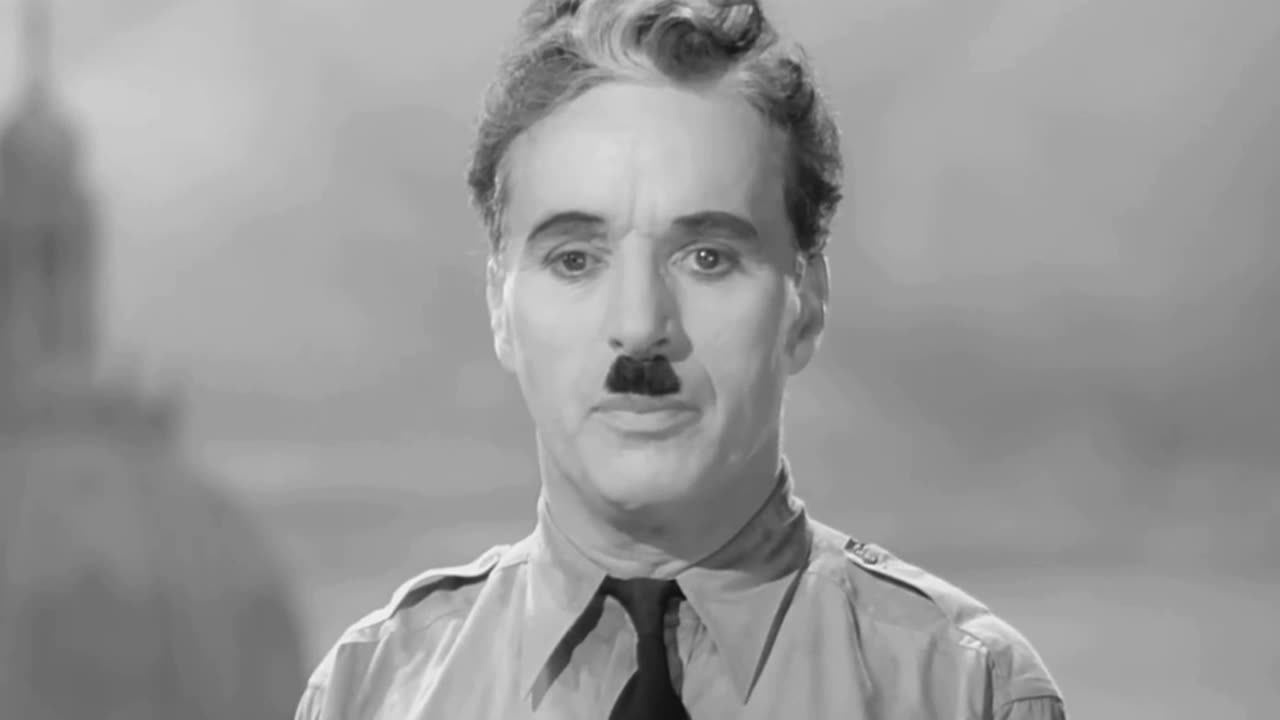
The speech that made Charlie Chaplin break his silence
In 1940, Charlie Chaplin released "The Great Dictator," a film that represented both a personal artistic evolution and a fearless political statement during one of history's darkest periods. After building his legendary career on silent films centered around his beloved "Tramp" character, Chaplin chose his first fully talking picture to deliver a scathing satire of Adolf Hitler and the rise of fascism in Europe. Playing dual roles, Adenoid Hynkel, a buffoonish dictator of the fictional nation Tomainia, and a Jewish barber victimized by the regime. Chaplin created a work that was simultaneously hilarious and deeply unsettling in its parallels to real-world atrocities.
The timing of the film's release made it particularly audacious. Written between 1938 and 1939 as Nazi Germany expanded its territorial conquests and persecution of Jews intensified, "The Great Dictator" emerged at a moment when the United States maintained official neutrality and Hollywood studios largely avoided content that might offend Nazi Germany or jeopardize their European markets. Chaplin studied propaganda films like Leni Riefenstahl's "Triumph of the Will" to understand and then dismantle the aesthetic of authoritarian power through comedy. His willingness to mock Hitler directly, transforming the führer's commanding presence into slapstick absurdity, represented an act of creative courage that few of his contemporaries were willing to attempt.
The film's enduring power resides in its final six-minute speech, where the Jewish barber, mistaken for Hynkel, addresses the masses with a message that transcends its immediate historical context. Speaking directly to the camera, and therefore to audiences worldwide, Chaplin's character delivers an impassioned plea for humanity over hatred, democracy over dictatorship, and compassion over cruelty. "We all want to help one another. Human beings are like that," he declares, offering a vision of human connection that stands in stark contrast to fascism's ideology of division and domination. This speech, written entirely by Chaplin, remains one of cinema's most quoted and referenced moments, continuously rediscovered by new generations as a reminder that art can serve as both resistance and hope in the face of tyranny.
📲 Stay connected!
Follow us on:
📸 Instagram: https://theurb.co/instagram
📘 Facebook: https://theurb.co/facebook
🐦 X (formerly Twitter): https://theurb.co/x
🎶 TikTok: https://theurb.co/tiktok
👔 LinkedIn: https://theurb.co/linkedin
Get more The Urban Herald!
🔔 Instant updates:
Join our WhatsApp Channel for new post notifications sent directly to your phone. Don't miss a beat!
https://theurb.co/whatsapp-channel
🎧 Listen on the go:
Catch up on all our stories and discussions wherever you are. Subscribe to The Urban Herald Podcast!
https://theurb.co/spotify-podcast
📰 Explore more:
For in-depth articles, exclusive content, and all our latest news, visit The Urban Herald website: https://theurb.co
Important information!
📹 Video credit: Roy Export SAS
All credit for the video goes to the original owner.
✅ Copyright disclaimer! Under Section 107 of the Copyright Act 1976: This content is intended for educational, commentary and entertainment purposes only. All media used in this photo/video has been transformed through the addition of an original voiceover, editing and creative interpretation, thus qualifying as fair use.
If this was submitted to us by mistake or would like it removed, please email us at [email protected]. Thank you for your cooperation!
📧 Contact us:
Sales and new business inquiries: [email protected]
Don't forget to LIKE 👍, SHARE ⤴️, and SUBSCRIBE ▶️ for more in-depth analyses and critical perspectives on trending topics!
#CharlieChaplin #Cinema #CinemaHistory #GoldenAgeOfHollywood #MovieHistory #ClassicFilms #SilentFilms #CinemaLovers
-
 1:09:15
vivafrei
4 hours agoTim Walz is a Loser and a FRAUD! Never Give Up Your Guns! Jan. 6 Pipe Bomber BREAKING NEWS & MORE!
43.3K31 -
 1:13:30
Sean Unpaved
2 hours agoCaleb Williams & Bears Jump To #1 In NFC! | UNPAVED
2.55K -
 9:48
9:48
Buddy Brown
7 hours ago $0.74 earnedOne of the RISKIEST Videos I've Done | Buddy Brown
13K7 -
 LIVE
LIVE
LFA TV
23 hours agoLIVE & BREAKING NEWS! | MONDAY 12/01/25
1,037 watching -

John Crump Live
4 hours agoThe Return Of John Crump Live
5.39K1 -
 22:49
22:49
The Quartering
2 hours agoBlack Friday Debt Bonanza, Youtube Bans Millions, South Park Roasts Bill Burr, MrBeast Outs Youtube
15.3K3 -
 LIVE
LIVE
Dr Disrespect
7 hours ago🔴LIVE - DR DISRESPECT - REDSEC - BATTLEFIELD ISN'T READY FOR US
1,400 watching -
The HotSeat With Todd Spears
3 hours agoEP 217: God Bless America, Why Not America Bless GOD? Pt 1
16.3K17 -
 1:35:44
Tucker Carlson
5 hours agoJohn Rich on Diddy, Demons, the Antichrist, How to Hear God, and His War on Child Predators
75.7K116 -
 1:09:52
The White House
7 hours agoPress Secretary Karoline Leavitt Briefs Members of the Media, Dec. 1, 2025
49.7K18