Guinea Worm Disease Eradication
When The Carter Center began leading the campaign to eradicate Guinea worm in 1986, there were an estimated 3.5 million cases of the disease in 21 countries in Africa and Asia. Today, less than a fraction of one percent of Guinea worm cases remain in a handful of endemic countries: South Sudan, Chad, Mali, and Ethiopia.
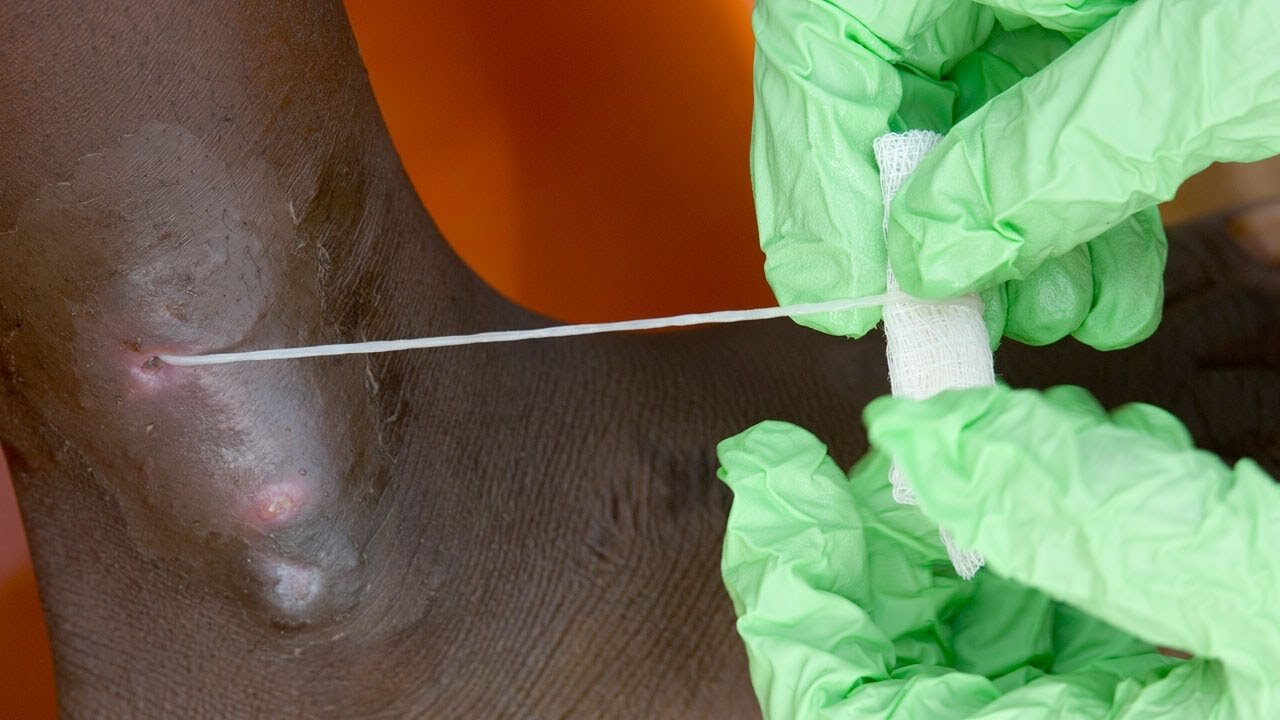
Guinea worm disease is contracted when a person drinks stagnant water that is contaminated with microscopic water fleas carrying infective larvae. Inside a person's body, the larvae grow for a year, becoming thin thread-like worms, up to 3-feet-long. These worms create agonizingly painful blisters in the skin, through which they slowly exit the body. People with emerging worms must not bathe or step in sources of drinking water, because a worm will release hundreds of thousands of eggs, or larvae, into the water. Water fleas then eat the larvae, and people who drink unfiltered water from the pond become infected -- continuing the life cycle of the parasite.
-
 LIVE
LIVE
The White House
5 hours agoPresident Trump Delivers Remarks on the Economy
1,918 watching -
 1:02:44
BonginoReport
2 hours ago“Low IQ” Crockett Launches Senate Bid - Nightly Scroll w/ Hayley Caronia (Ep.193)
101K42 -
 54:26
54:26
Katie Miller Pod
1 hour agoElon Musk on DOGE, AI, & Are we in a Simulation? | KMP Ep.18
6.93K8 -
 1:02:39
TheCrucible
3 hours agoThe Extravaganza! EP: 72 (12/09/25)
100K12 -
 1:50:53
Kim Iversen
3 hours agoNick Fuentes: "Hitler Was Very F**cking Cool" | Candace Owens ENDS Tim Pool
26.1K93 -
 1:46:54
Redacted News
4 hours agoSomething DEVASTATING is about to hit Ukraine, and NATO Puppet Zelensky is to blame | Redacted
140K71 -
 13:17
13:17
Stephen Gardner
4 hours agoWhat Trump Is Doing Right Now That No One Is Talking About!
25.9K20 -
 1:11:06
vivafrei
5 hours agoJan. 6 Suspect "My Little Pony" Obsession? Piers Morgan's Schlock Interview with Fuentes! AND MORE!
130K52 -
 LIVE
LIVE
Dr Disrespect
7 hours ago🔴LIVE - DR DISRESPECT - TARKOV 1.0 - THE VIOLENCE EVOLVES
898 watching -
 1:14:17
The Quartering
5 hours agoTim Pool Goes To War With Candace Owens, Social Media Ban Begins, Kids Turn To Socialism,
152K61