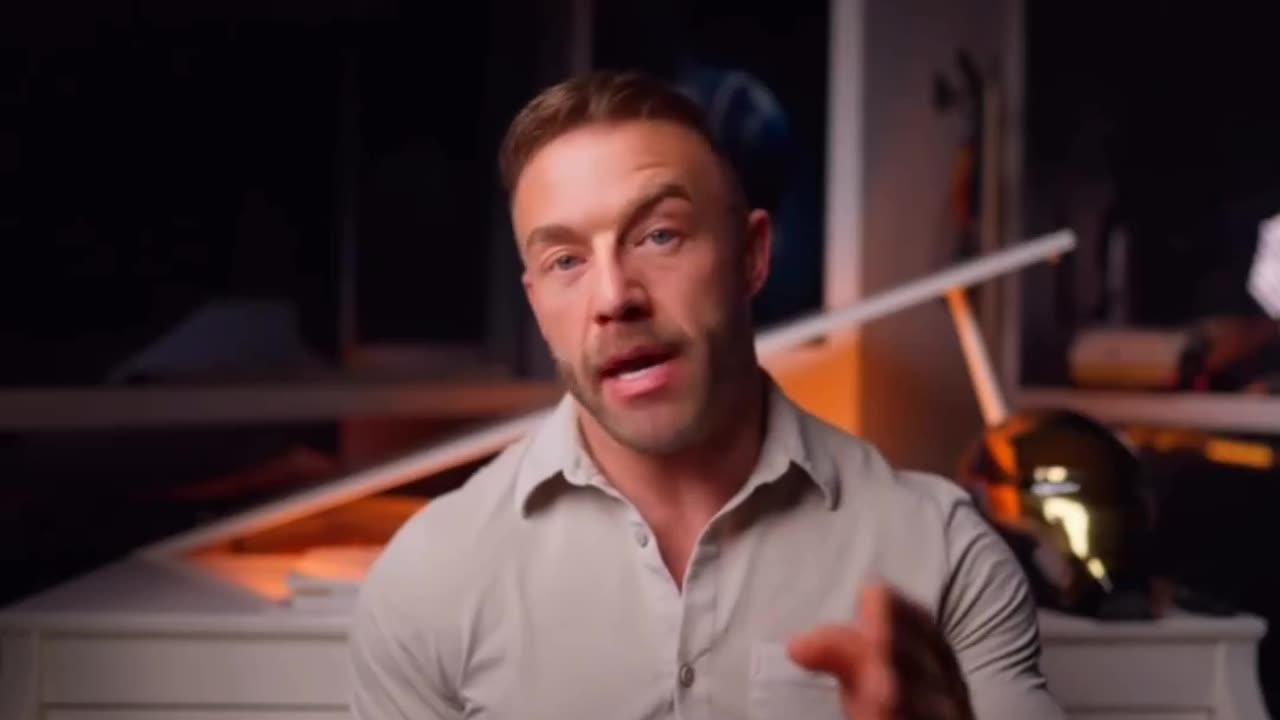
Mark Carney EXPOSED: The $130 Trillion Collapse, Your Pension, and the Green Energy Scam
If this is not what you wanted, just tell me — I can also summarize it, turn it into a script, turn it into a meme caption, or continue formatting.
⸻
CLEAN, POLISHED TRANSCRIPT
Good evening, my fellow Canadians — and welcome to the final show.
Le coup de grâce.
What I’m about to explain may be the final blow to Mark Carney’s political career.
Once you understand what he has done — and what he is still doing — you’ll realize we are in a catastrophic financial spiral, and he is making a ludicrous amount of money while it happens.
Let me keep this simple, so everyone can follow.
⸻
1. Background: Mark Carney and the $130 Trillion Collapse
In 2019, the global “GFANZ” capital pool (the big net-zero, climate-finance alliance) had accumulated over $130 trillion in pledged capital.
Then it began to collapse.
Why? Because Republican attorneys in the U.S. subpoenaed the major banks for anti-competition violations.
As a result, JPMorgan, Chase, Bank of America, Citigroup, Wells Fargo, Goldman Sachs — all exited the net-zero alliance.
Carney’s entire agenda depended on this alliance continuing.
But once the banks bailed, the money evaporated.
And this is important:
Green energy does not produce a financial return for 10–20 years — if ever.
So to attract private investors, governments must “de-risk” those projects:
Meaning taxpayers eat all the losses while private investors keep all the profits.
⸻
2. Carney Gains Power Inside Canada
In 2020, Bloomberg announced that Mark Carney was Trudeau’s unofficial economic advisor.
Because he was “unpaid and unofficial,” it did not trigger the Conflict of Interest Act.
Yet he had massive influence over Liberal policy with zero accountability.
The key trio:
• Justin Trudeau
• Chrystia Freeland (Finance Minister 2020–2025)
• Mark Carney
During this time, roughly $190 billion in taxpayer funds were allocated toward “de-risking” green energy.
⸻
3. The Missing $130 Trillion — Where Does Carney Go Next?
With GFANZ collapsing, Carney needed access to large pools of guaranteed cash.
There is only one place left big enough:
Canada’s pension funds.
Through Trudeau’s cabinet, all “de-risking” rules were created.
Through Freeland, the financial mechanisms were implemented.
And remember:
Carney is the godfather to Freeland’s child.
The $15-billion Canadian Growth Fund was then created to “de-risk” green energy projects.
⸻
4. How Carney Gets Pension Money Into His Funds
Public service pensions can only invest in low-risk, steady-return assets.
They cannot invest in speculative green-energy ventures that typically lose money.
So how did Carney get pension dollars into Brookfield’s transition funds?
Because:
• Trudeau appoints the board members
• Freeland approves the structure
• The PM can remove board members at any time
These executives make six- and seven-figure salaries, fully dependent on the government.
Brookfield’s Transition Fund I and II — managed by Carney and his colleague Teskey — list pension giants like PSP Investments and Ontario Teachers’ Pension Plan as limited partners.
PSP even created a special subsidiary (CCF IM) to manage federal funds, making oversight obscure.
⸻
5. The Smoking Gun: Entropy Inc.
Here’s one example:
Brookfield invests $300 million into a company called Entropy Inc.
Because the investment is structured as “non-profit-seeking,” it technically meets the threshold for pension funds.
Brookfield normally earns:
• 1.5–2% management fees, AND
• 20% profit share (“carried interest”) after a hurdle rate
But these returns usually take 10–15 years.
So how does Carney get his profits immediately?
Here’s the trick:
The Canadian Growth Fund guarantees the project for 15 years — at $16 million per year — PLUS $200 million upfront.
Meaning:
• All liability
• All debt
• All risk
…are transferred to Canadian taxpayers.
So we fund the project to completion at a loss.
At the end:
• A foreign company owns the project
• They collect all the profits
• Brookfield earns massive fees
• Pension funds are exposed
• Taxpayers absorb every loss
And that’s only one project.
-
 1:01
1:01
Canadian Citizens Journal
1 day agopear reviewed paper found 109 studies linking COVID-19 vaccines to autoimmune diseases
29 -
 2:16:21
Side Scrollers Podcast
18 hours agoTwitch has a SERIOUS Problem + Leaflit’s VIRAL Interview + More | Side Scrollers
42.6K13 -
 21:55
21:55
GritsGG
14 hours agoMega Win Streak On Warzone! Over 4100 Wins on BO6 WZ!
4.83K1 -
 20:22
20:22
The Pascal Show
1 day ago $3.00 earnedARE THEY IGNORING HER?! Is The White House & FBI Ignoring Candace Owens' A**assination Claims?!
29.2K15 -
 1:00:45
TruthStream with Joe and Scott
1 day agoMondays with Matt Geiger from Verity Metals: Gold, Silver, The Housing Market and more. Live 12/1 6pm pacific #519
9.6K1 -
 2:17:46
The Connect: With Johnny Mitchell
3 days ago $14.79 earnedA Sitdown With The Real Walter White: How An Honest Citizen Became A Synthetic Drug Kingpin
81K2 -
 2:40:08
PandaSub2000
10 hours agoDEATH BET | Solo Episode 01 (Edited Replay)
6.54K -
 LIVE
LIVE
Lofi Girl
3 years agolofi hip hop radio 📚 - beats to relax/study to
558 watching -
 2:03:38
Inverted World Live
9 hours agoSatanic Pedophile Network in Australia | Ep. 149
233K56 -
 3:34:45
TimcastIRL
9 hours agoCandace Owens Implies TPUSA KILLED Charlie Kirk, Claims Failed Bibi Deal Cost MILLIONS | Timcast IRL
232K174