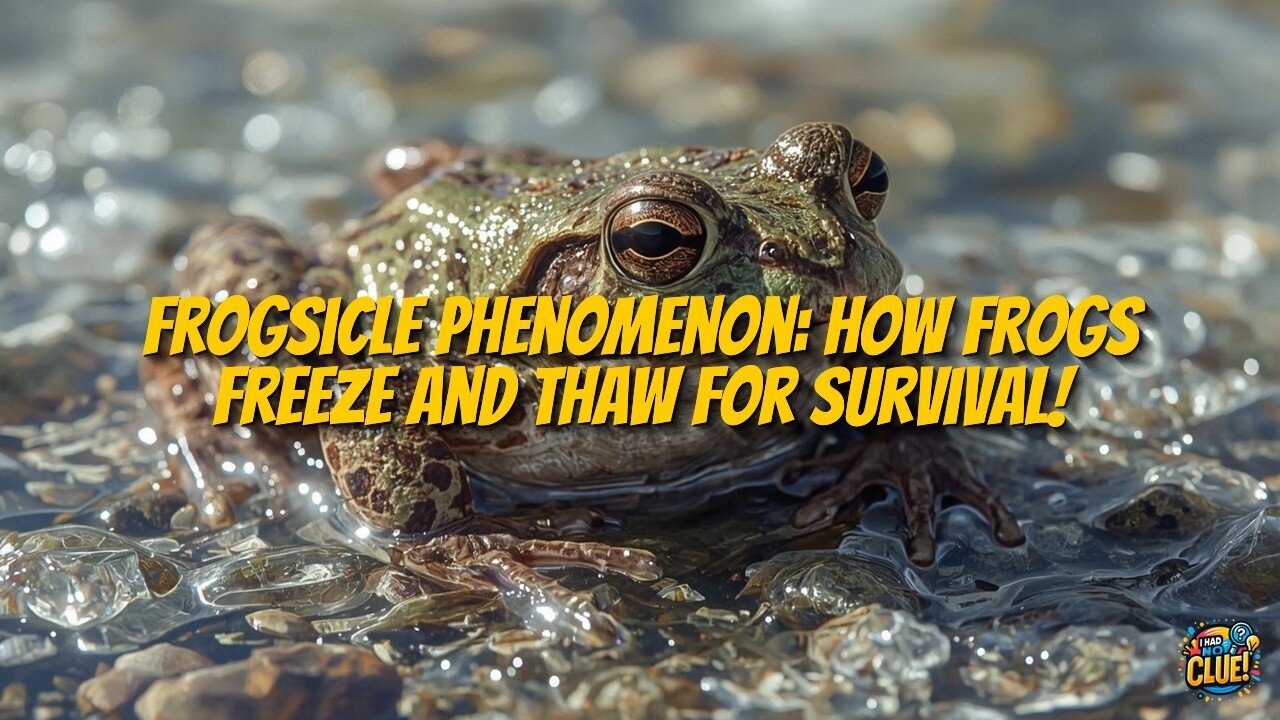
Freeze Survival: North American Frogs' Cryogenic Adaptation
Several North American frog species, including the wood frog, spring peeper, and gray treefrog, possess the remarkable ability to survive being frozen solid for extended periods. During winter, up to 65% of their body water turns to ice, their hearts stop, and all visible signs of life disappear, yet they thaw and resume normal activities when spring arrives. This freeze tolerance is achieved through sophisticated biochemical preparations: their livers produce massive amounts of glucose (up to 250 times normal levels), along with urea and other cryoprotectants that protect cellular structures while allowing ice to form safely between cells. These frogs can endure multiple freeze-thaw cycles, with Alaskan wood frogs surviving temperatures as low as -18°C for over seven months. This adaptation varies geographically within species and has attracted significant medical research interest for potential applications in organ preservation, treatments for ischemia, and cryonic preservation technologies.
-
 LIVE
LIVE
Red Pill News
2 hours agoA Deep State Christmas Carol - The Ghosts of Mass Shootings Past on Red Pill News Live
3,897 watching -
 1:18:39
Russell Brand
3 hours agoThe Return of Control: From Lockdowns to Censorship to War - SF663
112K30 -
 1:10:01
vivafrei
5 hours agoRob Reiner & Wife Murdered! Son Arrested & Held on $4 Million Bond! And More! Viva Frei Live!
43.2K61 -
 35:17
35:17
Stephen Gardner
2 hours ago🟢YES! Trump GETS UNEXPECTED news as Democrats LOSE Americas Trust!
16.8K20 -
 17:33
17:33
Cash Jordan
7 hours ago25,000 Homeless SEIZE NYC’s Subway… as “Communist Mayor” HANDS CITY to SQUATTERS
49.4K38 -
 6:59
6:59
Buddy Brown
4 hours ago $1.36 earnedSCARY Message about the 1930's Going viral now... | Buddy Brown
21.2K13 -
 LIVE
LIVE
LFA TV
1 day agoLIVE & BREAKING NEWS! | MONDAY 12/15/25
1,077 watching -
 1:29:35
The HotSeat With Todd Spears
3 hours agoEP 226: Not "If" But, When.....Is the "When" here?
21.2K9 -
 1:07:53
The Quartering
4 hours agoCandace Owens & Erika Kirk MEET, Terror In LA Stopped, Brown University Debacle & Australia Attack
134K31 -
 1:19:27
DeVory Darkins
5 hours agoBREAKING: DC Police Chief caught manipulating crime data in shocking report
116K37