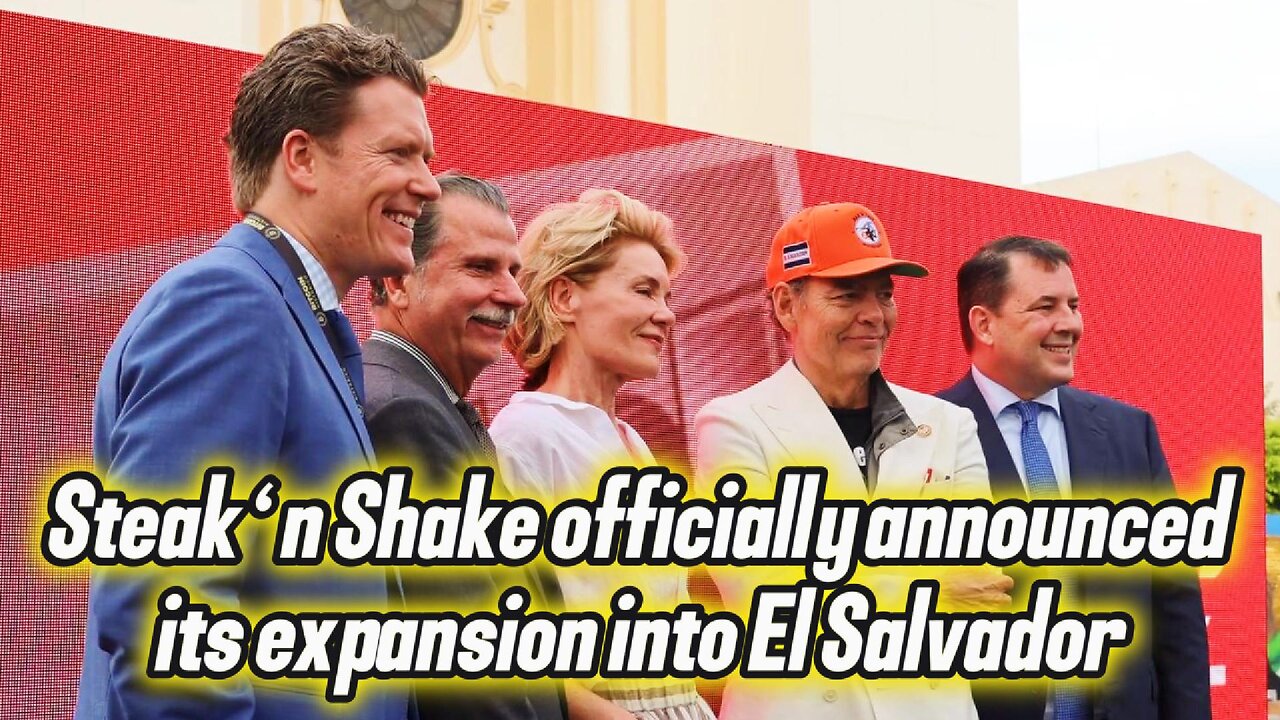
Steak ‘n Shake officially announced its expansion into El Salvador
In San Salvador's Centro Histórico, a seismic shift is underway—one that blends the unyielding promise of sound money with the nourishing power of regenerative food. At the forefront stand Max Keiser and Stacy Herbert, the dynamic duo who have transitioned from global Bitcoin evangelists to architects of El Salvador's bold economic rebirth. As co-leads of the National Bitcoin Office, they've orchestrated Bitcoin Histórico, a groundbreaking conference that drew Bitcoin luminaries from across the globe to this historic quarter. What unfolded wasn't just a gathering of minds; it was a clarion call for "Renaissance 2.0," where Bitcoin—the hardest money in the world—meets healthier living, igniting a chain reaction of sovereignty and vitality.
From Bitcoin OGs to Salvadoran Visionaries
Max Keiser and Stacy Herbert aren't newcomers to the revolution. Since unearthing Bitcoin in 2010, they've been its fiercest proponents, hosting The Keiser Report on RT and amplifying its message through BBC, Al Jazeera, and beyond. Their early advocacy turned heads, positioning them as the original "OGs" who decoded Bitcoin's potential to dismantle fiat illusions long before it became mainstream. By late 2022, their influence caught the eye of President Nayib Bukele, who tapped them to helm El Salvador's National Bitcoin Office—the world's first government entity dedicated to Bitcoin strategy.
Relocating to "Bitcoin Country" amid the 2021 bull market's frenzy (when BTC peaked at $69,000 before crashing to $16,000), Keiser and Herbert rolled up their sleeves. Keiser advises Bukele directly on Bitcoin investments, while Herbert directs the office's operations. Their mission? Transform El Salvador from a remittance-dependent economy into a Bitcoin-powered beacon of innovation. "You could build capital markets. You could build an economy. You could build a Singapore 2.0, an Alexandria 2.0, a Florence 2.0," Herbert reflected in a Bitcoin Magazine interview, envisioning a nation unexploited by crypto middlemen but empowered by sovereign money.
This ethos crystallized in Bitcoin Histórico, held November 12–13, 2025, across Centro Histórico's iconic landmarks: the National Palace, National Theater, BINAES library, and Plaza Gerardo Barrios. Organized by the National Bitcoin Office, the event wasn't your typical conference. It was an immersive odyssey—panels under colonial arches, drone shows piercing the night sky, fireworks echoing off volcanic backdrops, and free pupusas sizzling in beef tallow for all attendees. "There has never been any bitcoin conference like it because there is no other country like El Salvador and no other leader like Nayib Bukele," Herbert declared on X, capturing the electric atmosphere.
A Global Convergence: Speakers and Bitcoiners Ignite the Spark
Bitcoin Histórico pulled in a constellation of Bitcoin heavyweights, turning San Salvador into a nexus of ideas. Mexican billionaire Ricardo Salinas Pliego headlined alongside economist Jeff Booth, and traders like Tone Vays and Jimmy Song. Keiser joined a powerhouse panel moderated by Herbert, dissecting Bitcoin's role in national sovereignty, while biohacker Jack Kruse and Salvadoran officials like Gerson Martinez rounded out sessions on everything from energy mining to environmental stewardship.
Bitcoiners from Indonesia, the U.S., Europe, and beyond flooded the cobblestone plazas, their satoshis flowing as freely as the conversations. The event's state-backed pedigree—complete with giant LED screens broadcasting live from the plazas—underscored El Salvador's maturity as a Bitcoin nation. Amid Bitcoin's climb past $109,000, attendees didn't just talk price; they plotted Renaissance 2.0. This era, as Herbert frames it, echoes the Medici-fueled Florentine boom but supercharged by decentralized finance: low-time-preference investments fueling art, education, and infrastructure. "Strong men and hard money have created good times," Herbert tweeted, quoting the cyclical wisdom that now defines El Salvador's ascent.
Major announcements amplified the momentum. Mempool revealed its relocation to Bitcoin Country; the B300 mining chips arrived mid-conference; and The Little HODLer initiative pledged to revamp 500 school rooms into creative havens. But the real fusion of money and matter came in the food front—where Bitcoin's purity met the push for cleaner calories.
Steak ‘n Shake Plants Its Flag in Bitcoin Country: The Beef Tallow Revolution Arrives
In a move that perfectly marries American diner nostalgia with El Salvador’s Bitcoin-fueled future, Steak ‘n Shake officially announced its expansion into El Salvador immediately following Bitcoin Histórico. The iconic U.S. burger chain—already a Bitcoin-maximalist darling after rolling out BTC payments at all 400+ domestic locations in 2025—chose Centro Histórico as the beachhead for its Latin American debut.
The first location is slated to open in early 2026 directly on Plaza Gerardo Barrios, the same downtown square where thousands tasted their legendary Beef Tallow Fries during the conference. Every fry, every hash brown, every grilled cheese crust at the new Salvadoran outlets will be cooked exclusively in 100 % grass-fed beef tallow sourced from local regenerative ranches partnered with Texas Slim’s Beef Initiative and the Ministry of Agriculture.“El Salvador is the freest country on earth right now,” said Sardar Biglari, Steak ‘n Shake’s Bitcoin-friendly chairman, in a statement posted to X. “Where better to launch the world’s first all-beef-tallow, Bitcoin-paying, seed-oil-free fast-food experience?”
The menu will be tweaked for local palates—think pupusa-burger hybrids and yuca fries—but the non-negotiable core remains: zero canola, zero soy, zero industrial sludge; only beef tallow and real butter. Prices will be displayed in both dollars and satoshis, with Lightning Network payments accepted at the counter and drive-thru.
During Bitcoin Histórico, the chain previewed the concept with a pop-up stand that served over 12,000 portions of tallow-fried food in 48 hours and handed out more than 5,000 complimentary 16-oz jars of rendered grass-fed tallow to locals and visitors alike. Lines wrapped around the plaza as Salvadoran families, many trying beef tallow for the first time, discovered a cooking fat that doesn’t smoke, doesn’t inflame, and actually tastes like childhood before ultra-processed oils took over.
Max Keiser, never one to mince words, took the mic at the pop-up and declared: “Steak ‘n Shake isn’t just bringing burgers; they’re bringing metabolic freedom. This is how you weaponize a fast-food chain for good.”
For Stacy Herbert, the arrival seals a personal mission: “We fixed the money with Bitcoin. Now we’re fixing the food—one golden, crispy fry at a time.”
With construction already underway on the flagship Centro Histórico location and two more planned for Surf City and San Salvador’s Escalón district by mid-2026, Steak ‘n Shake is betting big that Salvadorans, armed with sound money and a taste for real food, are ready to ditch the seed oils for good.
When the neon “Steak ‘n Shake” sign finally flickers on above Plaza Gerardo Barrios next year, it won’t just be a restaurant opening; it will be the moment beef tallow officially goes mainstream in Bitcoin Country, and Renaissance 2.0 gets its first drive-thru.
Beef Tallow and Beyond: Cleansing the Plate for a Healthier Horizon
If Bitcoin cleanses the monetary system, then beef tallow—rendered from grass-fed, regenerative beef—is its culinary counterpart. At Bitcoin Histórico, this humble fat became a symbol of transition, a bridge from industrial seed oils to ancestral nourishment. Keiser and Herbert, vocal critics of fiat-fueled food degradation, championed tallow as a health elixir: stable, nutrient-dense, and free from the inflammatory pitfalls of processed alternatives. "Fix the money, fix the food, fix the world," as collaborator Texas Slim puts it—a mantra that resonated through the event.
Enter Steak 'n Shake, the American fast-food icon that's Bitcoin-maximalist at heart. After integrating BTC payments across 400 U.S. locations (boosting Q2 sales 11% and Q3 15%), the chain planted its flag in El Salvador post-conference. At Plaza Gerardo Barrios, they served Beef Tallow Fries to throngs of attendees and locals, handing out bottles of Grass-Fed and Wagyu Beef Tallow Cooking Oil gratis. "El Salvador is a great country. We were honored to be in Bitcoin Country," the chain posted on X, signaling the dawn of a "beautiful friendship." This wasn't mere marketing; it was education in action, introducing tallow's benefits—heart-healthy fats, vitamin absorption, and metabolic support—to a populace weary of ultra-processed diets.
The promotion extended beyond the plazas. Keiser and Herbert's team distributed tallow samples across downtown San Salvador, turning the historic square into a pop-up awareness hub. Passersby—tourists, vendors, families—received jars emblazoned with Bitcoin motifs, paired with quick primers on swapping vegetable oils for animal fats. "It's about bringing health to the people," Herbert emphasized, linking dietary sovereignty to financial freedom. In a nation where remittances once dominated, this grassroots giveaway sparked curiosity: Why cook with Bitcoin-backed beef? How does regenerative ranching combat climate narratives pushed by global agribusiness?
Beef Back Better: A Regenerative Pact with the Land
The tallow push was no solo act. Amplifying it was Beef Back Better, a regenerative agriculture venture sourcing GMO-free, grass-fed beef from El Salvador's volcanic soils. Their stall at Bitcoin Histórico buzzed with tastings, underscoring beef's role in soil health and carbon sequestration. But the crown jewel was Texas Slim, the Texas-born rancher and Beef Initiative founder whose gravelly drawl and unyielding ethos embody the carnivore-Bitcoiner crossover.
Slim, who's long fused peer-to-peer Bitcoin with peer-to-peer pastured beef, arrived as a force of nature. His Beef Initiative—decentralizing supply chains to empower family farms—struck a deal at the conference: an MoU with El Salvador's Ministry of Agriculture. The pact launches a regenerative farming project, breeding a "Salvadoran branded cow" optimized for local terroir. "10,000 gates are opening—and we’re just getting started," Slim posted from Berlin, El Salvador (a nod to the Bitcoin Berlin community), expressing gratitude to Bukele, Keiser, and Herbert for the welcome.
This collaboration isn't abstract. Slim's model has already seen U.S. ranchers like Cole Bolton earn full Bitcoins from direct beef sales, reinvesting in herds without bank loans. In El Salvador, it means jobs, nutrient-rich exports, and a bulwark against multinational packers. Tallow, once a byproduct, becomes the gateway drug: families frying plantains in grass-fed gold, discovering sustained energy and clearer minds. "Honor your soil," Slim urges—a call that ties Bitcoin's immutability to the earth's regenerative cycles.
Sound Money, Sound Bodies: The Dawn of Something Monumental
As Bitcoin Histórico faded into memory, its ripples endure. Keiser and Herbert's alchemy—global speakers seeding ideas, tallow tastings awakening palates—positions El Salvador as the vanguard of holistic prosperity. Sound money via Bitcoin's Strategic Reserve (SBR) pairs with better-quality food through regenerative beef, combating inflation in wallets and waistlines alike. Over 1,000 officials have since attended Keiser-Herbert briefings on SBR, while Slim's MoU promises a beef boom.
This is just the beginning. With Volcano Energy's geothermal Bitcoin mining humming and initiatives like Max & Stacy Food (seed-oil-free eats in El Zonte) on the horizon, El Salvador beckons builders. "Renaissance 2.0" isn't hype; it's happening—fueled by hard money and honest meat. As Herbert beams, it's liberation incarnate: for the people, by the people, one satoshi and steak at a time. In Centro Histórico's shadow, the future tastes like victory.
-
 2:55
2:55
GreenMan Studio
13 hours agoWHAT IS FREEDOM? w/ GreenMan Reports
25 -
 LIVE
LIVE
The Bubba Army
20 hours agoDONALD TRUMP SAYS "Black People Love Trump!" - Bubba the Love Sponge® Show | 12/10/25
1,713 watching -
 29:54
29:54
ZeeeMedia
13 hours agoAus Social Media Ban & British Govt's 'Emotion Detection' Cameras | Daily Pulse Ep 159
4.91K18 -
 LIVE
LIVE
GritsGG
16 hours agoBO7 Warzone Is Here! Win Streaking! New Leaderboard?
707 watching -
 1:00:41
Coin Stories with Natalie Brunell
17 hours agoBitcoin, Chasing Freedom & Breaking the Victimhood Cycle with Efrat Fenigson
61.6K2 -
 10:38
10:38
MattMorseTV
15 hours ago $21.27 earnedEU plans $2.34 Trillion ATTACK on U.S.A.
85.8K93 -
 35:41
35:41
MetatronGaming
2 days agoLet's Play HEXEN!
17.4K3 -
 2:08:37
Side Scrollers Podcast
19 hours agoNetflix/WB Will RUIN Entertainment + Anita Sarkessian “doesn’t deserve hate” + More | Side Scrollers
59.8K7 -
 2:00:01
TruthStream with Joe and Scott
16 hours agoAdrenochrome, Time Travel and Wormholes! Our most mindbending and mindblowing interview to date!! Premiers 12/9 3pm pacific 6pm eastern
17.5K11 -
 1:41:23
The Michelle Moore Show
19 hours ago'Setting the Record Straight On Many Myths and Lies We've Been Told Concerning Our Health' Guest, Dr. Margaret Aranda: The Michelle Moore Show (Dec 9, 2025)
20.1K5