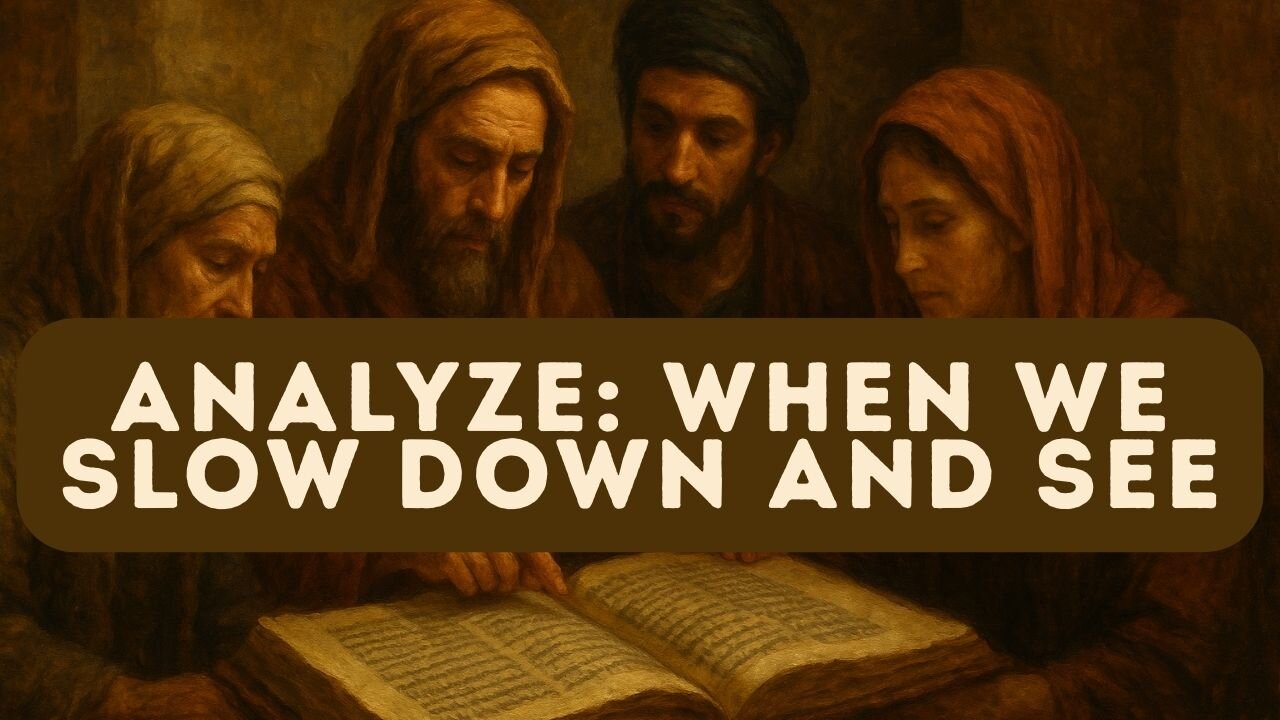
How to Analyze the Bible (Without a Seminary Degree)
How to Analyze the Bible (Without a Seminary Degree)
In this episode, we explore the “Analyze” step in the RAMPS Bible Study method—a practical and approachable way for everyday readers to deeply understand scripture. Many of us have read the Bible, but how many of us have truly analyzed it?
We talk about how to examine the Bible inductively, starting with the text itself and setting aside personal biases. It’s not about having all the answers—it’s about slowing down, asking thoughtful questions, and allowing the Bible to reveal its meaning in context.
Top Topics:
1. Reading Without Bias
We often come to the Bible with assumptions. This episode encourages readers to pause and read scripture with fresh eyes—observing first, interpreting second.
2. Context Matters
We dive into the importance of historical, cultural, and literary context when analyzing scripture. It’s not just what is said, but who it’s said to and why.
3. Tools That Help (And Don’t Overwhelm)
Bible software, commentaries, and even color-coding can enrich your understanding. But the heart of analysis is your willingness to engage and question.
4. Word Studies and Repetition
We discuss the value of tracing repeated words and themes across chapters and books. Whether it's “love,” “kingdom,” or “forgiveness,” repetition reveals emphasis.
5. Application to Modern Life
From ancient idol worship to modern brand loyalties, we reflect on how seemingly outdated texts are surprisingly relevant today.
Key Takeaways:
Analyzing the Bible is a form of worship. It doesn’t require credentials—just curiosity, humility, and attention. Whether you're diagramming verses, comparing translations, or highlighting repeated words, the goal is the same: to understand what God is saying and how that truth speaks to us today. We don’t have to be experts—we just have to be willing to explore the text thoughtfully and faithfully.
-
 17:37
17:37
MattMorseTV
1 day ago $9.68 earnedWalz just got NIGHTMARE NEWS.
25.7K137 -
 3:48
3:48
TruthStream with Joe and Scott
17 hours agoOver the Rainbow music video by Joe Rosati ~ 2026 cover of the 1939 classic
51K26 -
 LIVE
LIVE
Lofi Girl
3 years agolofi hip hop radio 📚 - beats to relax/study to
466 watching -
 1:28:16
The Michelle Moore Show
20 hours ago'Music Industry Insider Sexually Assaulted By Christian Pop Star Shares His Journey of Healing and Rebuilding' Guest, Randall Crawford: The Michelle Moore Show (Jan 16, 2026)
20.5K3 -
 3:11:09
PandaSub2000
2 days agoSilent Hill F | ULTRA BEST AT GAMES (Edited Replay)
17K -
 2:00:43
FreshandFit
7 hours agoShould Men and Women Live Together in 2026?
173K25 -
 2:02:30
TimcastIRL
13 hours agoMN To LOSE Congressional Seat Over Deportations, Attacks Against ICE Getting WORSE | Timcast IRL
328K412 -
 5:10:30
Drew Hernandez
1 day agoILHAN OMAR HOLDS SHADOW HEARING TO FUEL MINNEAPOLIS INSURRECTION?
57.2K28 -
 5:46:27
SpartakusLIVE
11 hours agoThe Boys are BACK in Town || GloryJean, NurVes, & StevieT
63.5K3 -
 4:44:53
I_Came_With_Fire_Podcast
18 hours agoHealthcare Pays You | Iran Spotlight | Canada Cozies China | w/ Morgan Lerette, former Blackwater
52.9K9